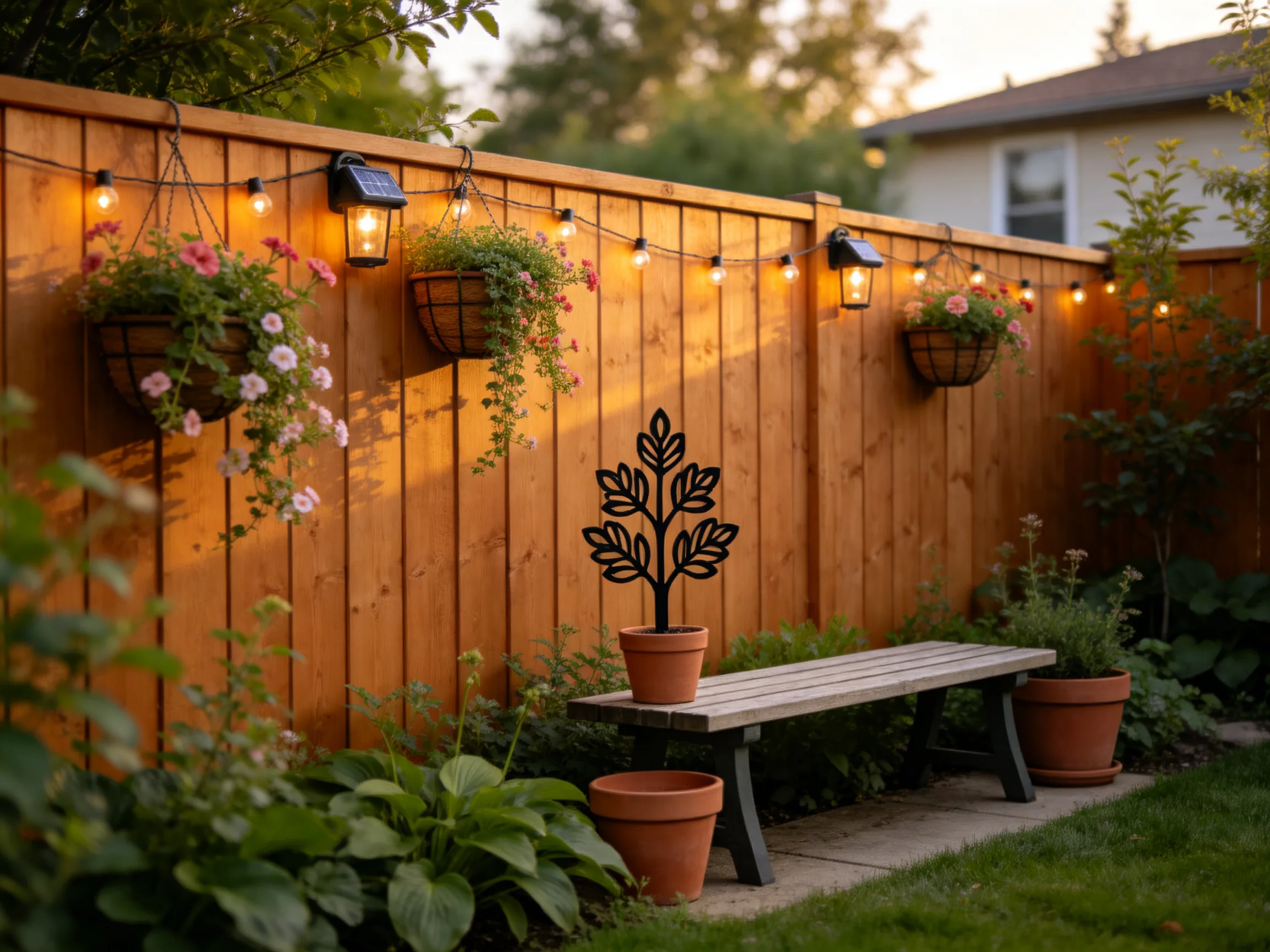
A plain wooden fence can become one of the most useful design surfaces in a garden. With the right mix of plants, lights, trellises, shelves, and weather-safe art, it can add privacy, soften hard edges, and make a small yard feel more finished. These wooden fence decorating ideas work for patios, side yards, cottage gardens, and compact backyards where every vertical surface matters.
1. Hanging Planter Rows with Trailing Flowers
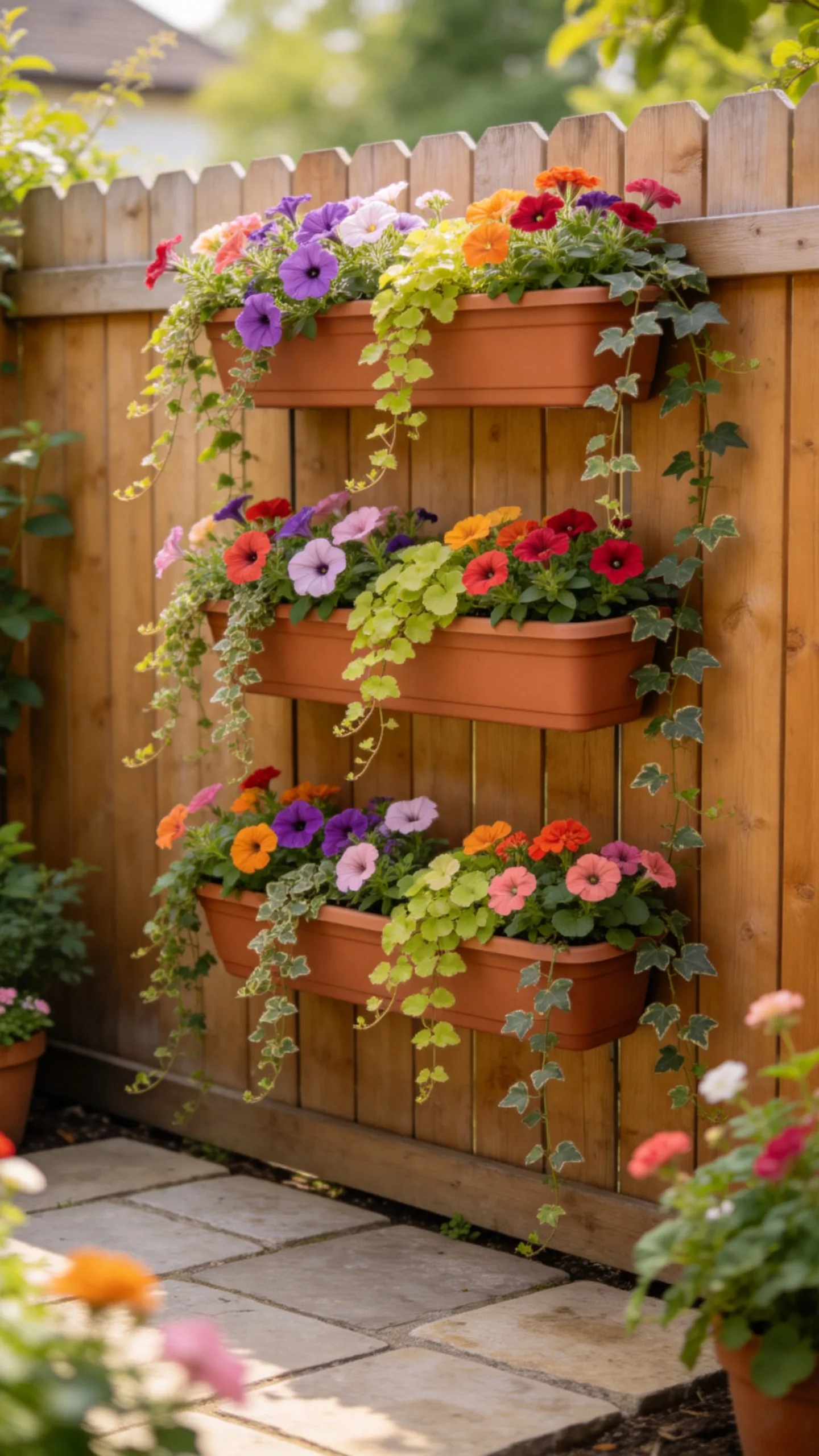
Mounting hanging planters in neat rows is one of the easiest ways to turn a wooden fence into a living wall without using ground space. Use metal hooks, fence brackets, or horizontal rails to hold lightweight pots filled with trailing plants such as calibrachoa, petunias, bacopa, ivy geraniums, sweet potato vine, or creeping Jenny.
For a tidy look, repeat the same planter style across the fence and vary the plant colors by season. In spring, use pansies and violas; in summer, switch to heat-tolerant annuals; in fall, add ornamental peppers or trailing ivy. Choose containers with drainage holes so rainwater does not collect against the wood.
This idea works especially well for small patios because it keeps planting off the floor while adding height and color. If the fence gets strong afternoon sun, water hanging baskets more often because they dry out faster than garden beds.
2. Solar String Lights Draped Along the Fence Line
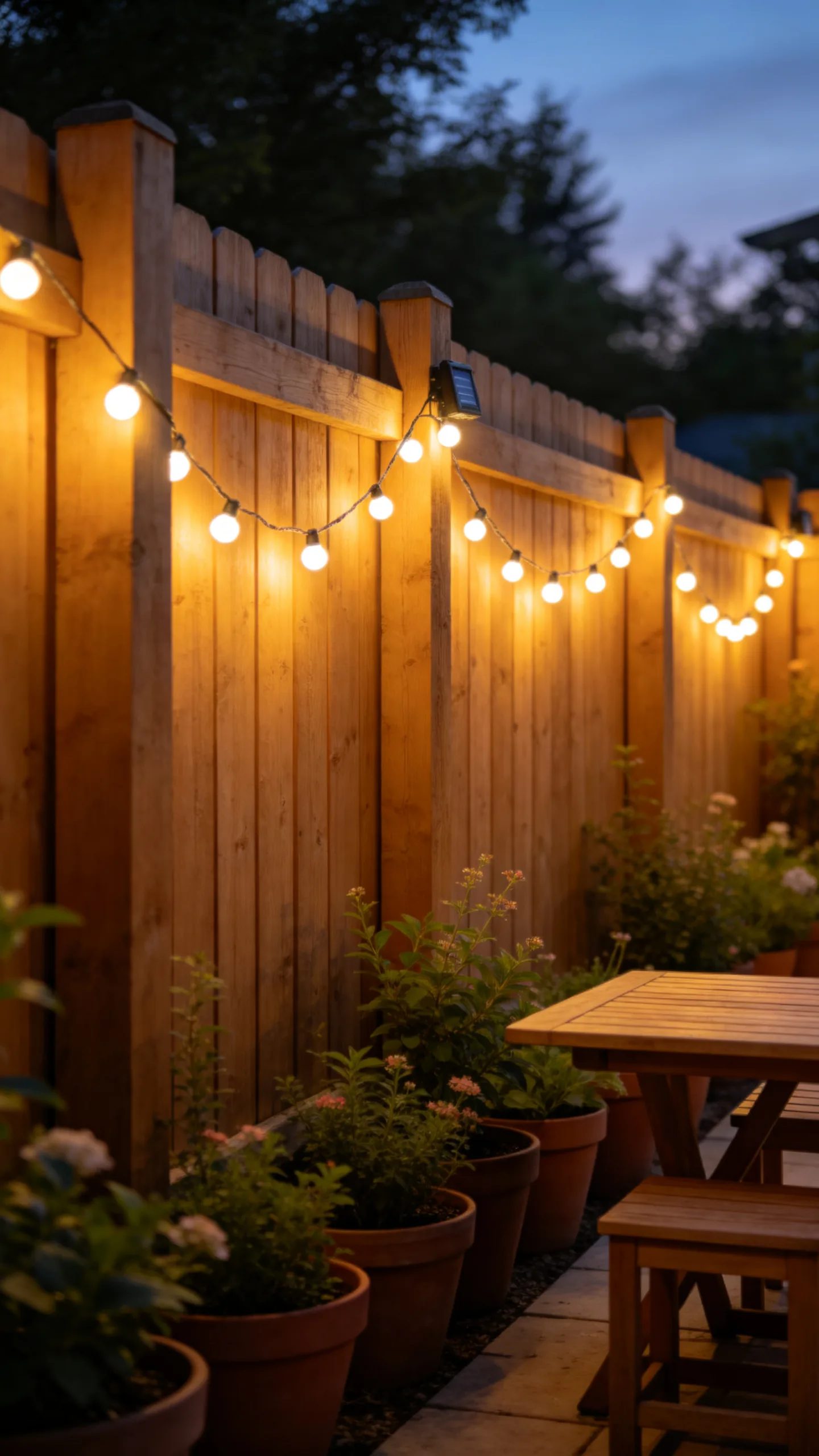
Solar string lights can make a wooden fence feel cozy after sunset without requiring outdoor wiring. Drape them in soft swoops between fence posts, run them along the top rail, or zigzag them across a seating area to create a warm backdrop for evening meals.
Choose warm white bulbs for a relaxed garden look, or globe-style bulbs for a café patio effect. If your fence is shaded by trees or a pergola, place the solar panel where it receives direct sunlight for several hours during the day. Use outdoor-rated clips instead of staples so the lights are easier to remove for repairs or seasonal changes.
String lights pair well with planters, climbing vines, and outdoor dining spaces. They are especially useful on long fence runs because they break up the flat surface and make the yard feel more intentional at night.
3. Vertical Herb Garden in Wall-Mounted Pots
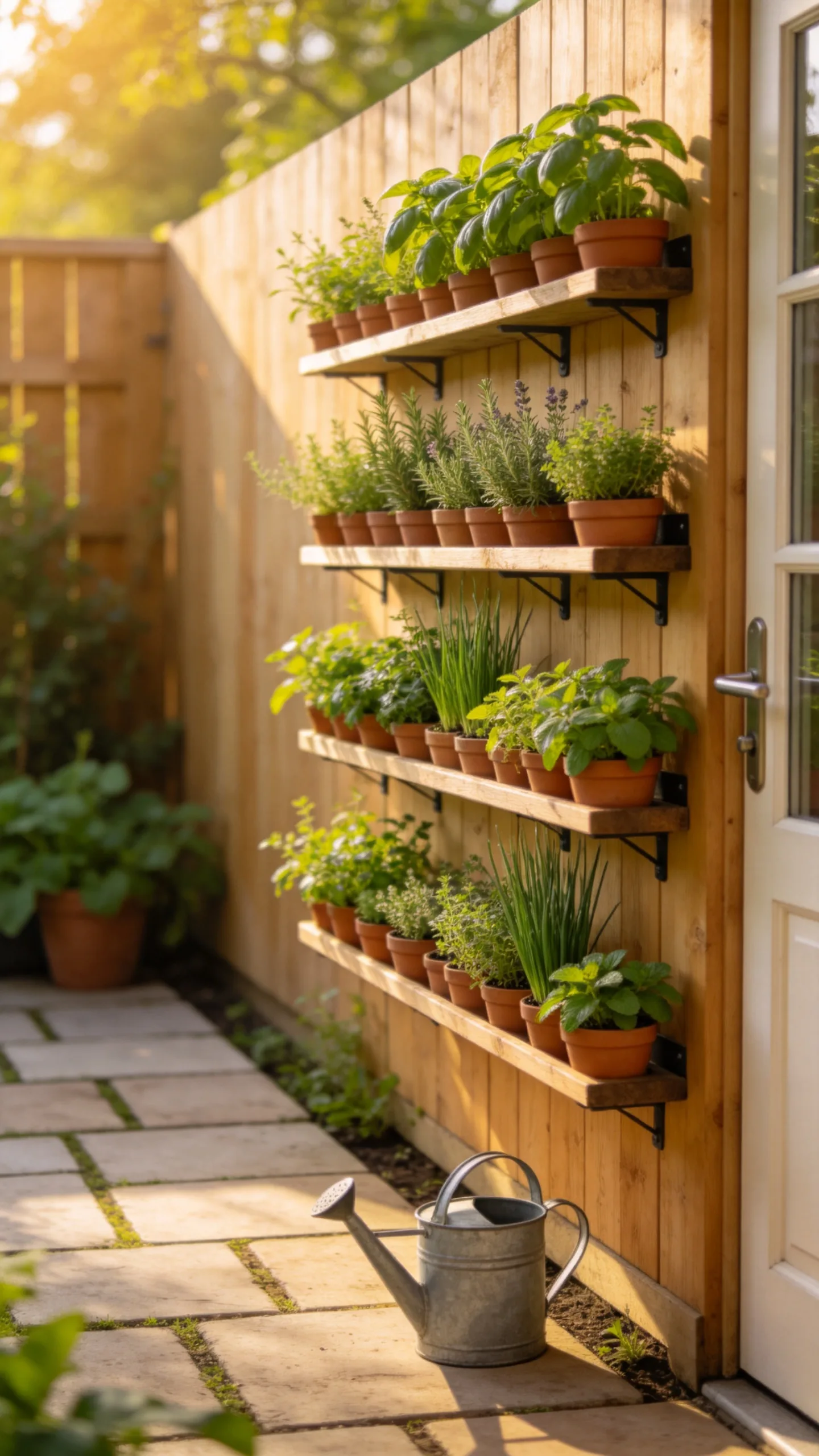
A wooden fence near a kitchen door or patio is a practical spot for a vertical herb garden. Attach small wall-mounted pots, pocket planters, or narrow wooden shelves and plant herbs like basil, parsley, thyme, oregano, chives, mint, and cilantro.
Group herbs by watering needs to make care easier. Mediterranean herbs such as rosemary, thyme, oregano, and sage prefer well-drained soil and more sun, while parsley, cilantro, and chives can handle slightly more moisture. Mint is best kept in its own container because it spreads aggressively in beds.
This fence decorating idea is both attractive and functional. It saves bed space, keeps herbs within reach for cooking, and adds fragrance along a patio or walkway. Use lightweight containers and avoid overloading older fence panels.
4. Climbing Rose Trellis Panels
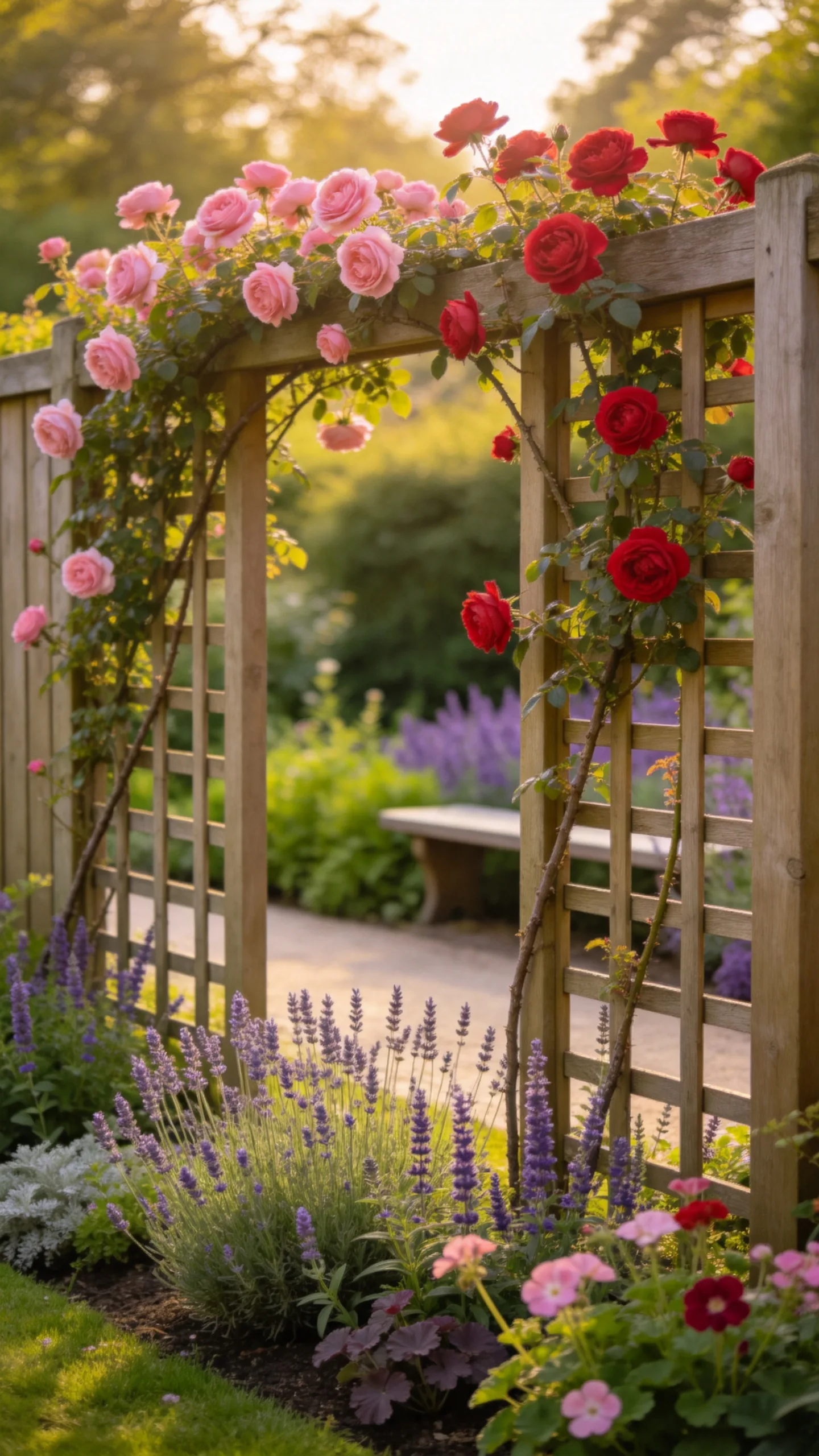
Adding trellis panels to a wooden fence gives climbing roses a structured place to grow while keeping thorny stems off walkways. Install a sturdy trellis a few inches in front of the fence so air can circulate behind the plant and the wood can dry after rain.
Choose climbing or rambling rose varieties suited to your climate and sun exposure. Most roses need at least six hours of direct sun and soil that drains well. Tie new canes horizontally along the trellis with soft garden ties to encourage more flowering shoots along the stems.
This idea works beautifully behind a bench, along a cottage-style border, or at the back of a flower bed. Underplant the roses with low-growing lavender, catmint, hardy geraniums, or salvia to cover bare stems and bring in layered color.
5. Outdoor Metal Wall Art Between Plantings
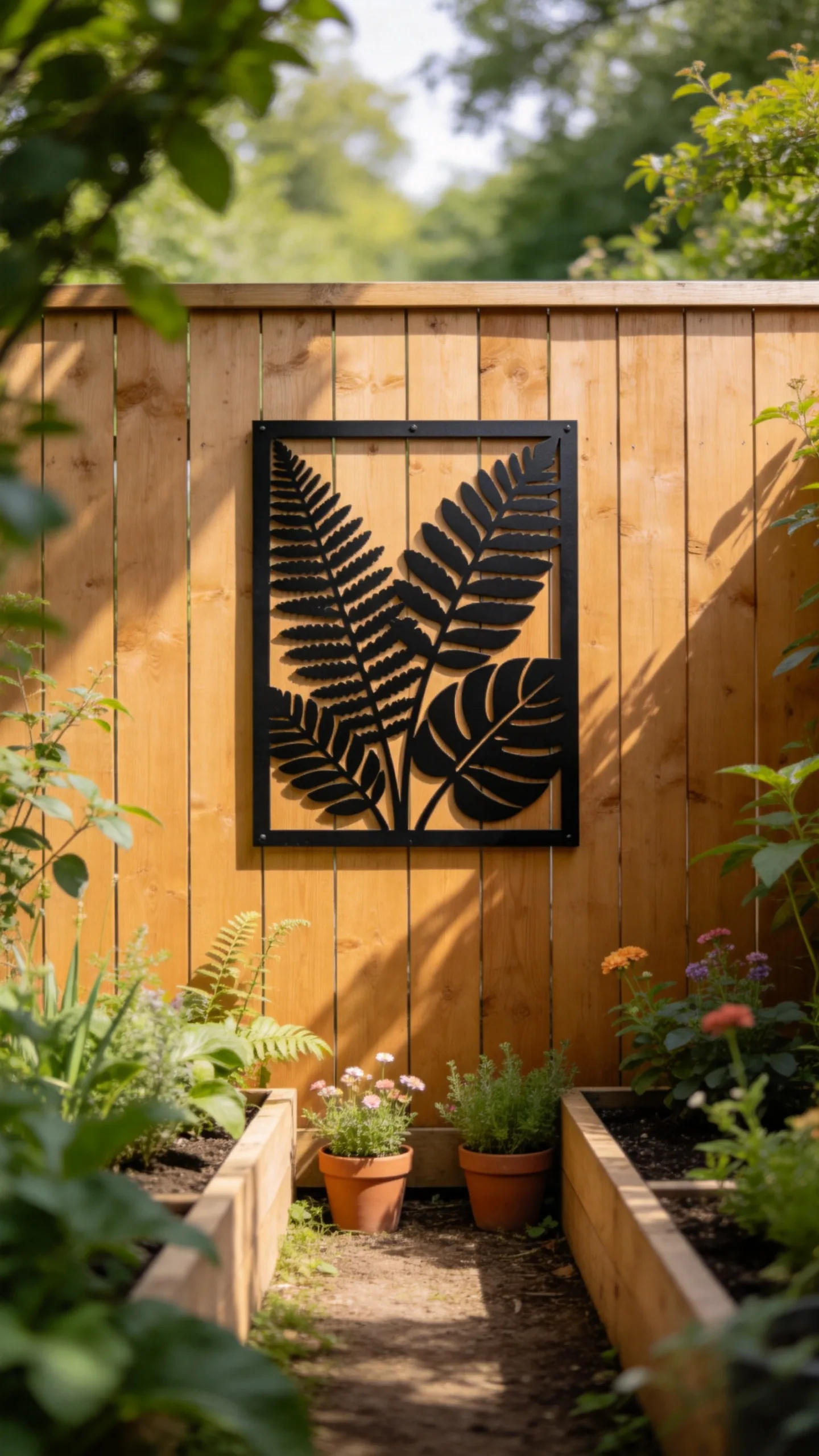
Outdoor metal wall art adds shape and texture to a wooden fence, especially when placed between pots, vines, or raised beds. Look for weather-resistant pieces such as leaf silhouettes, sunbursts, birds, butterflies, botanical panels, or geometric designs.
Choose a finish that contrasts with the fence. Black metal stands out against cedar or pale stained wood, while rusted metal adds warmth to gray or weathered boards. Hang pieces at eye level near seating areas, gates, or narrow side yards where garden beds may be too small for large shrubs.
To keep the display from looking cluttered, repeat one theme or material. For example, pair black metal fern art with real ferns in shaded containers, or use bird-shaped art near a birdbath and native flowering plants.
6. Fence-Mounted Window Boxes
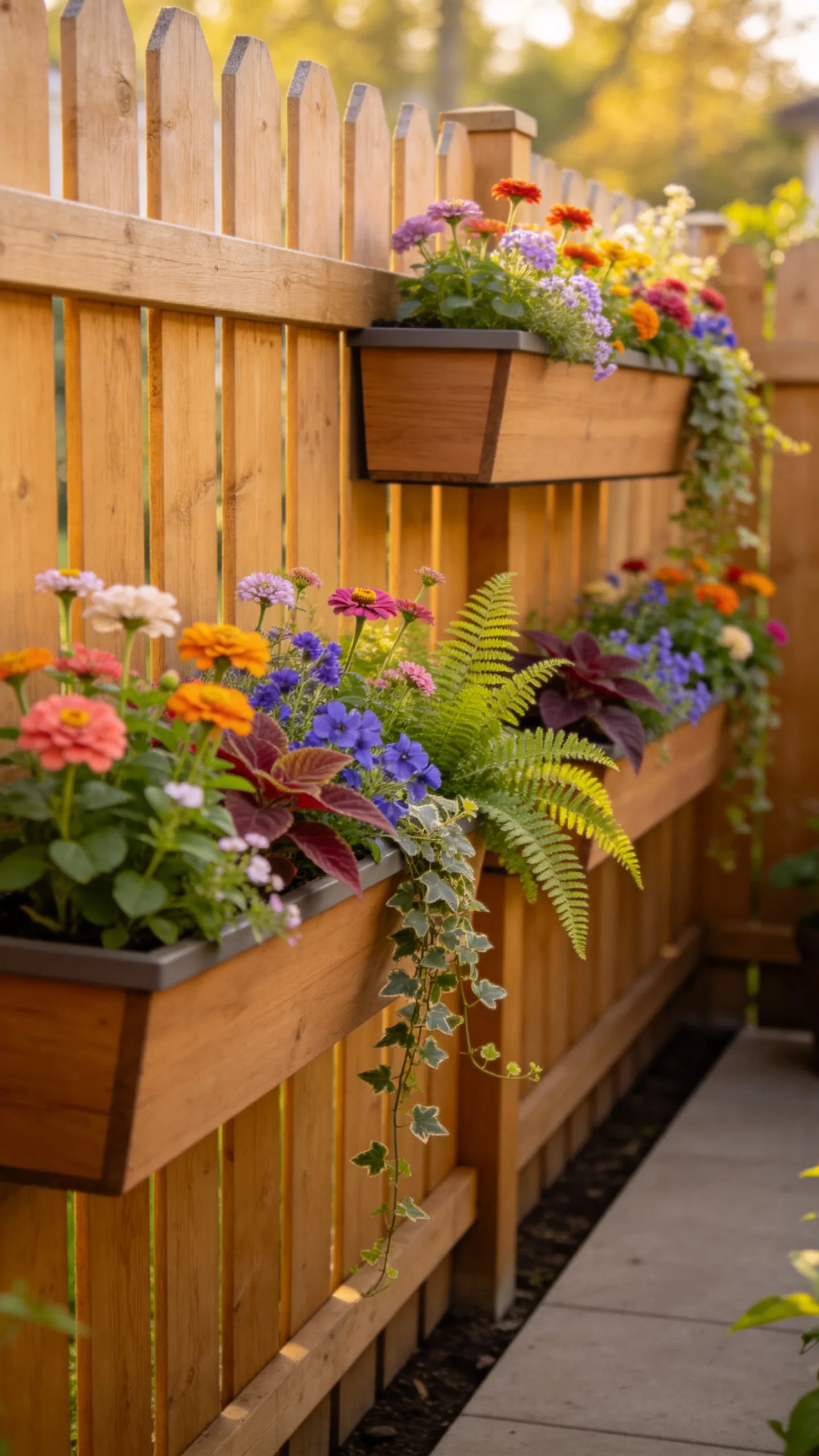
Window boxes are not just for house windows. Mounted on a wooden fence, they create compact planting strips that are easy to refresh through the seasons. Install them along a horizontal rail or at staggered heights to add movement across a long fence.
Fill sunny boxes with geraniums, lantana, verbena, dwarf zinnias, marigolds, or trailing lobelia. For partial shade, use begonias, impatiens, coleus, ferns, or heuchera. Add a lightweight potting mix and make sure every box drains freely to prevent excess moisture from sitting against the wood.
Fence-mounted window boxes work well in courtyards and small gardens because they lift flowers to eye level. They also soften fences behind outdoor dining sets, grill areas, and narrow walkways where in-ground planting may not fit.
7. Privacy Screen with Climbing Jasmine or Clematis
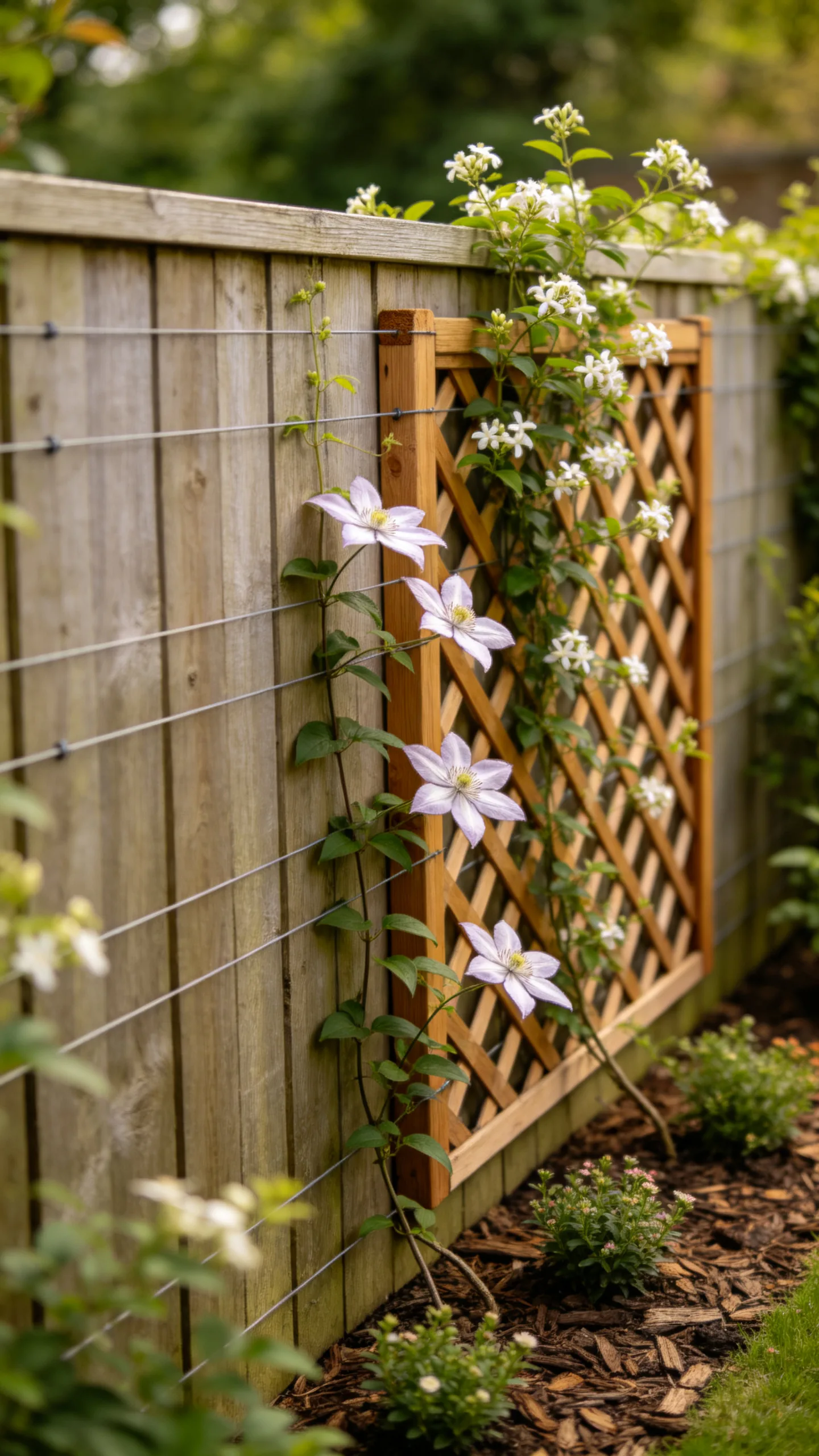
A wooden fence can become a softer privacy screen when paired with flowering climbers. Install wire mesh, horizontal cables, or a wooden lattice panel and train jasmine, clematis, honeysuckle, or star jasmine depending on your climate and available light.
Clematis often likes sun on its vines and cooler soil around its roots, so add mulch or low plants at the base. Star jasmine is evergreen in many mild climates and can create a dense screen, while honeysuckle can attract pollinators but may need regular pruning to stay controlled.
This idea is useful where a fence feels too bare or where you want to screen a neighboring view. Keep vines trimmed away from gates, latches, and the top of the fence so the structure remains accessible and less likely to hold trapped moisture.
8. Rustic Shelf Display with Potted Succulents
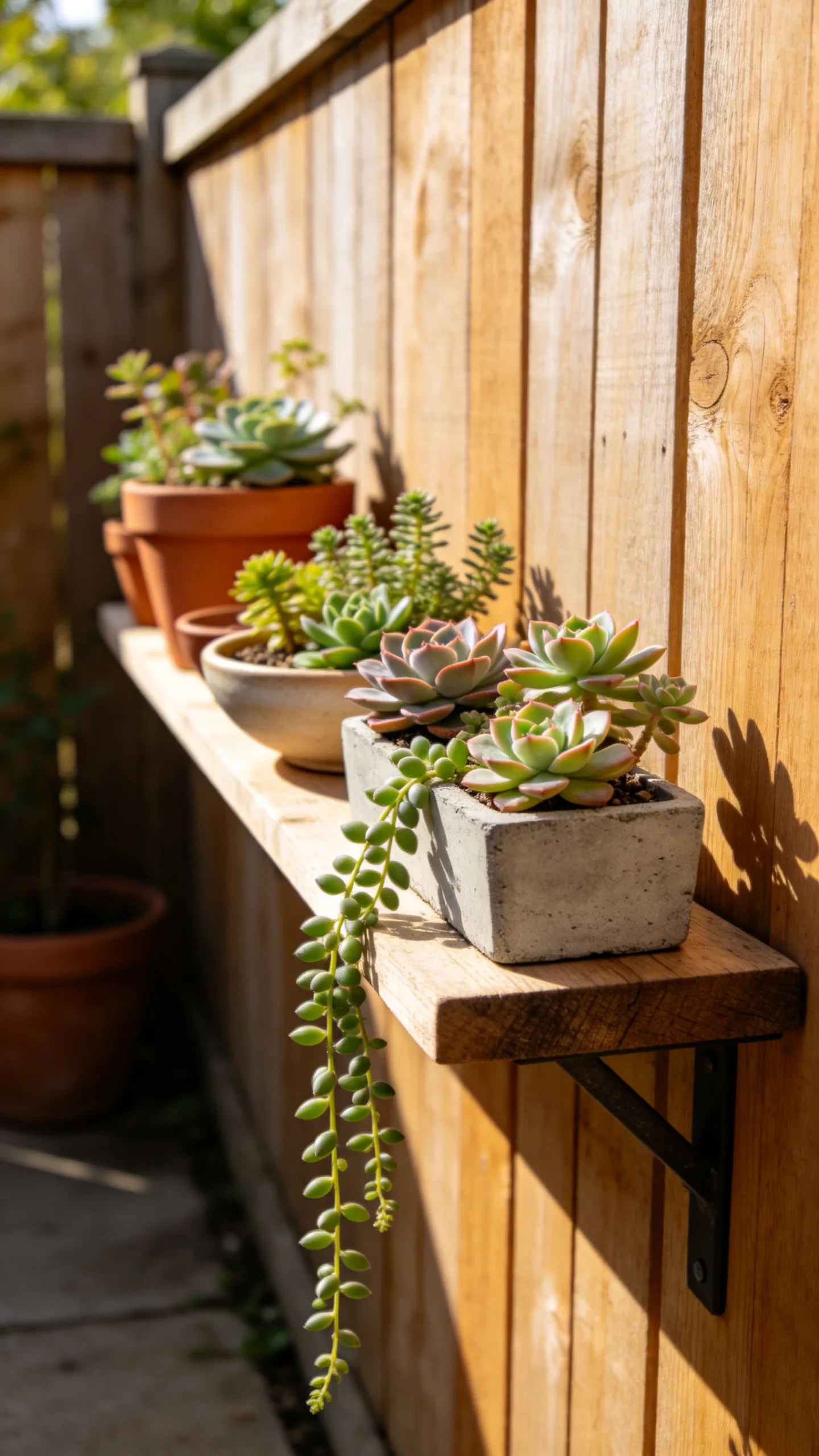
A simple wooden shelf attached to a fence can hold a rotating display of small potted plants and garden accents. Succulents are a good choice for sunny, dry spots because many varieties prefer fast-draining soil and do not need constant watering.
Use terracotta pots, shallow bowls, metal tins with drainage holes, or small concrete planters. Echeveria, sedum, sempervivum, crassula, and trailing string-of-bananas can create a layered look. In colder regions, keep tender succulents in removable pots so they can be brought indoors before frost.
This decorating idea is ideal for patios, balcony gardens, or narrow side yards because it adds detail without taking up floor space. Keep the shelf shallow enough that it does not block movement or catch too much wind.
9. Painted Fence Mural with Simple Botanical Shapes
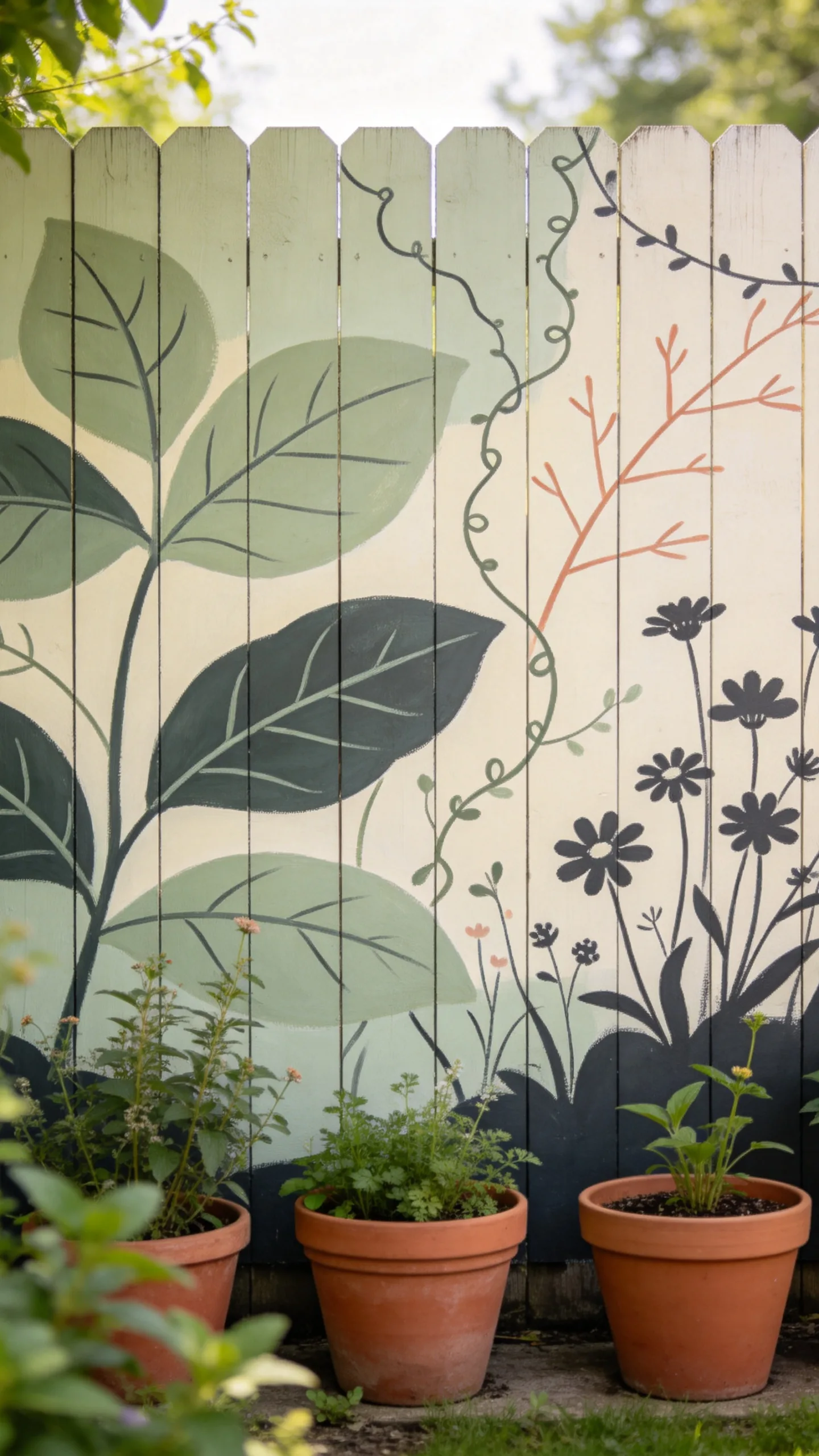
A painted mural can turn a wooden fence into outdoor art without adding heavy objects. Simple botanical shapes such as oversized leaves, vines, wildflowers, or abstract branches work well because they blend naturally with garden planting.
Use exterior paint or outdoor wood stain designed for weather exposure. Before painting, clean the fence surface and allow it to dry. A muted color palette, such as sage green, cream, terracotta, and charcoal, can feel calm and garden-friendly, while brighter colors can suit a playful family yard.
This idea is useful for fences where planting is limited by shade, poor soil, or a paved surface. Keep the design simple enough that it still looks good as real plants grow in front of it.
10. Lantern Hooks Along the Fence Posts
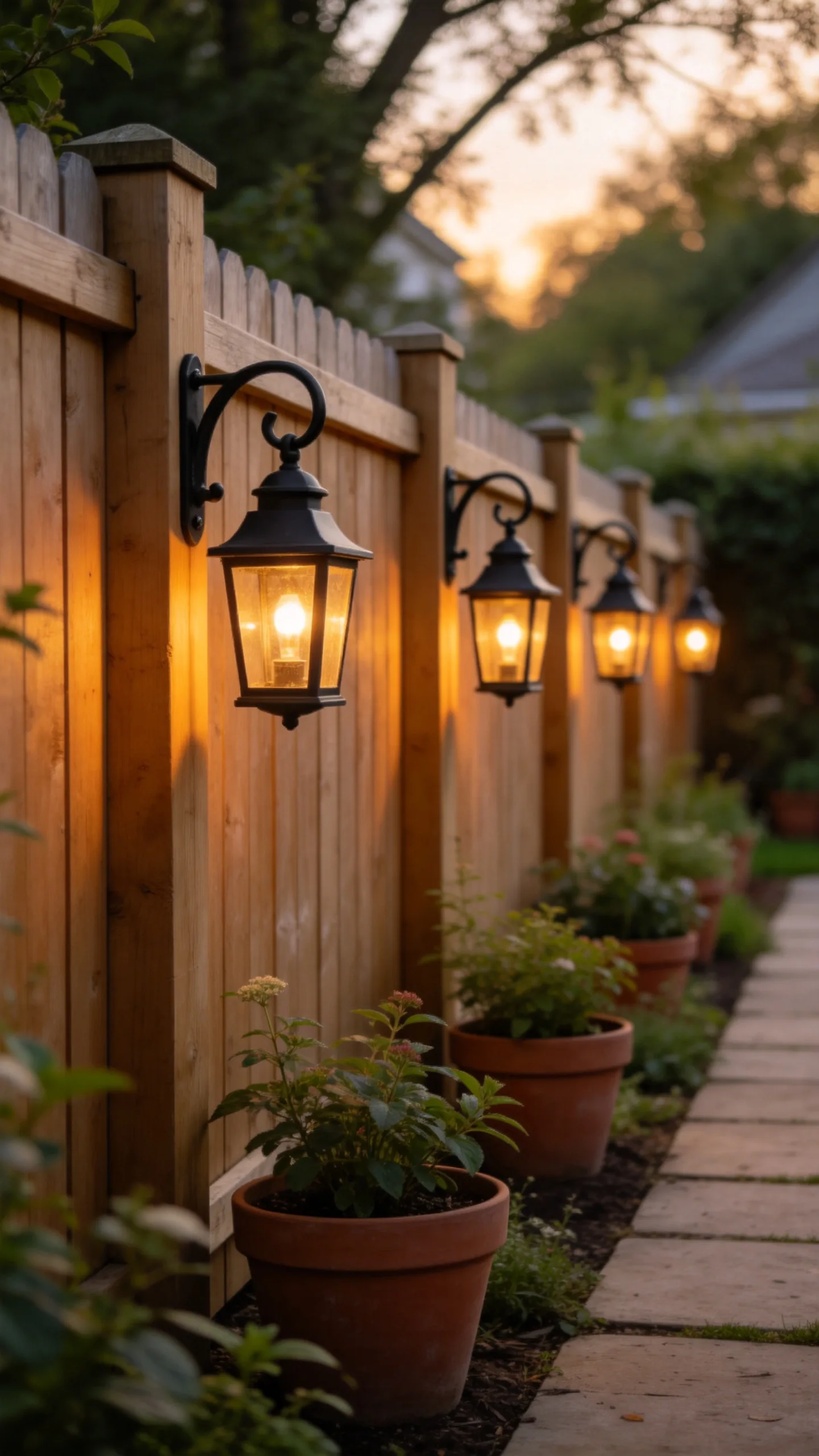
Fence posts are sturdy anchor points for lantern hooks, making them a practical place to add soft evening light. Install outdoor-rated hooks and hang solar lanterns, battery lanterns, or enclosed candle lanterns designed for exterior use.
Place lanterns near a seating area, garden path, or gate to guide the eye through the yard. For a consistent look, use the same lantern style on every other post. Black metal lanterns create a classic look, while woven or rattan-style lanterns suit casual patios and coastal gardens.
This idea is flexible because lanterns can be removed before storms or changed seasonally. Pair them with container plants at the base of each post to create a repeated rhythm along the fence.
11. Espalier Fruit Tree Against the Fence
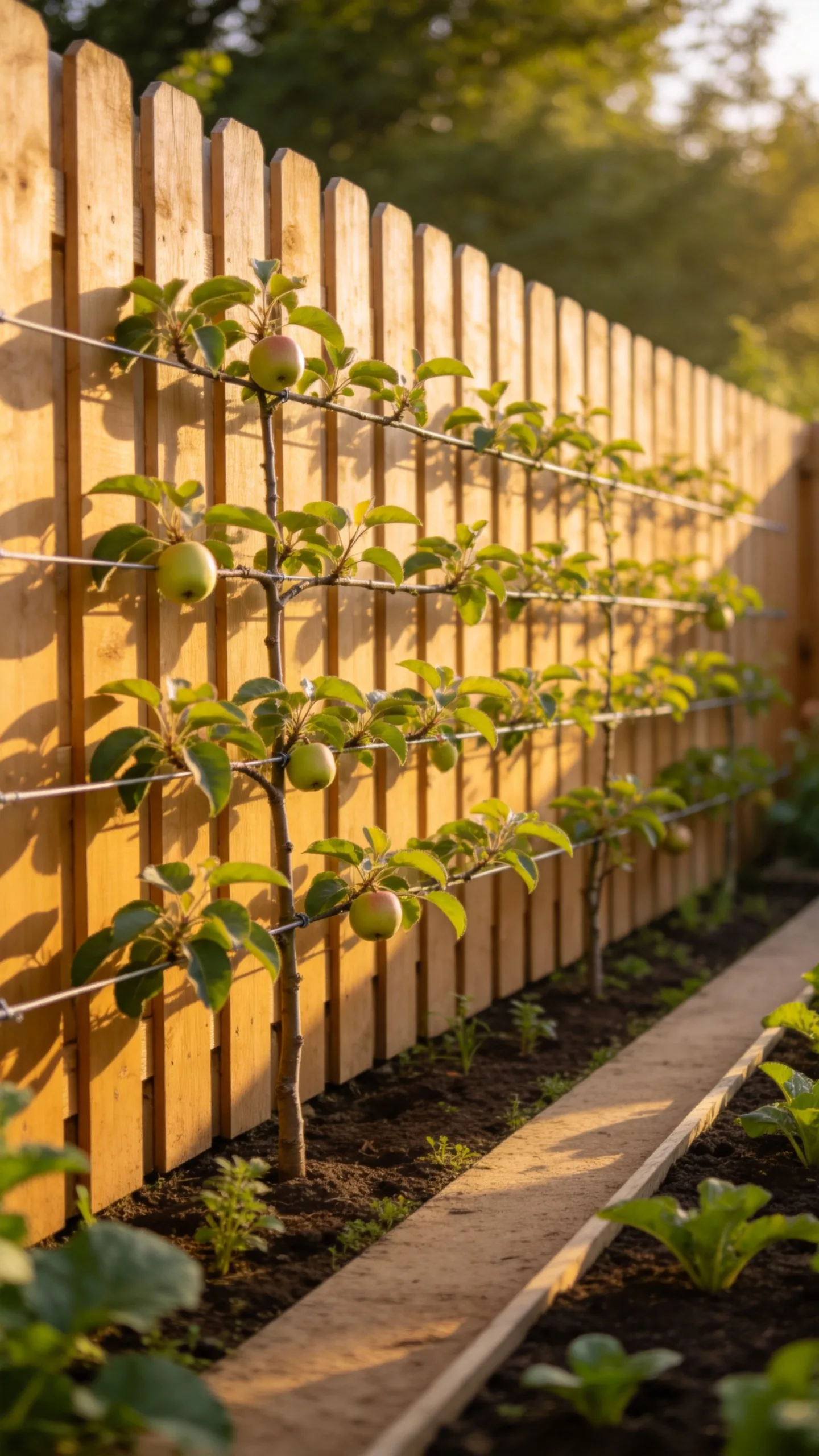
Espalier is a space-saving way to grow fruit trees flat against a fence. Apples, pears, figs, and some citrus can be trained along horizontal wires or a trellis system, depending on your climate. This turns the fence into a productive garden feature instead of just a boundary.
Install strong support wires a few inches away from the fence so branches have room to grow and air can move behind them. Choose a young tree and prune it regularly to maintain the shape. Most fruiting trees need full sun, and watering should be consistent during establishment.
This idea is best for gardeners who want both beauty and function in a narrow space. It works well along sunny fence lines beside paths, patios, or vegetable beds where a full-size fruit tree would be too large.
12. Birdhouse Gallery with Native Plant Containers
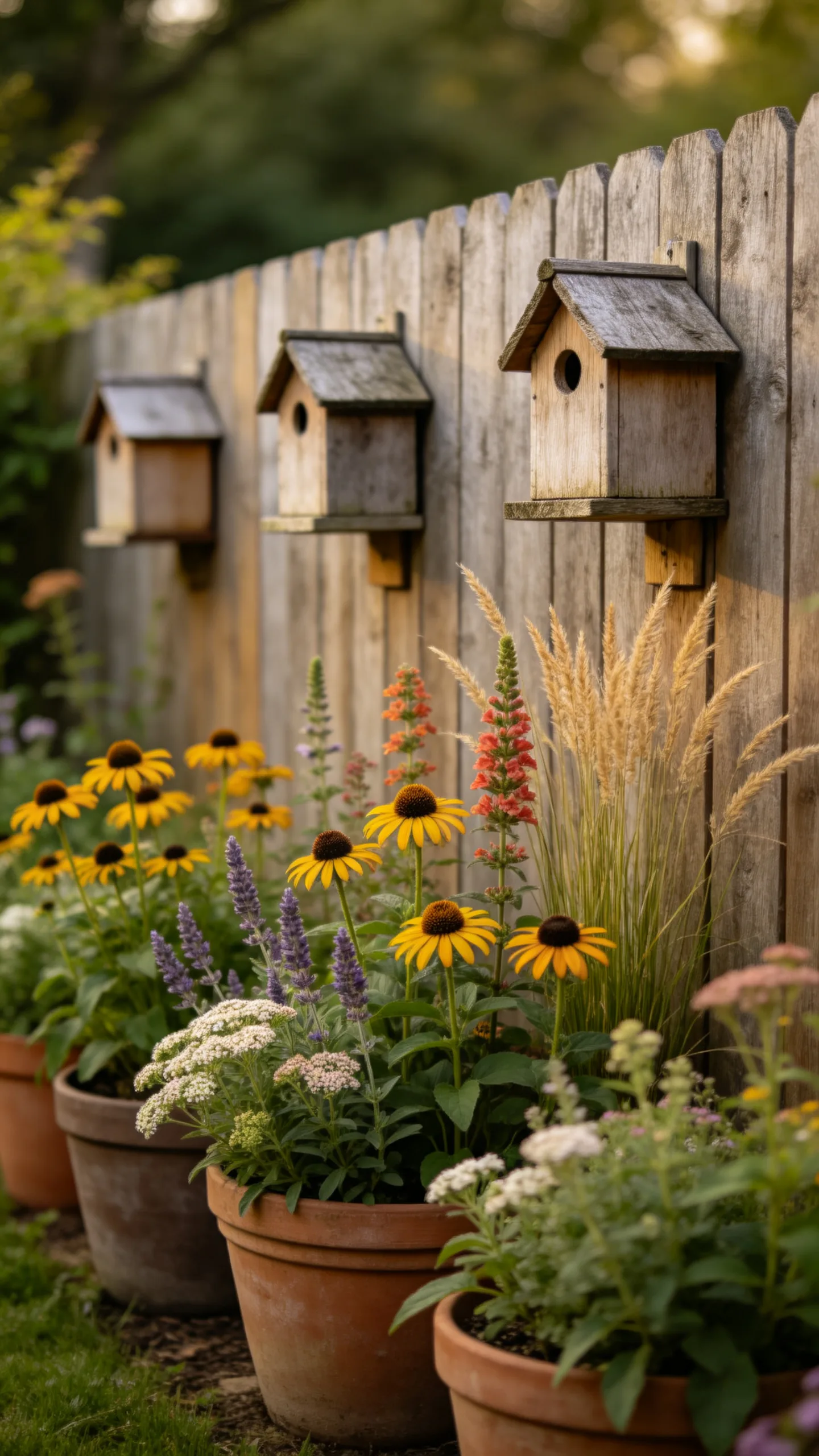
A collection of birdhouses can make a wooden fence feel charming, especially when paired with plants that support wildlife. Mount birdhouses at varied heights, leaving enough space between them so the display does not feel crowded.
Use outdoor-safe wood or painted houses with proper drainage and ventilation. For nearby containers, choose native flowers and seed-producing plants suited to your region, such as coneflower, black-eyed Susan, bee balm, salvia, yarrow, or native grasses. These plants can provide nectar, seed heads, or shelter depending on the season.
This fence decorating idea works best in a quiet part of the garden away from heavy foot traffic. Even if birds do not use every house, the combination of small architecture and layered planting gives the fence a collected garden look.
13. Mirror Panel Framed by Ferns and Shade Plants
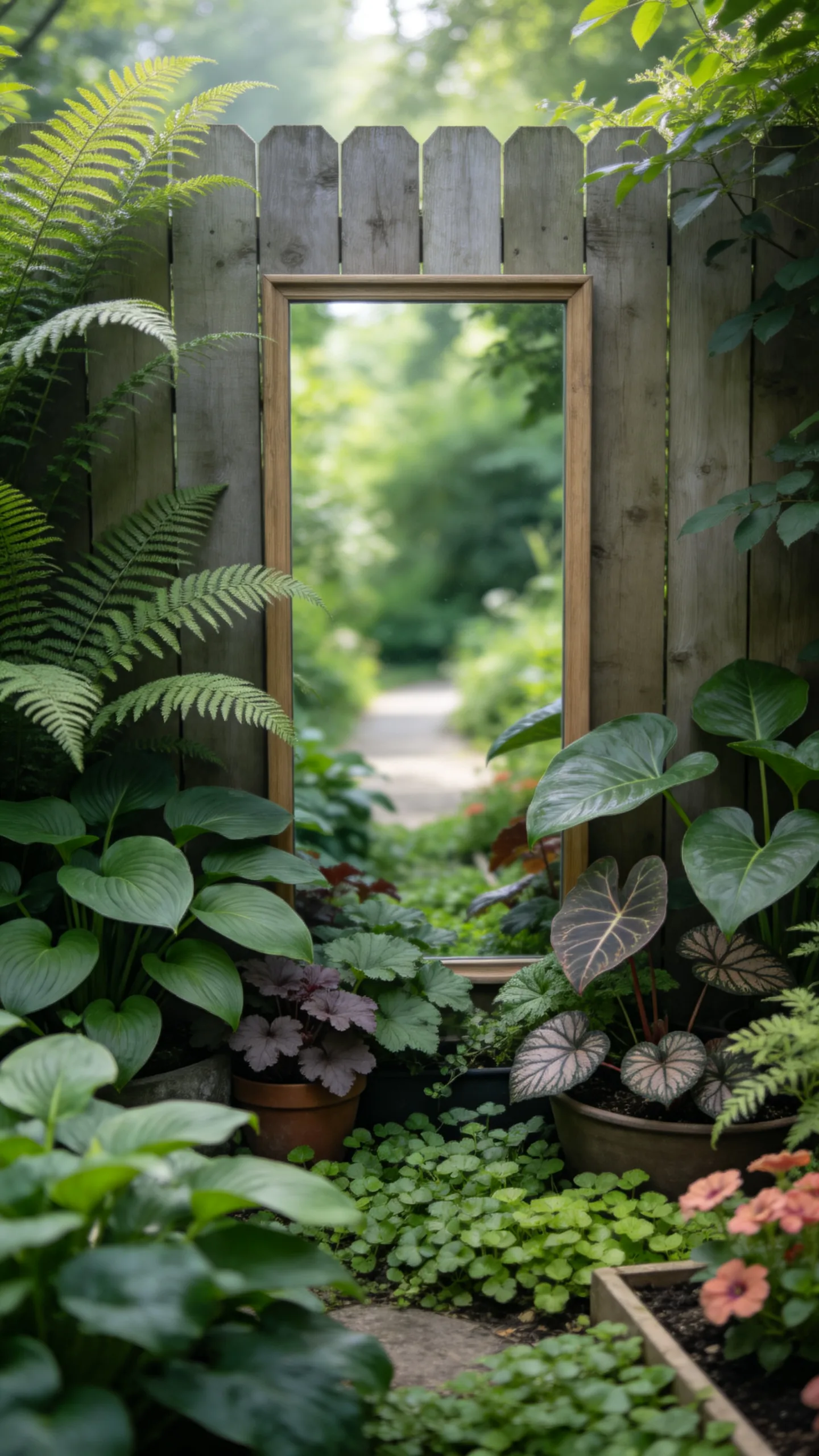
An outdoor mirror can make a small garden feel deeper when placed carefully on a wooden fence. Choose a mirror designed for outdoor use or place it in a protected area where it will not receive harsh weather. Frame it with shade-loving plants to help it blend into the garden.
For shaded fences, use containers or beds filled with ferns, hostas, heuchera, astilbe, caladiums, begonias, or creeping Jenny. The reflective surface can brighten a dark corner and visually expand a narrow side yard or courtyard.
Place the mirror where it reflects plants, a path, or a seating area rather than direct sun. Avoid positioning it where birds may fly into it; surrounding it with a frame, divided panes, or nearby foliage can help soften the reflection.
14. Mixed Fence Vignette with Planters, Lights, and Art
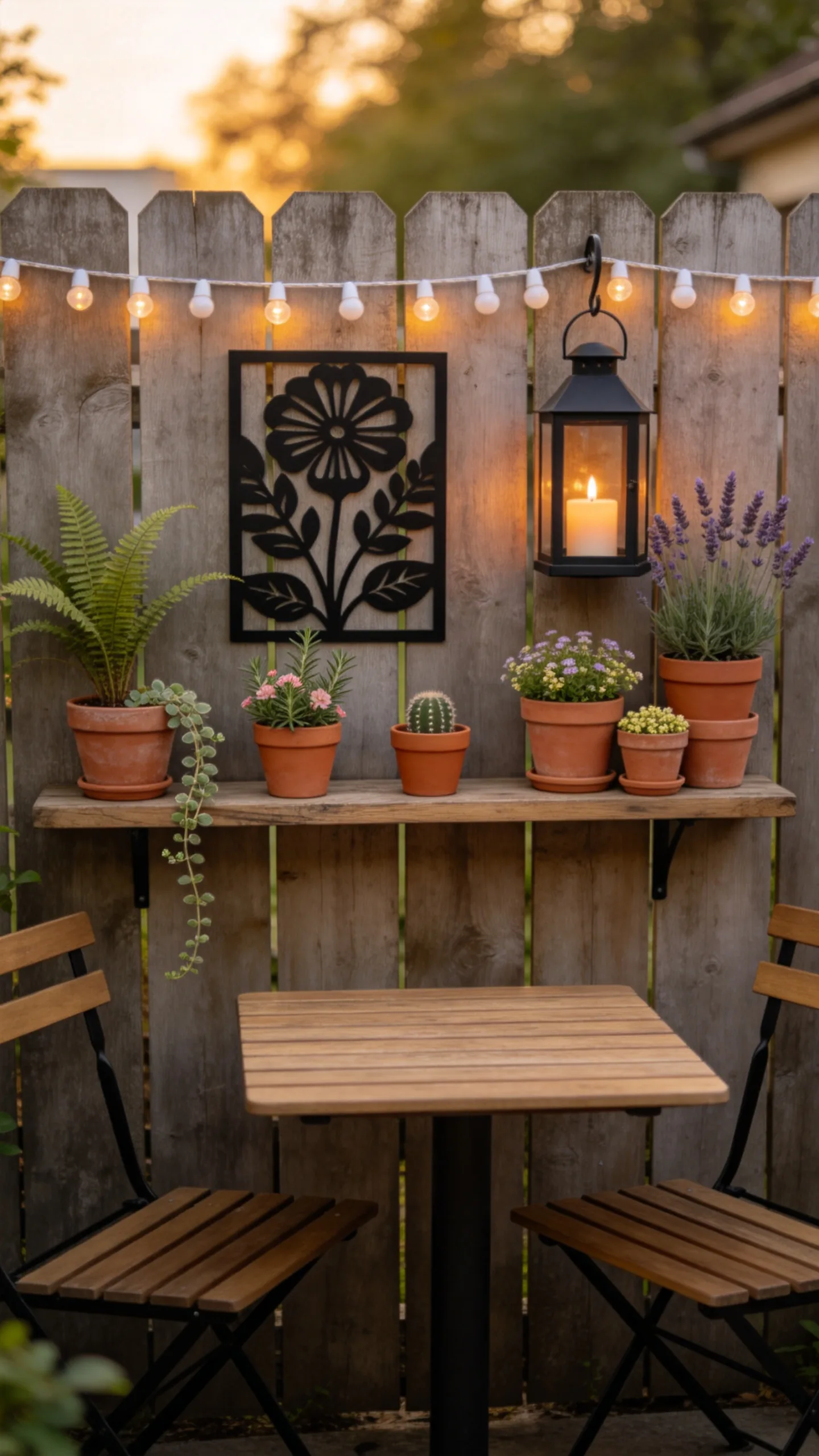
For a Pinterest-worthy fence display, combine several elements into one planned vignette instead of decorating the entire fence at once. Choose a section behind a bench, bistro table, potting station, or raised bed and layer planters, lights, and outdoor art around that focal point.
Start with one anchor piece, such as a metal art panel, trellis, mirror, or large wall planter. Add two or three containers at ground level, using different heights such as a tall planter, a medium pot, and a low bowl. Finish with string lights, lanterns, or a small shelf to bring in evening interest.
This approach works well for renters or budget-conscious gardeners because you can decorate one fence section first and expand later. Keep the materials cohesive, such as black metal accents with terracotta pots or natural wood shelves with white flowers, so the finished area looks intentional rather than crowded.