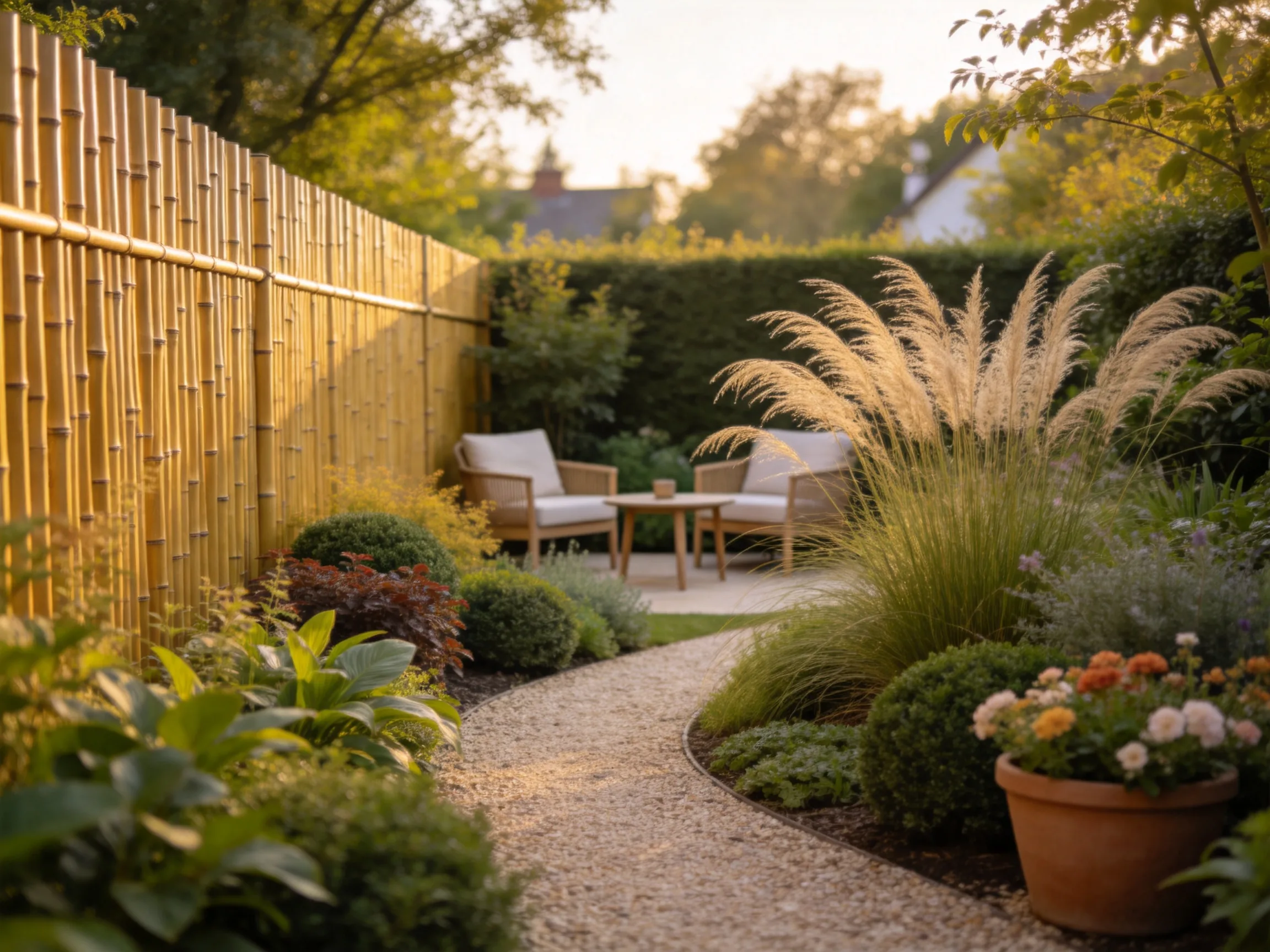
Bamboo fence ideas are a smart way to add privacy to a garden without making the space feel heavy or closed in. Whether you have a narrow side yard, a small patio, a raised-bed vegetable garden, or a backyard seating area, bamboo can create a natural screen with texture, warmth, and vertical height. These ideas range from simple rolled bamboo panels to framed fence designs, container screens, and trellis combinations that work well for real outdoor spaces.
1. Rolled Bamboo Screening Along an Existing Fence
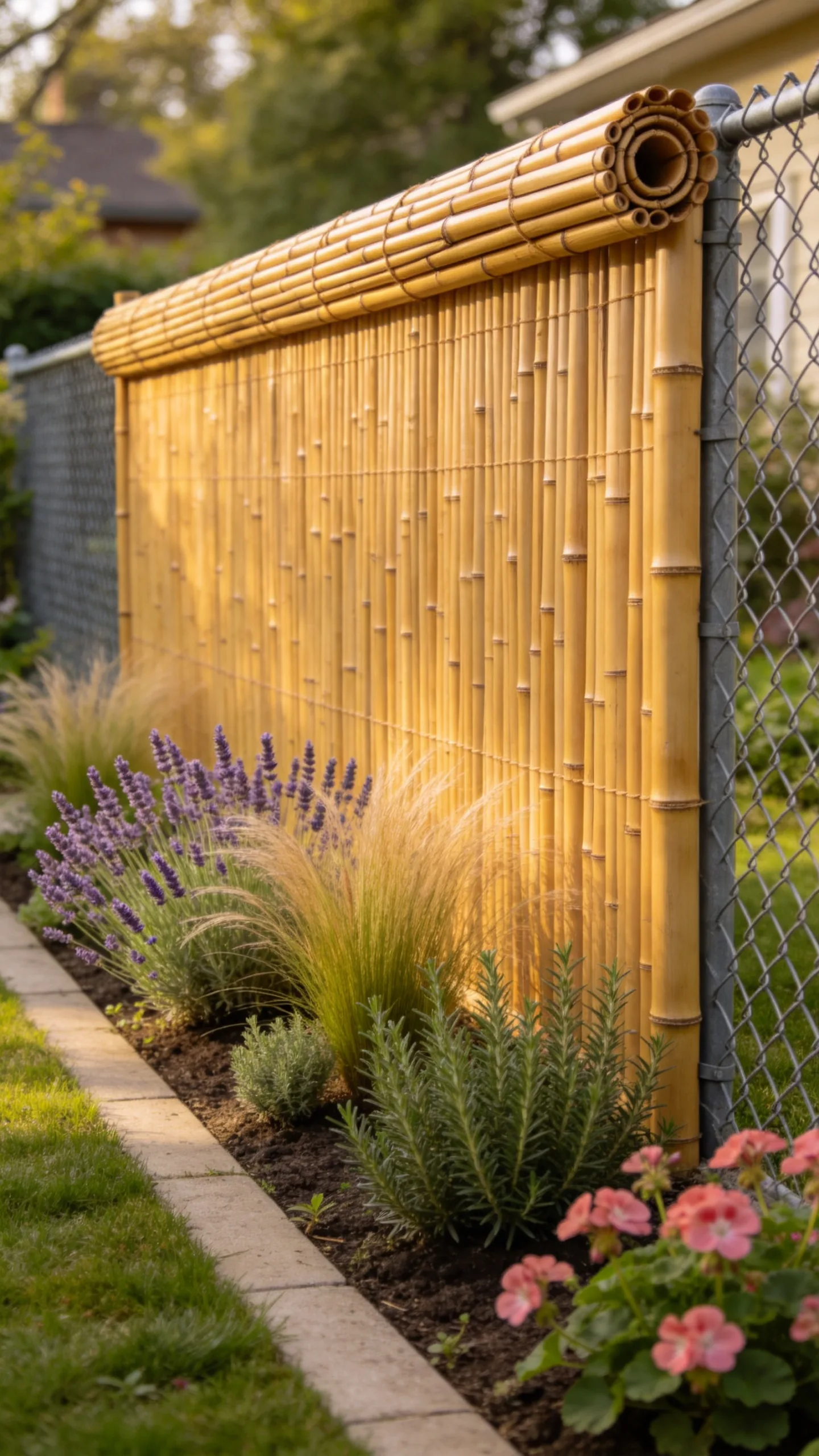
Rolled bamboo screening is one of the easiest ways to upgrade a plain chain-link, wire, or aging wood fence. The bamboo rolls can be attached with galvanized wire, outdoor zip ties, or fence staples, making them useful when you need privacy quickly without rebuilding the entire boundary.
This idea works especially well for narrow gardens because the screen sits flat against the existing fence and does not take up much planting space. Choose a roll height that matches your privacy need, such as a shorter screen for disguising a low fence or a taller one for blocking views from neighboring patios.
For a more finished look, plant low-maintenance border plants in front of the bamboo, such as lavender, dwarf ornamental grasses, compact rosemary, or hardy geraniums. Leave a little air gap between dense planting and the fence so the bamboo dries after rain and lasts longer.
2. Framed Bamboo Panel Fence for a Clean Modern Look
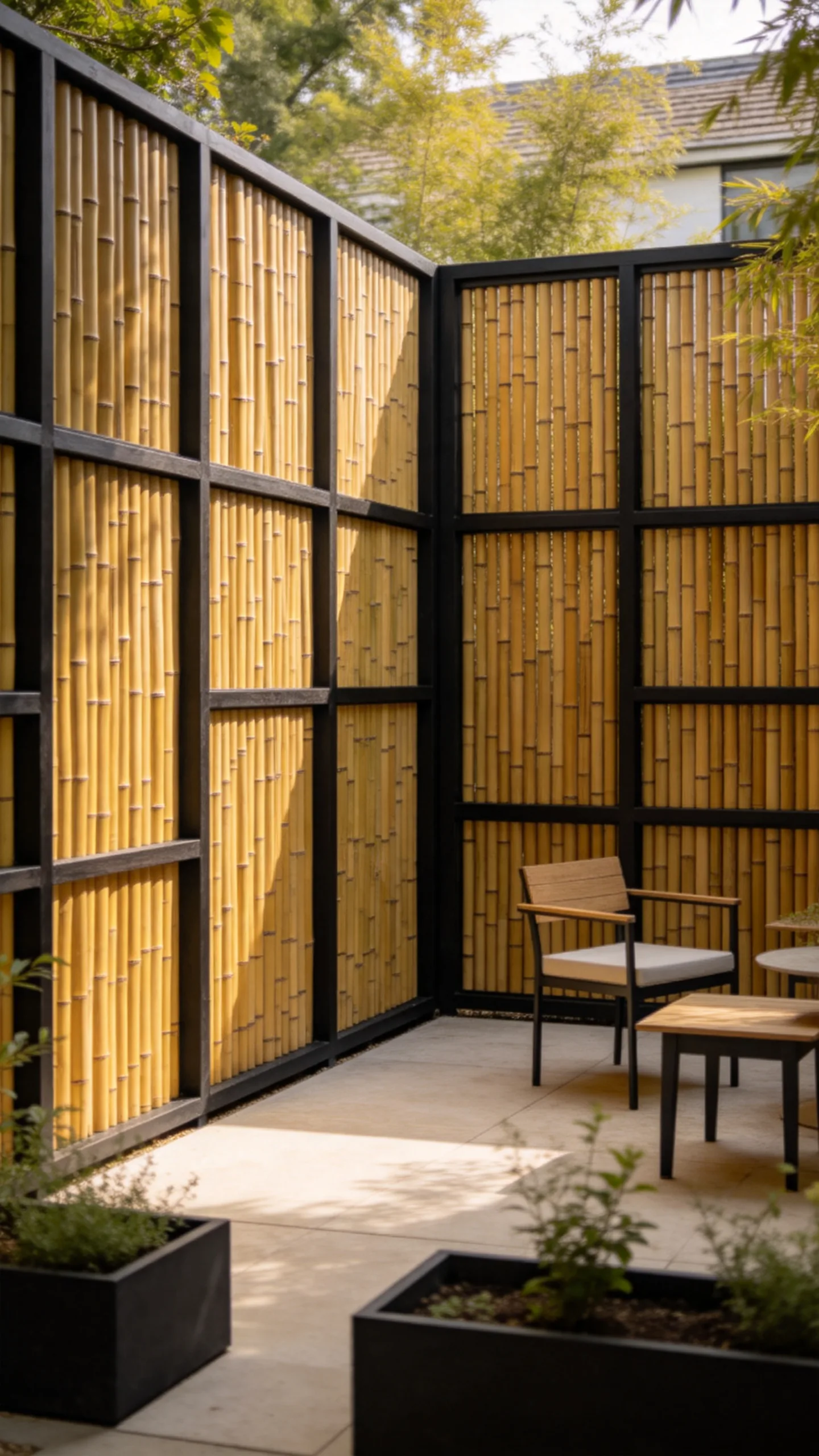
A framed bamboo panel fence gives bamboo a more structured, polished appearance. Instead of letting rolled bamboo stand alone, the canes are set inside wood or metal frames, creating tidy rectangular sections that look intentional around a patio, courtyard, or garden room.
This style is useful when you want privacy without a rustic or temporary feel. Dark-stained timber frames can make golden bamboo stand out, while black metal frames create a sharper modern contrast. The frame also helps keep the bamboo aligned and reduces sagging over time.
Use framed panels to screen a seating area, outdoor dining table, or hot tub zone. If the garden is small, keep the frame lines simple and repeat the same panel size to make the space feel organized rather than visually crowded.
3. Tall Bamboo Privacy Screen Behind a Garden Bench
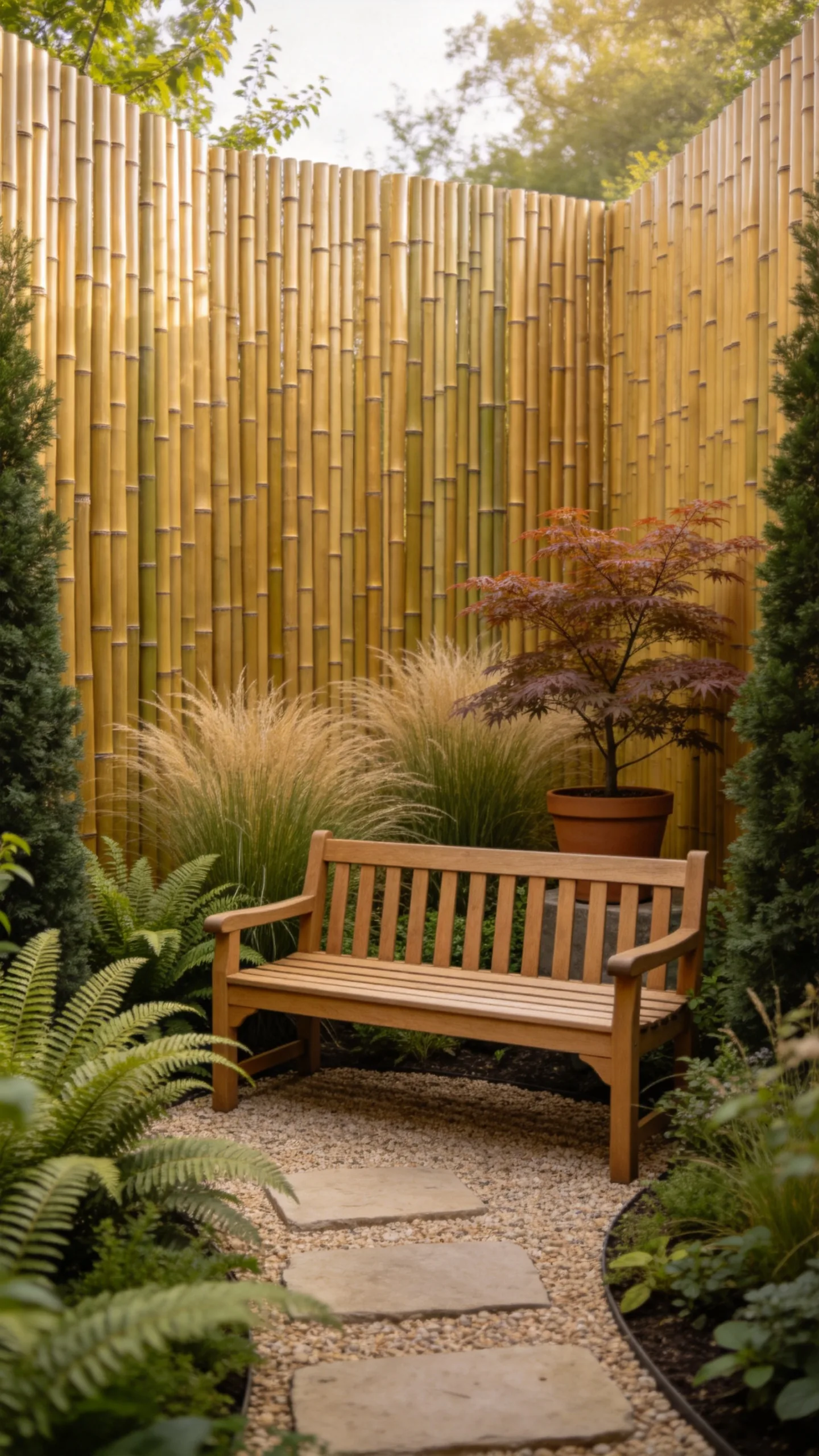
A bamboo screen behind a bench can turn an exposed corner into a more comfortable sitting spot. This works well along a fence line, at the end of a path, or against the back wall of a patio where you want a cozy garden focal point.
Install tall bamboo panels behind the bench, then add side planting to soften the edges. Clumping ornamental grasses, potted Japanese maple, ferns in shade, or upright evergreens can help the seating area feel tucked into the garden rather than simply placed in front of a screen.
This idea is especially helpful in small yards because the bench and screen share the same footprint. Add gravel, stepping stones, or a small paved pad underneath to keep the area dry and easy to maintain during wet seasons.
4. Bamboo Fence with Climbing Vines for Softer Privacy
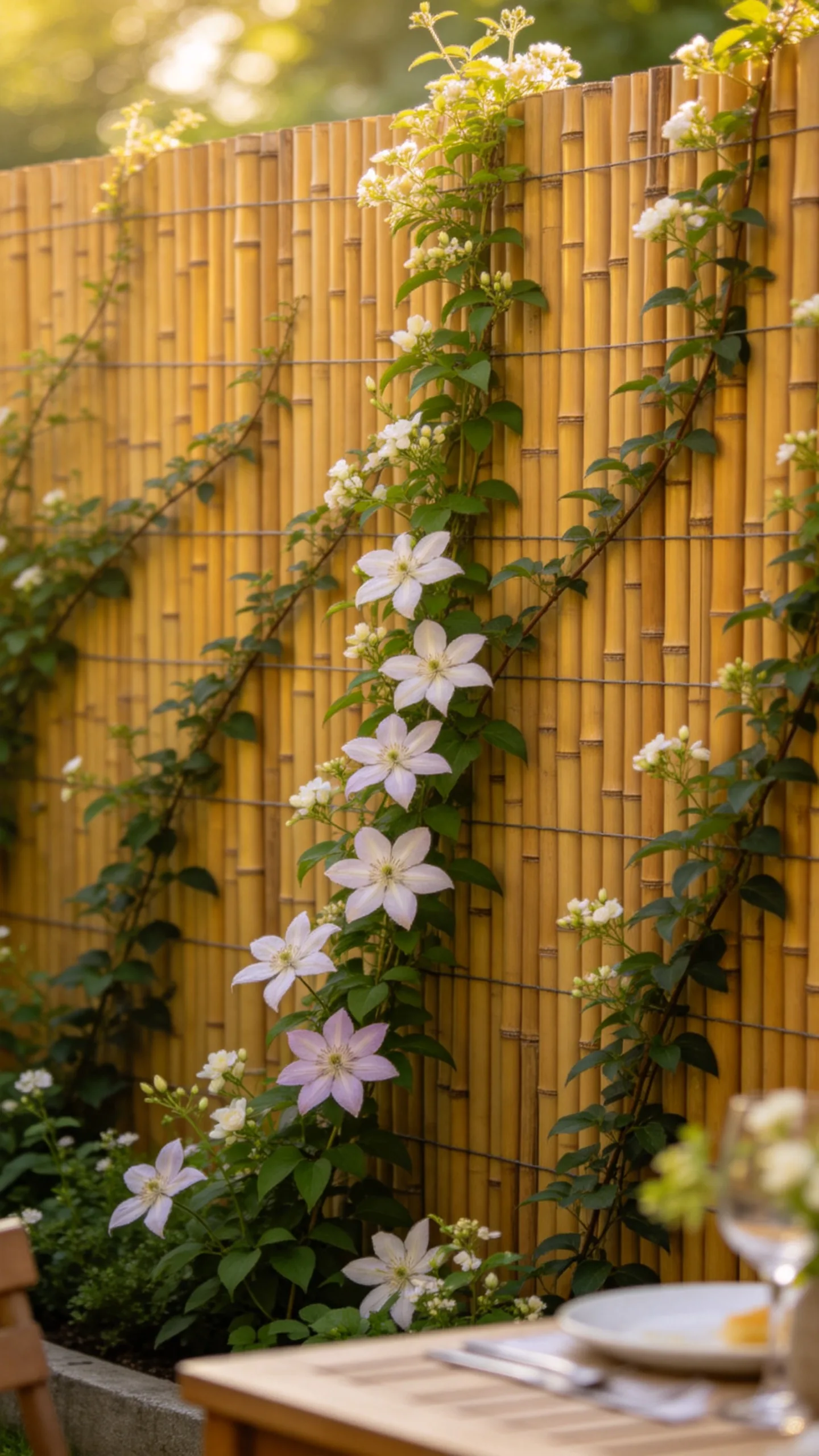
A bamboo fence can become more lush when paired with climbing plants. Instead of relying only on the bamboo for screening, add a trellis layer or horizontal wires in front of the fence and grow seasonal vines for extra coverage.
Good options depend on your climate and light conditions. In sunny spots, consider clematis, jasmine where hardy, climbing roses, or annual vines like black-eyed Susan vine. In part shade, climbing hydrangea or shade-tolerant clematis varieties may be better choices. Avoid planting aggressive vines directly into weak fence structures because their weight can become difficult to manage.
This design adds privacy during the growing season while keeping the bamboo visible as a warm backdrop. It is a strong choice for patios and dining areas where flowers, scent, and filtered greenery can make the space feel more enclosed.
5. Half-Height Bamboo Fence Around Raised Garden Beds
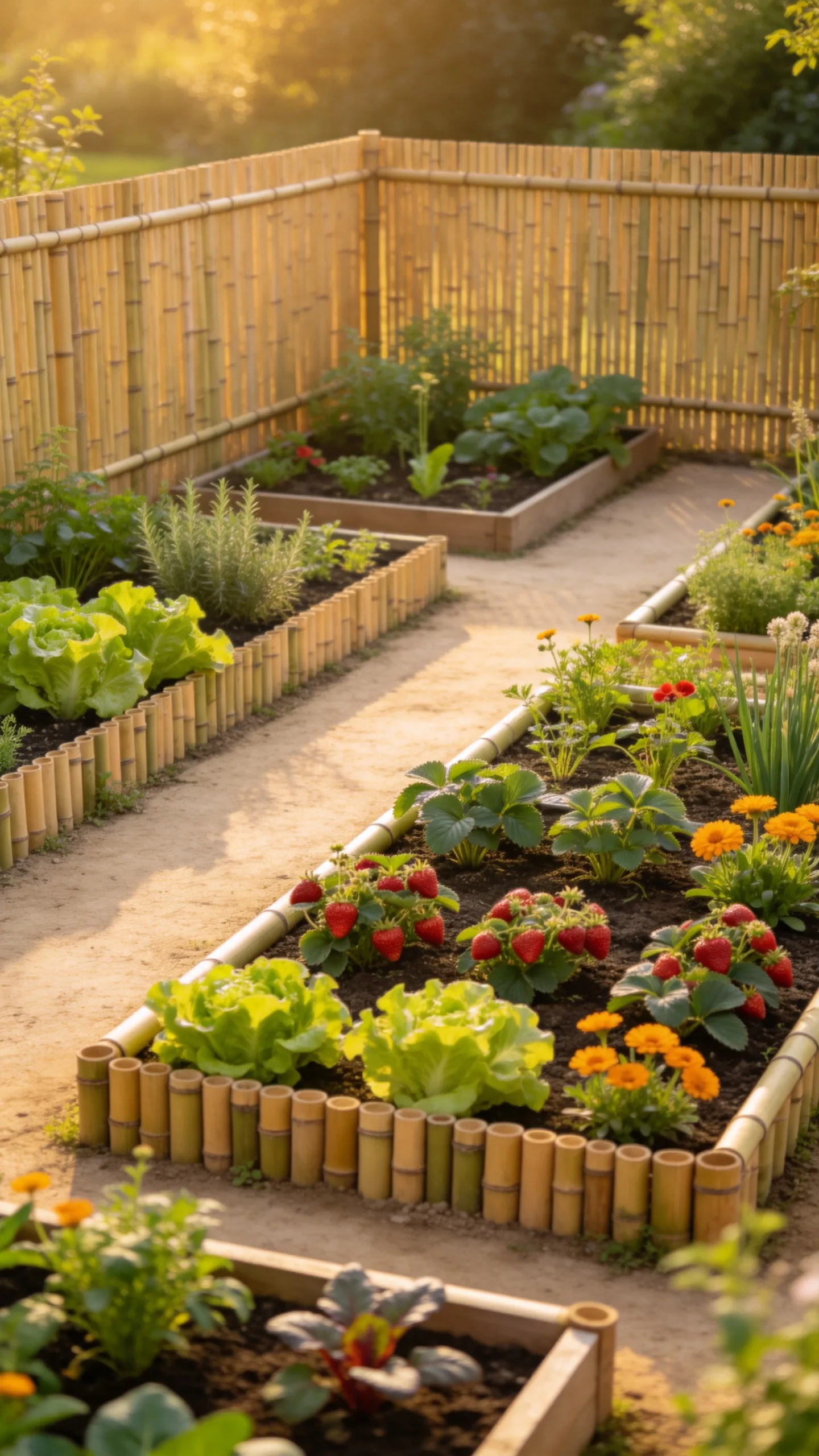
A half-height bamboo fence can define a vegetable garden or raised-bed area without blocking sunlight. Short bamboo panels around beds create a tidy boundary, help separate edible planting from lawn or paths, and add a decorative natural edge.
This idea is practical for gardens where full privacy is not needed but structure is helpful. Use bamboo edging or low fence panels around rectangular raised beds, then leave wide enough paths for a wheelbarrow, watering can, or kneeling pad.
For a productive look, pair the bamboo with herbs, lettuces, strawberries, calendula, nasturtiums, or compact vegetables. Because bamboo is a natural material, keep it slightly raised from constantly damp soil where possible, or use a gravel strip at the base to reduce moisture contact.
6. Bamboo Fence Panels Around a Patio Dining Area
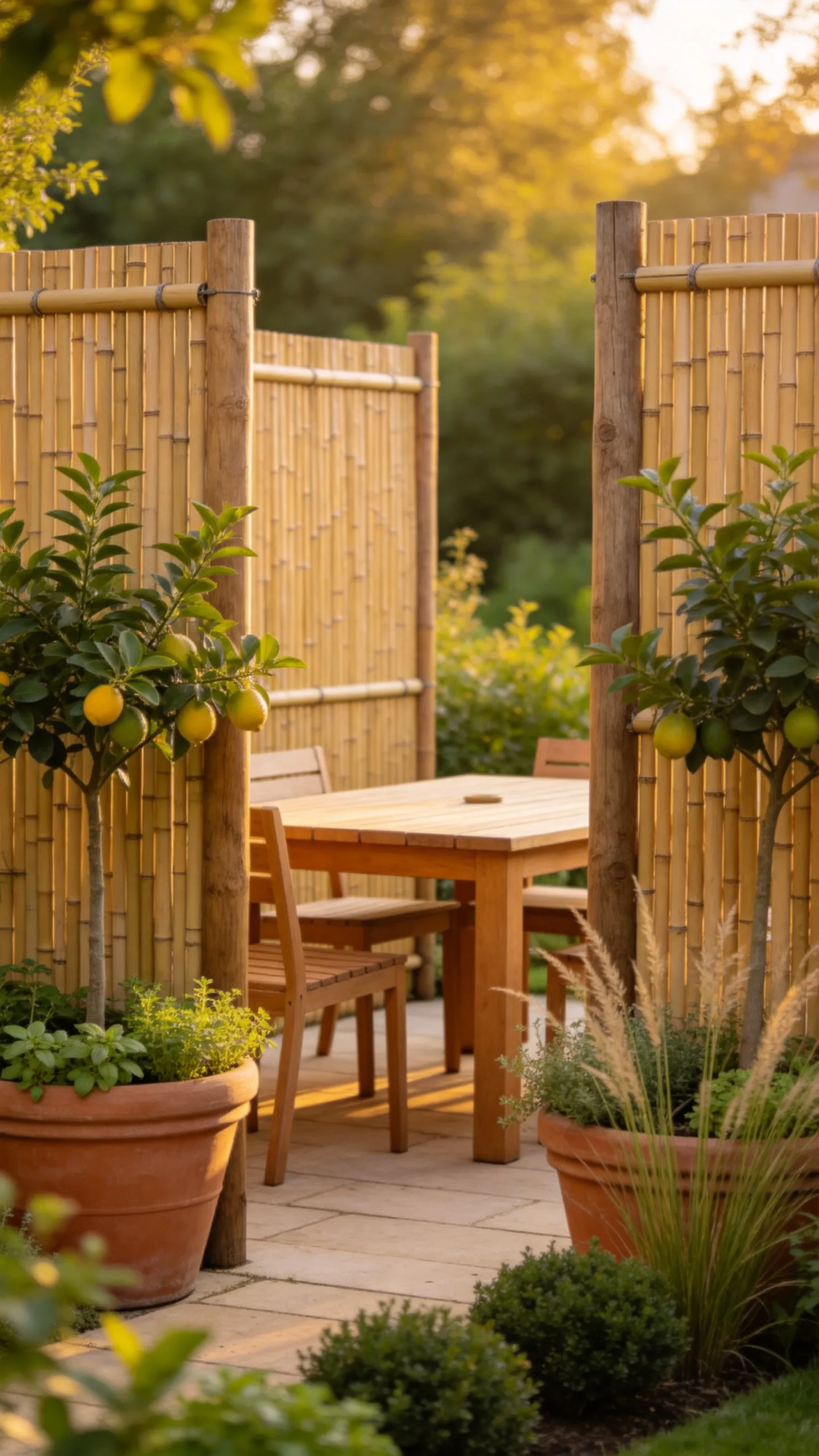
Bamboo fence panels can make an outdoor dining space feel more private and intentional. Place panels along one or two exposed sides of a patio rather than enclosing the whole area, so the space still has airflow and garden views.
This design works well beside a small table, grill area, or pergola. If the patio gets strong afternoon sun, position the bamboo screen where it blocks low-angle light without shading plants that need full sun. In windy gardens, secure panels to sturdy posts rather than lightweight freestanding supports.
Add large planters at the base with herbs, compact citrus in warm climates, dwarf shrubs, or ornamental grasses. The containers help anchor the fence visually and make the dining area feel connected to the garden.
7. Black-Framed Bamboo Fence for Contrast Planting
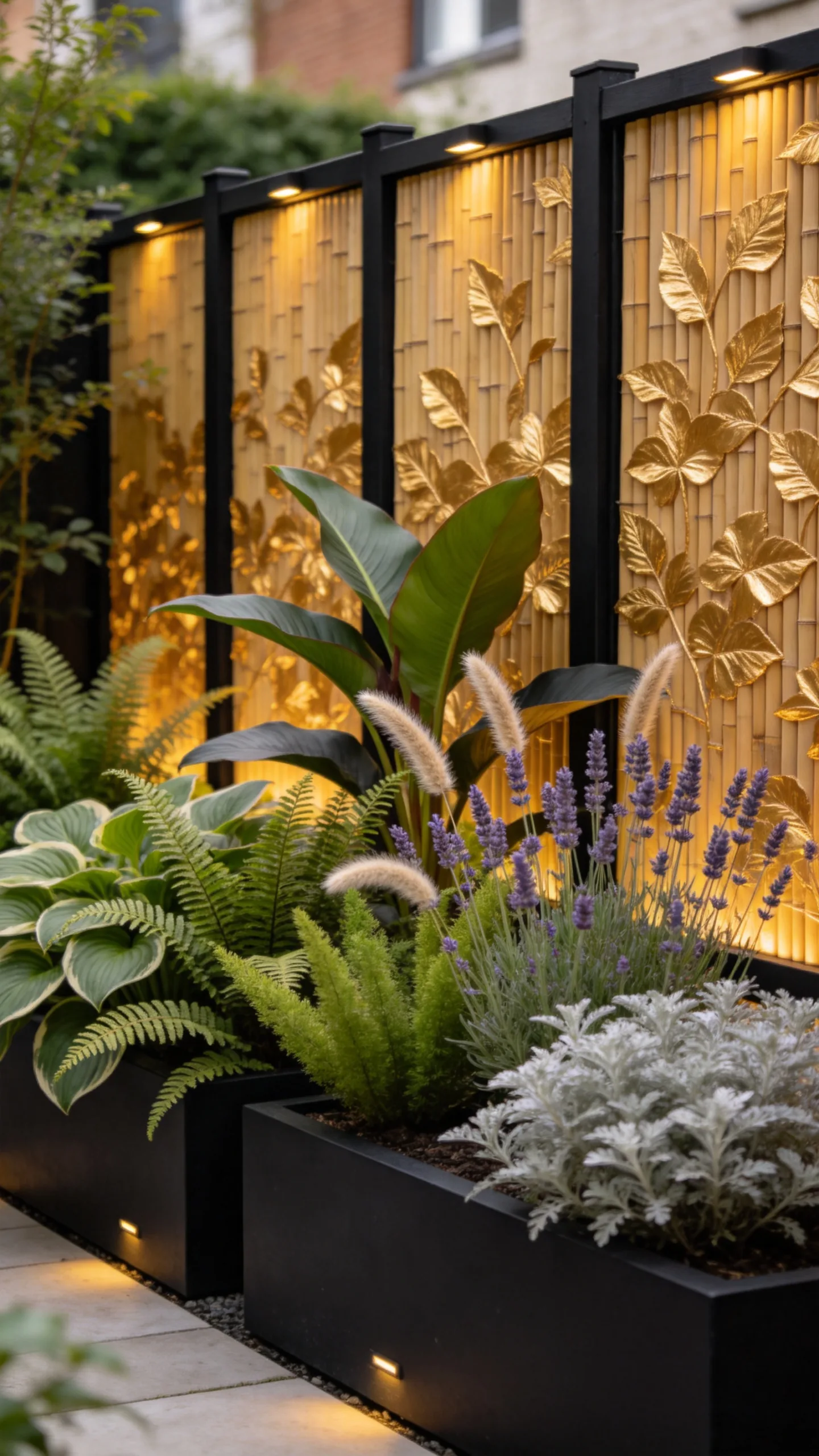
A black-framed bamboo fence creates a dramatic backdrop for foliage and flowers. The dark frame outlines the bamboo and gives the fence a more designed look, especially in contemporary gardens, courtyard patios, or urban backyards.
This style pairs beautifully with plants that have strong leaf shapes. Try hostas and ferns in shade, canna lilies and elephant ears in warm climates, or silver-leaved plants like lavender, artemisia, and olive in sunny dry gardens. The bamboo adds warmth while the black frame keeps the overall look crisp.
Use this idea where the fence will be visible from windows or a main seating area. Repeating the black detail in planters, garden lights, or outdoor furniture can make the privacy screen feel like part of the full garden design.
8. Bamboo Slat Fence with Narrow Gaps for Filtered Light
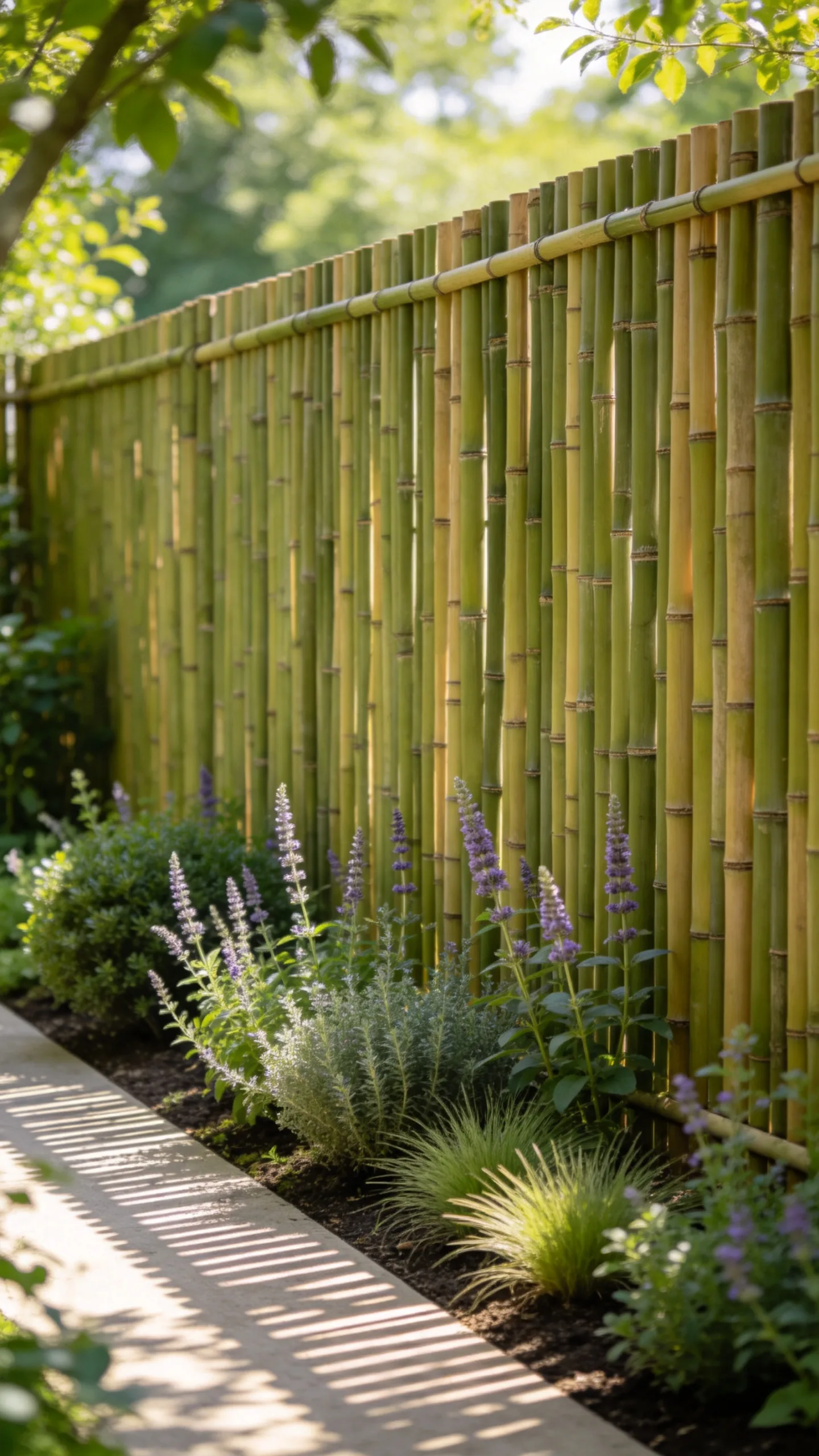
A bamboo slat fence uses individual canes or split bamboo pieces spaced with small gaps. This creates privacy while still allowing filtered light and air through, which is helpful for compact gardens that can feel dark behind a solid wall.
The gap size matters. Narrow spacing gives better privacy for patios and side yards, while wider spacing works well for decorative boundaries or plant backdrops. This style is also useful near planting beds because it reduces the deep shade that can happen with fully solid fencing.
Place sun-loving plants a little away from the fence so they still receive enough light. For a softer look, grow low shrubs, salvia, nepeta, or compact grasses along the base, leaving room for pruning and fence maintenance.
9. Bamboo Screen Attached to a Pergola Side
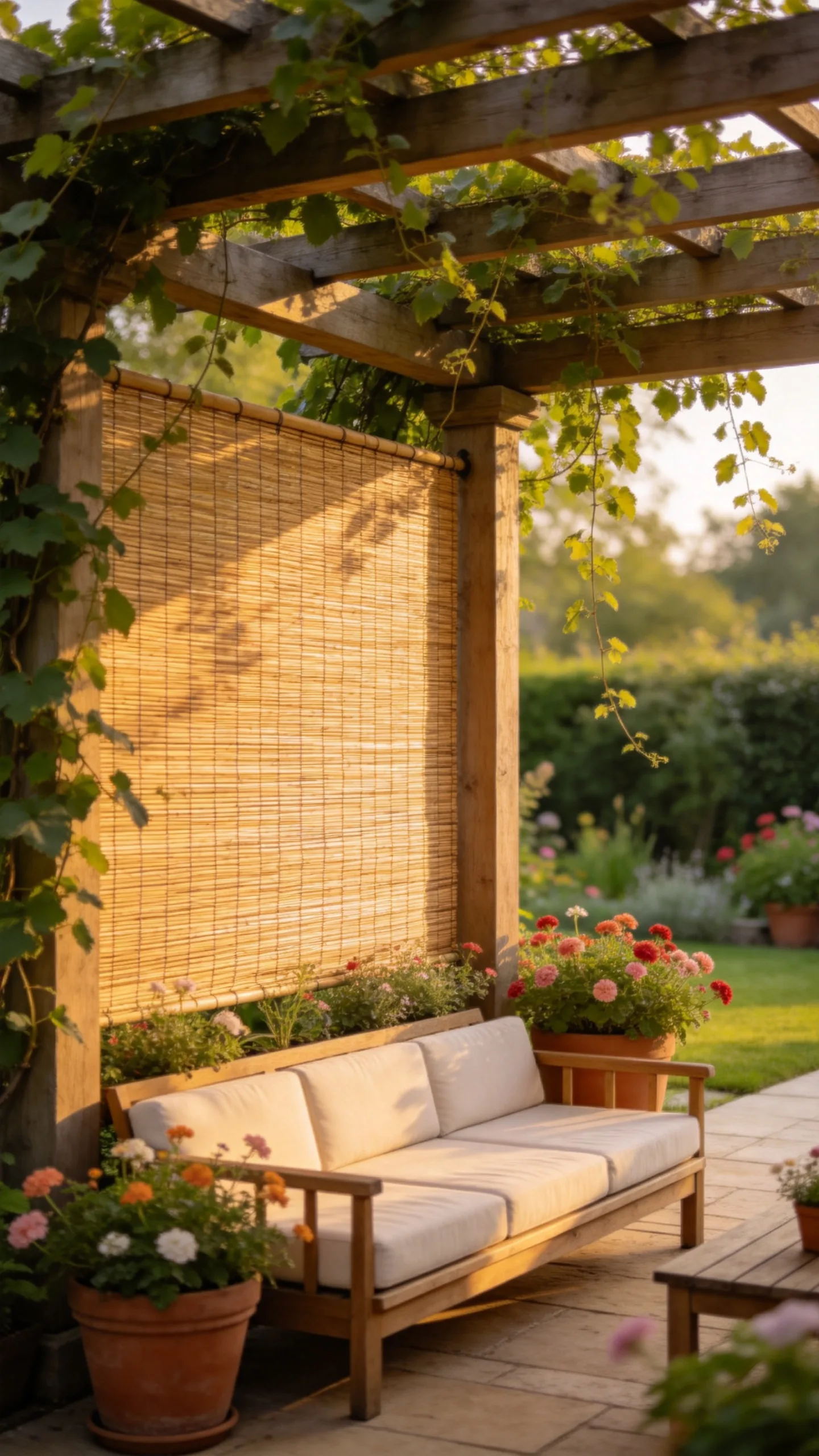
A bamboo screen on one side of a pergola can provide privacy and shade exactly where it is needed. This is useful if your seating area is overlooked from one direction or gets harsh afternoon sun from the side.
Attach bamboo panels or rolled screening securely to the pergola posts, making sure the structure can handle wind. A partial screen usually works better than covering every side because it keeps the pergola comfortable and open. For extra shade, combine the bamboo side screen with climbing plants overhead, such as grapevine, wisteria where suitable, or climbing roses on a strong support.
This idea is ideal for outdoor lounges, reading corners, or dining spaces. Add potted plants at the base to soften the vertical screen and prevent the bamboo from looking too flat against the structure.
10. Container Bamboo Fence for Renters or Flexible Layouts
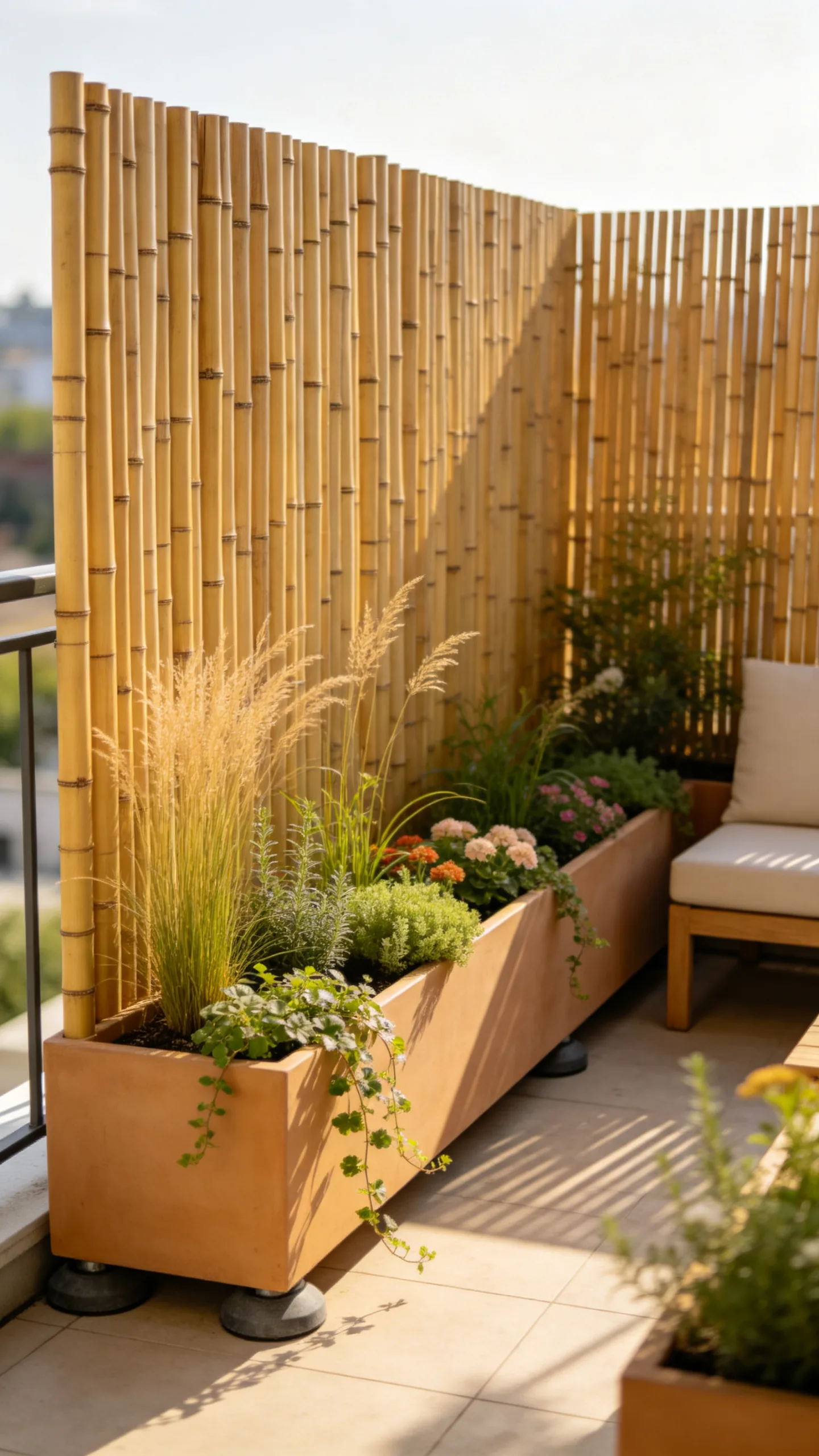
A container bamboo fence is a movable privacy solution for patios, balconies, decks, and rental gardens. Instead of attaching panels permanently, place bamboo screens or canes inside long trough planters filled with gravel, soil, or a weighted base.
This works well where drilling into walls or fences is not allowed. Use rectangular planters to create a straight privacy line, or stagger several containers to form a softer screen around a seating area. Make sure the containers are heavy enough to stay stable in wind, especially with taller bamboo panels.
You can plant the base with trailing herbs, small ornamental grasses, sedum, or seasonal flowers. If using live bamboo in containers, choose clumping varieties where appropriate and keep them contained, watered, and pruned so they do not become difficult to manage.
11. Bamboo Fence with Gravel Path Border
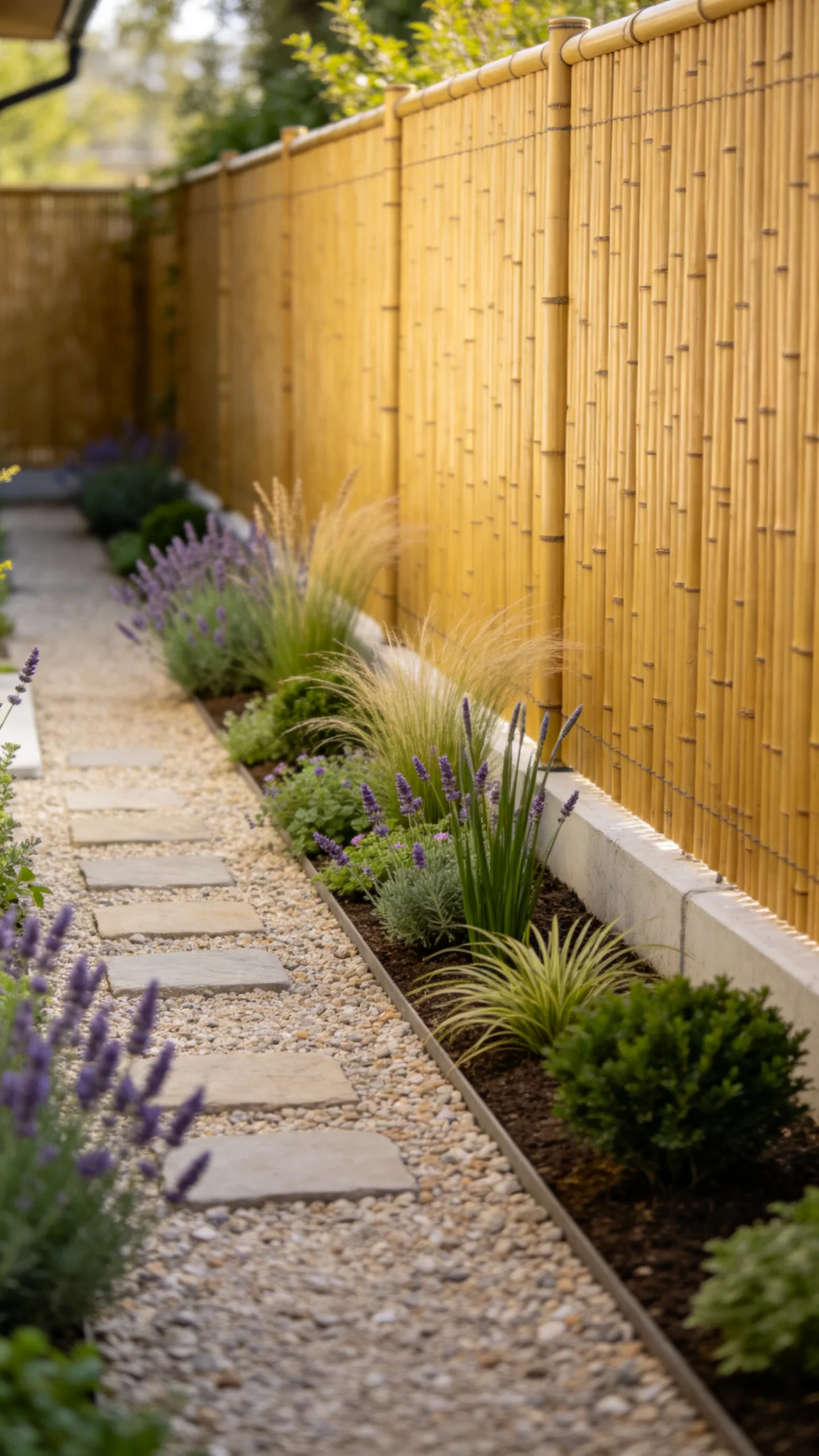
A bamboo fence paired with a gravel path creates a calm, low-maintenance garden edge. The path keeps people away from the fence base, improves access for cleaning or repairs, and helps reduce constant soil moisture against the bamboo.
This idea is useful along side yards, narrow access routes, or the edge of a courtyard garden. Choose gravel that suits the style of the space, such as pea gravel for a softer cottage look or darker gravel for a modern contrast. Add stepping stones if the path will be used often.
Plant along the opposite side of the path with compact, easy-care plants so the walkway stays open. Lavender, thyme, dwarf grasses, liriope, or low evergreen shrubs can create texture without overwhelming the narrow space.
12. Layered Bamboo Fence with Shrubs for Deeper Privacy
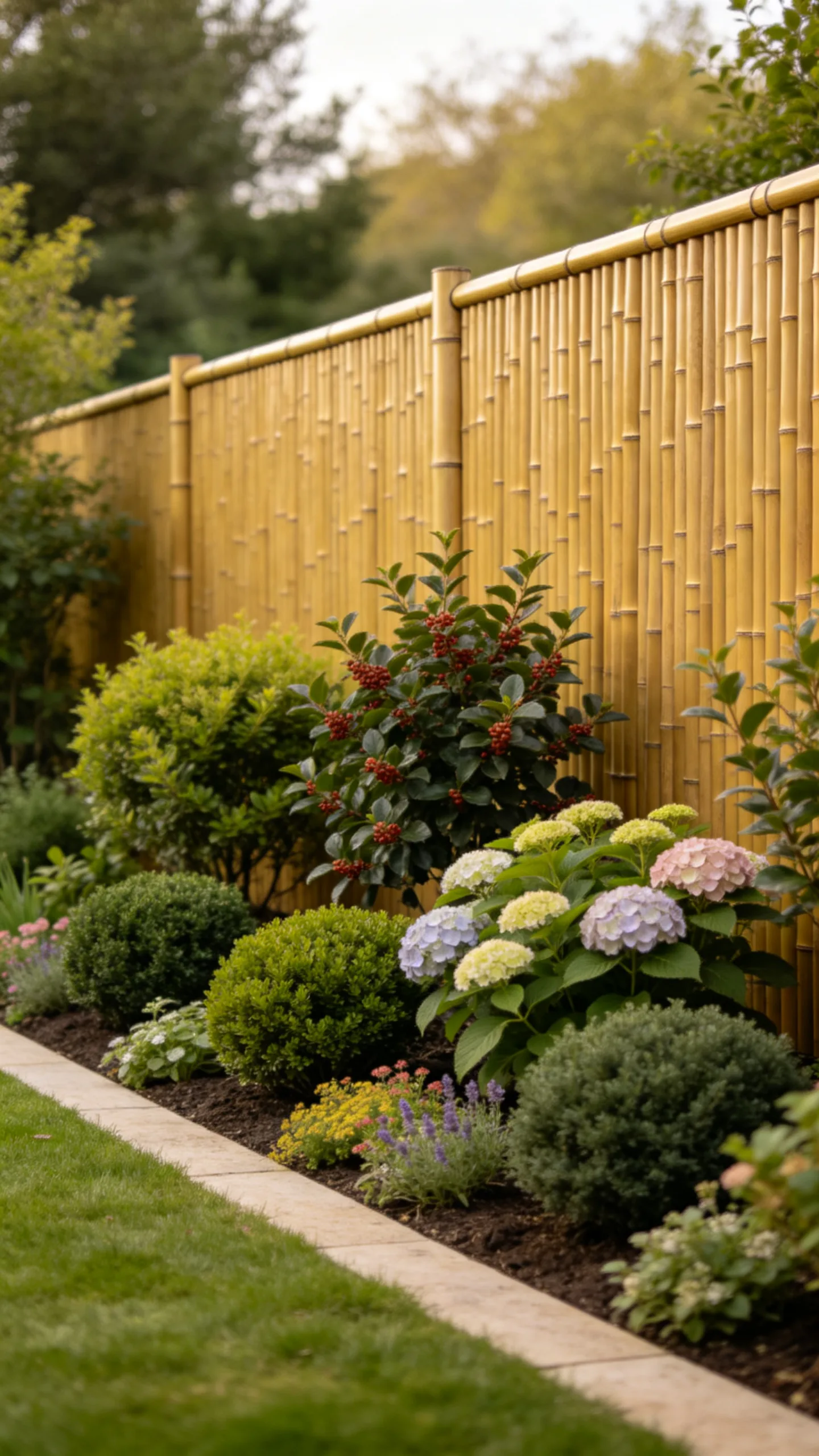
A layered bamboo fence uses bamboo as the first privacy screen and shrubs as a living second layer. This approach is helpful when you need more coverage from neighboring windows, garden paths, or a nearby seating area.
Place the bamboo fence along the boundary, then plant shrubs a suitable distance in front based on their mature size. Good choices may include boxwood, pittosporum, viburnum, holly, hydrangea, or compact evergreen varieties, depending on your climate and sun exposure. Check mature height and spread before planting so the shrubs do not crowd the fence.
This layered design creates visual depth and softens the straight fence line. It also makes privacy feel more natural because the eye sees bamboo texture, foliage, and seasonal planting instead of one flat barrier.