Rustic fences do more than mark a property line. They add texture, frame garden beds, guide footpaths, protect planting areas, and create the relaxed charm people associate with country living. The best rustic fence ideas for country living use natural materials, weathered finishes, simple construction, and practical layouts that fit the way a yard is actually used.
Whether you have a farmhouse front yard, a vegetable garden, a pasture edge, or a small backyard that needs more character, these fence styles can bring warmth and structure without feeling overly polished.
1. Split Rail Fence Along a Meadow Edge
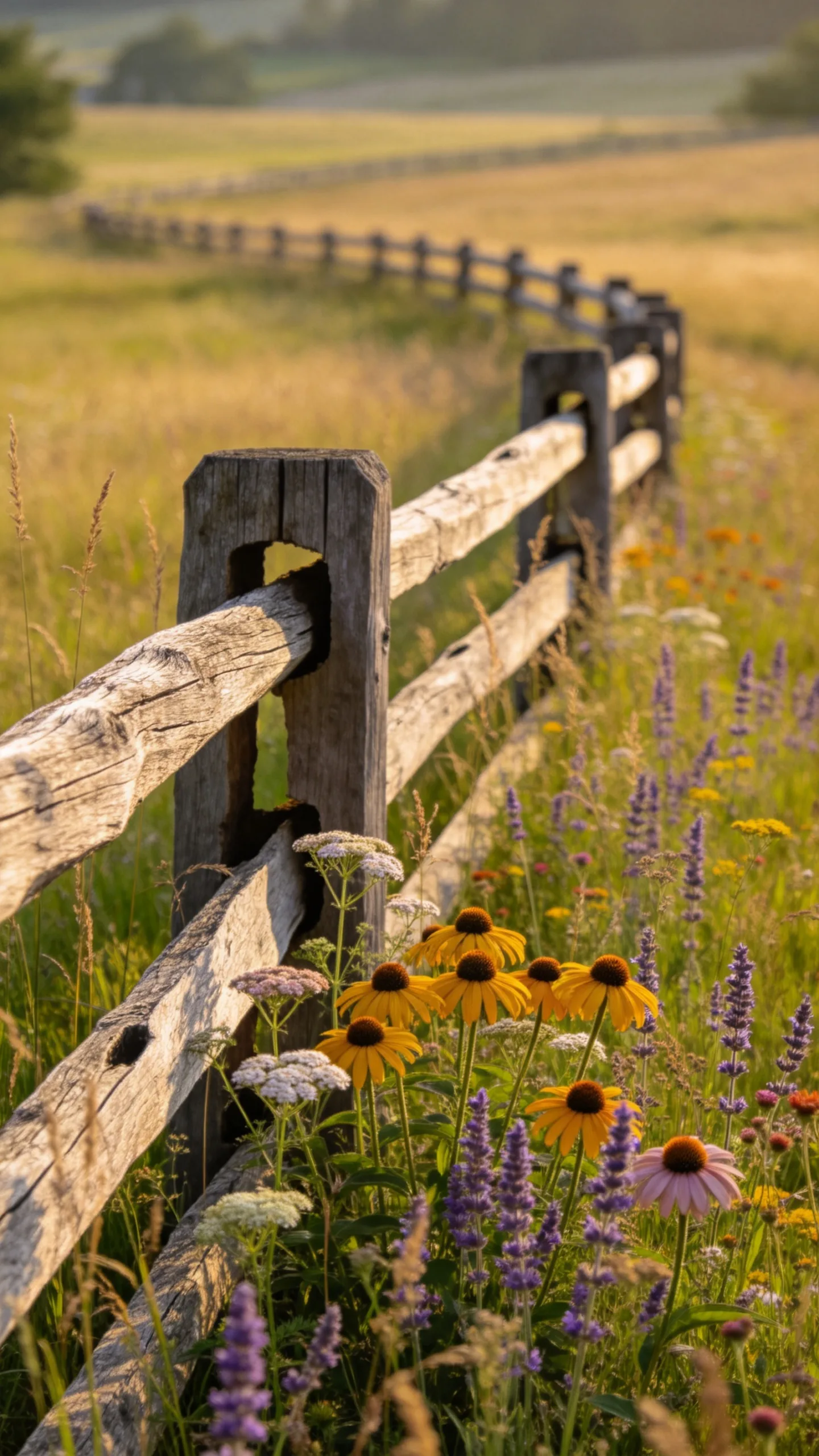
A split rail fence is one of the most classic rustic fence ideas for country living because it looks natural beside open grass, wildflowers, and pasture-style planting. The wide gaps keep the view open, so it works especially well along a meadow edge, driveway, or large front yard where you want definition without blocking the landscape.
Use cedar, locust, pine, or another locally available wood suited to outdoor use. For a softer garden look, plant native grasses, black-eyed Susans, coneflowers, yarrow, or lavender near the rails where the soil and sun exposure allow. The fence gives climbing vines and tall flowers a visual backdrop while still feeling relaxed.
This style is best for marking boundaries rather than keeping small pets or wildlife out. If you need more function, add discreet wire mesh to the inside of the rails while keeping the rustic wood visible from the main viewing side.
2. Weathered Picket Fence for a Farmhouse Garden
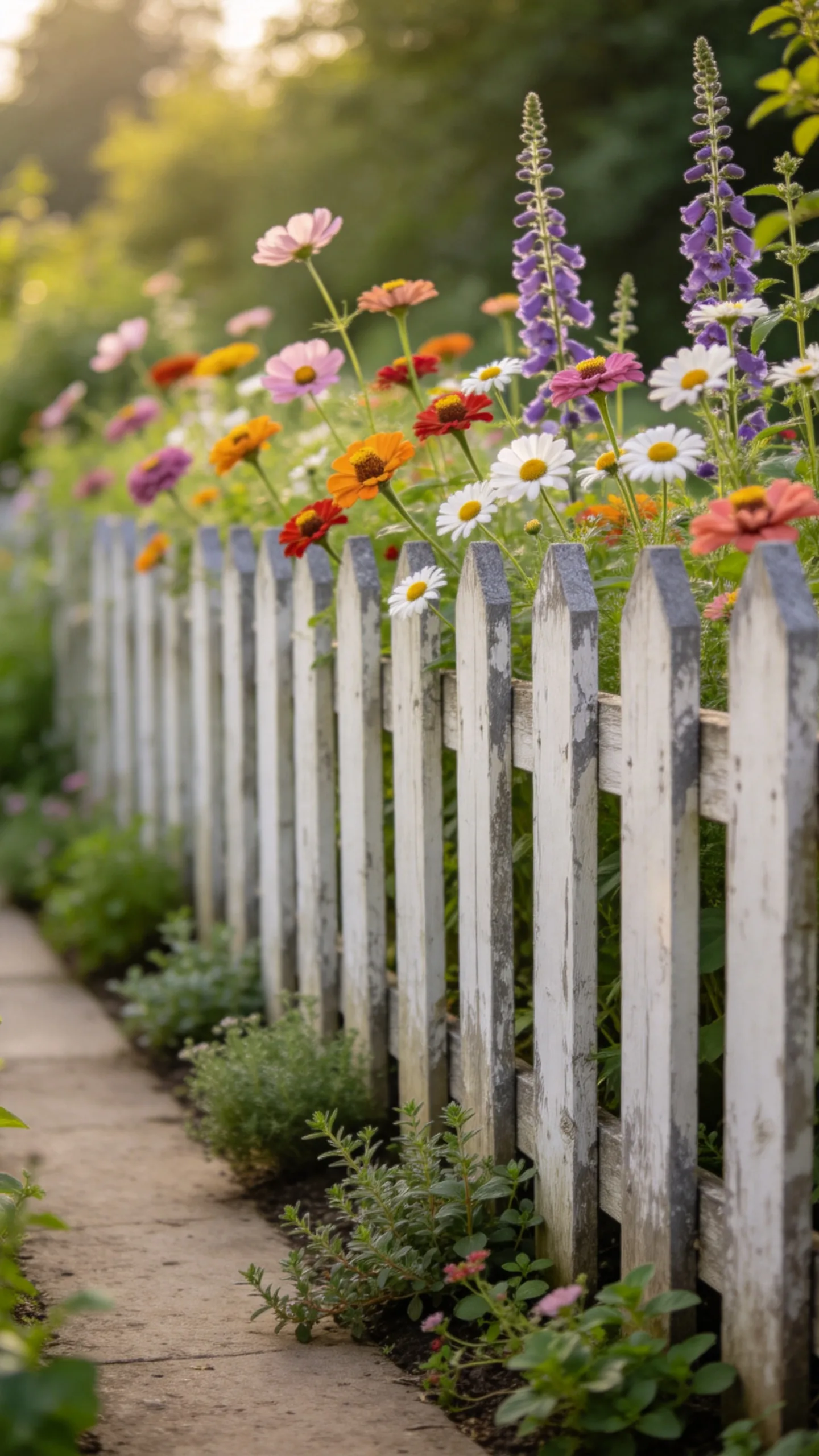
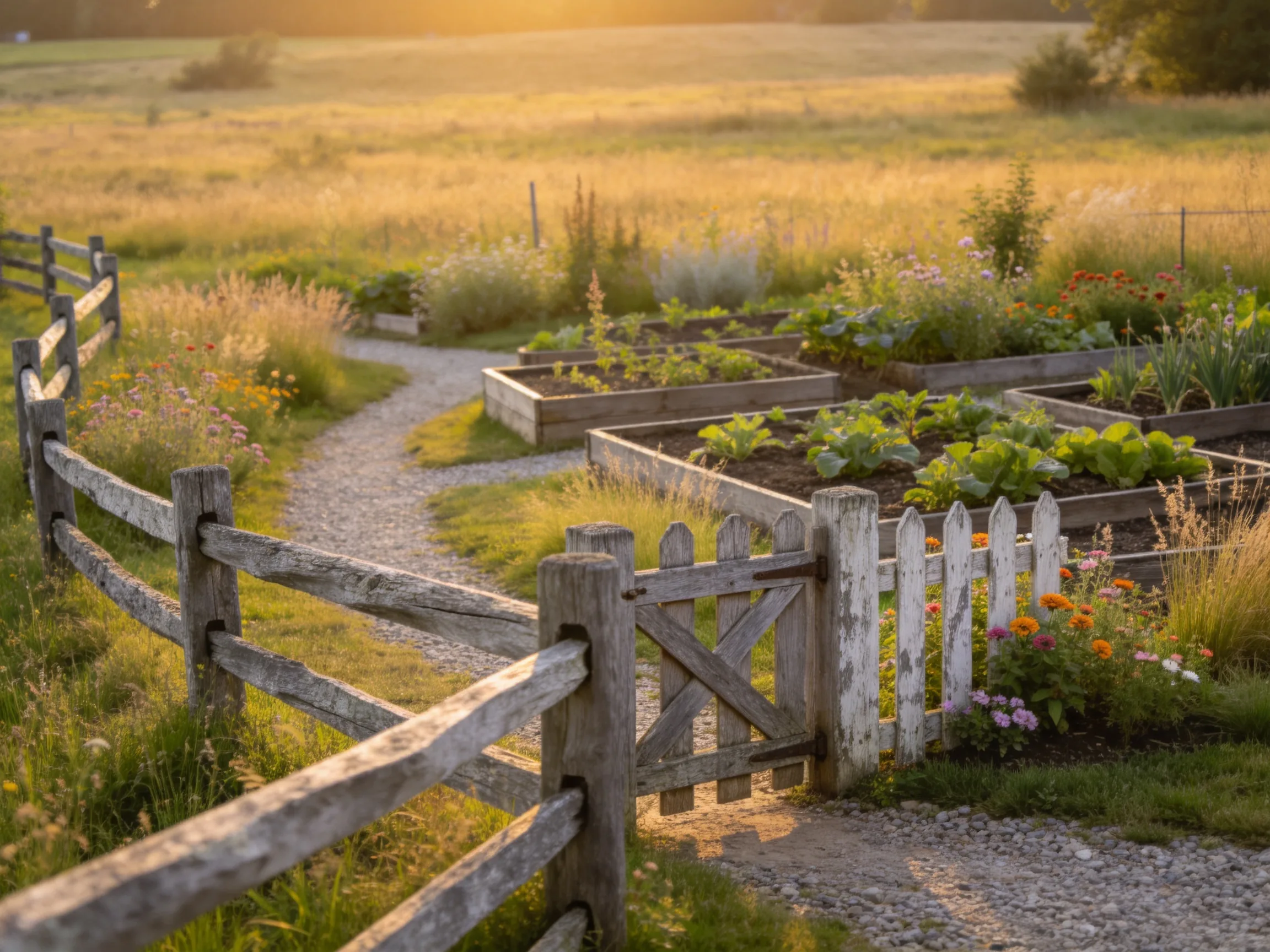
A weathered picket fence brings farmhouse charm to flower beds, cottage gardens, and front walkways. Instead of a bright, glossy finish, choose whitewash, soft gray stain, natural cedar, or gently aged paint to make the fence feel established and rustic.
This fence style works well around raised beds, herb gardens, or a small front yard because the vertical pickets create structure without feeling heavy. Keep the height moderate so flowers such as cosmos, salvia, zinnias, foxgloves, or daisies can spill visually above the fence line.
For a country look, avoid perfectly formal spacing in the planting. Layer taller blooms near the back, compact herbs near the path, and trailing plants close to the fence base. The pickets add order while the planting keeps the space relaxed.
3. Rough-Cut Board Fence for a Vegetable Patch
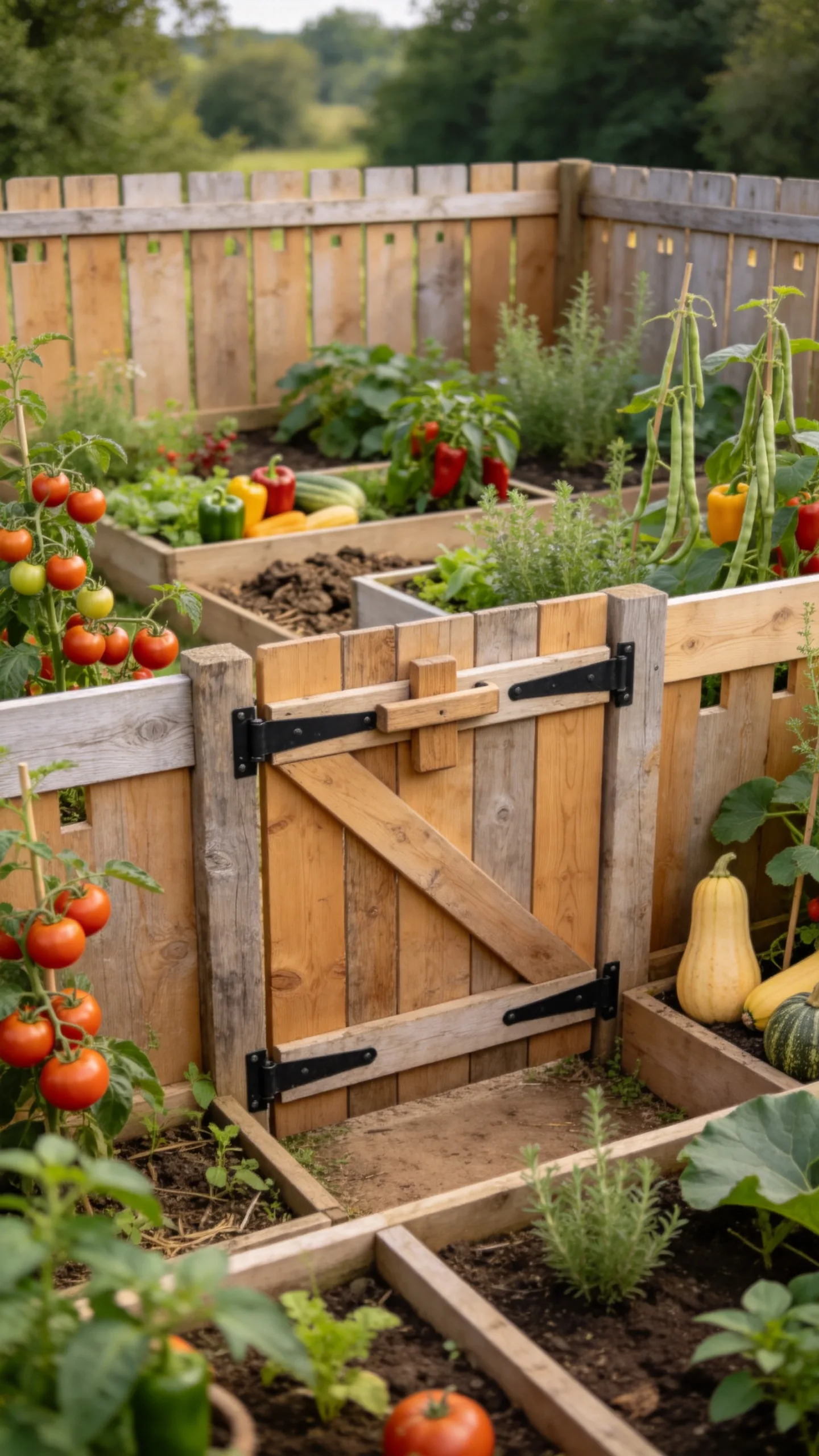
A rough-cut board fence gives a vegetable garden a practical farmhouse feel. Wide horizontal or vertical boards made from unfinished or lightly stained wood create a sturdy boundary around raised beds, compost areas, or a kitchen garden.
This style is useful when you want a fence that feels more substantial than wire but still rustic. Leave small gaps between boards for airflow, especially around vegetables that benefit from good circulation, such as tomatoes, peppers, squash, and beans. In damp climates, keeping boards slightly raised off the soil can help reduce rot.
Add a simple gate with black strap hinges or a wooden latch to complete the farmhouse look. If rabbits or other small animals are a concern, line the lower inside section with galvanized hardware cloth and bury the bottom edge a few inches where appropriate.
4. Rustic Wire and Wood Fence for a Productive Garden
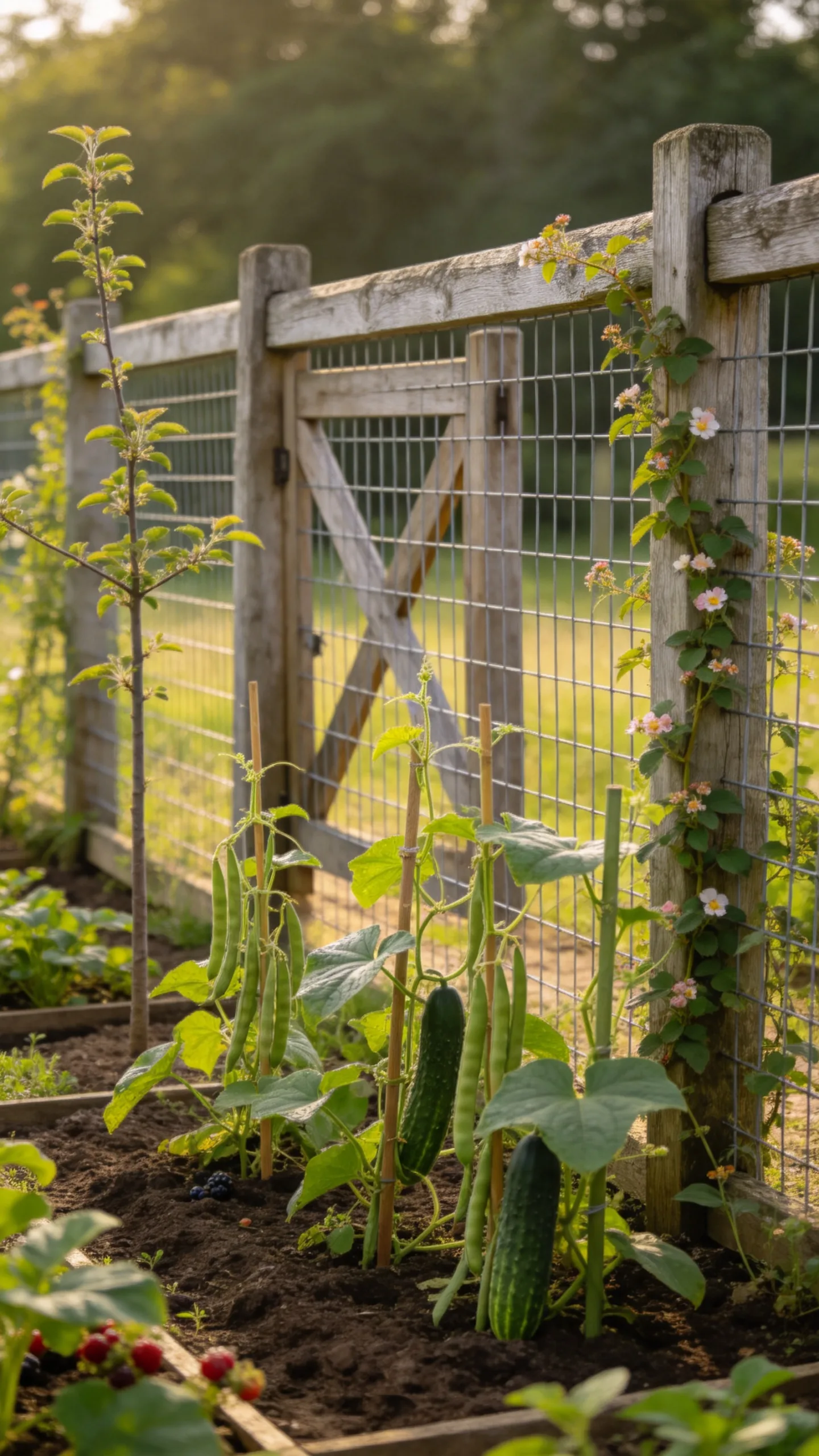
A wire and wood fence combines practical protection with country style. Use wooden posts and top rails with welded wire, hog panels, or hardware cloth between them. The wood provides warmth, while the wire keeps the design open and functional.
This is a strong choice for vegetable gardens, berry rows, chicken runs, or orchard edges. It allows sunlight and airflow to reach plants while helping define the growing area. For climbing crops, position the fence where peas, pole beans, cucumbers, or small flowering vines can use part of it as support.
To keep it rustic rather than industrial, choose natural wood posts, add a simple wooden gate, and avoid overly shiny finishes where possible. Over time, the combination of weathered wood, green vines, and galvanized wire creates a useful country garden boundary.
5. Reclaimed Wood Fence with Mixed Plank Widths
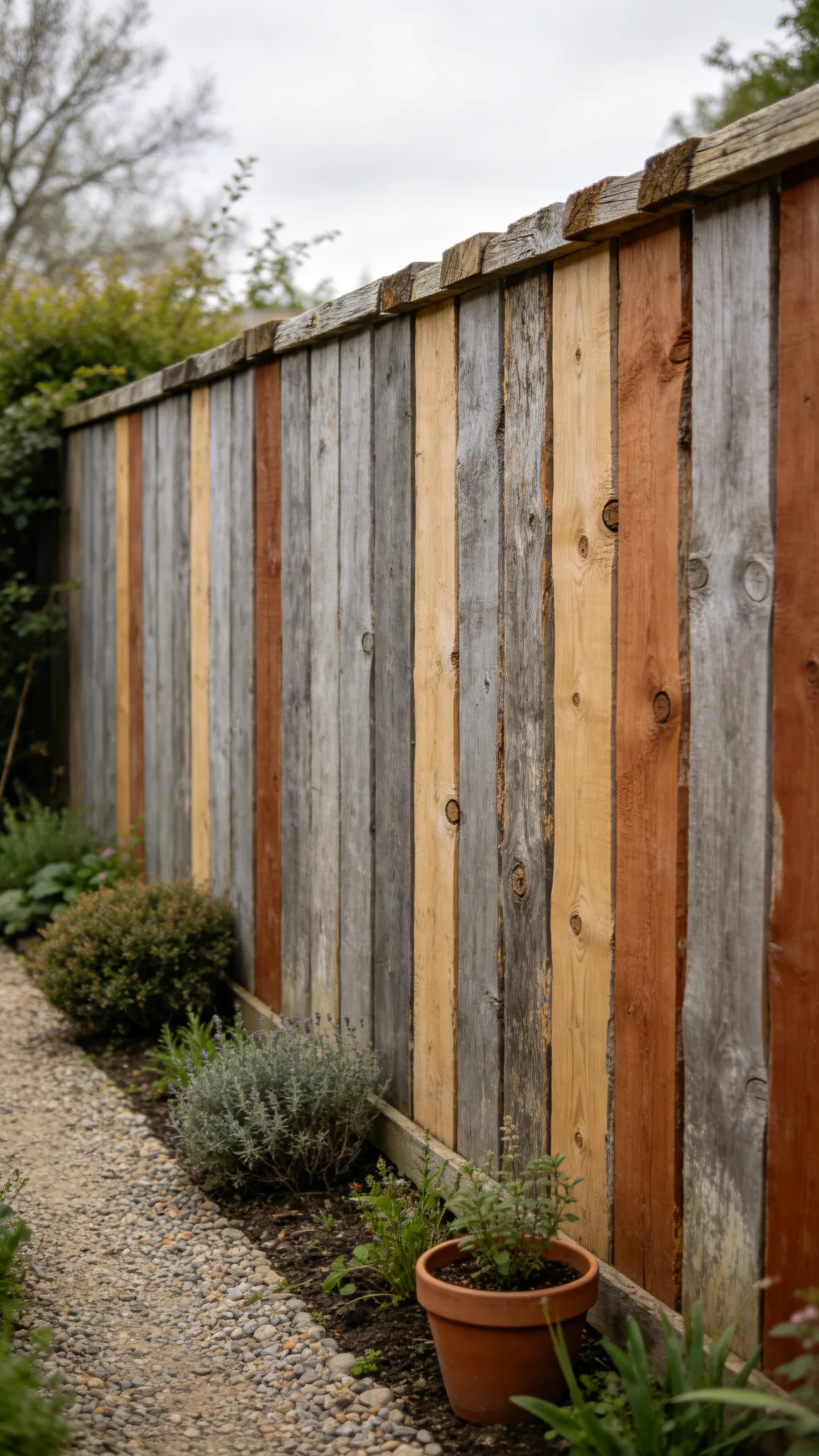
A reclaimed wood fence adds instant character because each plank has its own color, grain, knots, and worn edges. Mixed-width boards work especially well for rustic yards, side gardens, compost screens, or privacy panels near patios.
This idea is useful when you want a fence that looks collected over time rather than newly installed. Arrange boards vertically for a classic garden screen or horizontally for a more modern farmhouse look. Keep the top edge slightly uneven if you want a handmade feel, or trim it level for a cleaner finish.
Because reclaimed wood can vary in durability, inspect boards carefully before using them outdoors. Avoid wood with rot, unsafe coatings, or questionable chemical treatment, especially near edible gardens. Seal or stain suitable boards if your climate requires extra weather protection.
6. Wattle Fence Around Herb Beds
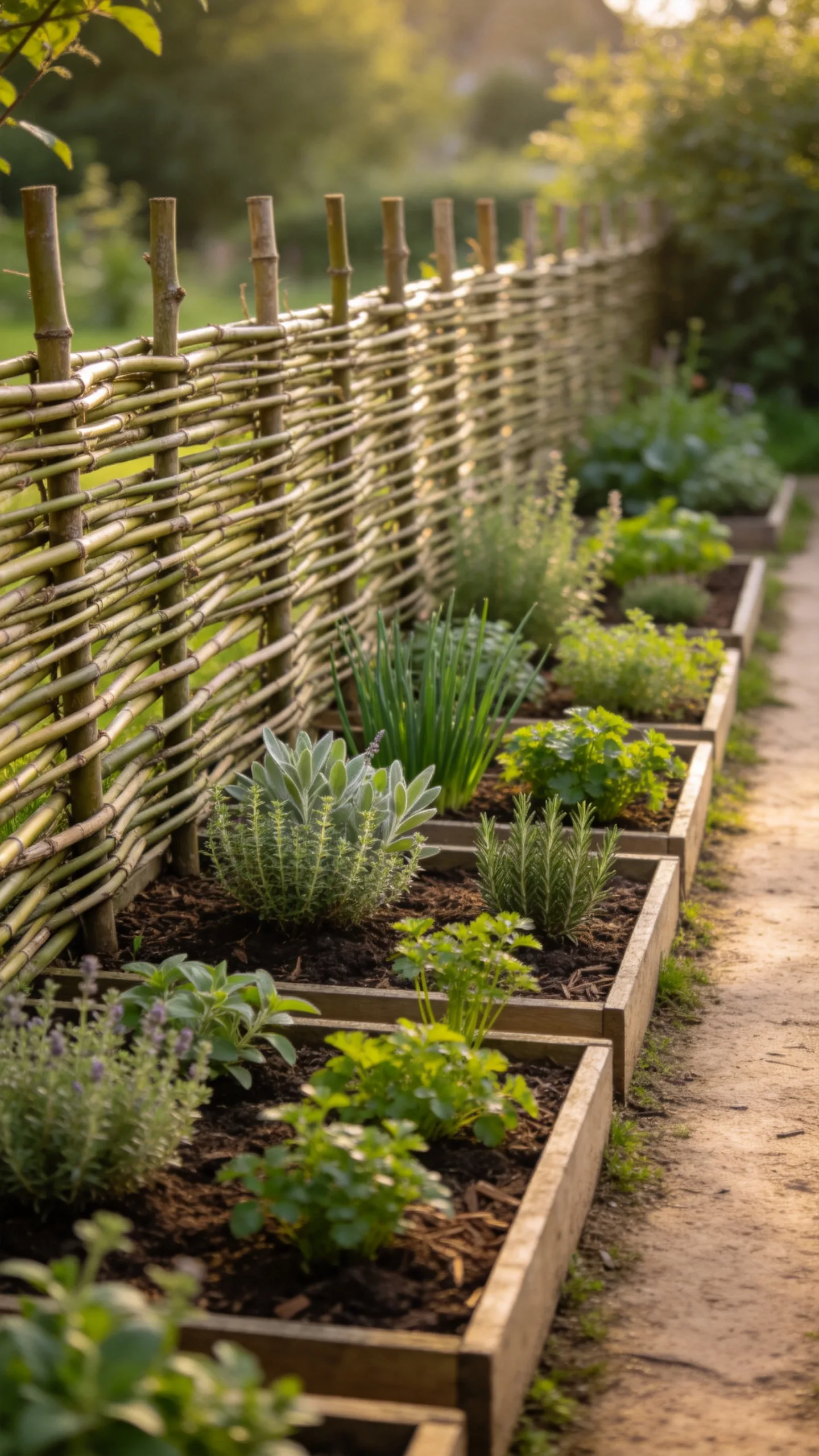
A wattle fence is made by weaving flexible branches between upright stakes, creating a low, textured border that feels very old-world and rustic. It is especially charming around herb beds, small vegetable patches, cottage garden borders, and narrow path edges.
Willow, hazel, dogwood, and other flexible prunings are often used, depending on what is available in your area. The fence is usually low, so it does not provide full privacy, but it clearly defines planting zones and helps keep loose mulch or soil inside a bed.
A wattle border works beautifully with herbs such as thyme, sage, oregano, chives, parsley, and rosemary in suitable climates. Because it is compact and low-profile, it is also a smart choice for small gardens where a tall fence would feel too heavy.
7. Log Post Fence for a Woodland Yard
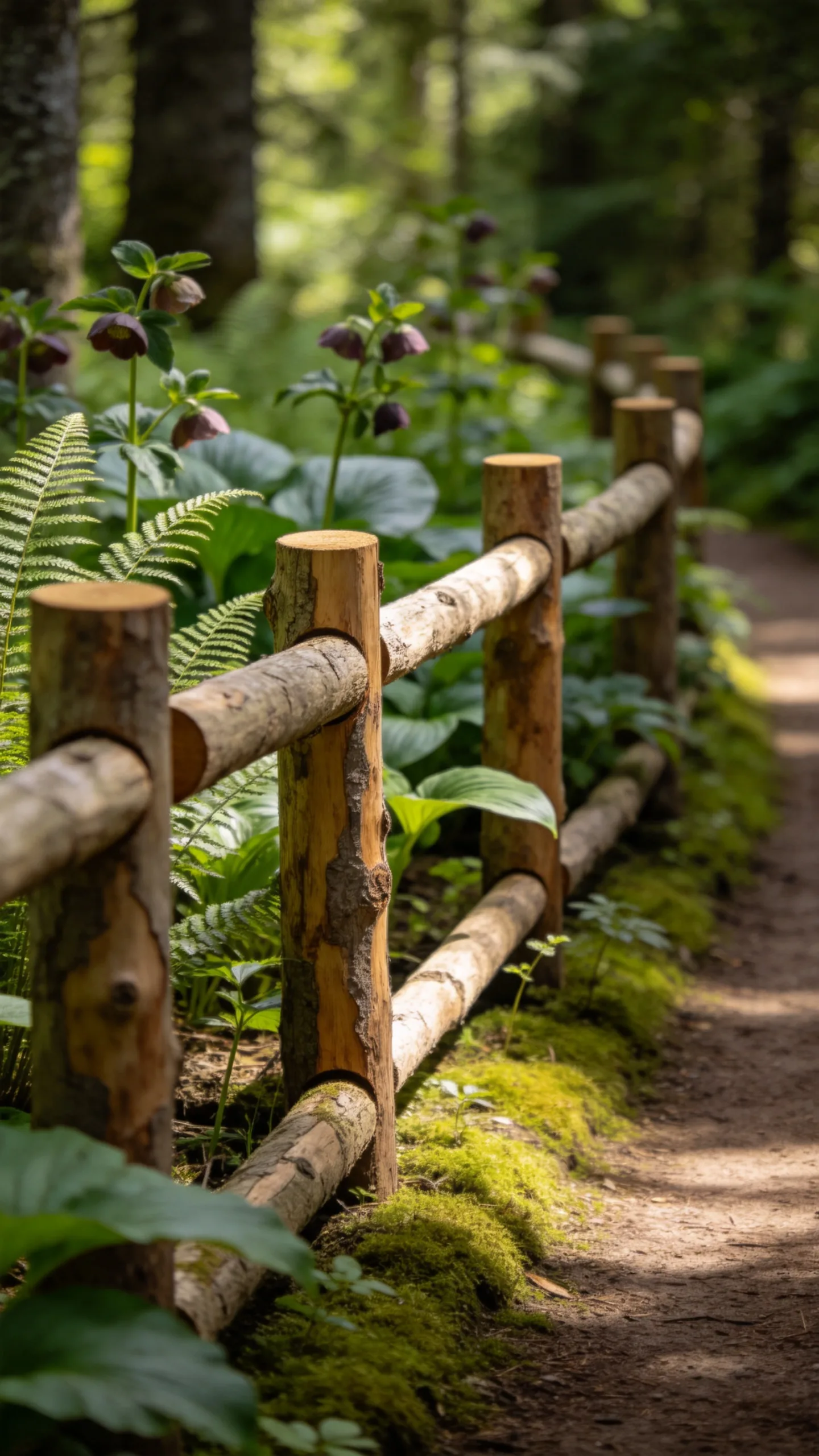
A log post fence looks right at home in a wooded or rural setting. Instead of smooth milled posts, use round logs or natural timber posts with visible bark texture or irregular shapes. This style blends well with shade gardens, woodland paths, native planting areas, and informal property lines.
Pair log posts with simple rails, rope, wire, or rough boards depending on how much enclosure you need. Around a woodland garden, this fence can guide visitors along a path while protecting young ferns, hostas, hellebores, or native understory plants from foot traffic.
Since logs sit close to the soil, choose rot-resistant wood when possible and set posts properly for your local conditions. In wet areas, drainage around the base is important. The goal is a sturdy rustic boundary that looks natural rather than decorative only.
8. Farm Gate Fence with Black Hardware
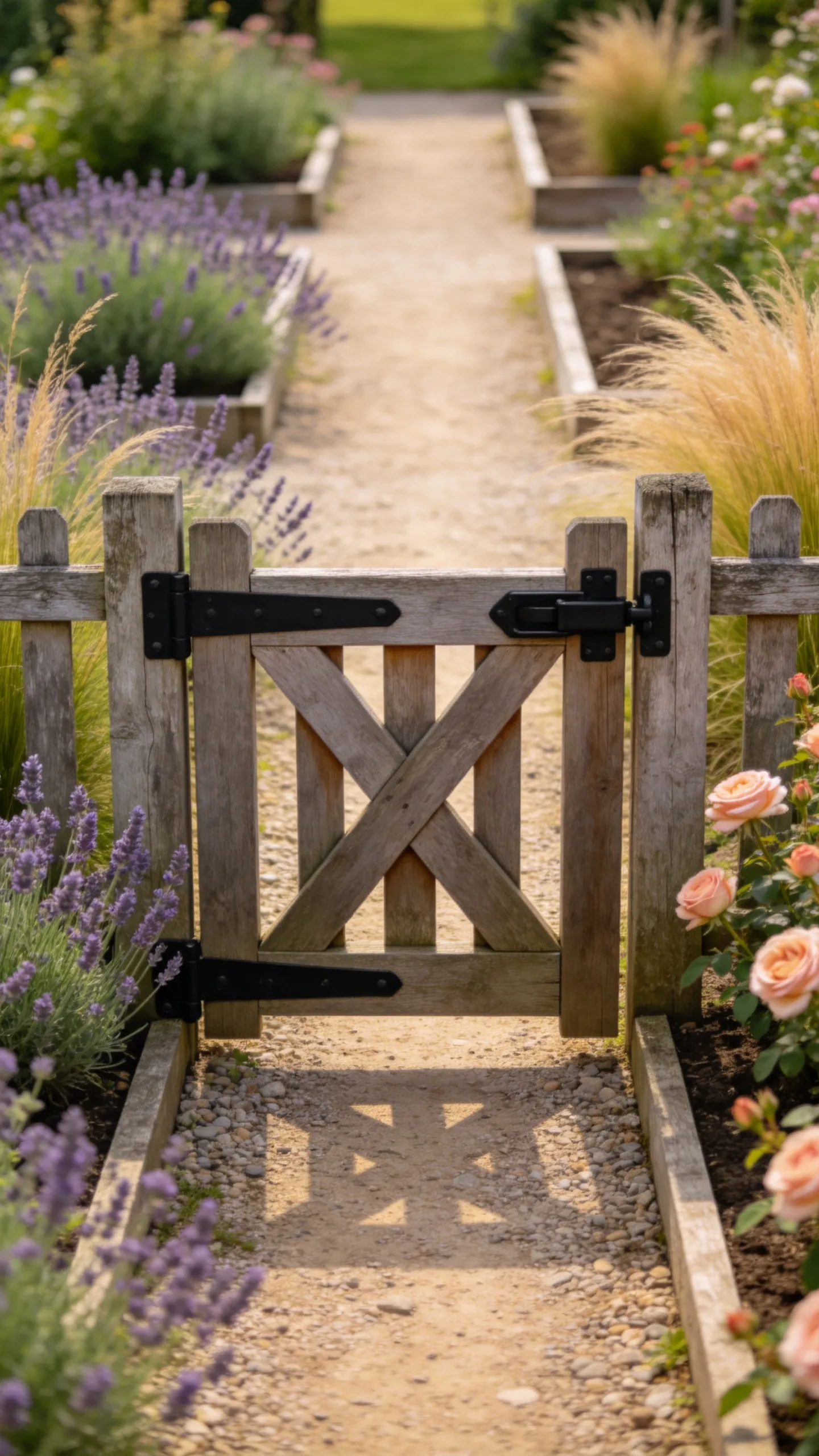
A rustic fence can become a focal point when paired with a strong farmhouse-style gate. A wooden gate with diagonal bracing, black strap hinges, and a simple latch adds country character to garden entrances, driveway edges, or backyard vegetable plots.
This idea works with several fence types, including split rail, board fencing, wire-and-wood fencing, or pickets. The gate gives the yard a clear transition point and makes even a simple garden feel more intentional. Place it at the start of a gravel path, between two raised beds, or at the entrance to a flower garden.
For planting around the gate, use sturdy perennials or shrubs that will not constantly block the swing. Lavender, catmint, boxwood, ornamental grasses, or compact roses can soften the entrance while keeping access easy.
9. Whitewashed Rail Fence with Climbing Roses
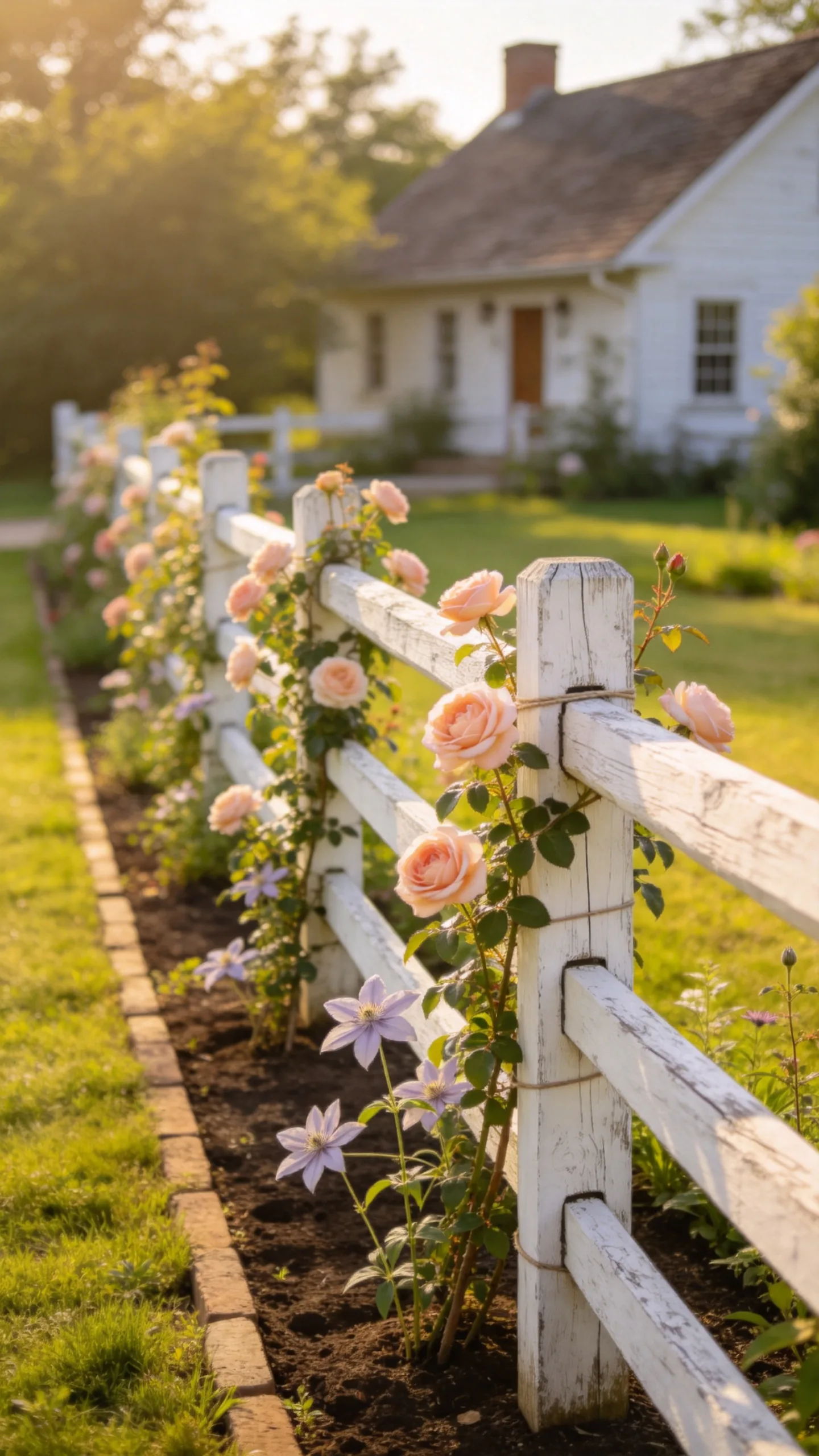
A whitewashed rail fence gives a country yard a bright farmhouse look without the formality of solid white paint. The washed finish allows wood grain to show through, which keeps the fence feeling rustic and relaxed.
This style is especially pretty along a front garden, cottage border, or sunny side yard. If your climate and sunlight suit them, climbing roses can be trained along the rails or near posts. Clematis, honeysuckle, or annual climbing vines are other options depending on your region and maintenance preferences.
Leave enough space between the fence and planting bed for pruning, tying stems, and watering. A rail fence with flowering climbers can create depth in a flat yard because it draws the eye horizontally while adding height at the posts.
10. Stone and Wood Fence for an Old Farm Look
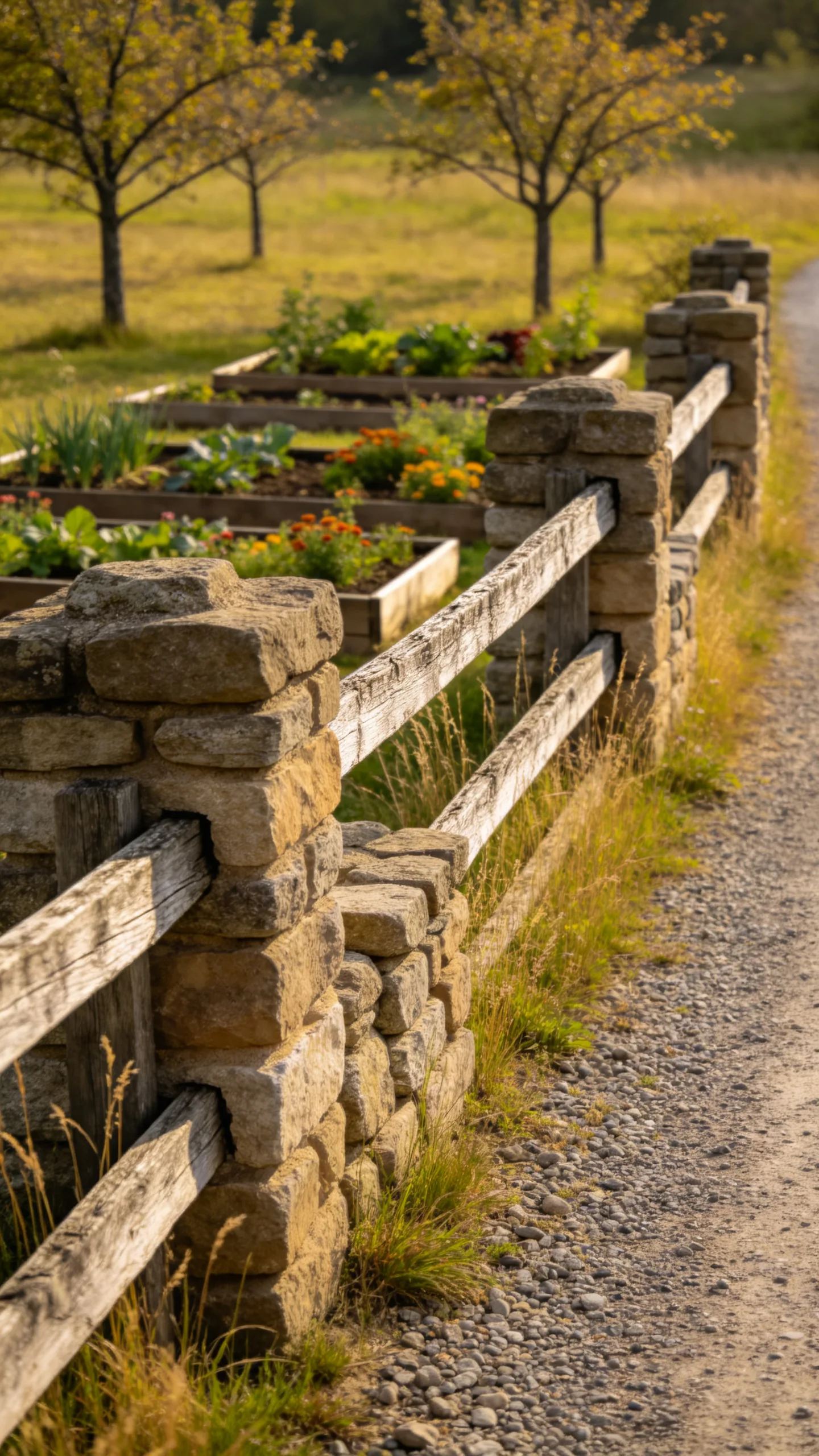
Combining stone and wood creates a fence with strong country character. Stone pillars, low stone walls, or stacked-stone bases can be paired with wooden rails or boards for a fence that feels grounded and timeless.
This idea works well near driveways, front entries, sloped yards, or garden terraces. The stone adds weight and texture, while the wood keeps the fence from feeling too formal. It also pairs naturally with gravel paths, native grasses, orchard trees, and farmhouse-style planting beds.
Use stone that suits your region if possible, such as fieldstone, limestone, granite, or stacked flat rock. For small yards, limit the stone to gate posts or short sections so the design does not overwhelm the space.
11. Rustic Privacy Fence with Staggered Boards
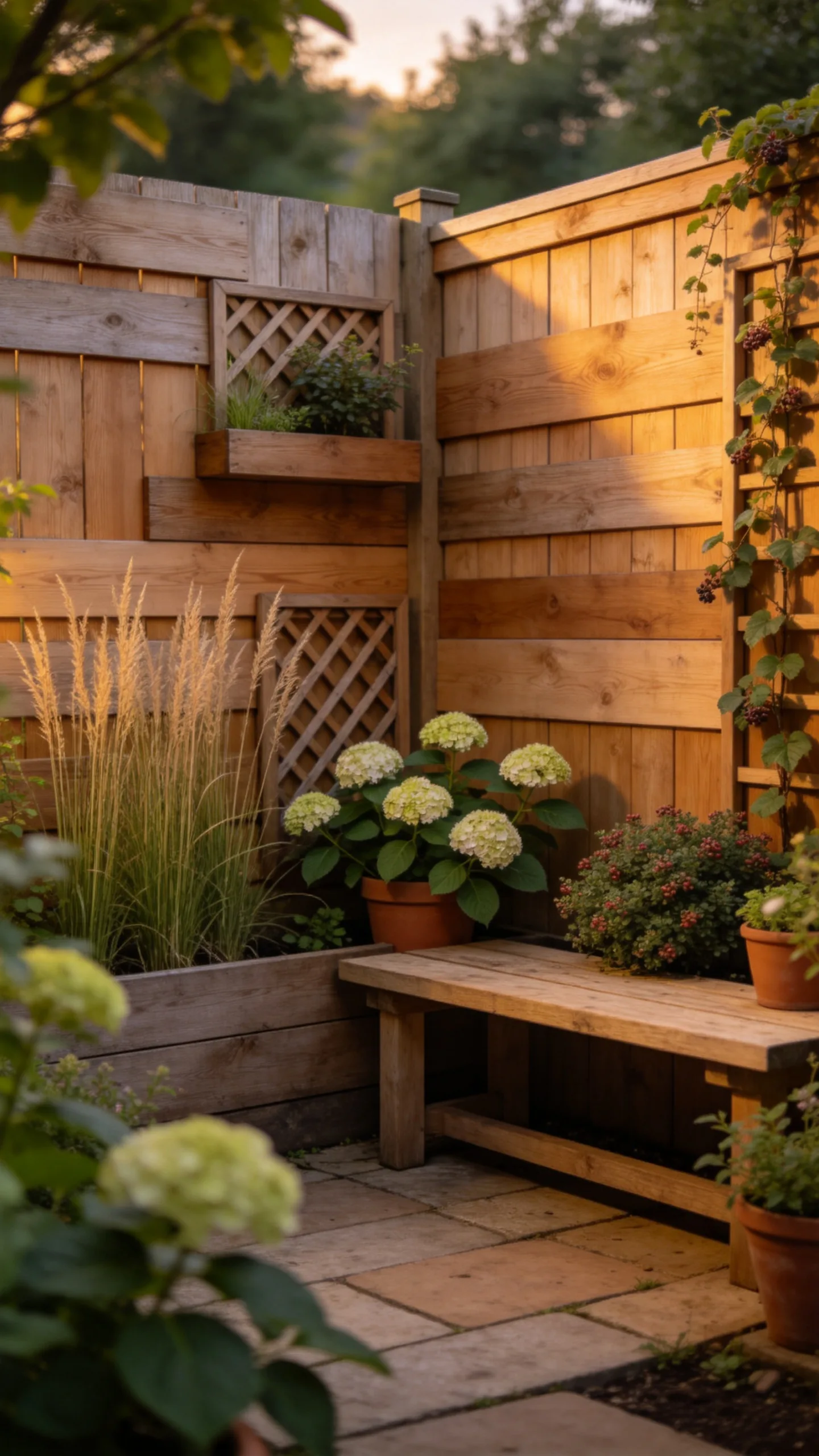
A privacy fence can still feel rustic if the design avoids a flat, overly polished wall. Staggered boards, varied widths, natural stain, and visible wood grain all help soften the look. This style is useful around patios, outdoor dining areas, potting benches, or small backyards that need screening.
Instead of building one long uninterrupted panel, break the fence with planting pockets, trellises, or small shrubs. Add tall grasses, hydrangeas, elderberry, viburnum, or climbing vines suited to your climate to make the fence feel like part of the garden rather than a hard edge.
For small spaces, a rustic privacy fence can create a cozy outdoor room. Use lighter stains in tight areas to avoid a heavy feeling, and keep planting layered so the fence adds depth instead of making the yard feel boxed in.
12. Low Rustic Fence for Raised Garden Beds
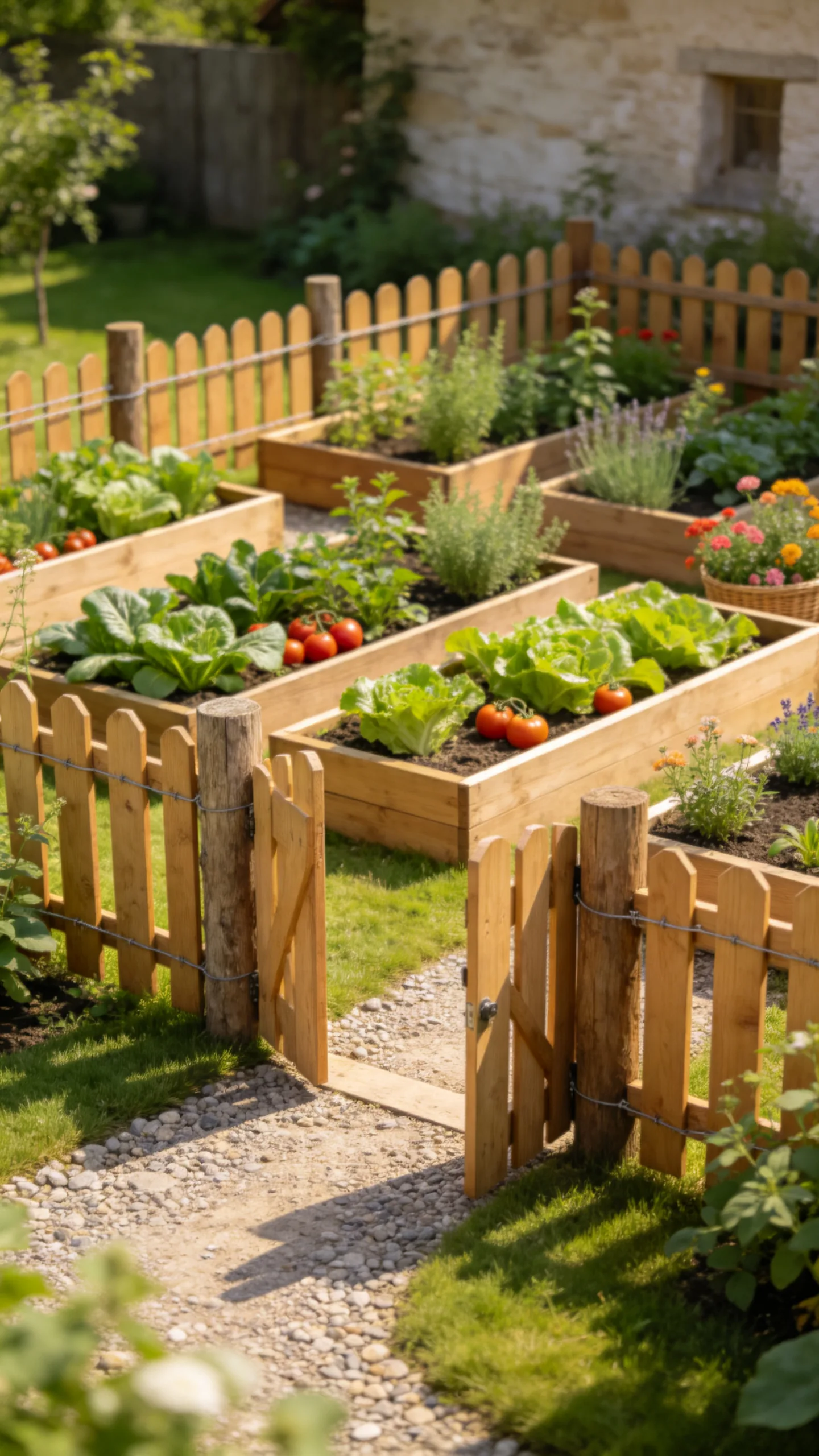
A low rustic fence around raised beds adds charm while keeping the garden organized. It can be made from short pickets, small split rails, woven branches, rough boards, or simple wood posts with wire. Because it stays low, it defines the space without shading vegetables or herbs.
This idea is especially useful in small yards where every foot matters. A low fence can separate the growing area from a lawn, gravel path, patio, or children’s play space while still keeping the garden open and easy to maintain. It also gives climbing supports, labels, and watering zones a more finished look.
Choose materials that match the raised beds for a cohesive farmhouse style. If the beds are cedar, a cedar border feels natural; if they are galvanized metal, wood posts and wire can balance the look. Keep gates or openings wide enough for a wheelbarrow, watering can, or harvest basket.