Natural fence ideas can make a yard feel more private without relying only on plain panels or hard barriers. By combining living plants with materials like wood, stone, bamboo, willow, and brushwood, you can create screening that feels softer, blends into the landscape, and supports a more relaxed outdoor setting. These ideas work for backyards, side yards, patios, garden borders, and small outdoor spaces where privacy matters.
1. Evergreen Hedge Fence with Boxwood, Yew, or Arborvitae
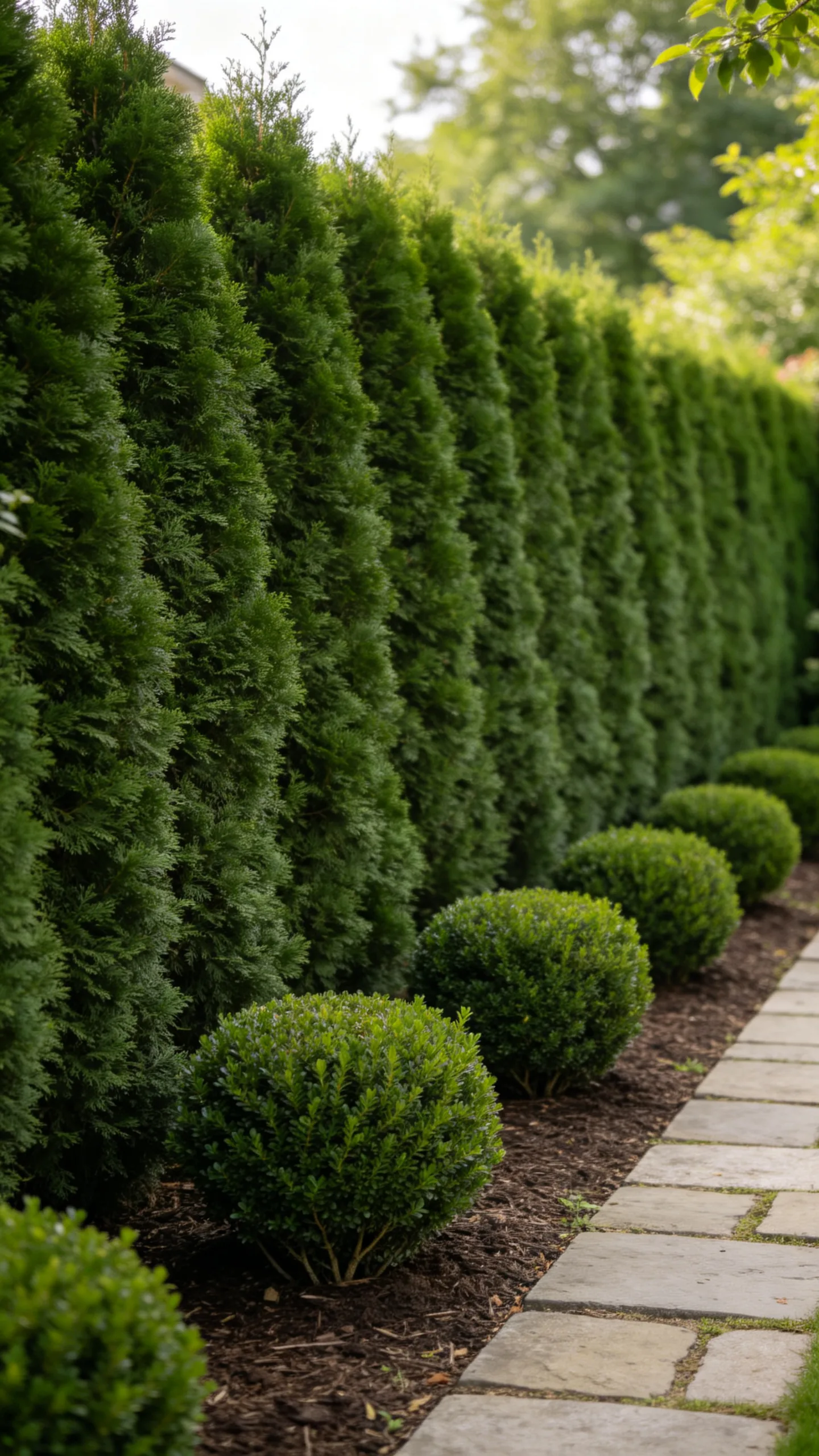
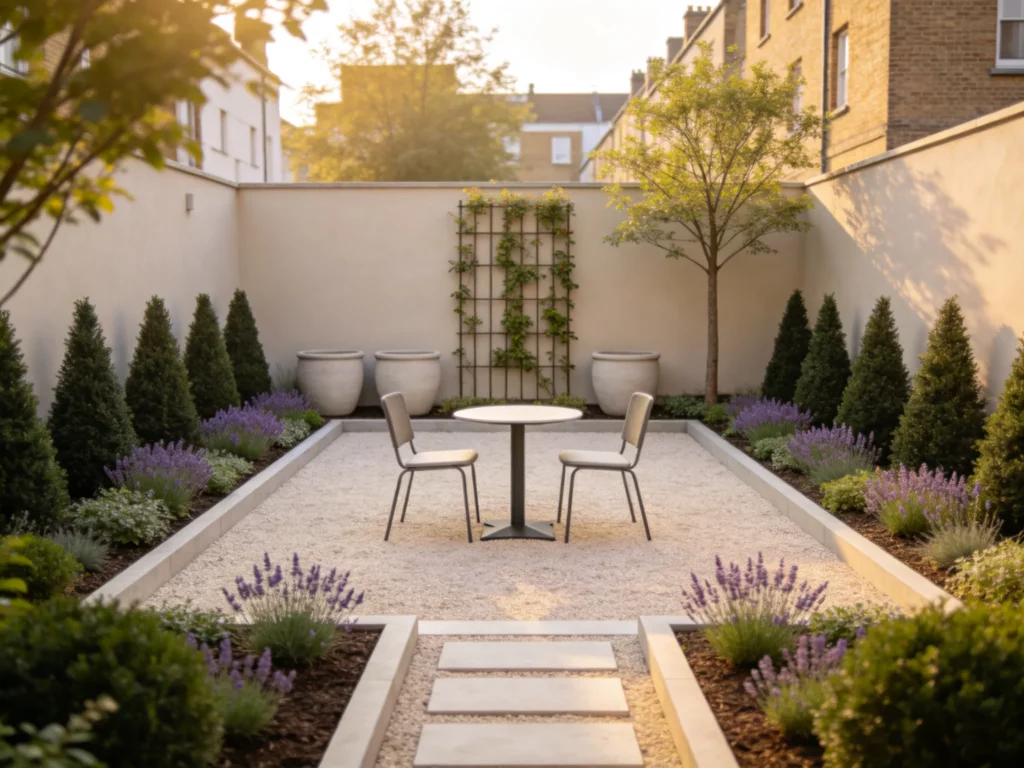
An evergreen hedge is one of the most classic natural fence ideas because it provides year-round coverage when planted in the right location. Boxwood works well for shorter formal borders, yew can be clipped into dense screens, and arborvitae is useful for taller privacy along property lines. Choose the plant based on the mature width, not just the height, so the hedge does not crowd a walkway, patio, or narrow side yard.
For a clean privacy screen, plant shrubs in a straight row with consistent spacing according to the plant tag or nursery guidance. In small yards, a single narrow row is usually better than a wide mixed border. Keep the base mulched to reduce weeds and help the soil retain moisture, especially during the first growing season while roots establish.
This type of fence needs regular pruning to stay dense. Light trimming once or twice a year encourages branching and prevents gaps. If you want a softer look, let the hedge grow in a slightly informal shape rather than clipping it into a rigid wall.
2. Woven Willow Fence for a Rustic Garden Border

A woven willow fence brings a handmade, organic look to vegetable gardens, cottage gardens, and backyard seating areas. Willow rods are flexible enough to weave between upright stakes, creating a textured screen that feels natural rather than manufactured. This idea works especially well for low to medium-height privacy around patios, compost areas, raised beds, or garden paths.
Use sturdy wooden stakes or thicker willow poles as the vertical supports, then weave thinner willow branches horizontally through them. The tighter the weave, the more privacy the fence provides. For a more open garden edge, leave small gaps between rows so light and air can pass through.
Willow fencing suits spaces where you want definition without a heavy visual barrier. It can weather beautifully over time, but it should be kept slightly above wet soil when possible to slow decay. In damp climates, expect natural materials to break down faster and plan for occasional repairs or replacement sections.
3. Bamboo Screen Fence for Narrow Side Yards
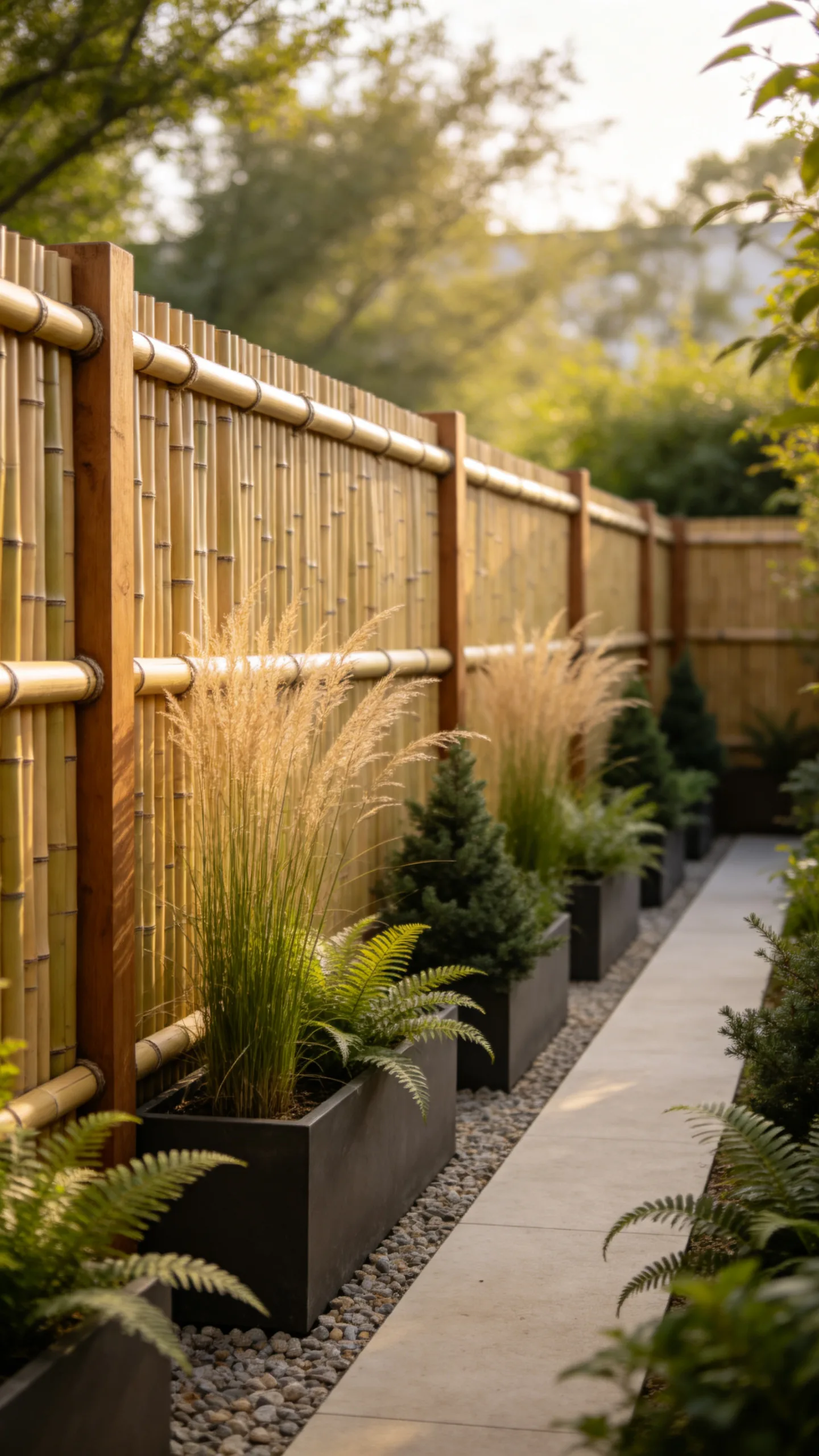
Bamboo screening is a practical option for tight spaces because it creates privacy without taking up as much width as a hedge. Rolled bamboo panels can be attached to an existing wire fence, rail, or simple wooden frame to soften the view and add a warm, natural texture. This is especially useful along side yards, balconies, rental gardens, or small patios where planting a wide border is not realistic.
For better durability, secure bamboo panels with galvanized wire, outdoor screws, or zip ties rated for exterior use. Keep the bottom edge slightly off the soil so it does not sit in constant moisture. If the screen faces strong wind, attach it to a strong support structure rather than relying on thin stakes.
Bamboo pairs well with container plants at the base. Try tall planters with ornamental grasses, dwarf conifers, or shade-tolerant ferns depending on the exposure. The plants soften the screen and help it feel more like part of the garden.
4. Mixed Native Shrub Fence for Wildlife-Friendly Privacy
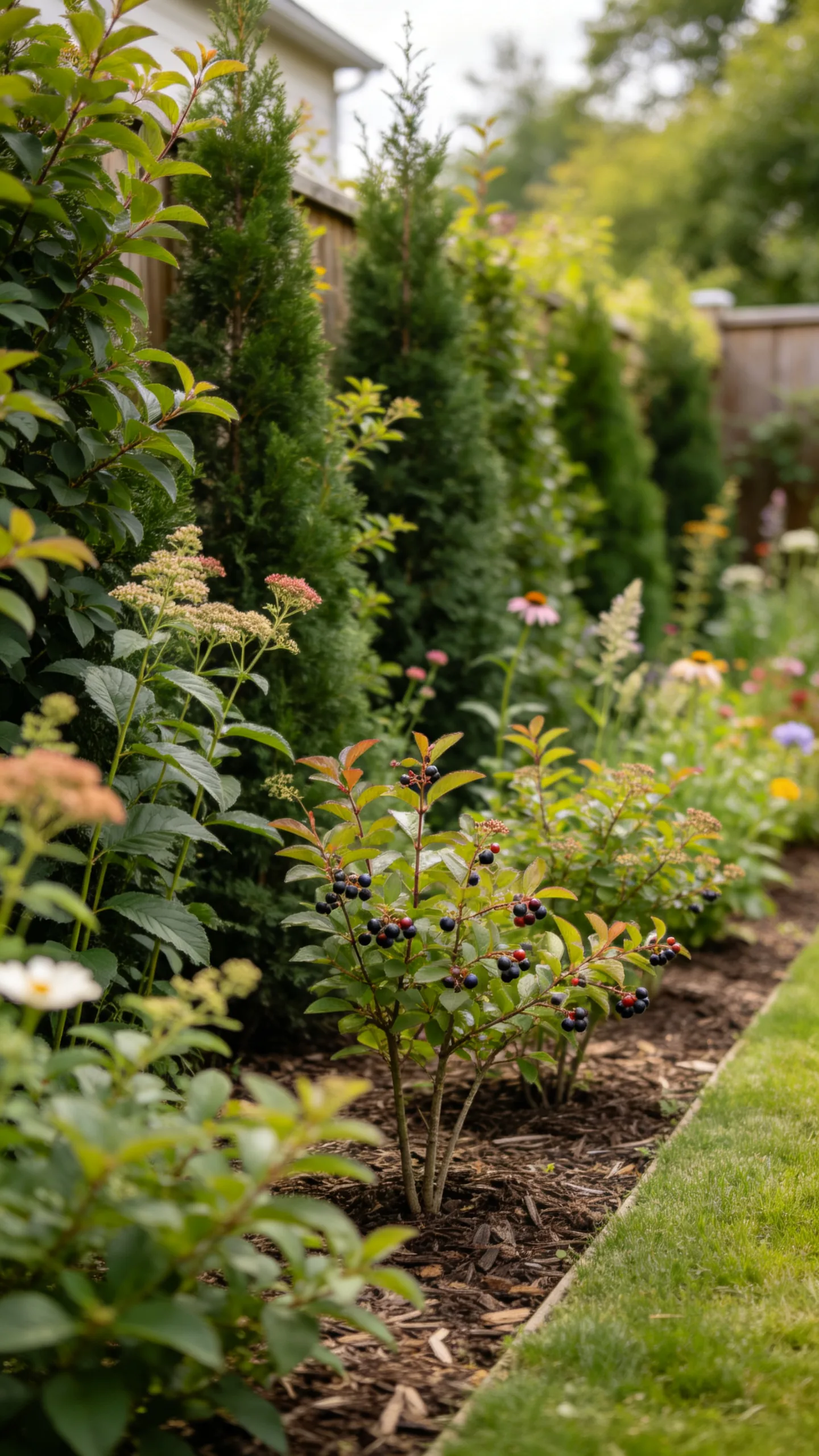
A mixed shrub fence creates a layered, natural privacy screen while offering seasonal flowers, berries, texture, and habitat value. Instead of one straight line of identical plants, combine several shrubs with different mature heights and shapes. Native shrubs are often a good starting point because they are more likely to suit local wildlife and growing conditions when selected for your region.
For a privacy-friendly layout, plant taller shrubs toward the back and smaller shrubs toward the front. In sunny yards, options might include viburnum, serviceberry, elderberry, or native dogwood, depending on your area. In part shade, look for shrubs that tolerate lower light and do not require constant pruning to stay healthy.
This idea needs more space than a narrow panel fence, so it is best for back property lines, wide side yards, or the edge of a lawn. The benefit is a softer screen with depth, seasonal interest, and fewer hard edges. Mulch between young shrubs during the first few years to reduce weeds while the planting fills in.
5. Stone Wall Fence with Creeping Thyme or Sedum
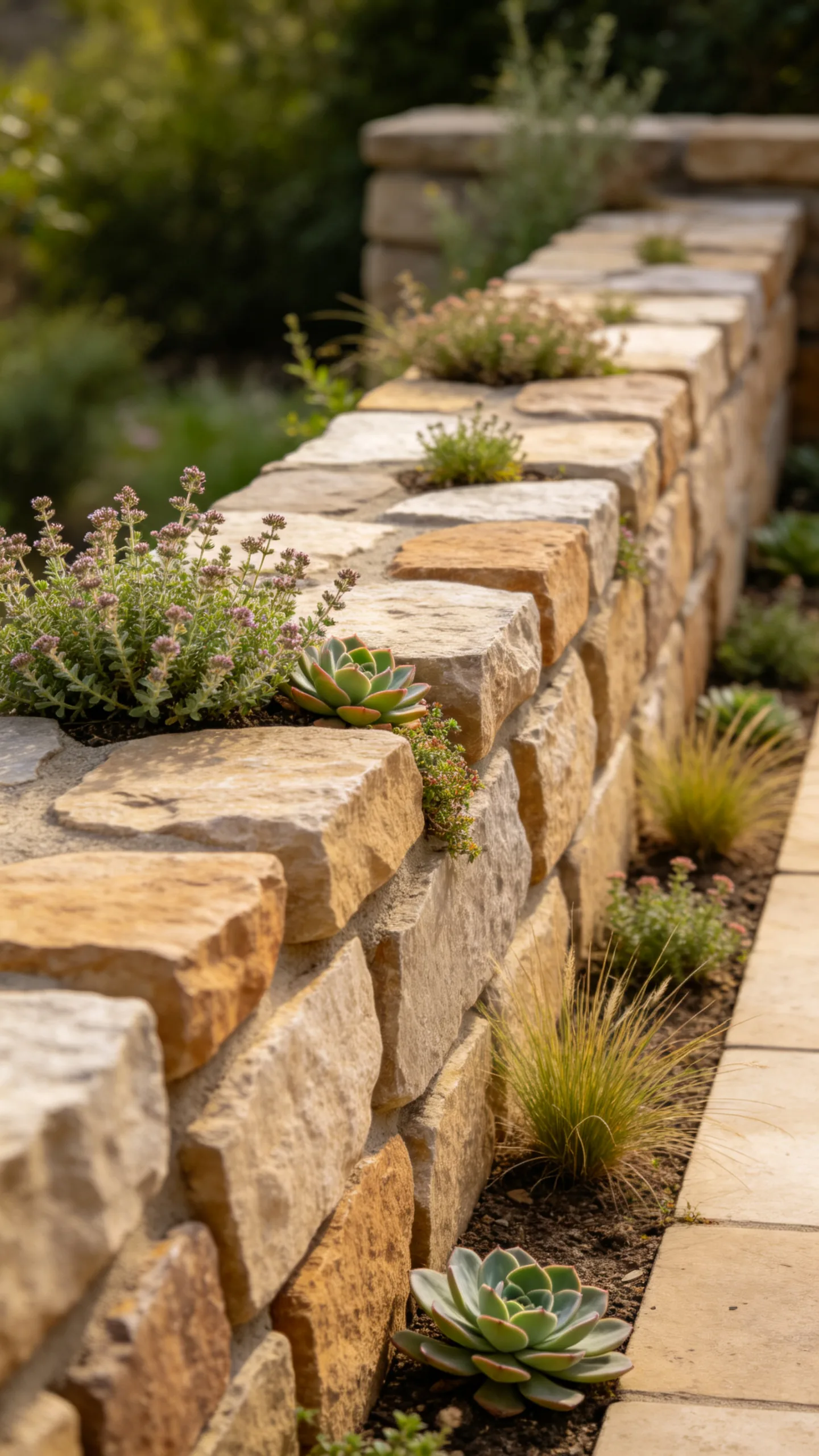
A stone wall makes a strong natural fence for garden edges, sloped yards, and patio borders. Fieldstone, stacked stone, or dry-laid rock can create a low privacy boundary while adding texture and structure. It works especially well where a full-height fence would feel too closed-in but a simple planting bed would not provide enough definition.
To make the wall feel planted rather than bare, tuck drought-tolerant plants into crevices or along the base. Creeping thyme, sedum, hens and chicks, and small ornamental grasses can soften the hard edges if they suit your climate and sun exposure. These plants usually need good drainage, so avoid placing them in soggy spots.
A stone wall is also helpful for separating outdoor rooms. Use it behind a seating area, around a fire pit zone, or along a front garden border. For taller retaining or privacy walls, check local building codes and consider professional installation, especially on slopes.
6. Cedar Slat Fence with Climbing Vines
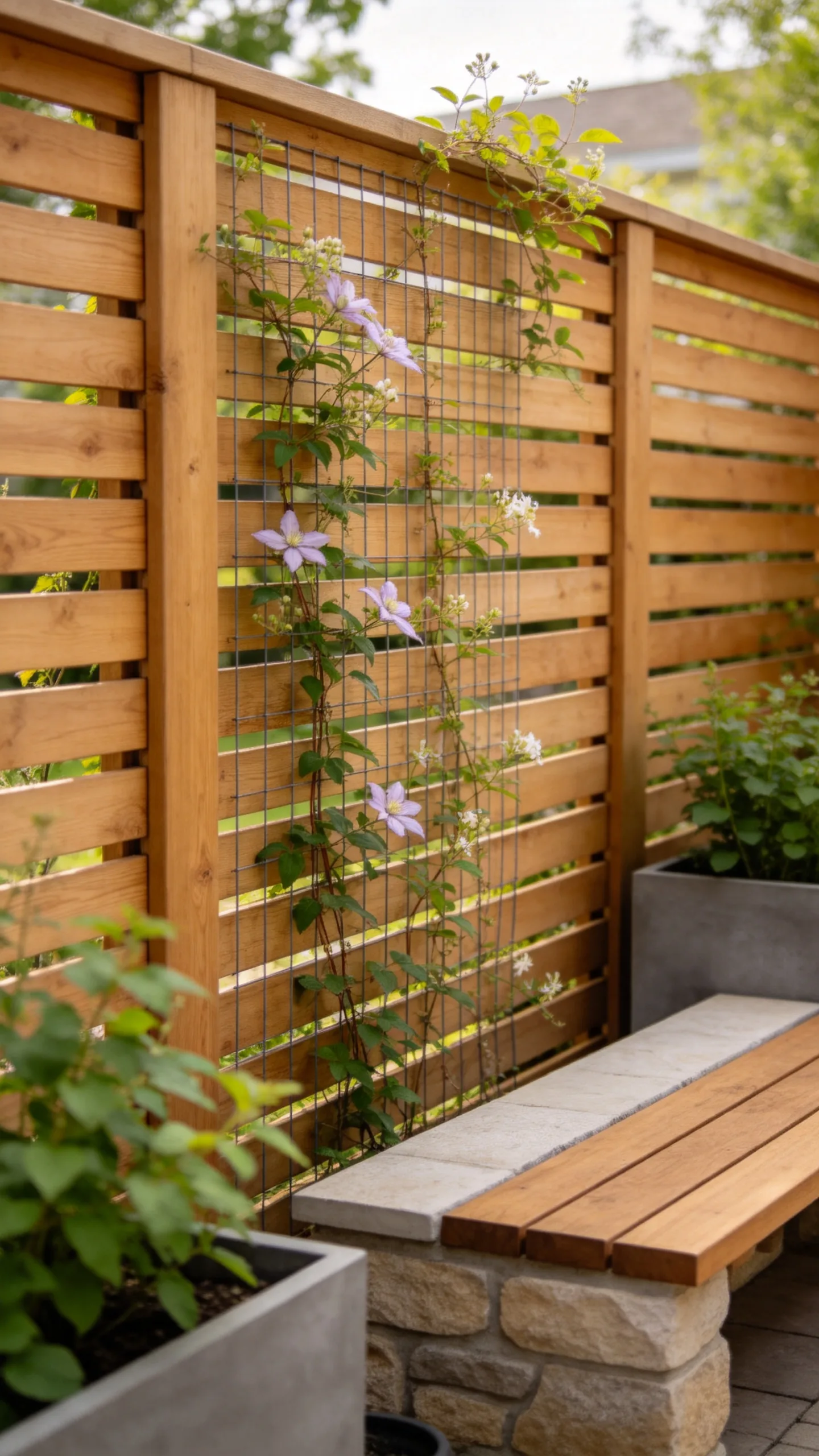
A cedar slat fence offers a natural wood look while giving you control over privacy and airflow. Horizontal or vertical slats can be spaced tightly for stronger screening or slightly apart to let light through. Cedar is popular outdoors because it weathers attractively, though it still benefits from proper installation and occasional maintenance.
Add climbing vines to make the fence feel greener and less flat. A trellis panel or wire grid attached to the fence gives vines something to grip without forcing them directly into every board seam. Depending on your region and light conditions, consider clematis, climbing hydrangea, star jasmine, honeysuckle, or native vines that are not invasive in your area.
This idea is useful for patios and backyard seating zones because it blends structure with planting. Keep vines pruned so they do not trap too much moisture against the wood. Leave access for maintenance, staining, or repairs if you want the fence to last longer.
7. Living Trellis Fence with Climbing Roses
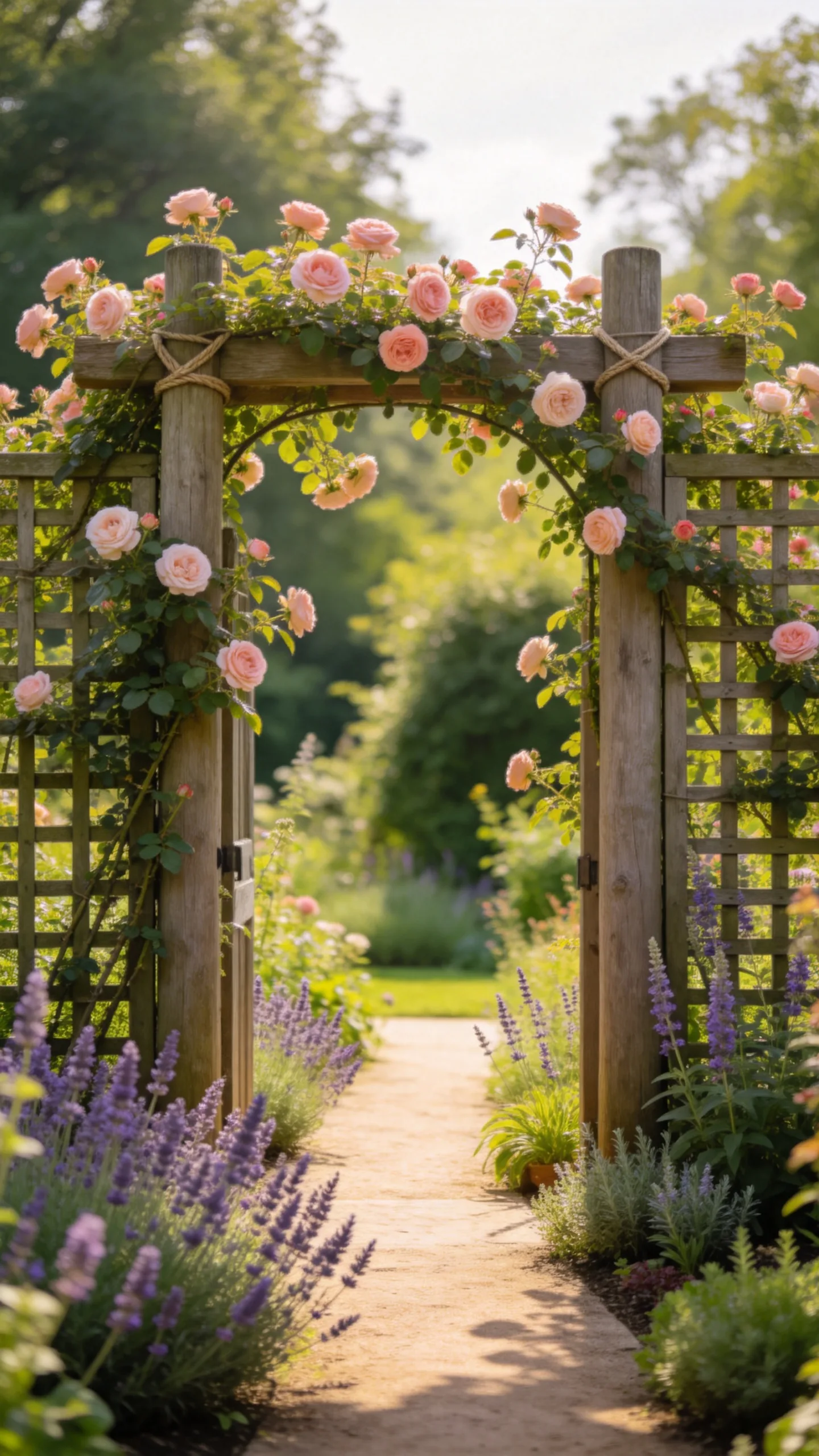
A living trellis fence uses upright posts and lattice, wire mesh, or wooden panels to support climbing plants. Climbing roses are a beautiful option for sunny locations where you want privacy with flowers and fragrance. They work best with sturdy support because mature canes can become heavy, especially after rain.
Place posts deep enough to handle wind and tension, then add horizontal wires or trellis panels for tying in canes. Train the rose stems outward and slightly horizontal instead of letting them grow straight up; this encourages more flowering along the canes. Good airflow is important, so avoid crowding roses into a damp, shaded corner.
This fence is ideal for screening a dining area, garden entrance, or walkway. Underplant with lavender, catmint, salvia, or low herbs if they fit your climate and sun conditions. These smaller plants help cover the base while keeping the design soft and garden-focused.
8. Brushwood Fence for Soft Screening Around Patios

Brushwood fencing is made from bundled natural twigs, reeds, or brush, creating a dense screen with a warm, earthy appearance. It is a useful choice when you need quick privacy around a patio, deck edge, balcony rail, or pool equipment area. Because it is usually sold in rolls or panels, it can often be attached to an existing fence frame.
The dense texture blocks views better than many open trellis styles, but it still feels less harsh than solid boards. Use it where you want privacy at eye level, such as behind outdoor chairs or along a neighboring fence line. For stability, fasten it to strong posts or a frame rather than installing it loosely.
Brushwood is a natural material, so weathering is part of its look. Keep it off constantly wet ground, and avoid placing sprinklers where they hit it every day. Pair it with potted palms, ornamental grasses, or evergreen shrubs to make the screen feel intentional instead of temporary.
9. Raised Planter Fence with Tall Grasses
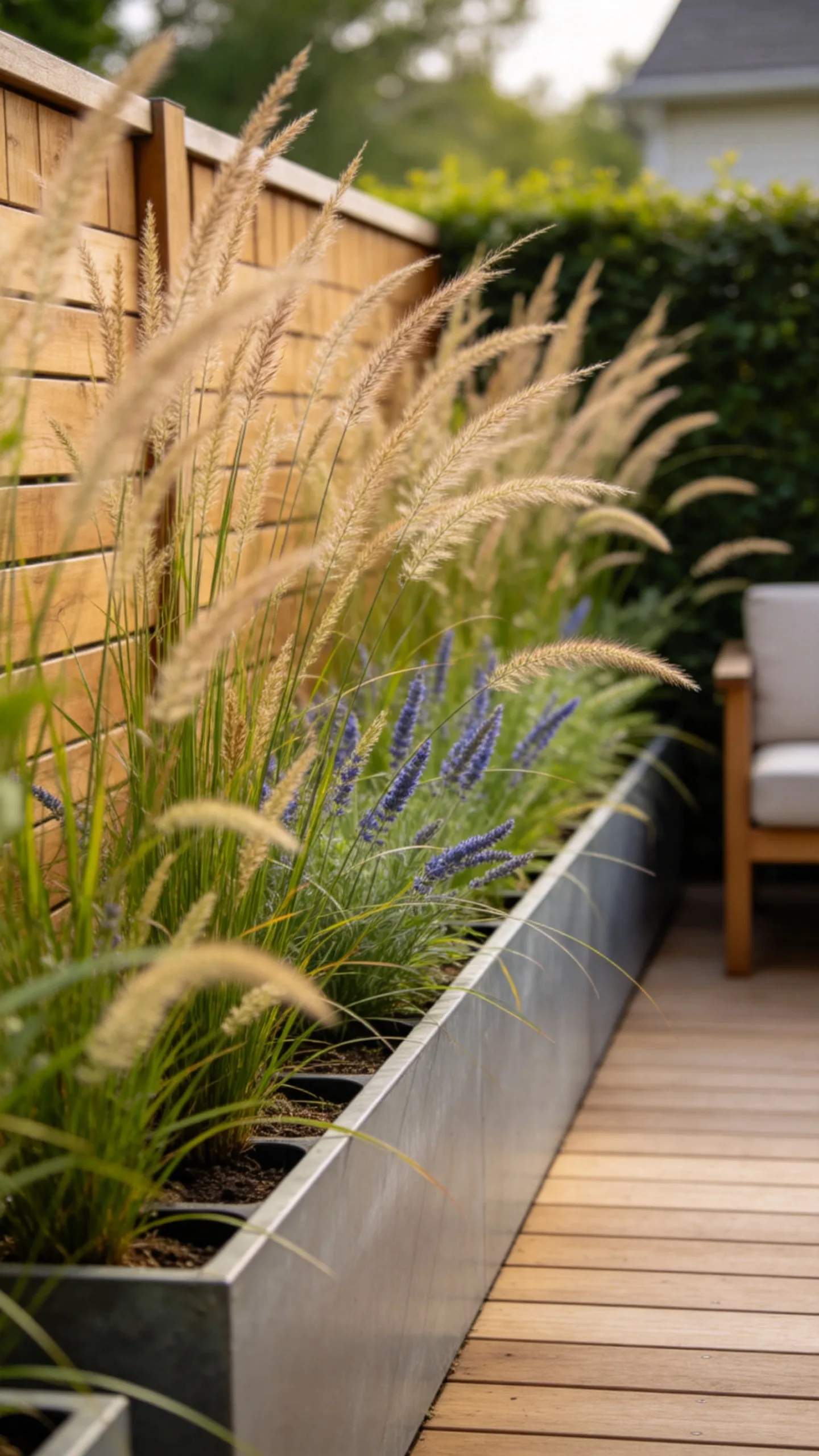
A raised planter fence combines a container wall with living privacy plants, making it especially helpful for patios, decks, renters, and small yards. Long wooden or metal planters can hold tall grasses that create movement, texture, and partial screening without requiring a full garden bed.
Choose grasses based on mature height, spread, and winter appearance. Feather reed grass, switchgrass, little bluestem, or fountain grass may work in different regions, but check local suitability before planting. In windy spots, choose sturdy varieties that do not flop easily. For shade, grasses may be less effective, so consider sedges or shade-tolerant foliage plants instead.
Raised planters need drainage holes and a quality potting mix, not heavy garden soil. Watering is especially important in hot weather because containers dry out faster than in-ground beds. This idea saves space by lifting the planting into a narrow footprint while still creating privacy where people sit or gather.
10. Log and Branch Fence for a Woodland Garden Edge

A log and branch fence gives a woodland-style garden a natural boundary using rough-cut logs, fallen branches, or trimmed limbs. It works well as a low fence around native plant beds, shade gardens, informal paths, or rustic backyard zones. The irregular shapes make it feel relaxed and handmade.
For a simple structure, set thicker posts in the ground and stack horizontal branches between them. Another option is to use upright branches close together for a twig-style screen. Select sound wood rather than pieces that are already crumbling, and avoid using diseased plant material from garden trees or shrubs.
This type of fence is not usually a full security barrier, but it is excellent for visual separation. It can guide foot traffic, mark the edge of a planting area, or screen a compost corner. Ferns, hostas, woodland sedges, and shade-tolerant groundcovers look natural planted along the base.
11. Gabion Fence Filled with Local Stone

A gabion fence uses wire cages filled with stone to create a rugged, natural-looking privacy wall. It is heavier and more structural than many garden fence options, so it works best where you want a strong boundary, sound buffering, or a modern rustic look. The stone fill can be chosen to match nearby paths, retaining walls, or house materials.
Gabion panels can be used as full-height screens or lower garden dividers. For privacy, taller sections may need professional planning, level footing, and attention to drainage. Even low gabion walls are heavy, so they should be built on a stable base that will not shift.
To soften the look, plant around the gabion with grasses, trailing perennials, or small shrubs. In sunny spots, Mediterranean-style herbs or drought-tolerant plants can look striking against stone. In wetter or shaded spaces, choose plants that match those conditions rather than forcing dry-garden plants into the wrong site.
12. Layered Fence with Wood Posts, Stone Base, and Evergreen Planting
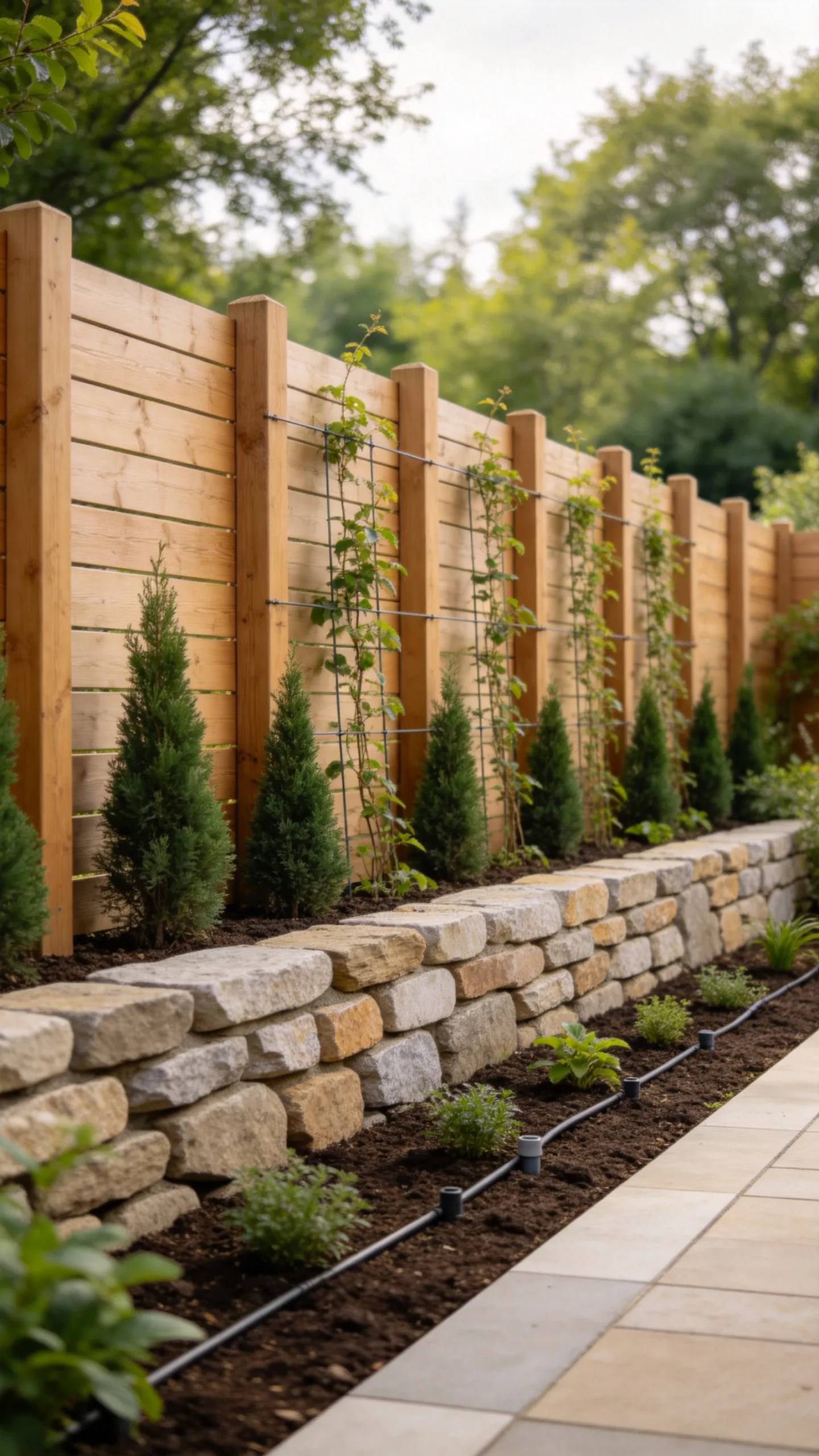
A layered natural fence combines several materials so the privacy screen looks established from the start. A low stone base can define the boundary, wood posts can provide structure, and evergreen shrubs or climbers can fill in the living layer. This approach works well when one material alone would feel too plain or too bulky.
Use the stone base to anchor the design visually, especially along a patio, driveway edge, or garden room. Add wood posts at regular intervals for height and rhythm. Between the posts, plant narrow evergreens, espaliered shrubs, or climbing plants on wire supports. This creates depth without requiring a very wide planting bed.
The key is choosing plants that match the available space. For narrow beds, avoid shrubs that will mature too wide unless you are willing to prune often. Mulch the planting strip, leave room for airflow, and keep irrigation aimed at the soil rather than constantly wetting the wood. This creates a privacy fence that feels natural, structured, and usable in a real garden plan.