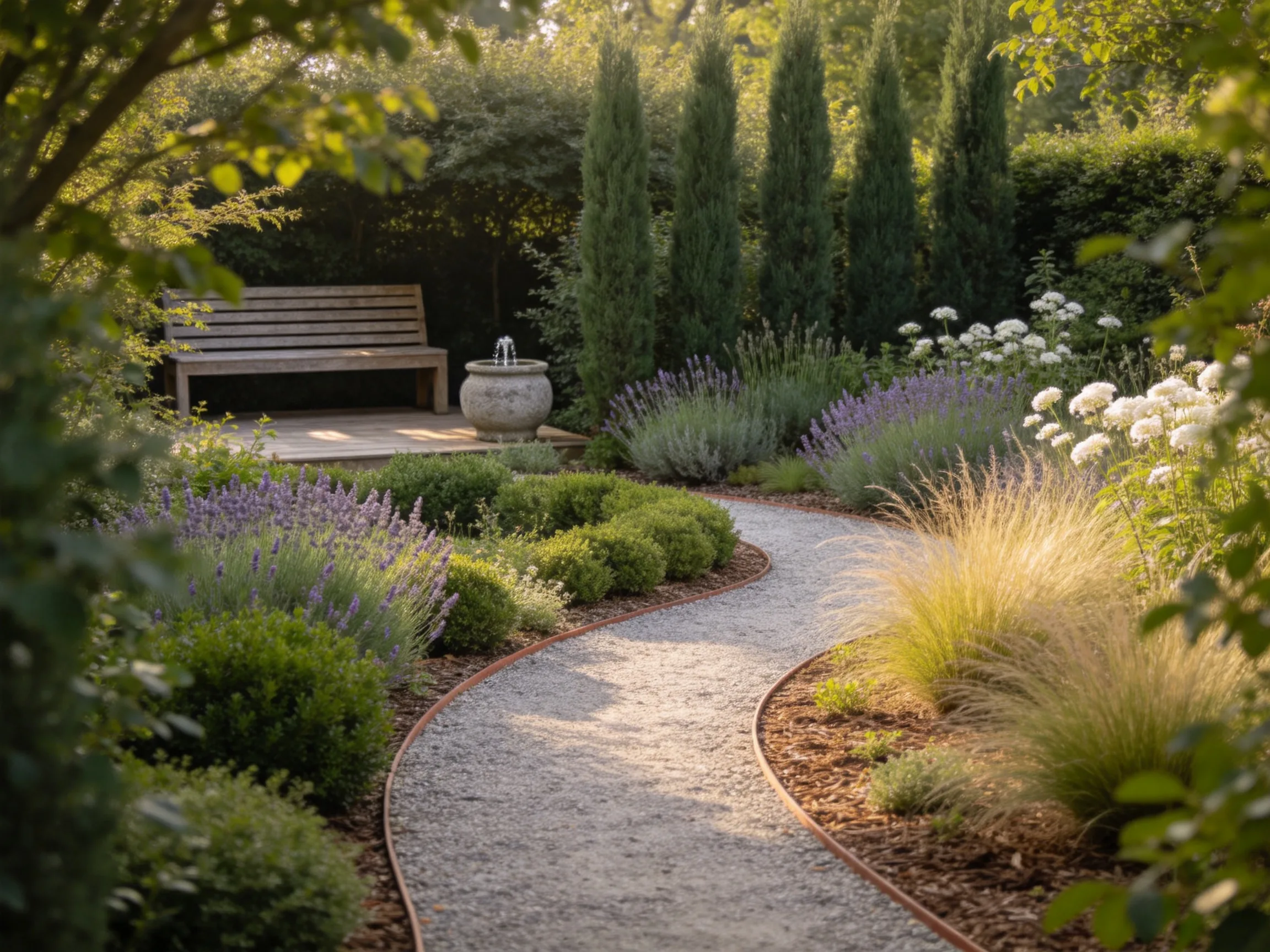
A thoughtful wellness garden design can turn an ordinary backyard into a quieter place for reading, stretching, meditating, or simply stepping away from a busy day. The most effective retreats combine comfortable seating, sensory plants, privacy, shade, and easy-care features suited to the site. Use these practical ideas individually or layer several together to create a calming outdoor space that fits your garden’s size, light, climate, and maintenance needs.
1. Create a Secluded Seating Nook
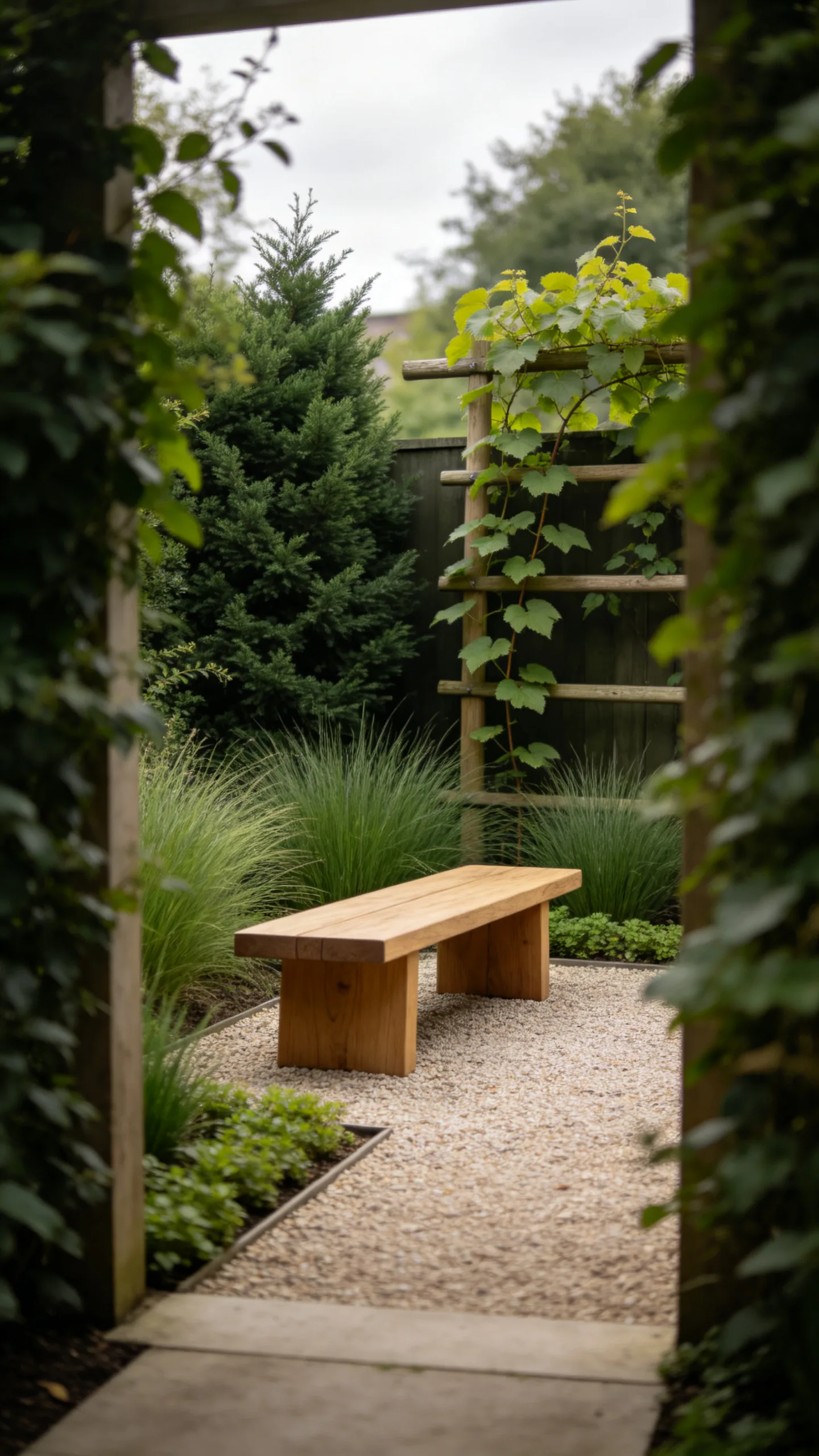
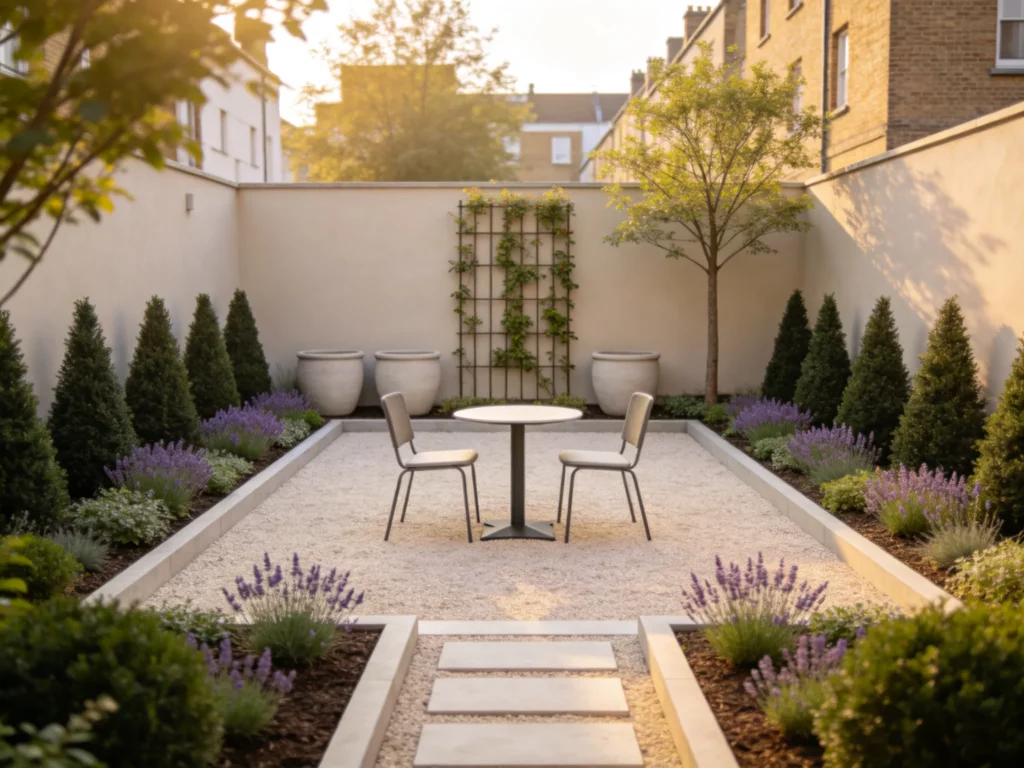
Choose a low-traffic corner and define it with a compact bench, lounge chair, or weather-resistant floor cushions. Position the seat so it faces greenery rather than a back door, driveway, or utility area. Even in a narrow yard, a small chair placed diagonally in a planted corner can create a stronger sense of depth and separation.
Add a backdrop using clumping ornamental grasses, an evergreen shrub, or a trellis covered with a vine suitable for your climate. Keep mature plant sizes in mind so the area does not become cramped. A gravel or bark-mulch base can reduce weeds and eliminate the need to mow around the furniture.
2. Plant a Layered Green Privacy Border
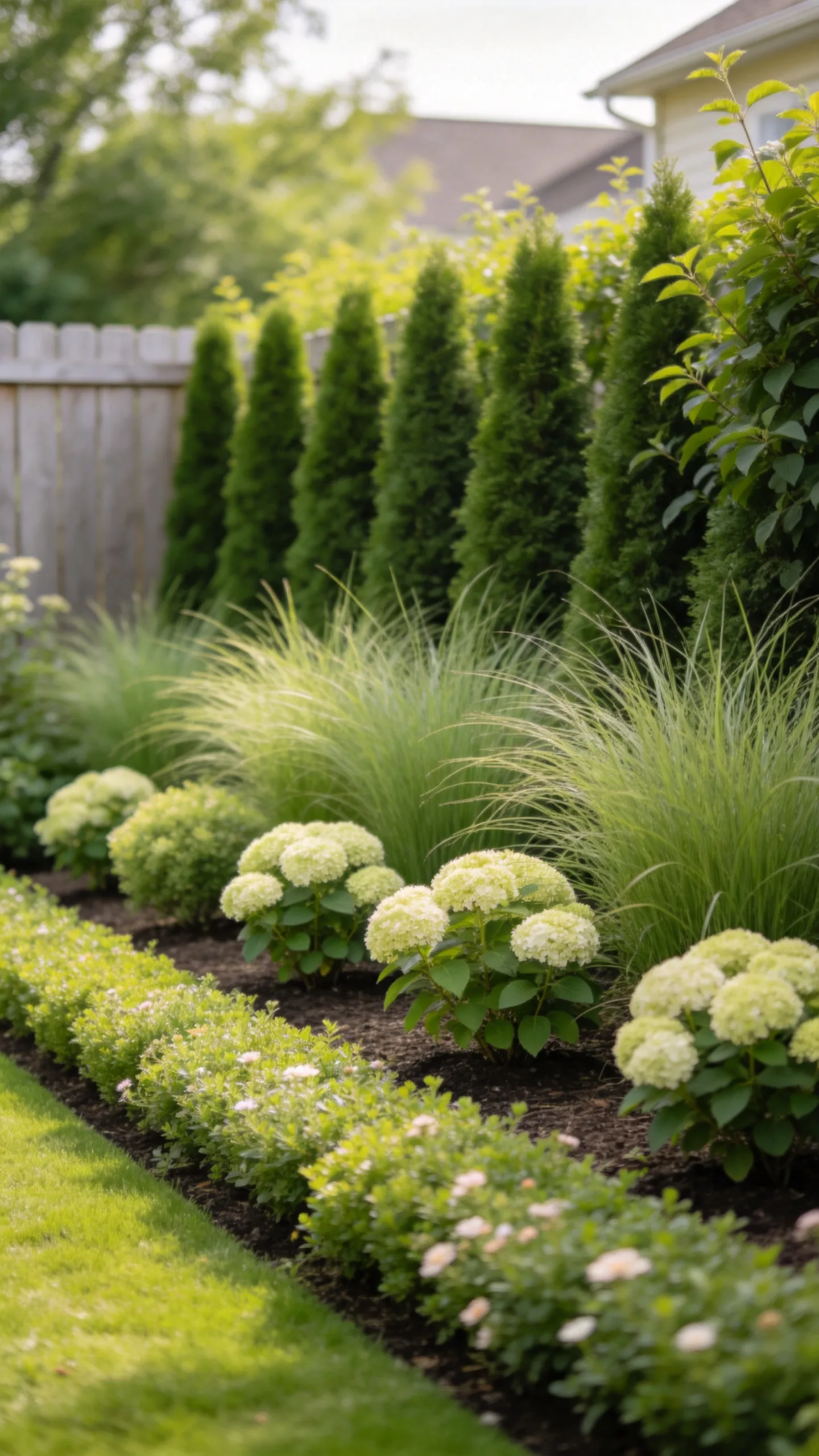
Build a living screen by arranging plants in layers rather than relying on a single hedge. Place taller shrubs or narrow evergreens at the back, medium-height grasses or flowering shrubs in the middle, and low ground covers along the front. This staggered design softens property lines while making a small garden appear deeper.
For limited-width beds, look for columnar evergreens, upright junipers, clumping bamboo labeled as non-running, or trellis-trained climbers. Select plants according to your local hardiness zone, sunlight, and available soil moisture. Leave enough space between specimens for their mature spread, which improves airflow and reduces frequent pruning.
3. Add a Gently Curving Garden Path
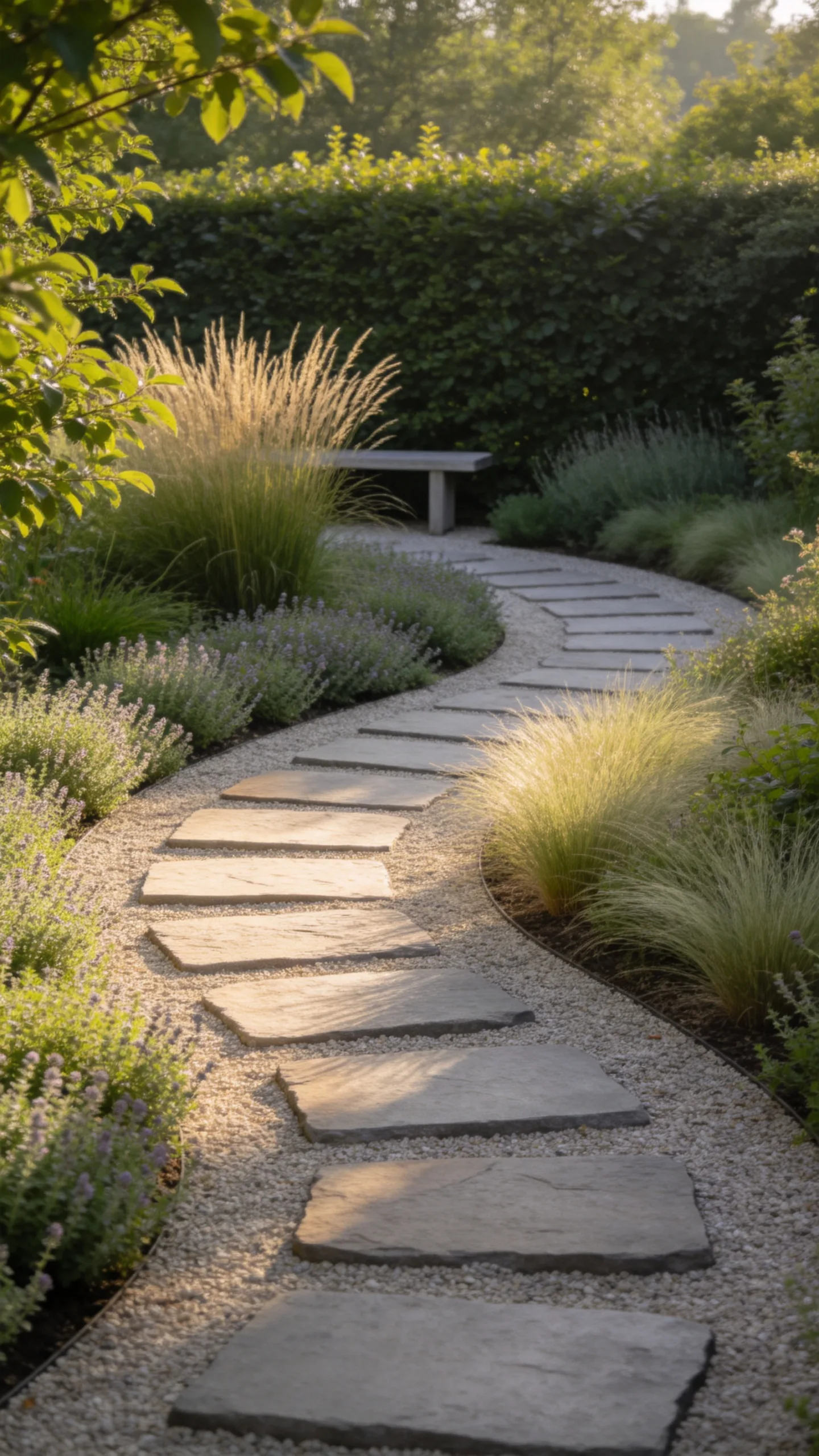
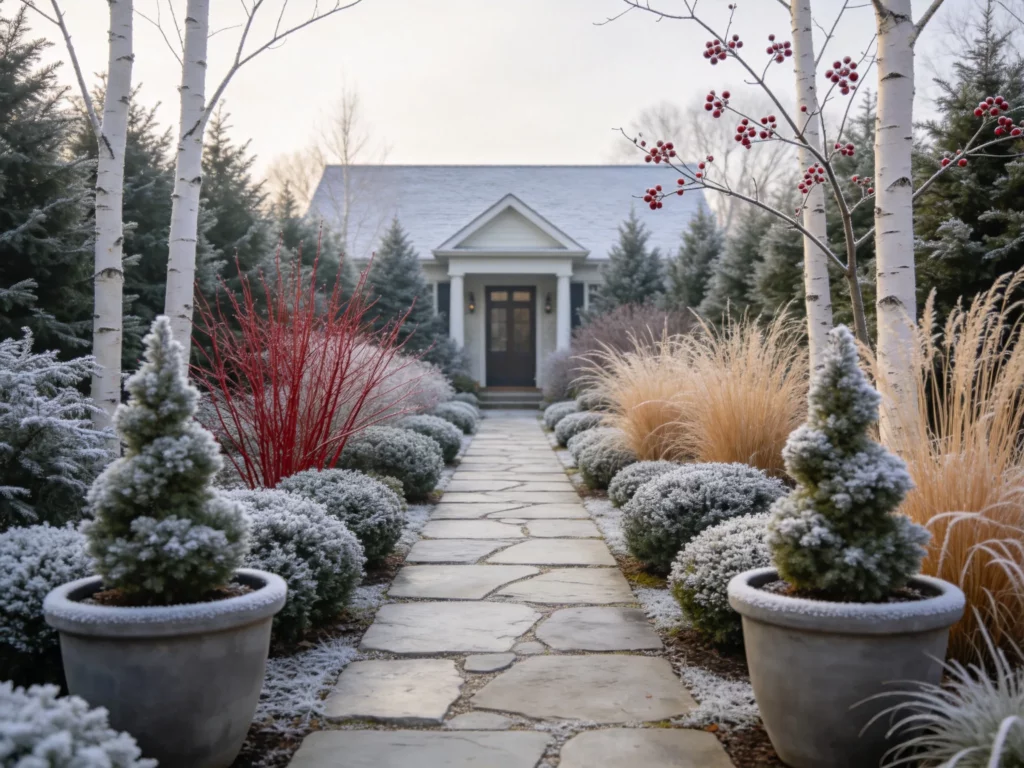
A curved path encourages a slower journey through the backyard and makes the entire layout feel less rigid. Use gravel, flat stepping stones, brick, or bark chips to connect the house with a seating area, water feature, or garden gate. Let part of the destination remain hidden behind planting to create visual depth.
Make the route wide enough for comfortable movement and keep the surface level. Large, closely spaced pavers provide steadier footing than widely separated stones. Edge the path with low plants such as creeping thyme in sunny, well-drained areas or sedges in partially shaded, moisture-retentive soil. Avoid planting thorny or vigorous spreading varieties where they could obstruct the walkway.
4. Design a Fragrant Sensory Planting Bed
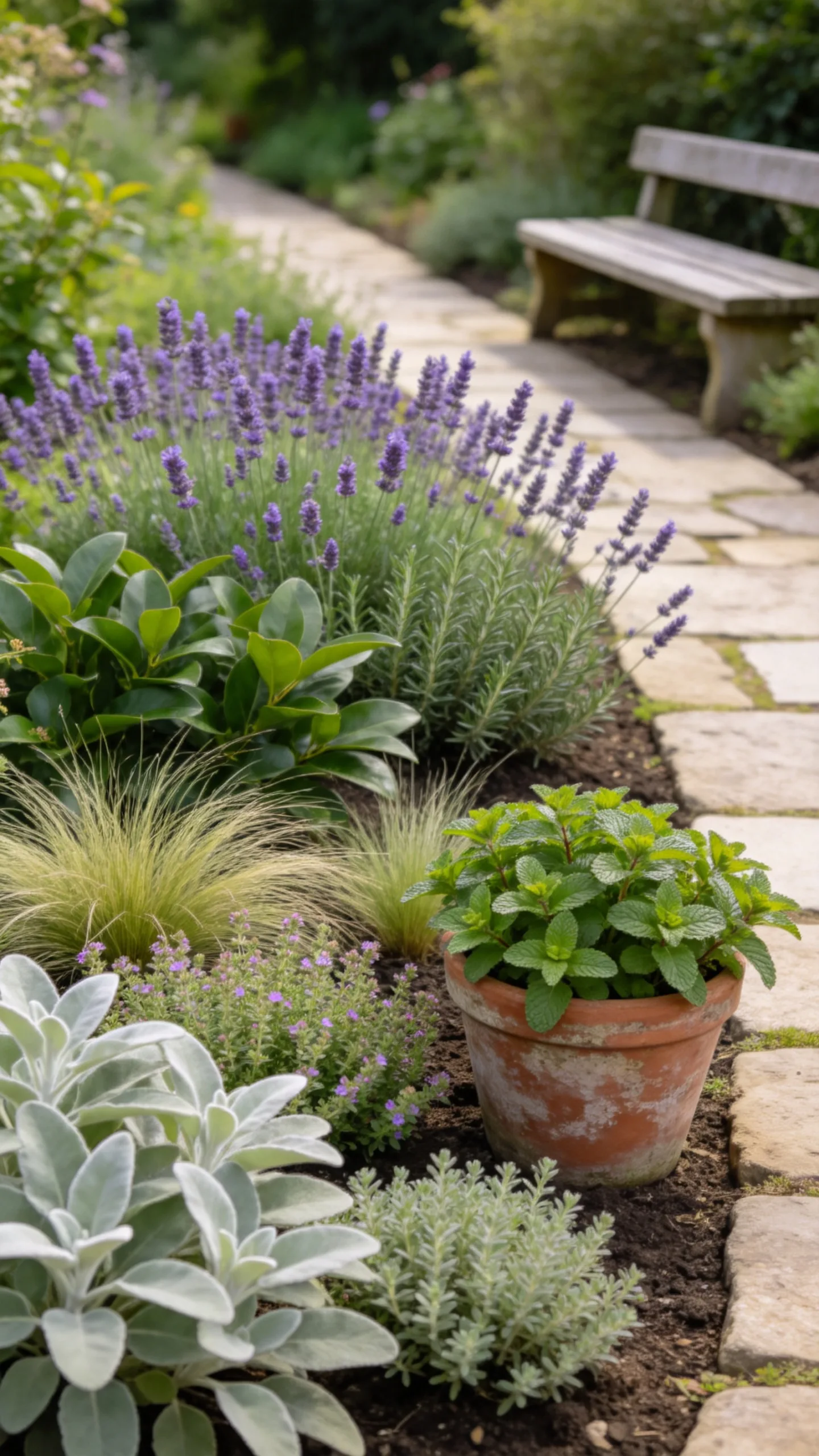
Place aromatic plants beside a bench, path, or patio where leaves and flowers can be appreciated at close range. Lavender, rosemary, thyme, mint, lemon balm, scented geraniums, and star jasmine are useful options, although their suitability depends on local temperatures and sun exposure.
Group plants by watering needs to simplify care. Mediterranean herbs generally prefer full sun and fast-draining soil, while mint and lemon balm tolerate more moisture and some afternoon shade. Grow aggressive spreaders such as mint in buried or freestanding containers. Include plants with varied textures—soft lamb’s ear, feathery grasses, and glossy evergreen leaves—to make the bed engaging even when few flowers are open.
5. Introduce a Small Recirculating Water Feature
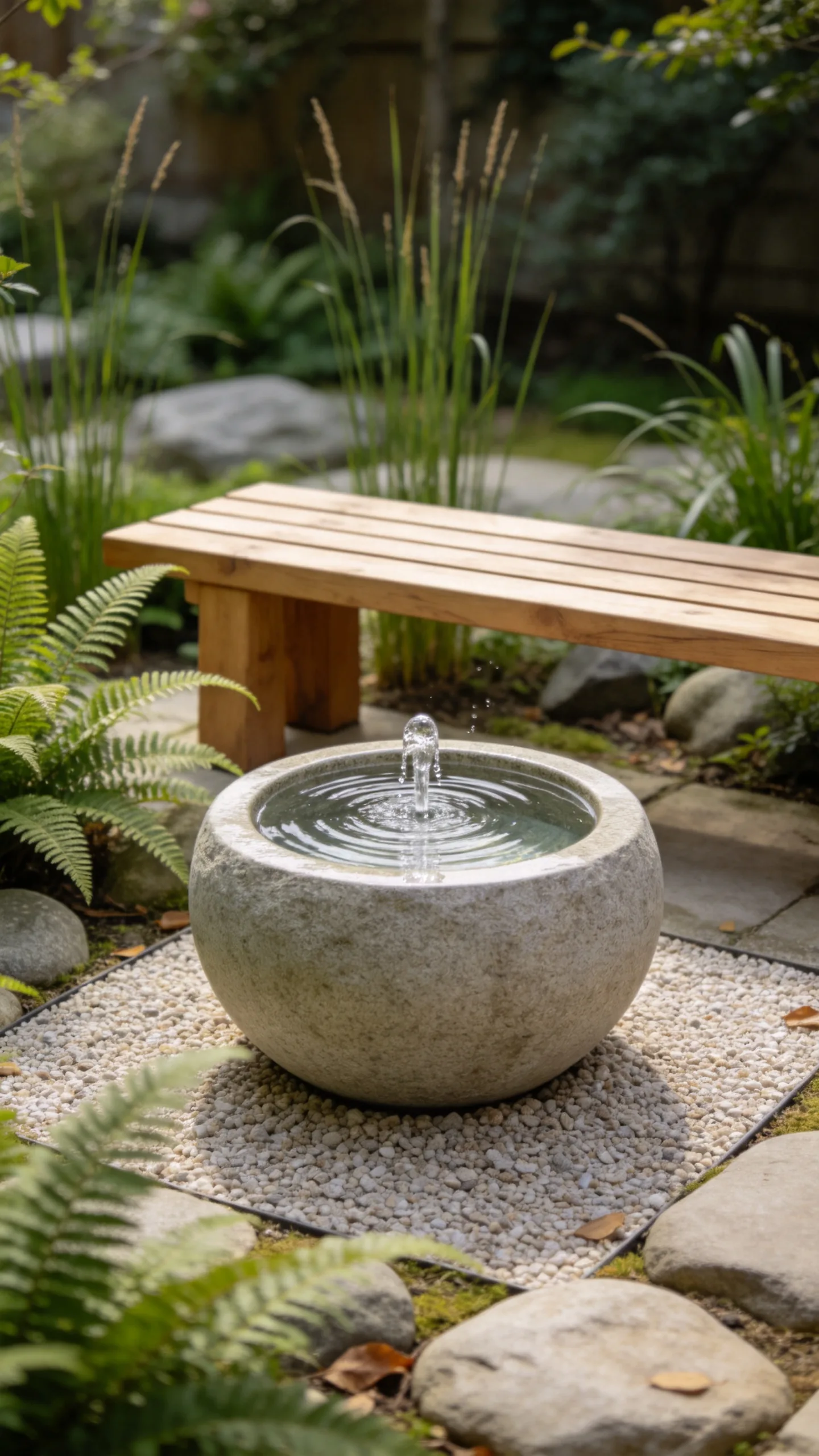
A compact fountain, bubbling urn, or water bowl can add gentle sound without requiring a pond. Place it close to the primary seating area so the water is audible at a low flow. A self-contained recirculating model saves space and uses the same water repeatedly, though it will still need occasional topping up during hot or windy weather.
Set the feature on a stable, level base and locate it near a safe outdoor power source if it uses an electric pump. Clean the pump and remove fallen leaves regularly to prevent blockages. In mosquito-prone areas, keep water circulating and follow local guidance for maintaining standing water. Choose a simple shape and modest flow so the feature supports the garden rather than dominating it.
6. Build a Shaded Stretching or Meditation Deck
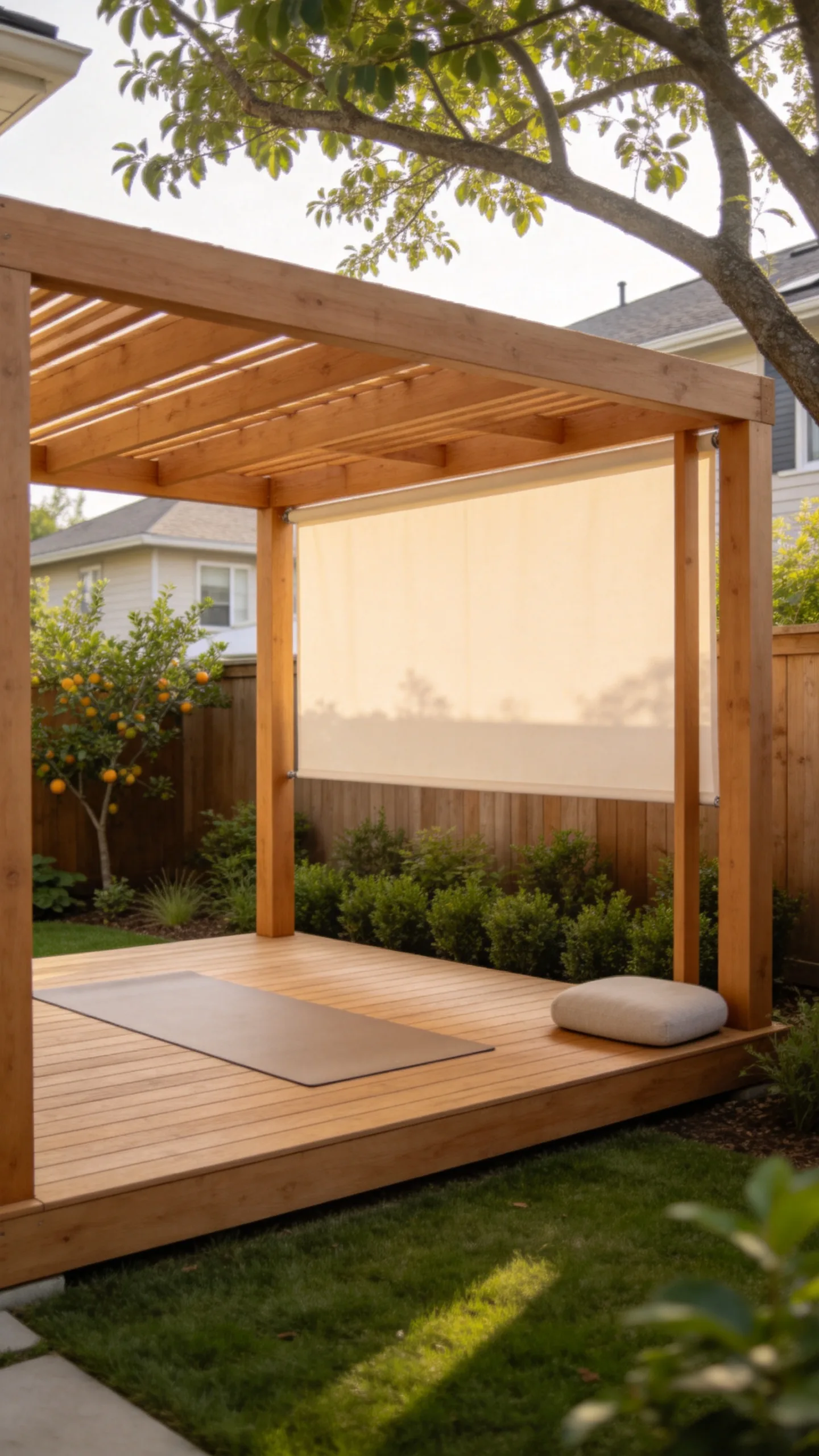
Reserve a level surface for yoga, breathing exercises, or quiet sitting. A small timber platform, smooth paved circle, or firm gravel pad can fit beside a fence or beneath an open-canopy tree. Allow enough clear room for the intended activity, and avoid placing the space directly under plants that frequently drop fruit, sap, or brittle branches.
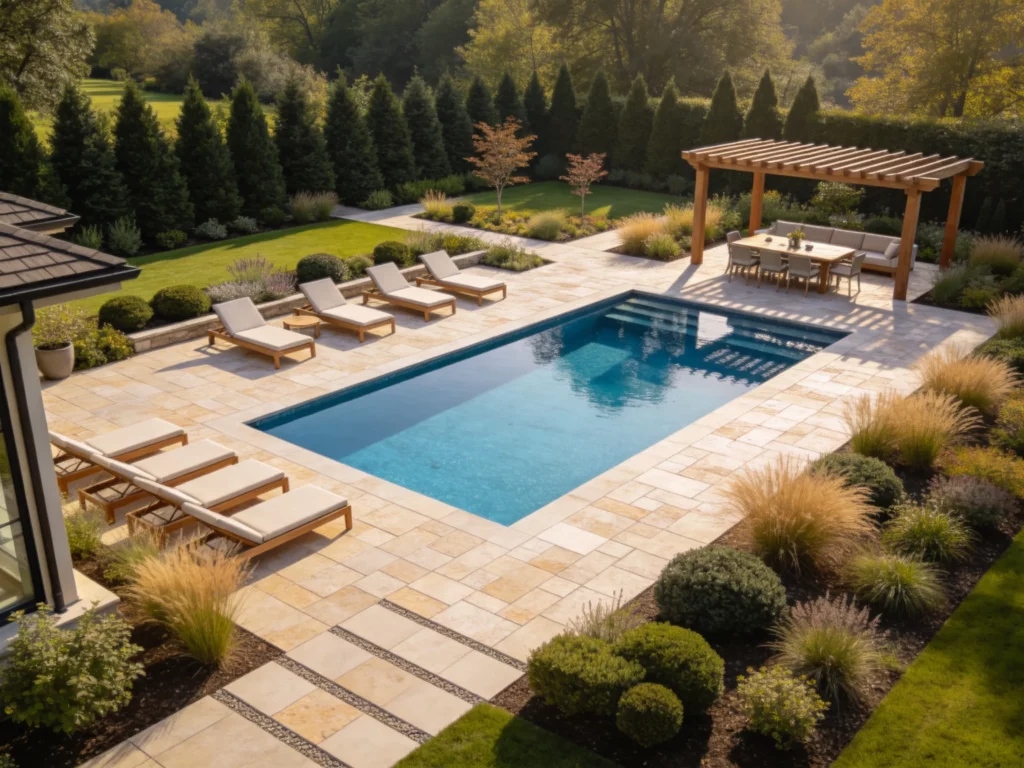
Create shade with a pergola, retractable canopy, shade sail, or deciduous vine trained overhead. Deciduous climbers can provide summer cover while allowing more winter light, but their weight must be supported by a sturdy structure. Keep nearby planting simple and low so the area remains open, easy to clean, and comfortable to use.
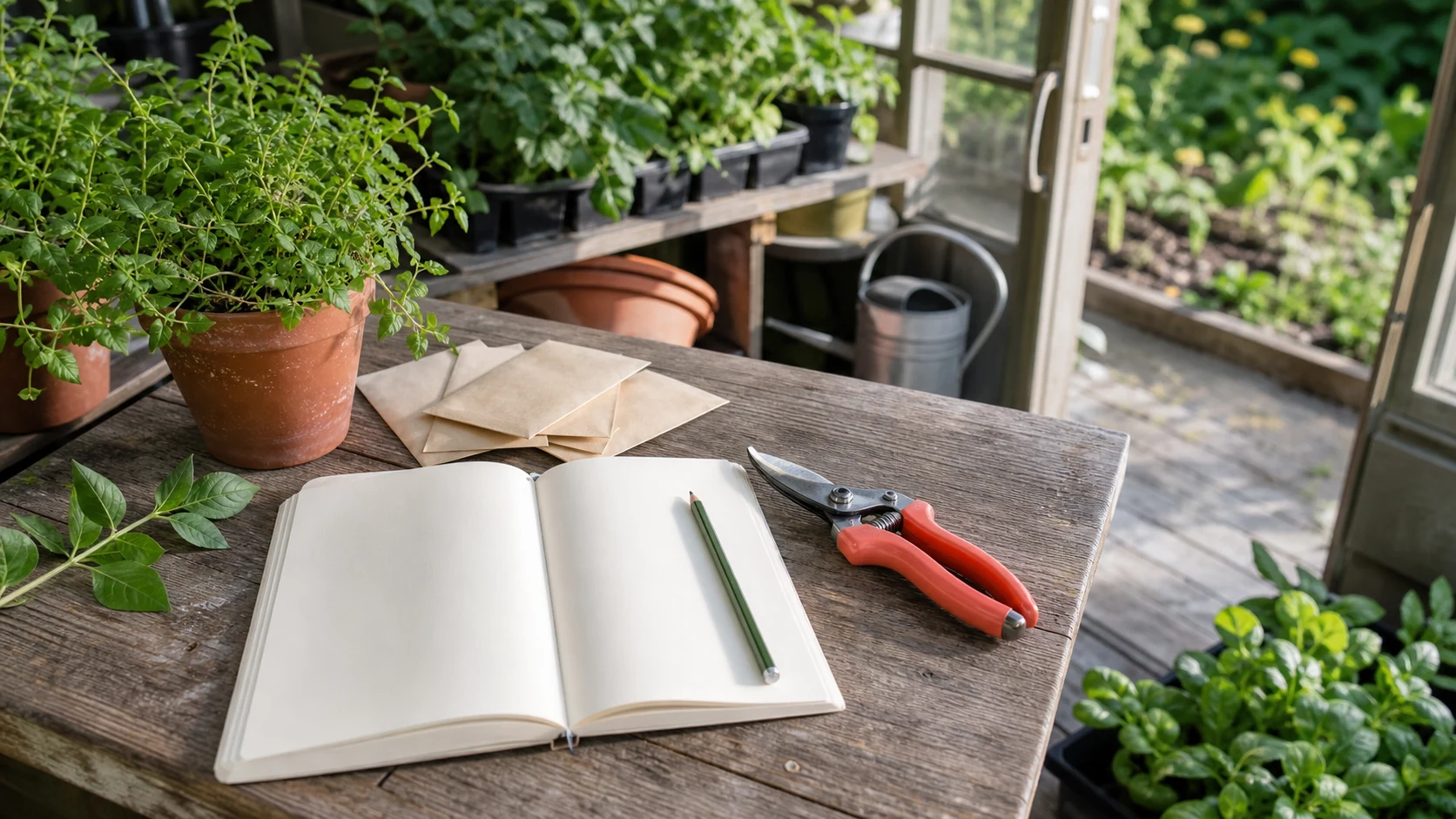
7. Grow a Compact Tea and Herb Garden
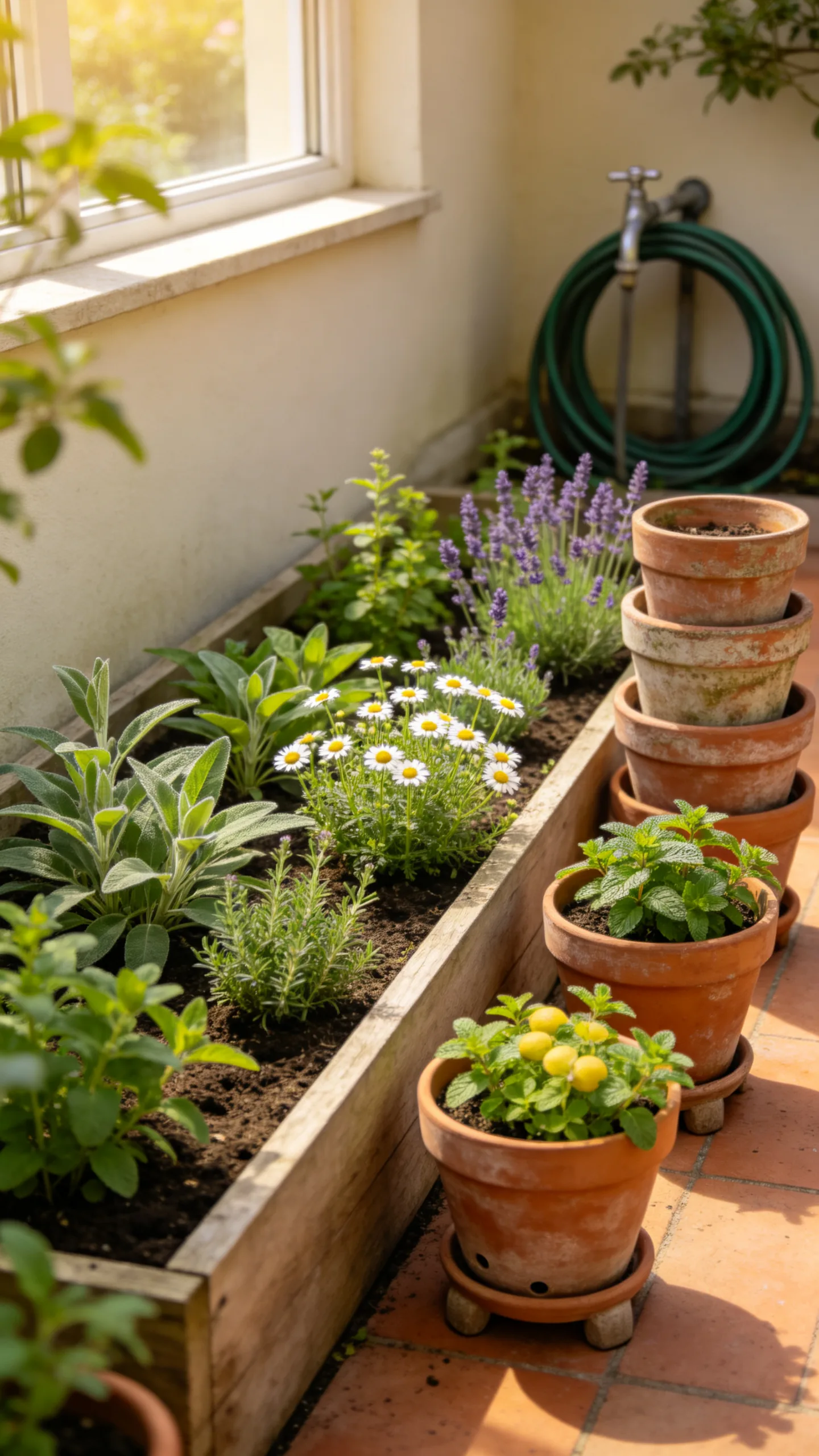
A raised bed or group of containers filled with useful herbs gives the retreat a practical purpose. Depending on local growing conditions, consider chamomile, lemon balm, peppermint, sage, thyme, or edible lavender varieties. Verify that each plant is correctly identified and suitable for culinary use before harvesting it.
Place sun-loving herbs where they receive at least six hours of direct light, and use containers with drainage holes to prevent waterlogged roots. A tiered stand, wall-mounted planter, or narrow trough saves floor space on a small patio. Keep containers near a tap or use drip irrigation, since pots dry faster than in-ground beds during warm weather.
8. Use a Soft, Restrained Color Palette
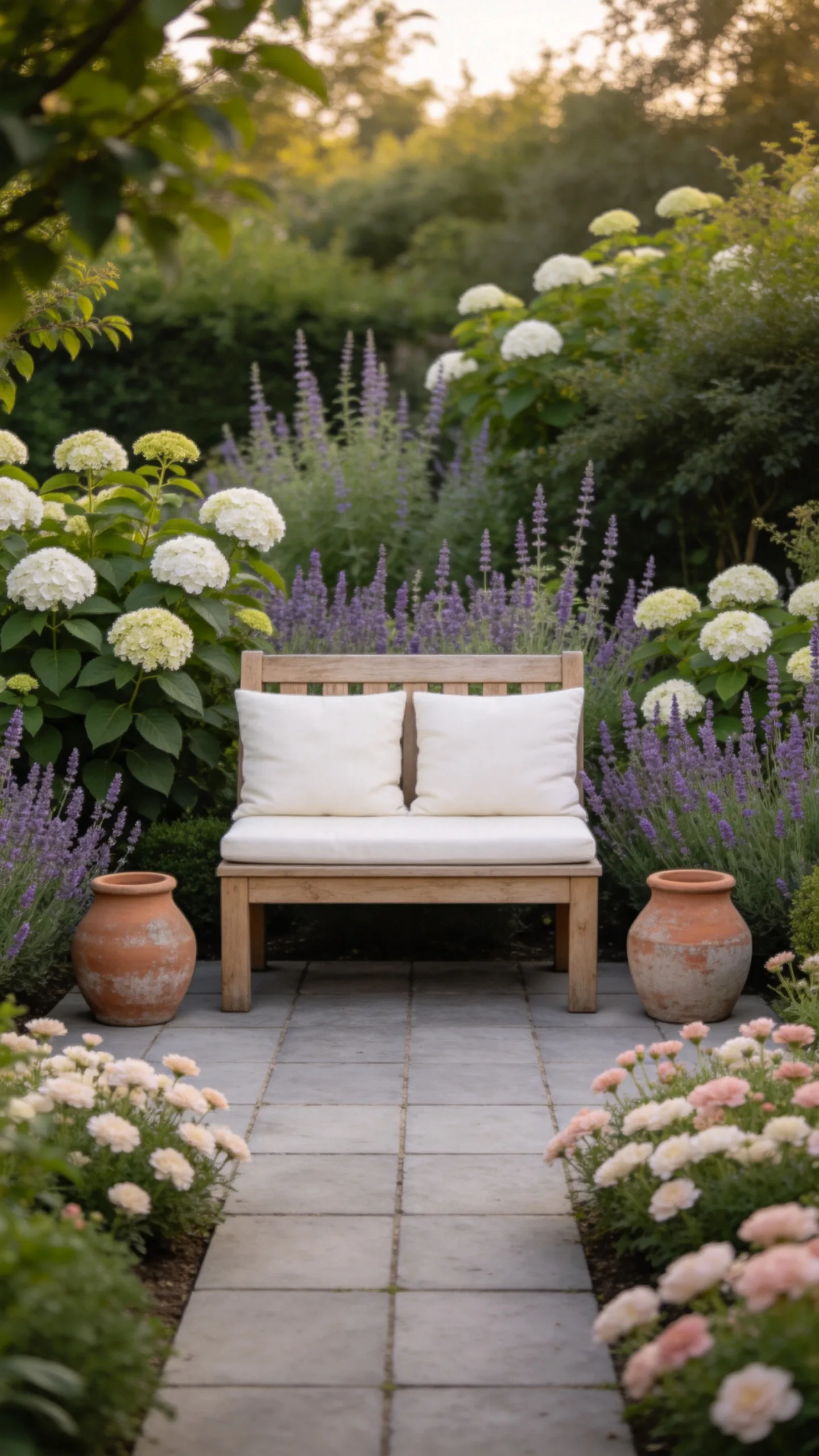
Limit the planting scheme to green foliage with a few pale flower colors, such as white, soft blue, muted purple, or blush pink. Repeating the same plants in groups creates a more cohesive view than scattering many unrelated varieties throughout the yard. White-flowering hydrangeas, catmint, salvia, alliums, and pale roses can work where their light and climate requirements are met.
Extend the palette to furniture, pots, and textiles. Natural timber, weathered terracotta, warm gray stone, and cream cushions tend to blend easily with planting. Choose two or three container styles and repeat them around the garden to reduce visual clutter, especially in a compact backyard.
9. Install Warm, Low-Level Evening Lighting
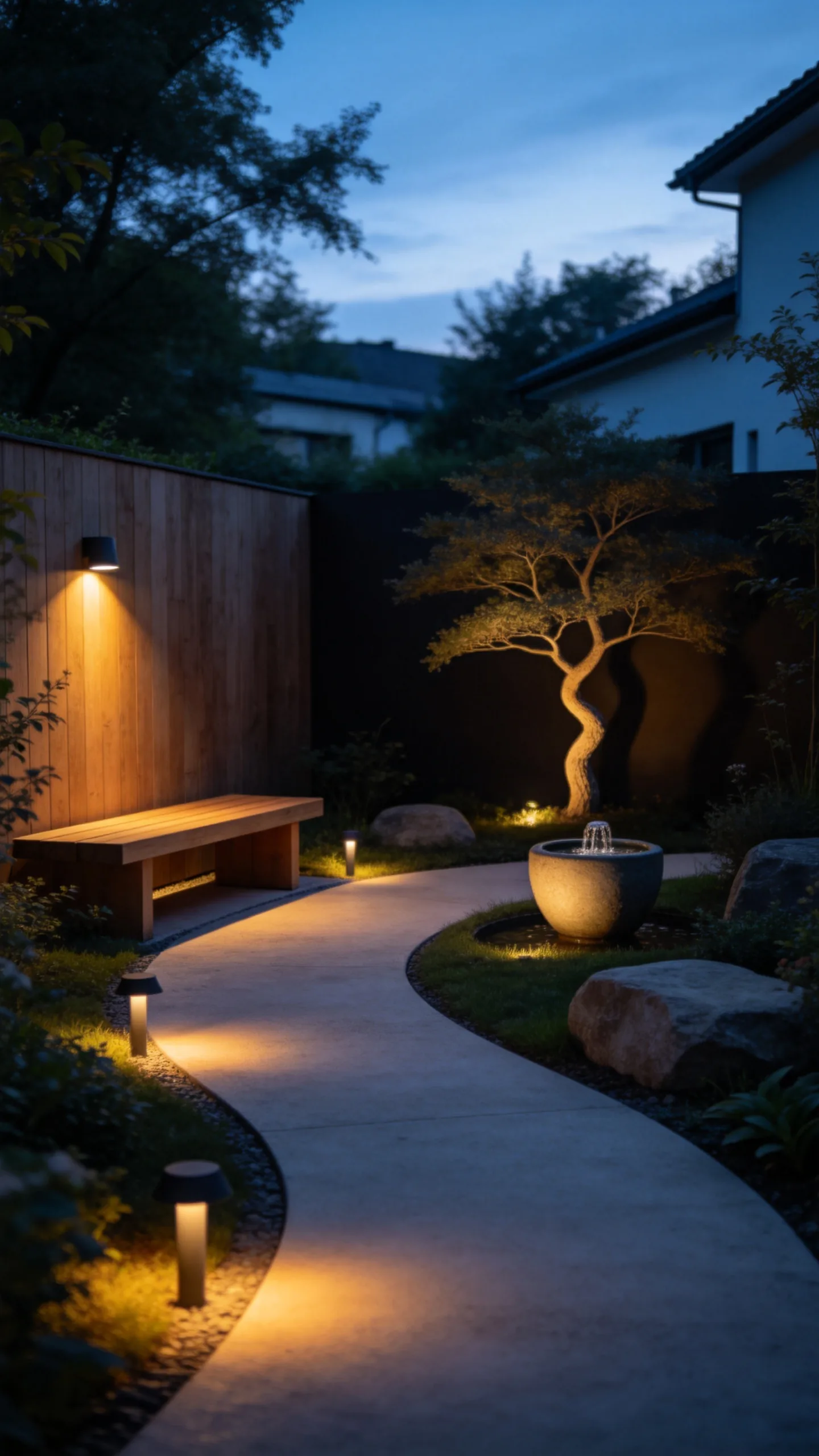
Use subtle lighting to make the garden comfortable after sunset without flooding the entire yard. Place shielded path lights beside steps, add a warm wall light near seating, or weave outdoor-rated string lights beneath a pergola. Aim fixtures downward to reduce glare and prevent light from shining into neighboring properties.
Solar lights are convenient in sunny positions, while low-voltage wired systems usually offer more consistent output in shaded gardens. Illuminate only important features, such as the path edge, a sculptural tree, or the water feature. Timers and motion sensors can limit unnecessary nighttime lighting and reduce disturbance to nocturnal wildlife.
10. Establish a Low-Maintenance Ground Layer
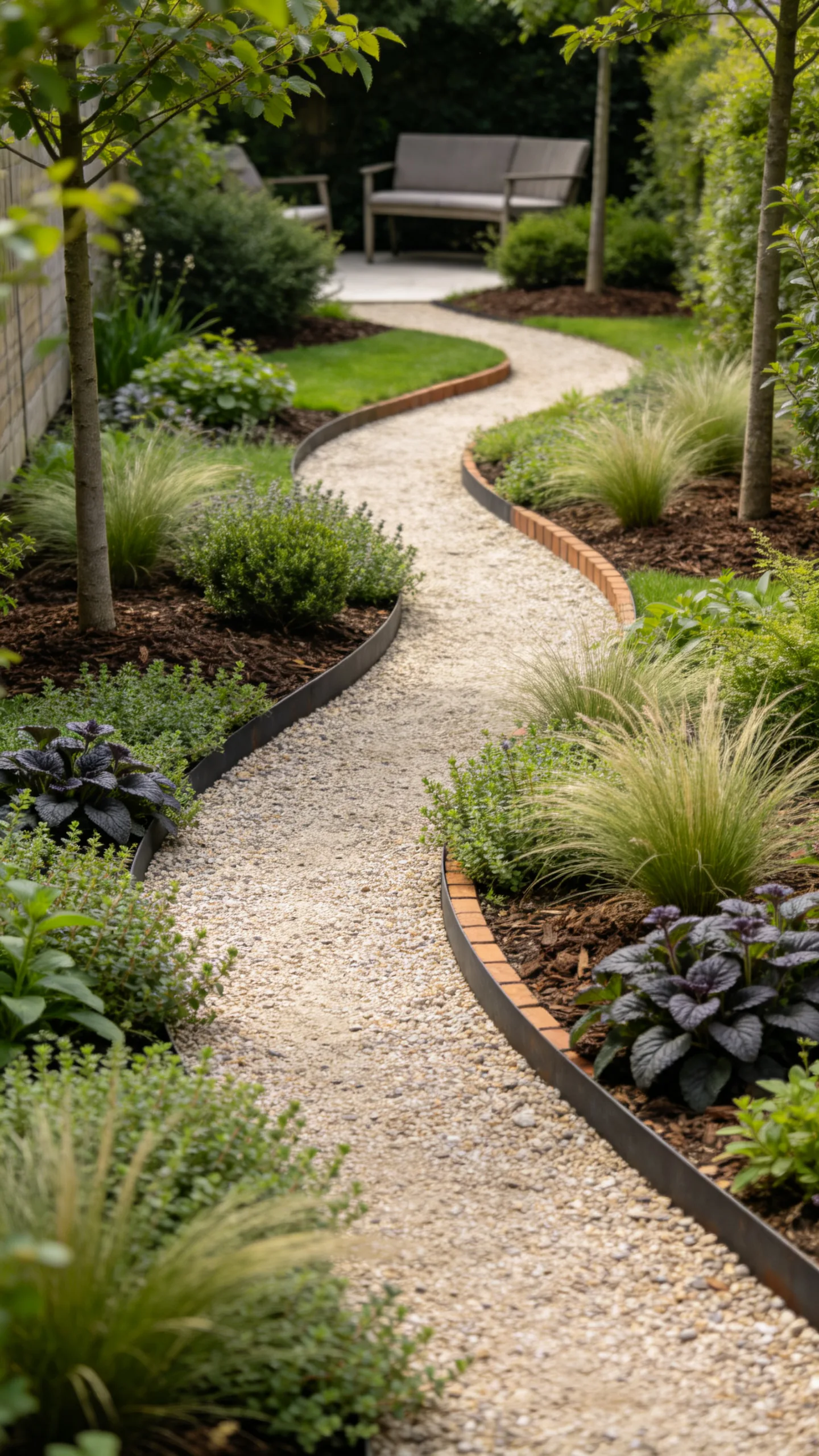
Replace difficult strips of lawn with ground covers, mulch, gravel, or densely planted perennial beds. This reduces mowing around furniture and narrow borders while giving the retreat a softer, more finished appearance. Suitable ground covers might include creeping thyme for dry sun, ajuga for partial shade, or native sedges for sites matching their moisture needs.
Apply organic mulch around shrubs and perennials to suppress weeds and slow moisture loss, keeping it away from stems and tree trunks. Install simple metal, stone, or brick edging to stop gravel and mulch from spilling onto paths. Before planting, remove perennial weeds and improve drainage where needed; good preparation makes the garden easier to maintain and leaves more time to enjoy the space.