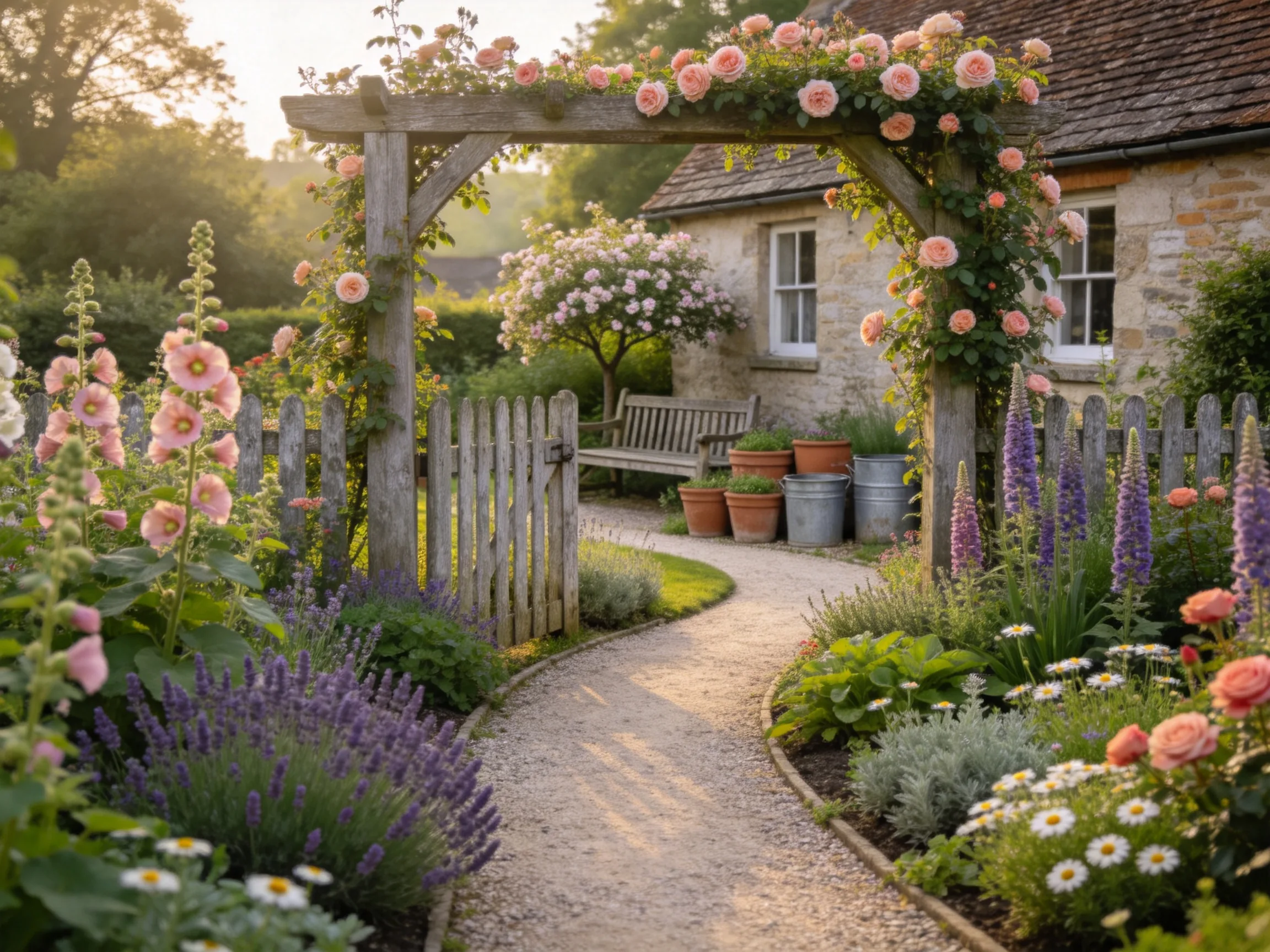
A charming village garden feels welcoming rather than overly planned, combining abundant flowers, practical pathways, edible plants, and weathered materials. Whether you have a compact courtyard or a larger backyard, these village garden design ideas can help you create a cozy cottage look while making thoughtful use of light, planting space, and existing features.
1. Frame the Entrance With a Flower-Covered Arbor
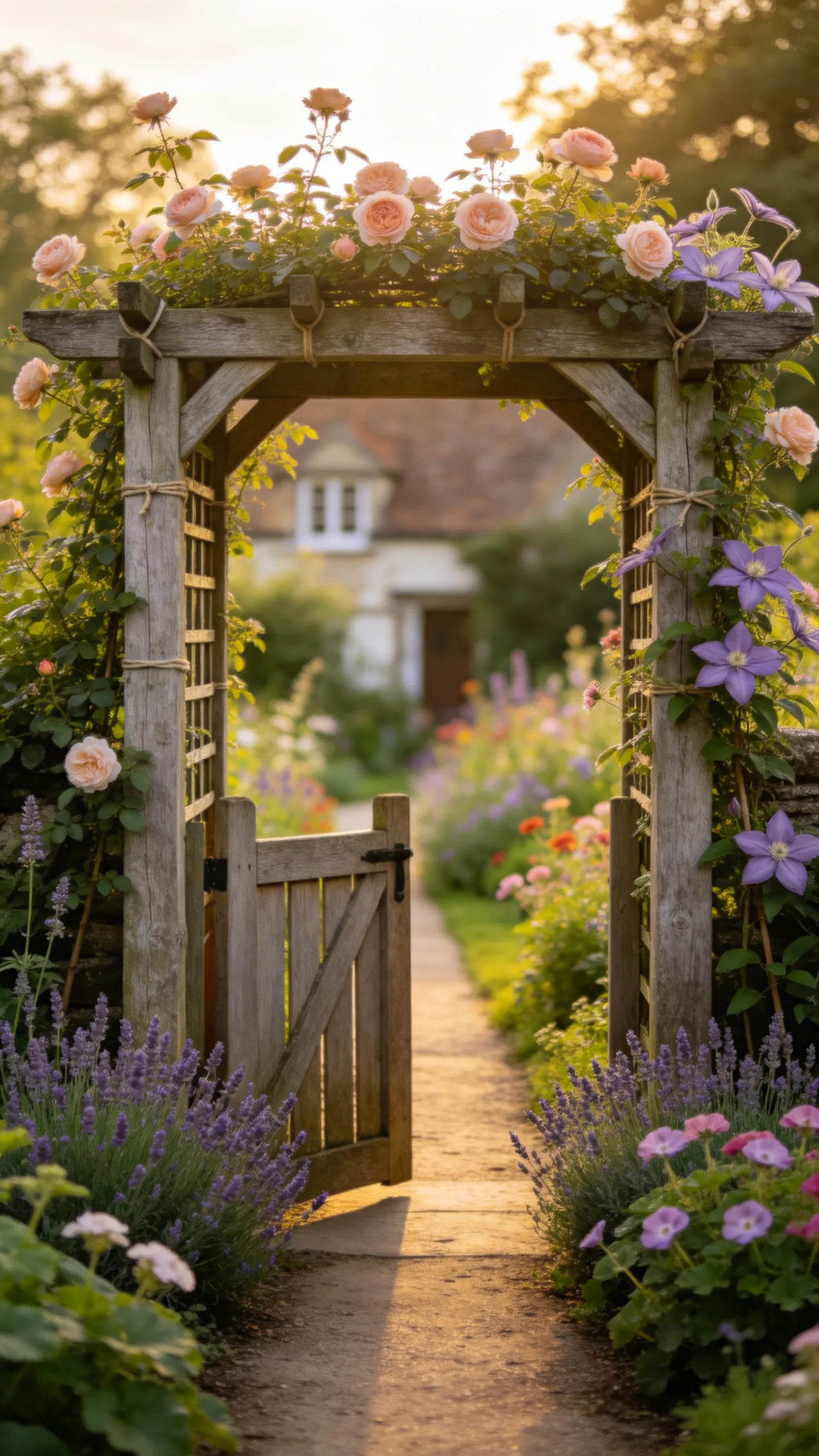
Place a simple timber or painted metal arbor over the main garden gate or at the beginning of a path. Train a climbing rose, clematis, honeysuckle, or star jasmine over the structure, choosing a plant suited to your local climate and the amount of sun the entrance receives.
An arbor creates height without taking up much ground space, making it especially useful in a narrow front garden. Install a small trellis panel on each side if extra support is needed, and tie new stems loosely with soft garden twine. Underplant the posts with lavender, catmint, or hardy geraniums to soften the base and continue the cottage-style planting at ground level.
2. Plant Deep Borders With Layered Cottage Flowers
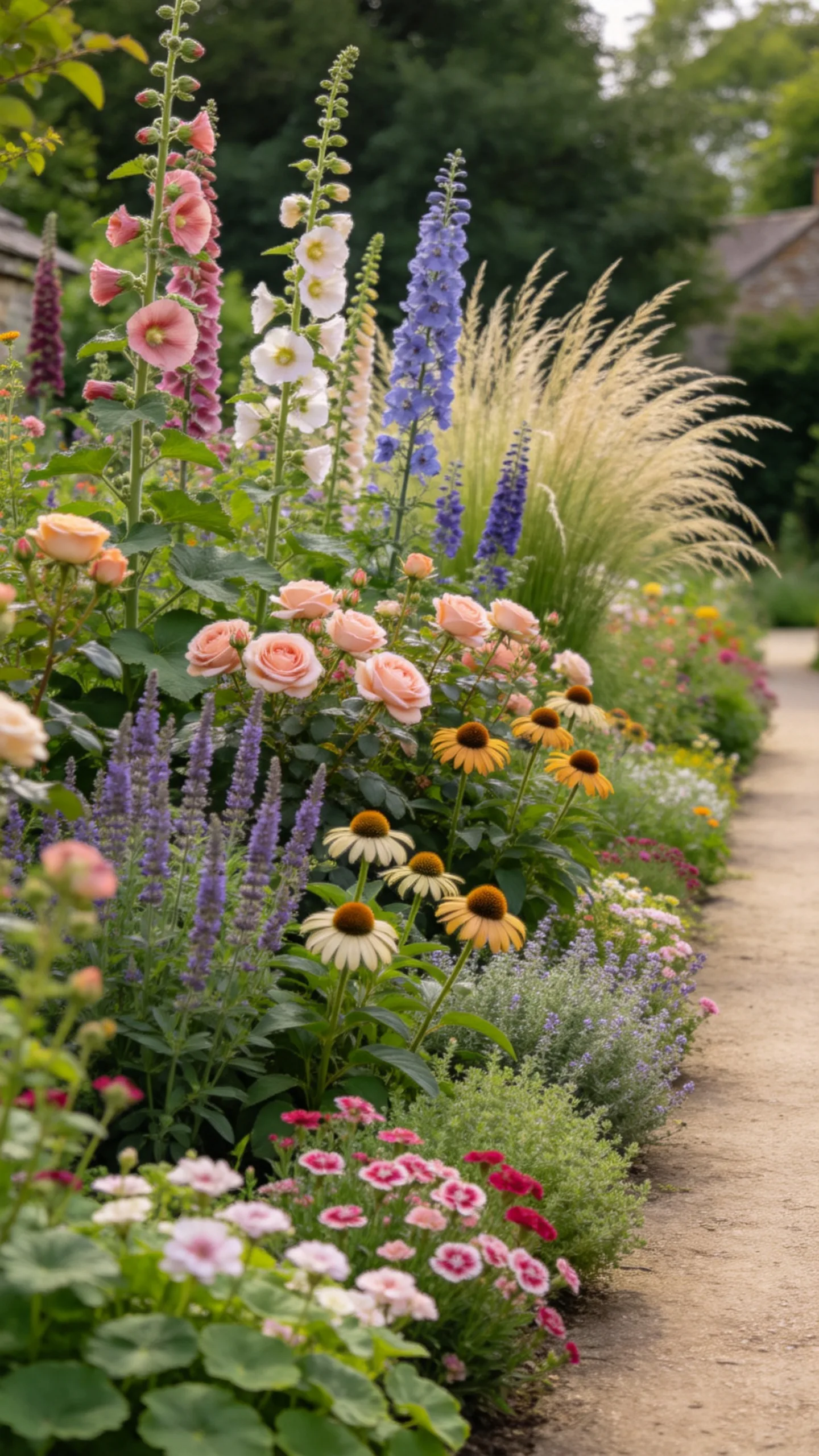
Create an informal border using plants of different heights instead of arranging flowers in straight, evenly spaced rows. Place hollyhocks, foxgloves, delphiniums, or ornamental grasses toward the back; use roses, salvias, and coneflowers through the middle; and edge the bed with dianthus, creeping thyme, or lady’s mantle.
Repeat a few plants along the border so the display still feels connected despite its loose appearance. Select varieties with staggered flowering seasons, such as spring bulbs, early-summer perennials, and late-season asters. In a small yard, keep the border deep at one end and gradually narrow it to create visual perspective without sacrificing the path or seating area.
3. Lay a Curving Gravel Path
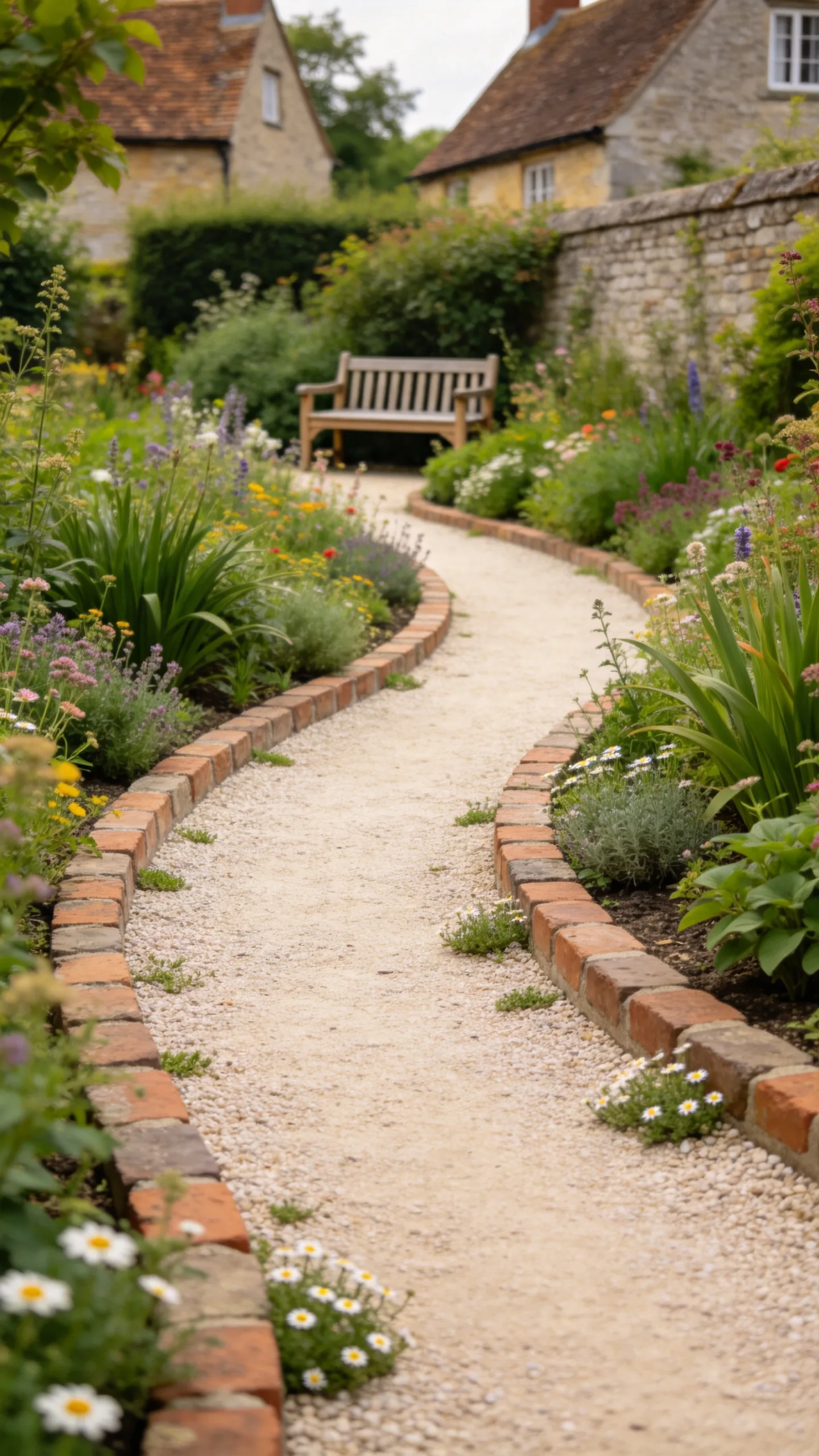
A gently curving path adds an established village character and encourages visitors to explore the garden slowly. Use compacted gravel, pea stone, or locally available crushed rock over a firm sub-base, with steel, brick, timber, or stone edging to keep the material from spreading into beds.
Allow thyme, chamomile, or low-growing sedum to soften selected edges, but keep the main walking surface clear. A path about 3 feet wide is comfortable for regular use, while a narrower secondary path can lead to a bench, shed, or vegetable patch. Curves can also make a short garden appear deeper by partially hiding the destination from view.
4. Mix Herbs and Vegetables Into Flower Beds
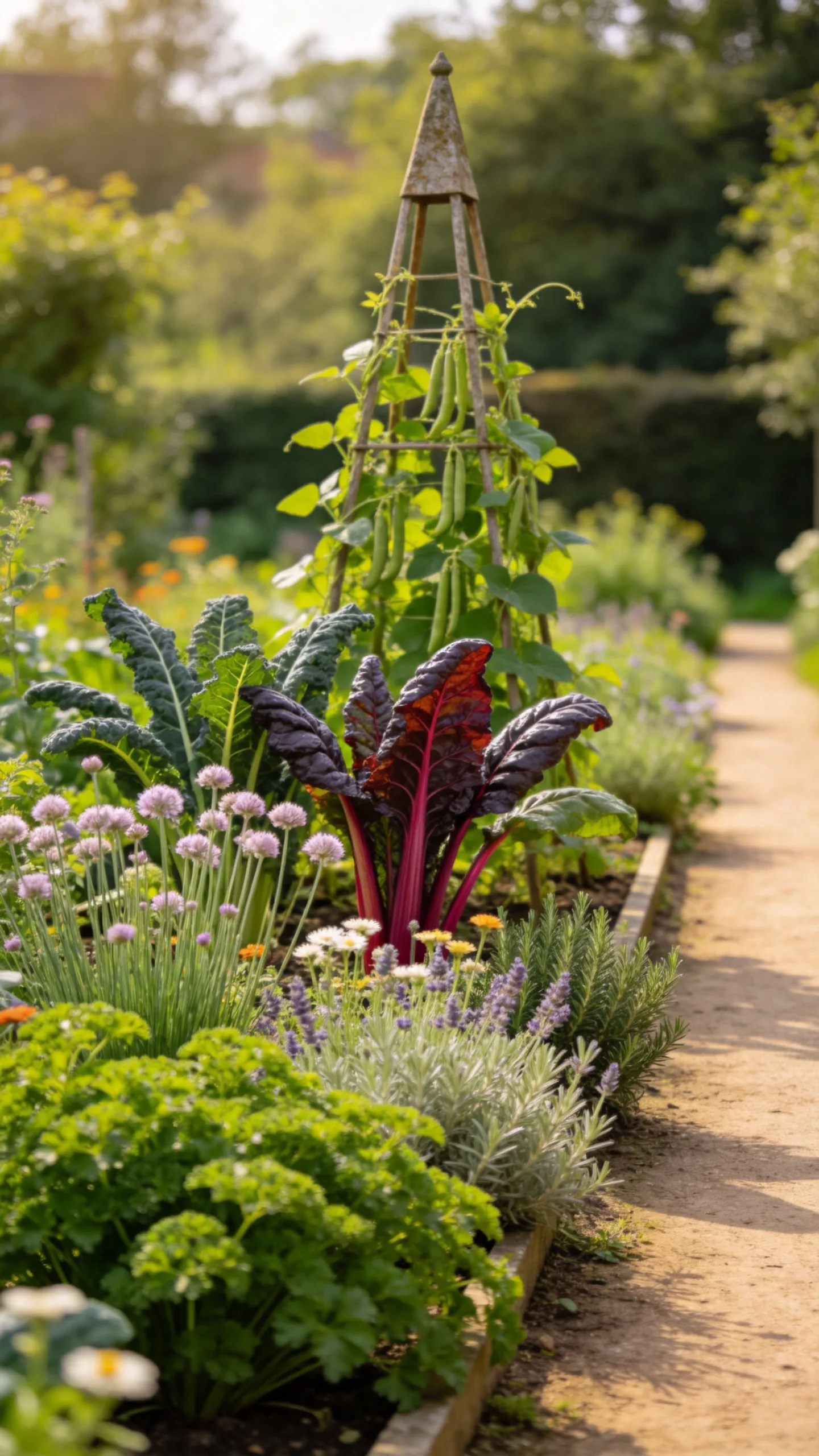
Traditional village garden design often blends useful crops with ornamental planting. Tuck curly parsley, chives, sage, rosemary, or compact basil between flowering plants, and use upright vegetables such as kale or rainbow chard as textured accents. Always match herbs to the conditions: Mediterranean varieties generally prefer full sun and free-draining soil, while parsley and chives tolerate some light shade.
Support peas, runner beans, or cucumbers on a narrow obelisk or wall-mounted trellis to save bed space. For easy harvesting, position frequently used herbs beside the kitchen door or path. Avoid placing vigorous mint directly in a mixed border; grow it in a buried pot or separate container to control its spreading roots.
5. Add a Rustic Picket Fence and Wooden Gate
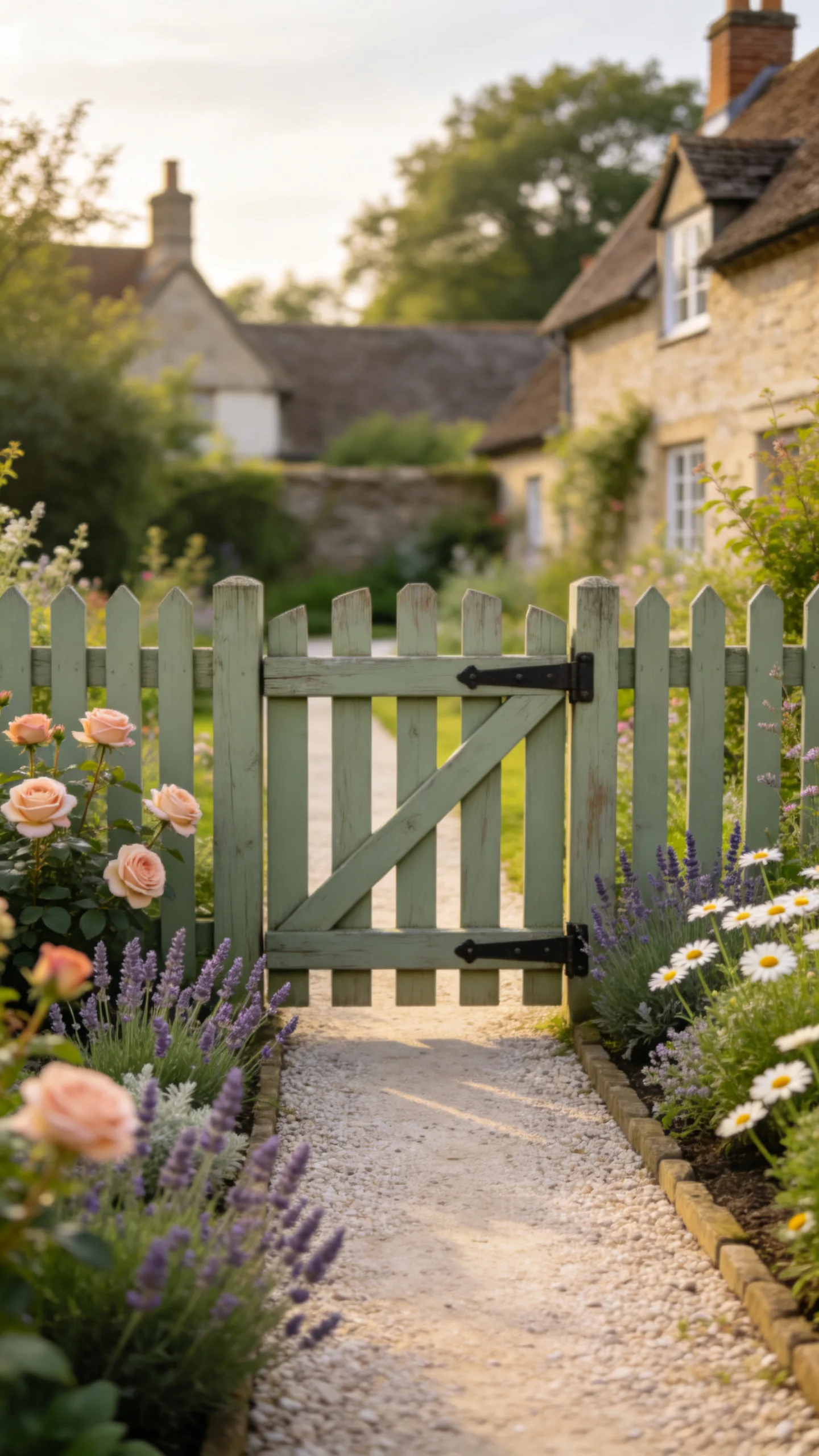
A low picket fence can define the garden without making it feel closed off. Natural timber develops a weathered finish, while soft white, sage green, pale blue, or muted gray paint gives the boundary a classic cottage appearance. Keep the fence low enough to preserve sunlight and views, particularly in a small front yard.
Plant compact roses, lavender, nepeta, or daisies along the inside edge, leaving enough clearance for airflow and maintenance. A simple wooden gate with traditional hinges creates a strong focal point when aligned with the front path. If privacy is needed, combine the fence with taller shrubs in selected areas rather than installing a solid boundary around the entire garden.
6. Create a Cozy Bench Nook Under a Small Tree
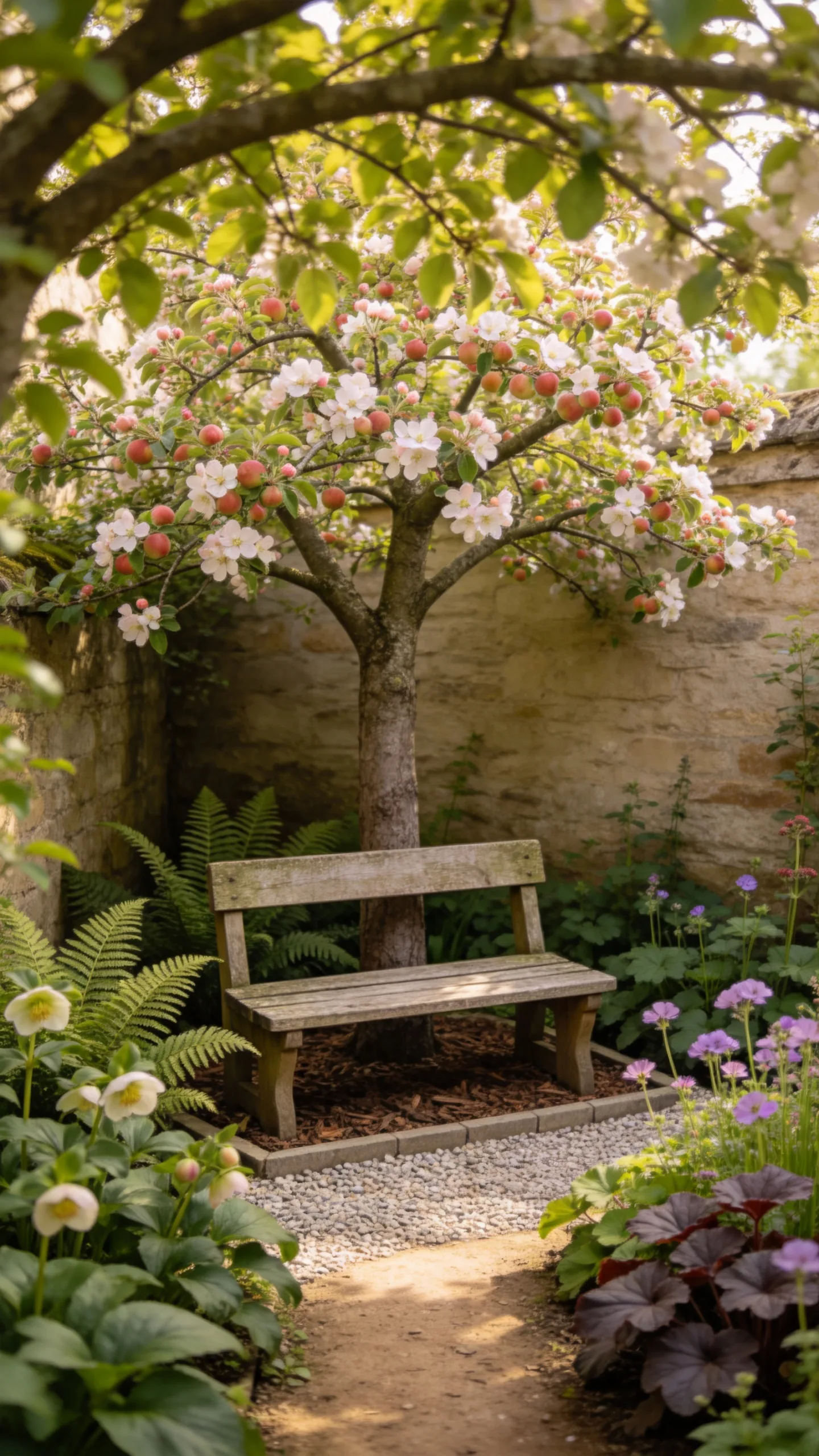
Turn a quiet corner into a village-style seating area with a wooden, wrought-iron, or painted garden bench. Position it beneath a small ornamental tree such as crabapple, serviceberry, hawthorn, or a compact fruit tree, checking mature height and root spread before planting near paving or walls.
Use shade-tolerant plants such as ferns, hellebores, heucheras, or hardy geraniums around the base, while keeping mulch away from the trunk. A short gravel pad beneath the bench prevents muddy feet and reduces trimming work. In a very compact garden, place the seat against a wall and train a small tree as an espalier to provide greenery without occupying the center of the space.
7. Display Flowers in Aged Pots and Galvanized Containers
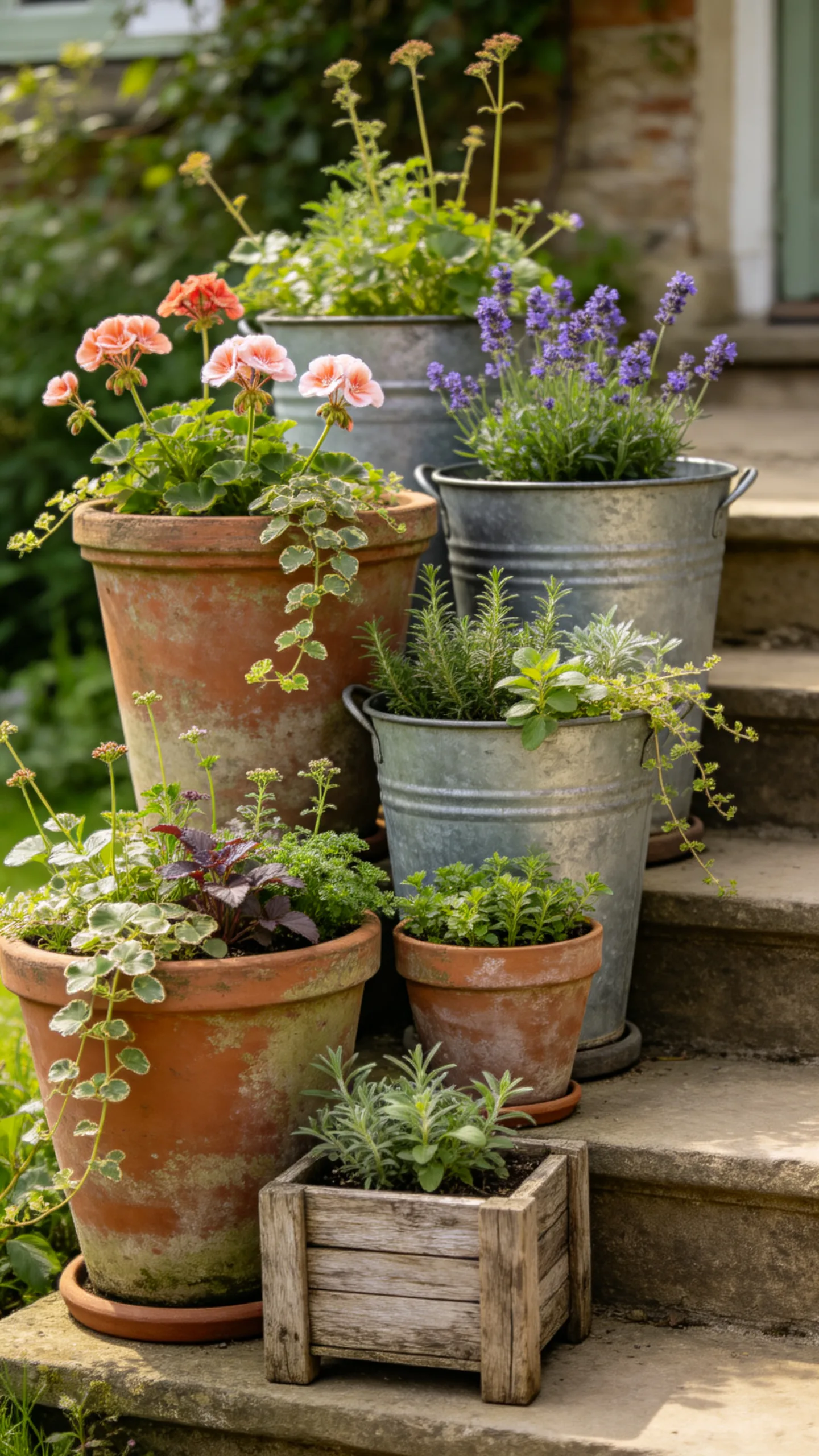
Group terracotta pots, galvanized tubs, wooden planters, and repurposed metal containers near steps, doors, or seating areas. Fill them with seasonal combinations such as violas and bulbs in spring, pelargoniums and trailing lobelia in summer, or compact grasses and heucheras for autumn texture.
Every container needs drainage holes, and metal vessels may require extra holes and pot feet to prevent waterlogging. Use a moisture-retentive potting mix for thirsty annuals, but add grit for herbs that prefer sharp drainage. Arranging containers in groups of three or five creates a fuller display, while placing taller pots behind smaller ones adds depth without cluttering a narrow patio.
8. Train Climbers Against Walls and Sheds
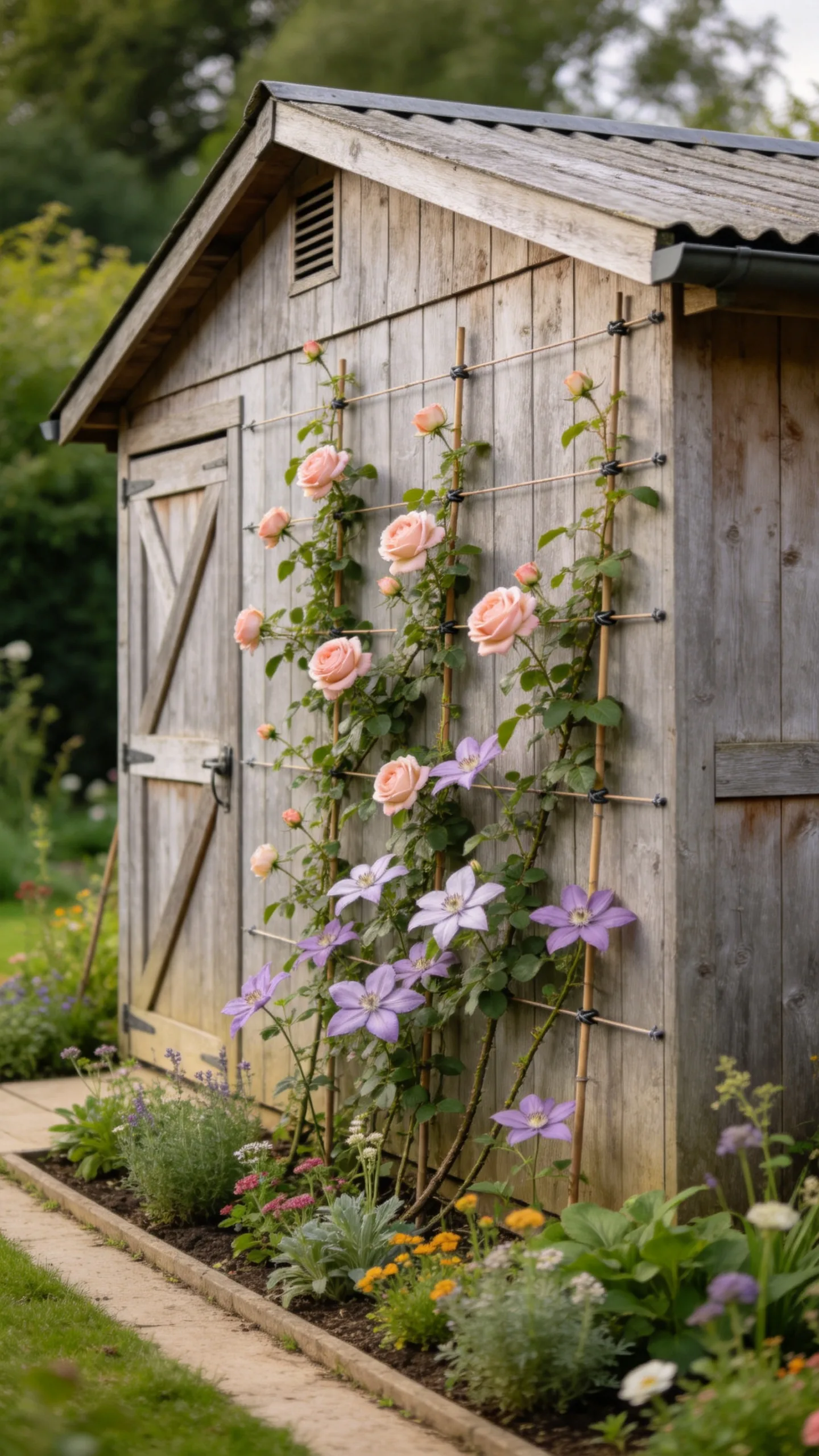
Bare walls, fences, and garden sheds offer valuable vertical planting space. Attach horizontal wires or a sturdy trellis before planting climbing roses, clematis, honeysuckle, grapevines, or espaliered fruit. Leave a small gap between the support and wall so air can circulate and stems can be tied in easily.
Match the climber to the site rather than choosing by appearance alone. Some roses and fruiting vines flower best in strong sun, while certain clematis and climbing hydrangeas can handle partial shade. Vertical planting hides plain surfaces, improves privacy, and leaves the ground available for a path, herbs, or a narrow flower border.
9. Introduce a Small Wildlife Water Feature
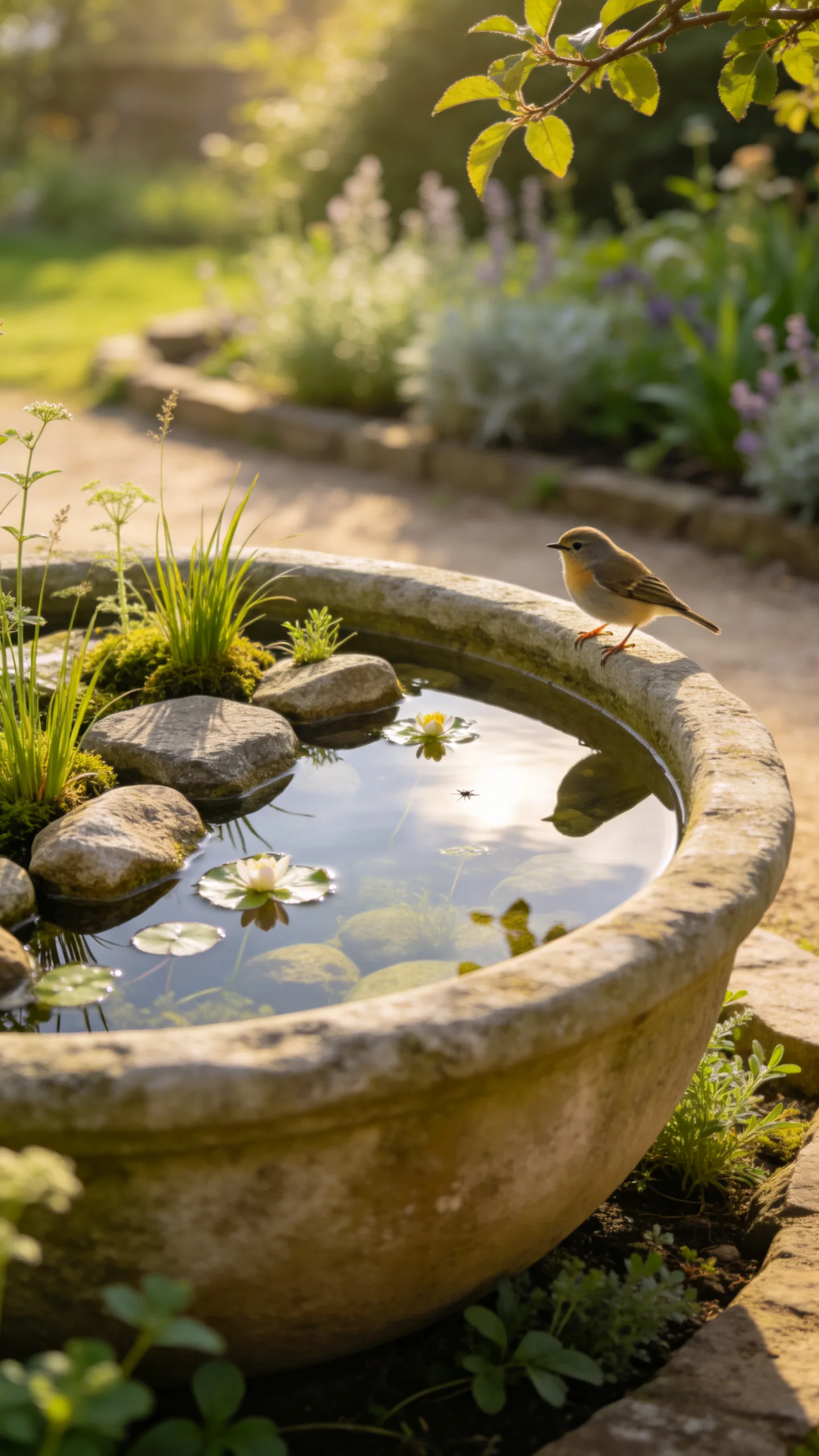
A shallow birdbath, stone basin, or compact container pond brings movement and reflective light into a village garden. Place it where it can be seen from a window or bench, but avoid positioning it directly beneath trees that constantly drop leaves. Add a few stones at different heights so insects and small wildlife have safe landing and exit points.
For a container pond, use an watertight vessel and choose compact aquatic plants appropriate for the water depth and local conditions. Avoid adding invasive species, and check regional guidance before selecting pond plants. Top up evaporated water during dry weather, remove decaying foliage, and keep the feature small enough to clean safely and regularly.
10. Finish With Informal Brick and Stone Edging
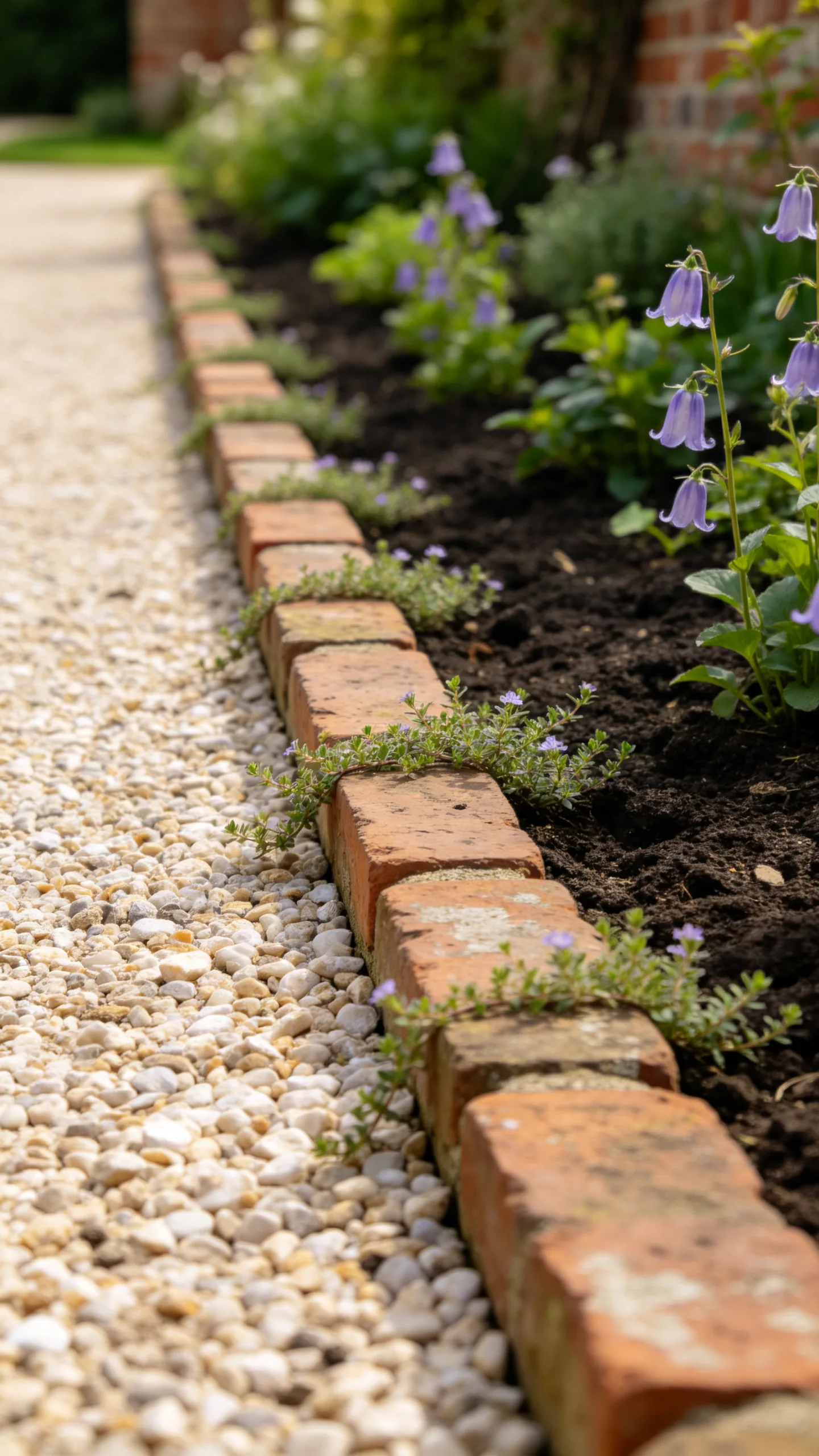
Reclaimed-look bricks, rounded fieldstones, or locally sourced stone can give borders a settled, timeworn appearance. Lay bricks flat for a simple mowing edge, angle them for a more decorative finish, or place irregular stones along gravel paths to separate planting from the walking surface.
Set the edging into a shallow trench over compacted sand or fine gravel so it remains stable through rain and seasonal ground movement. Use one main material throughout the garden to connect different areas, then let low plants such as creeping thyme, aubrieta, or campanula spill over occasional sections. The result should look gently softened by planting while still keeping soil, mulch, and gravel where they belong.