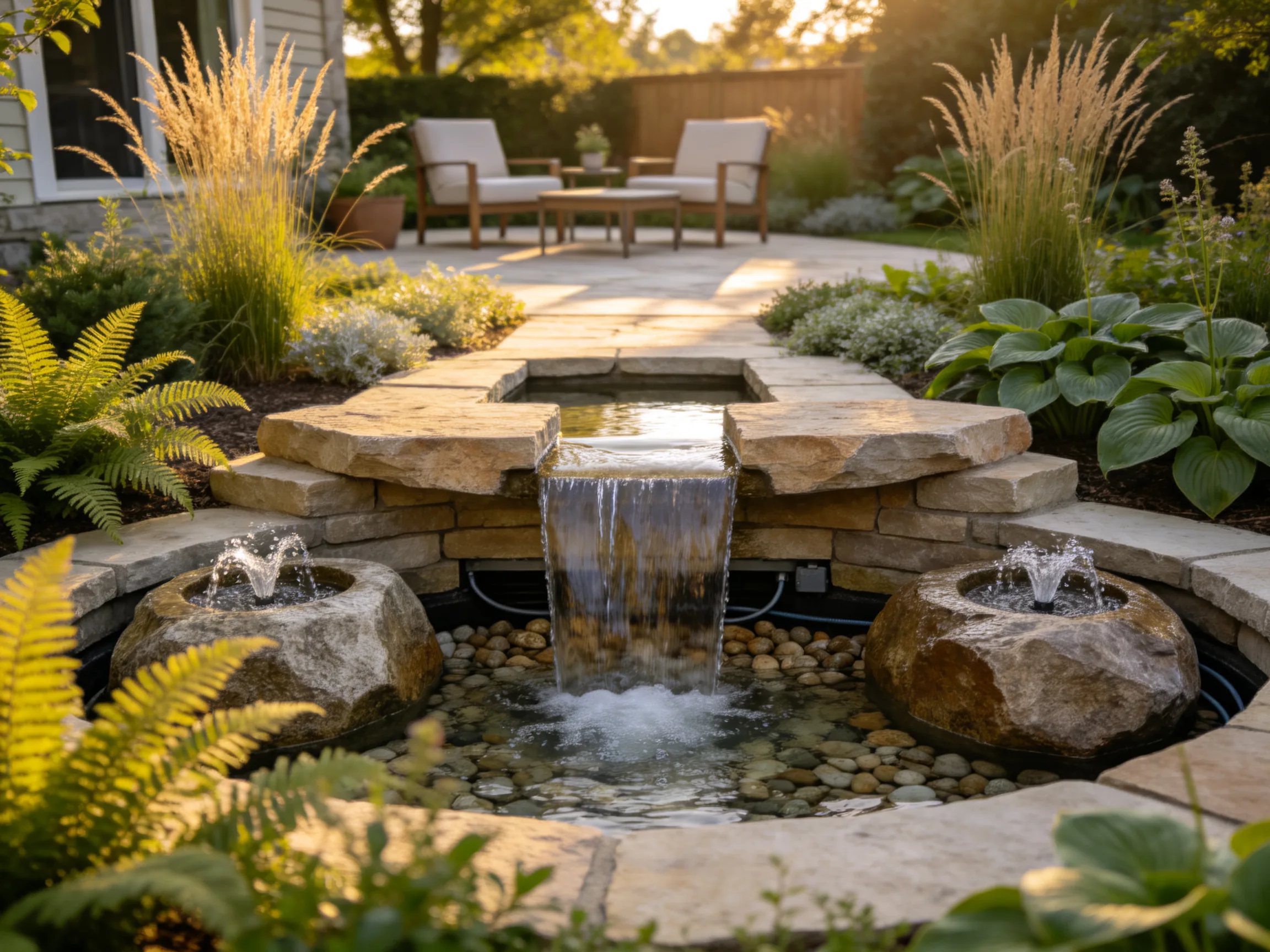
A well-planned water fall in garden design can add movement, soften hard edges, and turn a plain yard into a more layered outdoor space. These DIY ideas focus on realistic builds for backyards, patios, and small garden corners, with options for different budgets, sunlight levels, and maintenance needs.
1. Stacked Stone Spillway Waterfall
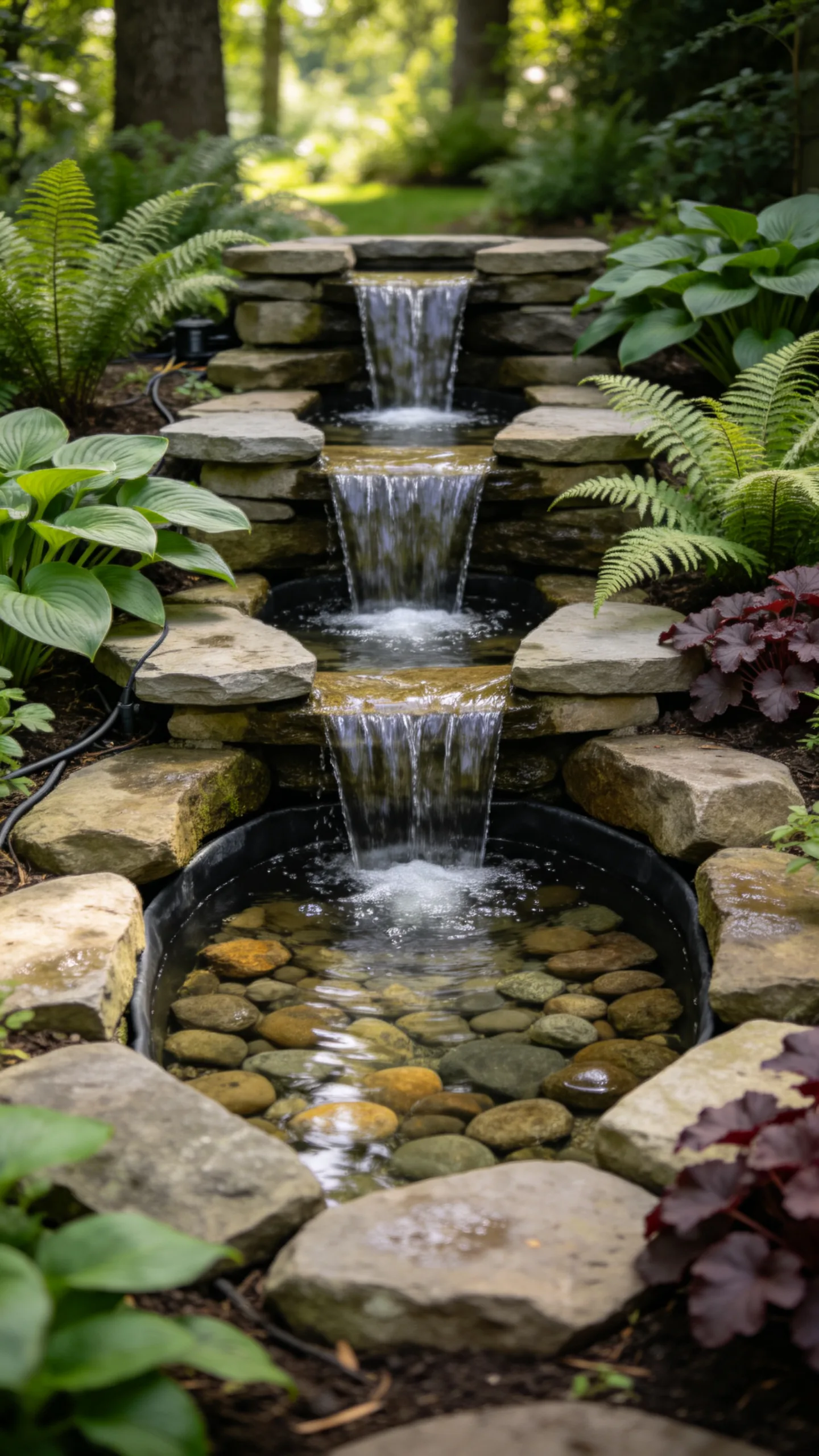
A stacked stone spillway is one of the easiest ways to create a natural-looking water fall in garden spaces with a sloped bed or raised edge. Build a small recirculating basin below, then use flat stones or ledgestone to guide water down one or two short drops. The layered rock gives the feature a woodland feel and works well beside ferns, hostas, heuchera, or other shade plants if the area gets partial sun.
Keep the shape compact if your yard is small. A spillway only needs enough height to make the water visible and audible, so even a 12- to 18-inch drop can be effective. Line the basin with river rocks to hide the liner, and use larger stones on the sides to keep splash contained and maintenance simple.
2. Pondless Gravel Basin Waterfall
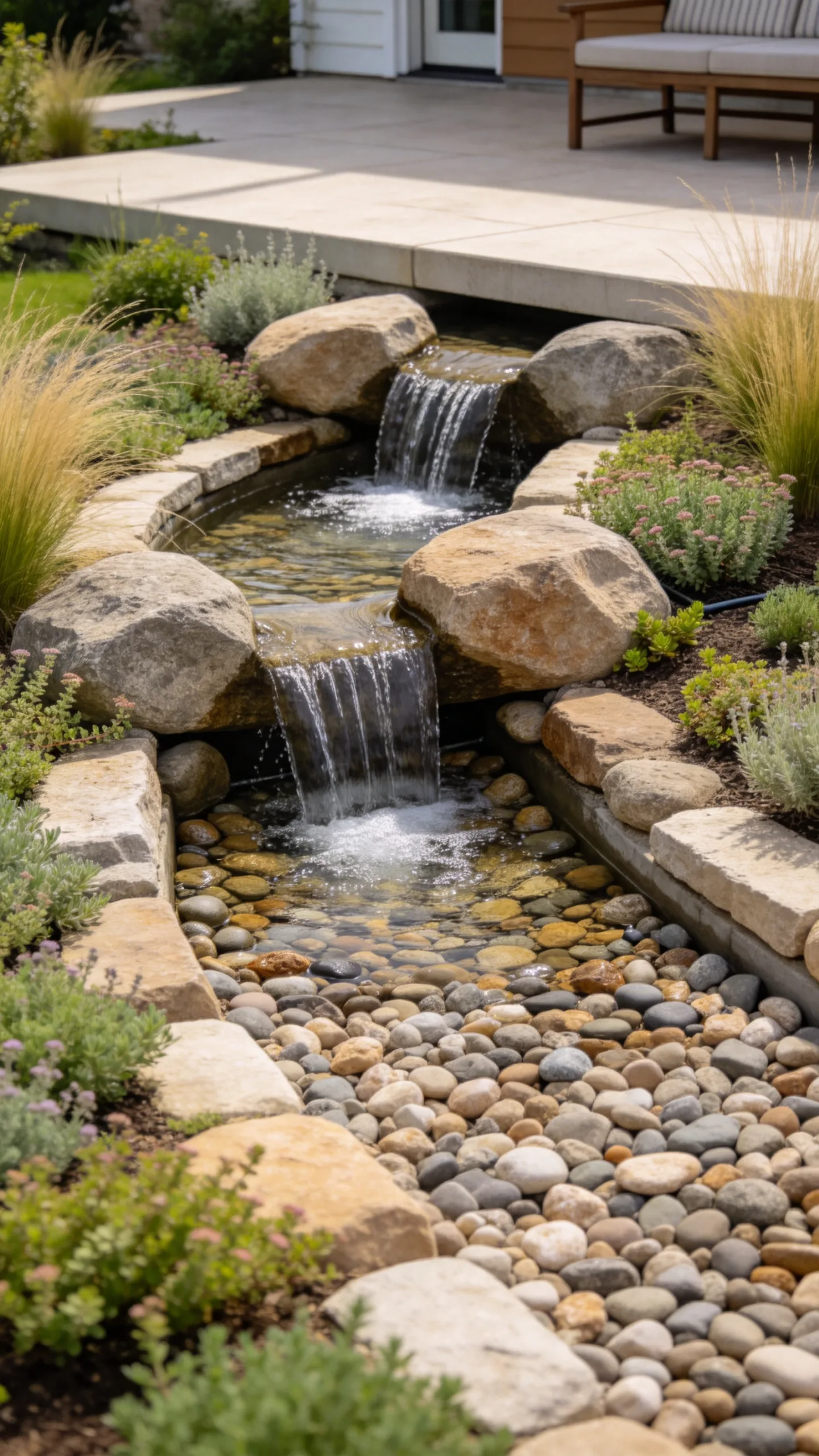
A pondless waterfall is ideal if you want the sound of running water without an open pond. Water collects in an underground reservoir under decorative gravel, then a pump sends it up to a short rock cascade. This setup saves space, reduces standing water, and is easier to keep clean than a traditional pond.
For a backyard makeover, place it near a seating area, fence line, or patio corner where the sound can carry. Use boulders, cobbles, and gravel to create a natural transition from hardscape to planting bed. Drought-tolerant border plants like ornamental grasses, creeping thyme, or sedum can frame the edges without crowding the basin.
3. Ceramic Pot Spill Fountain
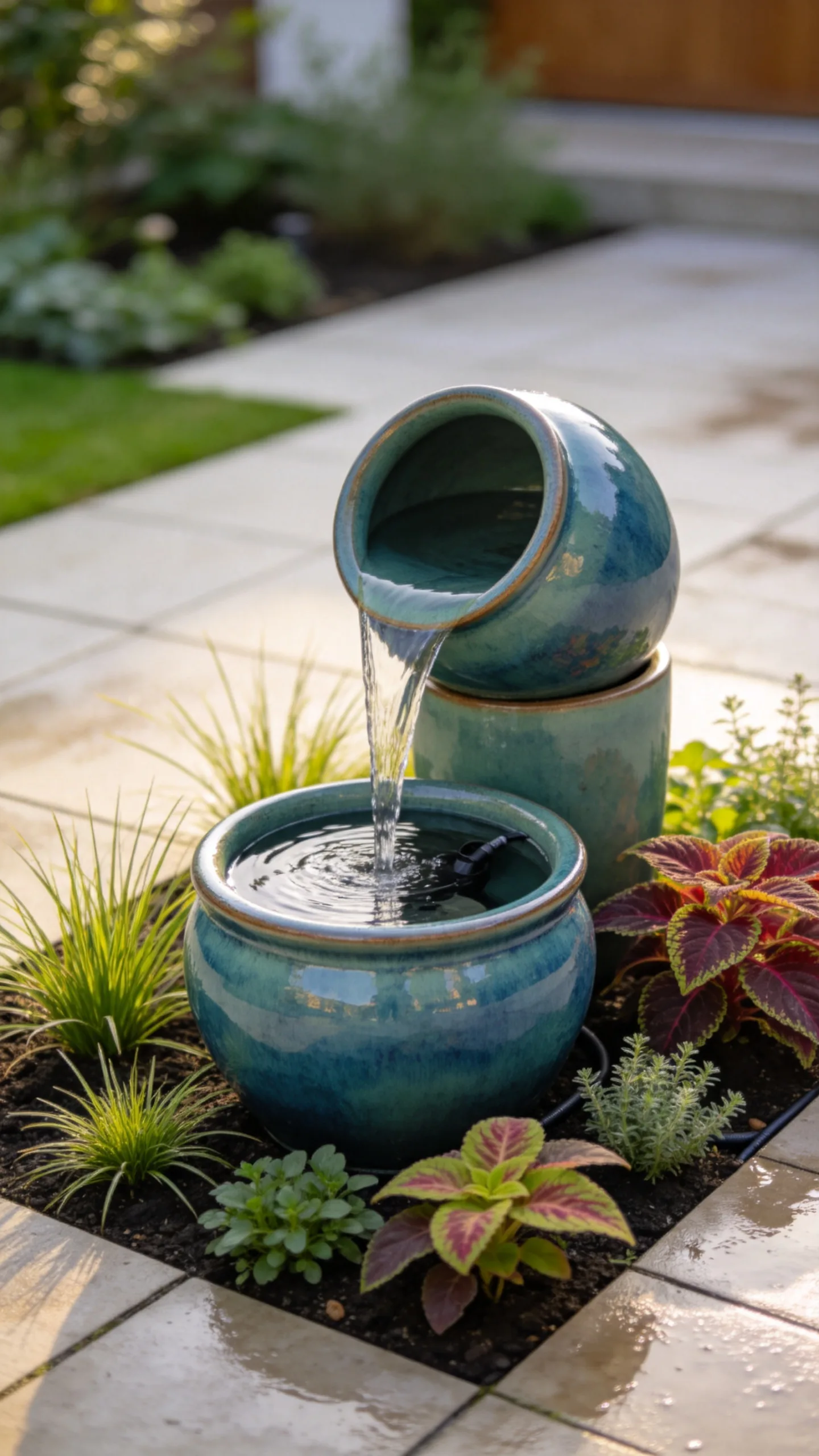
A ceramic pot spill fountain creates a compact focal point that works well in courtyard gardens, decks, and small patio beds. One pot sits slightly higher than another, and water flows from the upper vessel into the lower one before recirculating through a hidden pump. This design is especially useful if you want a decorative water fall in garden containers or tight spaces.
Choose frost-tolerant pots if the feature will stay outdoors year-round in a cold climate. Place it near low plantings such as dwarf mondo grass, coleus, or compact herbs so the fountain stands out. The smooth pot surface gives a clean, modern look, while glazed finishes add color without needing extra decoration.
4. Stone Wall Sheet Waterfall
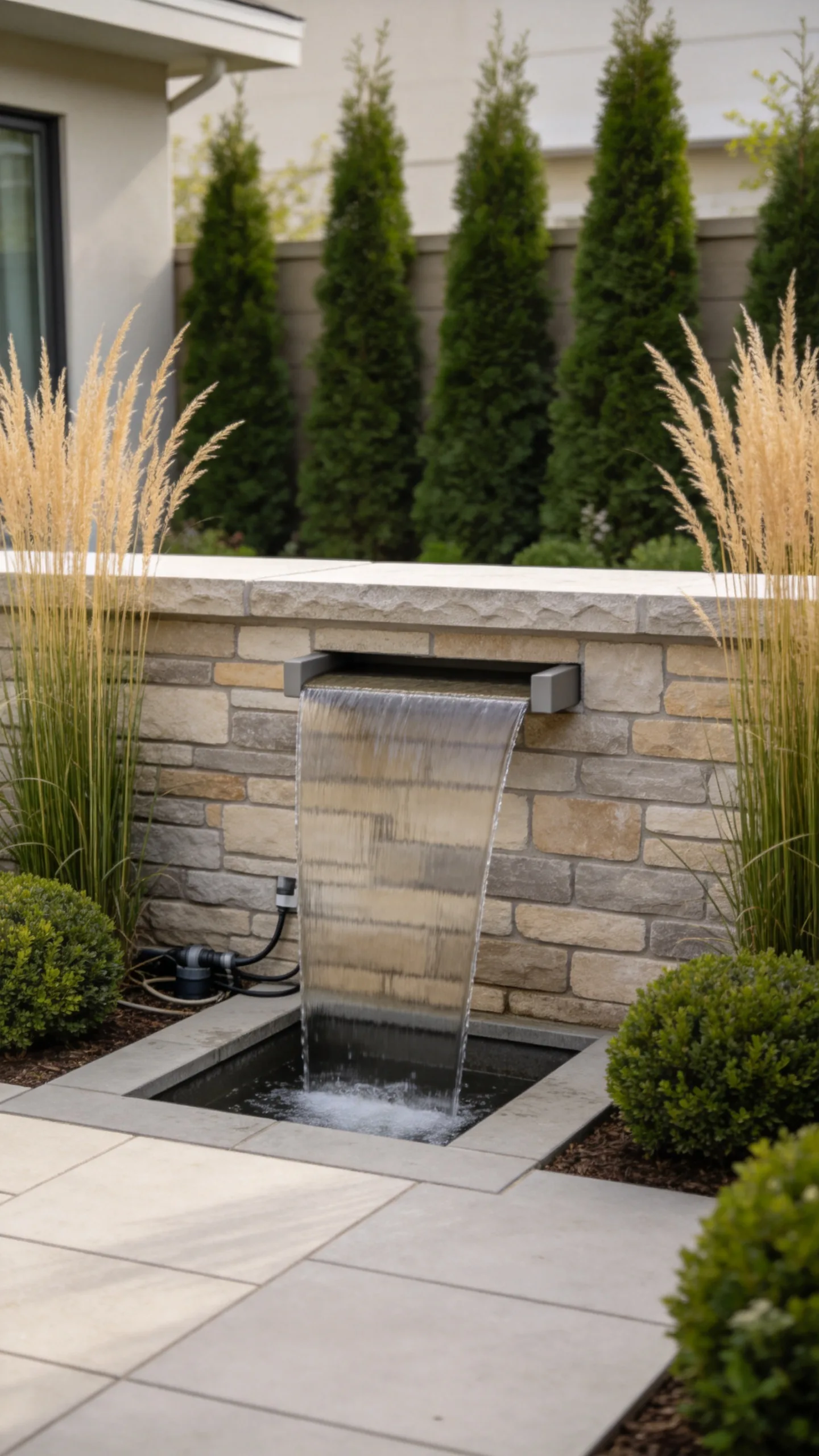
A sheet waterfall built into a short retaining wall gives a more formal backyard look. Water flows in a thin, even sheet over a stone cap or metal spillway into a catch basin below. This style works well beside a modern patio, straight walkway, or rectangular planting bed where clean lines matter.
To keep the design DIY-friendly, use a preformed spillway insert hidden behind stacked stone or masonry veneer. Add tall grasses, boxwood, or upright evergreens nearby to balance the horizontal wall. The structure is especially effective in narrow side yards because it adds visual depth without taking up much ground space.
5. Half-Barrel Garden Waterfall
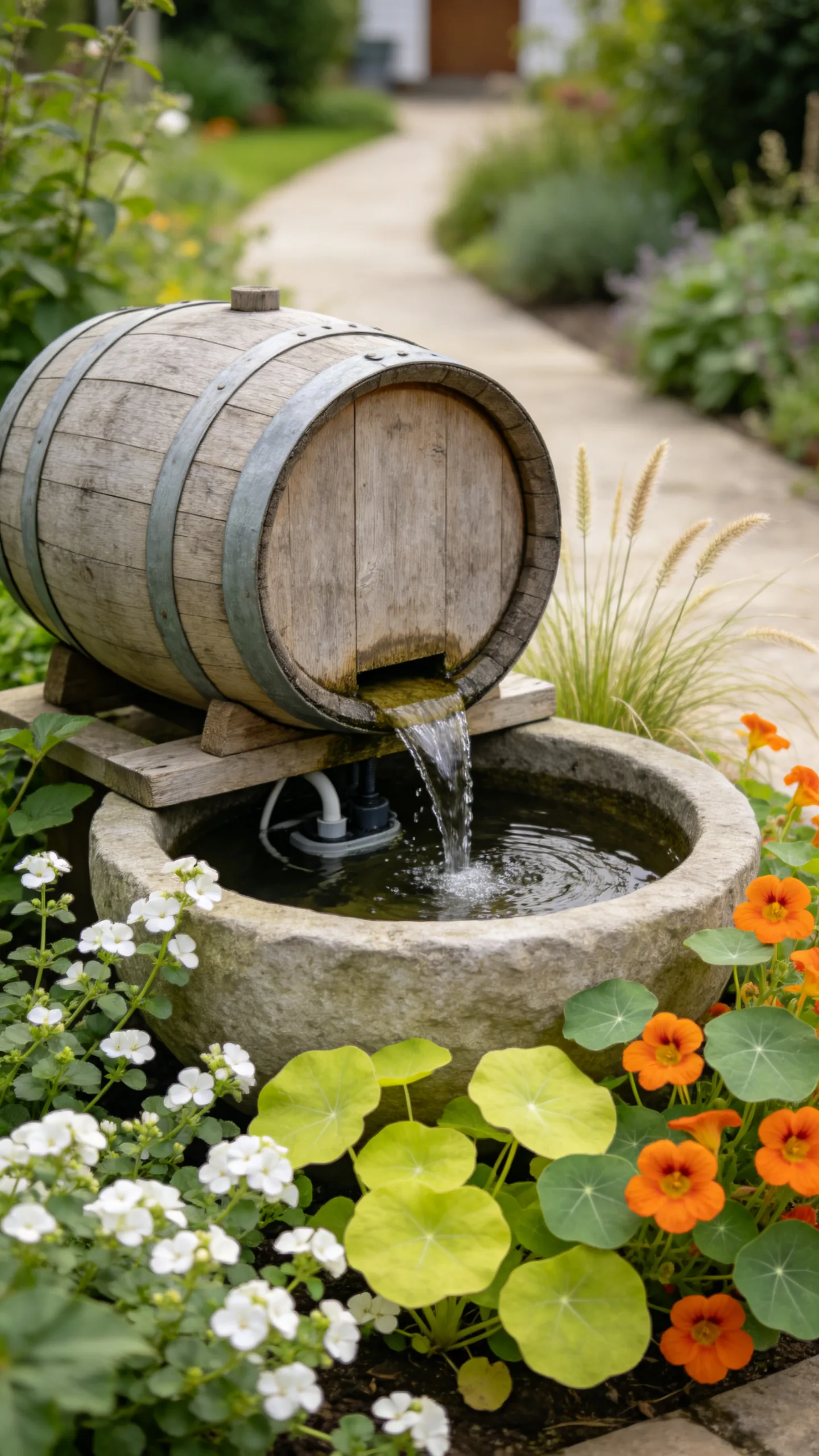
A half-barrel waterfall is a practical choice if you want a rustic feature with a small footprint. An old barrel or barrel-shaped planter can hold the pump and upper spill section, while water tumbles into a lower basin made from a stock tank, stone tub, or hidden reservoir. The look fits cottage gardens, vegetable borders, and casual backyard corners.
This style is easy to customize with potted plants around the base. Try trailing bacopa, sweet potato vine, or nasturtiums to soften the edges in warm months. In cooler seasons, swap in evergreen structure like dwarf conifers or decorative grasses so the feature still looks intentional when annuals fade.
6. Tiered Planter Waterfall
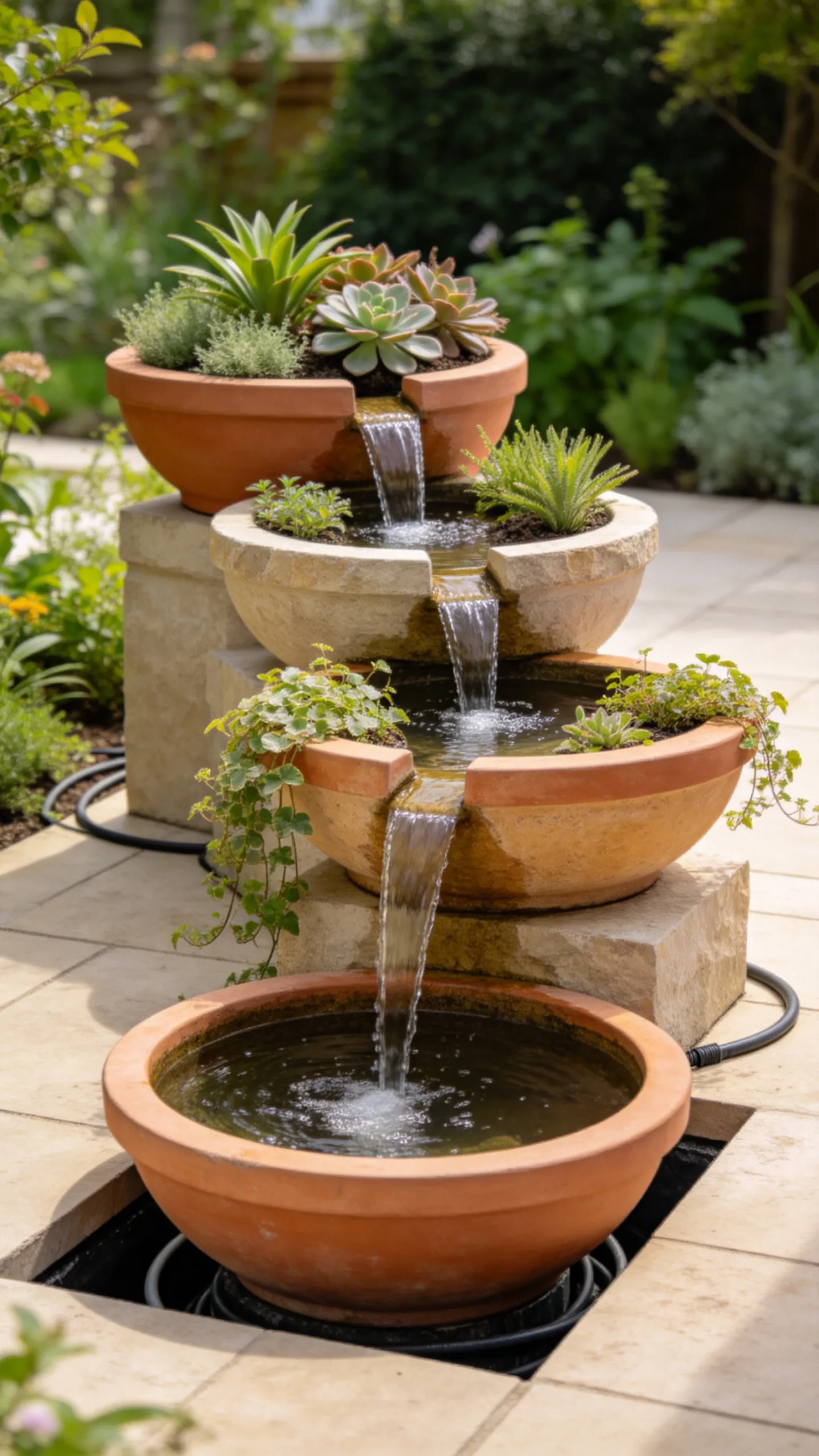
A tiered planter waterfall combines planting and water movement in one compact build. Use three staggered containers, each set slightly lower than the one above, so water flows from planter to planter before ending in a catch basin. This is a smart option for decks, raised patios, and small yards where a full pond would be too large.
The planting pockets let you mix texture and height around the water feature. Use moisture-tolerant plants in the upper tiers and trailing plants on the lower edges to echo the movement of the water. If you choose containers with wide rims, they are easier to drill, line, and stabilize on a level base.
7. Bamboo-Rimmed Zen Waterfall
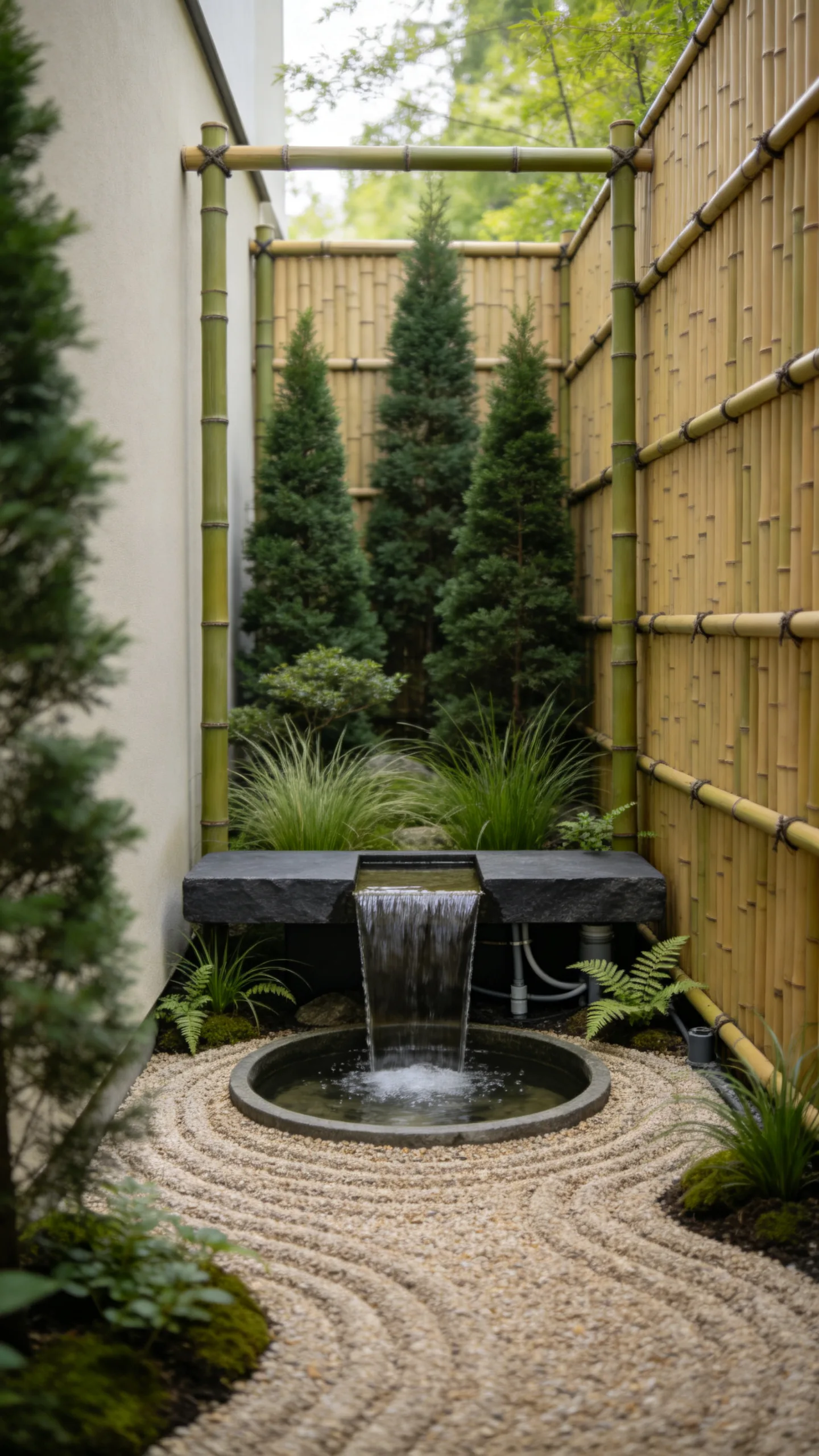
A bamboo-rimmed waterfall gives a backyard a calm, structured feel without requiring a large build. Water can run over a short stone shelf or into a shallow basin while bamboo edging, gravel, and clipped evergreens create the backdrop. This design suits minimalist gardens, meditation corners, and narrow side yards that need a clean focal point.
Use gravel or decomposed granite around the base to simplify drainage and reduce muddy splashing. Add a few carefully placed plants such as Japanese forest grass, dwarf mondo grass, or small ferns for softness. Because the design relies on shape and texture instead of dense planting, it stays manageable in small spaces.
8. Boulder-Stream Waterfall
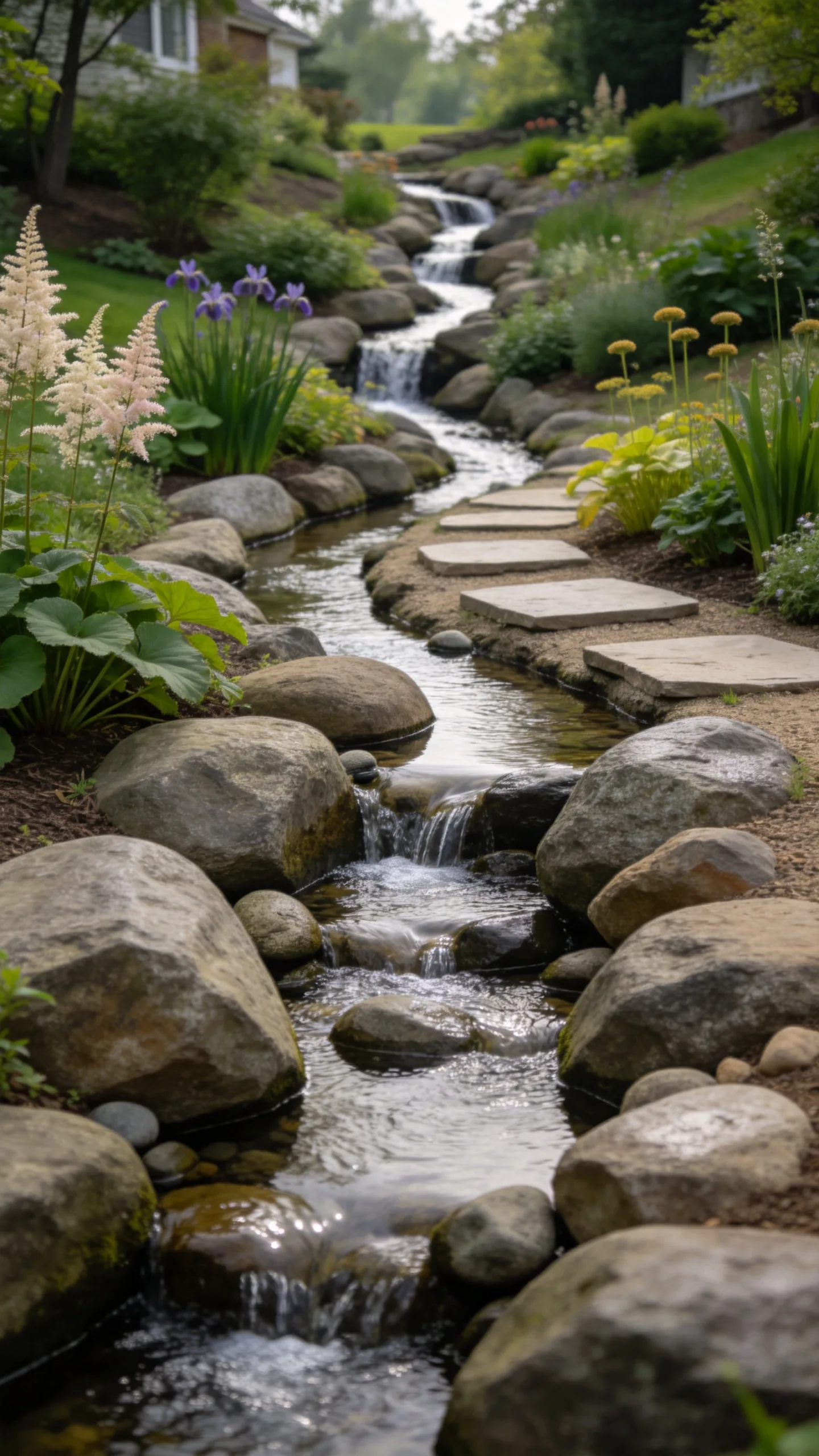
A boulder-stream waterfall works well if you want your water fall in garden design to look like it belongs in a natural slope. Build a narrow streambed with liner, then set large stones along the sides so water trickles through irregular channels. The uneven rock placement makes the flow sound fuller and helps hide the mechanical parts.
This style is best for yards with enough length to show movement. Plant moisture-loving species along the stream edge, such as astilbe, irises, ligularia, or carex, depending on your climate. Keep the stream shallow enough for easy cleaning and use flat stepping stones nearby if you want to turn it into a visible path feature.
9. Corner Ledge Waterfall
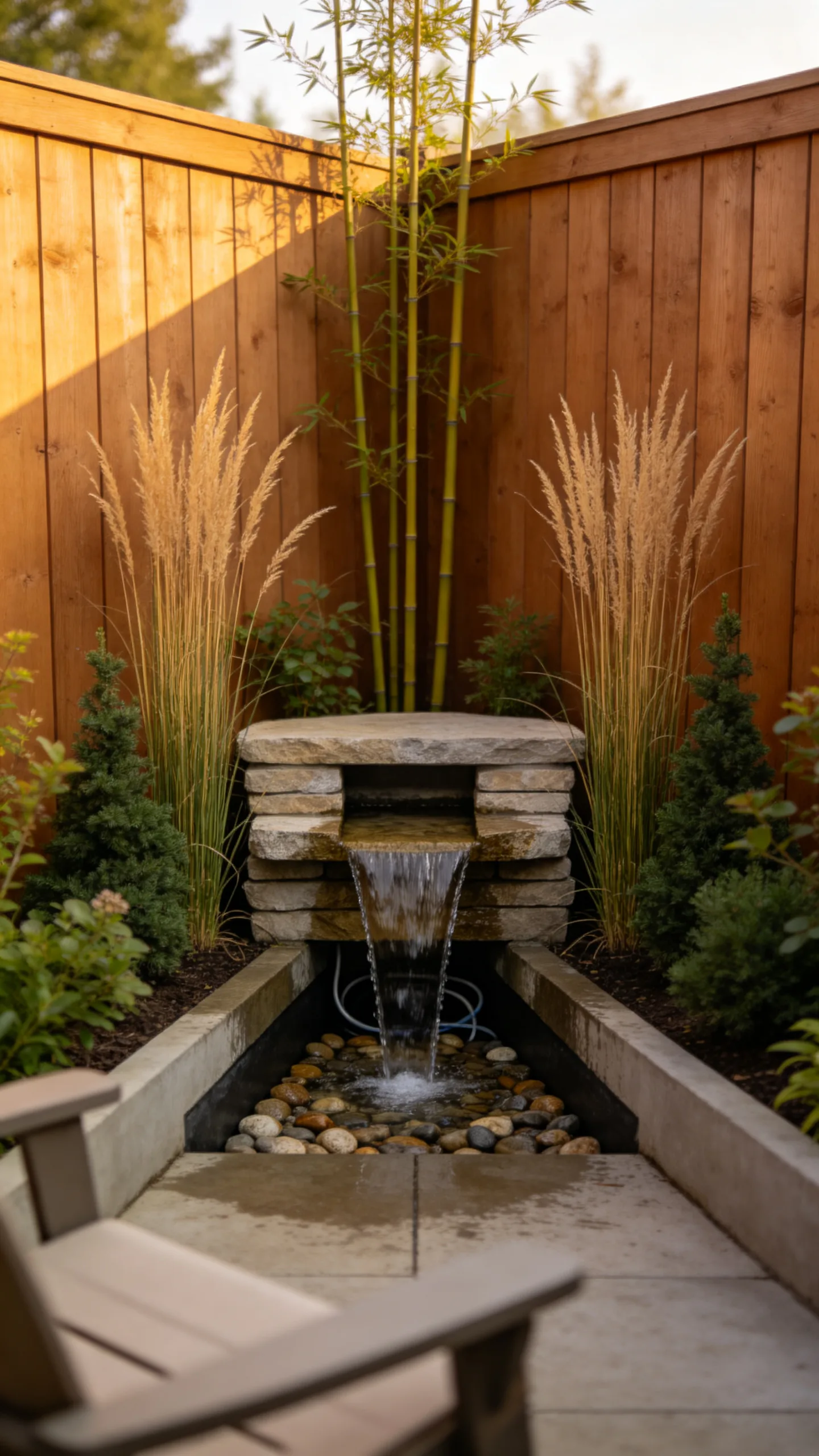
A corner ledge waterfall makes good use of an overlooked backyard edge. Build the feature into a fence corner, patio angle, or bed intersection so the water appears to emerge from the landscape itself. A short ledge or stacked shelf lets water fall into a hidden basin while the surrounding plants soften the hard corner.
This is a strong option when you want privacy and sound at the same time. Place taller plants behind or beside it, such as bamboo in a container, ornamental grasses, or evergreen shrubs, to block views and frame the feature. The corner placement also keeps the water visible from multiple seating angles without taking up the center of the yard.
10. Solar-Powered Patio Cascade
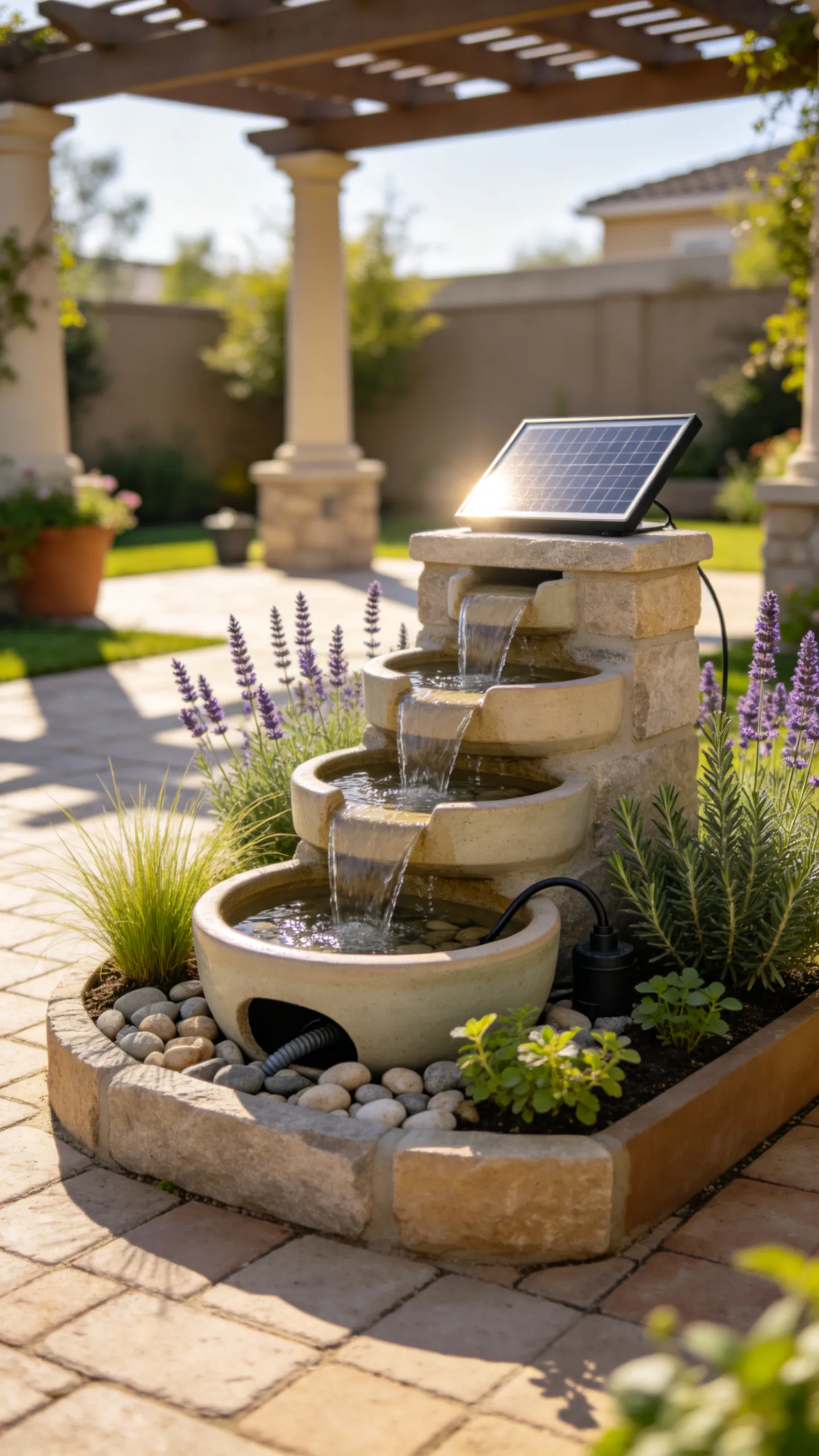
A solar-powered patio cascade is a flexible option for homeowners who want a simpler DIY build and less visible wiring. A small pump powered by a solar panel can move water through a compact stone or ceramic cascade placed near a deck, pergola, or paver patio. It is best for sunny spots where the panel can get steady light.
This type of waterfall is useful for renters, beginner DIYers, or anyone testing a backyard water feature before building something larger. Pair it with container plantings, such as dwarf grasses, salvias, or herbs, so the area feels styled rather than temporary. For the cleanest look, hide the reservoir with pebbles and keep the surrounding plants low enough that the waterfall remains the main focal point.