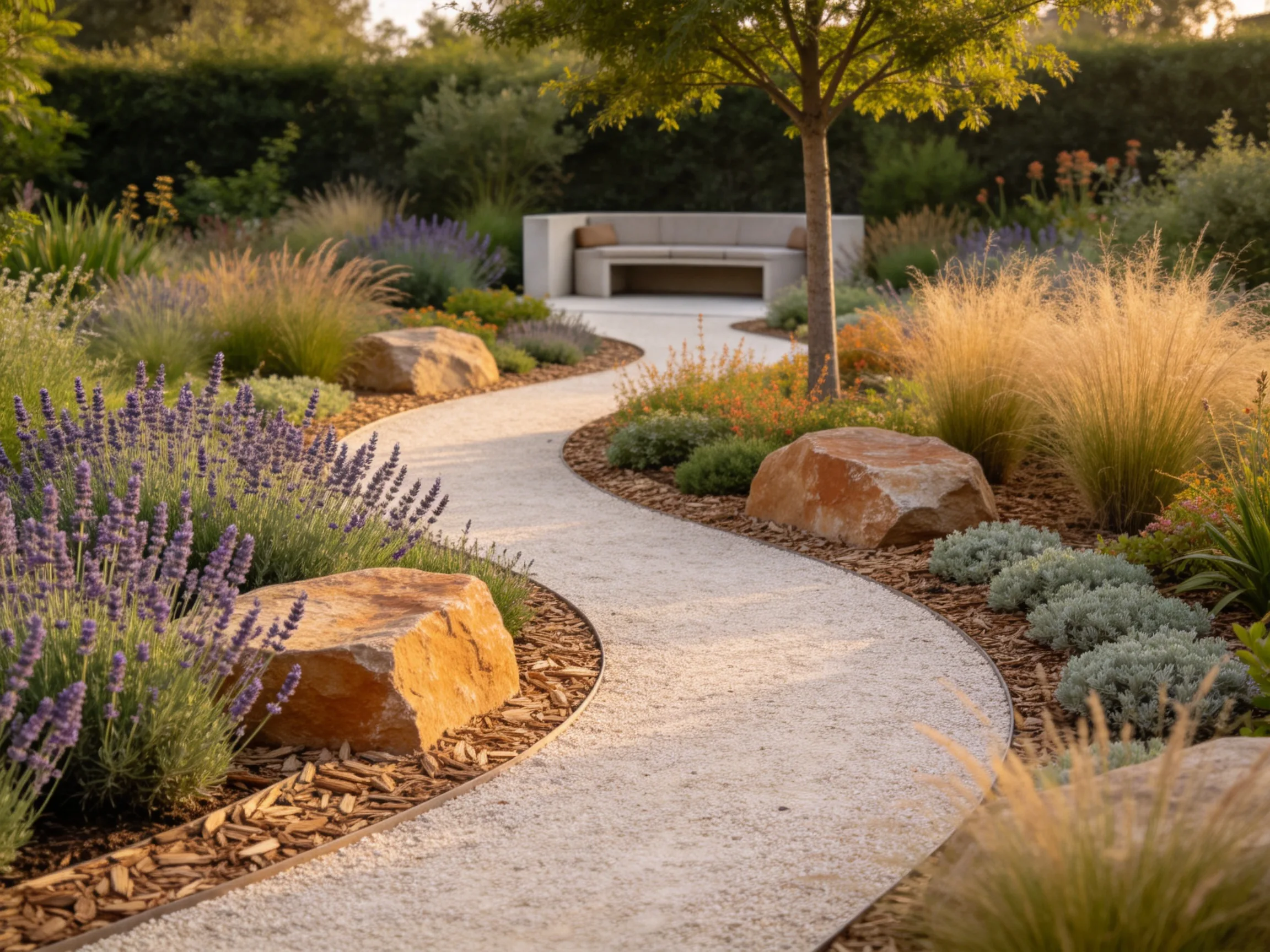
A low maintenance drought tolerant garden combines water-wise planting with materials that reduce evaporation, suppress weeds, and simplify routine care. Gravel paths, mineral mulch, organic mulch, raised beds, and resilient plants can all help—but the best choices depend on your climate, soil drainage, sun exposure, and local plant availability. Use these practical ideas to create a garden that needs less watering without sacrificing texture, color, shade, or seasonal interest.
1. Build a Gravel Garden With Mediterranean Herbs
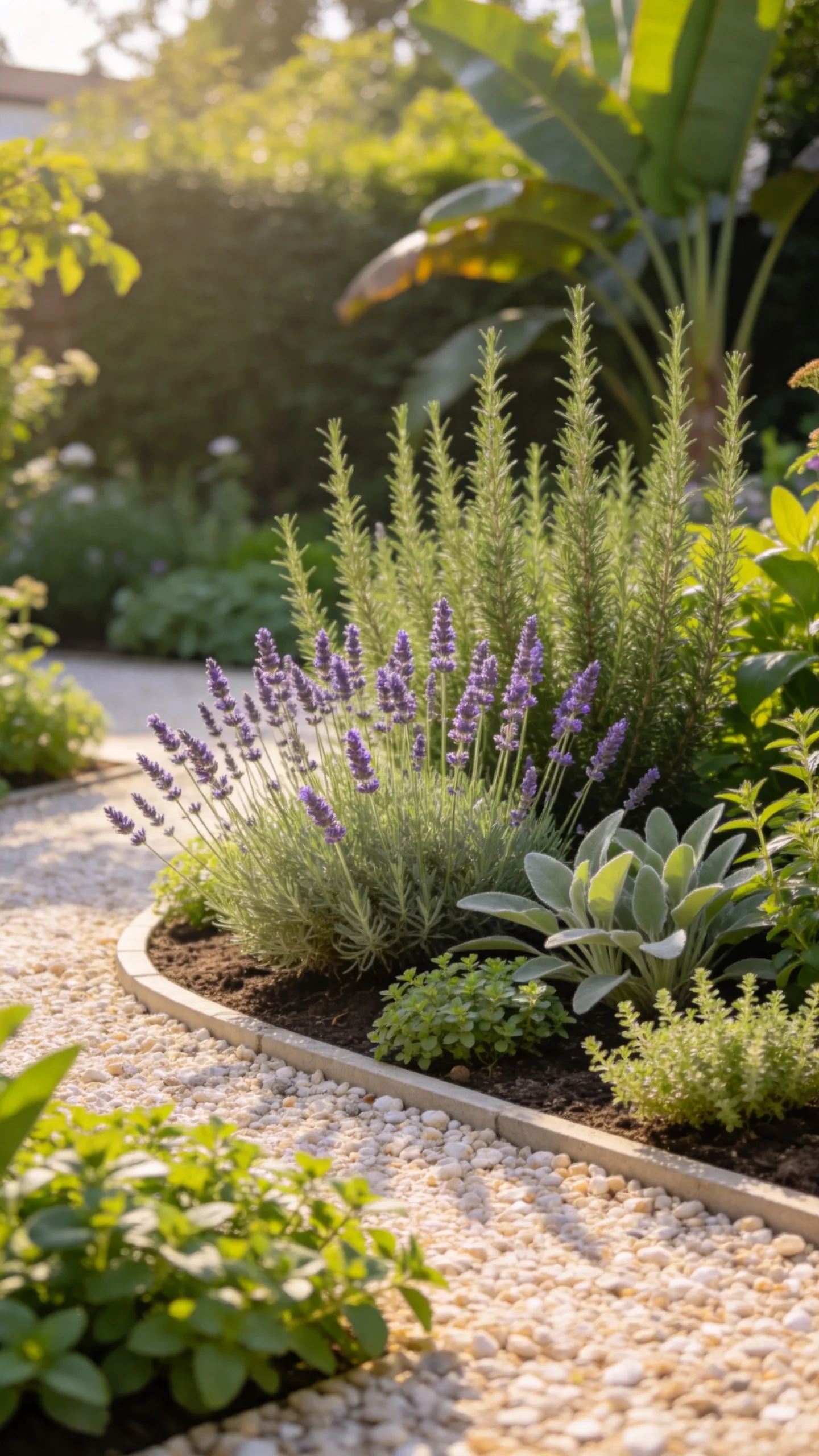
Turn a hot, sunny area into a gravel garden planted with lavender, rosemary, thyme, sage, and oregano. These herbs generally perform best in full sun and sharply drained soil, making them suitable for dry borders, side yards, and areas near patios. Check local hardiness before planting rosemary or lavender, as cold or humid conditions can affect their survival.
Remove perennial weeds, improve heavy soil with compost and grit if appropriate, and spread a 2- to 3-inch layer of washed gravel around the plants. Keep gravel away from stems and crowns. The mineral surface reduces mud and discourages new weeds while allowing rain to soak into the soil.
2. Create a Curved Dry Creek Bed
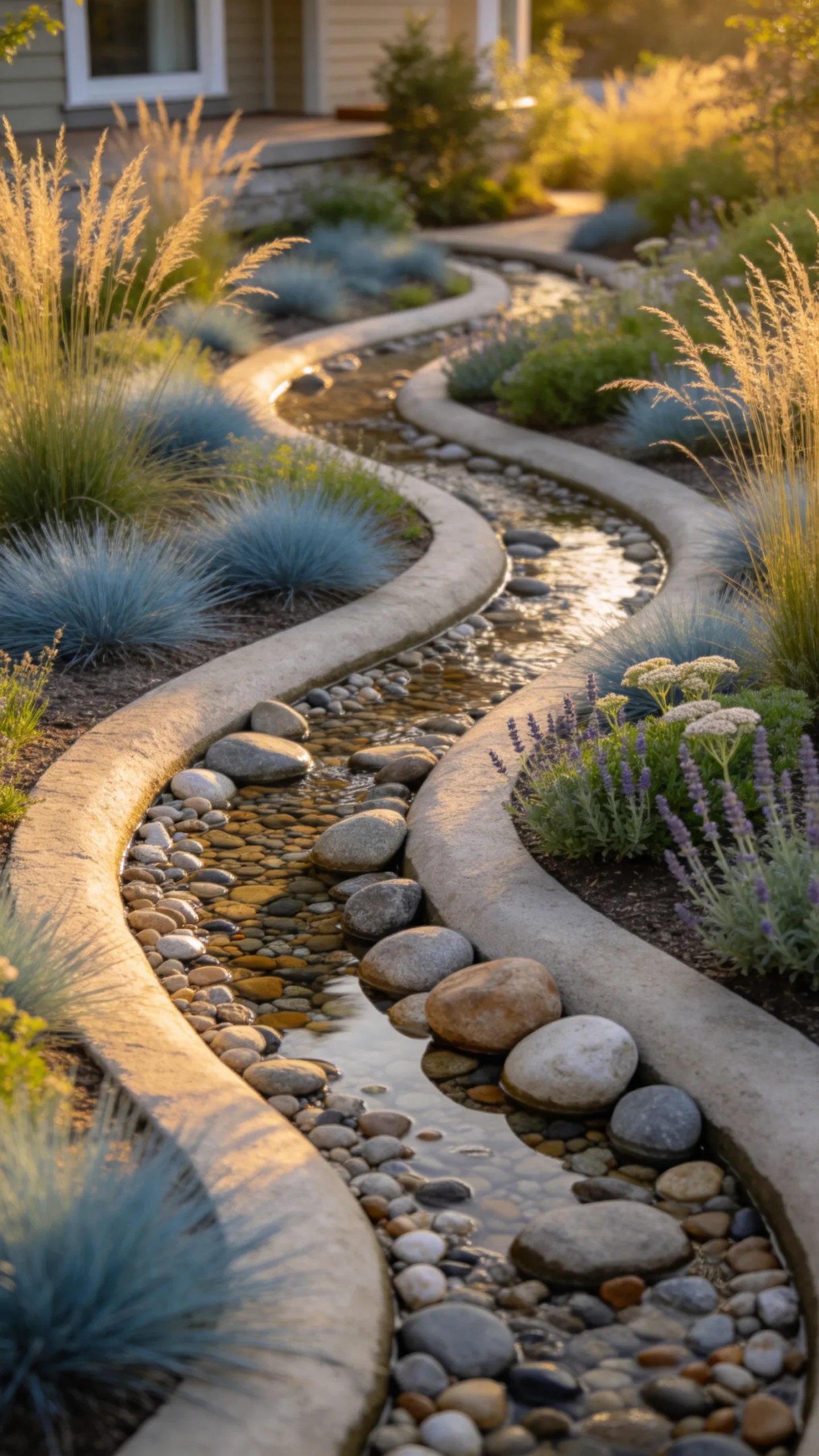
A dry creek bed gives a low-water garden a strong visual line while directing occasional runoff. Excavate a shallow, curving channel, line it with landscape fabric only if needed for soil separation, and fill it with a mix of river rock, cobbles, and smaller gravel. Position larger stones at bends to make the feature look more natural.
Plant drought-tolerant grasses and perennials along the edges rather than in the drainage channel. Blue fescue, muhly grass, yarrow, and compact salvias can soften the stonework. Confirm that redirected water will remain on your property and flow away from building foundations.
3. Replace a Thirsty Lawn With Gravel Islands
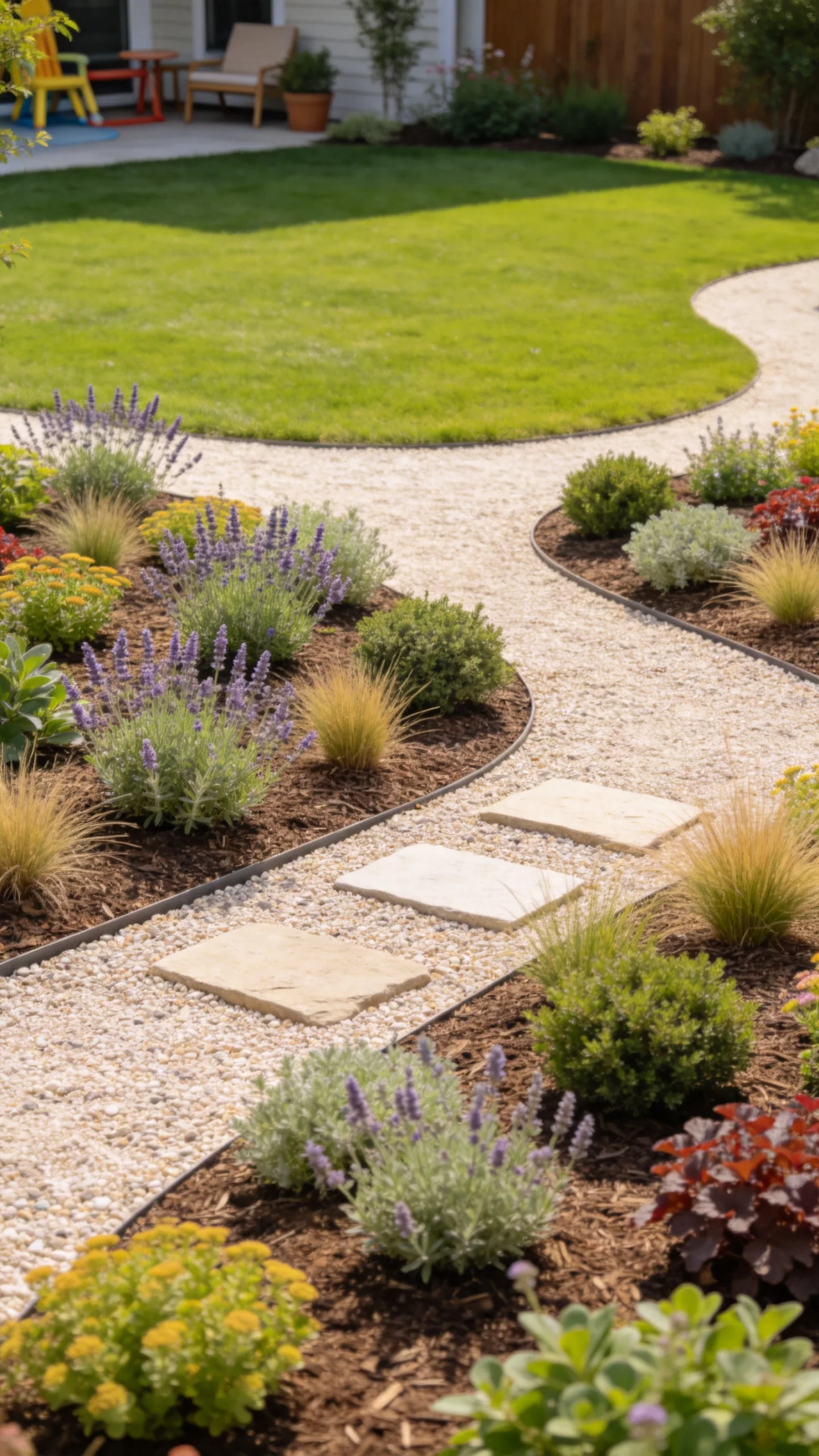
Instead of removing an entire lawn at once, cut out several wide planting islands and connect them with gravel or stepping stones. Use broad, simple shapes that are easy to edge and maintain. This approach reduces the amount of turf requiring irrigation while preserving some open space for pets, play, or outdoor seating.
Fill the islands with groups of hardy plants such as catmint, sedum, ornamental grasses, and drought-tolerant shrubs. Apply 2 to 3 inches of mulch between plants, leaving the crowns uncovered. Choose a turf species suited to your region and water the remaining lawn deeply but less frequently where local conditions allow.
4. Layer Boulders With Creeping Ground Covers
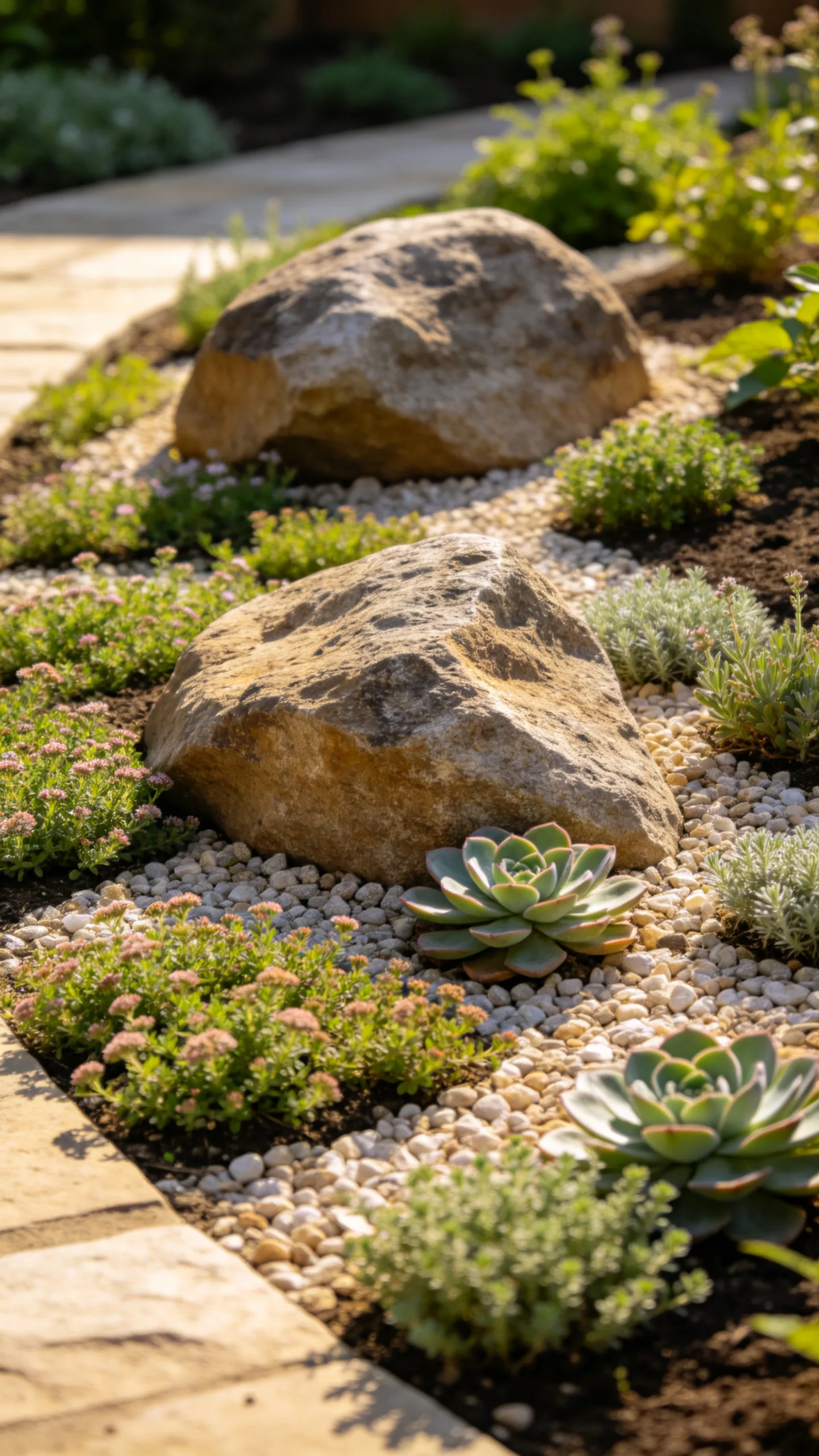
Use two or three locally sourced boulders as anchors in a sunny, well-drained bed. Partially bury the stones so they appear settled into the landscape, then plant low-growing species around their bases. Creeping thyme, hardy ice plant, sedum, and woolly thyme can spread over the soil without hiding the rock structure.
Select ground covers carefully because cold tolerance and tolerance for summer humidity vary. Space plants according to their mature width instead of packing them tightly for immediate coverage. Gravel around the young plants provides a clean finish and leaves room for gradual growth.
5. Plant a Mulched Border of Native Perennials
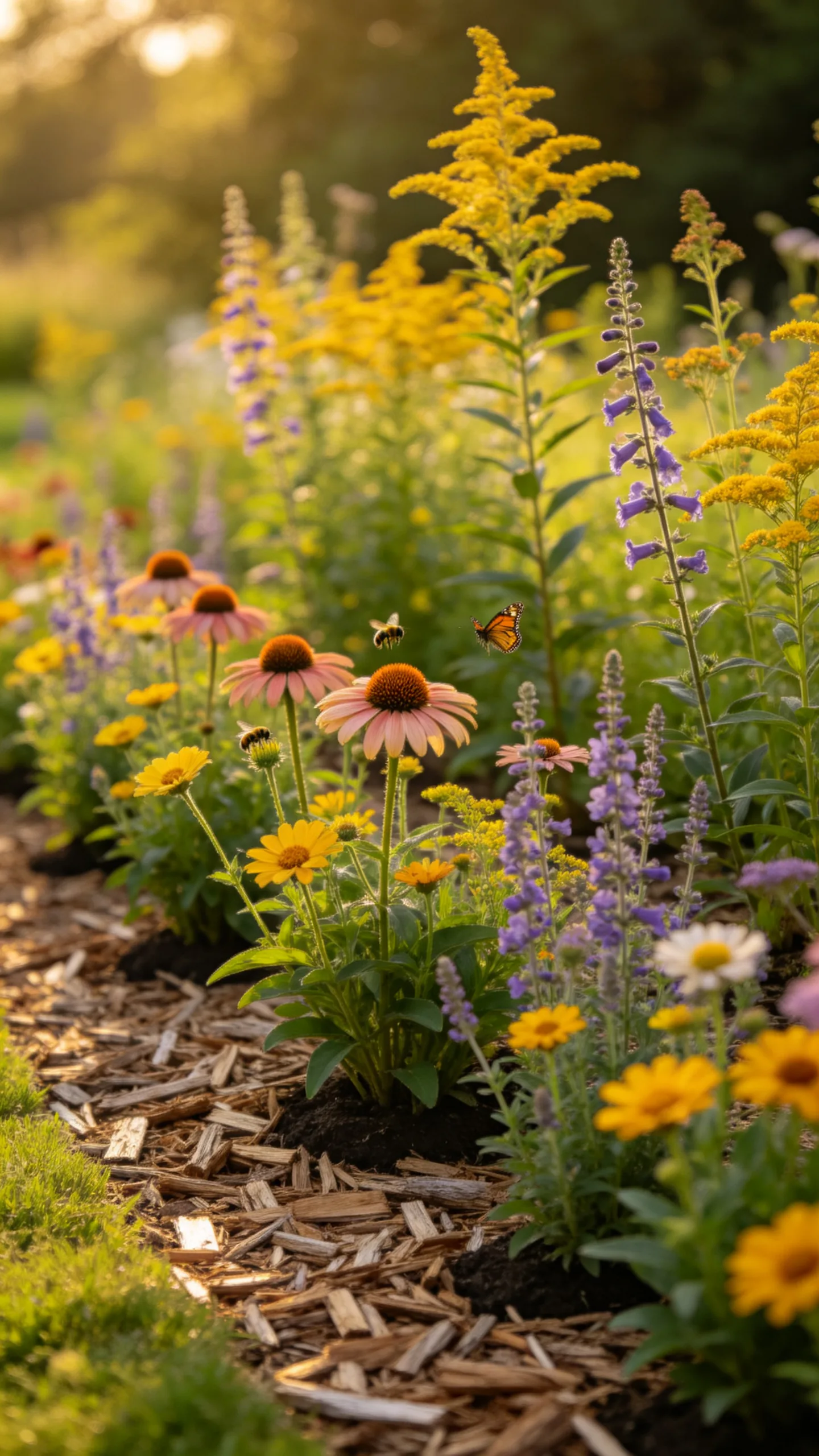
Native perennials adapted to local rainfall patterns can form the backbone of a low maintenance drought tolerant garden. Depending on your region, suitable options may include coneflower, blanket flower, penstemon, coreopsis, goldenrod, or native milkweed. A local nursery or extension service can help match plants to your soil and climate.
Arrange the plants in repeated groups of three or five to make the border look cohesive. Add a 2- to 3-inch layer of shredded bark or arborist wood chips to reduce evaporation and weed growth. Water consistently during establishment; even drought-tolerant plants need supplemental moisture while developing roots.
6. Edge a Sunny Path With Lavender
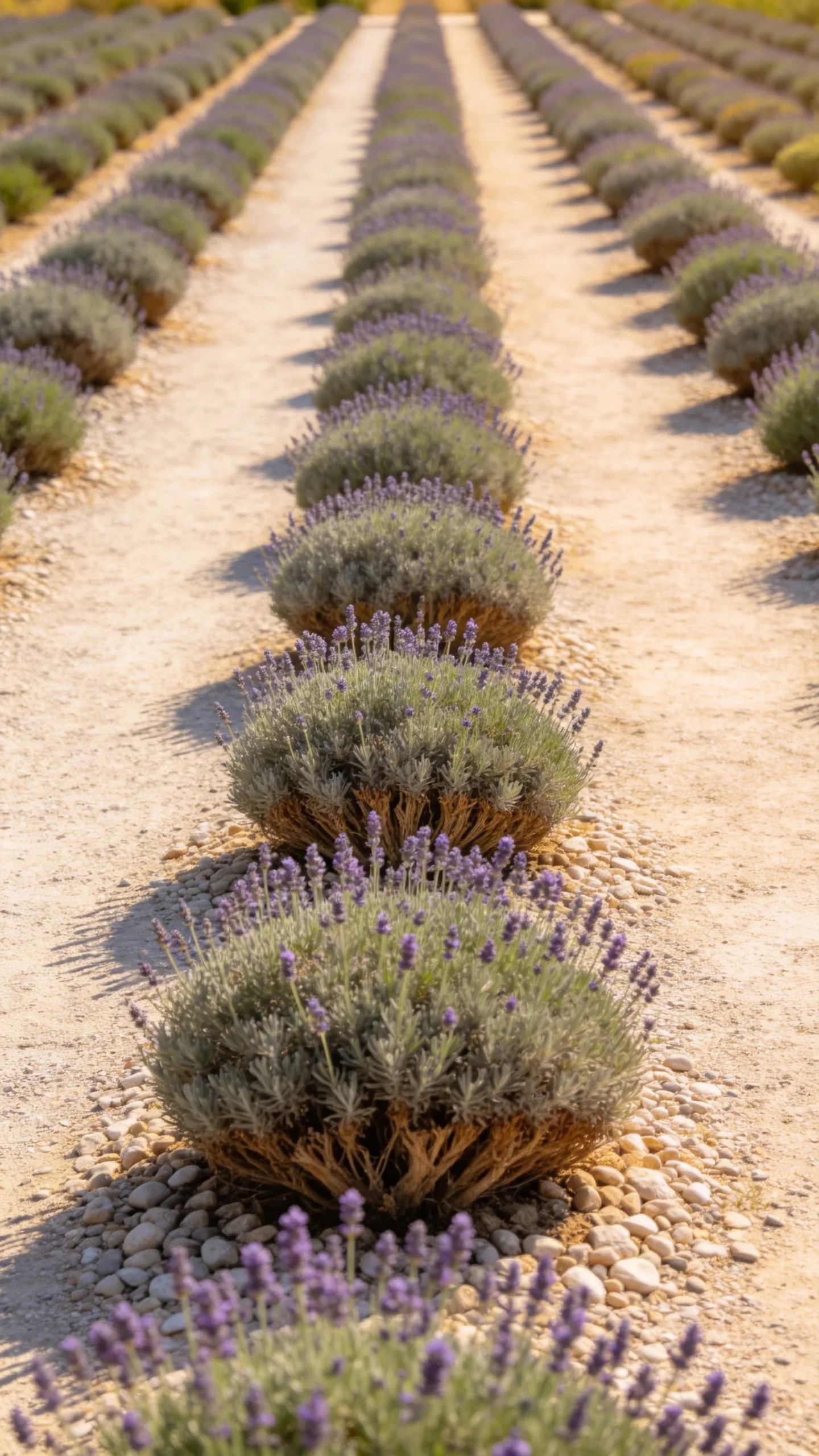
A row of lavender can define a gravel walkway while adding fragrance and soft color. Choose compact cultivars for narrow paths and allow enough room for their mature spread so stems do not obstruct foot traffic. Lavender needs full sun, excellent drainage, and good air circulation.
Use gravel rather than moisture-retentive bark directly around lavender crowns, particularly in regions with wet winters. Trim plants lightly after flowering, avoiding cuts into old, leafless wood. In humid climates where lavender struggles, consider drought-tolerant catmint or compact salvia as an alternative.
7. Design a Succulent Rock Garden
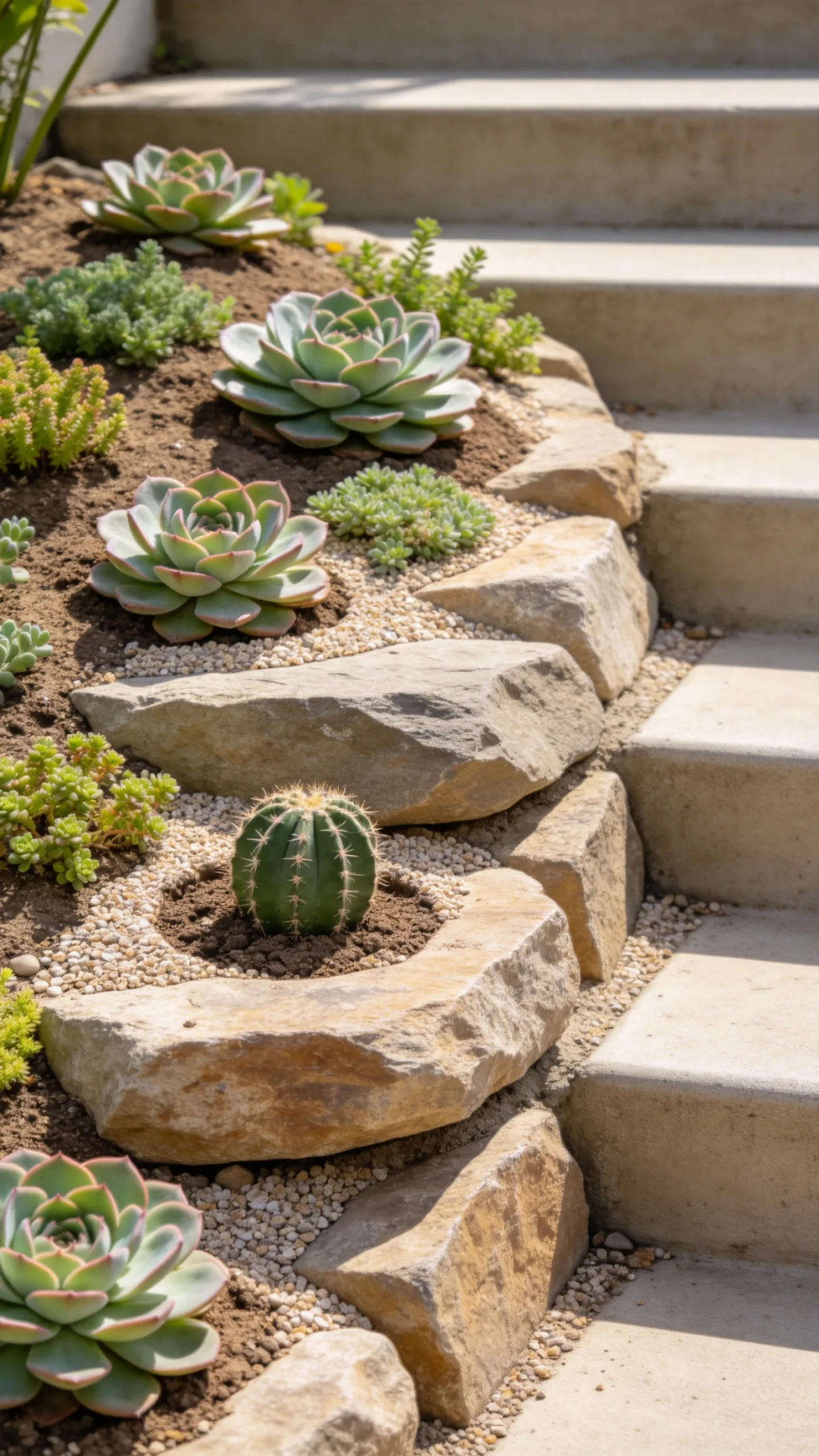
Create a small rock garden on a slope, raised mound, or other area where water drains quickly. Position flat rocks at different heights, fill gaps with gritty soil, and plant hardy succulents such as hens-and-chicks, stonecrop, or cold-tolerant prickly pear. Use species rated for your winter temperatures.
Finish the surface with fine gravel to keep succulent foliage away from damp soil. Avoid placing the garden beneath roof runoff or in a low spot where water collects. A compact succulent bed works especially well in front yards, beside steps, or near a mailbox because it delivers texture without frequent pruning.
8. Add a Decomposed Granite Seating Area
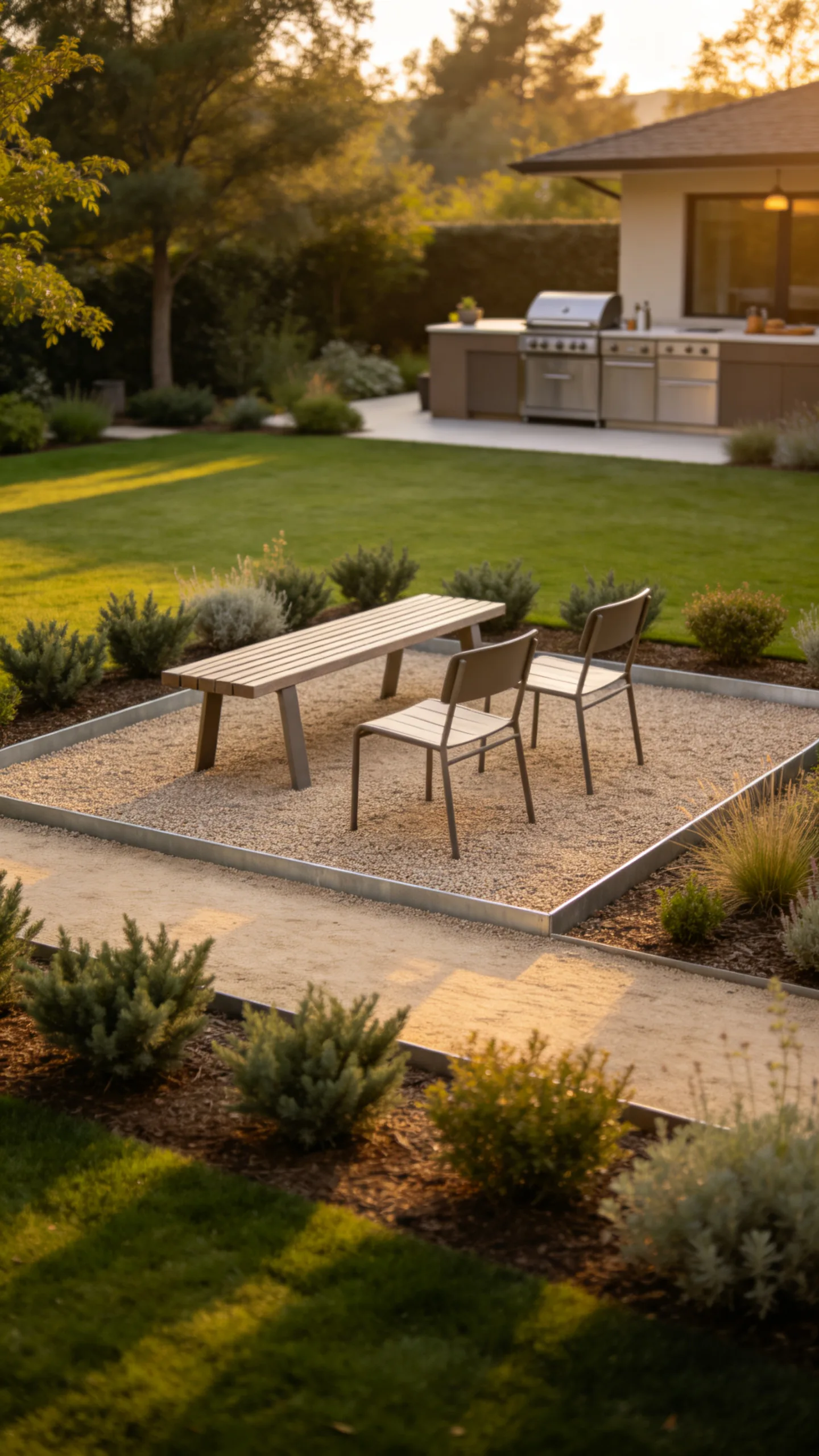
A decomposed granite patio can create an informal seating zone without adding a large expanse of irrigated planting. Excavate the area, install a compacted aggregate base, and apply decomposed granite in thin, compacted layers. Metal, stone, or concrete edging helps contain the material.
Place a bench or small café set in the center and plant drought-tolerant shrubs around the perimeter for definition. Options may include dwarf juniper, manzanita, ceanothus, or compact Texas sage, depending on regional suitability. Leave access for occasional raking and choose stabilized material if loose particles would be difficult to manage.
9. Use Ornamental Grasses for Soft Movement
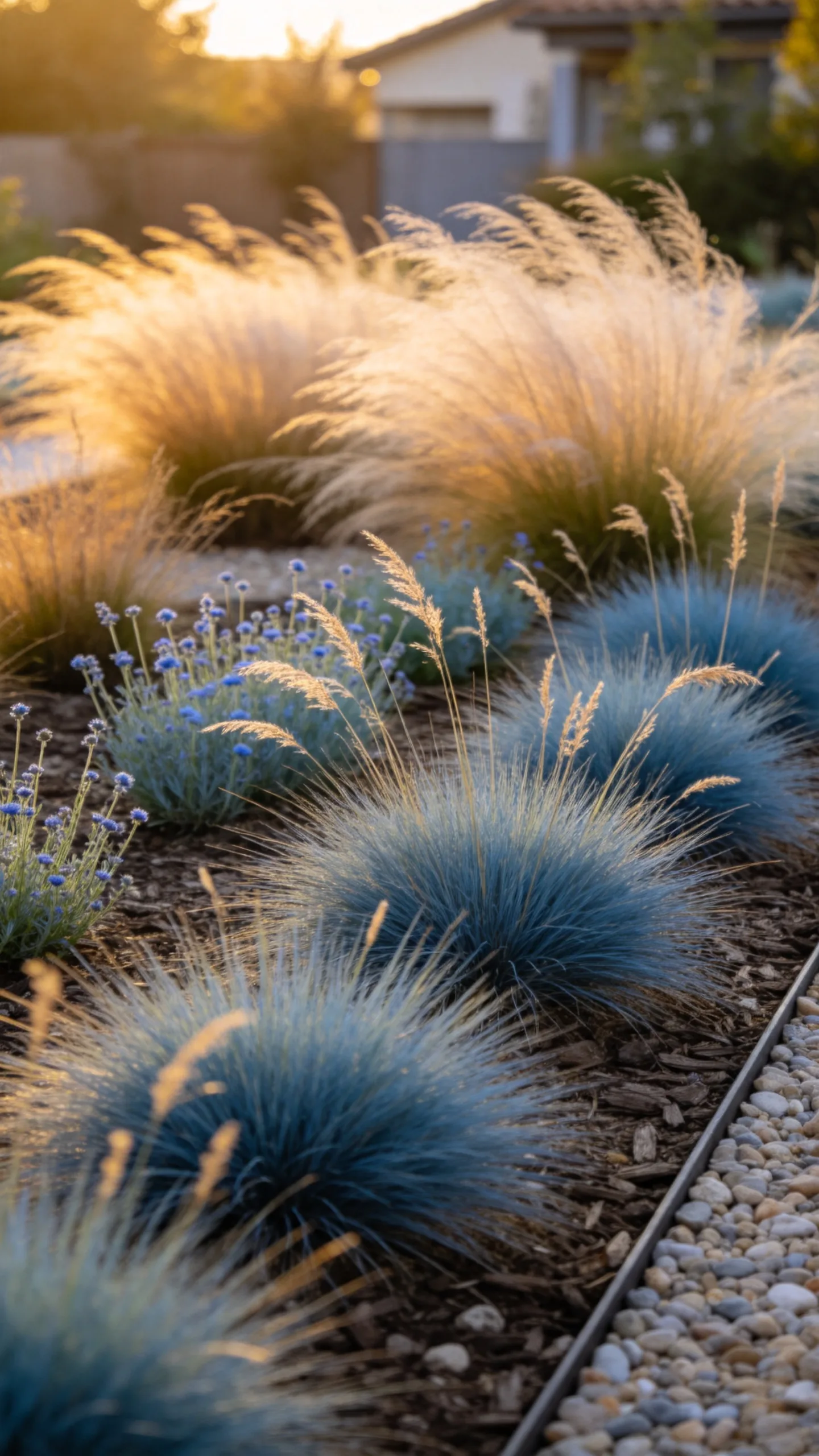
Drought-tolerant ornamental grasses bring movement to gravel and mulch beds without requiring repeated deadheading. Blue grama, little bluestem, muhly grass, blue fescue, and feather reed grass each suit different climates and moisture levels, so verify local growing conditions before choosing.
Plant grasses in repeated drifts rather than scattering individual specimens. Cut deciduous types back in late winter before new growth begins; evergreen grasses often need only gentle combing to remove old blades. Keep highly flammable dry foliage away from structures in wildfire-prone areas and follow local defensible-space guidance.
10. Make a Low-Water Mailbox Bed
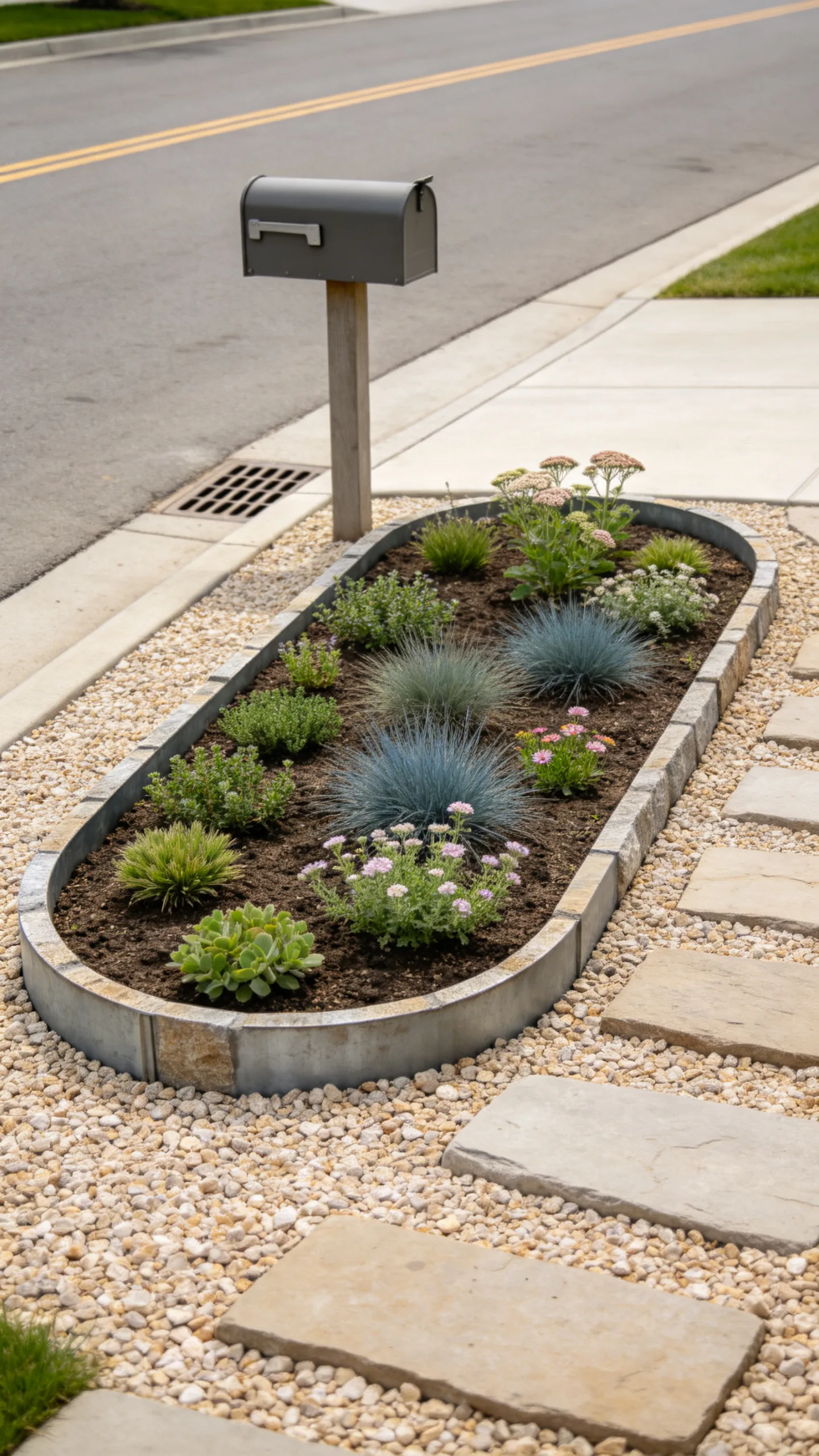
A mailbox bed can transform a small patch of difficult roadside ground into a contained drought-tolerant display. Outline a circle, oval, or simple rectangle with steel or stone edging, then improve drainage if the soil is compacted. Do not interfere with utility lines, sightlines, drainage ditches, or postal access.
Choose short plants that will not block the mailbox, such as dwarf sedum, creeping thyme, compact yarrow, blue fescue, or low-growing native flowers. Cover the soil with gravel or coarse mulch and install a few flat stepping stones so the mailbox remains accessible after rain.
11. Fill a Raised Bed With Dry-Climate Plants
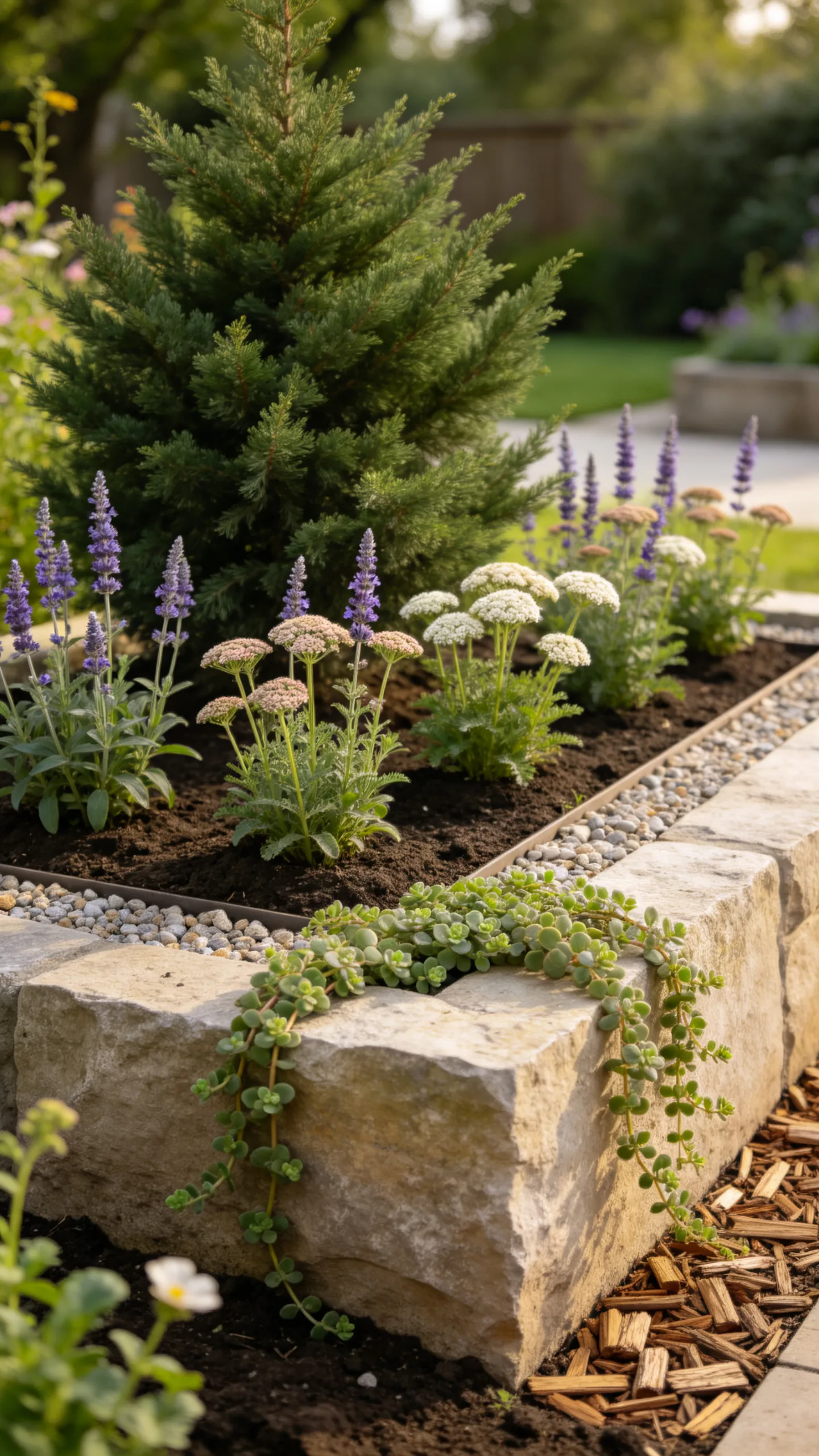
A raised bed offers control over drainage and soil composition, which is useful for many drought-tolerant plants. Build it from stone, brick, rot-resistant wood, or metal, then fill it with a soil mix suited to the selected species. Avoid making the bed so narrow or shallow that it dries out immediately in intense summer heat.
Combine an evergreen anchor plant with flowering perennials and trailing ground covers. A possible sunny mix includes compact juniper, salvia, yarrow, and creeping sedum. Top the bed with gravel for plants that prefer dry crowns, or use wood-chip mulch where slightly more moisture retention is beneficial.
12. Frame Steps With Hardy Cushion Plants
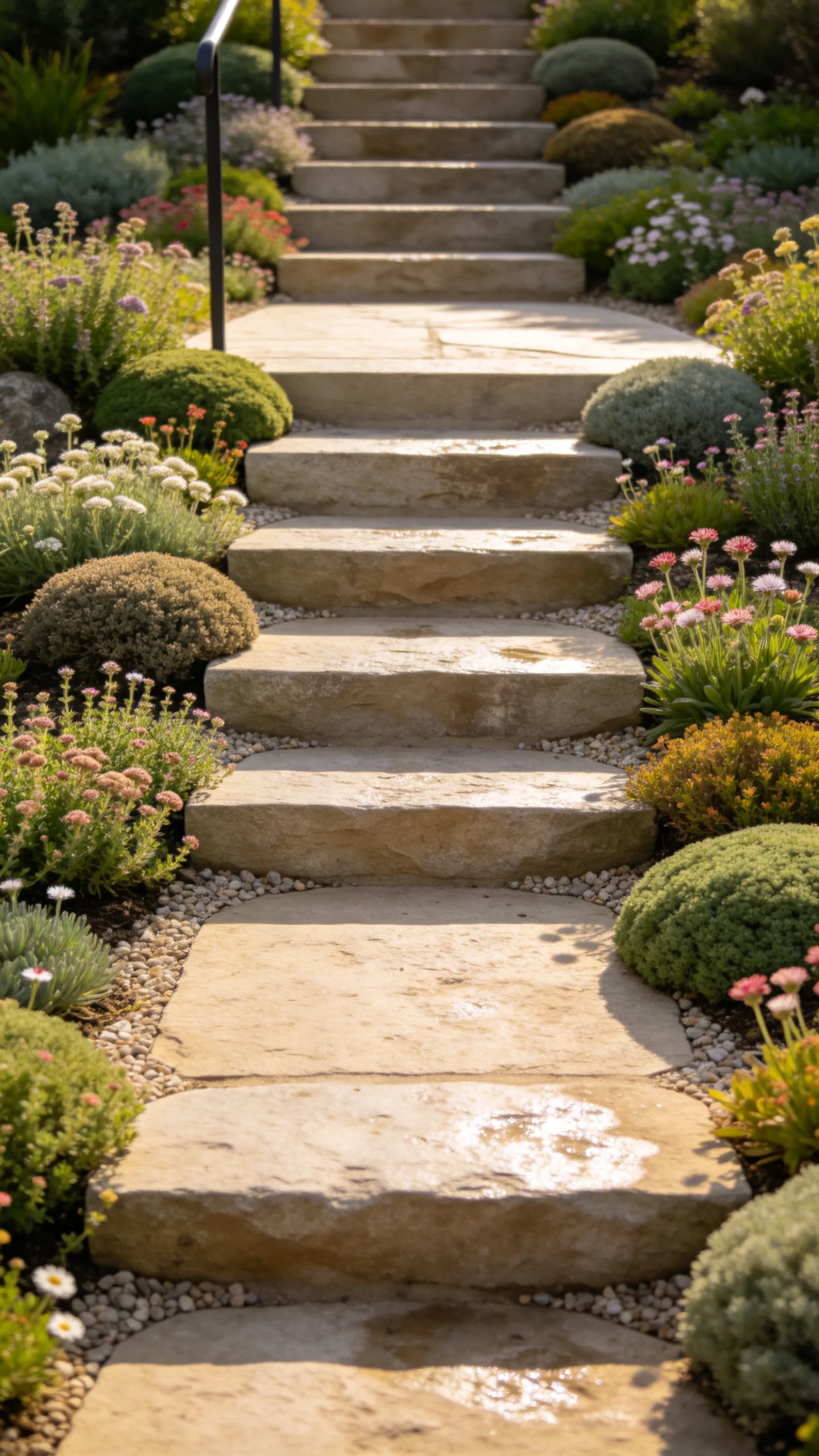
Plant the gaps and edges around outdoor steps with compact plants that tolerate reflected heat. Creeping thyme, pussytoes, low sedum, thrift, and small dianthus can create cushions of foliage without overwhelming the stairs. Keep plants outside the primary walking surface to prevent tripping and damage.
Use gravel between the plants to reduce soil splash and maintain a defined edge. Check mature height and spread before planting, particularly beside handrails and narrow landings. Drip emitters can provide targeted water during establishment without soaking the entire staircase area.
13. Create a Mulched Shrub Foundation Bed
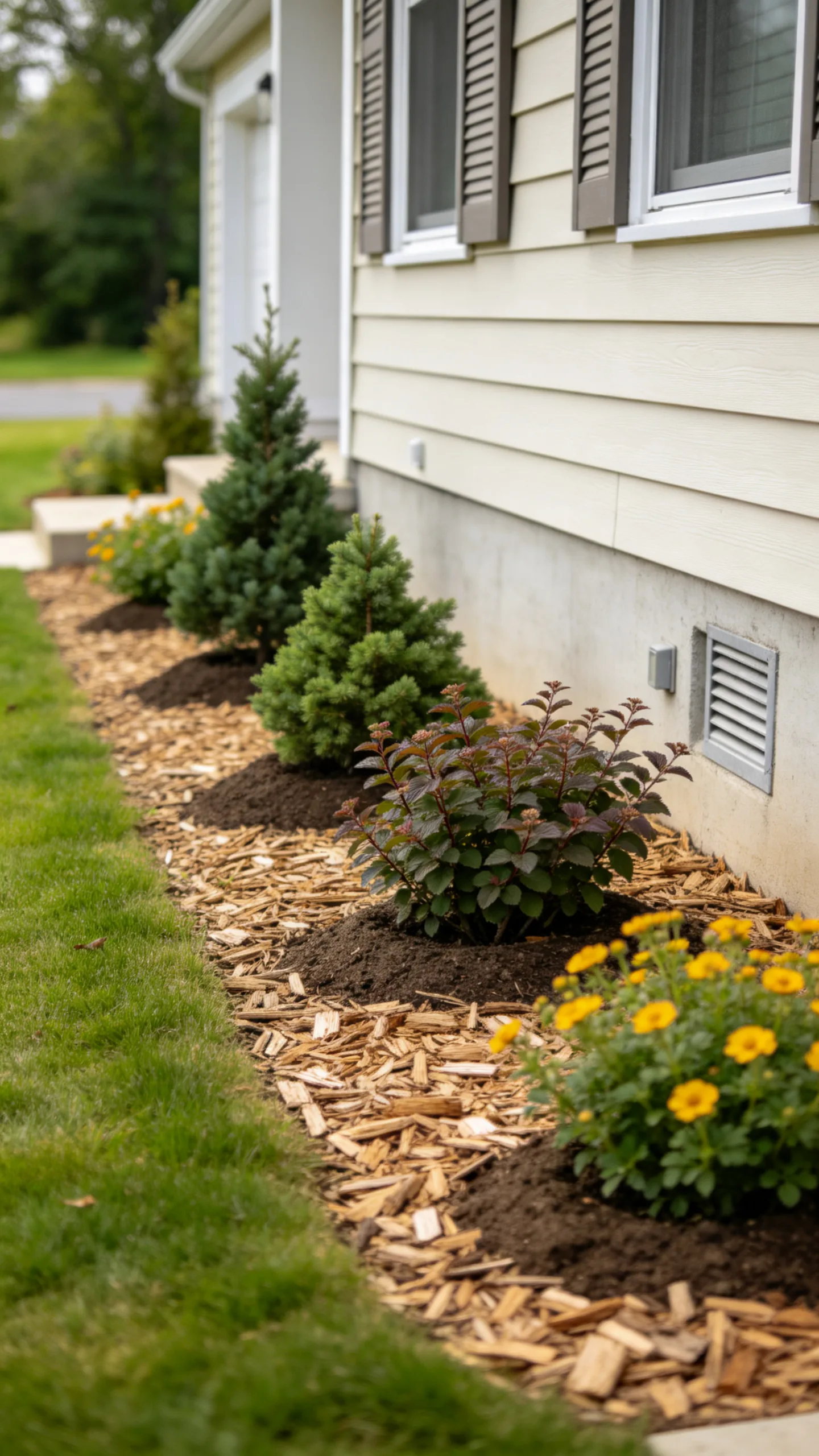
A simplified foundation bed can reduce both watering and pruning when shrubs are selected at the correct mature size. Consider drought-tolerant choices such as dwarf juniper, ninebark, potentilla, wax myrtle, manzanita, or Texas sage, depending on climate, sun, and available space.
Place shrubs far enough from the house to preserve airflow and access for maintenance. Add a 2- to 4-inch layer of wood chips, keeping mulch several inches away from trunks and siding. Use a limited plant palette and repeat varieties to avoid the constant trimming associated with crowded mixed foundation plantings.
14. Train a Drought-Tolerant Vine on a Trellis
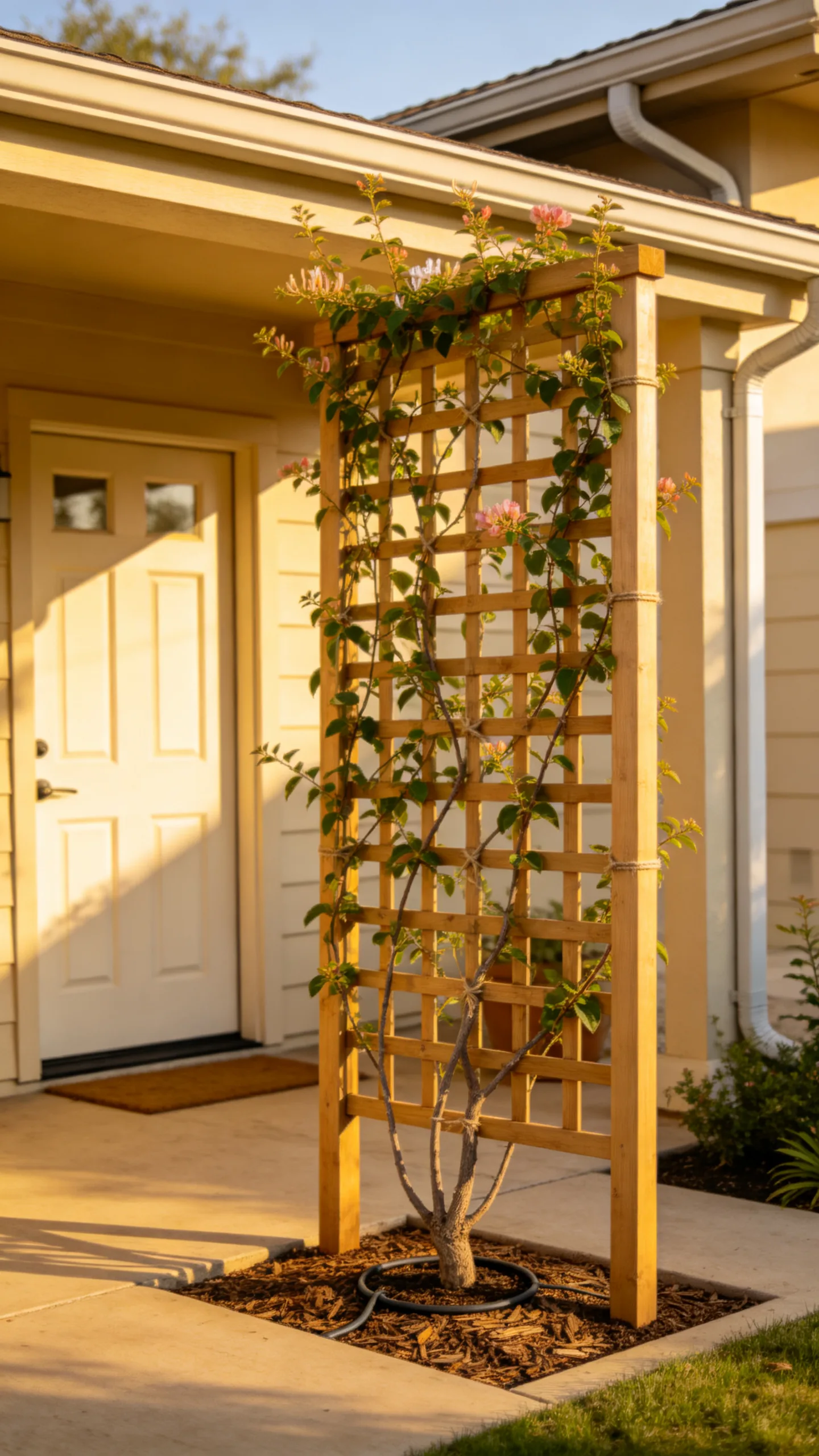
A vertical trellis adds height and privacy without consuming much ground space. Position it along a sunny fence, beside a patio, or at the end of a narrow garden. Drought-tolerant vine options may include trumpet honeysuckle, grape, bougainvillea, or evergreen clematis, but suitability varies substantially by region.
Install the support before planting and confirm that it can hold the vine’s mature weight. Mulch the root zone and water deeply during establishment. Avoid invasive species, and choose a vine with a growth habit that matches the available maintenance time; vigorous vines generally require more pruning.
15. Combine Agaves With Warm-Toned Gravel
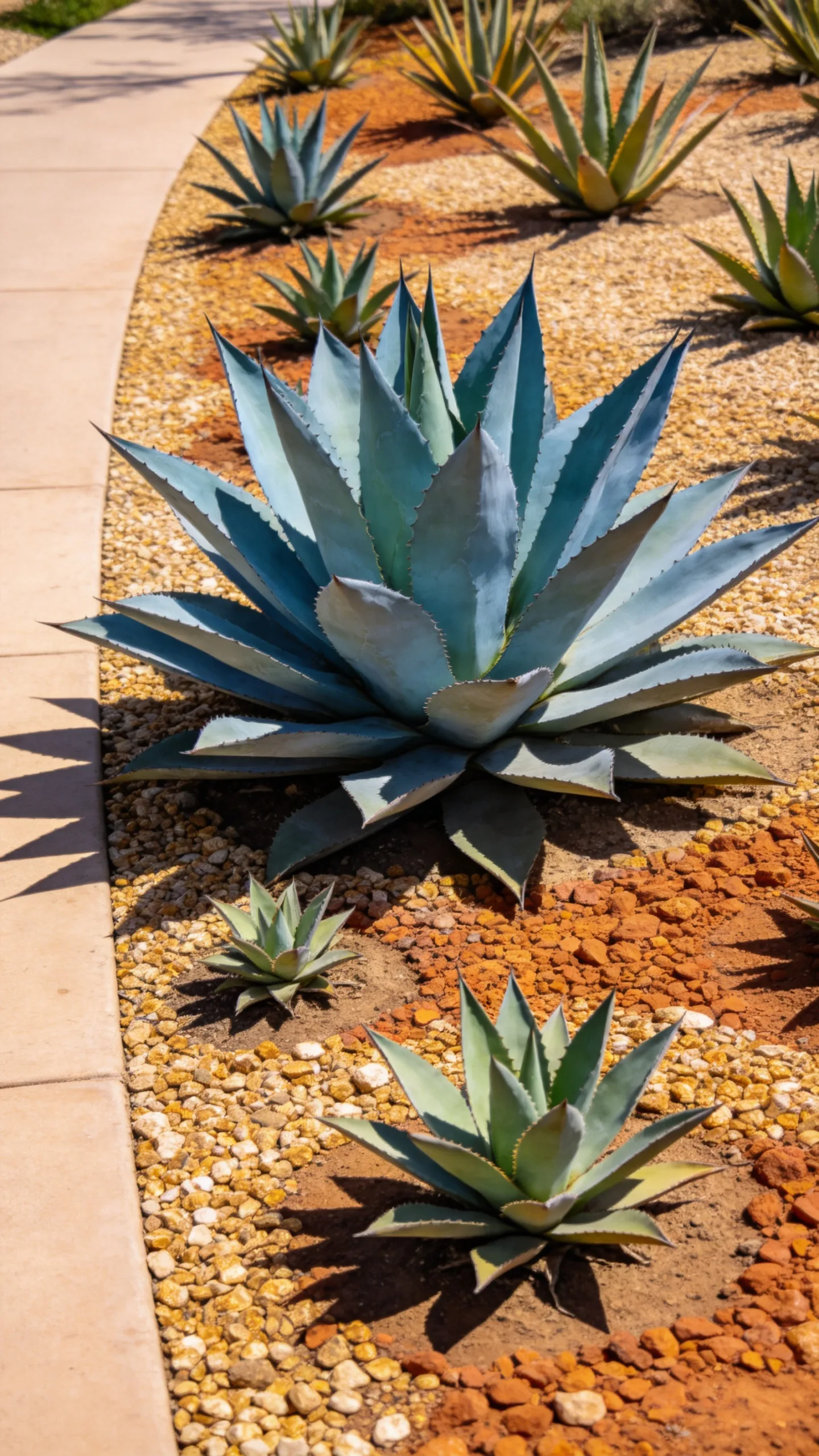
In frost-free or mild-winter climates, agaves create strong architectural shapes against tan, rust, or gold gravel. Set one large specimen as a focal point and repeat smaller agaves or aloes nearby. Space them well away from paths because many varieties have sharp leaf tips.
Plant in fast-draining soil and avoid burying the crown. In colder climates, create a similar effect with hardy yucca, red yucca, cold-tolerant prickly pear, or containers that can be moved under cover. Confirm local safety and invasiveness concerns before using plants that produce abundant offsets.
16. Plant a Pollinator Strip Beside a Gravel Path
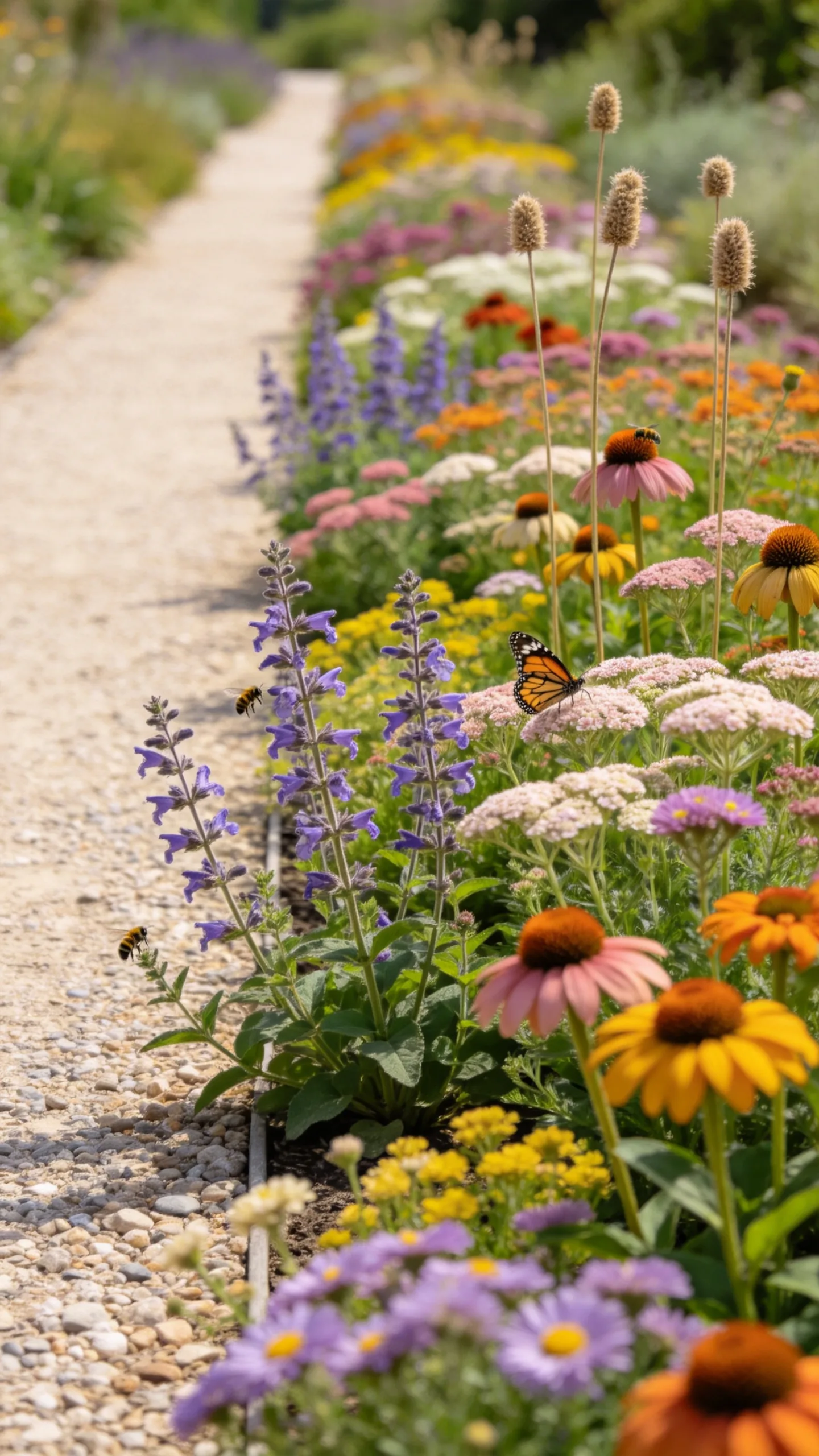
Reserve a narrow strip beside a path for long-blooming, water-wise flowers. Select three to five species with overlapping bloom periods, such as penstemon, salvia, yarrow, coneflower, and asters suited to your area. Repeated blocks of each plant are easier to maintain and more visually effective than a large assortment of single specimens.
A gravel path provides access for weeding, trimming, and observing pollinators without compacting the bed. Leave some flower heads standing into winter for seeds and structure, then cut back at the appropriate time for each species. Avoid pesticides that could harm visiting insects.
17. Use Large Containers With Hardy Plants
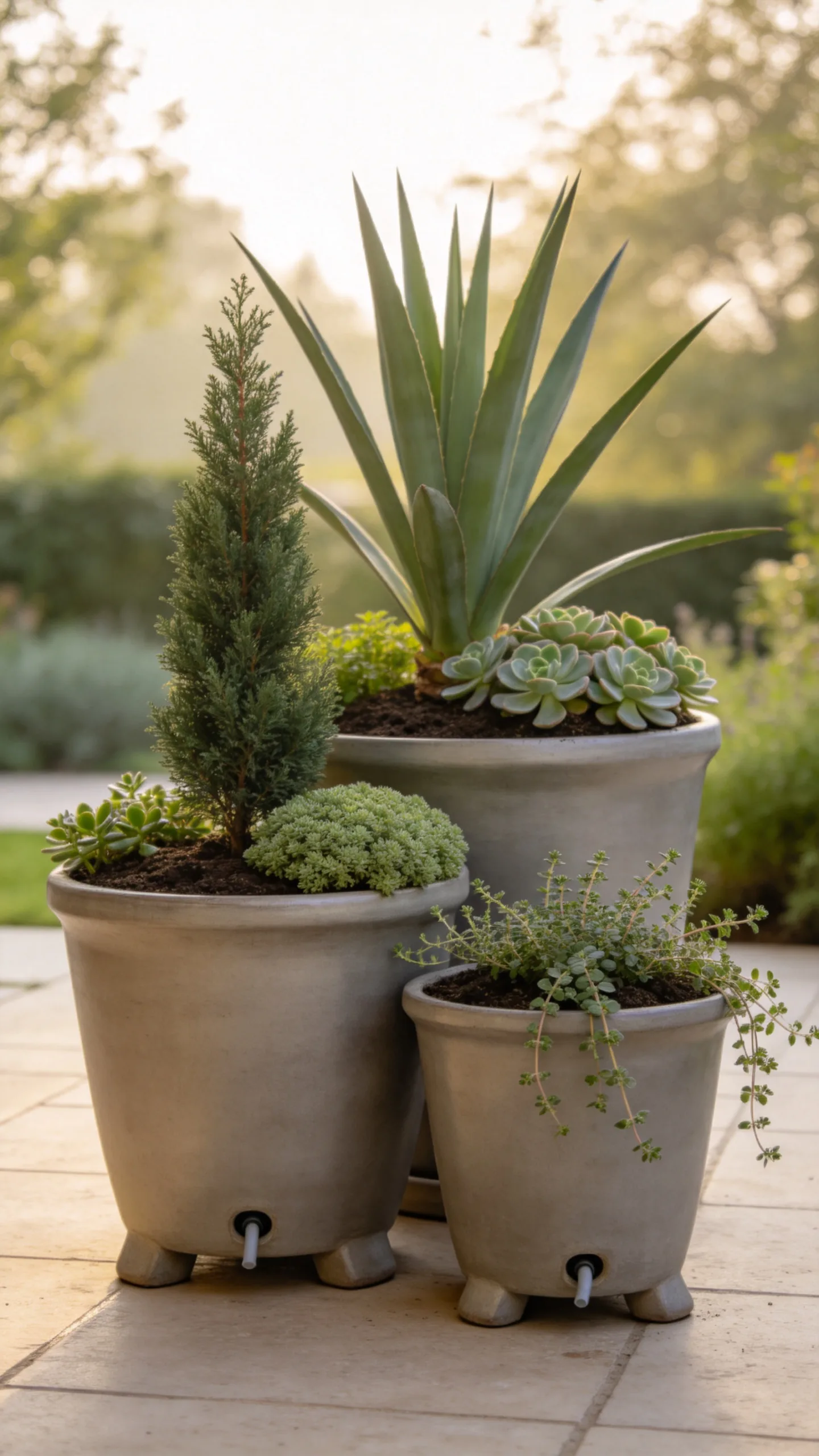
Large containers can bring drought-tolerant planting to patios, balconies, and paved courtyards. Choose pots with drainage holes and enough soil volume to slow rapid drying. Terra-cotta offers a classic look but loses moisture faster than glazed ceramic, resin, or metal containers.
Fill each pot with a simple combination, such as an upright yucca or dwarf conifer paired with sedum and trailing thyme. Container plants still need regular checks because roots cannot access surrounding soil. A drip line on a timer can simplify watering, but adjust the schedule for heat, rainfall, and seasonal dormancy.
18. Terrace a Dry Slope With Stone
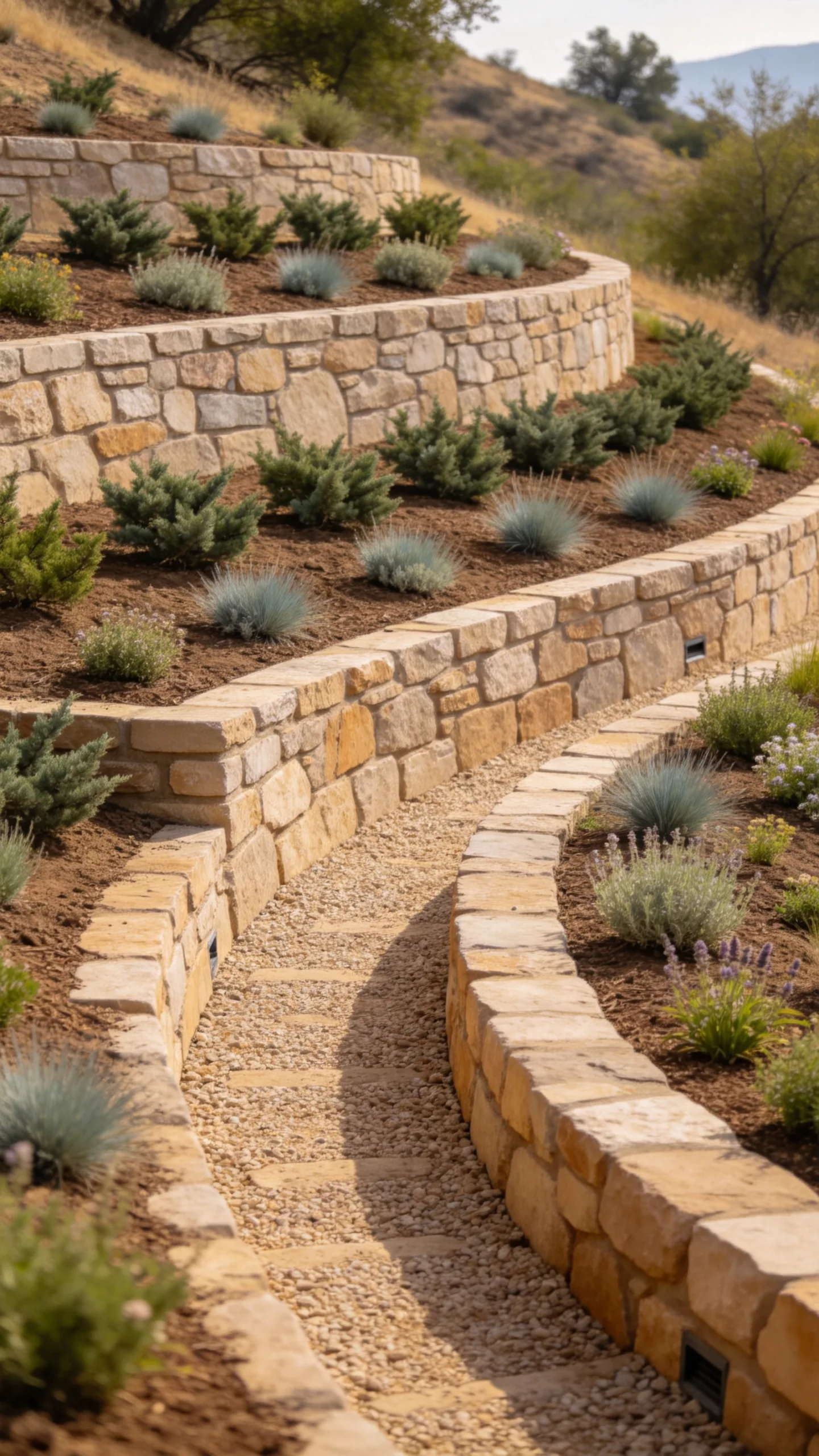
Break a steep, difficult slope into shallow terraces using low stone retaining edges. Terracing slows runoff, creates level planting pockets, and makes weeding safer. Significant retaining walls may require drainage design, permits, or professional installation, so keep do-it-yourself walls low and follow local requirements.
Plant each tier with deep-rooted grasses, spreading shrubs, and hardy perennials appropriate for the slope’s exposure. Creeping juniper, little bluestem, sumac, ceanothus, and ground-cover roses are possible choices in suitable regions. Apply coarse mulch or angular gravel that is less likely to wash downhill.
19. Arrange a Formal Grid of Drought-Tolerant Plants
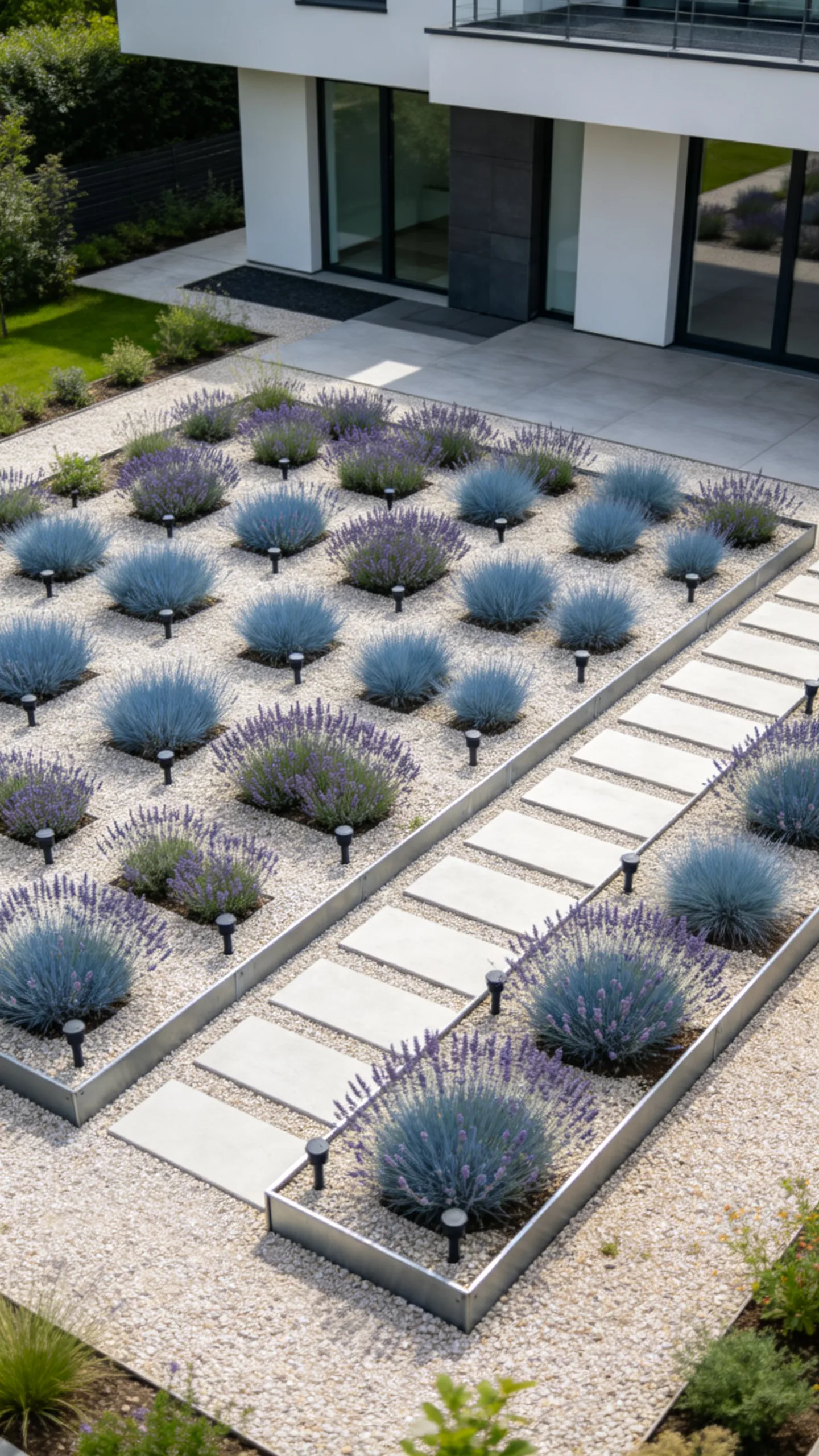
A simple grid can make a low-water front garden look intentional and orderly. Space repeated plants—such as globe-shaped santolina, compact lavender, blue fescue, or small agaves—at consistent intervals in a rectangular gravel bed. Measure mature widths so the plants will nearly meet without becoming crowded.
Use steel edging to separate the gravel from adjacent lawn or paving. Add a straight stepping-stone route for access and place drip emitters at each plant. This layout is particularly practical for modern homes and small courtyards because repetition creates impact with relatively few plant varieties.
20. Shade the Ground With Drought-Tolerant Trees
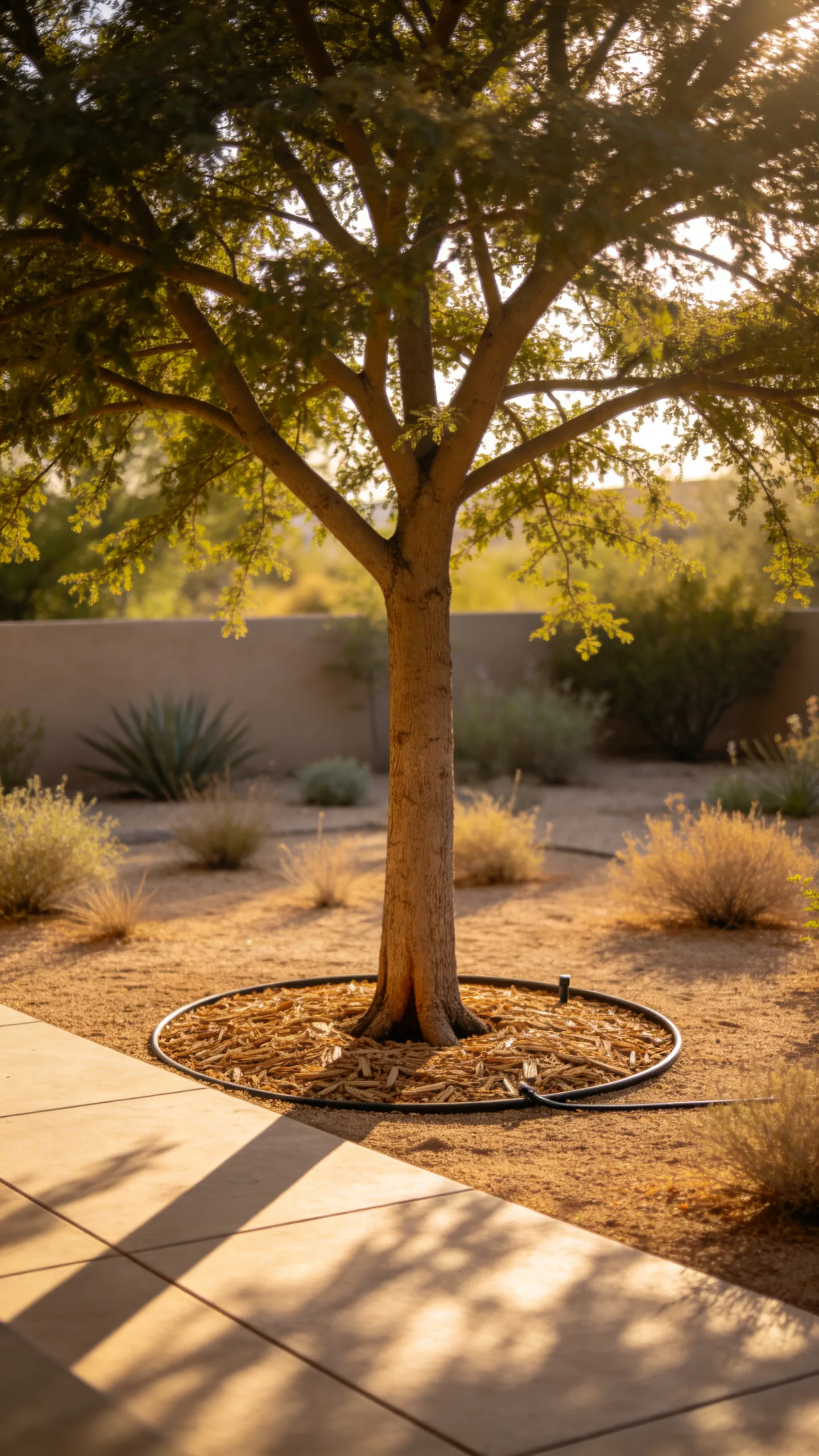
A well-placed tree can reduce heat on a patio or west-facing garden, although every tree needs adequate establishment water. Options may include desert willow, bur oak, hackberry, olive, palo verde, or native oak species, depending on climate, available root space, and local restrictions.
Plant the tree away from foundations, utilities, and overhead wires, allowing for its mature canopy. Create a wide mulch ring with 2 to 4 inches of wood chips rather than piling mulch against the trunk. Continue deep watering as needed during dry periods, especially for young trees and in areas with prolonged drought.
21. Mix Flagstones With Low-Growing Herbs
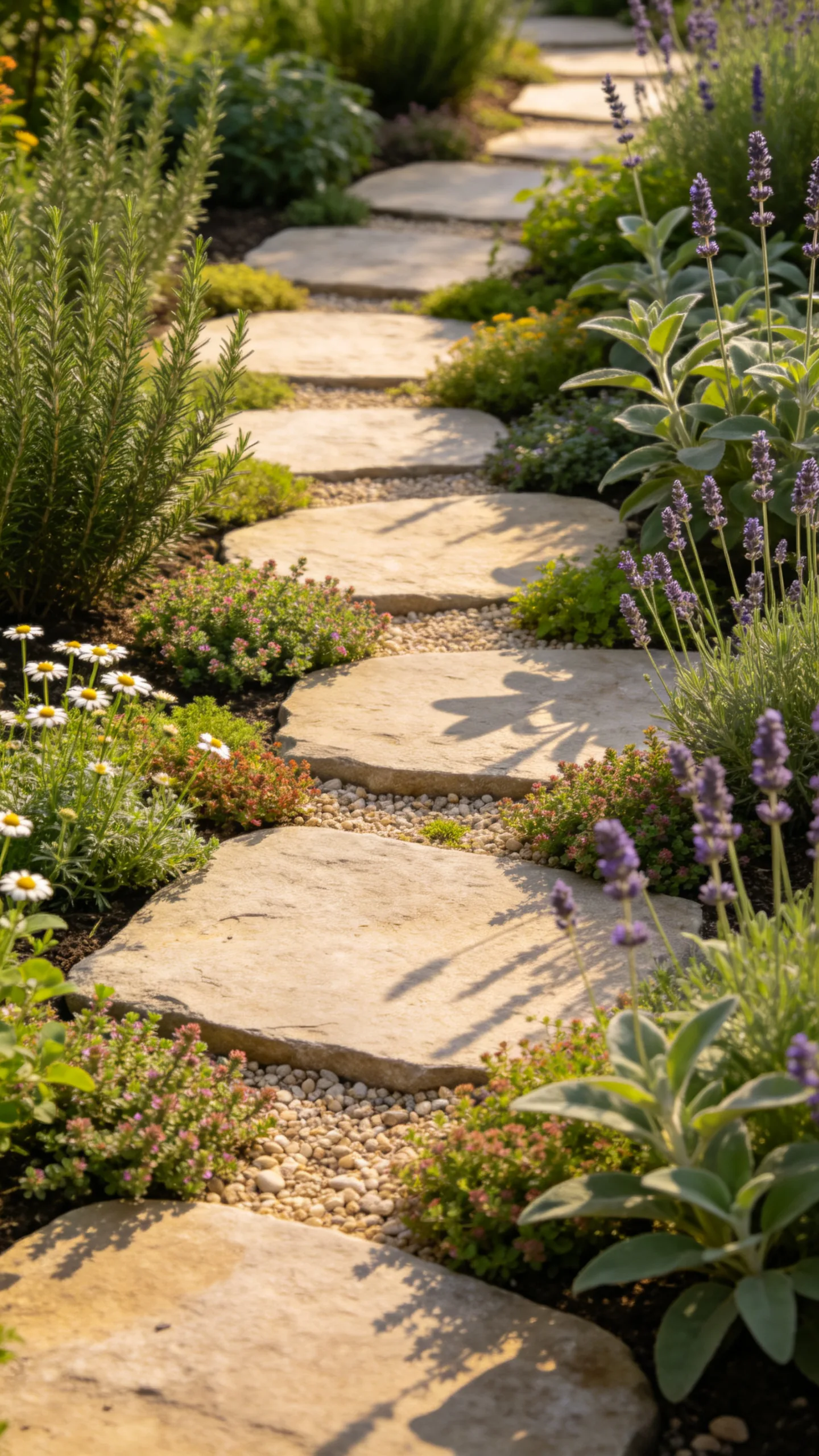
Lay widely spaced flagstones through a sunny herb bed to create an informal, permeable path. Set each stone on a stable base and keep the walking surfaces level. Fill broad planting gaps with low herbs such as creeping thyme, oregano, chamomile, or savory where those plants are hardy.
Place taller rosemary, sage, and lavender outside the footpath so they do not obstruct movement. Gravel in the narrow joints can reduce mud and make volunteer seedlings easier to remove. Harvest herbs regularly, but avoid heavy cutting late in the season if tender new growth could be damaged by frost.
22. Screen a Patio With Water-Wise Shrubs
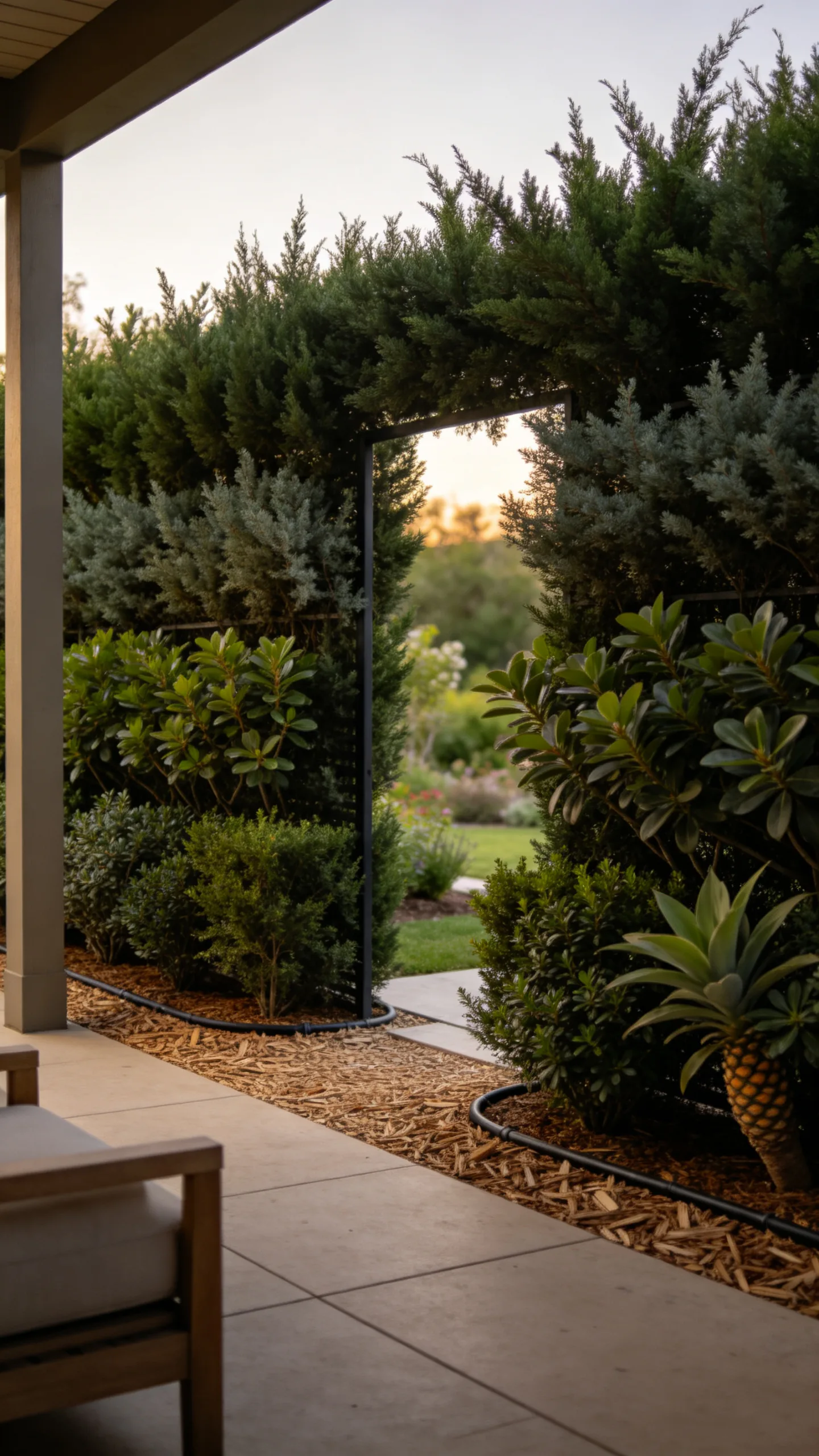
Create privacy around a seating area with a staggered row of shrubs instead of a solid, frequently clipped hedge. Suitable candidates may include pineapple guava, hopseed bush, juniper, oleaster, wax myrtle, or native evergreen shrubs. Check mature dimensions and regional invasiveness before purchasing.
Staggering the shrubs gives each plant room to develop its natural shape and allows air to circulate. Install drip irrigation along the root zones and cover the bed with wood chips. Add one or two openings in the screen to preserve views and provide easy access for pruning or irrigation repairs.
23. Build a Small Gravel Courtyard Garden
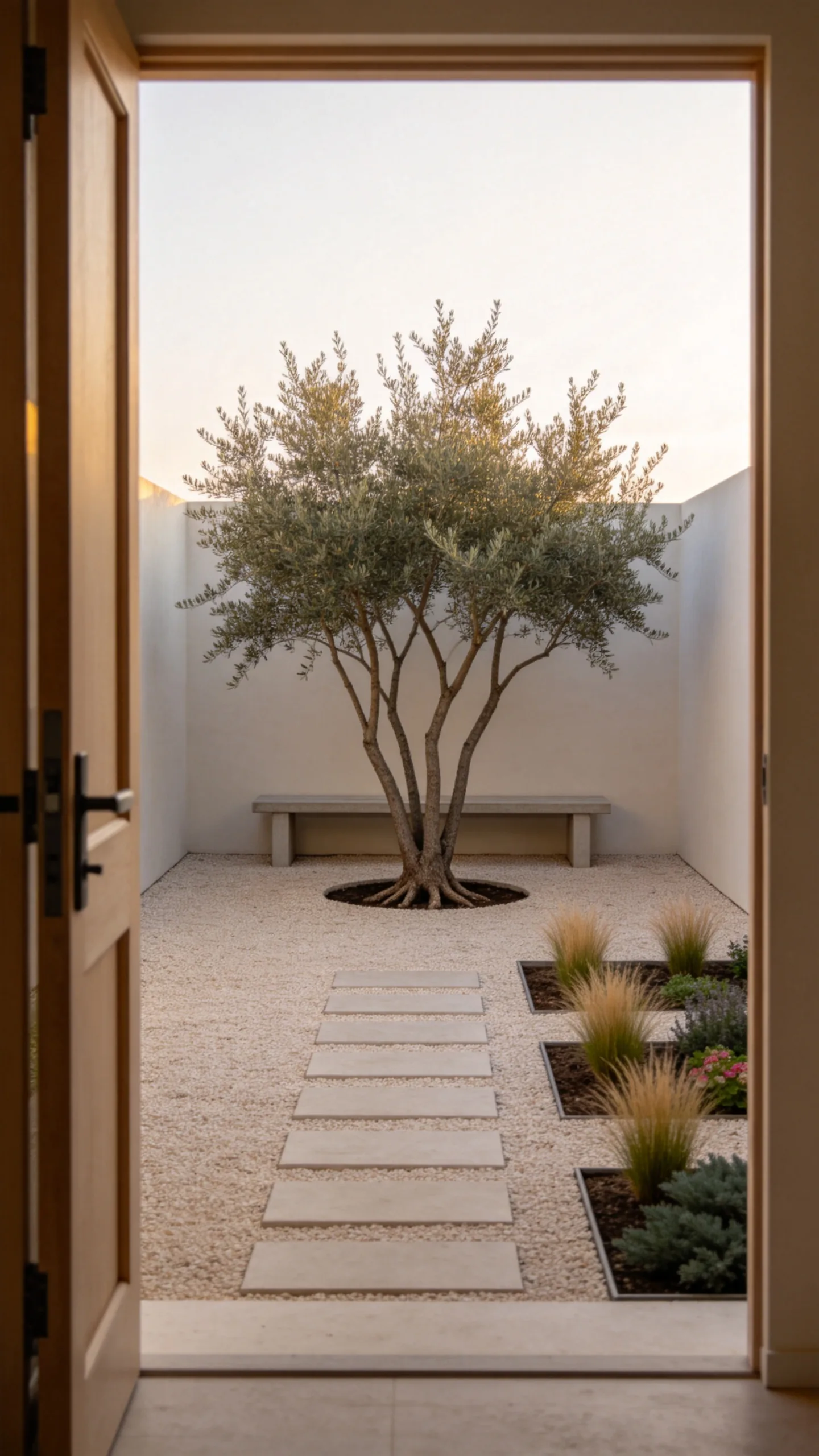
Transform an enclosed corner into a gravel courtyard with a compact tree, a bench, and a few carefully placed planting pockets. Begin with a stable gravel surface and edging, then leave generous openings for plant roots. A multi-stem serviceberry, desert willow, olive, or crape myrtle may work as the focal tree depending on climate and available space.
Surround the tree with a restrained mix of ornamental grasses, hardy perennials, and evergreen ground covers. Use drip irrigation beneath the gravel and include stepping stones where regular access is needed. Keeping the palette limited makes the courtyard feel calm while reducing complicated pruning, watering, and seasonal cleanup.