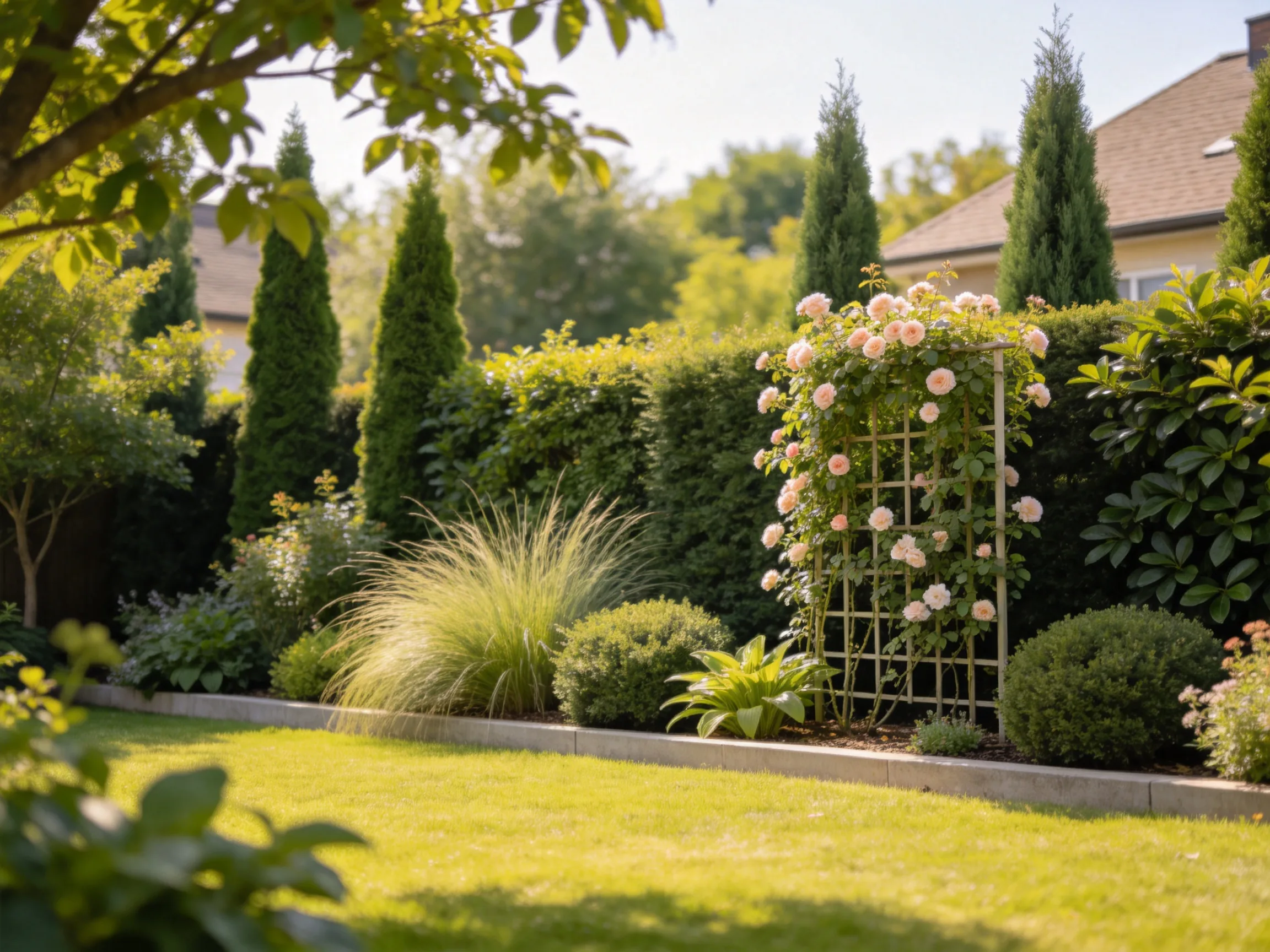
A living screen can soften property lines, reduce unwanted views, and make a sunny backyard feel more secluded. The best full sun privacy plants depend on winter temperatures, available width, soil drainage, and whether year-round coverage is essential. Before planting, confirm the mature size and local suitability of each species, then leave enough space for healthy airflow rather than crowding plants for instant coverage.
1. Green Giant Arborvitae
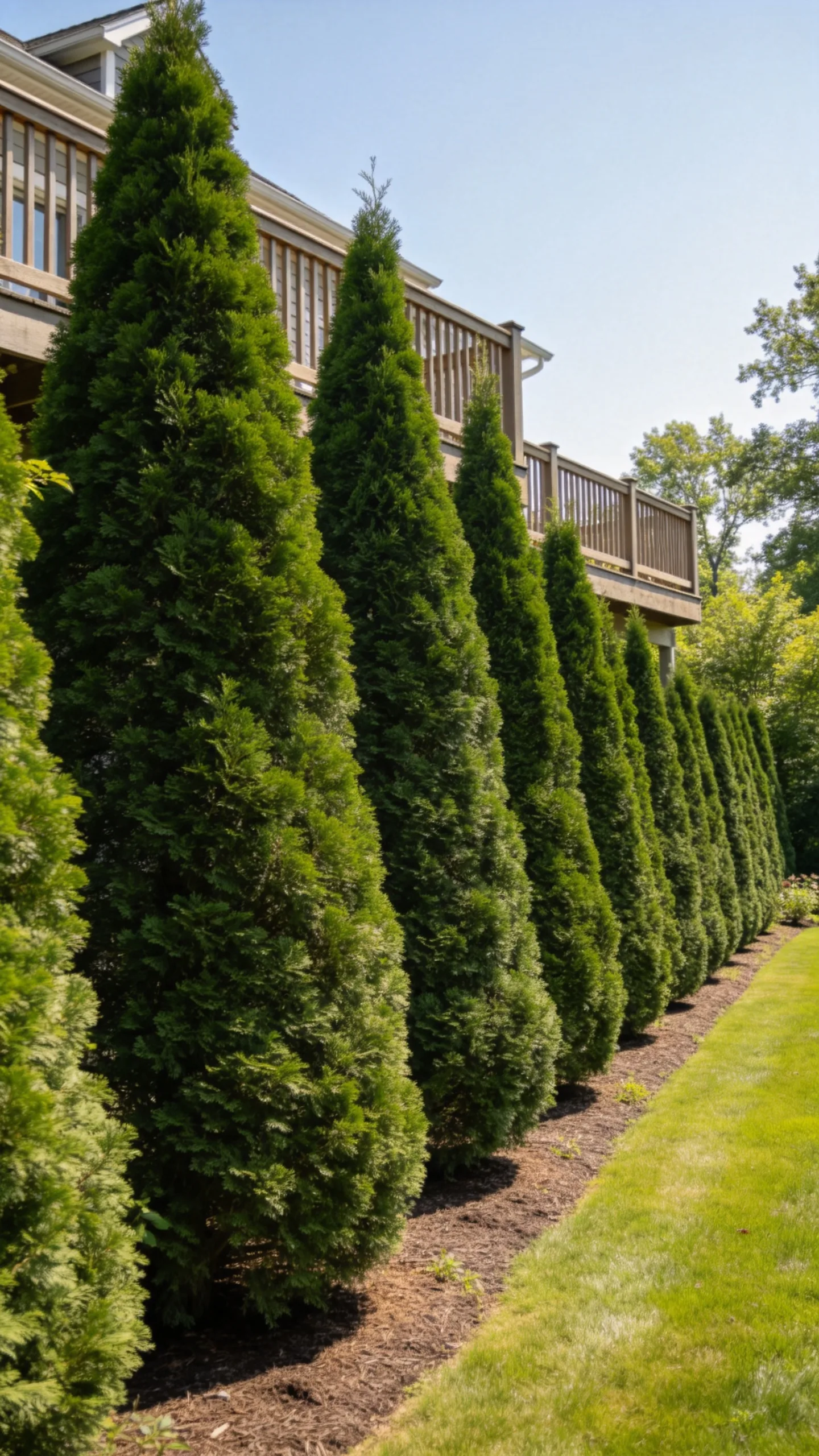
Green Giant arborvitae (*Thuja* ‘Green Giant’) is a fast-growing evergreen suited to large property lines in roughly USDA Zones 5–8. Its dense, pyramidal foliage can create a tall year-round screen, but mature plants may reach 12–18 feet wide. Space them about 6–8 feet apart for a connected hedge, adjusting for the room available.
Plant this arborvitae in full sun and moist, well-drained soil. Water deeply during the first two growing seasons, especially during hot or dry weather. An informal row usually needs less maintenance than a tightly sheared hedge, and its natural shape makes it useful for screening two-story homes or elevated neighboring decks.
2. Leyland Cypress
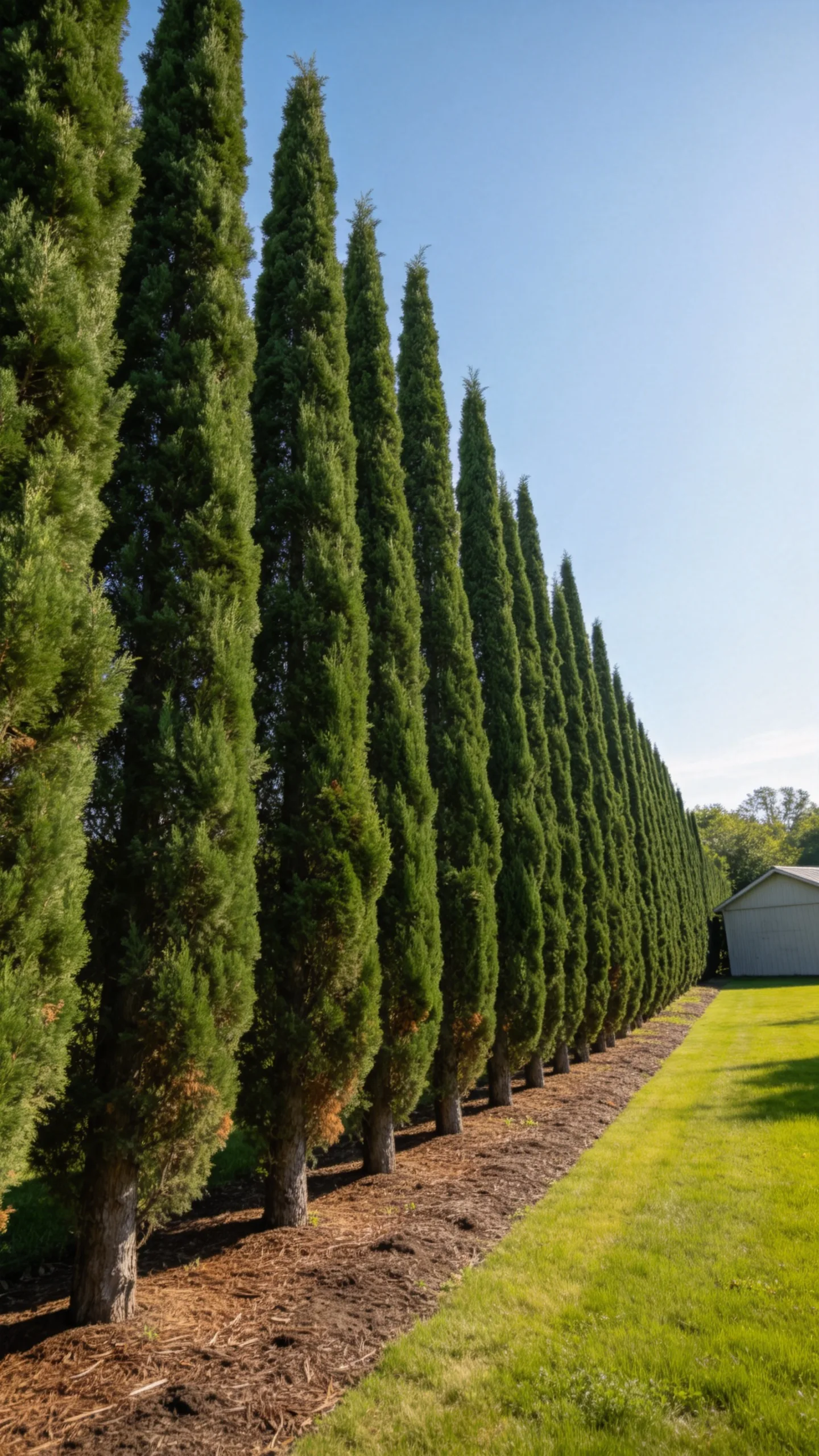
Leyland cypress (*× Cuprocyparis leylandii*) provides quick evergreen coverage in suitable climates, generally Zones 6–10. It grows best in full sun with well-drained soil and can become exceptionally tall, so it is better for broad suburban or rural lots than narrow side yards.
Allow approximately 8–10 feet between plants rather than installing a crowded wall. Better spacing improves airflow and may reduce problems with canker, root stress, and interior browning. Avoid planting it in consistently wet ground, and consider a mixed screen if local Leyland cypress diseases are common.
3. Arizona Cypress
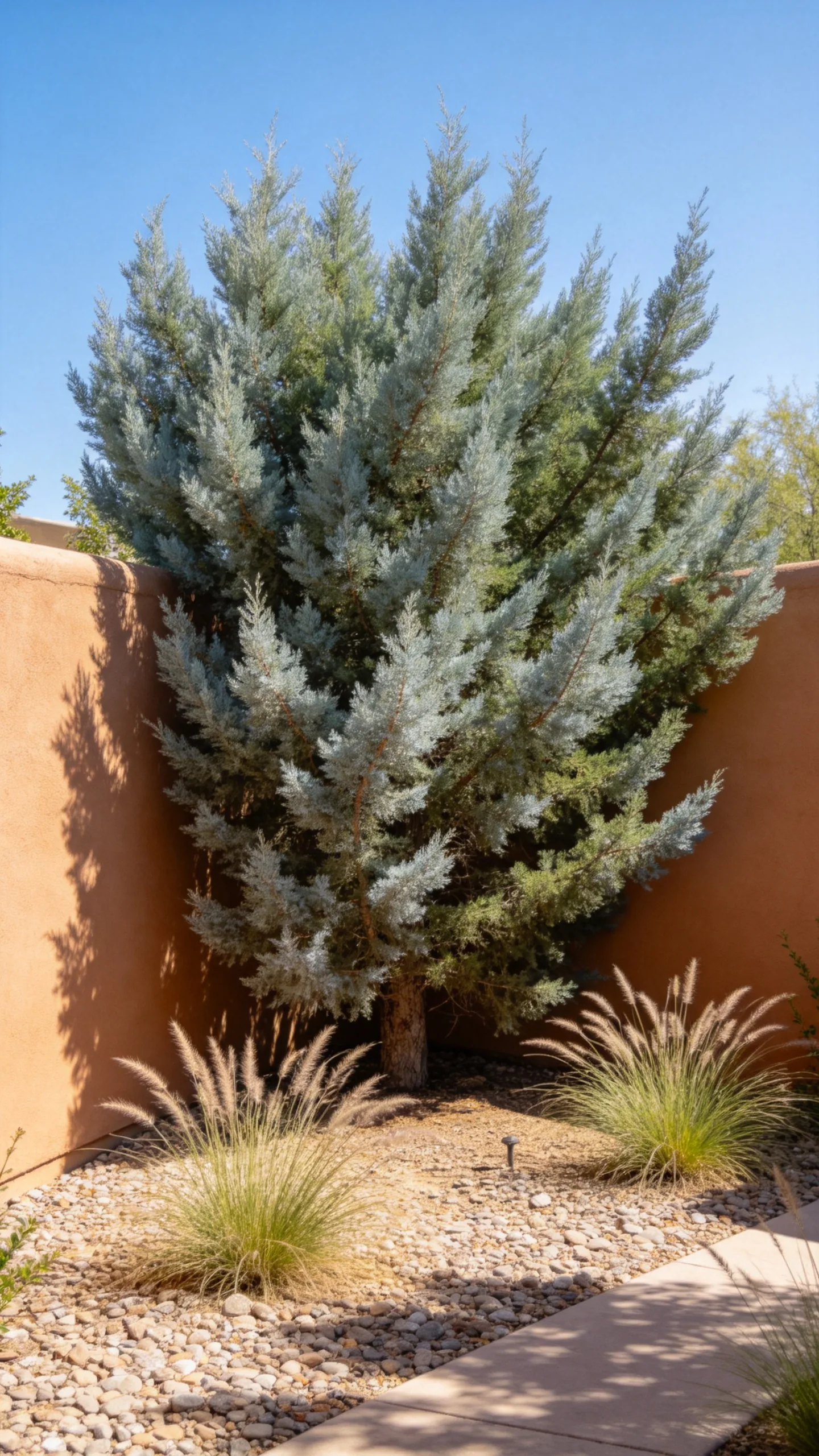
Arizona cypress (*Hesperocyparis arizonica*) is a strong privacy option for sunny, dry landscapes in approximately Zones 7–9. Its blue-green or silvery foliage works well with gravel paths, stucco walls, ornamental grasses, and other drought-conscious landscape elements.
Use it where the soil drains quickly and there is enough room for a tree that may grow 15–25 feet wide. Once established, it generally handles dry conditions better than moisture-loving conifers, but new trees still require regular deep watering. Cultivars such as ‘Blue Ice’ and ‘Carolina Sapphire’ offer especially colorful foliage.
4. Eastern Redcedar
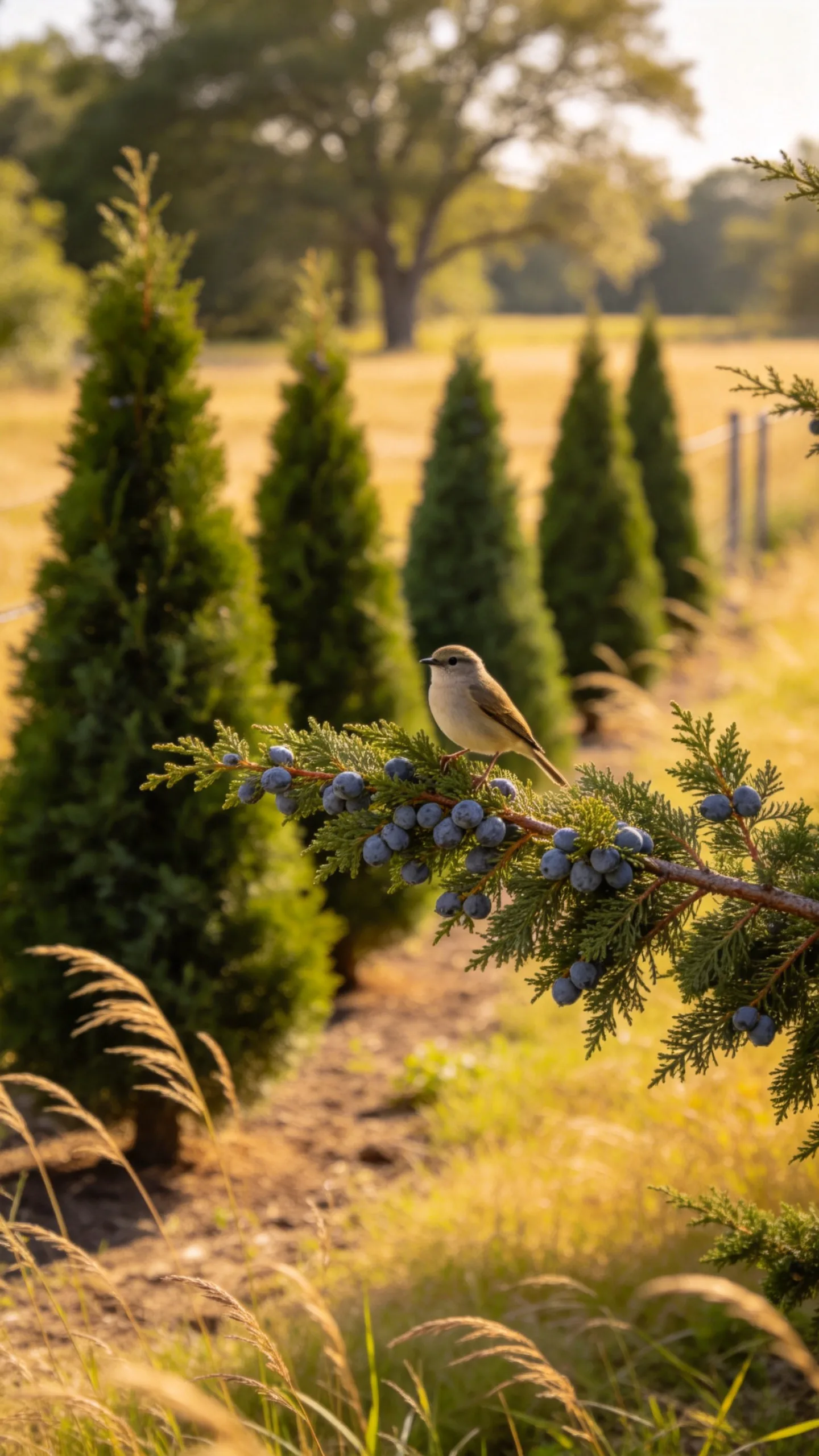
Eastern redcedar (*Juniperus virginiana*) is a durable native evergreen for many sunny sites in Zones 2–9. It tolerates wind, seasonal dryness, and a range of soils once established, making it useful along exposed property lines or at the edge of a large backyard.
Plant trees about 8–12 feet apart for an informal screen, depending on the cultivar and desired density. Female plants can produce blue, berry-like cones that feed birds. Because eastern redcedar can host cedar-apple rust, gardeners growing susceptible apple or crabapple trees should consider local disease pressure before planting.
5. Nellie R. Stevens Holly
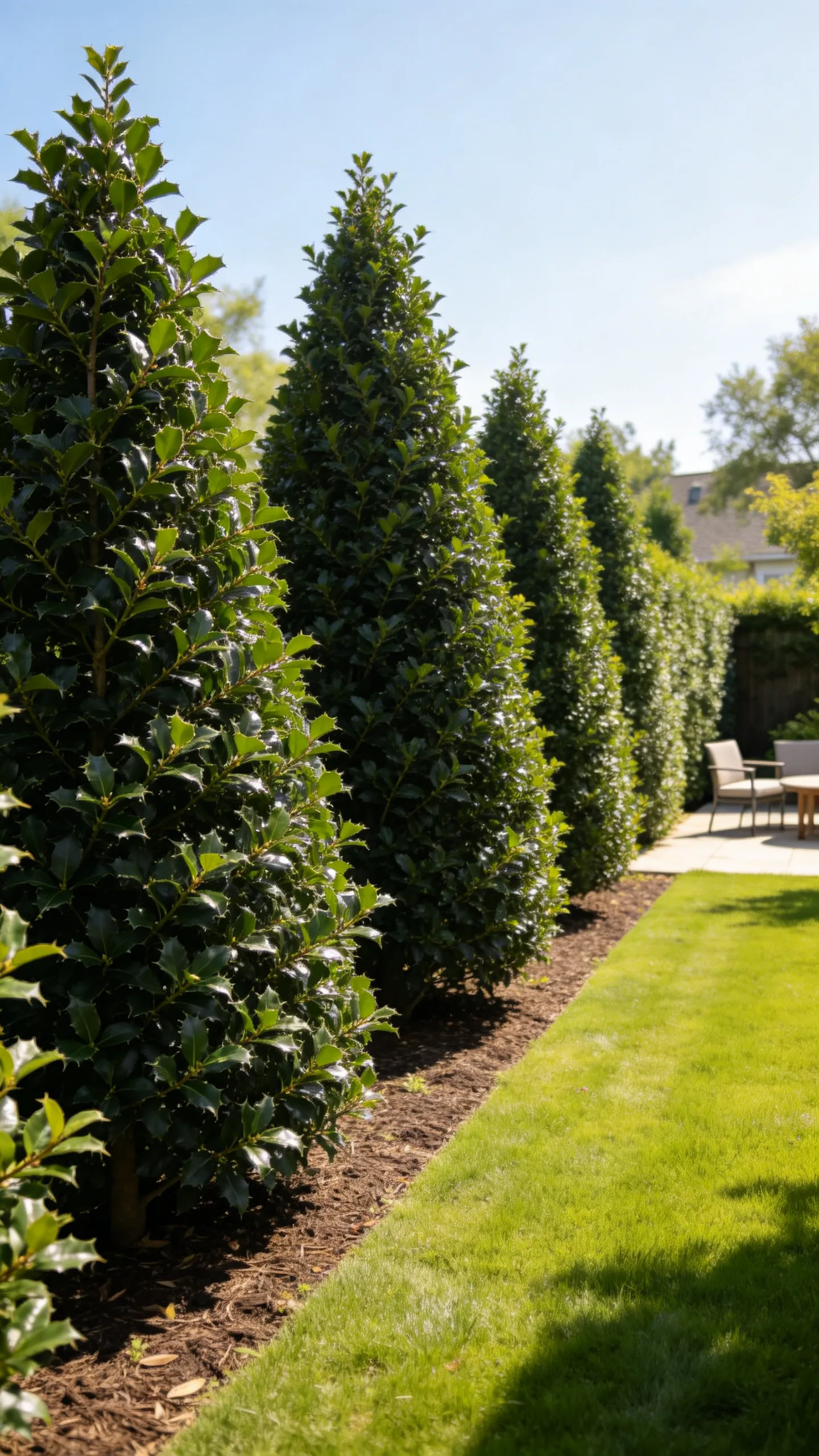
Nellie R. Stevens holly (*Ilex* ‘Nellie R. Stevens’) forms a glossy, broadleaf evergreen screen in roughly Zones 6–9. It handles full sun well and can be pruned as a formal hedge or left to develop into a tall, pyramidal shrub.
Space plants around 6–8 feet apart for screening, with more room if you want each shrub to keep its natural form. Provide well-drained soil and consistent water while roots become established. The spiny foliage can discourage foot traffic, so place it away from narrow paths, play areas, and frequently used gates.
6. Southern Wax Myrtle
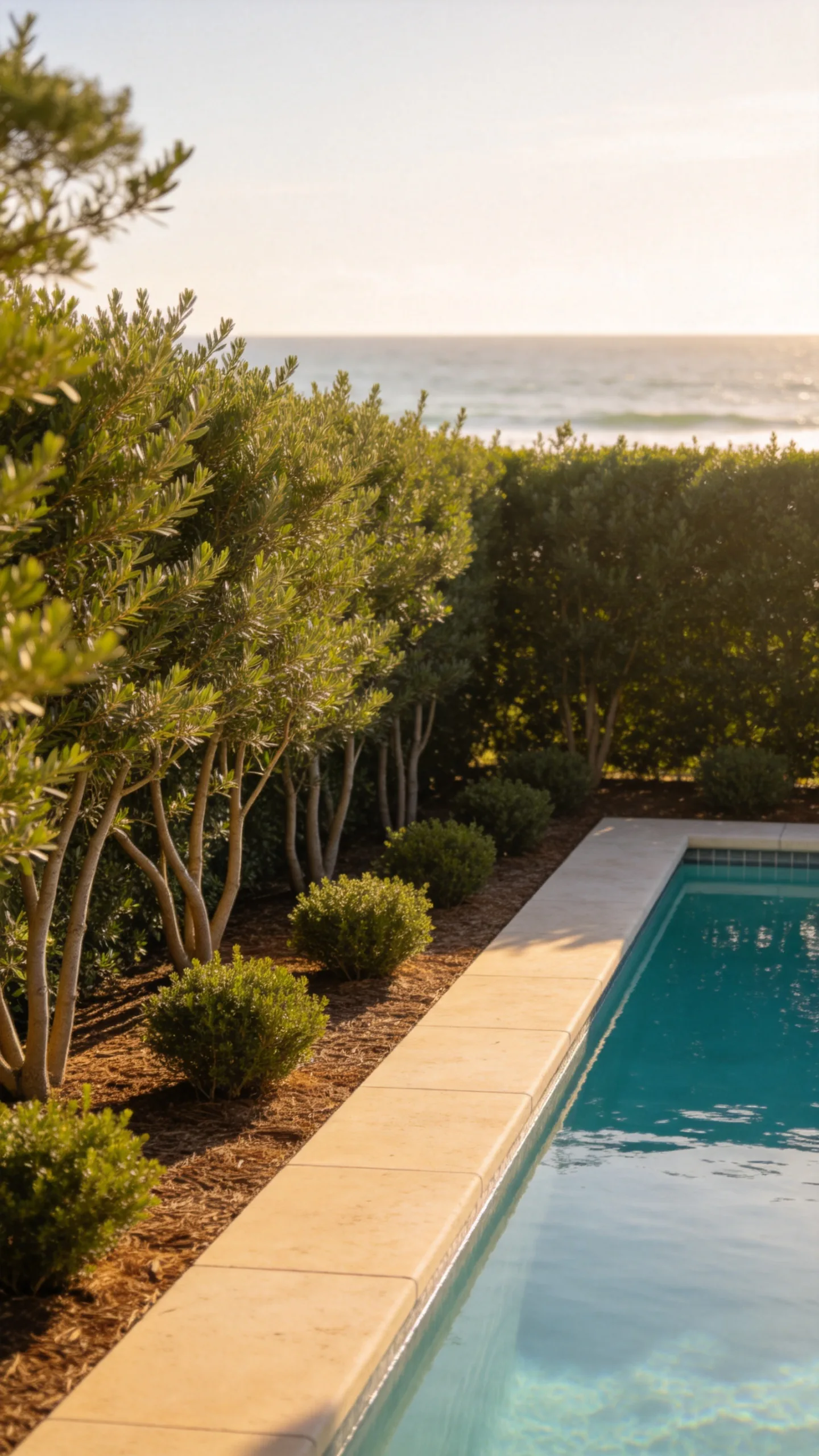
Southern wax myrtle (*Morella cerifera*) is a quick-growing evergreen or semi-evergreen shrub for warm regions, generally Zones 7–10. Its fine-textured foliage creates a softer screen than many conifers, and established plants tolerate heat, salt spray, and periodic drought.
Use wax myrtle as a loose hedge beside patios, pools, or coastal property lines. Plants can reach 10–20 feet tall and should usually be spaced 6–10 feet apart. Lower branches may be retained for ground-level privacy or removed gradually to create a small multi-trunk tree with space underneath.
7. Skip Laurel
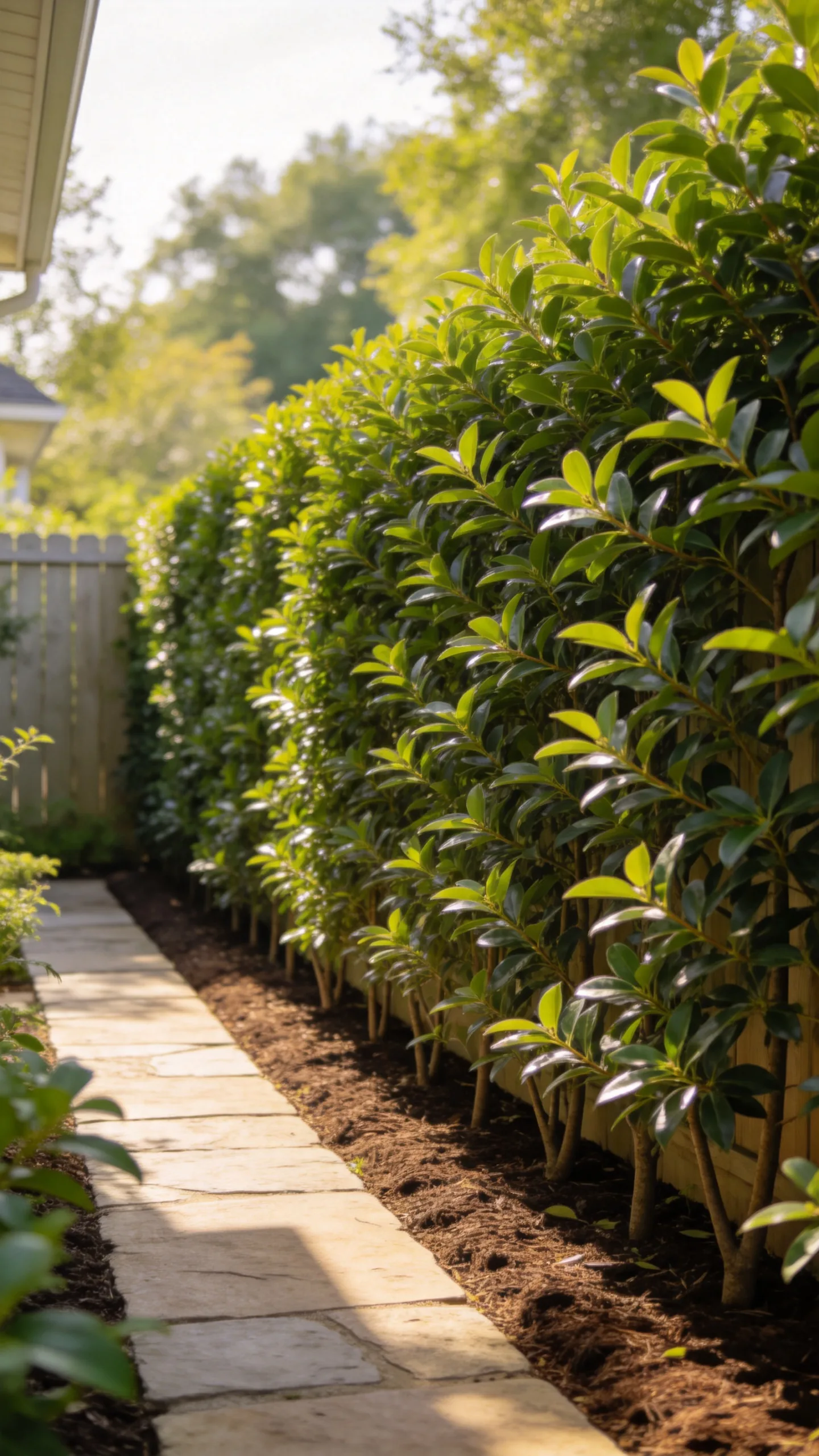
Skip laurel (*Prunus laurocerasus* ‘Schipkaensis’) is a relatively narrow evergreen shrub with shiny leaves and dense branching. It performs well in approximately Zones 6–9 and is useful where a broad conifer would overwhelm a side yard or patio boundary.
Install plants about 4–6 feet apart in fertile, well-drained soil. Full sun encourages dense growth in cooler areas, although afternoon shade may reduce stress in hot climates. Avoid waterlogged beds, and remember that laurel leaves and seeds are toxic if eaten, making placement important around pets and children.
8. Red Tip Photinia
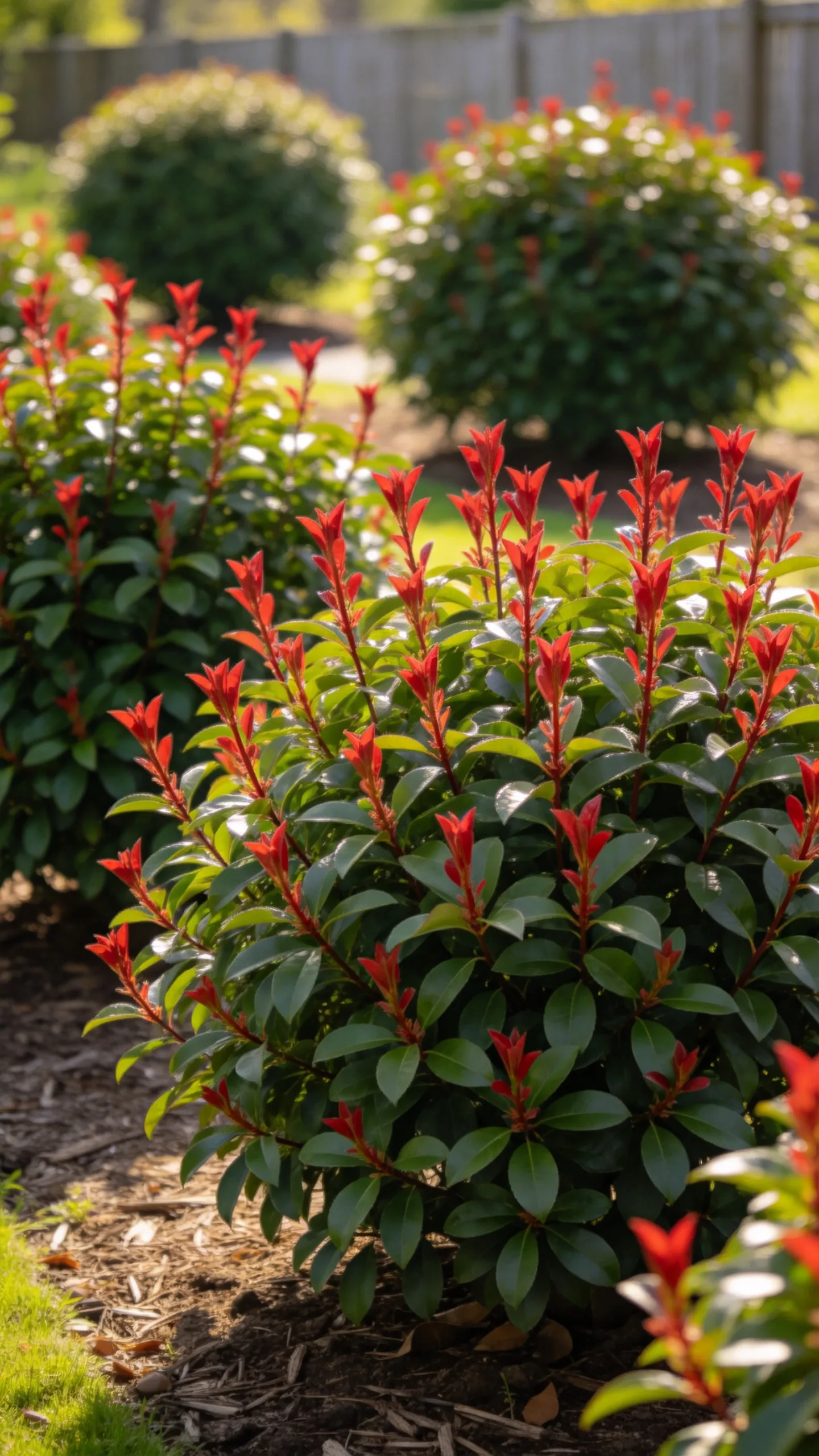
Red tip photinia (*Photinia × fraseri*) produces bright red new growth that matures to glossy green, giving a privacy hedge seasonal color. It is best suited to full sun in generally mild climates, around Zones 7–9, where it can grow into a substantial evergreen screen.
Space shrubs at least 5–8 feet apart and avoid frequent overhead watering. Crowded, damp conditions can encourage Entomosporium leaf spot, a serious issue in some regions. If this disease is common locally, use photinia as part of a mixed border rather than planting one long, tightly clipped row.
9. Podocarpus
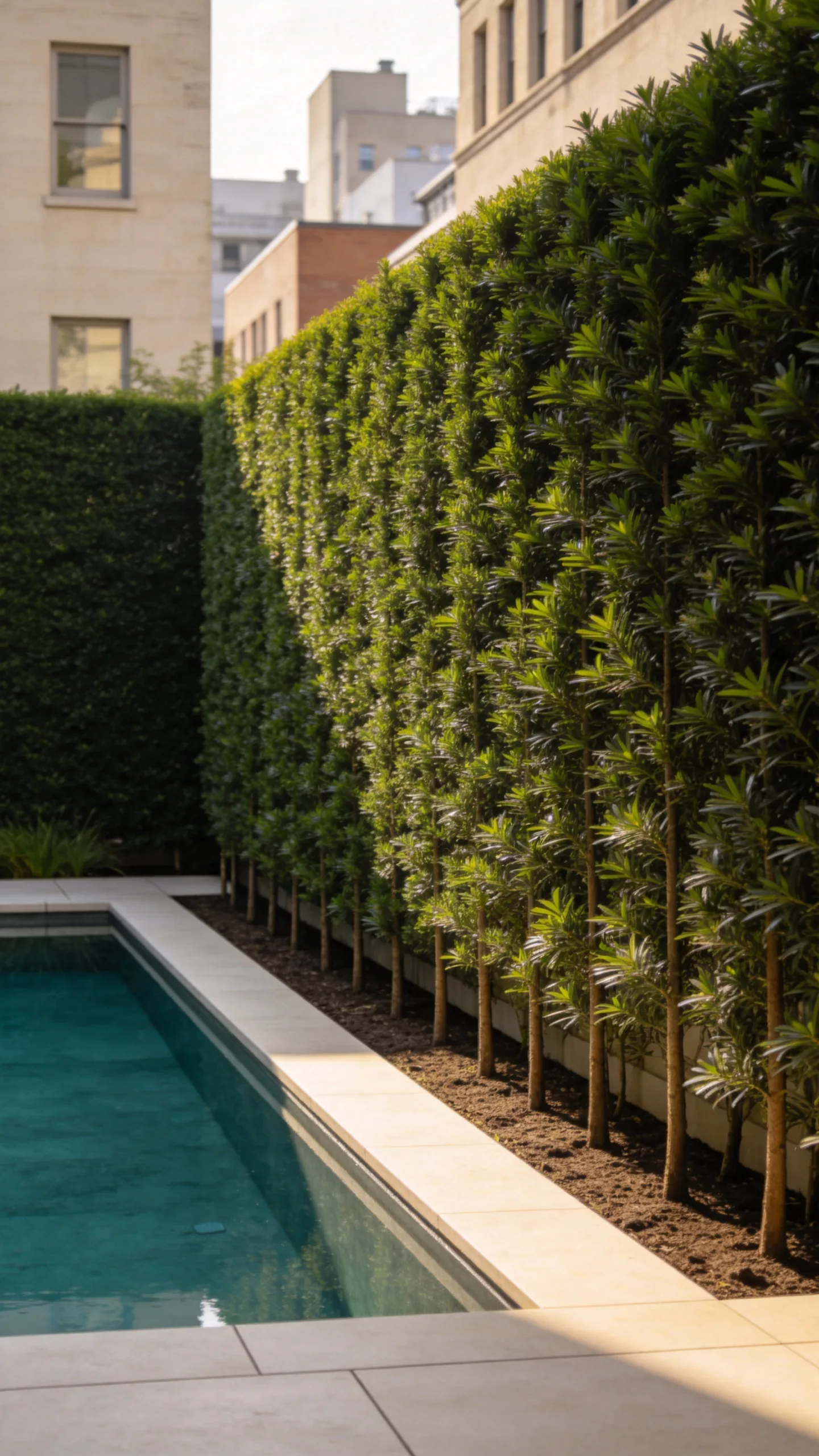
Podocarpus, often sold as yew pine (*Podocarpus macrophyllus*), is a narrow-leaved evergreen for warm climates, usually Zones 8b–11. It can be clipped into a formal hedge or trained as a small tree, making it adaptable to pool enclosures, driveway edges, and compact urban yards.
Place plants roughly 3–6 feet apart, depending on the cultivar and how quickly you want the foliage to connect. Podocarpus grows in full sun but benefits from regular water while establishing. Choose compact cultivars for shallow beds because standard forms can eventually become much larger than a typical foundation shrub.
10. Sweet Viburnum
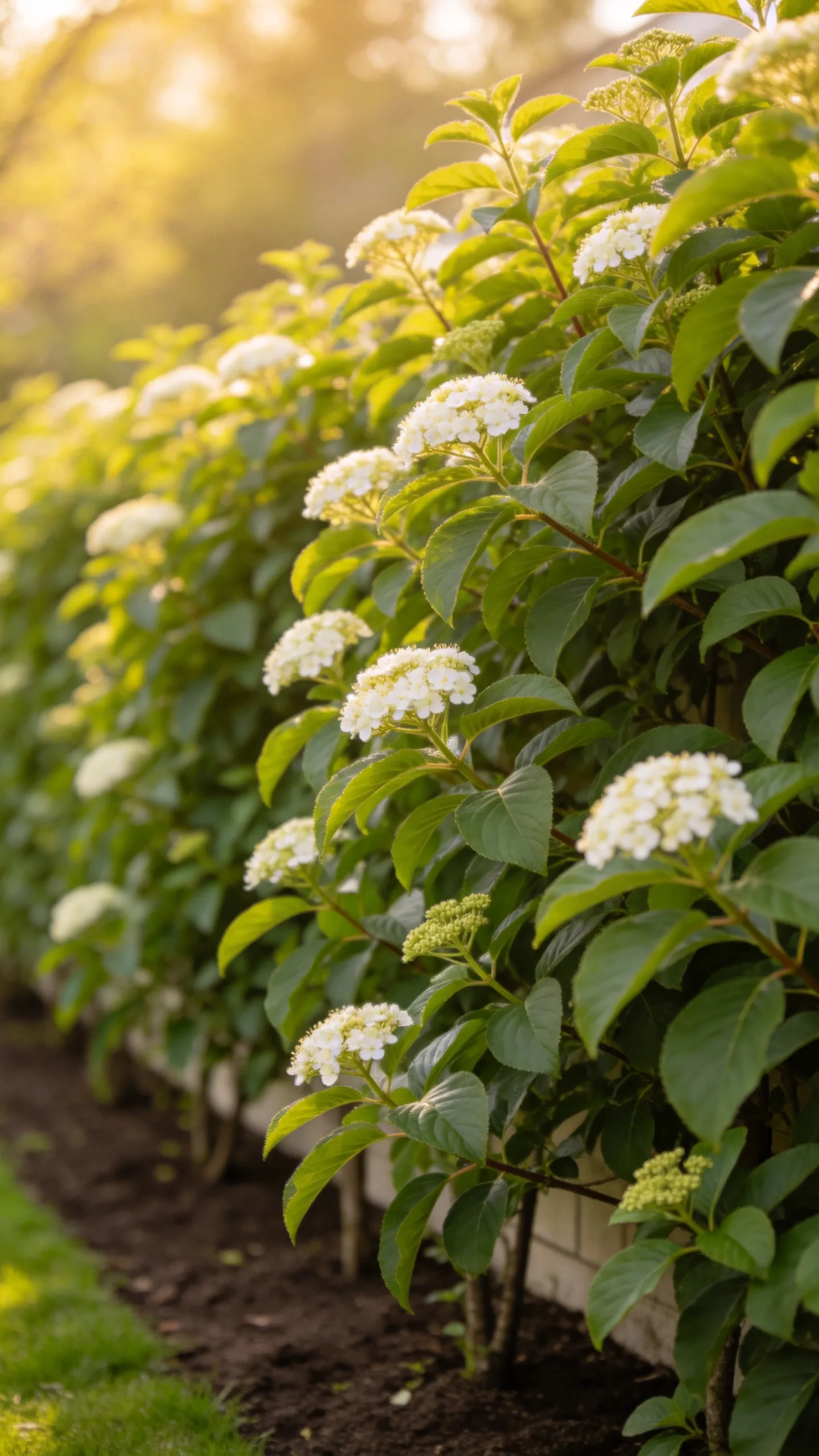
Sweet viburnum (*Viburnum odoratissimum*) is a fast-growing broadleaf evergreen for warm regions, generally Zones 8–10. Its large leaves create a lush visual barrier, while clusters of small white flowers add spring interest when the shrub is allowed to grow less formally.
For a privacy hedge, space plants about 4–6 feet apart and provide fertile, well-drained soil. Sweet viburnum responds well to pruning, but repeated shearing can create a dense outer shell with sparse growth inside. Selective pruning keeps the screen full while allowing light and air to reach the branches.
11. Clumping Bamboo
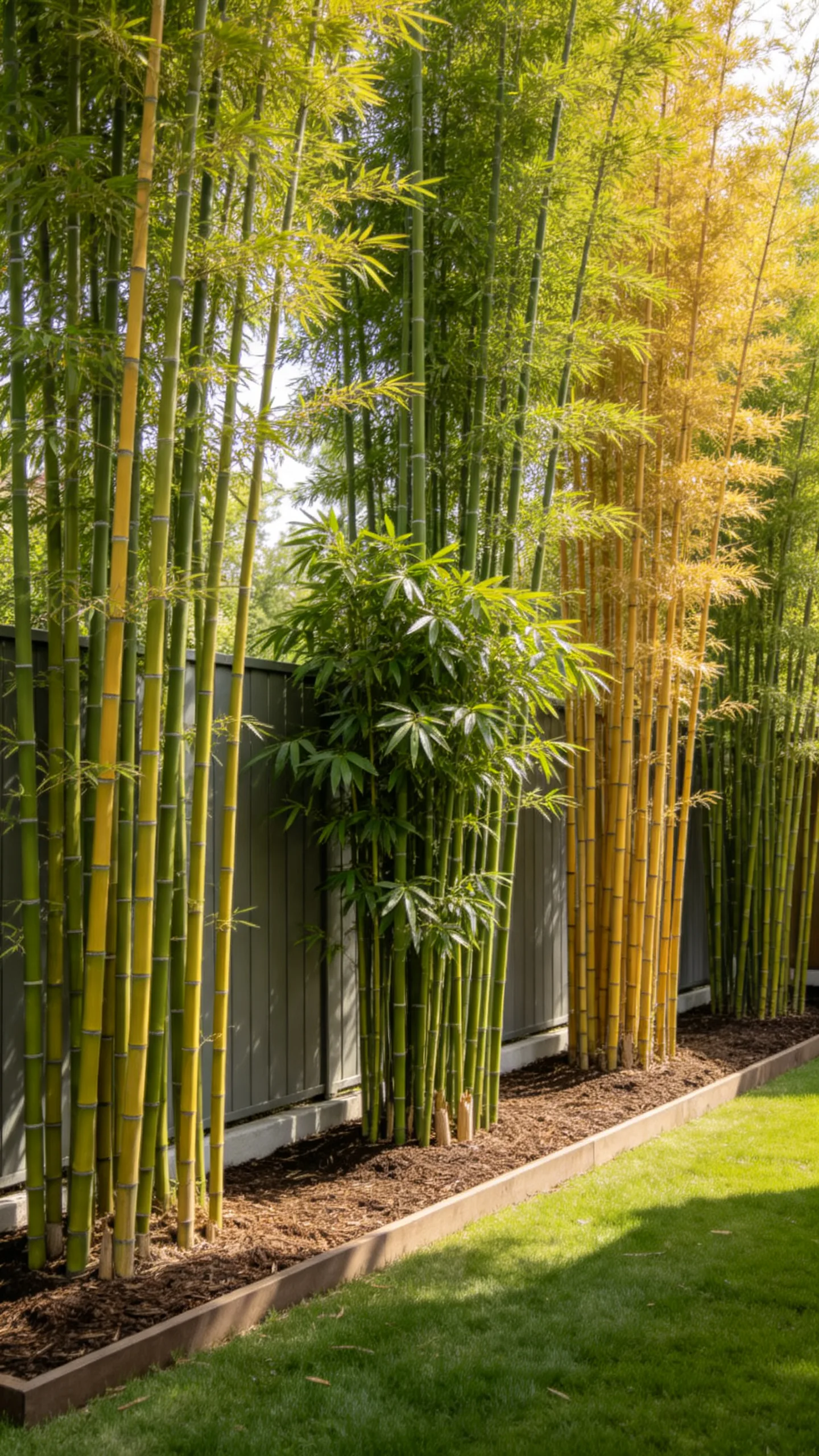
Clumping bamboo can produce a tall, narrow screen without the aggressive underground spread associated with running bamboo. Sun-tolerant *Bambusa* species suit many warm climates, while certain *Fargesia* cultivars are better for cooler areas but may prefer protection from intense afternoon heat.
Confirm the mature height, cold hardiness, and local regulations before purchasing. Even clumping types widen gradually, so provide an appropriate bed or large reinforced container. Regular water and mulch support fast establishment, while removing older canes at ground level keeps the screen tidy and allows new culms room to develop.
12. Hybrid Willow
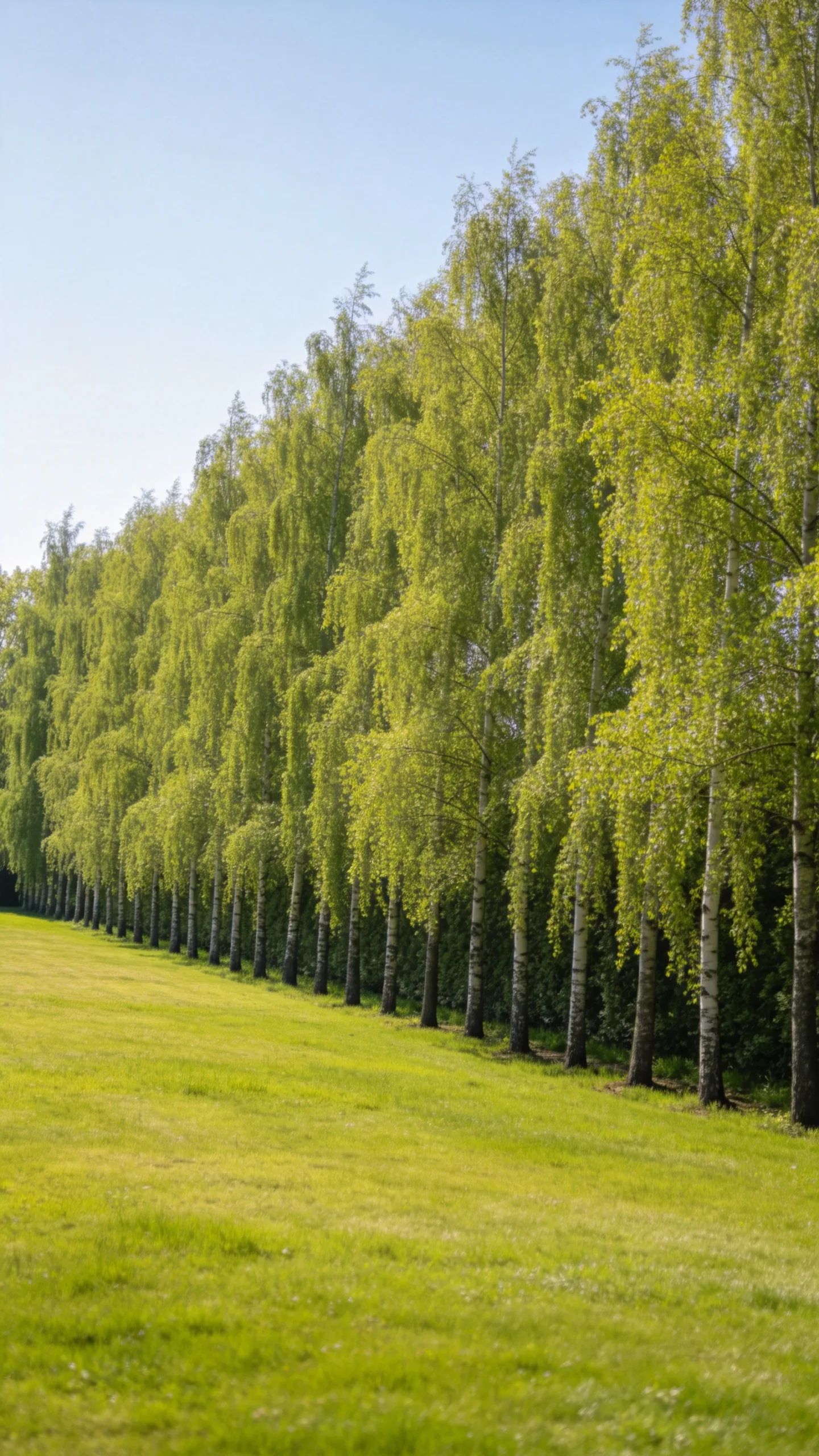
Hybrid willows are deciduous trees often selected for their rapid growth in full sun. They can form a tall seasonal screen within a relatively short period in suitable conditions, but their eventual size makes them appropriate only for spacious yards.
Plant them well away from foundations, septic fields, drainage pipes, and paved areas because willow roots seek moisture. A row may need approximately 10–15 feet between trees, depending on the selection. Expect bare branches during winter, and use an evergreen understory if cold-season privacy is important.
13. Forsythia
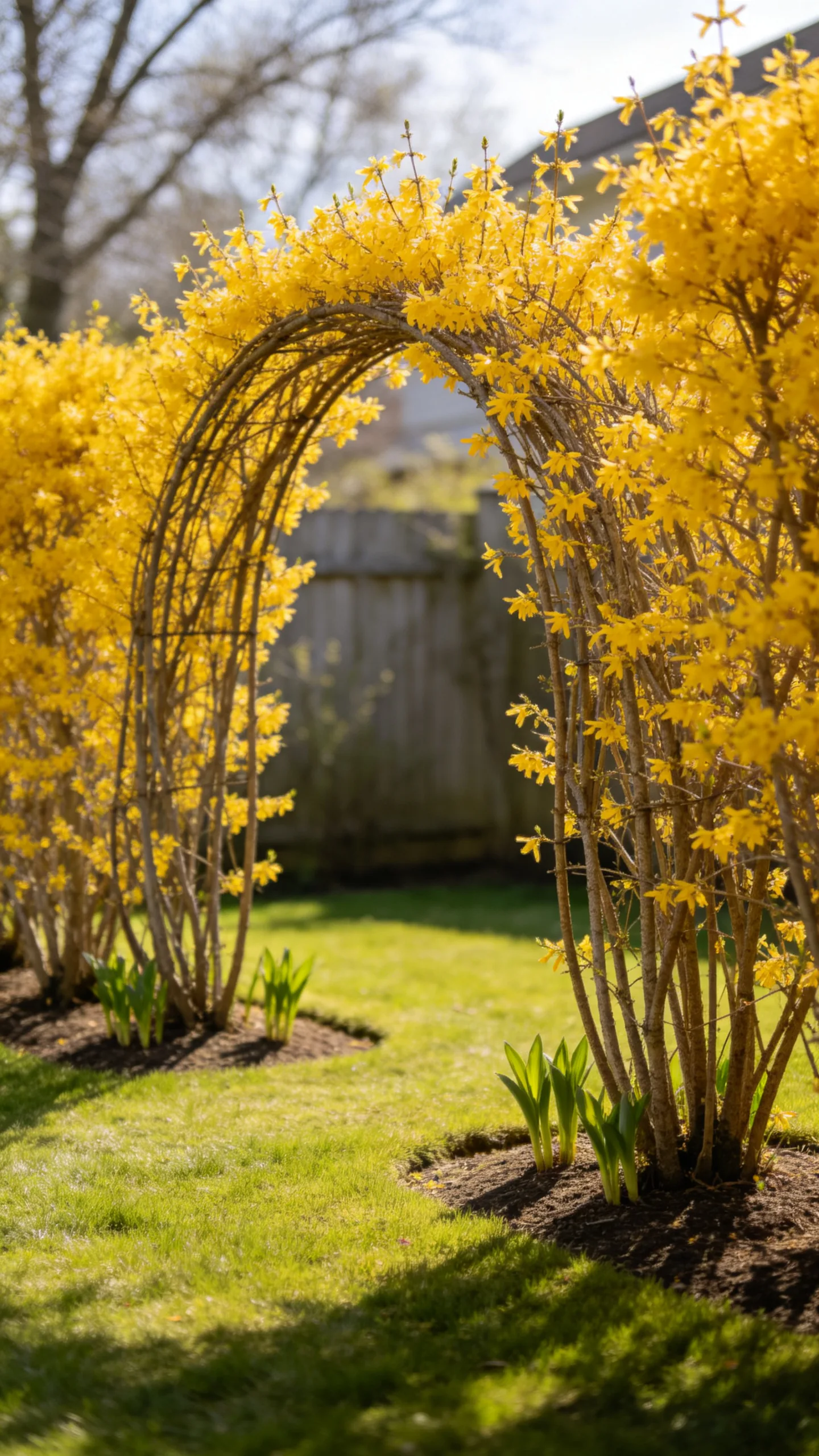
Forsythia is a fast-growing deciduous shrub known for bright yellow flowers on bare branches in early spring. It works well as an informal boundary in Zones 5–8, especially where summer privacy is more important than complete winter coverage.
Choose a full-size cultivar and space plants about 4–6 feet apart. Forsythia flowers best in full sun and tolerates average soil once established. Prune the oldest stems at ground level after flowering instead of repeatedly shearing the entire shrub; this preserves its arching shape and encourages fresh growth from the base.
14. Rose of Sharon
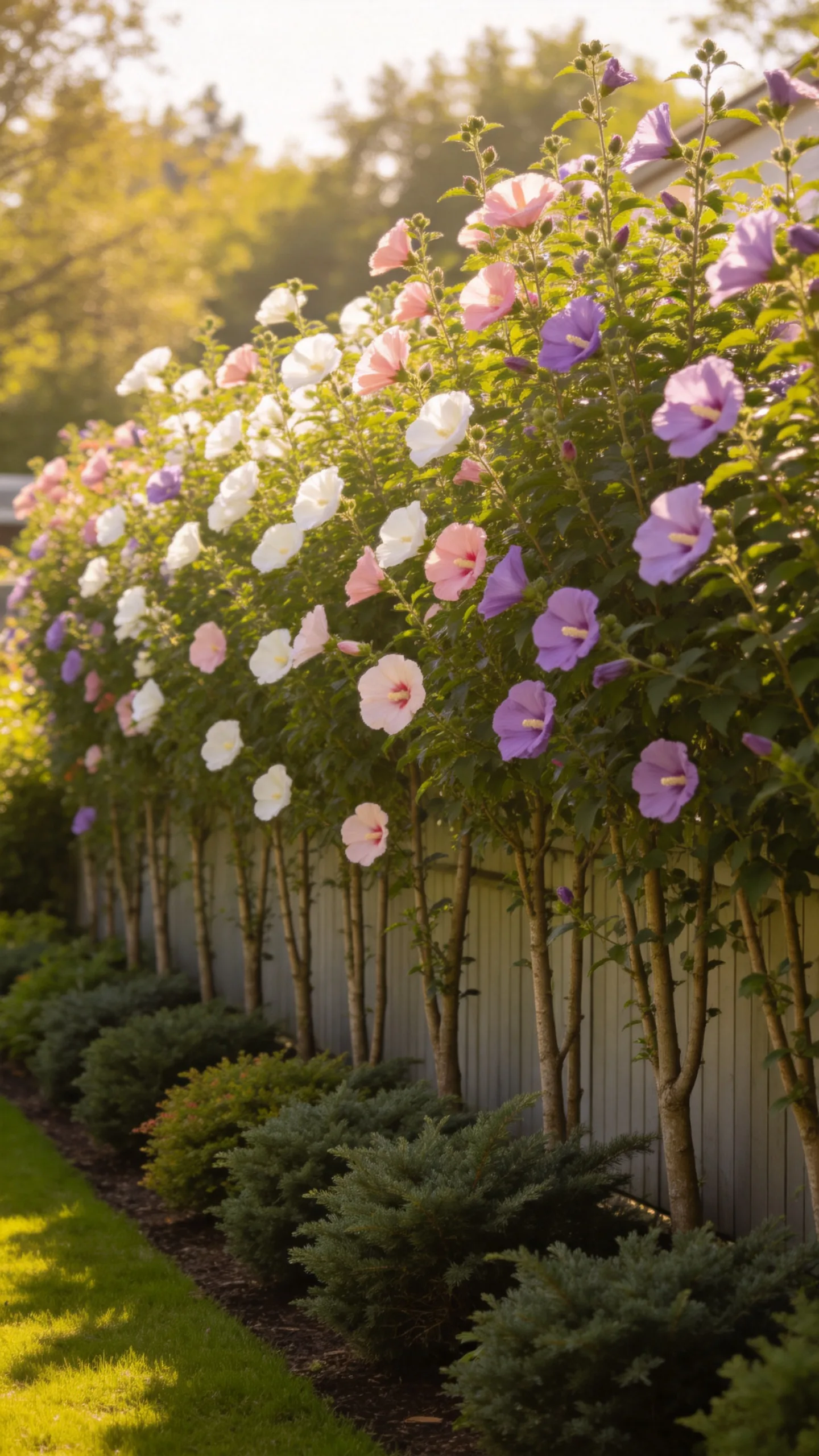
Rose of Sharon (*Hibiscus syriacus*) creates an upright flowering screen in sunny gardens, generally in Zones 5–9. Its late-summer blooms are available in white, pink, lavender, and blue-purple shades, and the narrow habit fits mixed borders better than many wide shrubs.
Plant specimens about 4–6 feet apart for a loose hedge. Because the plant is deciduous, combine it with shorter evergreens if winter screening is needed. Some older varieties self-seed heavily, so look for sterile or low-seed cultivars where volunteer seedlings or regional invasiveness are concerns.
15. Pyracantha
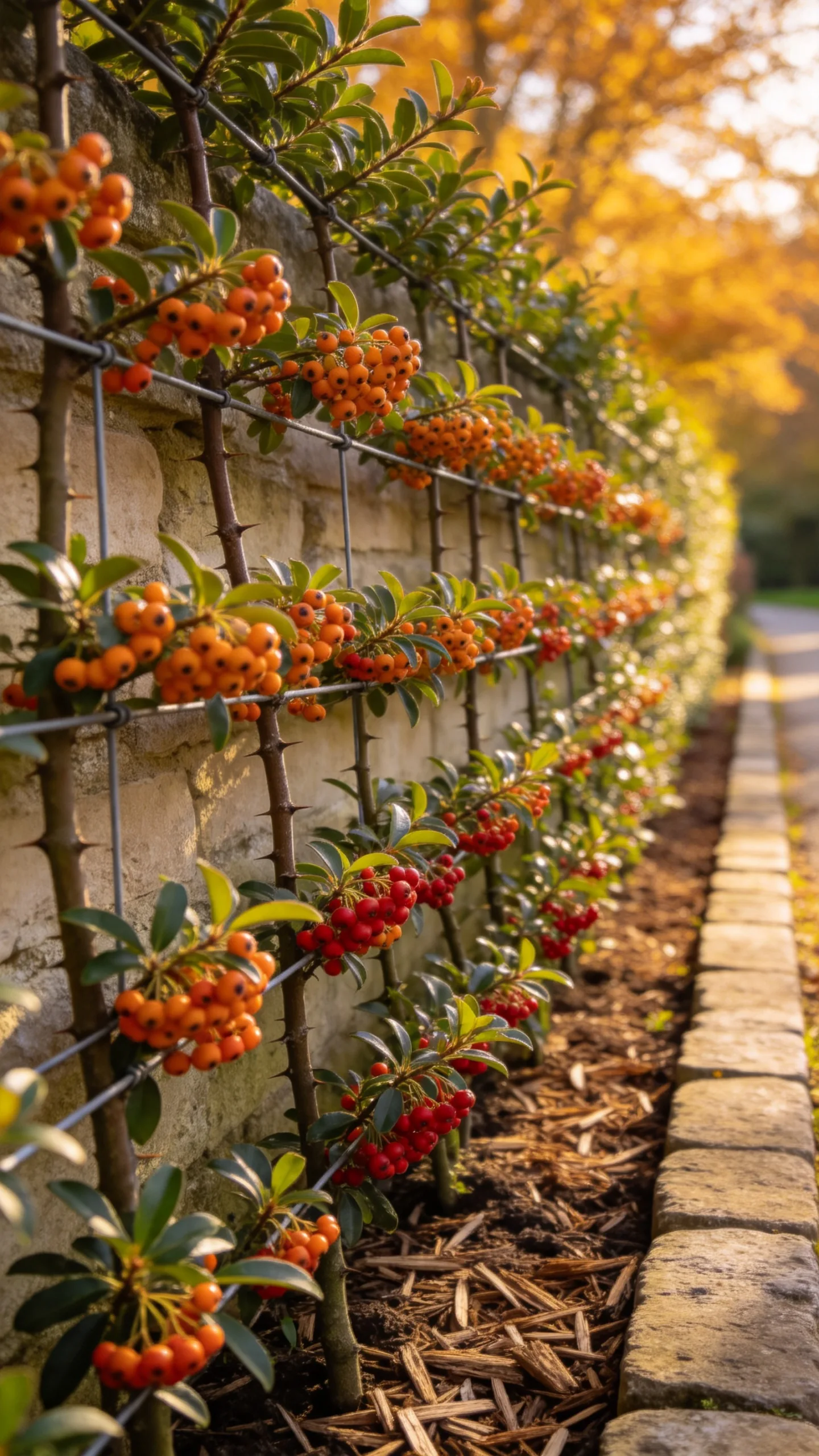
Pyracantha, commonly called firethorn, is a dense evergreen or semi-evergreen shrub with thorny branches, spring flowers, and clusters of orange, red, or yellow berries. In roughly Zones 6–9, it can form a formidable full sun screen along fences and less-trafficked boundaries.
It can be grown as a freestanding hedge or tied to sturdy horizontal wires as an espalier, saving bed space. Wear thick gloves when pruning and keep the plant away from play zones and narrow walkways. Check locally for cultivars with resistance to fire blight and scab.
16. Oleander
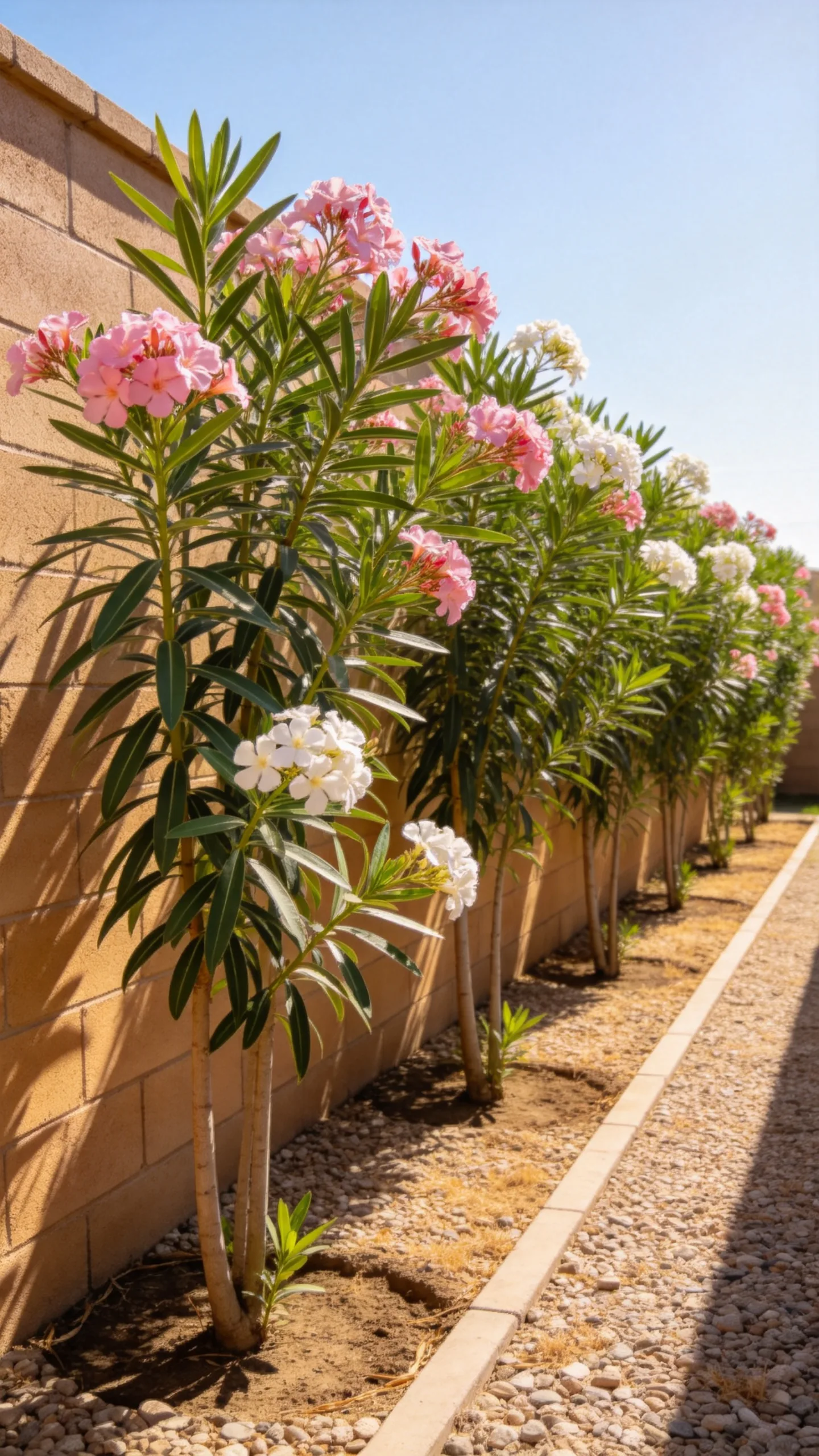
Oleander (*Nerium oleander*) is a heat-tolerant evergreen shrub for frost-free and mild-winter regions, typically Zones 8–11. It grows quickly in full sun and produces long-lasting flower clusters in white, pink, red, salmon, or yellow.
Use oleander for a wide roadside or backyard screen where reflected heat and dry conditions challenge other shrubs. Space plants according to cultivar, often 5–8 feet apart. Every part of oleander is toxic if ingested, and the smoke from burning trimmings is hazardous, so it is unsuitable near edible gardens, livestock areas, or places where children and pets may chew plants.
17. Bougainvillea on a Trellis
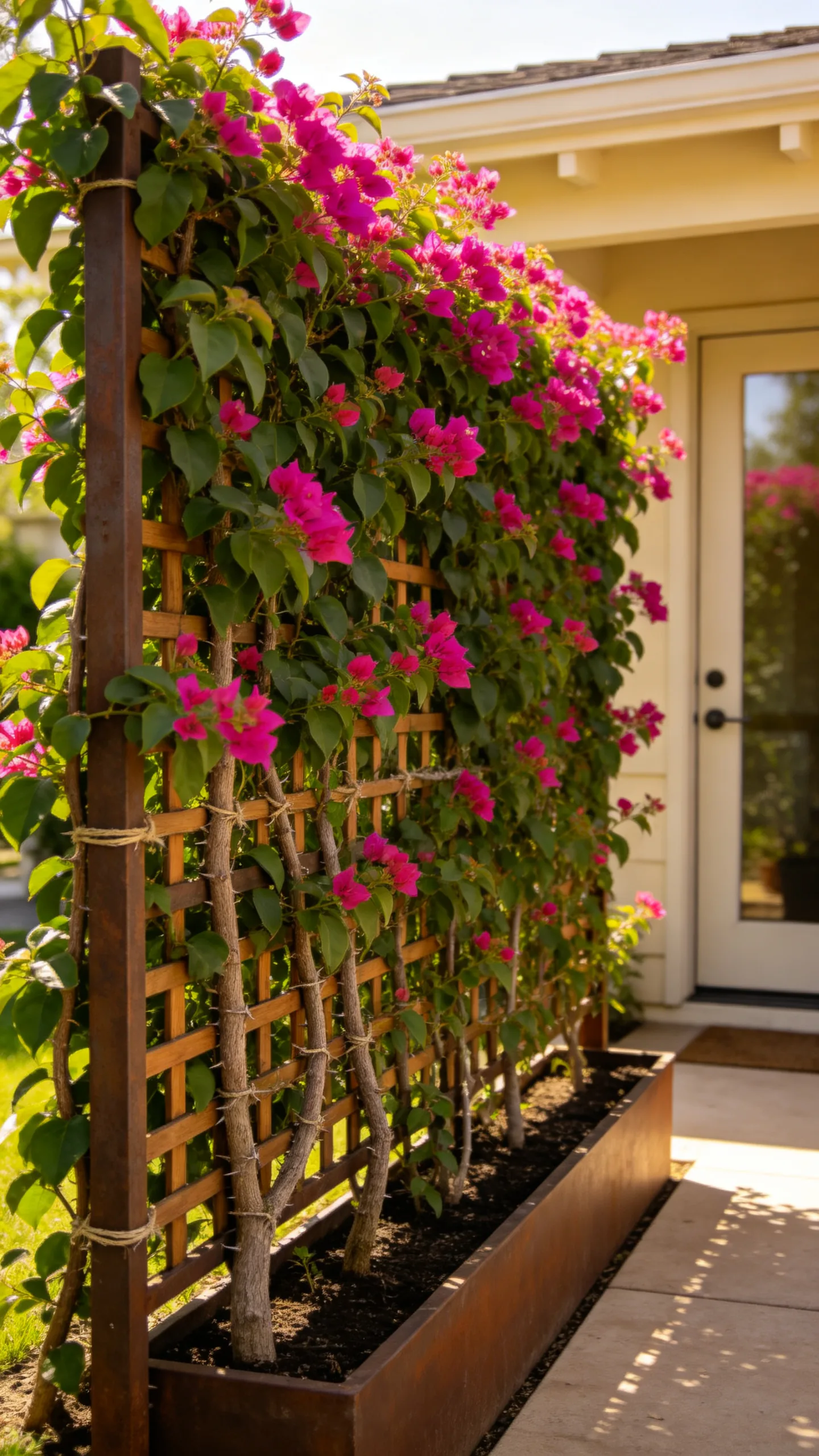
Bougainvillea can cover a sunny trellis or open fence with colorful bracts in warm climates, usually Zones 9–11. Its vertical growth makes it particularly useful beside a small patio where there is not enough ground space for a broad hedge.
Install a strong metal or wood support and tie young stems in place rather than expecting the plant to cling on its own. Bougainvillea flowers most heavily in full sun and well-drained soil. Position its thorny stems away from doors and walkways, and grow it in a large movable container where winter protection is required.
18. Star Jasmine on Fence Wires
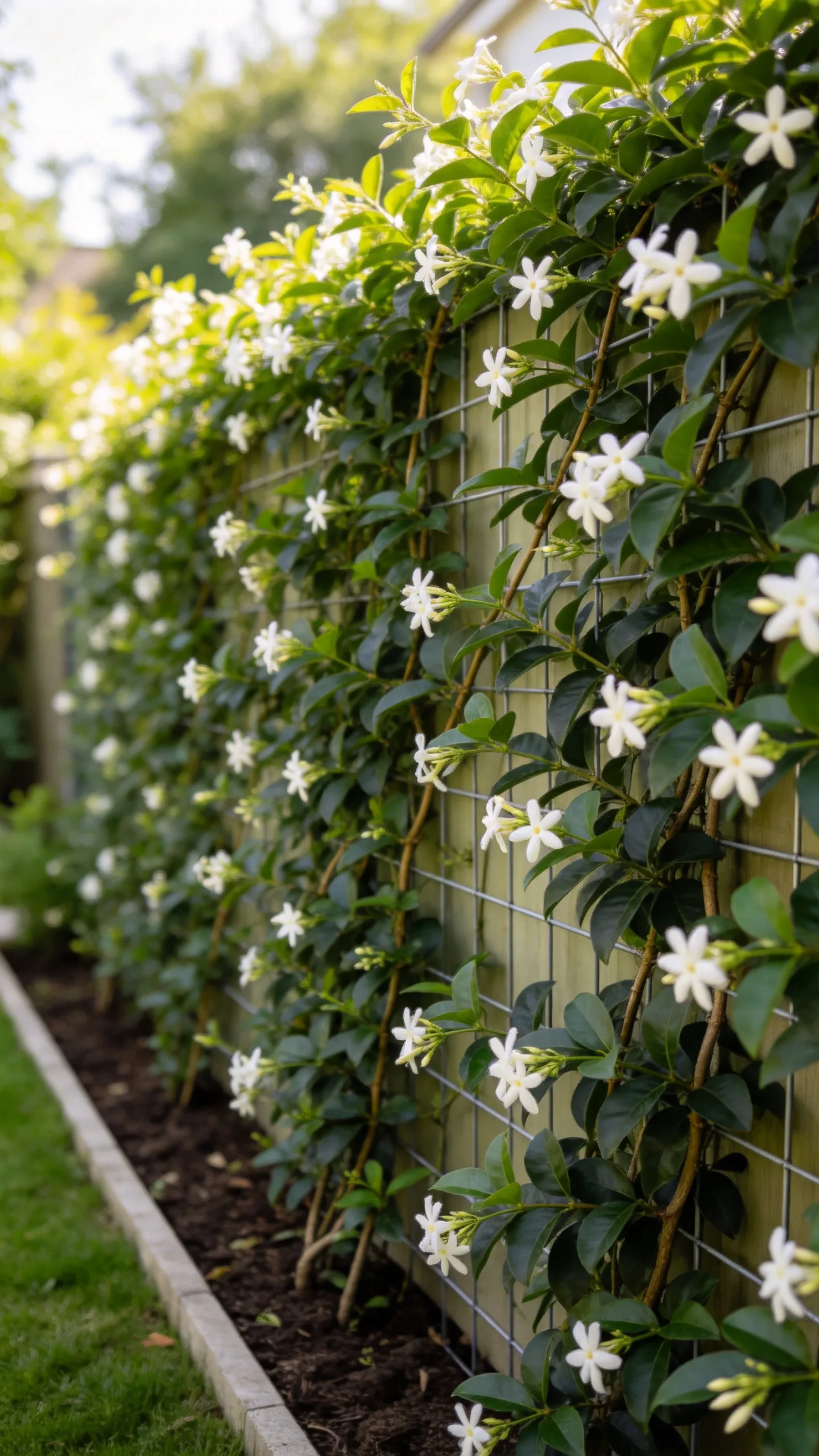
Star jasmine (*Trachelospermum jasminoides*) is an evergreen vine with glossy leaves and fragrant white flowers. It grows in full sun or partial shade in approximately Zones 8–10 and can turn a wire panel, lattice, or open fence into a leafy screen without using much bed width.
Space vines about 3–5 feet apart and guide new stems along horizontal wires to fill gaps evenly. It needs regular water during establishment but should not sit in saturated soil. In colder areas, star jasmine can be grown in containers, although moving a large trained vine indoors may not be practical.
19. Hops on a Tall Trellis
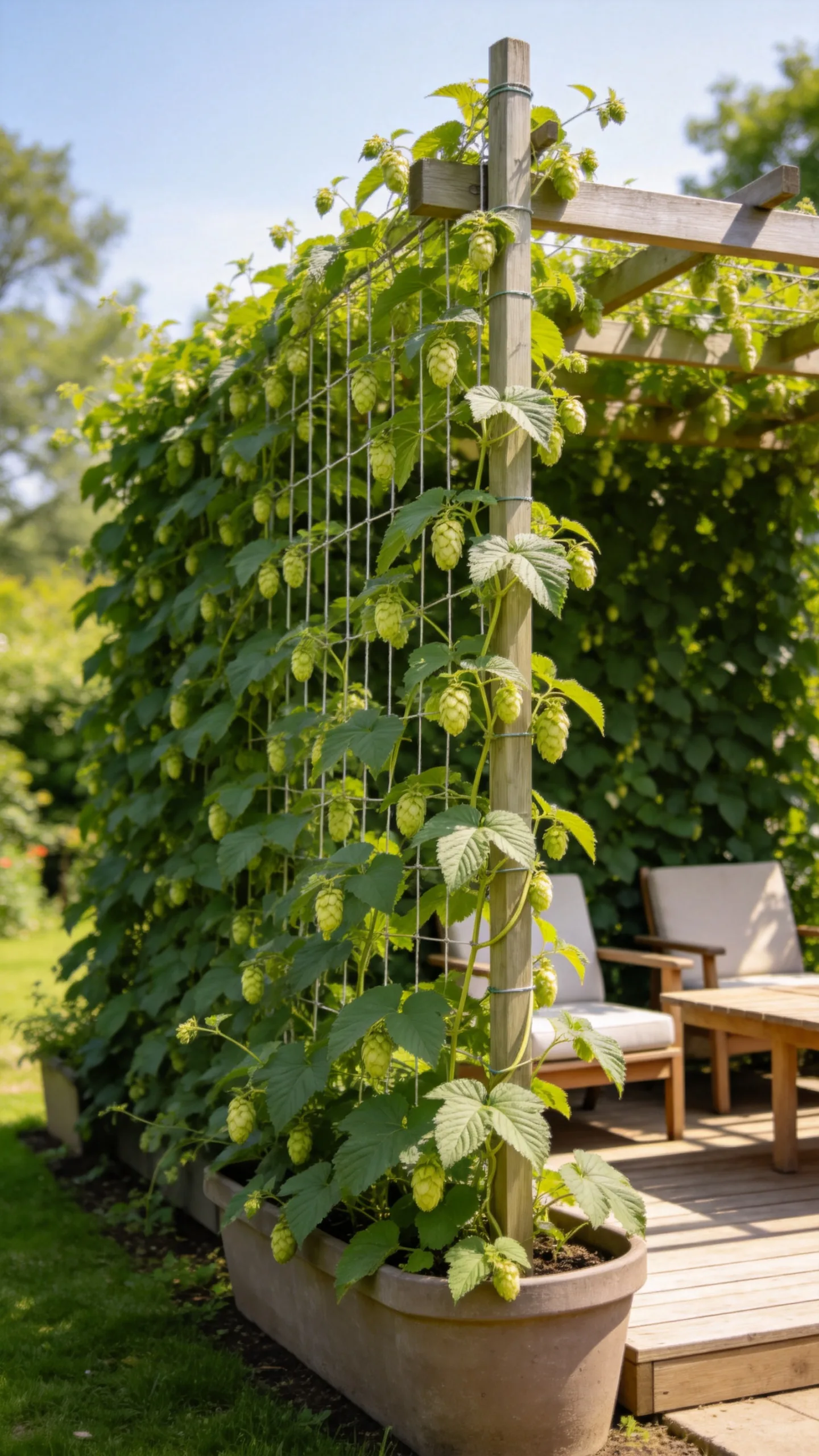
Hops (*Humulus lupulus*) is a vigorous perennial vine that can cover a tall trellis during a single growing season. It is useful for seasonal privacy around decks, pergolas, and outdoor seating areas in approximately Zones 3–8.
Provide strong vertical twine, wire, or a freestanding frame because mature vines become heavy. Hops dies back to the ground after frost, so it will not screen winter views. Rhizomes can spread beyond the original planting area; install a root barrier, grow hops in a large container, or remove unwanted shoots regularly.
20. Switchgrass
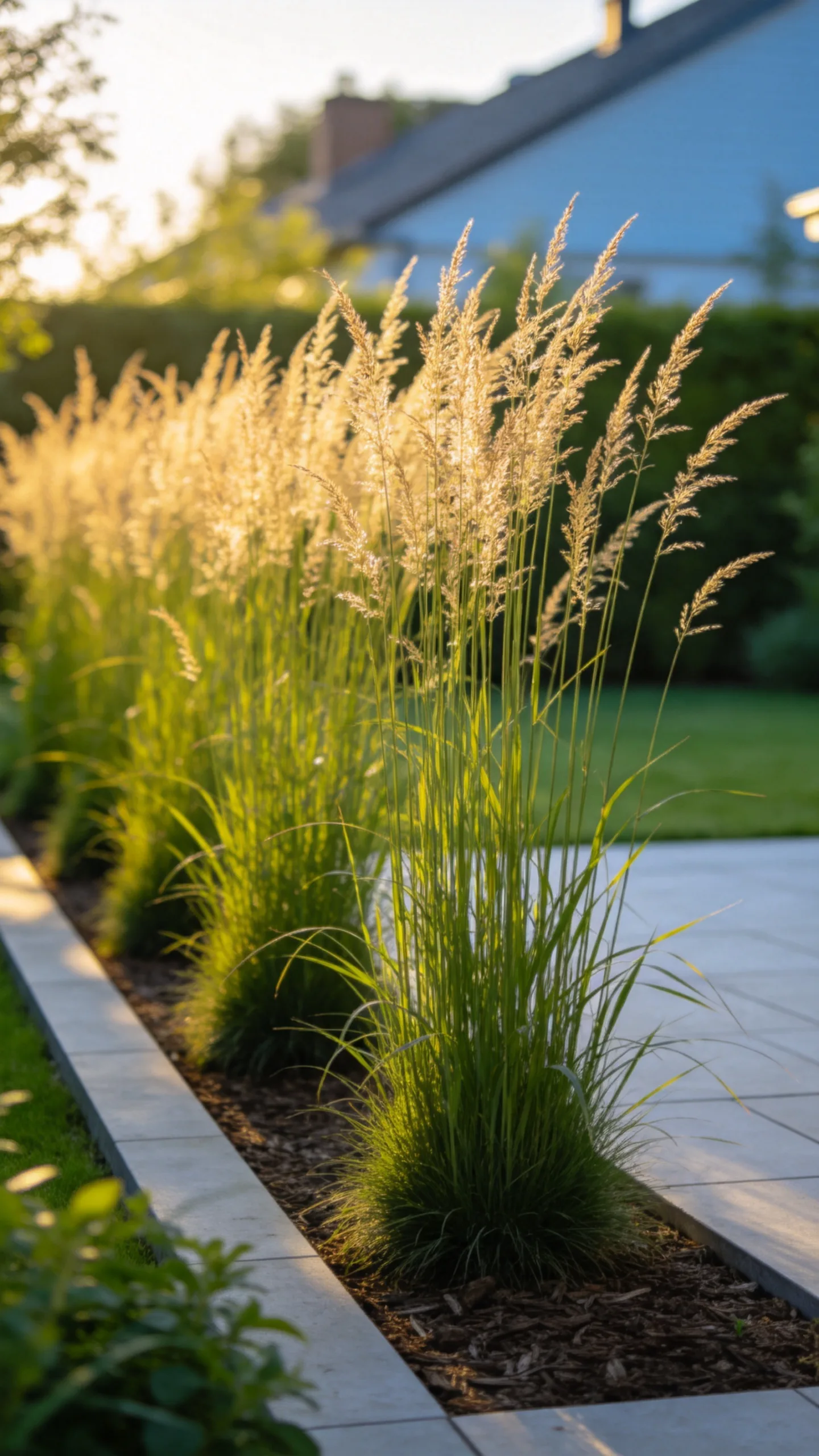
Switchgrass (*Panicum virgatum*) is a warm-season native grass that forms upright clumps in full sun. Tall cultivars such as ‘Northwind,’ ‘Dallas Blues,’ or ‘Cloud Nine’ can create a narrow summer screen along patios, rain gardens, and property lines without the width of a woody hedge.
Space plants according to cultivar, commonly 2–3 feet apart, and cut the dry stems to several inches above the ground in late winter. New growth emerges in spring, so privacy develops gradually each year. Once established, switchgrass tolerates periodic drought, though moisture needs vary among cultivars.
21. Big Bluestem
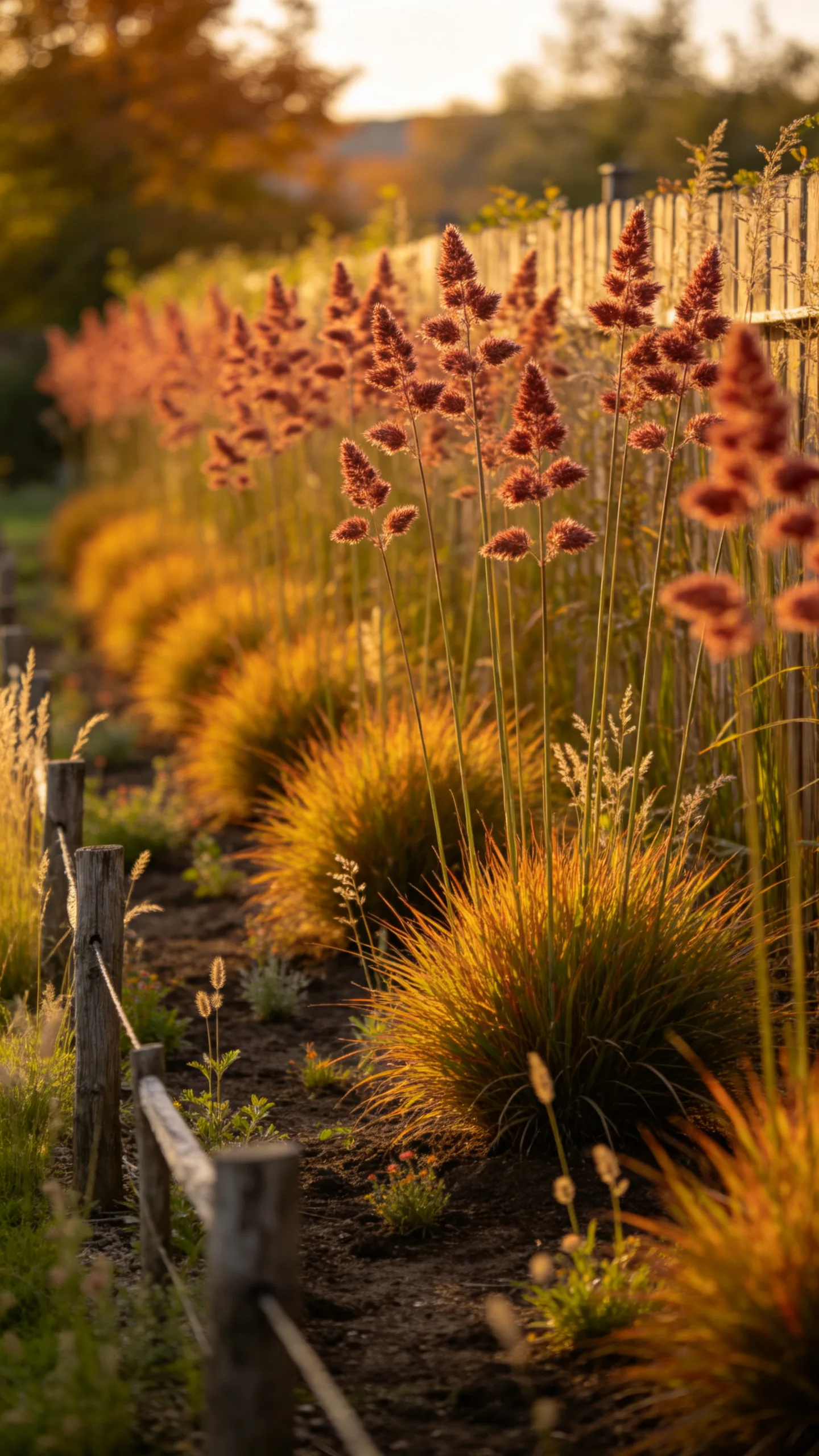
Big bluestem (*Andropogon gerardii*) is a tall native prairie grass for sunny landscapes in roughly Zones 3–9. Its upright summer growth, distinctive seed heads, and copper-red fall color make it a practical seasonal screen for naturalistic backyards.
Plant it in a mass or staggered row with about 2–3 feet between clumps. Big bluestem performs best in full sun and generally stays sturdier in average or lean soil than in heavily fertilized beds. Leave the stems standing through winter for texture and wildlife value, then cut them back before new spring growth appears.