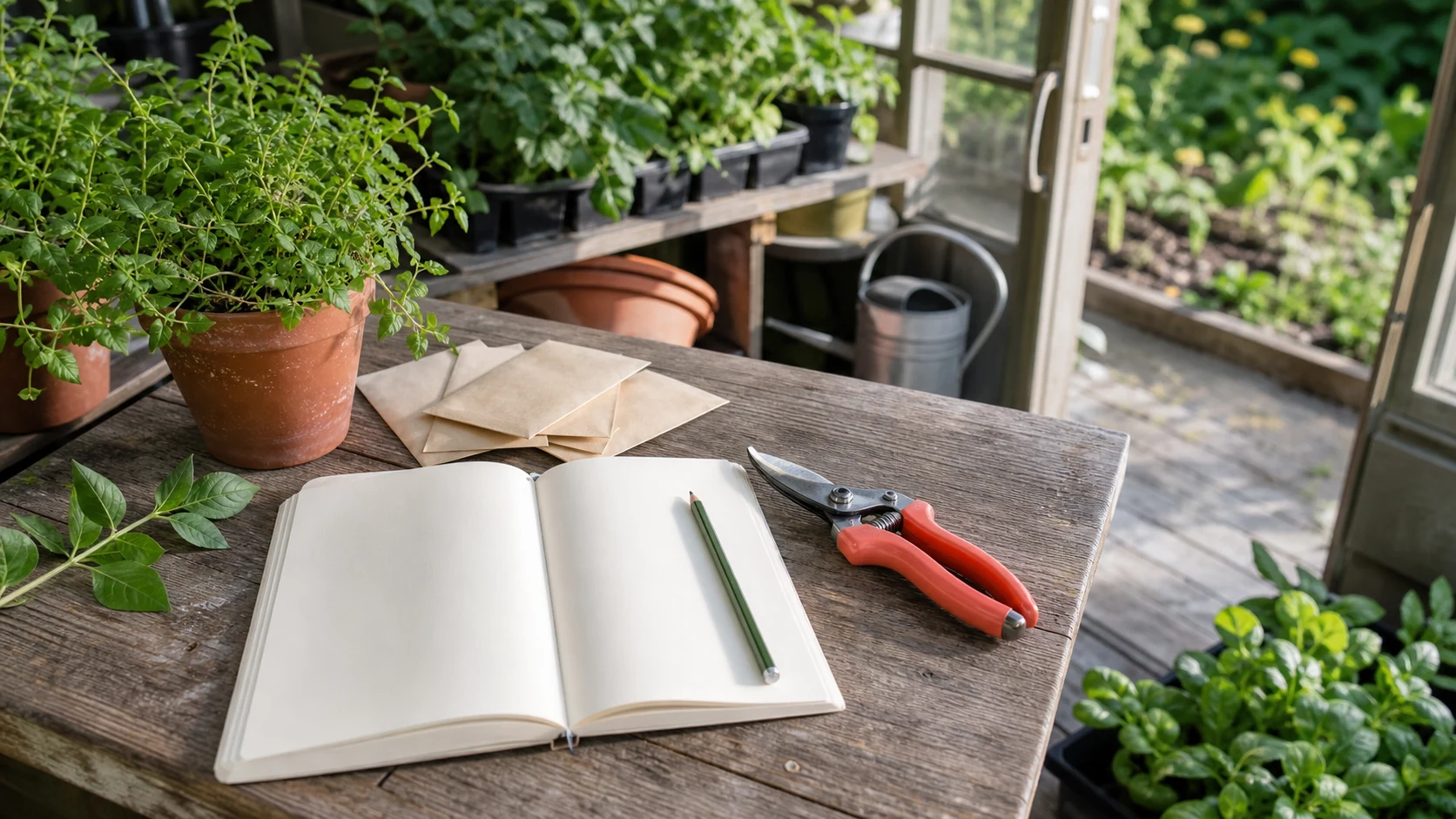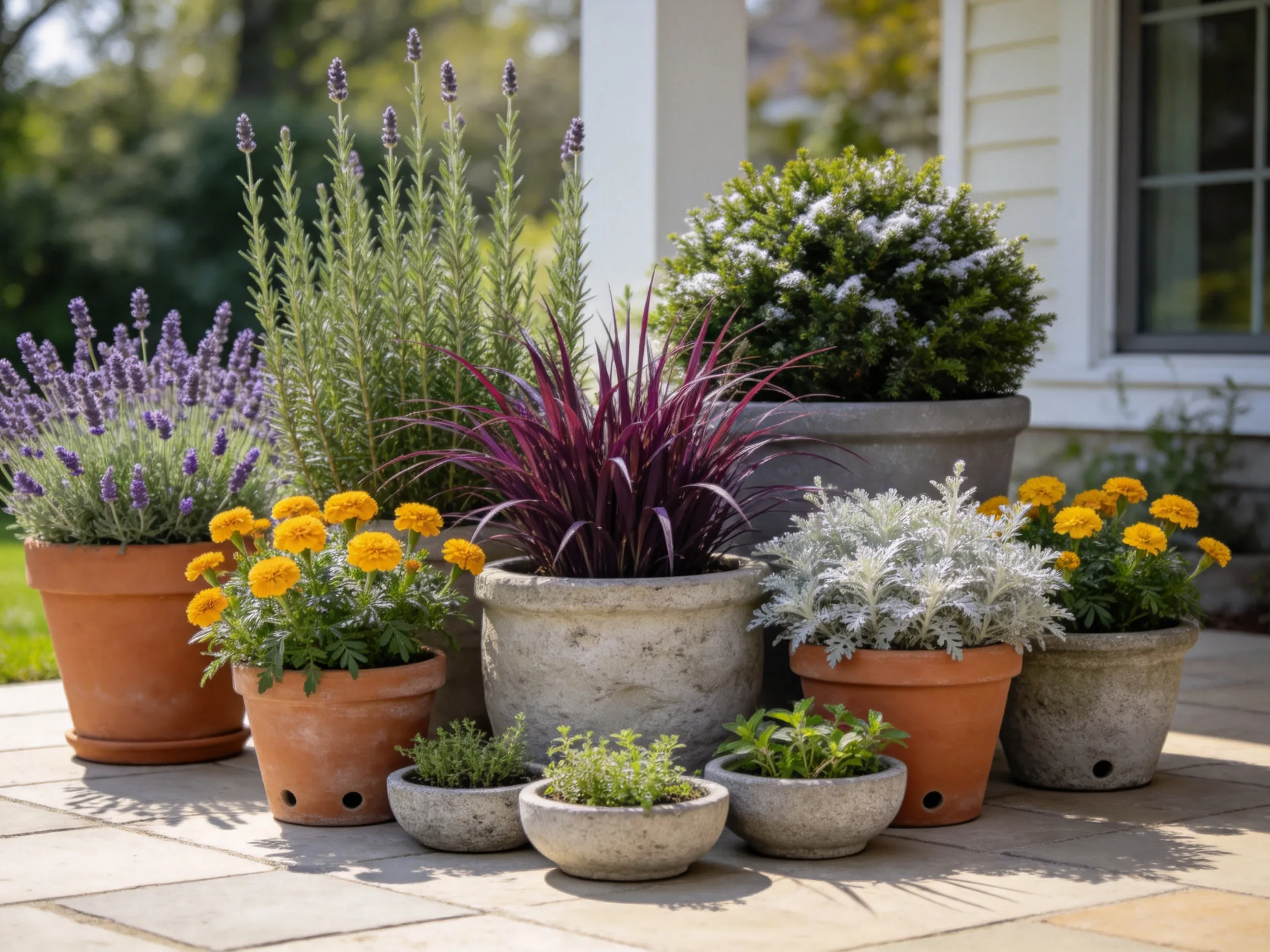
Deer may sample almost any plant when food is scarce, so no container is completely deer-proof. However, plants with aromatic foliage, coarse textures, sap, or strong flavors are often less appealing. These deer resistant container plants offer practical options for sunny patios, shaded porches, entry steps, and small gardens while keeping watering, drainage, and seasonal care in mind.
1. Lavender in a Sunny Terracotta Pot
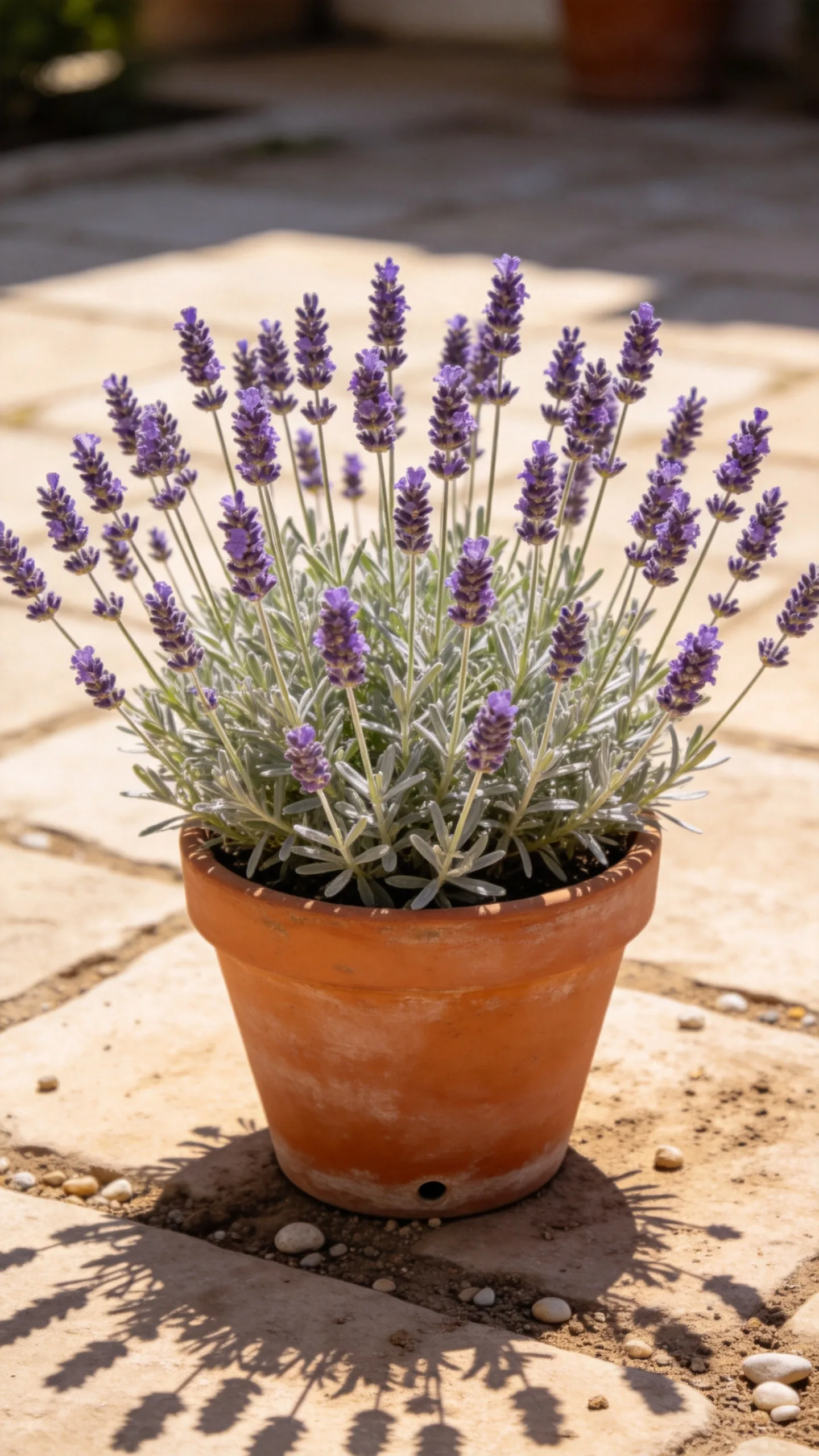
Lavender’s fragrant, silvery foliage is usually unappealing to deer, while its purple flowers attract pollinators. Plant one compact variety, such as ‘Hidcote’ or ‘Munstead,’ in a 12- to 16-inch terracotta pot with a drainage hole. Use gritty, fast-draining potting mix and place the container where it receives at least six hours of direct sun.
Allow the top few inches of soil to dry before watering again. Terracotta helps excess moisture evaporate, making this combination suitable for exposed patios, front steps, and other hot locations. In cold regions, move the pot to a sheltered, unheated area for winter or treat the plant as a seasonal feature.
2. Rosemary Topiary by the Front Door
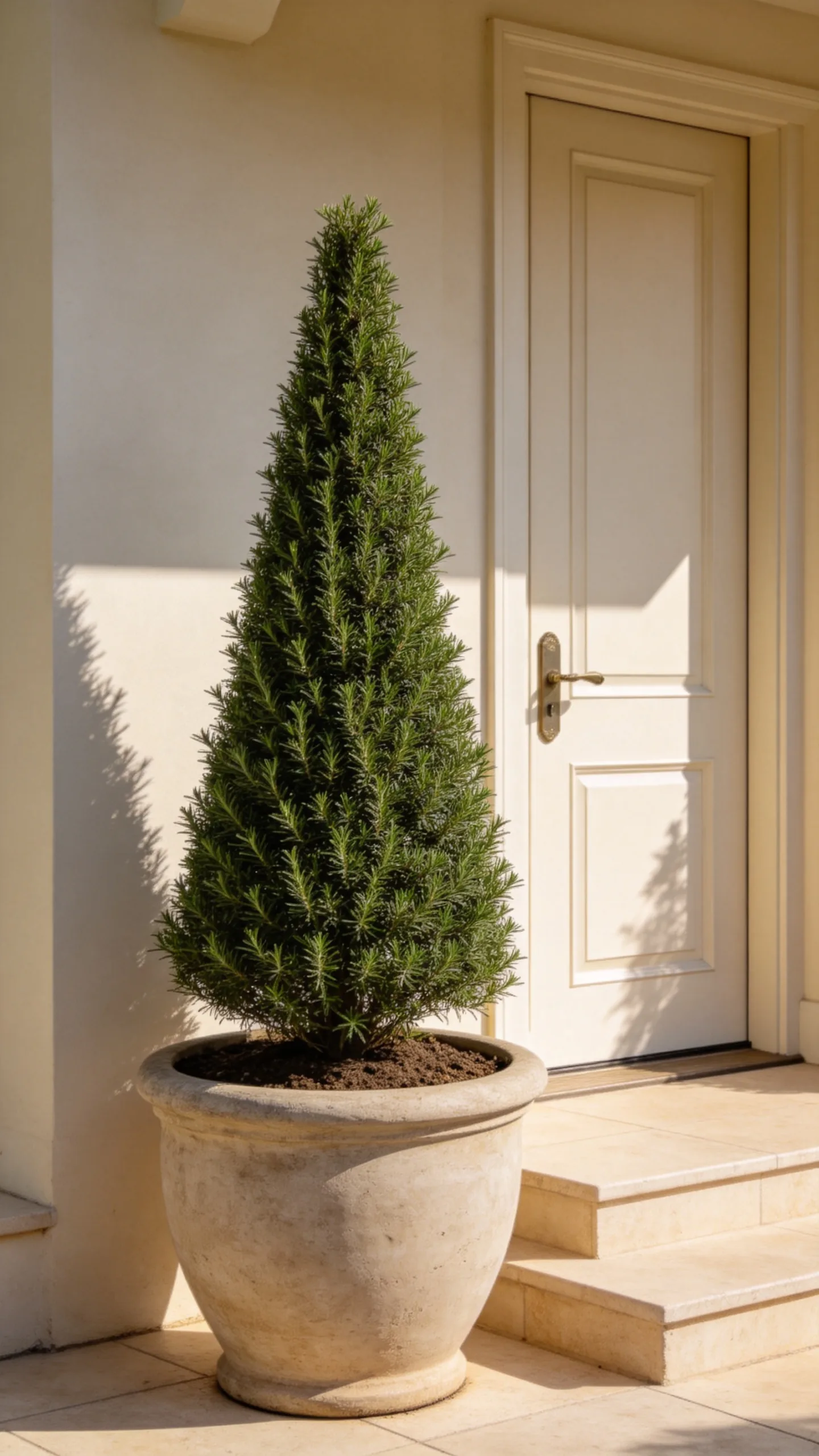
Rosemary combines needlelike foliage, a strong herbal scent, and an upright form that works well beside an entrance. Choose a clipped cone, standard, or naturally upright cultivar and place it in a heavy pot that will not tip in the wind. A 14-inch container is generally suitable for a young plant, but larger specimens need more root room.
Set rosemary in full sun and use a well-draining mix amended with coarse perlite or fine bark. Water thoroughly when the upper inch or two feels dry rather than keeping the soil constantly damp. Where winters are colder than the variety tolerates, bring the plant into a cool, bright location before a hard freeze.
3. Purple Fountain Grass as a Tall Centerpiece
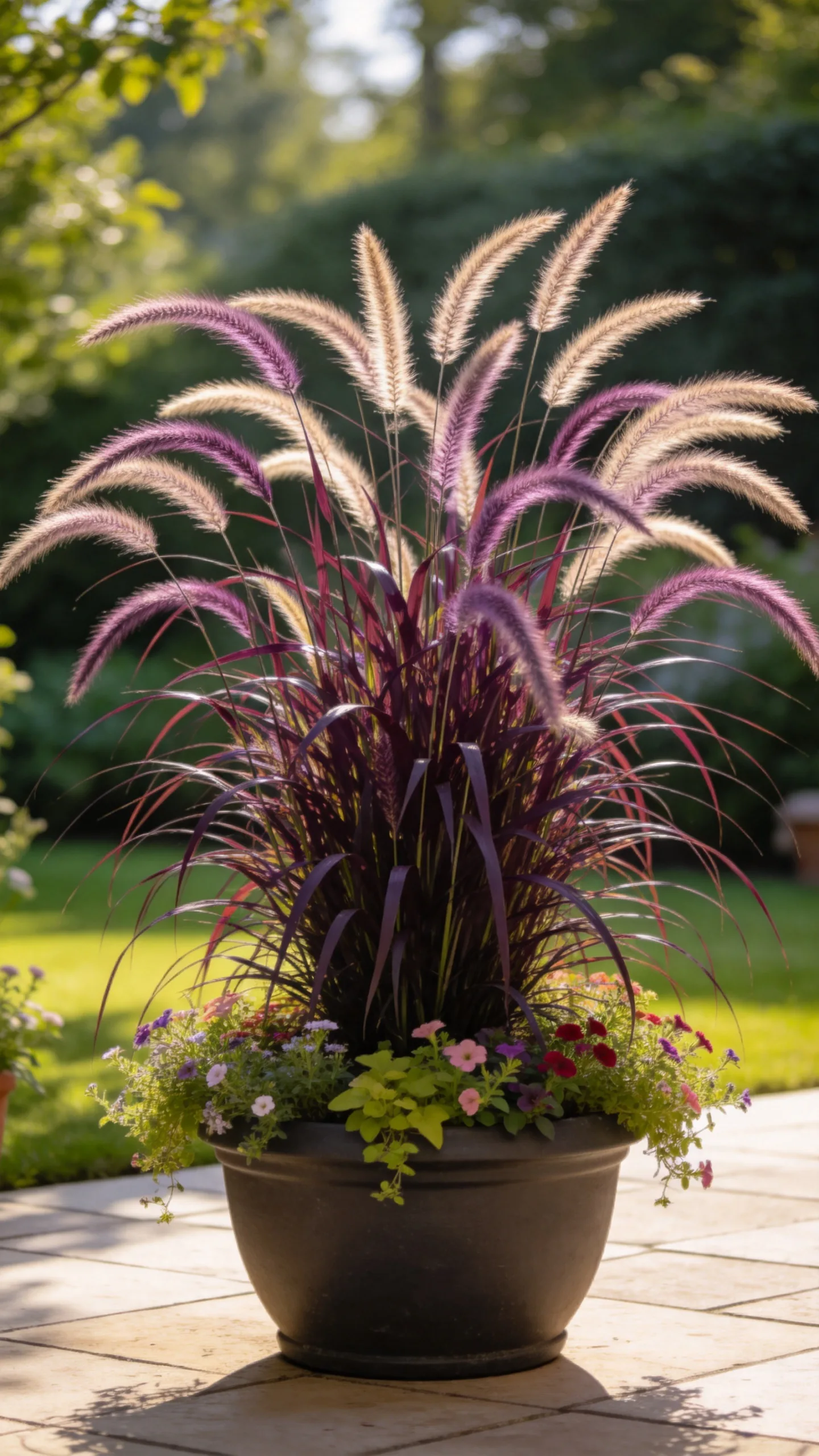
Purple fountain grass has arching burgundy foliage and feathery seed heads that create height without requiring a wide planting bed. Deer commonly pass over ornamental grasses, making this a useful centerpiece for a large patio planter. Position one plant in the middle of an 18- to 24-inch pot and surround it with lower-growing annuals if desired.
Give the container full sun for the deepest foliage color and strongest growth. Water when the top inch of mix becomes dry, checking more often during hot or windy weather. Purple fountain grass is perennial only in warm climates, but it also works well as a dramatic annual in colder areas.
4. Mint in Its Own Contained Planter
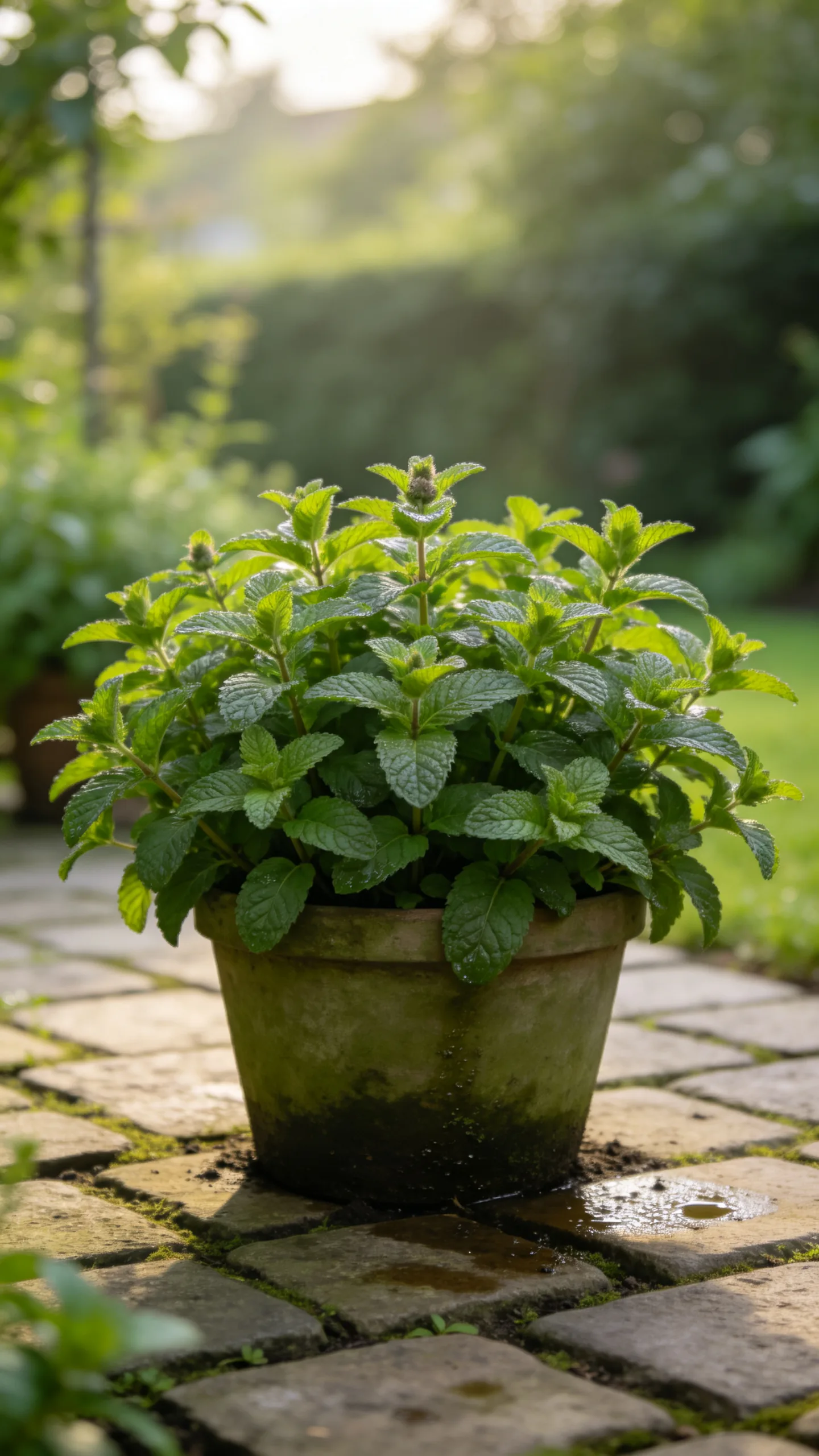
Mint’s intense fragrance and flavor often discourage browsing, and growing it in a pot prevents its spreading roots from taking over a bed. Use a container at least 12 inches wide for peppermint, spearmint, or chocolate mint. Keep the planter on a hard patio surface so stems cannot root into nearby garden soil.
Mint grows in sun to partial shade and prefers consistently moist—but not waterlogged—potting mix. Pinch the tips regularly to encourage bushy growth and harvest leaves before flowering for the strongest flavor. Because mint can spread by seed as well as roots, remove flower heads if containment is a priority.
5. Sage and Thyme in a Dry Herb Bowl
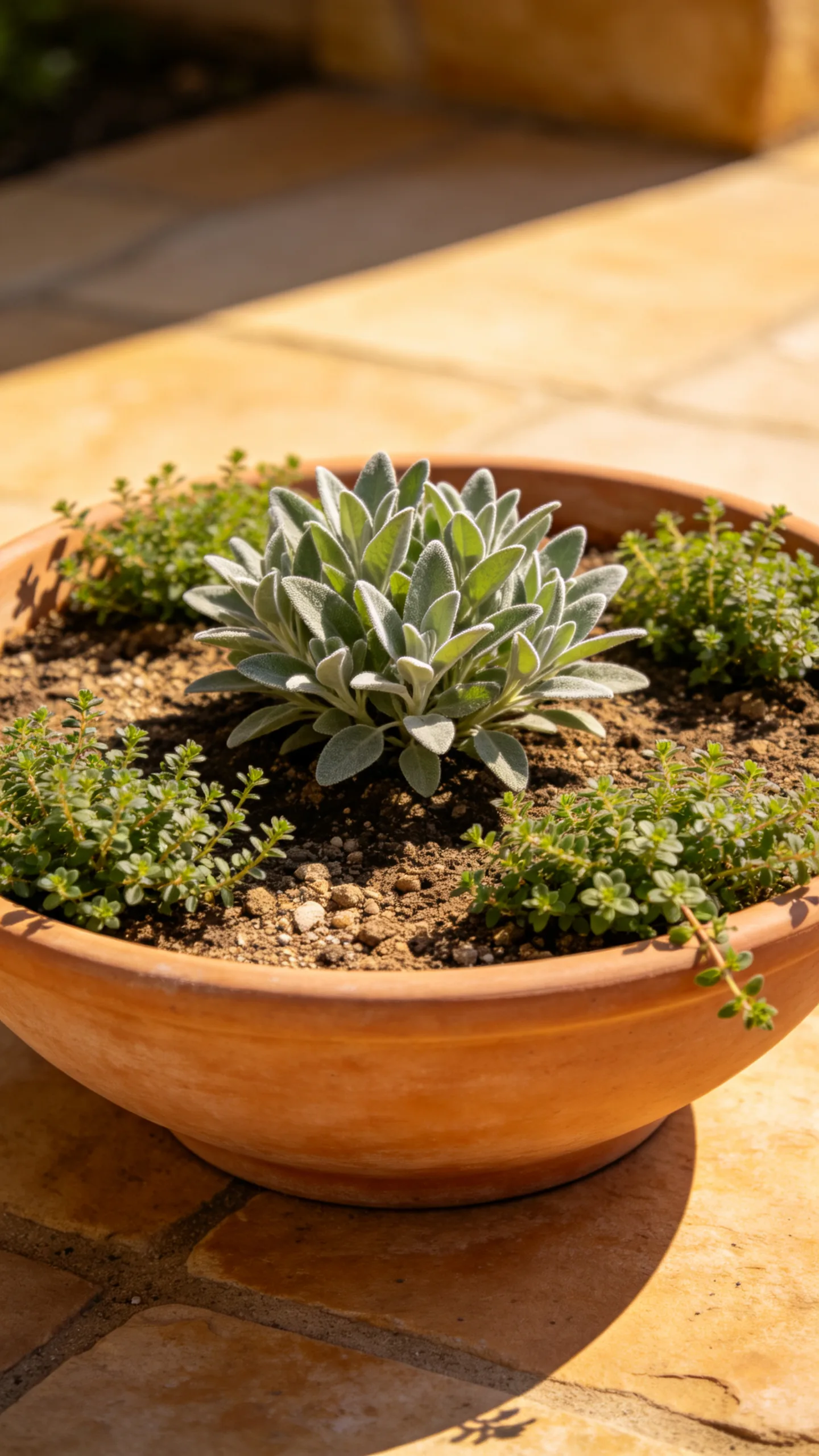
Common sage and thyme both have aromatic foliage that deer tend to avoid. Combine one compact sage plant with two or three creeping or English thyme plants in a broad, shallow bowl at least 14 inches across. Sage provides a structured center, while thyme softens the edge without quickly overwhelming the arrangement.
Place the bowl in full sun and fill it with a lean, quick-draining potting mix. Avoid pairing these herbs with plants that require constantly moist soil. Trim sage lightly after flowering and clip thyme as needed for cooking, but do not cut deeply into old woody stems.
6. Oregano Spilling Over a Railing Planter
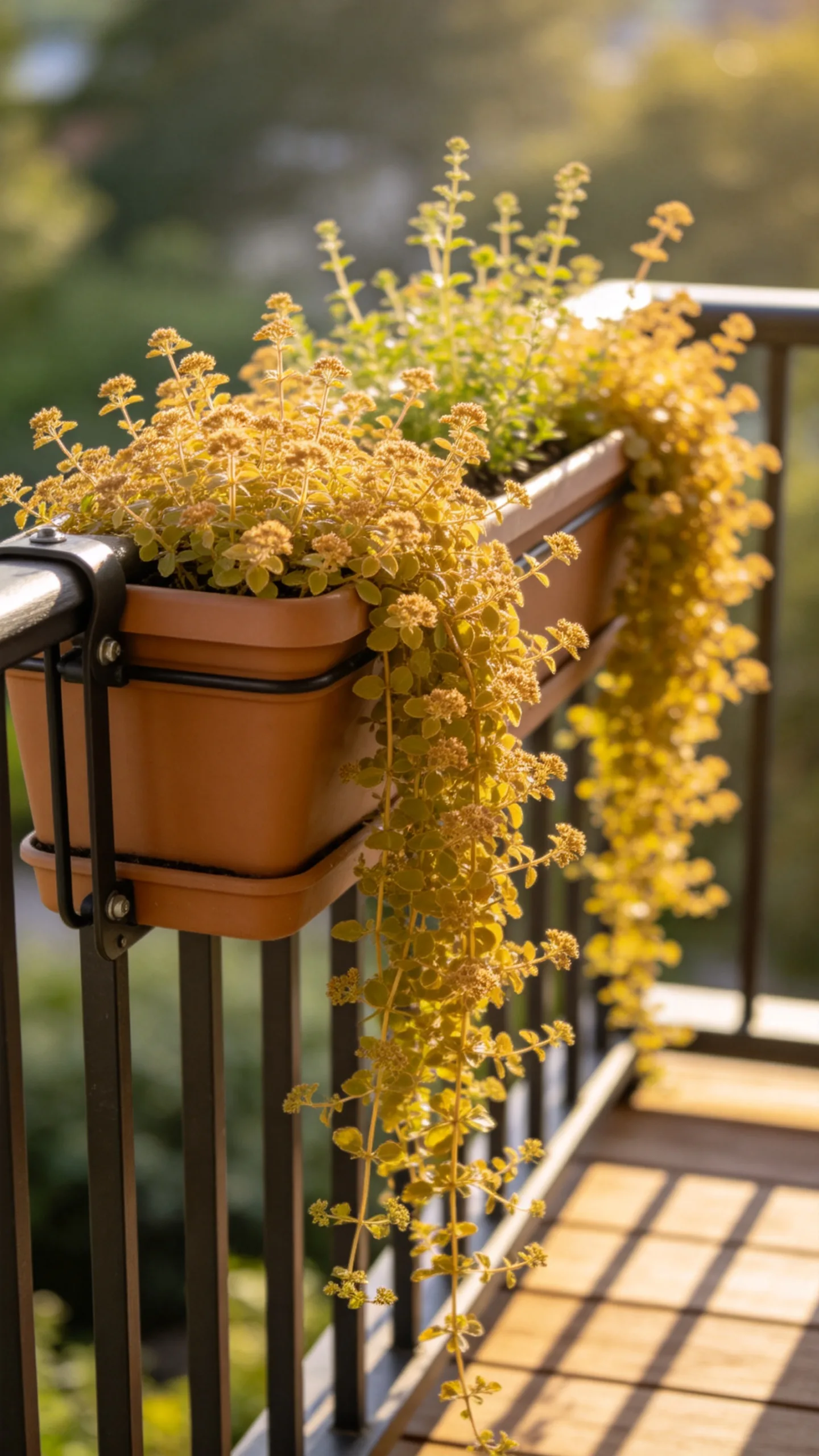
Oregano’s pungent leaves make it a practical choice for an elevated box where deer might otherwise reach trailing flowers. Plant compact Greek oregano or golden oregano along the outer edge of a sturdy railing planter. The stems will gradually spill over the side, covering the box without taking up floor space on a narrow balcony or deck.
Oregano performs best with six or more hours of sun and moderate watering. Let the upper layer of potting mix dry between soakings, and make sure the planter drains freely after rain. Frequent harvesting keeps the growth dense and provides fresh leaves for kitchen use.
7. Marigolds in Bright Entry-Step Pots
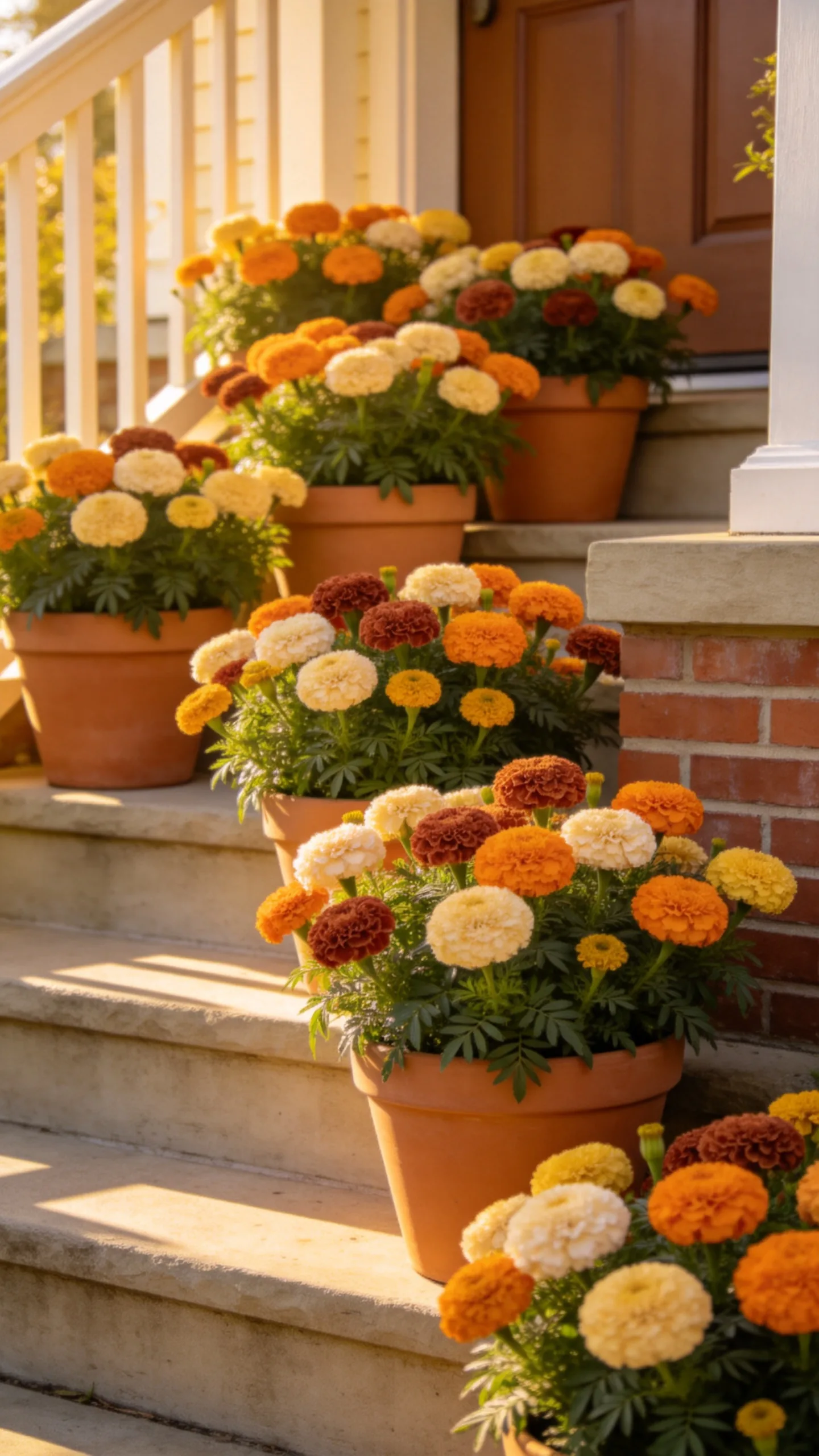
Marigolds have strongly scented foliage and dense flower heads that deer often leave alone. Fill matching 10- to 12-inch pots with French marigolds for compact color, or use larger containers for taller African marigolds. Their gold, orange, cream, and rust shades pair easily with brick, stone, and painted porch steps.
Place the pots in full sun and remove faded flowers to extend blooming. Marigolds need regular water in containers, but the roots should not sit in saturated soil. They are warm-season annuals, so wait until frost danger has passed before setting them outdoors.
8. Zinnias in a Color-Blocked Patio Pot
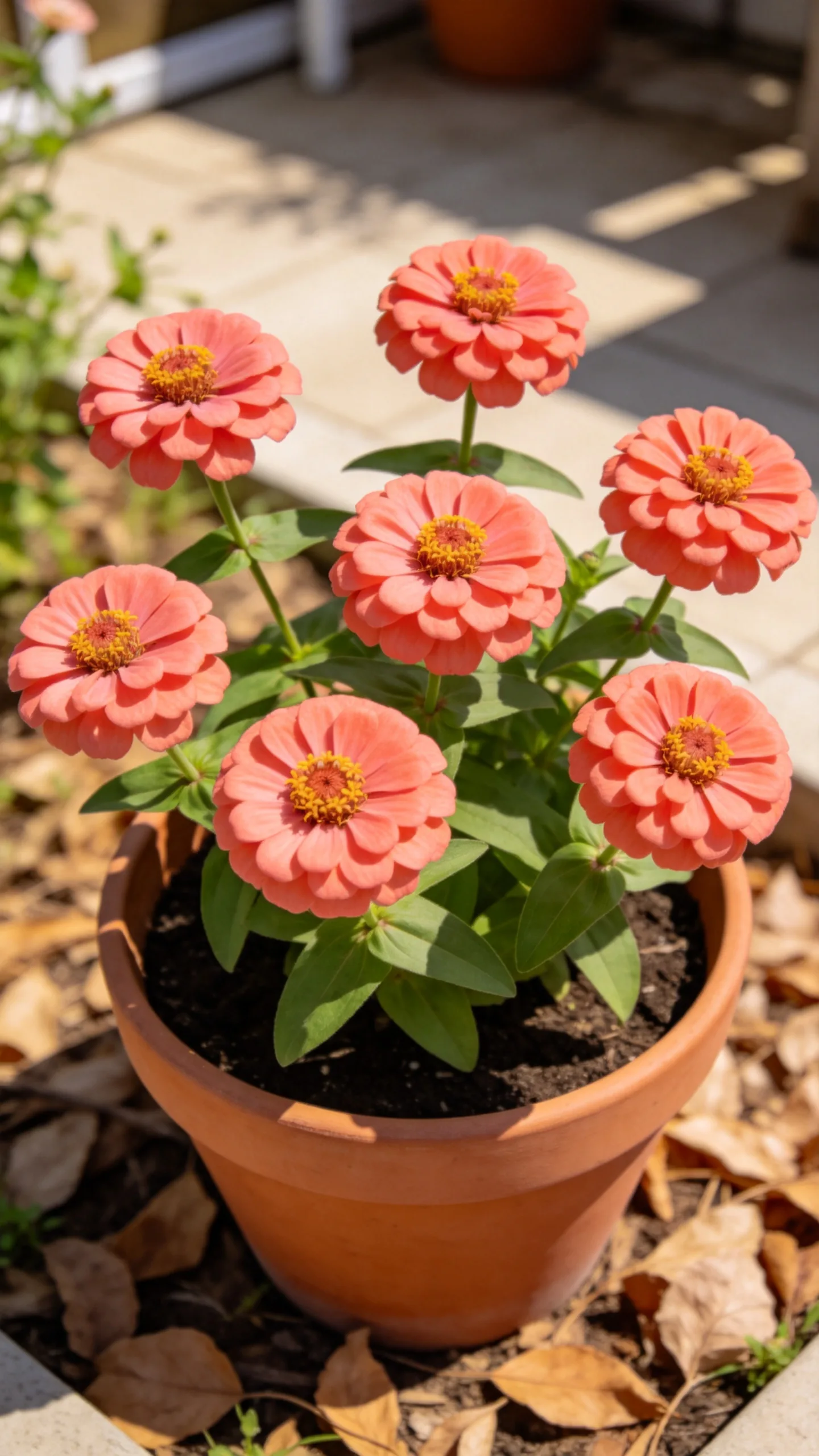
Zinnias have coarse leaves and stems that are less tempting to deer than many soft-foliaged annuals. For a polished container, plant several compact zinnias in one color rather than mixing every available shade. Dwarf cultivars fit 12- to 16-inch pots, while taller cutting types need deeper, heavier containers and may require support.
Give zinnias full sun, good air circulation, and water directed at the soil rather than over the leaves. This reduces prolonged leaf moisture, which can contribute to fungal problems. Deadhead regularly or cut flowers for indoor arrangements to encourage continued bloom production.
9. Snapdragons for Cool-Season Container Color
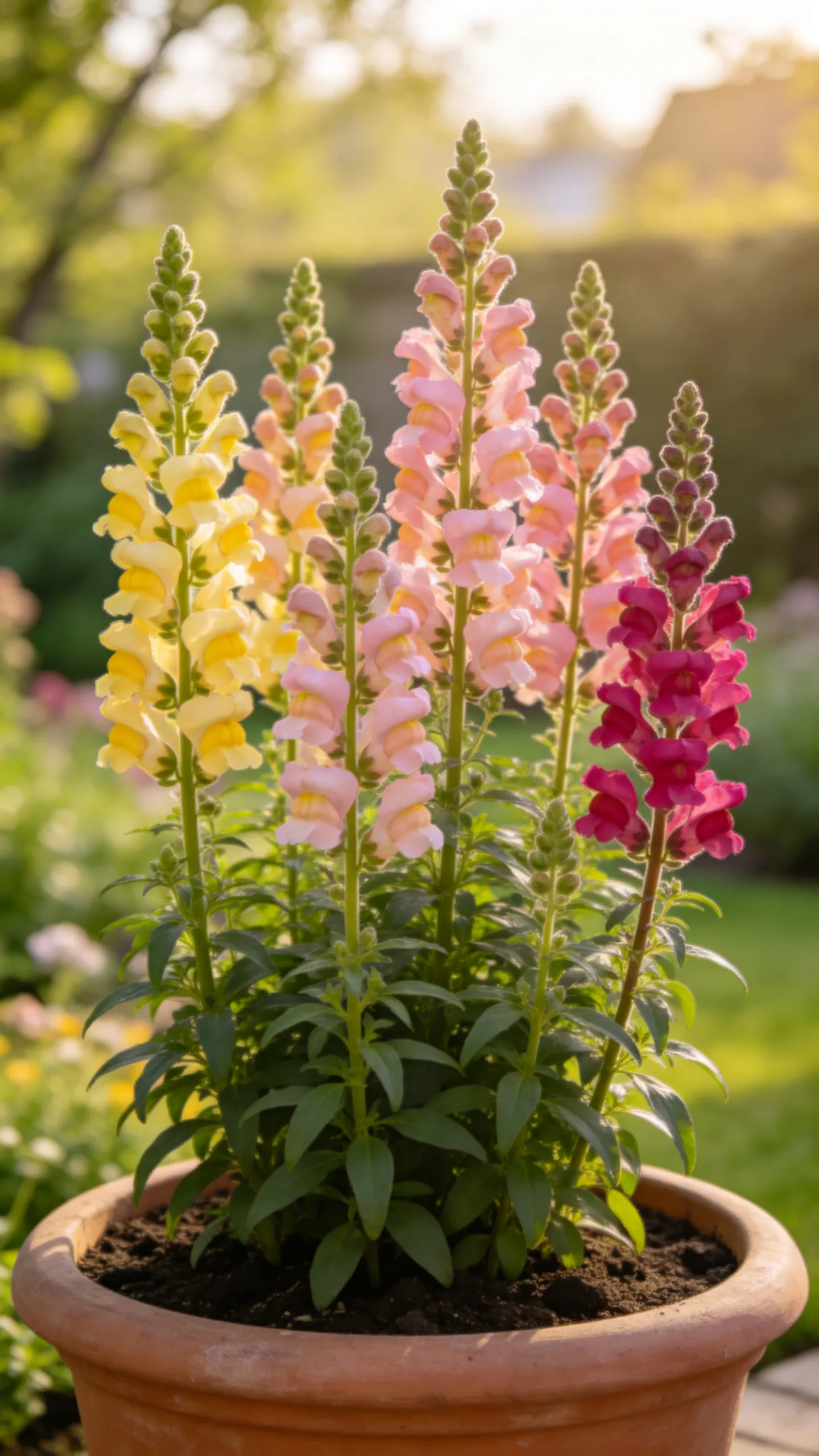
Snapdragons add upright flower spikes to spring and autumn containers, when many warm-season annuals are not yet performing. Deer often avoid their slightly bitter foliage. Use dwarf varieties near pot edges or choose medium-height cultivars as the central feature in a 14-inch or larger container.
Place snapdragons in full sun during cool weather, with afternoon shade in regions where spring temperatures rise quickly. Keep the soil evenly moist and remove spent spikes to support additional flowers. They may pause or decline during summer heat, so plan to replace them with heat-tolerant plants if necessary.
10. Dusty Miller and White Alyssum Combination
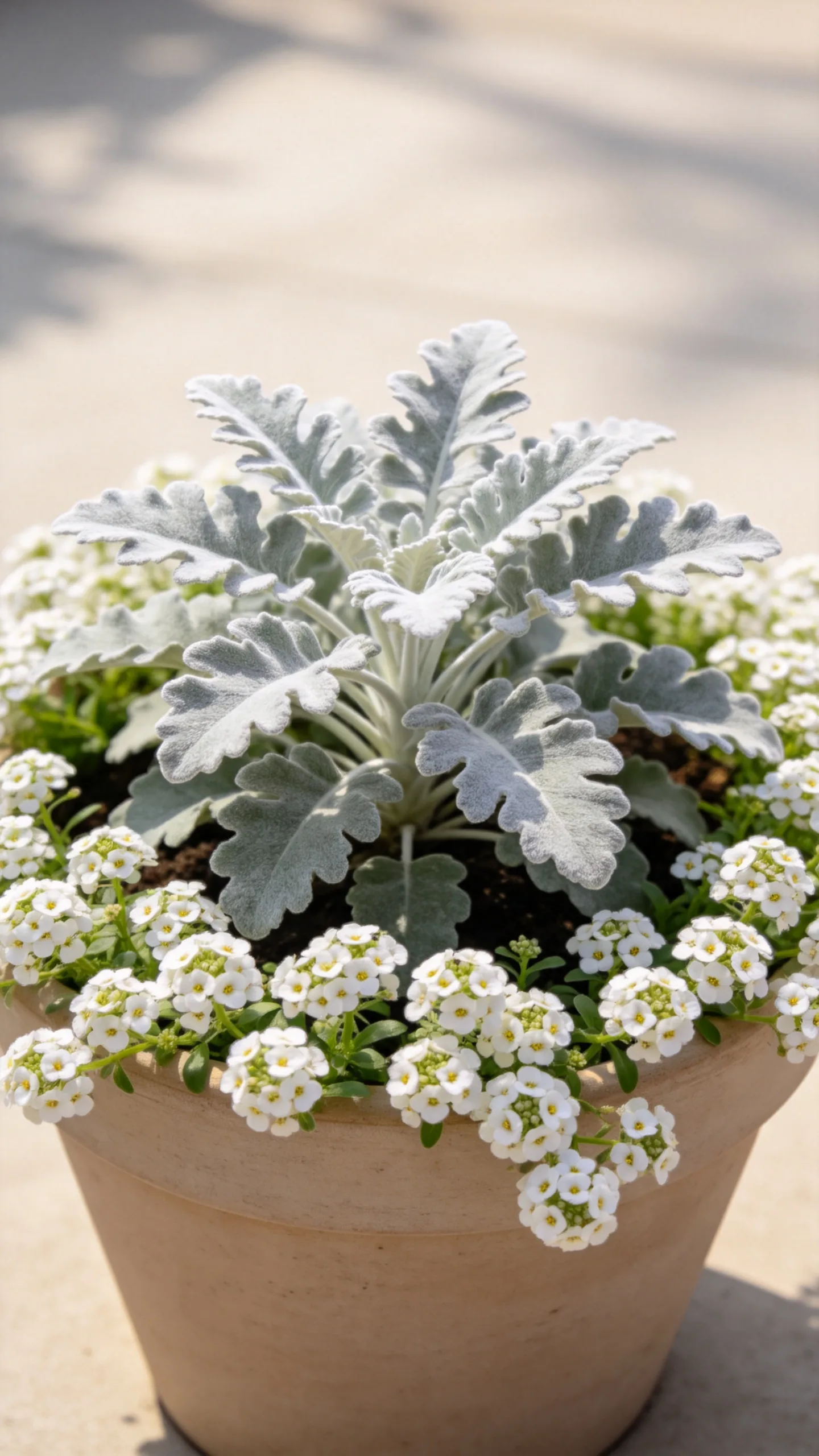
Dusty miller’s fuzzy silver foliage is commonly avoided by deer and provides a durable framework for a pale container palette. Plant one or two dusty miller plants in the center of a 12- to 16-inch pot, then add white sweet alyssum around the rim. The alyssum softens the edge with small flowers, though its deer resistance can vary.
This pairing prefers sun and well-drained potting mix. Dusty miller handles short dry periods once established, while alyssum flowers best with more regular moisture, so water when the top inch of soil dries. Shear alyssum lightly if it becomes leggy, especially after a flush of bloom.
11. Scented Geraniums in Movable Porch Pots
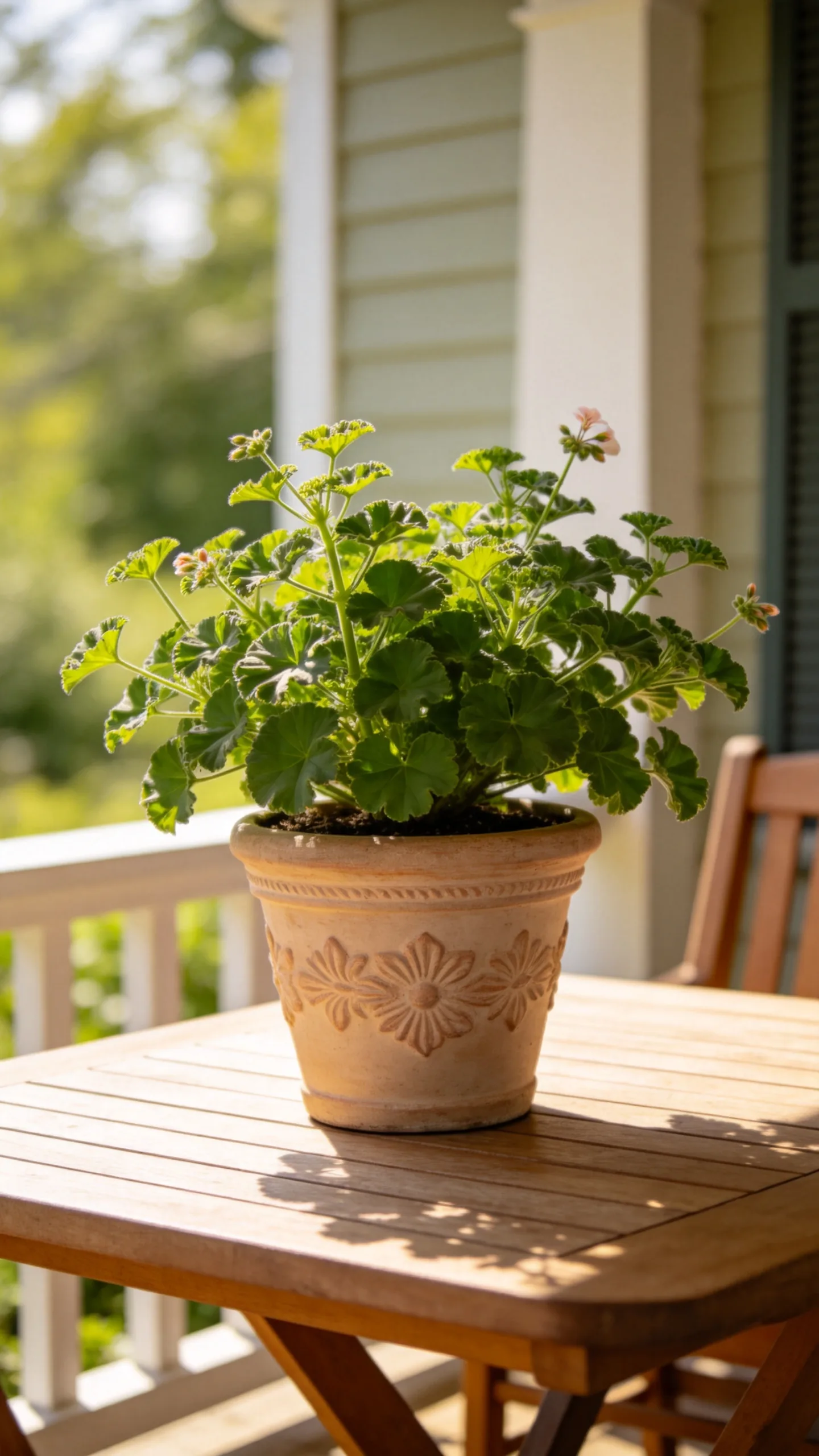
Scented geraniums offer textured leaves with fragrances resembling lemon, rose, mint, or spice. Their strong aroma makes them a less attractive choice for many deer. Grow one plant in a 10- to 12-inch pot so it can be moved easily between a sunny porch, outdoor table, and protected winter location.
Provide at least four to six hours of sun and pinch growing tips to maintain a compact form. Water thoroughly, then allow the upper soil to dry slightly before watering again. Scented geraniums are frost-tender, but cuttings can be rooted or whole plants overwintered indoors in a bright window.
12. Boxwood in a Formal All-Season Container
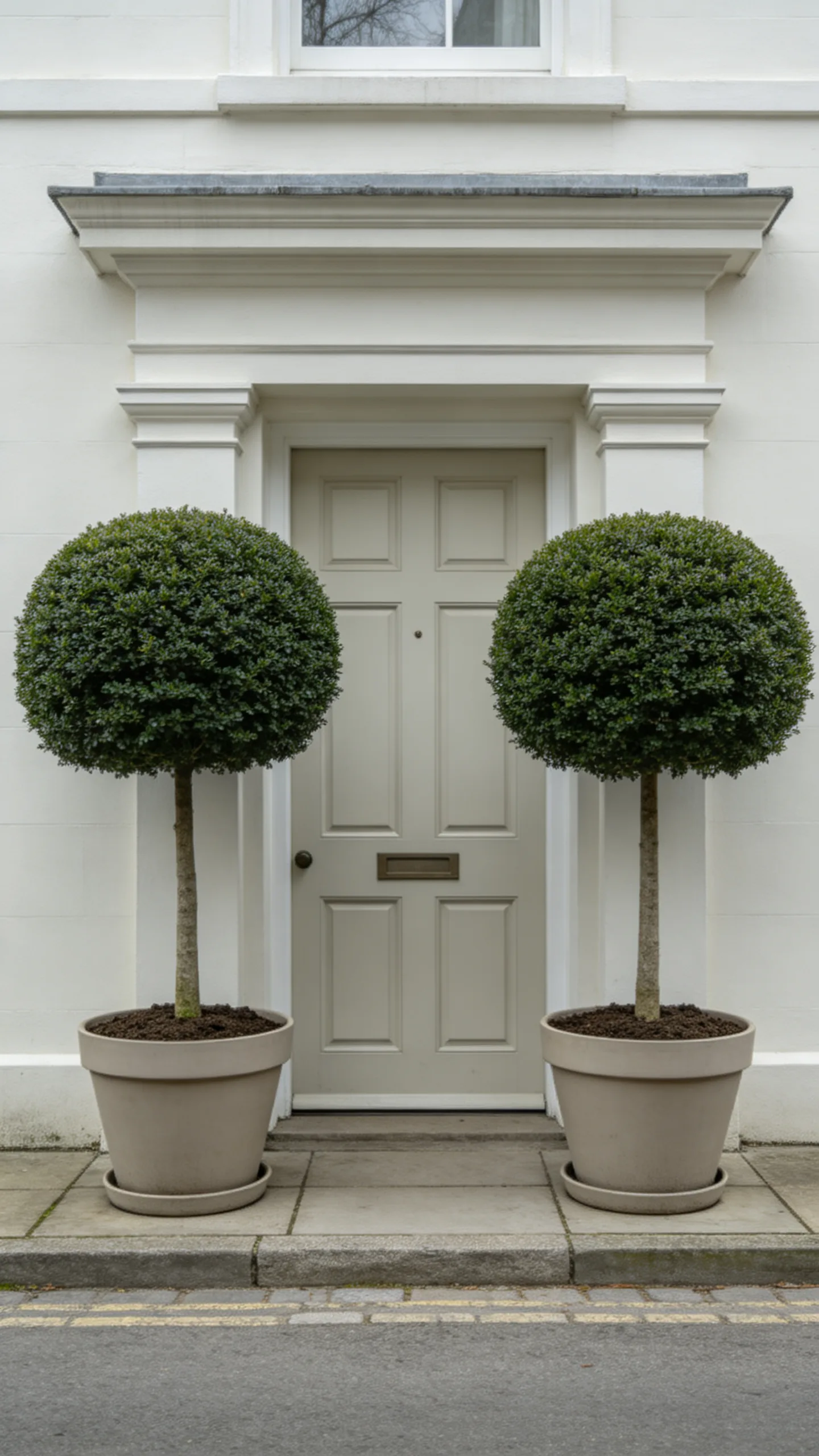
Boxwood’s dense evergreen foliage creates year-round structure, and deer often avoid it because of its scent and alkaloid-containing leaves. A compact cultivar can anchor a symmetrical pair of planters beside a doorway or define the corners of a small patio. Select a frost-resistant container several inches wider than the root ball.
Use a well-draining mix and keep the root zone evenly moist during the first growing season. Boxwood tolerates sun to partial shade, although containers in strong winter sun may need protection from drying winds. Check local recommendations before choosing a cultivar, as climate tolerance and boxwood disease pressure vary by region.
13. Dwarf Juniper in a Rugged Stone Pot
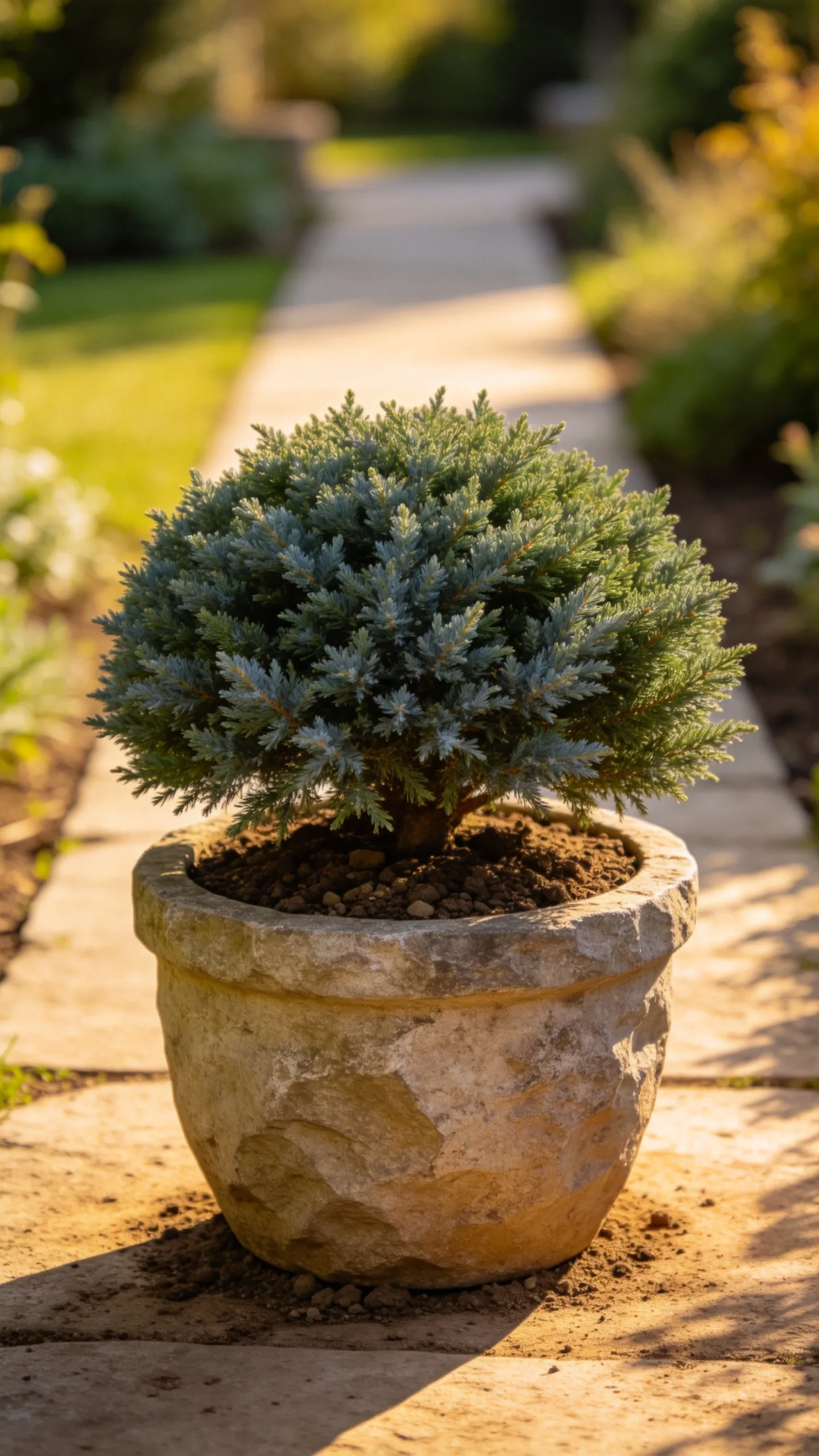
Juniper’s prickly, resin-scented foliage is not usually a preferred deer food. A compact upright or mounded juniper planted in a stone-look pot provides evergreen color with relatively little trimming. It is particularly useful on exposed decks or front walks where delicate flowers dry out quickly.
Choose a container with excellent drainage and use a coarse potting mix rather than dense garden soil. Most junipers need full sun and should not remain soggy. Select a cultivar suited to both the local climate and the mature size of the pot, since some plants sold as “dwarf” still become several feet wide over time.
14. Dwarf Mugo Pine for a Low-Maintenance Pot
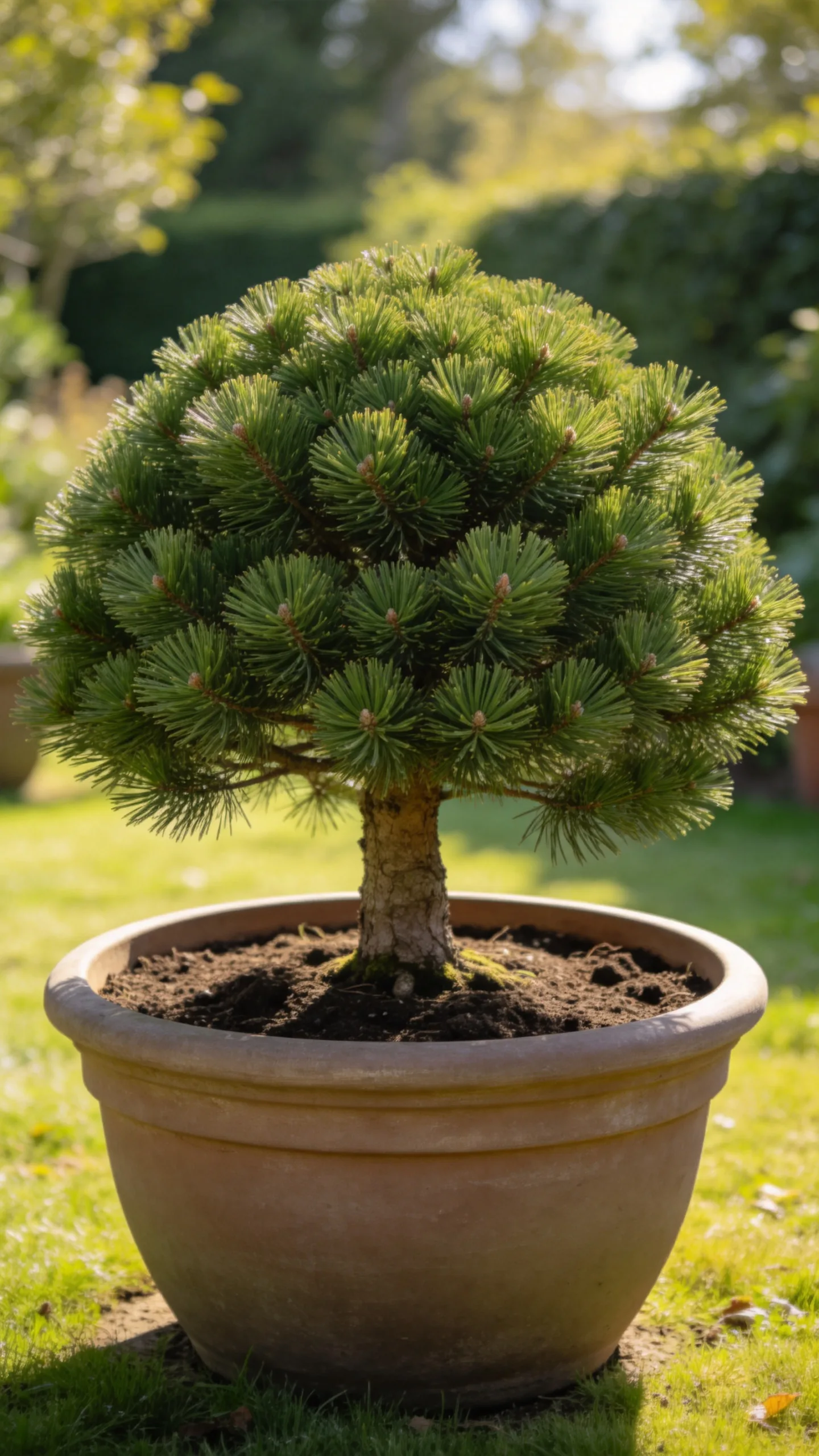
Dwarf mugo pine brings a compact, rounded evergreen shape to a large container. Its stiff needles and resinous scent generally make it less appealing to deer. Place it in a frost-tolerant pot at least 18 inches wide, leaving enough space around the base for watering and air movement.
Set the container in full sun and use a free-draining mix formulated for outdoor shrubs. Water deeply when the upper portion of soil feels dry, including during mild winter periods if the mix is not frozen. Confirm the mature dimensions on the plant label, because mugo pine cultivars vary greatly in eventual height and spread.
15. Lamb’s Ear in a Silver Foliage Trough
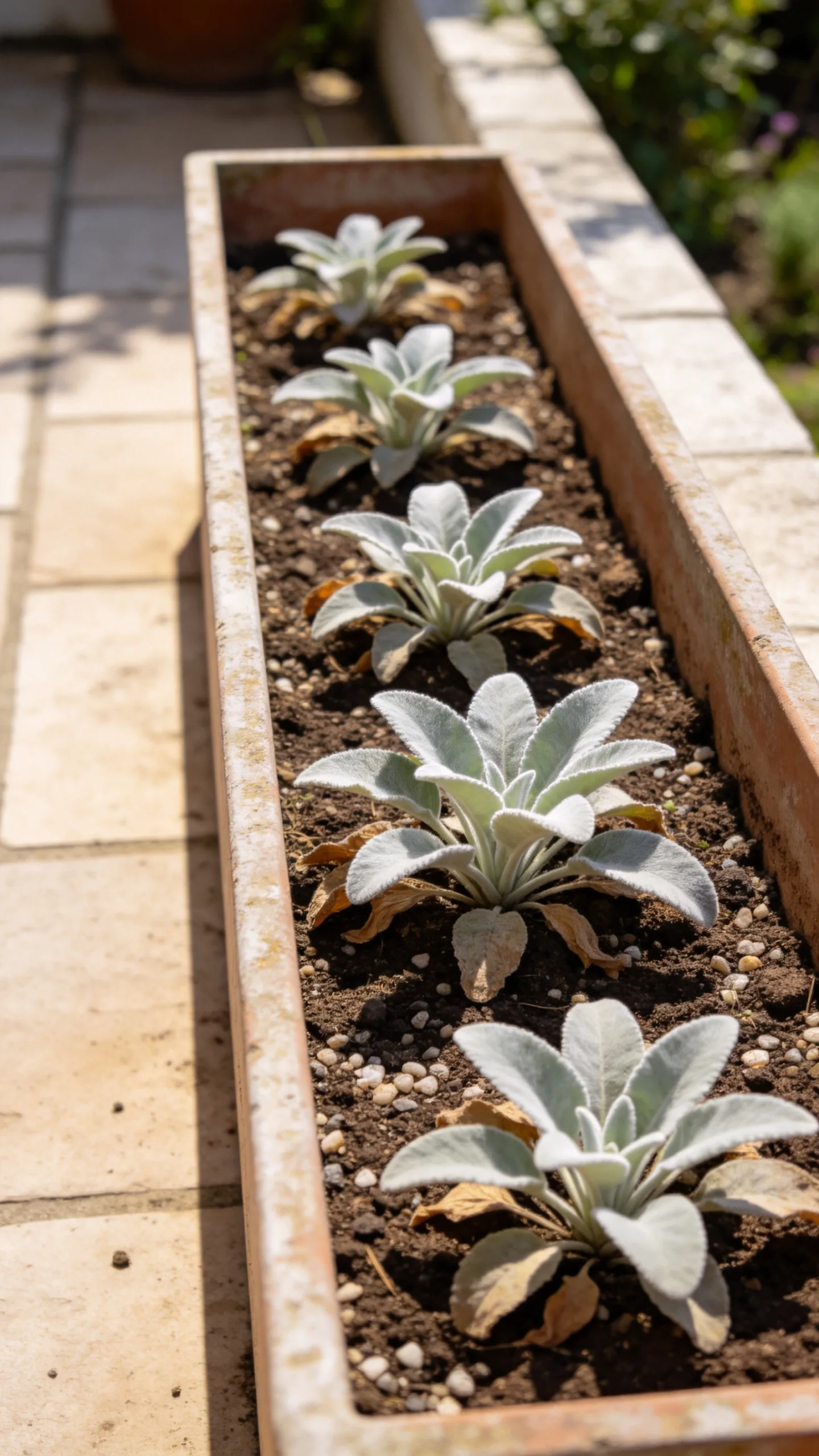
The thick, woolly leaves of lamb’s ear are a texture deer usually dislike. Plant several small divisions in a rectangular trough to create a soft silver ribbon along a patio edge. Compact, low-flowering cultivars are especially useful where you want foliage interest without tall bloom stalks.
Lamb’s ear prefers full sun and sharply drained soil. Water at the base and avoid crowding the plants, as wet foliage and poor airflow can lead to rot. A raised trough keeps the leaves visible while preventing this spreading perennial from roaming through a small garden bed.
16. Russian Sage in a Large Sun-Baked Planter
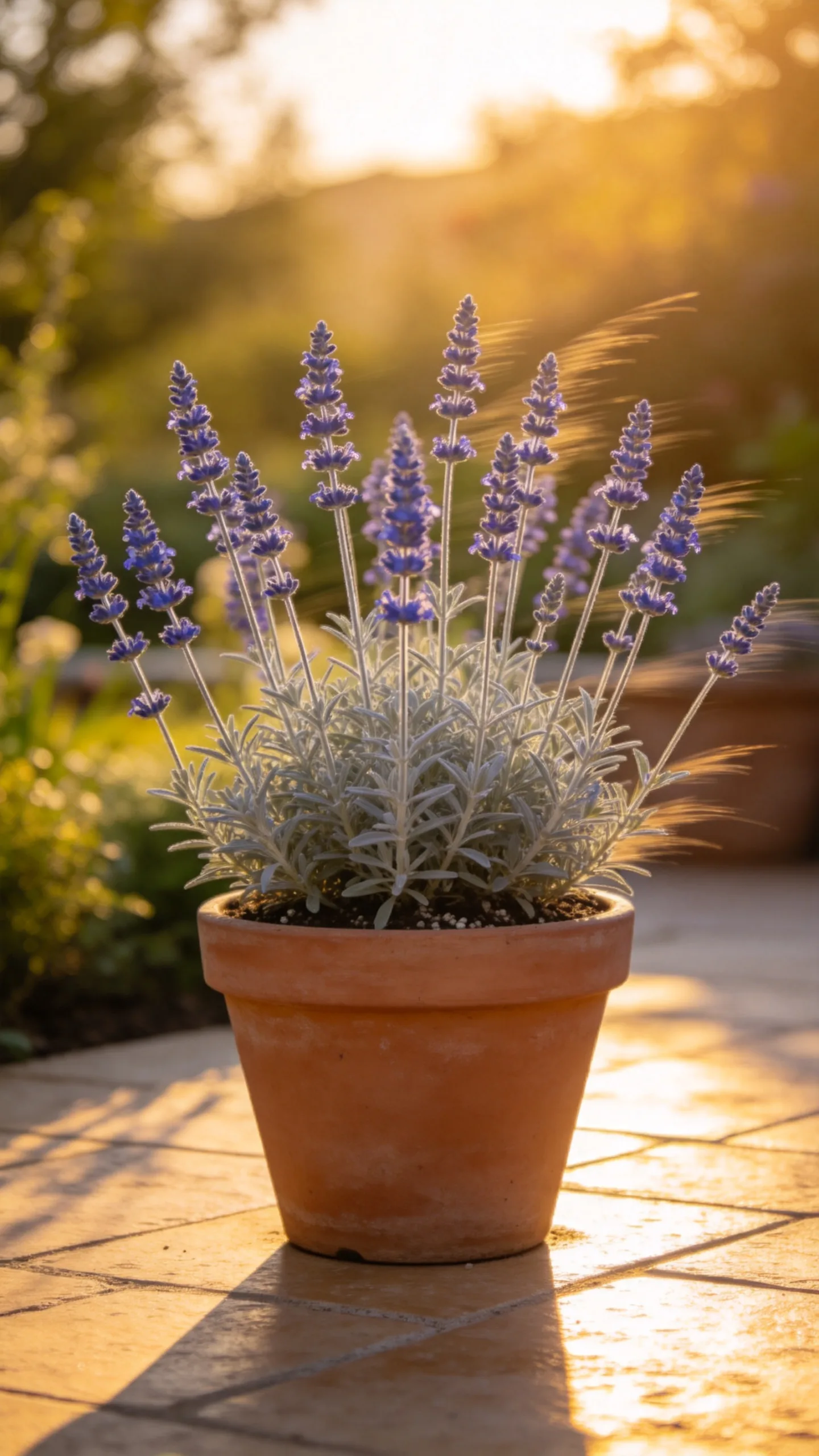
Russian sage provides airy violet-blue flowers, silver stems, and aromatic foliage for a hot, sunny location. Its open form adds height without visually closing in a small patio. Use a compact cultivar in a container at least 18 to 24 inches wide so the roots have enough room and the plant remains stable in wind.
Mix extra perlite or fine gravel into the potting medium and avoid frequent shallow watering. Russian sage performs best when the soil dries somewhat between deep soakings. Cut old stems back in early spring after severe cold has passed, rather than pruning hard in autumn.
17. Catmint Around a Container Obelisk
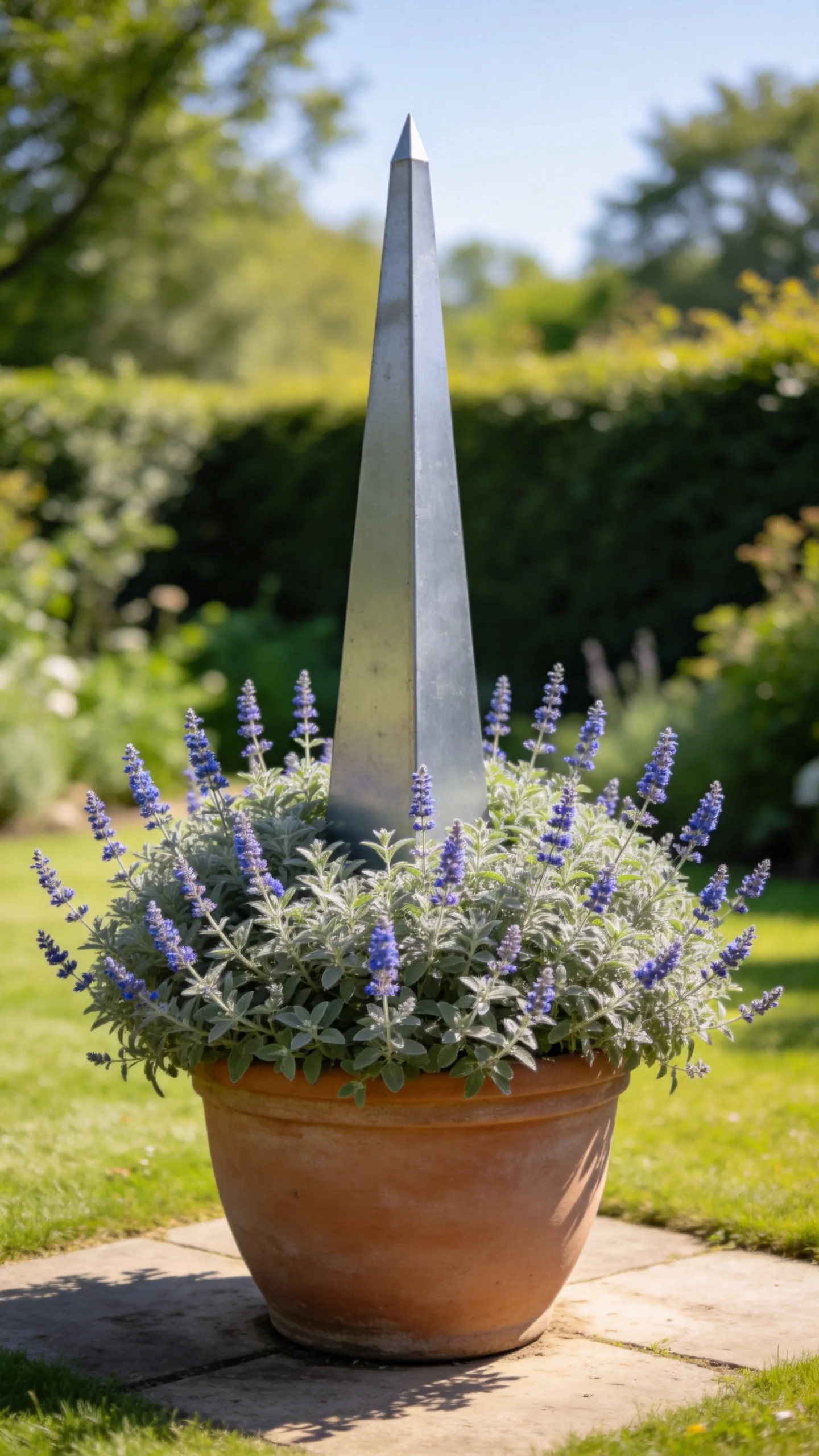
Catmint has fragrant gray-green foliage and long-lasting blue-purple flowers that deer commonly avoid. Instead of using the obelisk for a climber, place it in the center as a visual accent and plant compact catmint around its base. The foliage will mound outward and disguise the lower portion of the support.
Choose a wide pot and a cultivar bred to remain compact. Full sun produces the most flowers, although light afternoon shade can be helpful in very hot climates. Shear the plant by about one-third after the first heavy bloom to encourage tidier growth and possible reblooming.
18. Bee Balm in a Moisture-Retentive Container
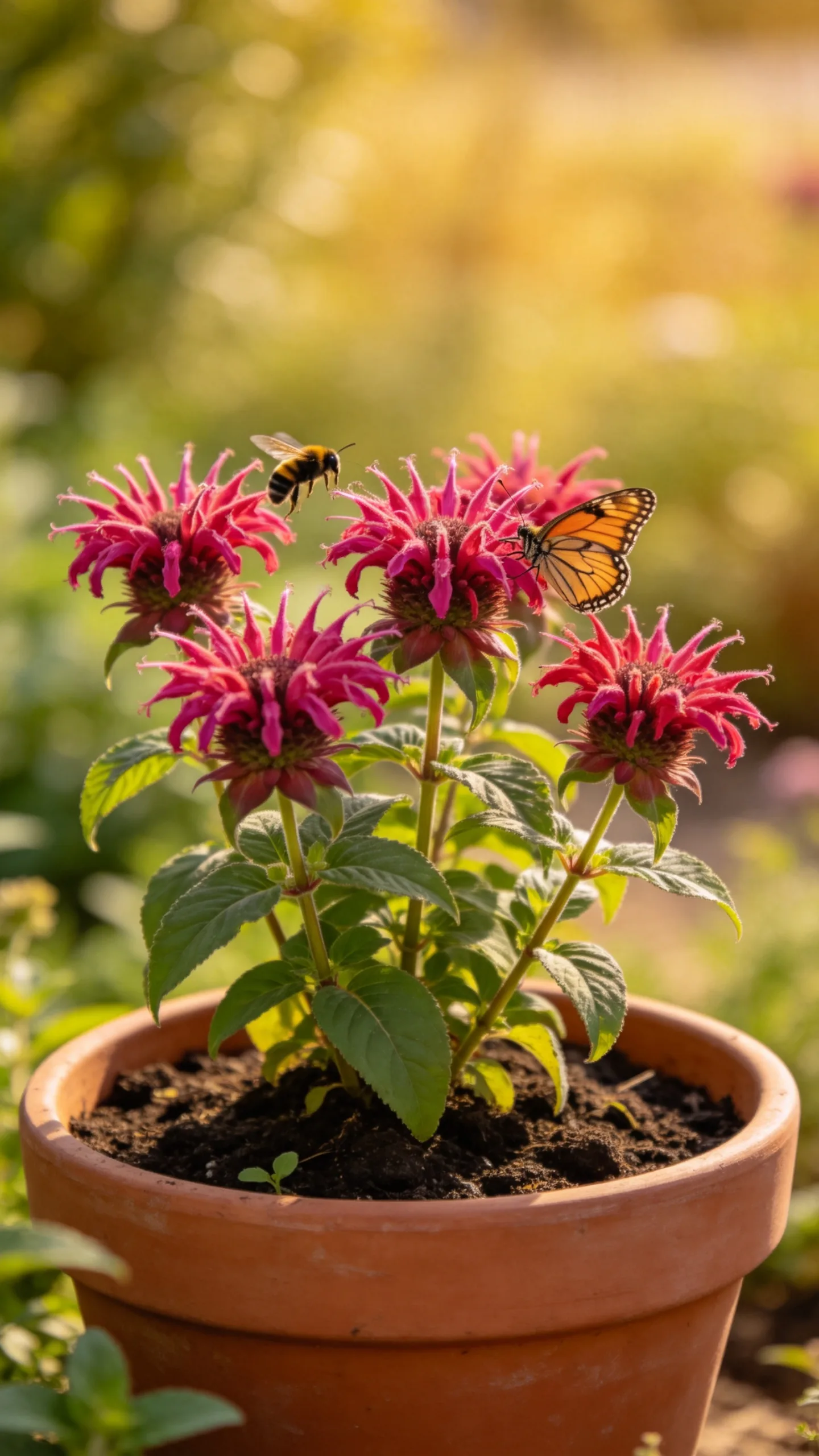
Bee balm’s mint-scented foliage is usually unattractive to deer, while its vivid flower heads draw bees, butterflies, and hummingbirds. Compact cultivars fit containers better than traditional tall forms. Plant one in a 14- to 18-inch pot and position it where its movement and pollinator activity can be enjoyed.
Unlike Mediterranean herbs, bee balm prefers consistently moist soil. Use quality potting mix that holds some moisture but still drains, and check the container frequently during summer. Provide good air circulation and choose a mildew-resistant cultivar where powdery mildew is common.
19. Chives in a Kitchen-Door Window Box
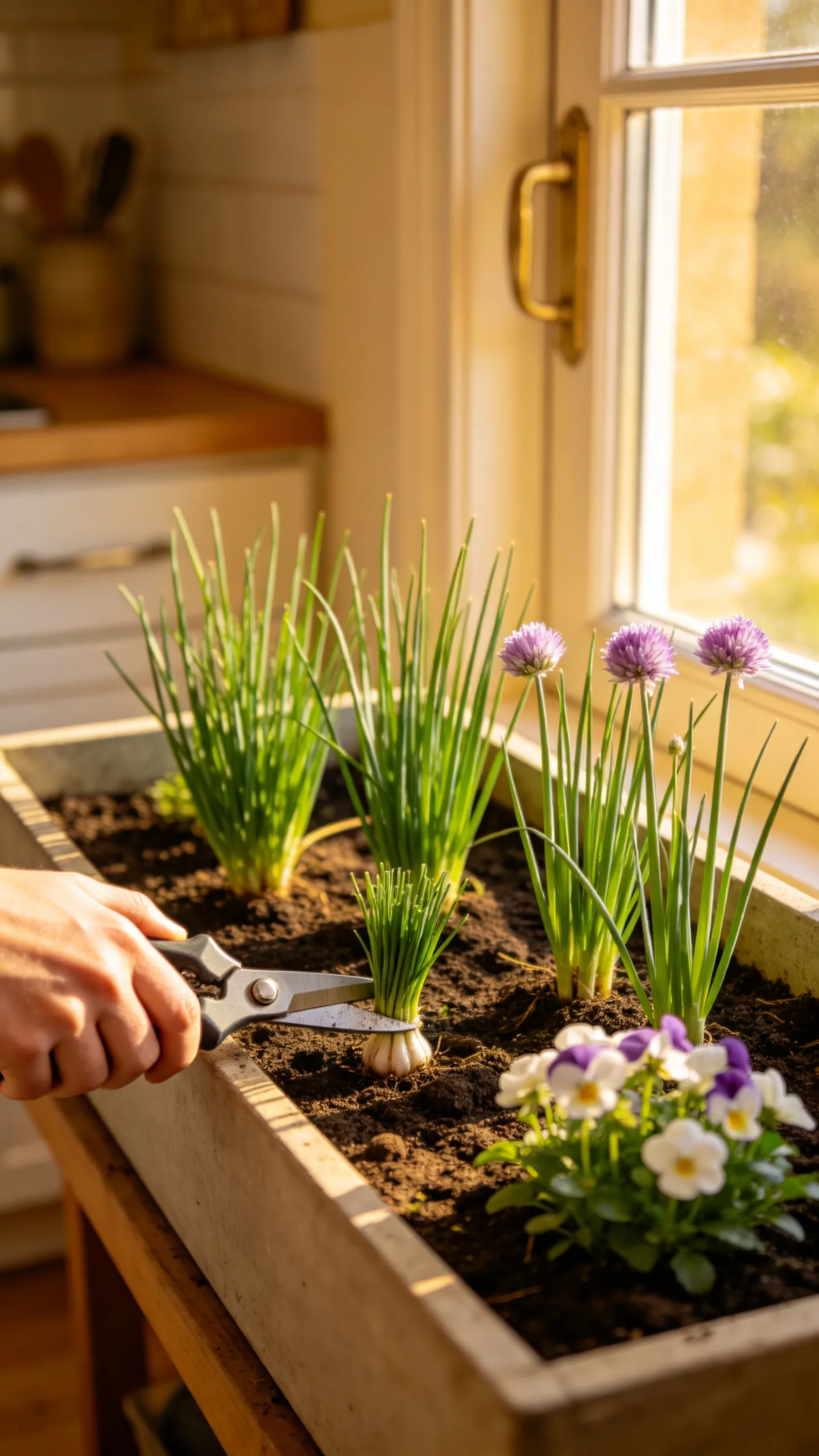
Chives have narrow, onion-scented leaves that deer tend to avoid, making them useful for an edible window box near the kitchen. Space small clumps several inches apart and combine common chives with garlic chives if the box is large enough. Their purple or white flowers also support pollinators.
Give the planter sun to partial shade and water whenever the top inch of mix becomes dry. Snip leaves close to the base as needed, taking only part of each clump at a time. Remove seed heads to limit unwanted seedlings, or leave a few flowers for visual interest and beneficial insects.
20. Daffodils Overplanted With Creeping Thyme
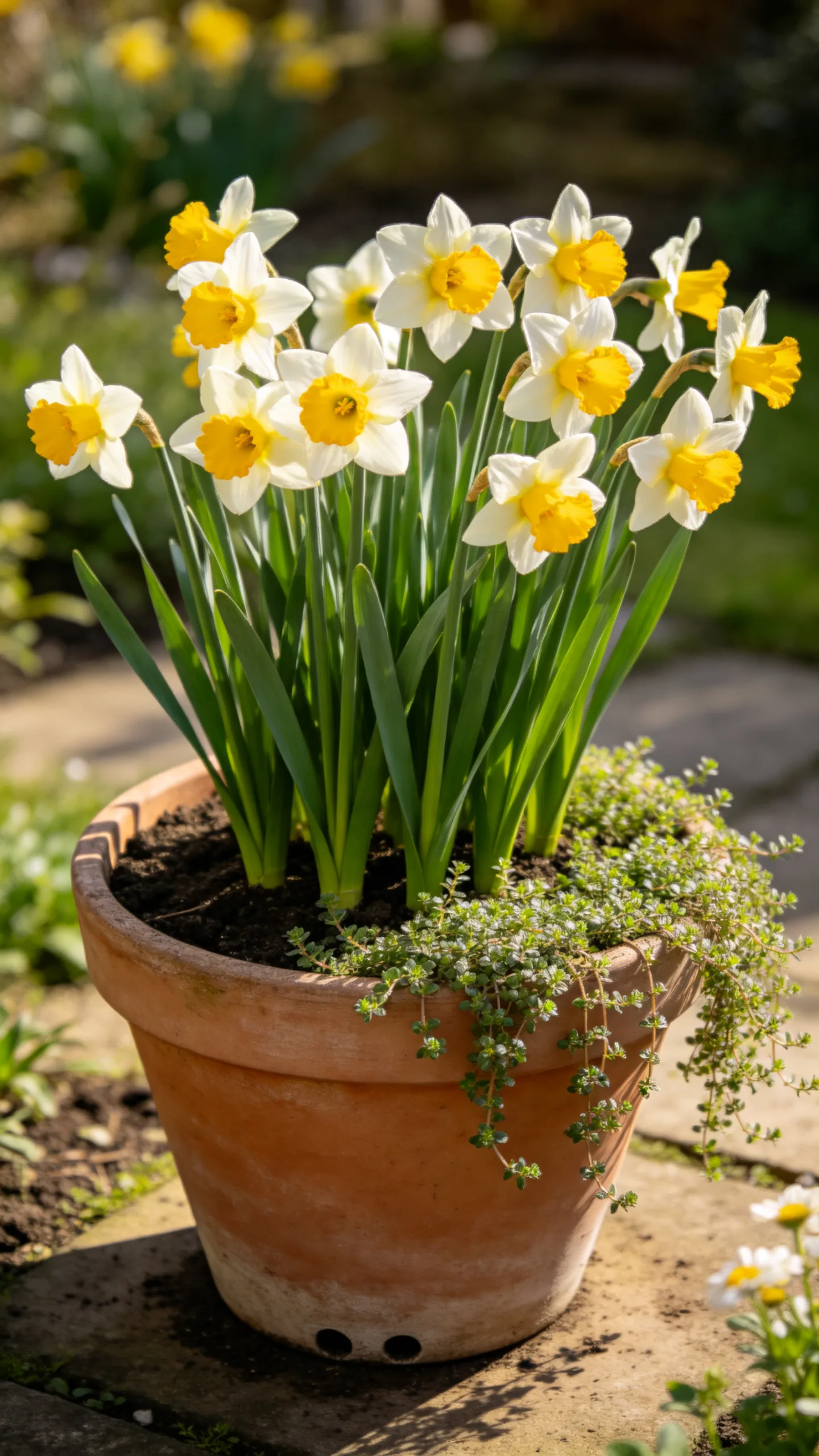
Daffodils contain compounds that make the entire plant unpalatable to deer. In autumn, plant bulbs in a deep, frost-resistant container, setting them at the depth recommended for the specific variety. Add creeping thyme near the surface to provide foliage before and after the spring flowers appear.
Keep the pot in sun to light shade and avoid waterlogged conditions through winter. After flowering, remove spent blooms but leave daffodil foliage in place until it yellows naturally, allowing the bulbs to store energy. In climates with warm winters, select bulbs suited to local chilling conditions or purchase pre-chilled bulbs.
21. Alliums in a Layered Bulb Pot
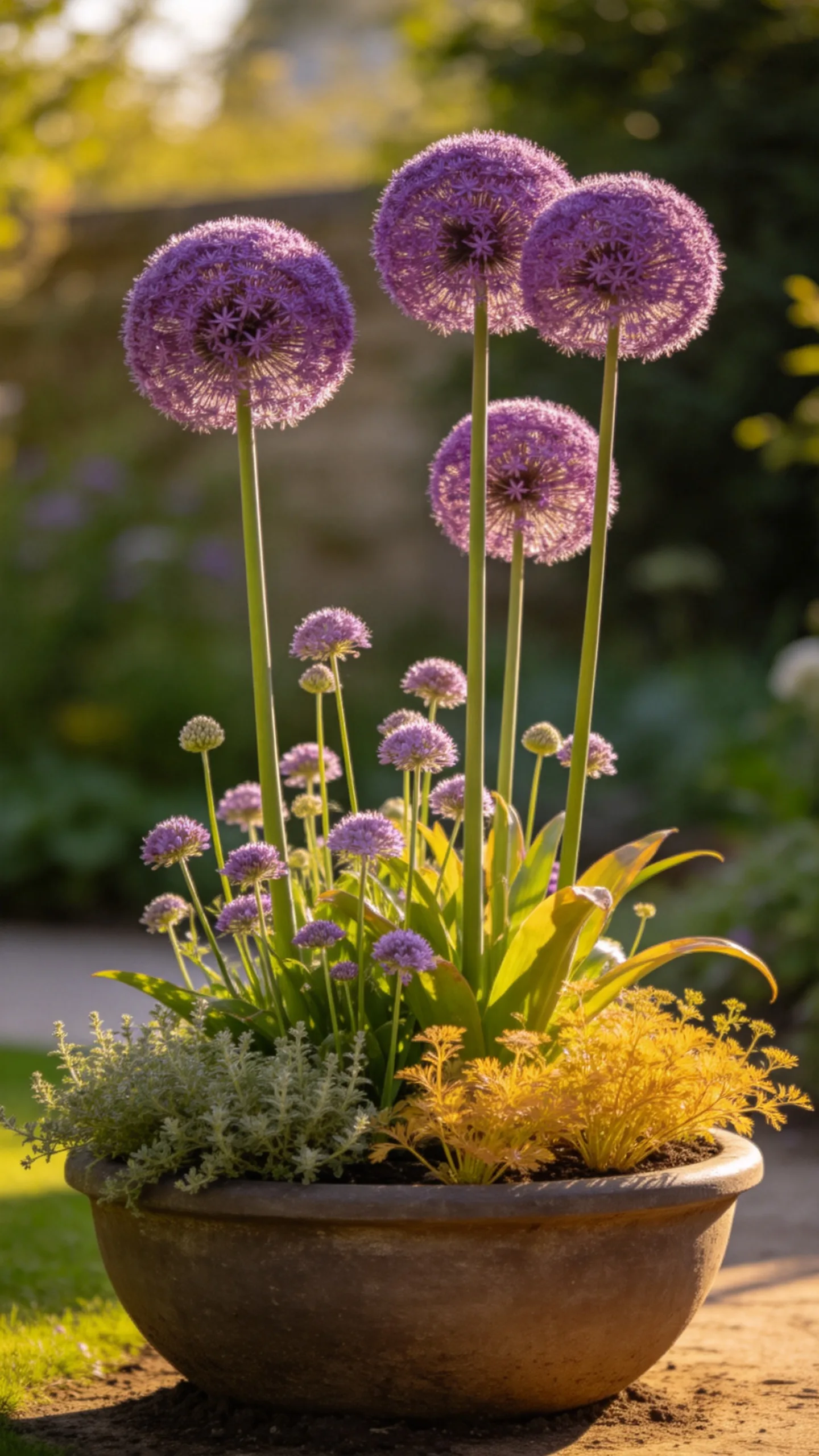
Ornamental alliums produce globe-shaped flowers above onion-scented stems and foliage that deer generally pass over. Create a layered bulb container by placing larger, later-blooming alliums deeper in the pot and smaller species closer to the surface, following package instructions for spacing and planting depth.
A deep container helps anchor tall flower stems and protects the bulbs from rapid temperature swings. Place it in full sun and ensure rain can drain freely. Because allium foliage may yellow before the flowers finish, position a low-growing herb or seasonal annual near the rim to hide the fading leaves without removing them prematurely.
22. Hellebores for a Shaded Winter Pot
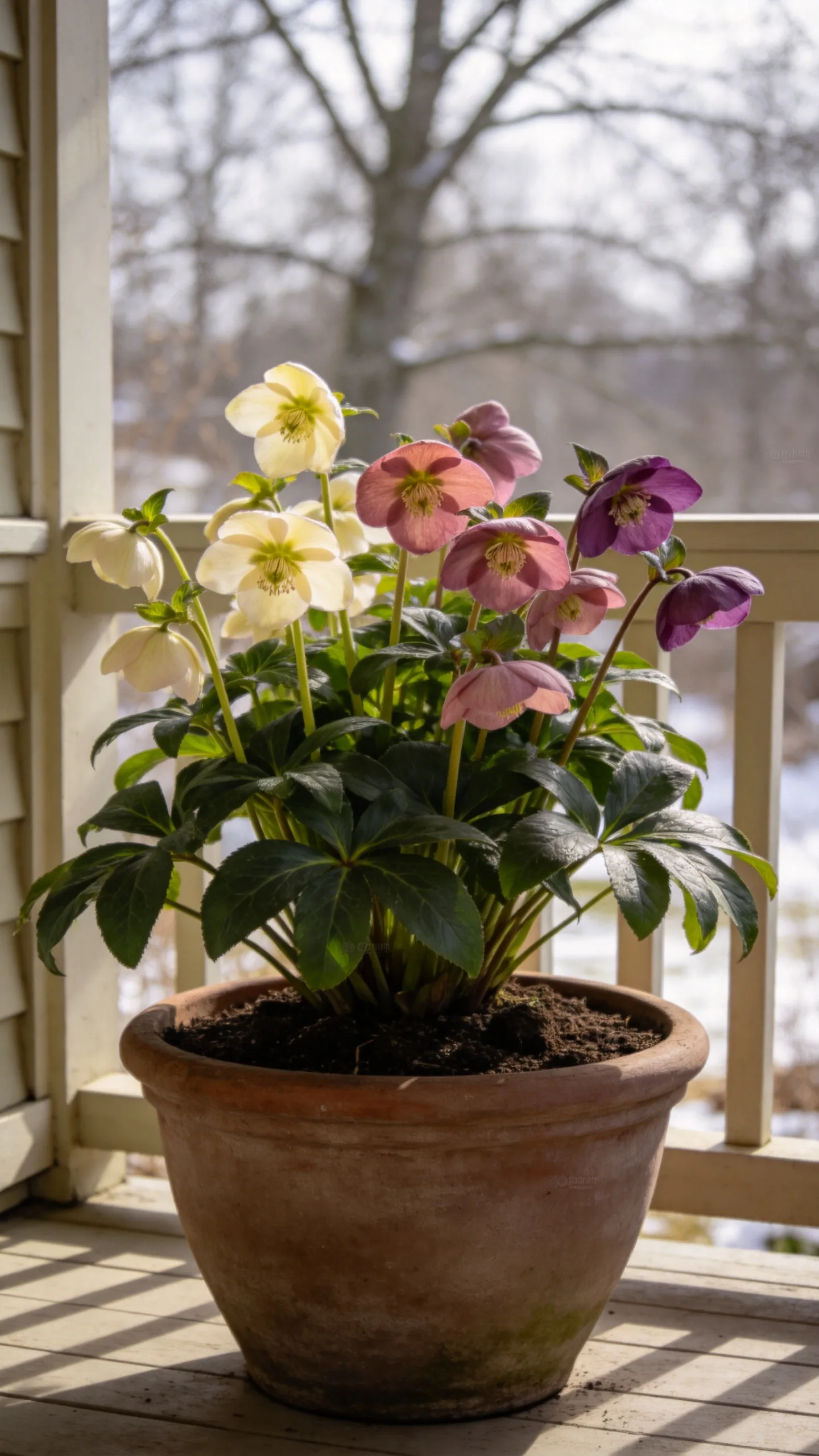
Hellebores provide leathery evergreen or semi-evergreen foliage and late-winter to early-spring flowers. Their bitter, toxic plant compounds mean deer tend to avoid them, but the same qualities make careful placement important around pets and children. Plant one hellebore in a broad pot with enough depth for its substantial root system.
Place the container in partial or dappled shade, protected from harsh afternoon sun. Use rich, well-draining potting mix and maintain moderate moisture without leaving the roots waterlogged. Remove damaged older leaves as flower buds emerge, and wear gloves if the foliage irritates your skin.
23. Euphorbia and Ornamental Grass Mixed Planter
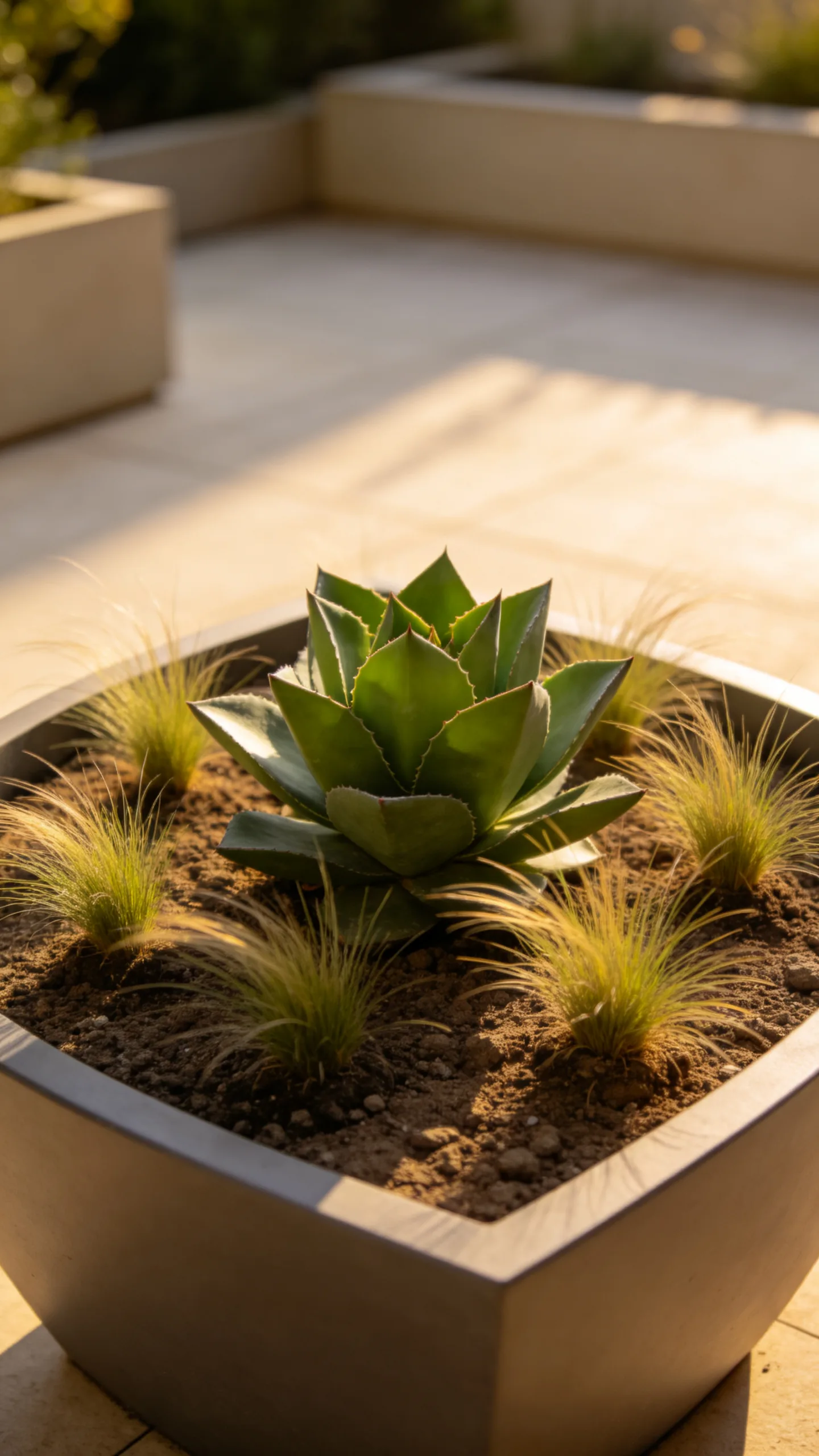
Euphorbia’s milky sap and ornamental grass’s fibrous texture create a container that is generally low on a deer’s menu. Use a compact euphorbia as the structural center and surround it with small tufted grasses suited to the same light and moisture conditions. This combination offers movement and foliage contrast even when few plants are blooming.
Most sun-loving euphorbias need excellent drainage and only moderate water once established, so avoid pairing them with moisture-demanding grasses. Wear gloves when planting or pruning because euphorbia sap can irritate skin and eyes, and keep the pot away from children and pets. Check the species carefully before buying, as cold tolerance, mature size, and invasiveness vary among euphorbias and ornamental grasses.