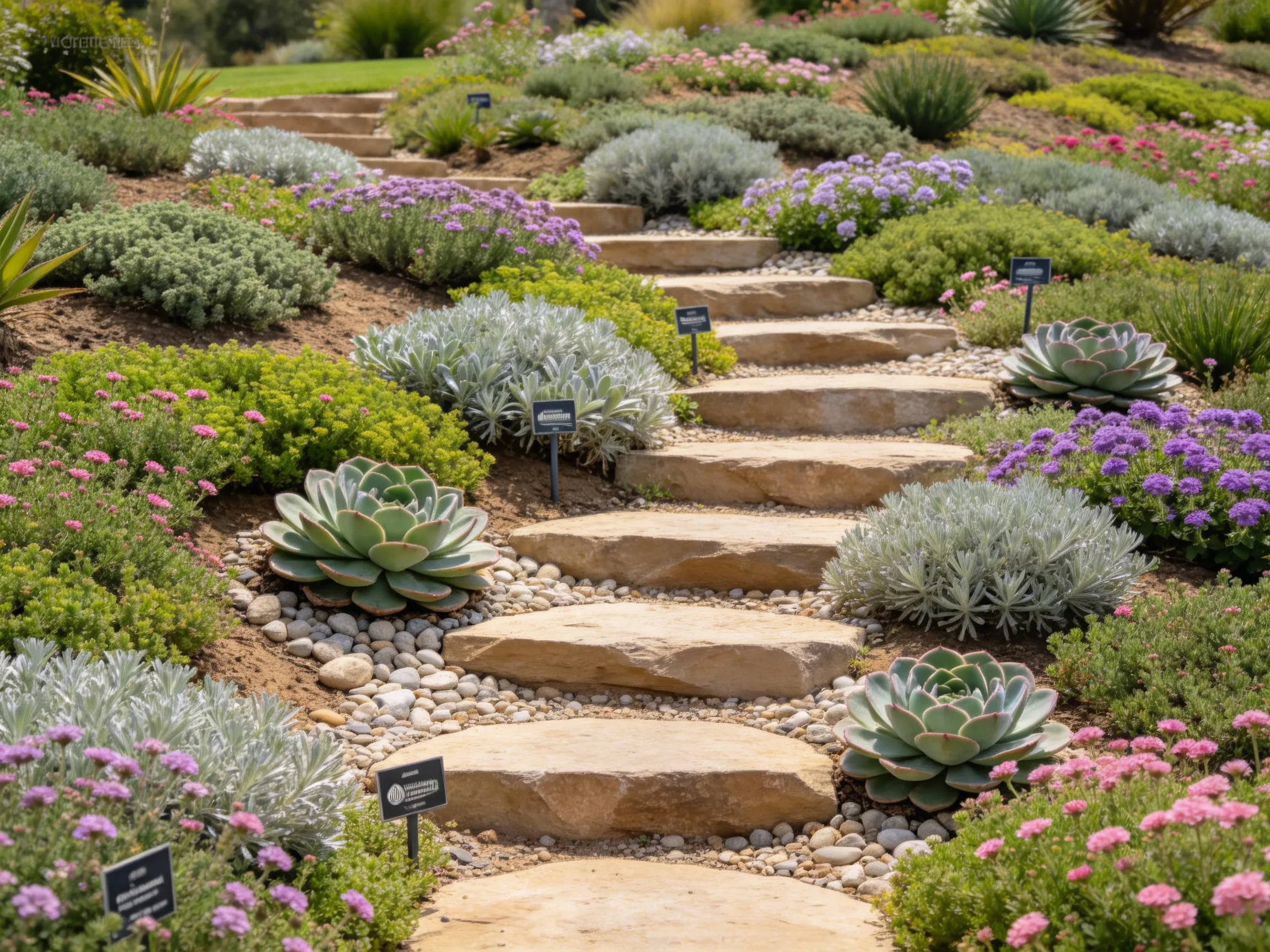
Sunny, dry areas can support a dense, attractive planting when the ground cover matches the site. The plants below tolerate drought best after their roots are established, so plan to water them during their first growing season. Before planting, confirm local hardiness, soil compatibility, and invasive status, especially in warm climates where some ground covers spread aggressively.
1. Creeping Thyme
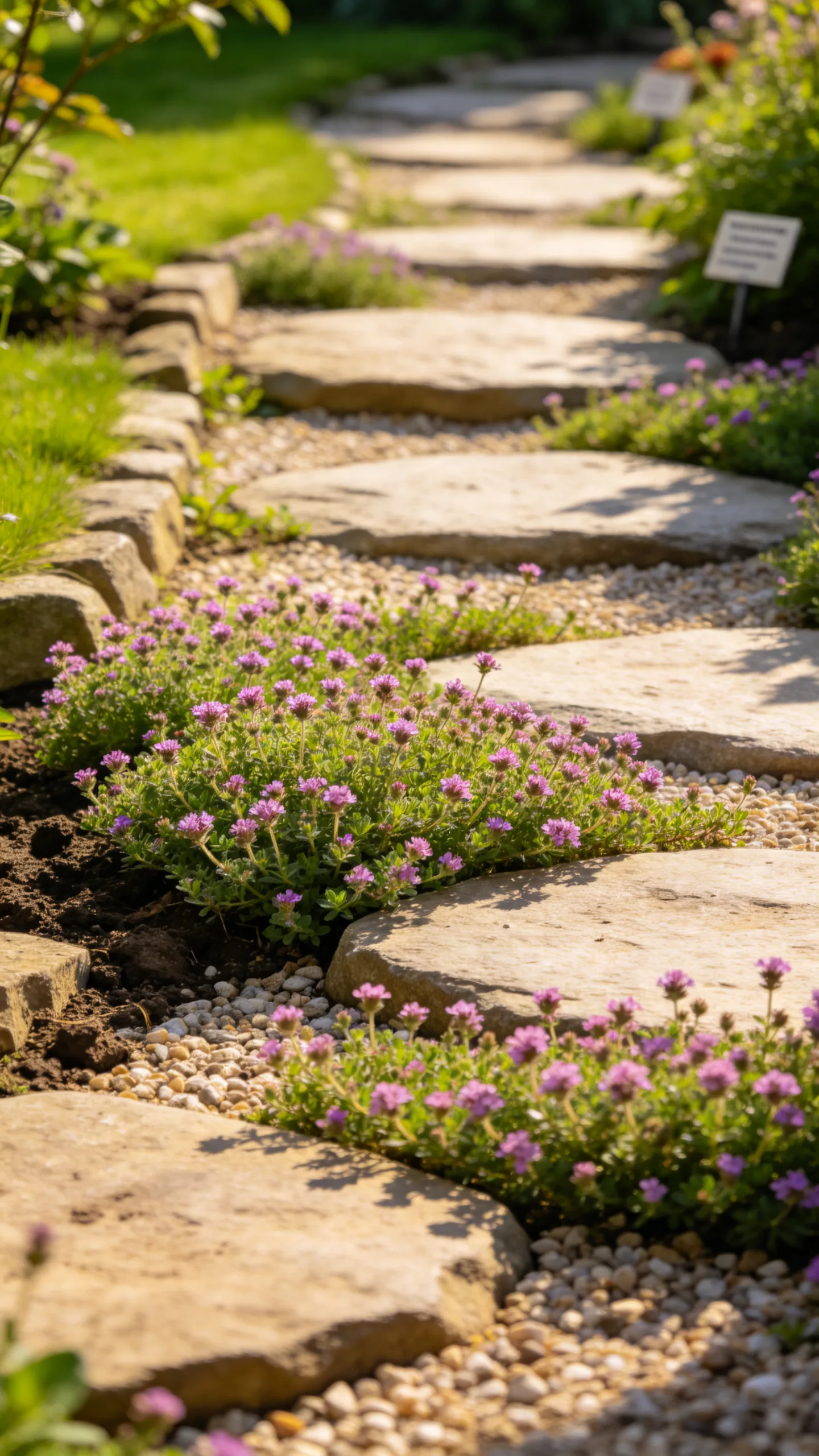
Creeping thyme (*Thymus serpyllum* and related cultivars) forms a low, aromatic mat that works well between stepping stones, along path edges, and across small sunny slopes. Its tiny leaves and pink, purple, or white summer flowers suit cottage gardens, gravel gardens, and other informal spaces.
Plant creeping thyme in full sun and sharply drained soil, spacing plugs about 8 to 12 inches apart. It dislikes soggy ground and heavy foot traffic, but it can tolerate occasional steps once established. Trim lightly after flowering if the stems become uneven or begin covering nearby paving.
2. Stonecrop Sedum
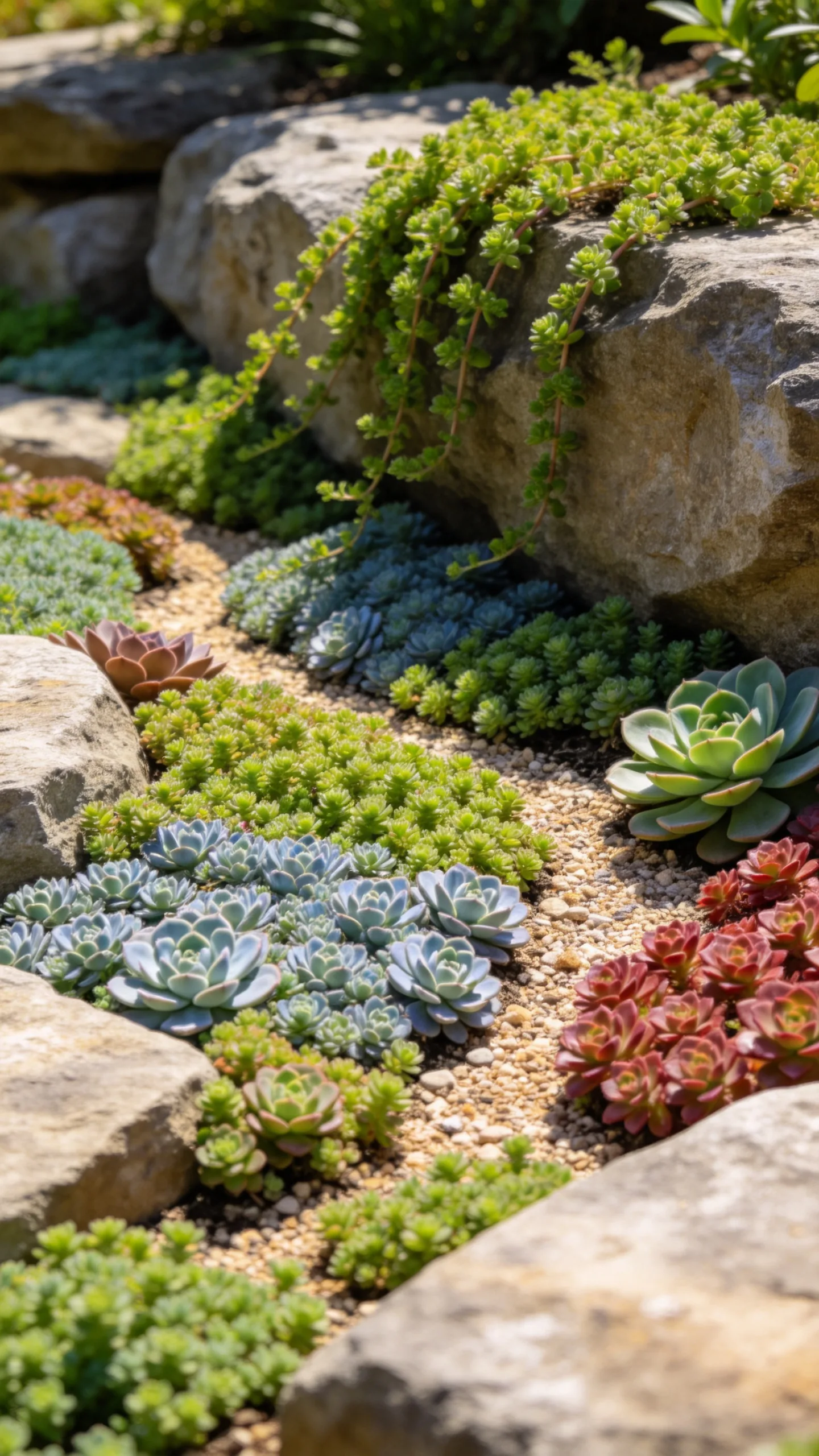
Low-growing stonecrops such as *Sedum spurium*, *Sedum acre*, and *Sedum album* store water in their fleshy leaves, making them practical for hot borders, rock gardens, retaining walls, and shallow planting pockets. Depending on the variety, foliage may be green, blue-gray, bronze, or red-tinged.
Use sedum where soil drains quickly, because wet winter conditions can cause rot. Small divisions or plugs can be planted 6 to 12 inches apart and allowed to knit together. Remove fallen leaves from dense patches so moisture does not collect around the crowns.
3. Hardy Ice Plant
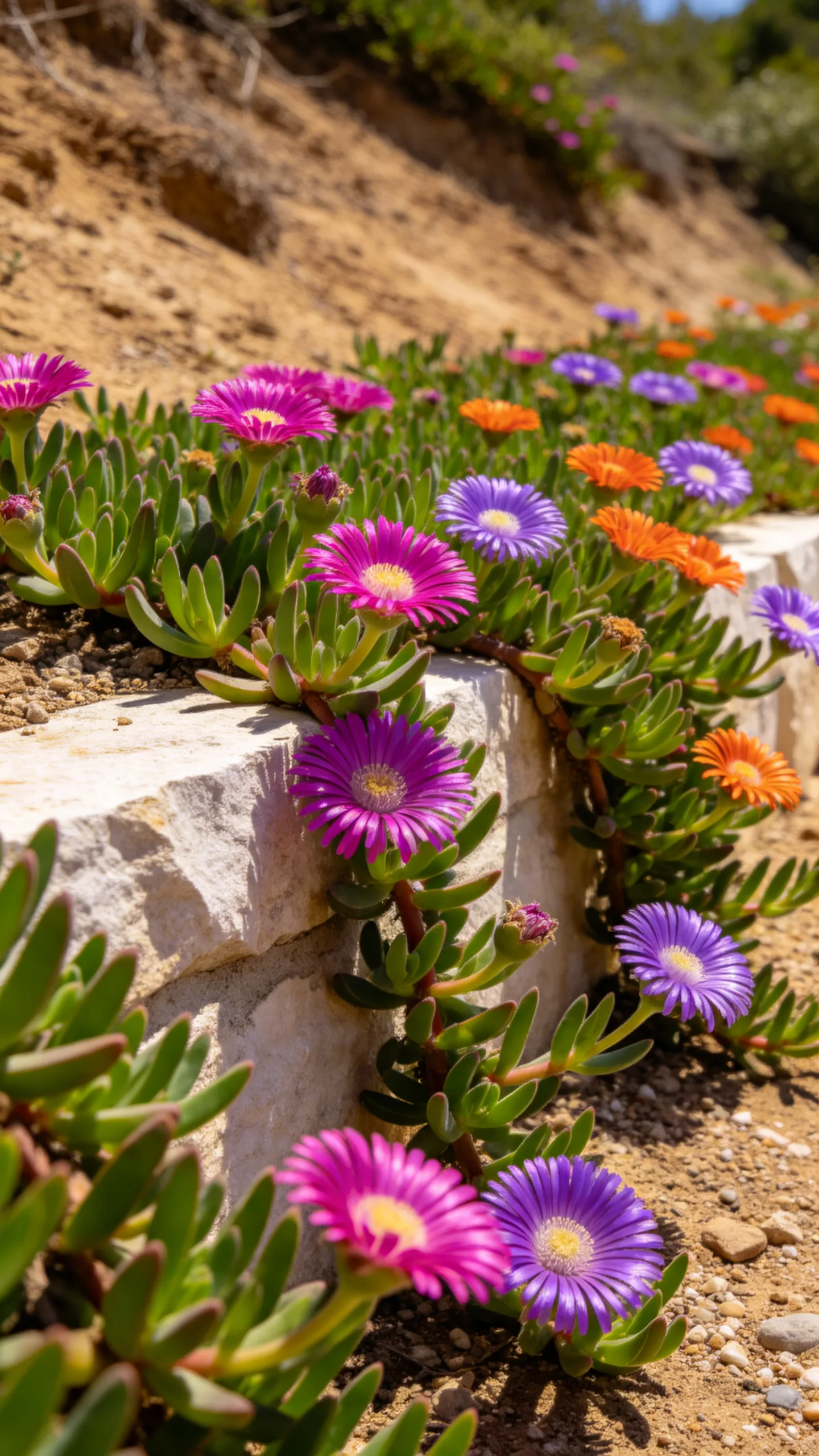
Hardy ice plant (*Delosperma* species and hybrids) produces succulent foliage and vivid daisy-shaped flowers in shades of pink, purple, orange, yellow, and red. It is especially effective spilling over stone edging or covering a sunny bank where reflected heat would stress thirstier plants.
Choose a cold-hardy cultivar suited to your region and provide gritty, fast-draining soil. Although established plants handle dry periods well, winter wetness is a common cause of failure. Space plants about 12 to 18 inches apart and avoid placing them where roof runoff or irrigation collects.
4. Creeping Phlox
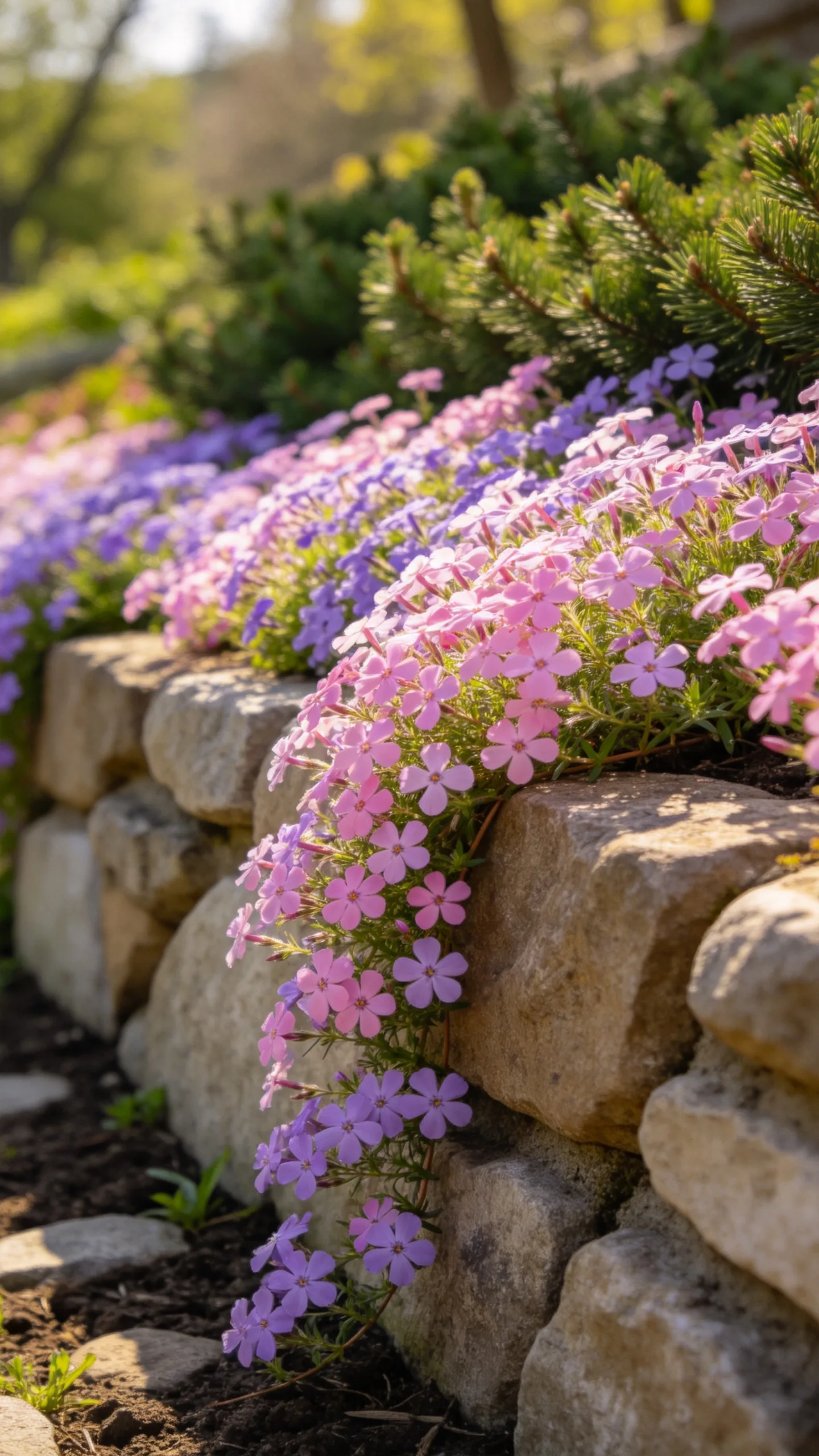
Creeping phlox (*Phlox subulata*) creates a carpet of needlelike evergreen or semi-evergreen foliage, followed by abundant spring flowers. It is a useful choice for the front of a border, the top of a retaining wall, or a sloped bed where its spreading stems can soften hard edges.
This plant performs best in full sun with well-drained soil and occasional deep watering during extended drought. Space plants 12 to 18 inches apart, keeping the crowns slightly above heavy soil. After flowering, shear the foliage lightly to encourage a compact shape and reduce woody, bare centers.
5. Snow-in-Summer
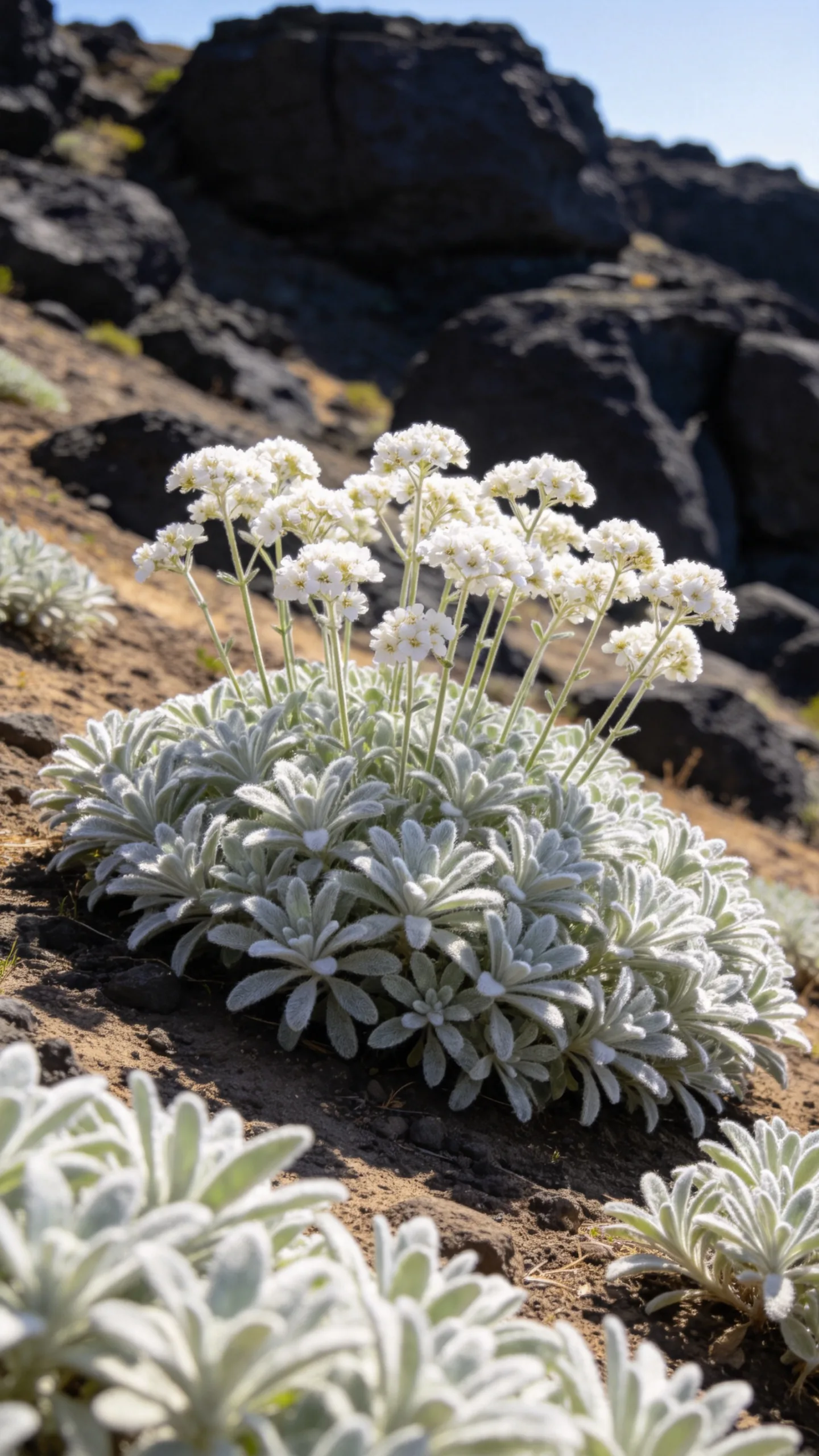
Snow-in-summer (*Cerastium tomentosum*) combines silvery foliage with masses of small white flowers in late spring or early summer. Its pale leaves brighten hot, exposed planting areas and contrast well with dark stone, purple-leaved plants, and ornamental grasses.
Plant it in lean, dry, well-drained soil rather than a heavily amended bed. The stems spread quickly, so use it along slopes or broad edging where it has room to form a mat. Shear after flowering to limit self-seeding, and check regional recommendations because it can spread beyond garden boundaries in some locations.
6. Lamb’s Ear
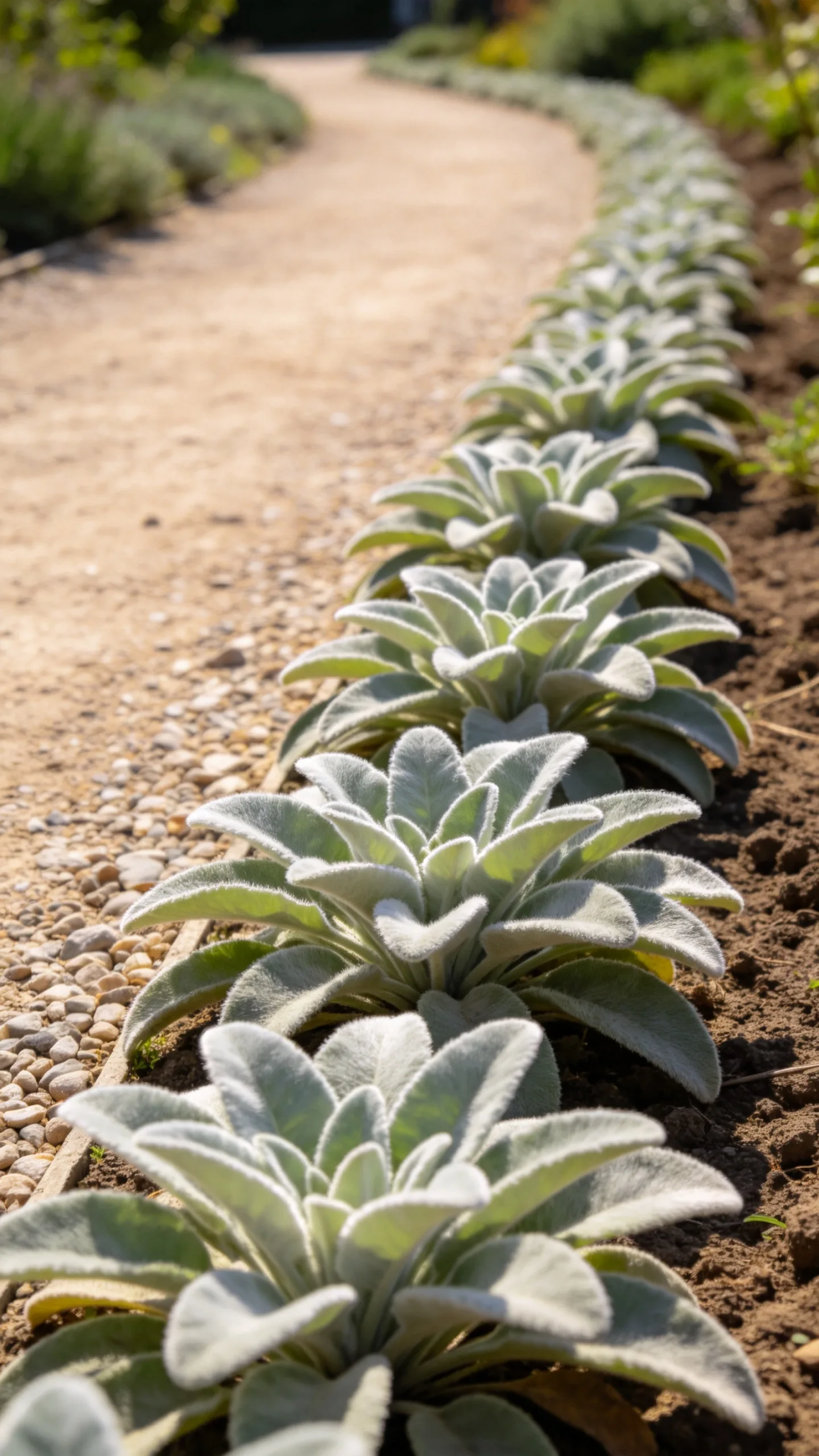
Lamb’s ear (*Stachys byzantina*) has thick, velvety silver leaves that shade the soil and create a soft border along sunny paths. Compact cultivars such as ‘Big Ears’ or nonflowering ‘Helene von Stein’ are generally more useful as ground covers than tall, heavily flowering selections.
Give lamb’s ear full sun, good air circulation, and soil that does not remain wet after rain. Space plants about 12 to 18 inches apart and remove damaged lower leaves in spring. In humid climates, avoid overhead watering because consistently damp foliage can lead to rot and leaf spotting.
7. Pussytoes
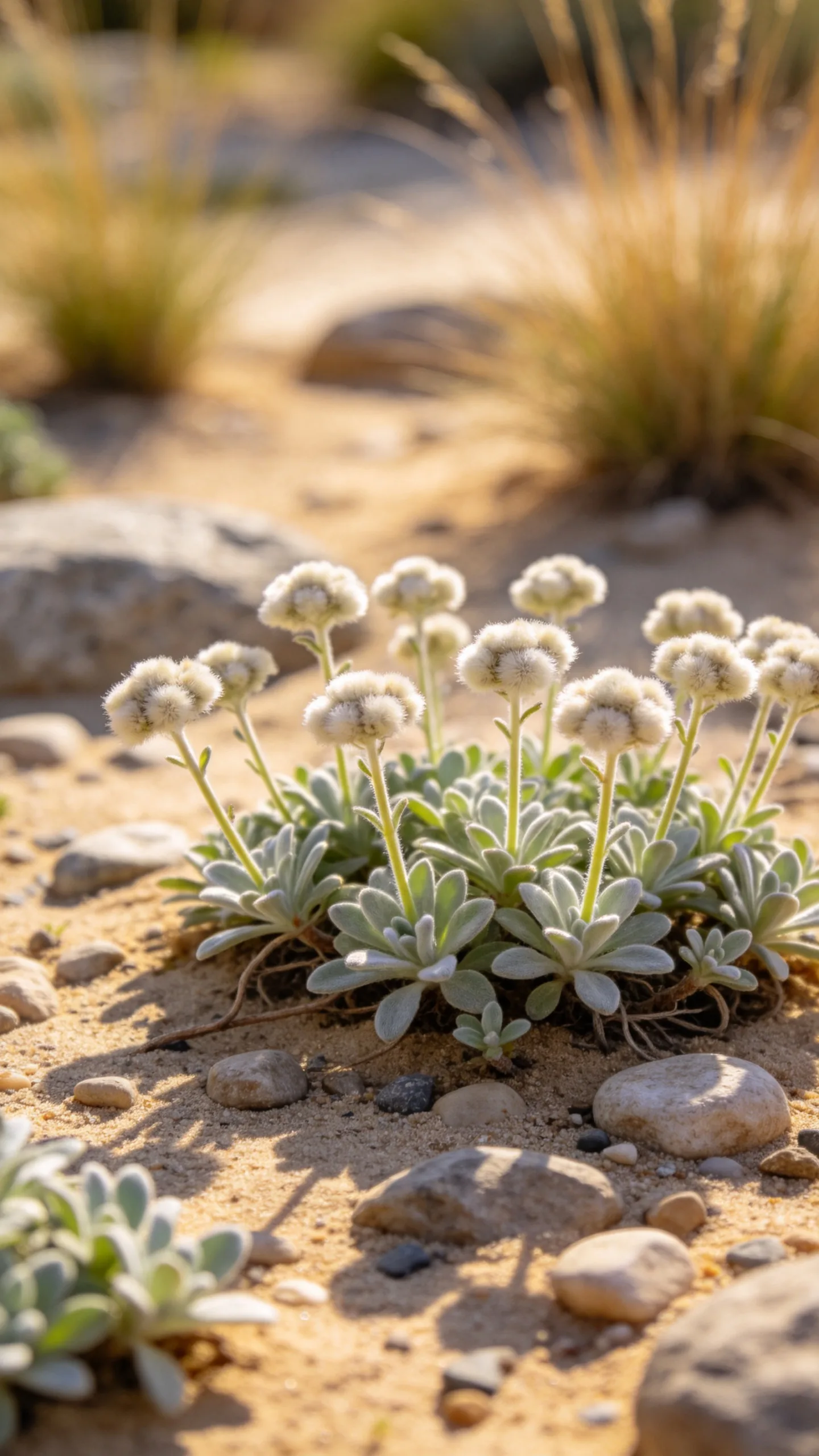
Pussytoes (*Antennaria* species) are low-growing North American natives with silvery leaves and small spring flower clusters. They fit naturally into dry pollinator gardens, sandy beds, rock gardens, and sunny sites where richer soil would be unnecessary.
Plant pussytoes in lean, well-drained soil and avoid frequent fertilizing or irrigation. The plants spread through short runners, gradually forming a tight mat without growing tall. Select a species native to your region when possible, since moisture tolerance and cold hardiness vary among different *Antennaria* species.
8. Bearberry
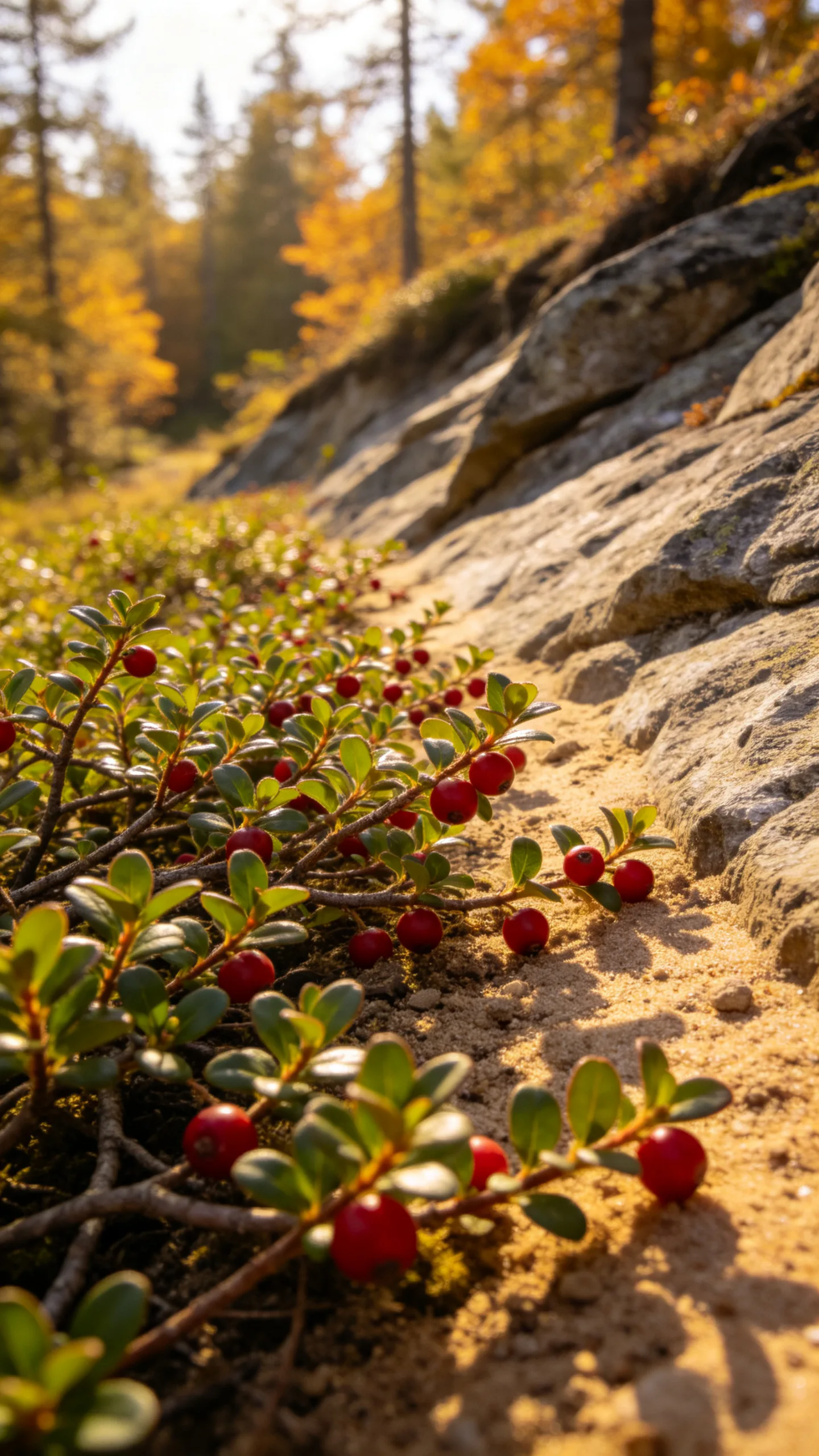
Bearberry (*Arctostaphylos uva-ursi*), also called kinnikinnick, is a woody evergreen ground cover with small leaves, pale spring flowers, and red berries. It is useful on sunny banks, along woodland edges, and in naturalistic gardens where a low, year-round cover is needed.
This plant favors acidic, sandy, or rocky soil and may struggle in alkaline clay. Space plants roughly 2 to 3 feet apart to accommodate their slow-spreading stems. Bearberry requires regular moisture while establishing but generally needs little supplemental water later when planted in a compatible site.
9. Creeping Juniper
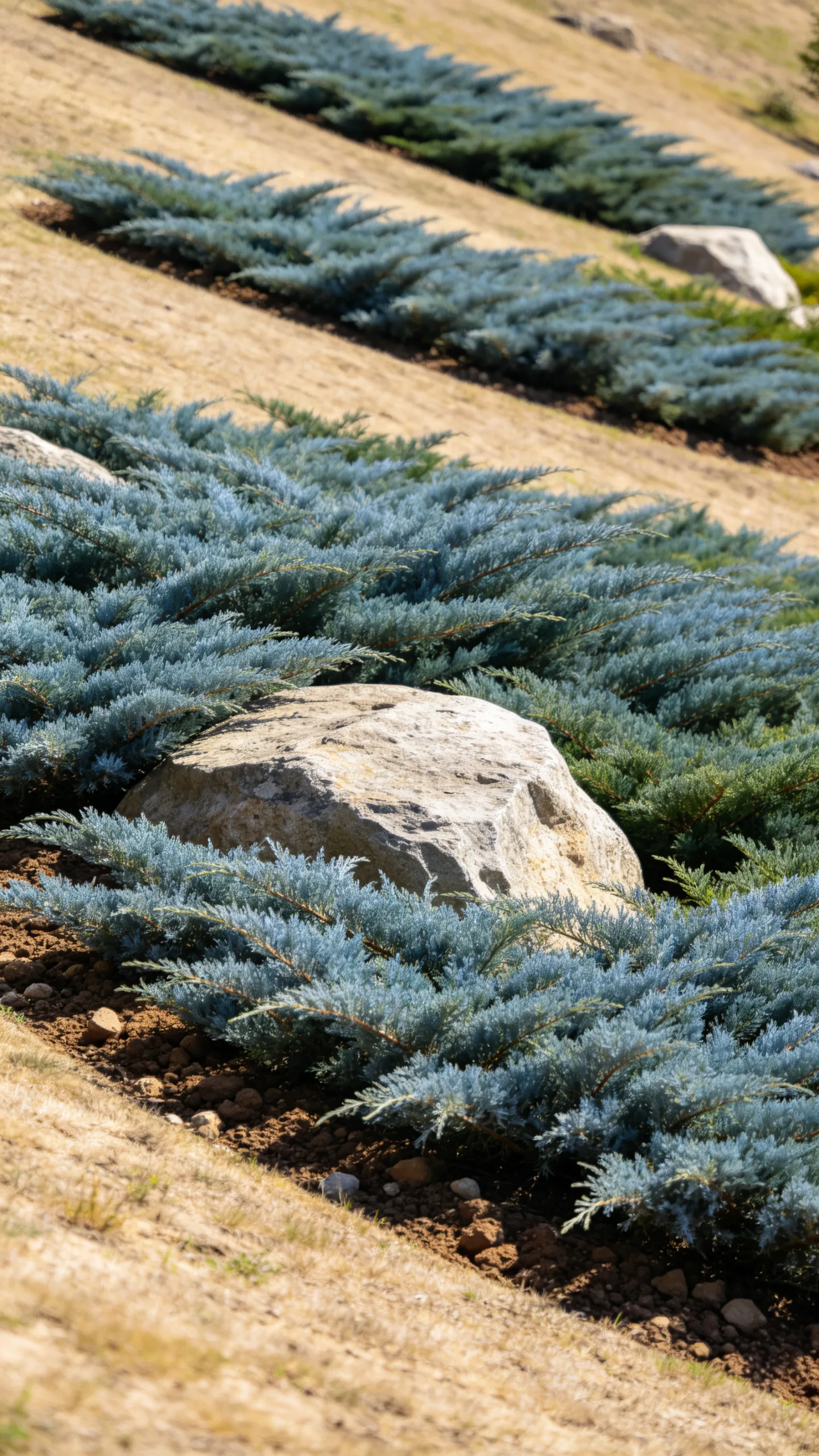
Creeping juniper (*Juniperus horizontalis*) provides evergreen coverage for dry slopes, foundation beds, and wide areas that are difficult to mow. Cultivars range from blue-gray forms such as ‘Blue Rug’ to greener selections with slightly taller growth.
Set plants 3 to 6 feet apart according to their mature spread, rather than crowding them for instant coverage. Creeping juniper needs full sun, open airflow, and well-drained soil. Keep mulch away from the low branches, and prune only stray tips because cutting into old, bare wood may leave permanent gaps.
10. Rockspray Cotoneaster
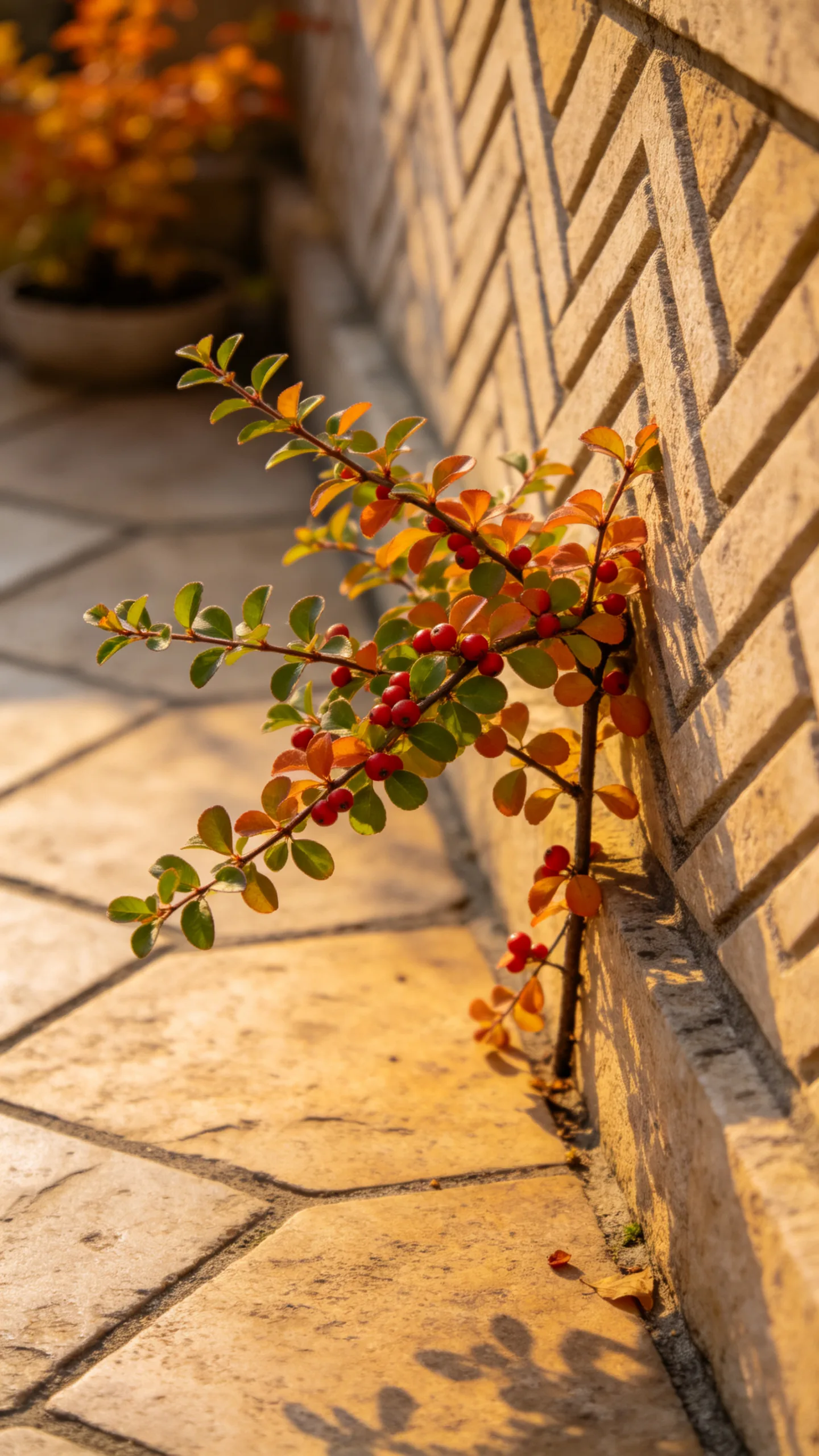
Rockspray cotoneaster (*Cotoneaster horizontalis*) has layered, herringbone-patterned branches that hug slopes and spill over walls. Small flowers attract pollinators, while red berries and colorful fall foliage extend its seasonal interest.
Plant it in full sun and average, well-drained soil, leaving several feet between plants. Once established, it can tolerate dry conditions, though occasional deep watering helps during prolonged heat. Cotoneaster is invasive in some regions, so consult local extension guidance and choose a noninvasive alternative where its berries can spread into natural areas.
11. Silver Carpet
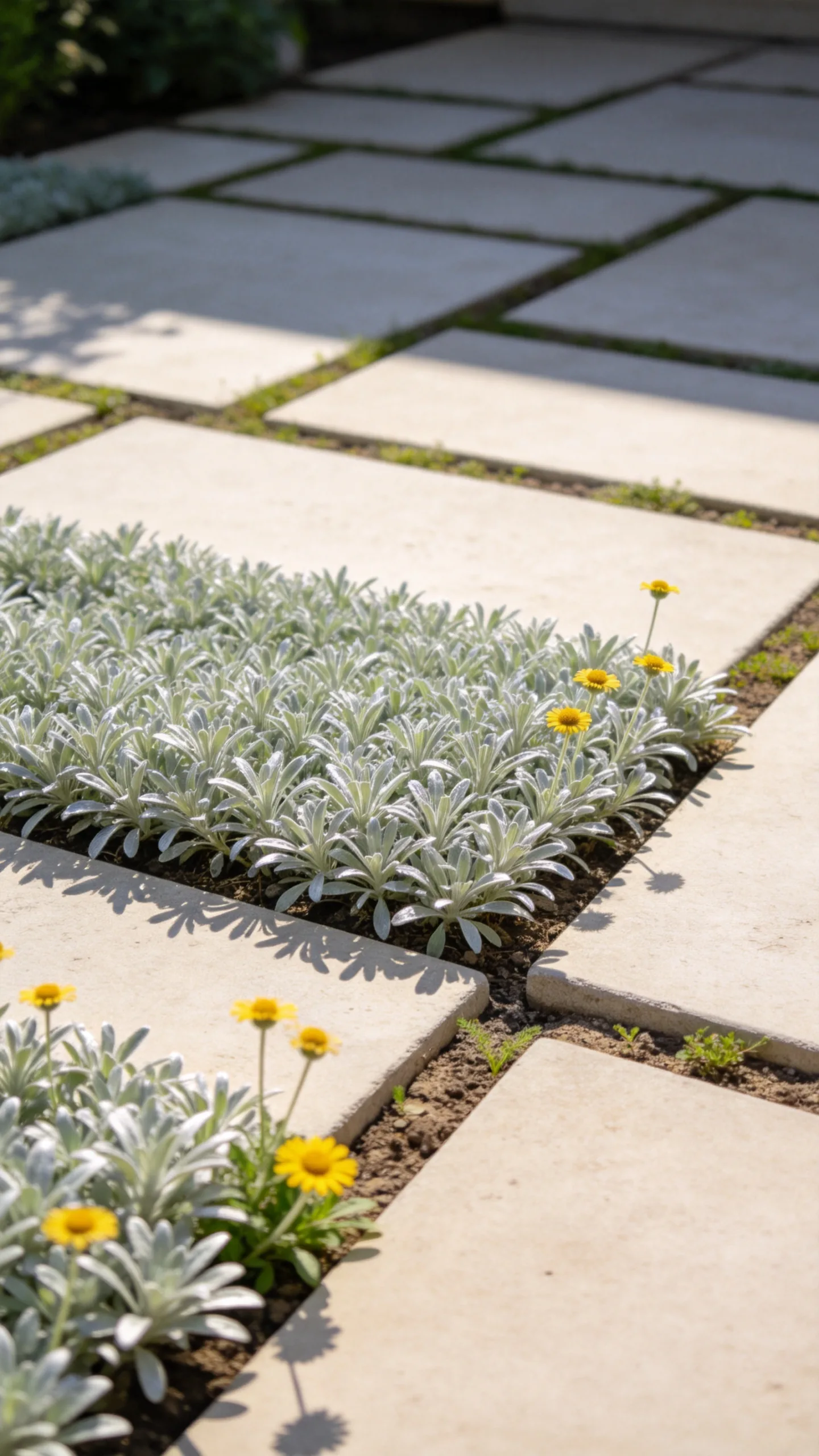
Silver carpet (*Dymondia margaretae*) forms a close, silver-green mat only a few inches tall. It is often used between wide-set pavers, beside patios, or as a small lawn substitute in warm, dry-climate gardens.
Provide full sun and well-drained soil, spacing plugs about 6 to 12 inches apart. Water consistently during establishment, then reduce irrigation as the roots develop. Silver carpet handles occasional light foot traffic but is not suitable for an active play lawn, and it may need frost protection outside mild climates.
12. Gazania
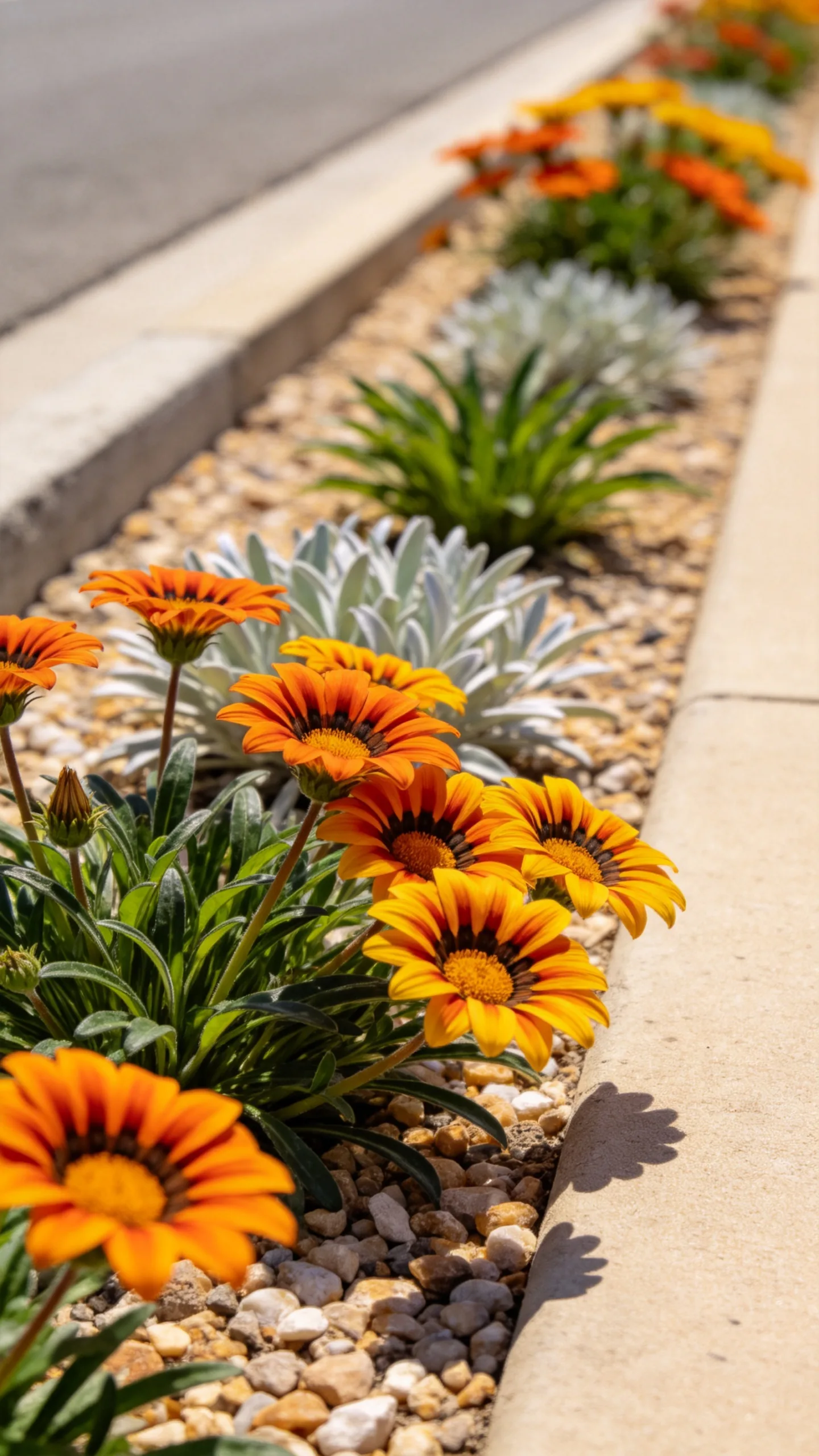
Gazania (*Gazania rigens*) produces bold, daisy-like flowers above narrow green or silver foliage. Low-growing forms can fill sunny curb strips, coastal beds, gravel gardens, and other exposed locations where heat and salt spray may be concerns.
Plant gazanias 8 to 12 inches apart in fast-draining soil. They are perennial mainly in warm climates and can be grown as annual ground covers in colder areas. Deadhead to extend flowering, and check local invasive plant lists because gazania can naturalize in some frost-free coastal regions.
13. Trailing Lantana
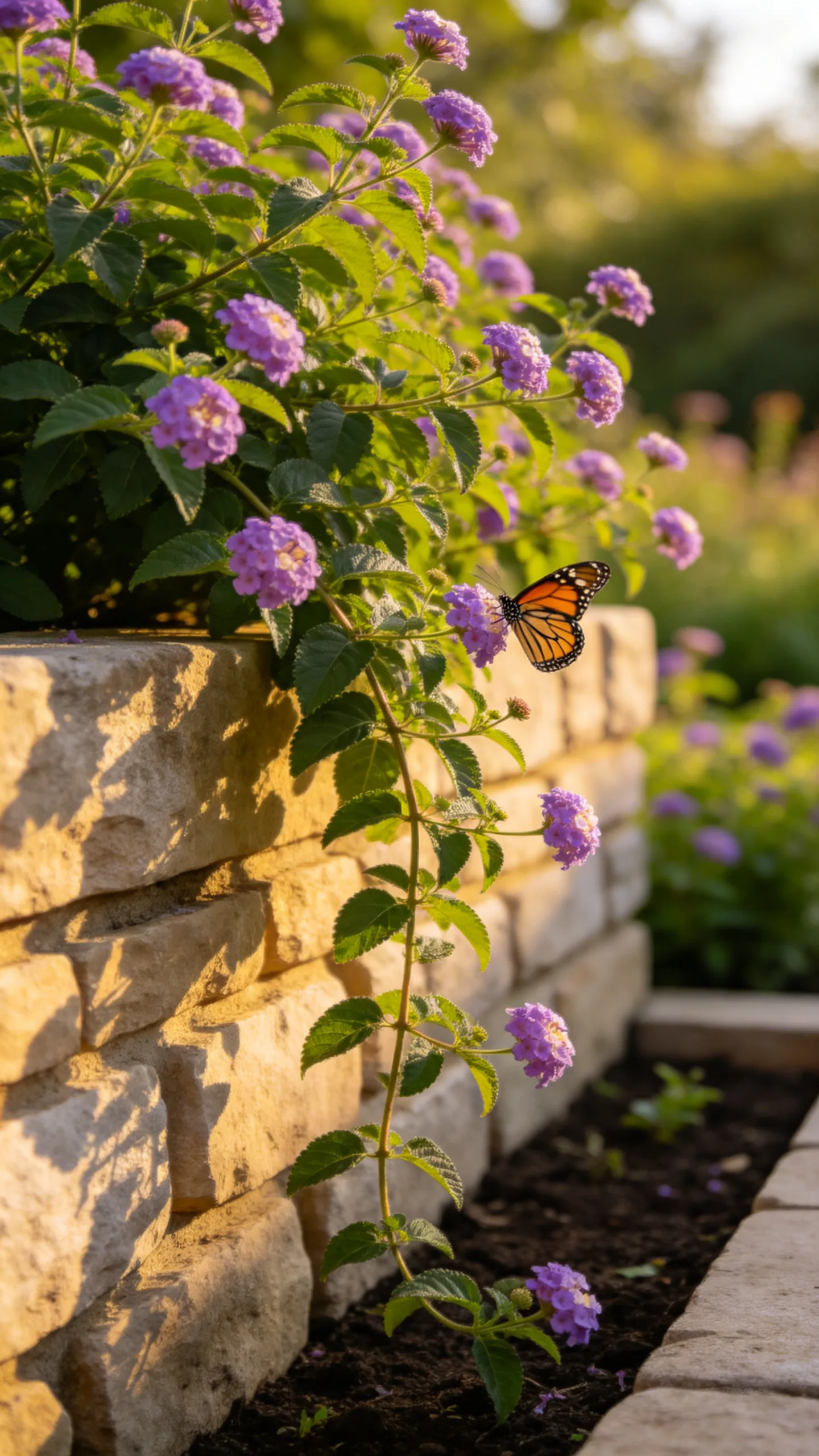
Trailing lantana (*Lantana montevidensis*) spreads across banks and over retaining walls, producing clusters of purple, lavender, or white flowers through the warm season. Its long bloom period can support visiting butterflies and other pollinators.
This plant is best suited to warm climates and may die back or fail to overwinter in areas with hard freezes. Give it full sun, well-drained soil, and enough space for its arching stems. Lantana can be invasive in some regions, and its berries and foliage are toxic if eaten, so verify local recommendations and use care around children, pets, and livestock.
14. Homestead Purple Verbena
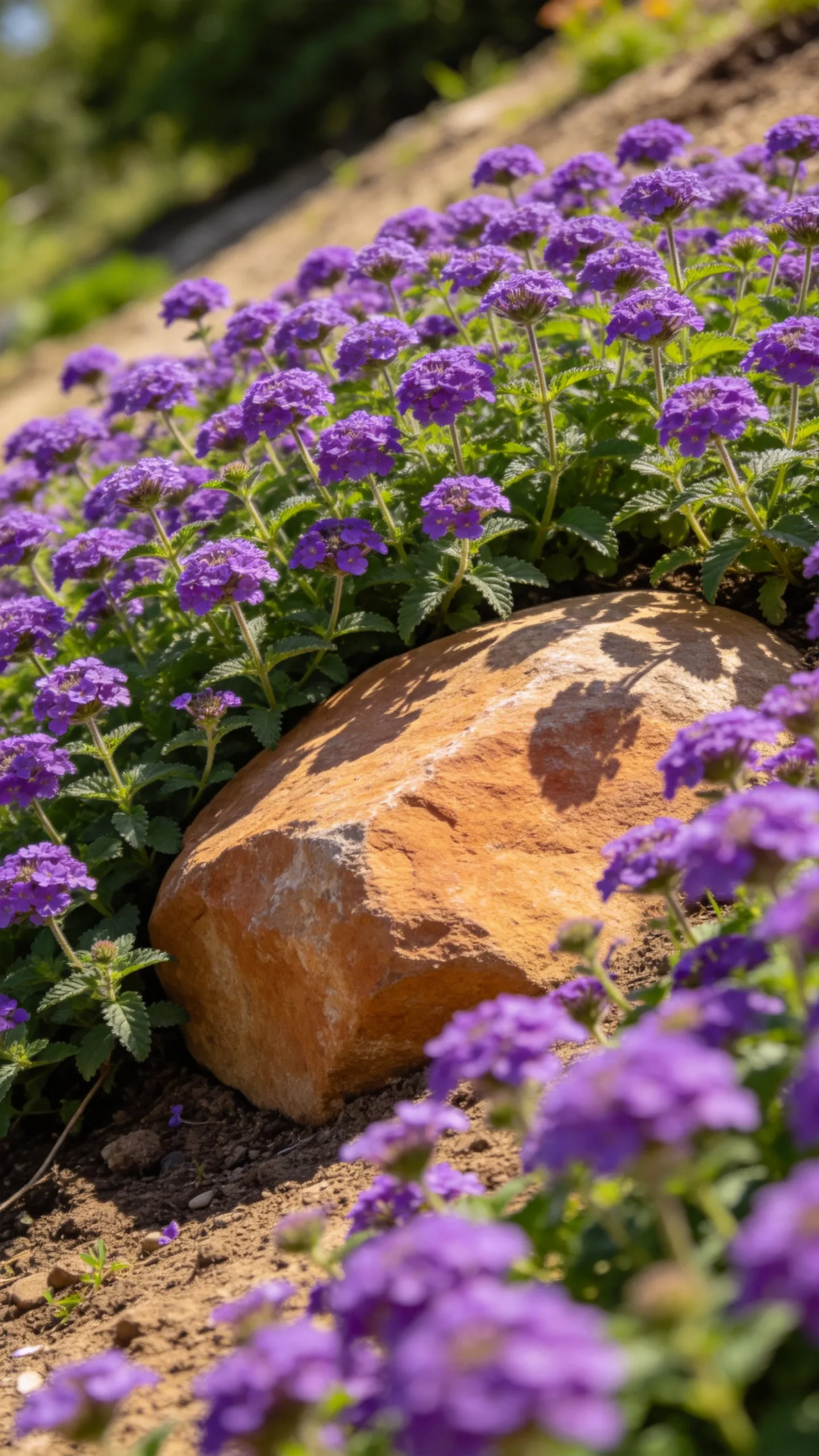
‘Homestead Purple’ verbena spreads into a broad, flowering mound with deep purple blooms from spring into fall in suitable climates. It works well along the front of sunny borders, around boulders, or on slopes where its stems can root as they touch the soil.
Plant it about 18 to 24 inches apart in well-drained soil. Water deeply during establishment, then allow the upper soil to dry between waterings. A midsummer trim can refresh leggy growth, while good airflow helps reduce powdery mildew in humid weather.
15. Creeping Germander
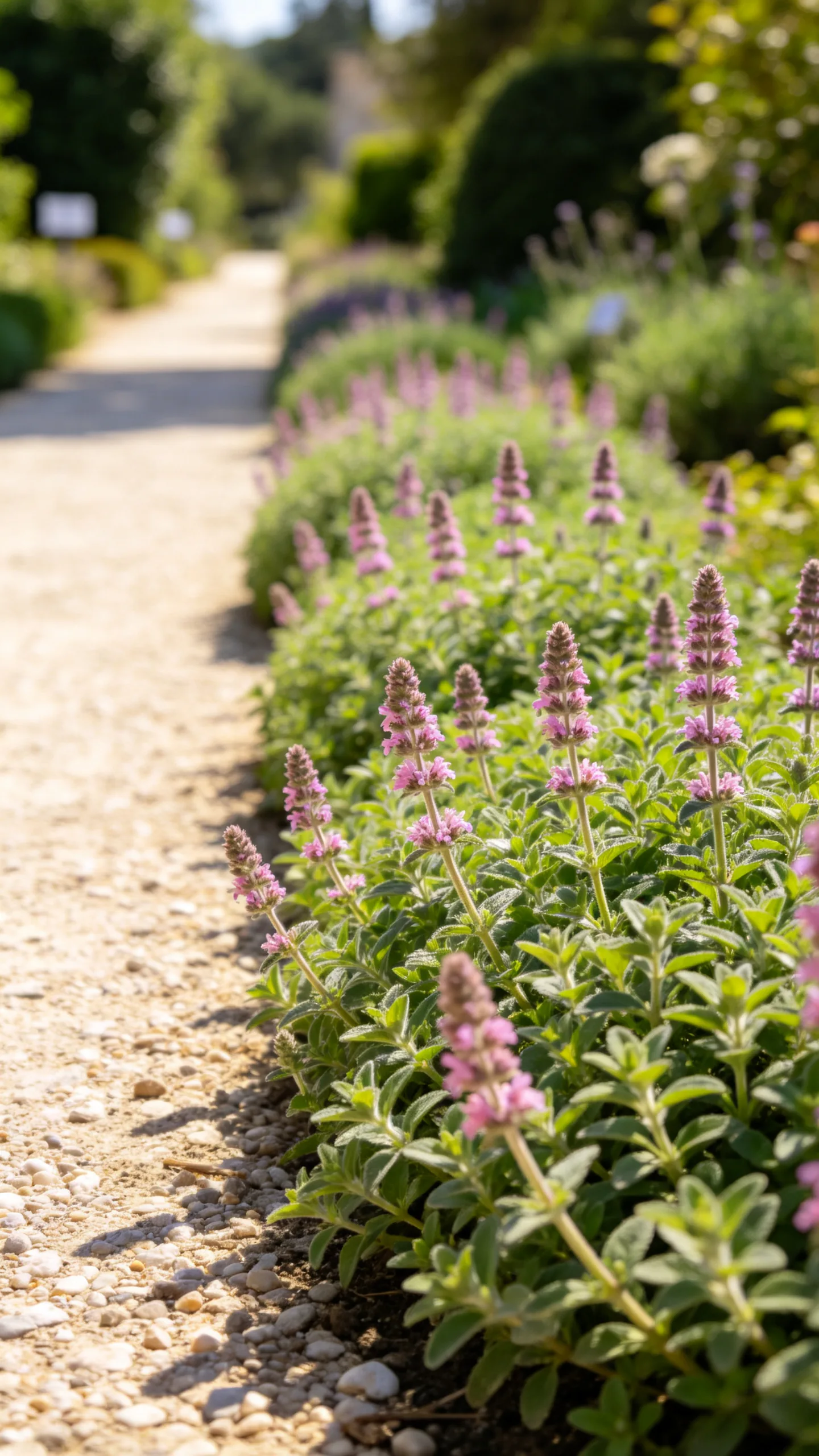
Creeping germander (*Teucrium chamaedrys* and low-growing cultivars) has small evergreen or semi-evergreen leaves with spikes of pink-purple flowers. It can create a tidy edge beside gravel paths or cover a dry, sunny section of a Mediterranean-style garden.
Use well-drained soil and space plants approximately 12 to 18 inches apart. Germander responds well to light shearing after flowering, which keeps the mat dense and discourages woody stems. Confirm the growth habit of the cultivar before buying, since some forms are upright edging plants rather than true ground covers.
16. Common Yarrow
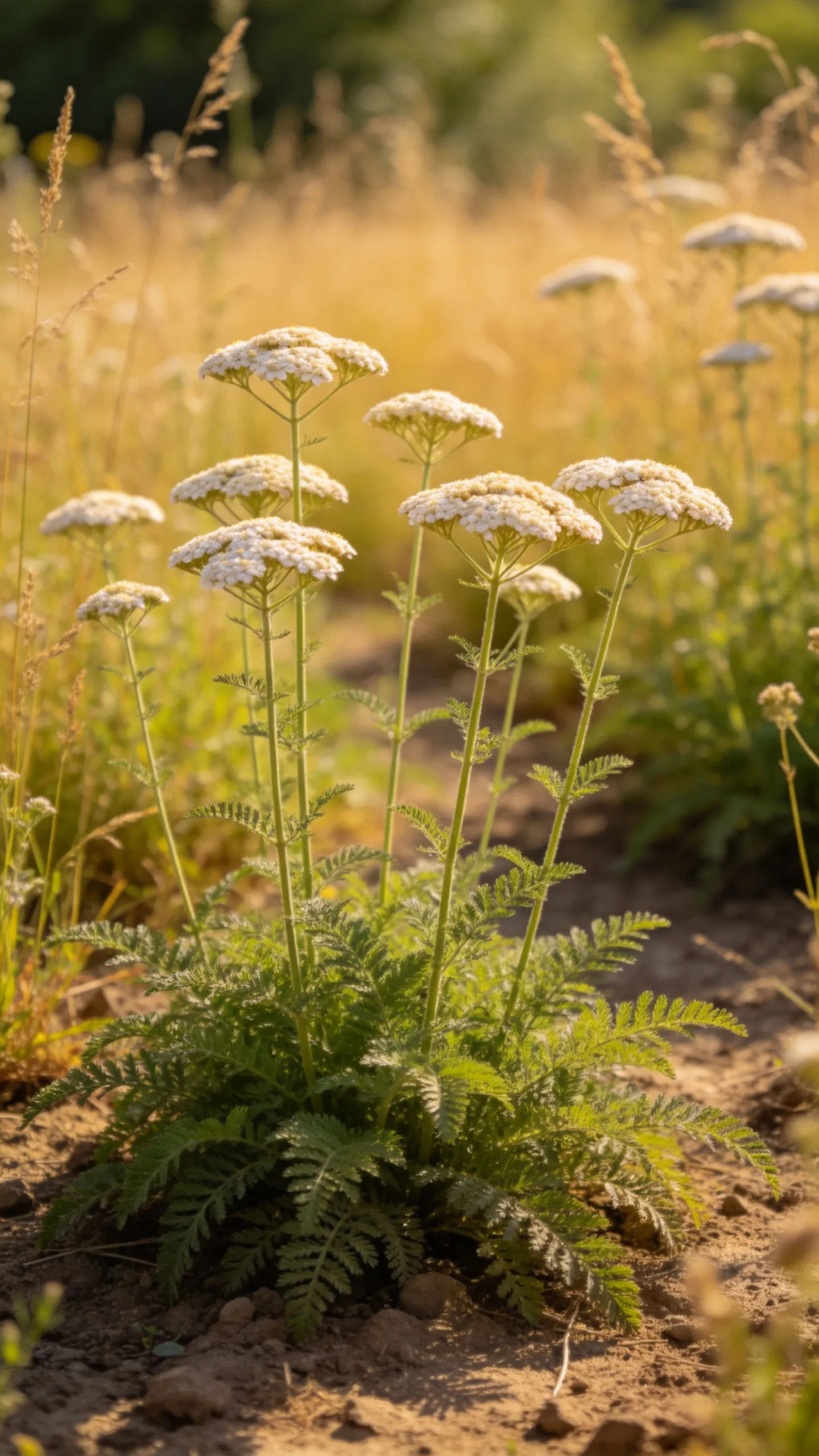
Common yarrow (*Achillea millefolium*) spreads through rhizomes and forms ferny foliage that covers dry soil beneath its upright flower stems. It is appropriate for meadow-style plantings, pollinator gardens, and larger sunny areas where a loose, natural appearance is welcome.
Plant yarrow in average to poor, well-drained soil and avoid excessive fertilizer, which can produce floppy growth. Mow or cut the flower stalks after blooming if a lower mat is preferred. Because it spreads steadily, place it away from small, delicate plants and use regional native varieties where available.
17. Prostrate Rosemary
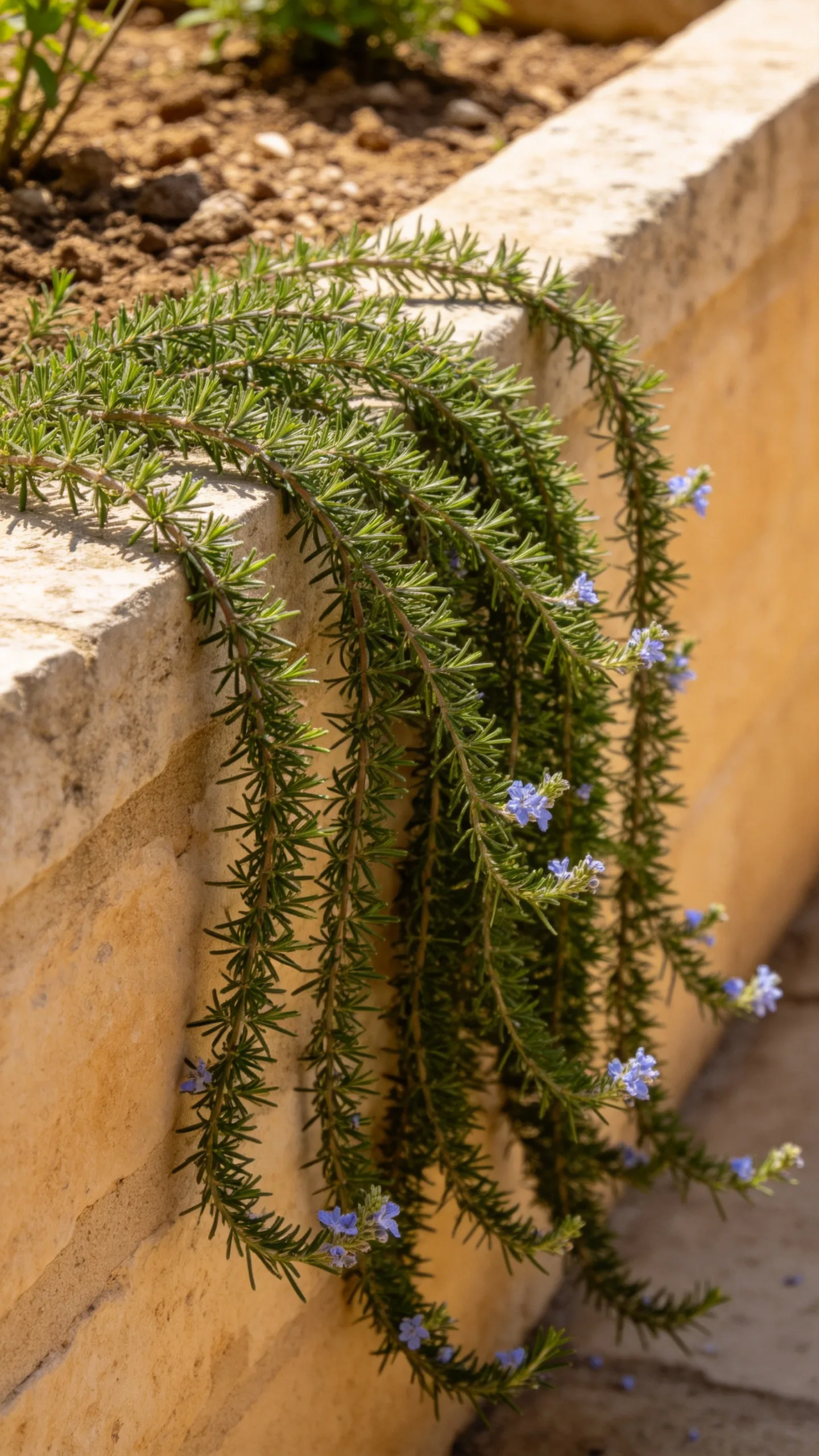
Prostrate rosemary (*Salvia rosmarinus* trailing cultivars) creates aromatic evergreen stems that cascade over walls, raised beds, and sunny banks. Its blue flowers provide seasonal color, while the foliage can also be clipped for culinary use when the plant has not been treated with unsuitable chemicals.
This ground cover performs best in warm climates with excellent drainage and full sun. Space plants 2 to 4 feet apart and water deeply but infrequently after establishment. In colder regions, grow it in a large container that can be protected during winter or select a hardier ground cover.
18. Creeping Oregano
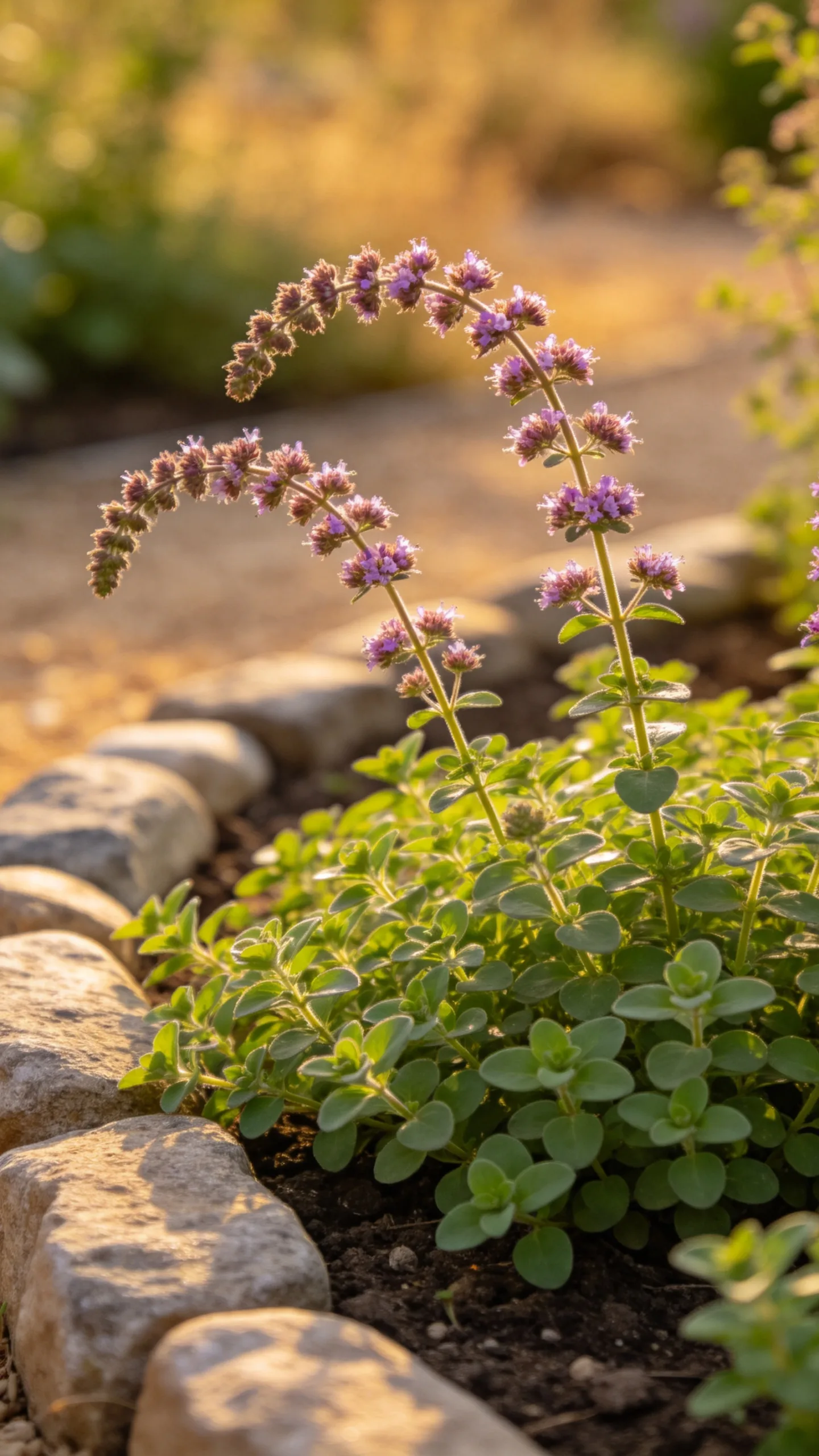
Creeping oregano, including ornamental forms of *Origanum vulgare* and *Origanum laevigatum*, forms a fragrant mat topped by small flowers and colorful bracts. It suits herb gardens, rocky borders, and dry slopes where its foliage can spread around larger perennials.
Plant it in full sun and lean, well-drained soil, leaving 12 to 24 inches between plants depending on the cultivar. Shear after flowering to control seedlings and maintain a compact shape. Culinary flavor varies, so choose a named edible variety if harvesting is important, and check local guidance because common oregano can spread aggressively.
19. California Fuchsia
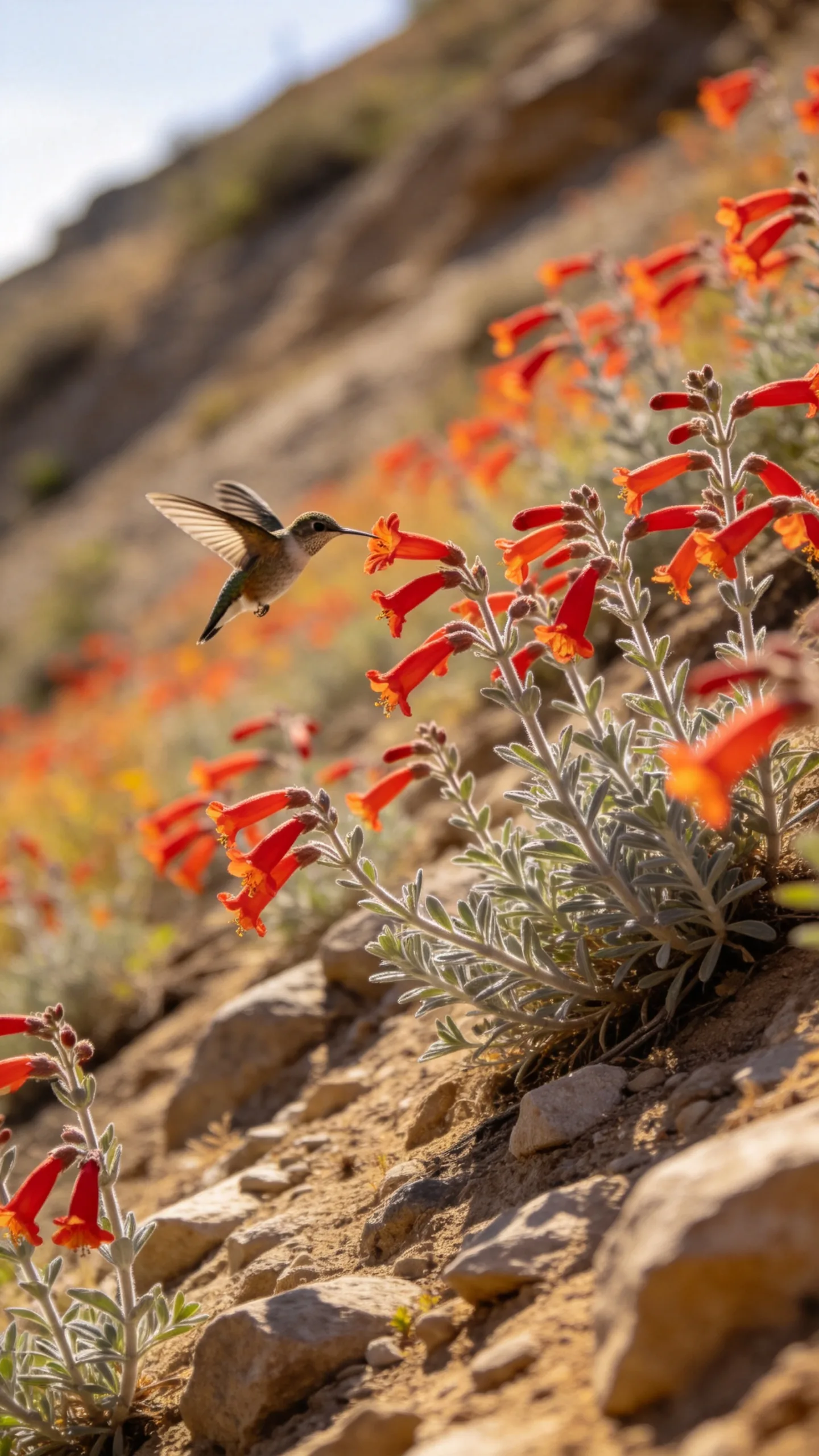
California fuchsia (*Epilobium canum*) is a drought-adapted western native with spreading stems and vivid red-orange tubular flowers. It is particularly valuable for late-season color in dry slopes, native gardens, and habitat plantings where hummingbirds can reach the blooms.
Choose a low-growing cultivar and plant it in full sun with well-drained soil. Water during the first season, then reduce irrigation once the roots are established. Cut old stems close to the ground in late winter before new growth appears, and allow enough room for the plant’s underground spread.
20. Carmel Creeper Ceanothus
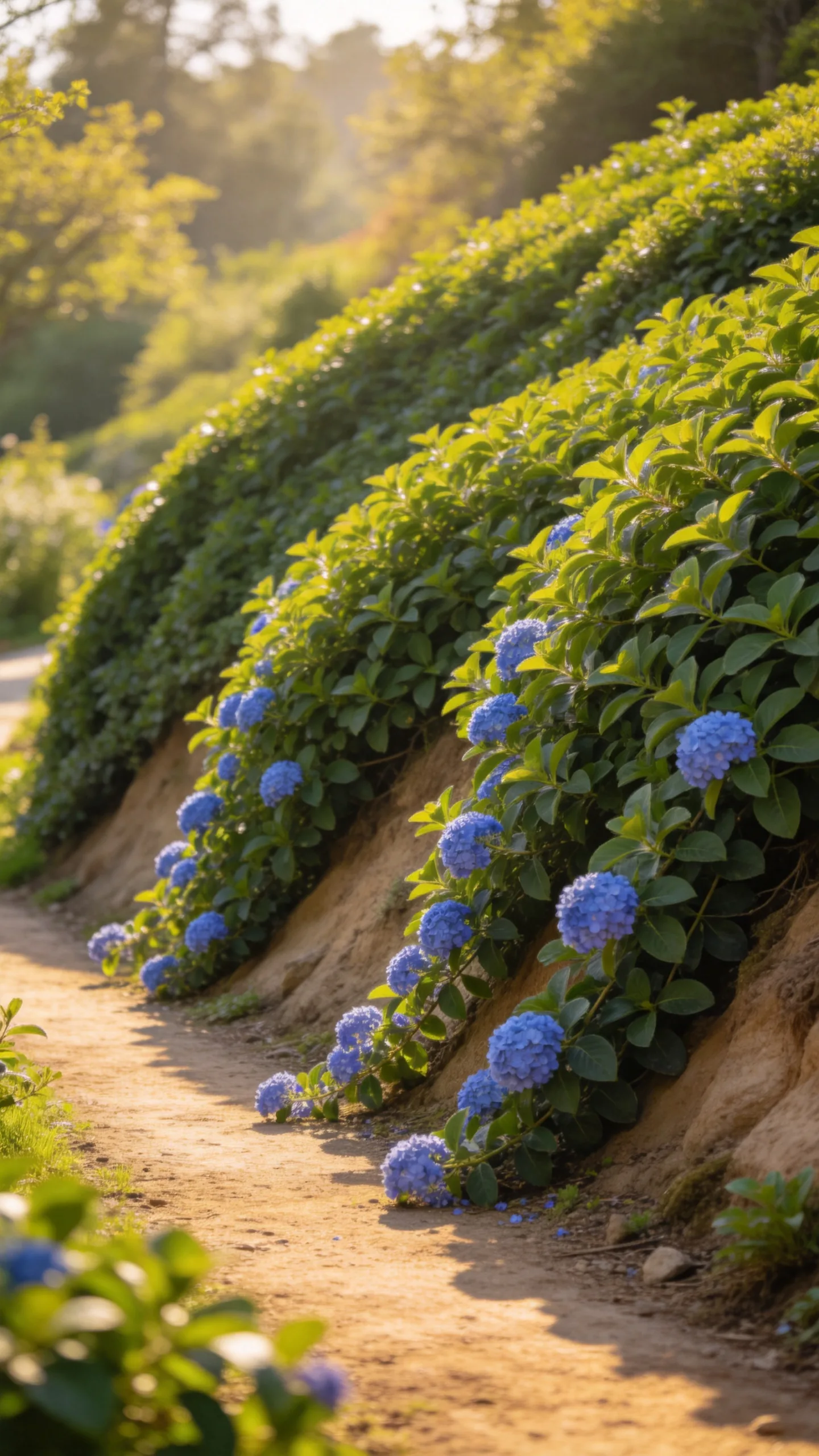
Carmel creeper (*Ceanothus griseus* var. *horizontalis*) is a broad, low evergreen shrub that functions as a substantial ground cover on sunny banks. Glossy foliage and clusters of blue spring flowers make it useful where both erosion control and pollinator value are priorities.
This plant is best adapted to mild, dry-summer climates. Give it well-drained soil, space for several feet of horizontal growth, and regular water only while it becomes established. Avoid summer overwatering and heavy pruning into old wood, and choose a locally appropriate ceanothus species where Carmel creeper is not suited to the climate.
21. Hens and Chicks
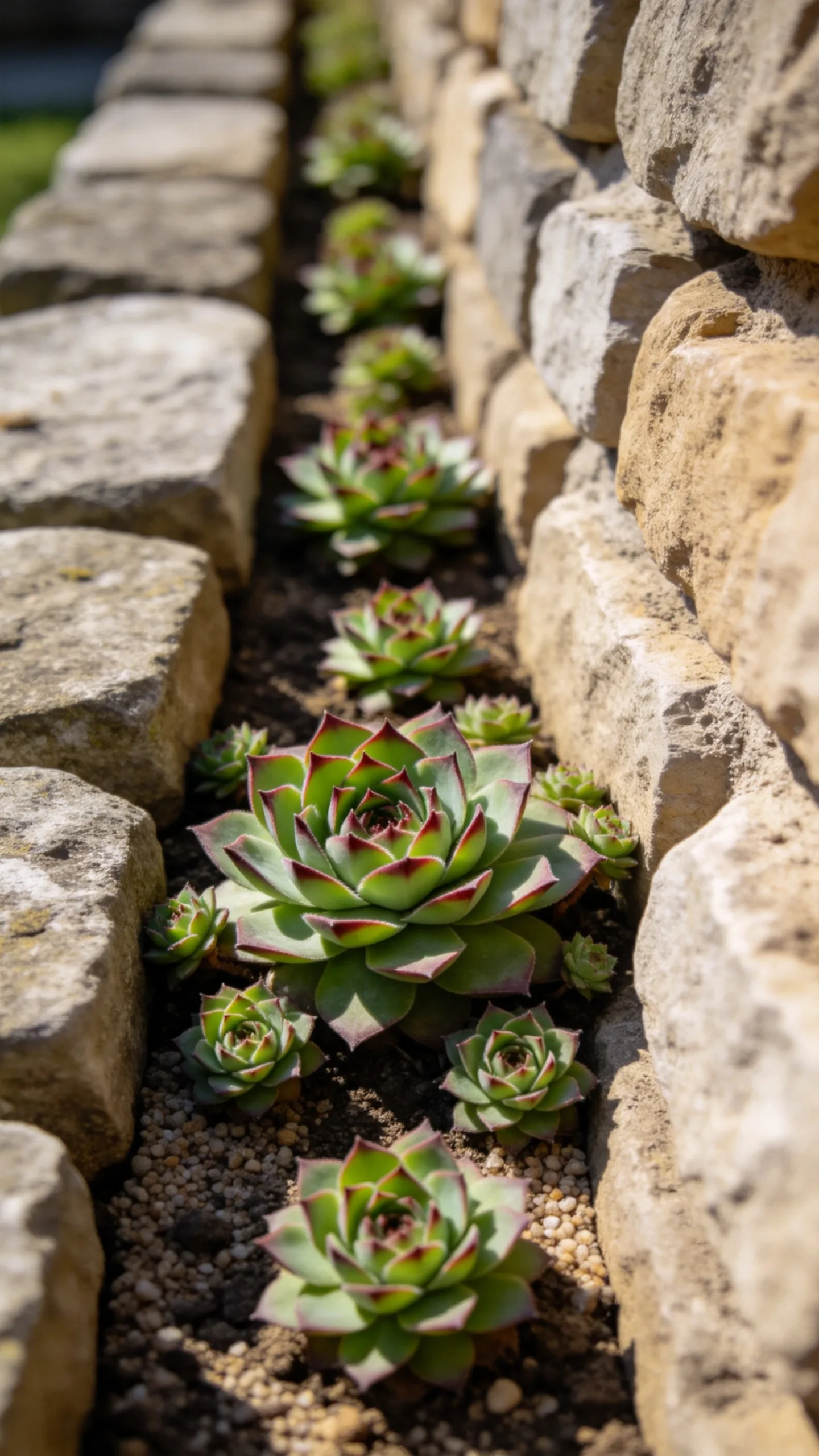
Hens and chicks (*Sempervivum* species and hybrids) grow as tight succulent rosettes that produce smaller offsets around the parent plant. They are ideal for narrow rock crevices, dry stone walls, trough planters, and shallow beds where larger ground covers would overwhelm the space.
Plant rosettes 4 to 8 inches apart in gritty soil with excellent drainage. Established plants need little water, but they should not remain wet during winter. Individual rosettes die after flowering, so remove the spent center and let the surrounding offsets fill the opening.