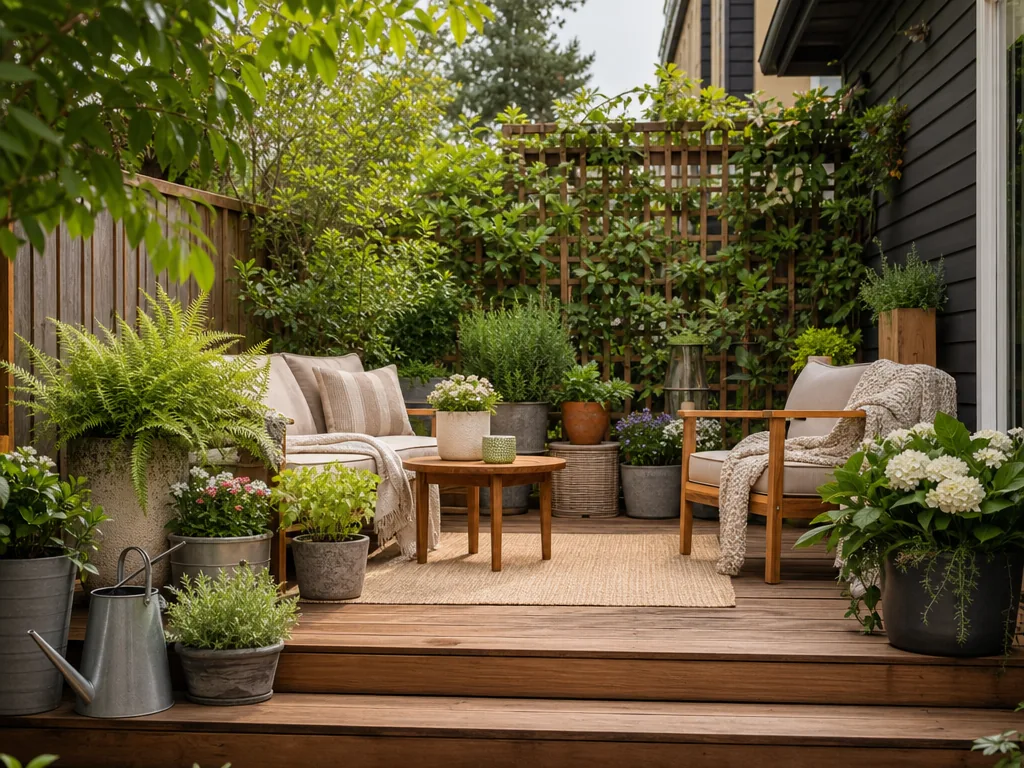
Deck Garden Ideas with Plants and Planters for a Cozy Outdoor Space
A deck can feel like an outdoor room, but without plants it often feels bare, hard, and disconnected from the rest of the garden. The best deck garden ideas soften the edges, add privacy, create shade or color, and make the space feel like somewhere you actually want to sit.
You do not need to rebuild the deck to make it greener. Containers, railing planters, vertical accents, privacy plants, and a few cozy decor choices can turn a plain deck into a planted outdoor space. The key is to think like a gardener first and a decorator second.
Think of the Deck as a Small Outdoor Garden Room
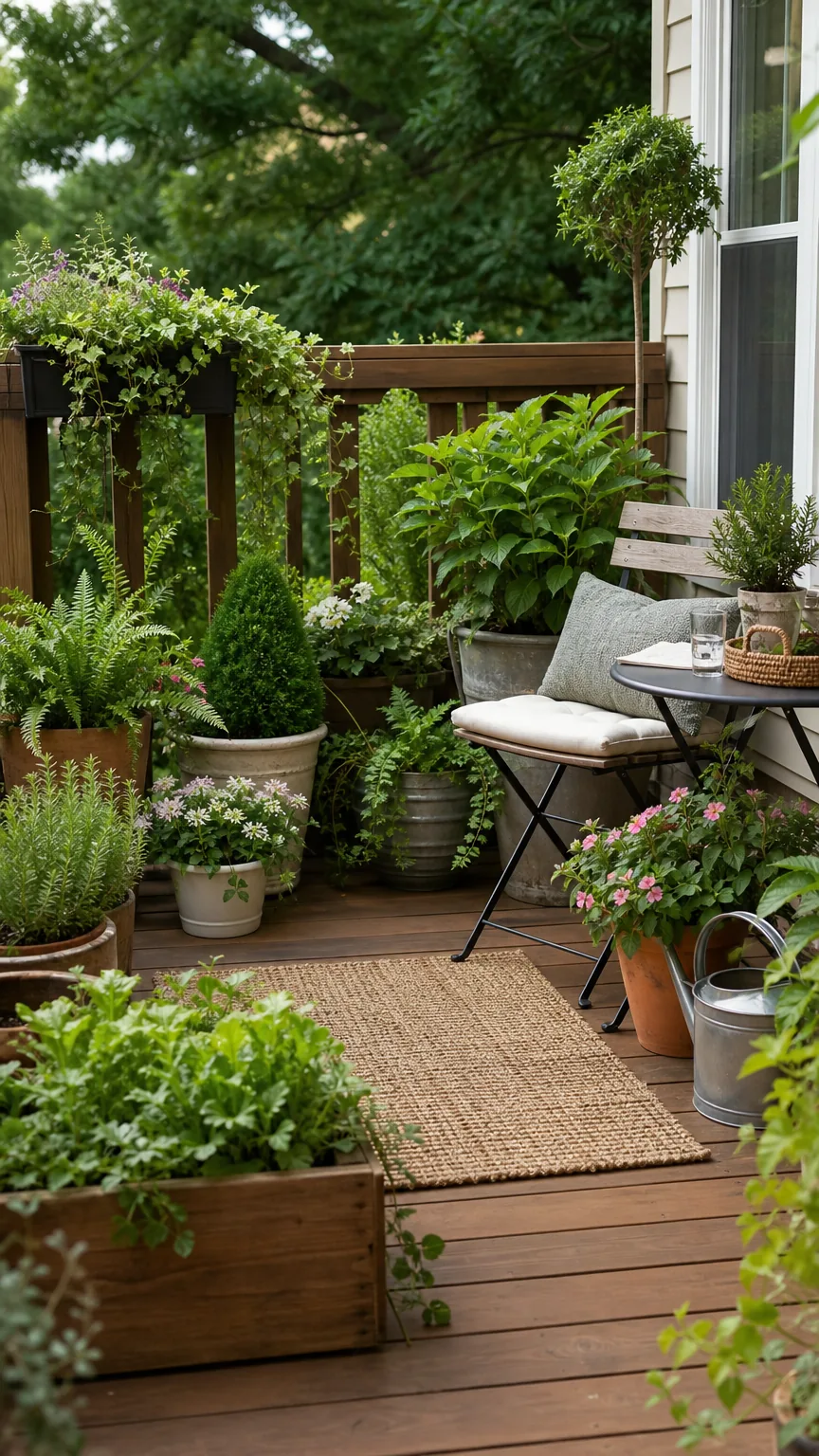
Before buying plants, decide how the deck should feel. Do you want a quiet coffee corner, a lush container garden, a dining space surrounded by herbs, or a private place to relax in the evening? This purpose will guide the layout.
Start by dividing the deck into zones. A seating zone might need privacy plants and lighting. A dining zone might need herbs, compact flowers, and enough open floor space for chairs. A sunny corner might become a container garden with tomatoes, lavender, or ornamental grasses. A shady wall might be better for ferns, hostas in pots, or foliage plants.
Use containers to shape the room. Tall planters can mark corners. Low pots can soften stairs. Narrow troughs can run along railings. A single large planter often looks better than many tiny pots scattered around the deck.
Group Containers to Make the Deck Feel Lush
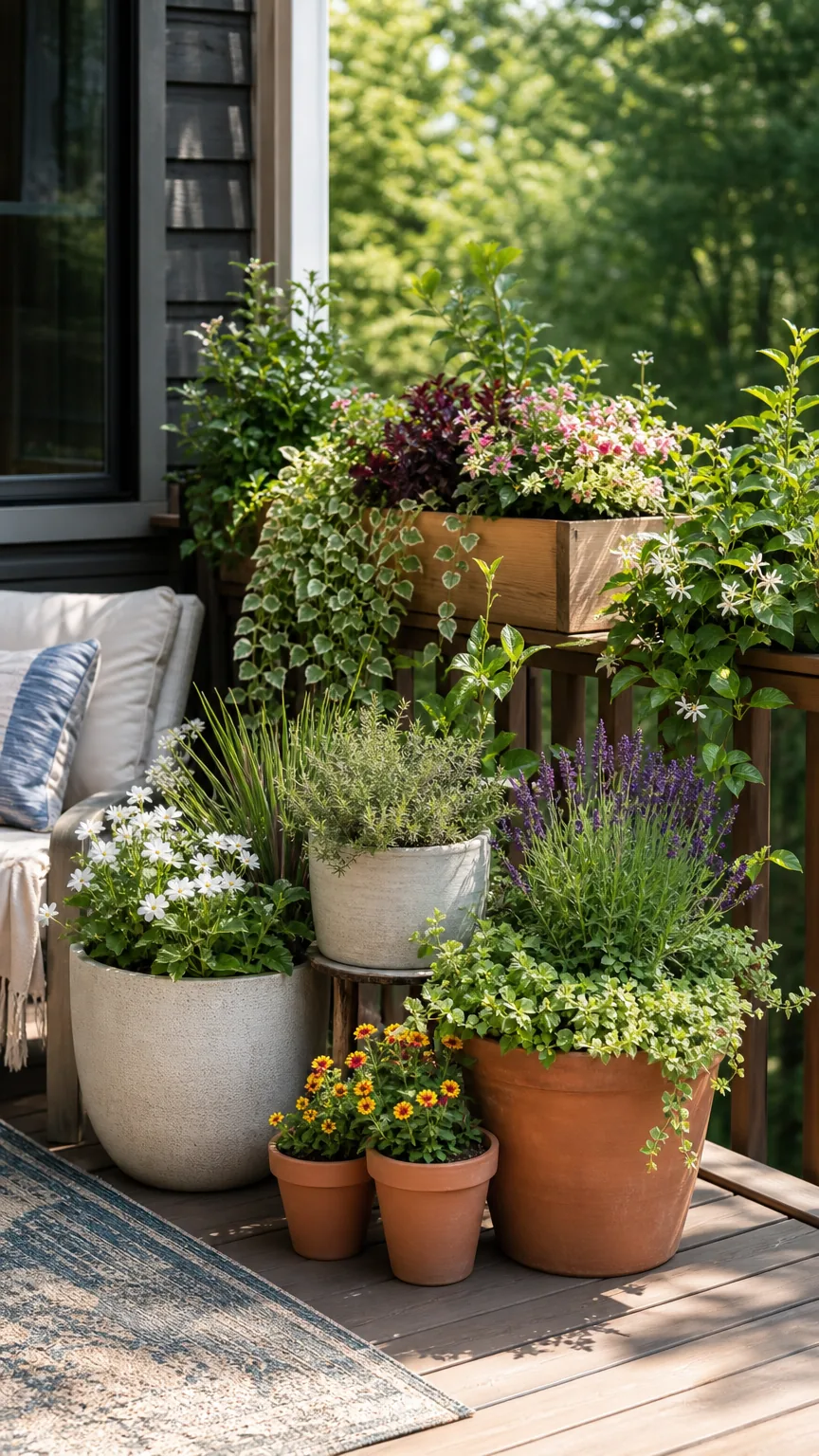
Container groupings are the heart of a deck garden. Instead of placing one pot here and one pot there, cluster plants in groups of three to five. This creates a fuller look and makes watering easier.
Vary the heights. Use one tall plant, one medium plant, and one trailing or low plant. A tall grass, a flowering annual, and a trailing sweet potato vine can make a simple container corner look designed. For an edible deck garden, try a compact tomato, basil, parsley, and a pot of flowers to attract pollinators.
Repeat materials so the deck feels organized. You can mix pot sizes, but keep the color or texture related: terracotta, matte black, weathered wood, galvanized metal, or warm neutral ceramic. Too many unrelated pots can make the deck look cluttered.
Remember that containers dry out faster on decks than in garden beds. Choose potting mix made for containers, water deeply, and use saucers only where they will not trap water against the deck surface for long periods.
Use Railing Planters for Color Without Losing Floor Space
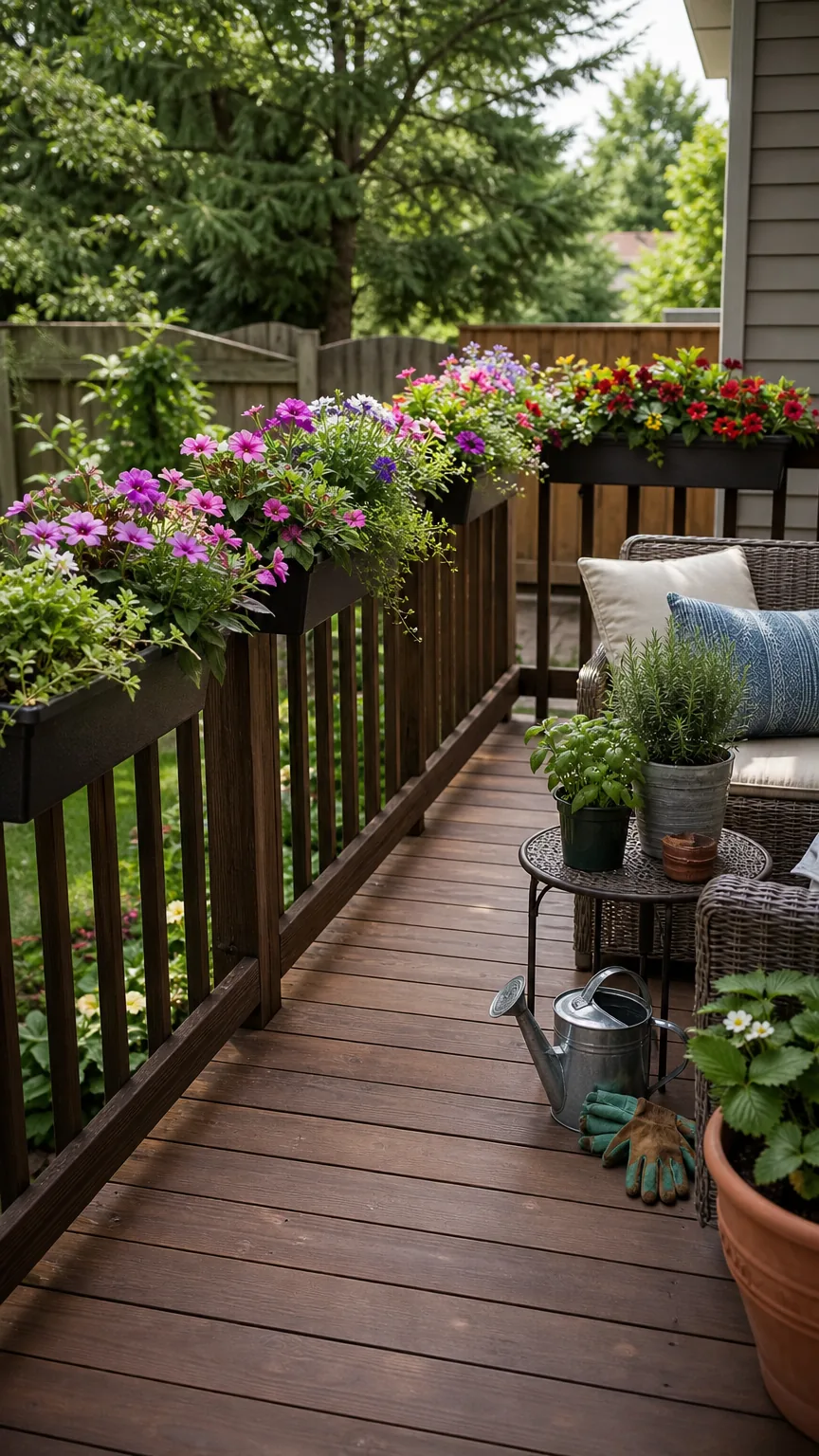
Railing planters are perfect for small decks because they add flowers or herbs without using floor space. They also help blur the edge between the deck and the garden beyond it.
Use railing boxes for trailing flowers, compact herbs, or seasonal annuals. Petunias, calibrachoa, nasturtiums, thyme, oregano, parsley, and compact geraniums can all work depending on your climate and sun exposure. If the deck gets hot afternoon sun, choose tougher plants and water consistently.
Safety matters. Make sure railing planters are securely attached and not too heavy for the railing. Avoid placing heavy containers where they could fall onto a walkway. If water drips onto a neighbor’s space or lower deck, use liners and water carefully.
For a polished look, repeat the same railing planter style along one side of the deck. A row of matching boxes with different plants can look lush without feeling messy.
Add Privacy Plants for a More Comfortable Deck
A deck feels much cozier when it has some privacy. Plants can soften views, block a neighbor’s window, or make a seating area feel more protected.
Tall containers are the easiest option. Ornamental grasses, dwarf evergreens, bamboo alternatives, compact shrubs, or tall flowering perennials can create a green screen. In smaller spaces, use a trellis in a large planter with climbing plants. Clematis, jasmine in warm climates, climbing roses, or annual vines can add height without taking much floor space.
Choose privacy plants based on light and maintenance. A plant that looks beautiful online may struggle if your deck is windy, shaded, or very hot. Also consider winter appearance. If you want year-round privacy, include evergreen plants rather than relying only on summer flowers.
Do not overcrowd privacy planters. Tall plants need enough root space and stable containers so they do not tip over in wind.
Bring in Vertical Garden Ideas for Blank Walls and Corners
Blank deck walls, fences, and corners are opportunities for vertical gardening. A wall planter, ladder shelf, trellis, or hanging rail can add greenery without taking much room.
For a sunny wall, use herbs, succulents, strawberries, or heat-tolerant annuals in small containers. For a shaded wall, try ferns, trailing ivy in controlled pots, or shade-loving foliage plants. A ladder shelf can hold small pots while still being easy to move when you clean the deck.
Vertical pieces also help connect the deck to the house. A trellis with climbing greenery beside a door can make the transition from indoor to outdoor feel softer. A shelf of herbs near the kitchen door makes the deck useful as well as pretty.
Keep maintenance realistic. Small wall planters dry out quickly, and high shelves can be annoying to water. Place vertical gardens where you can reach them easily.
Make the Space Cozy With Seating, Lighting, and Soft Edges
Plants create the garden, but seating and lighting make the deck usable. Place chairs where they face the best view of the plants, not just the house wall. A small table, outdoor cushion, or weather-safe rug can make the space feel more finished.
Lighting should be warm and subtle. String lights over a seating area, solar lanterns near containers, or small step lights can make the deck inviting in the evening. Use lights to highlight the planted areas rather than flooding the whole deck.
Soft edges matter too. Let trailing plants spill over containers. Use rounded pots if the deck has many straight lines. Place a tall plant beside a hard corner. These details make the deck feel less like a platform and more like a garden room.
Deck Garden Mistakes to Avoid
The biggest mistake is treating a deck garden like a regular garden bed. Containers need drainage, consistent watering, and enough root space. Heavy planters need stable placement. Water should not sit against wood decking for long periods.
Avoid using only furniture and calling it a garden. A deck with a sofa and one tiny pot will still feel bare. On the other hand, avoid filling every inch with containers until there is no room to walk or sit. A good deck garden balances plants with open space.
Also match plants to the deck’s conditions. Wind, reflected heat, shade from the house, and limited water access can all change what will thrive. Start with a few strong container groupings, learn what works, and build from there.
With the right planters, privacy plants, vertical accents, and cozy lighting, a plain deck can become one of the most inviting parts of the home garden.