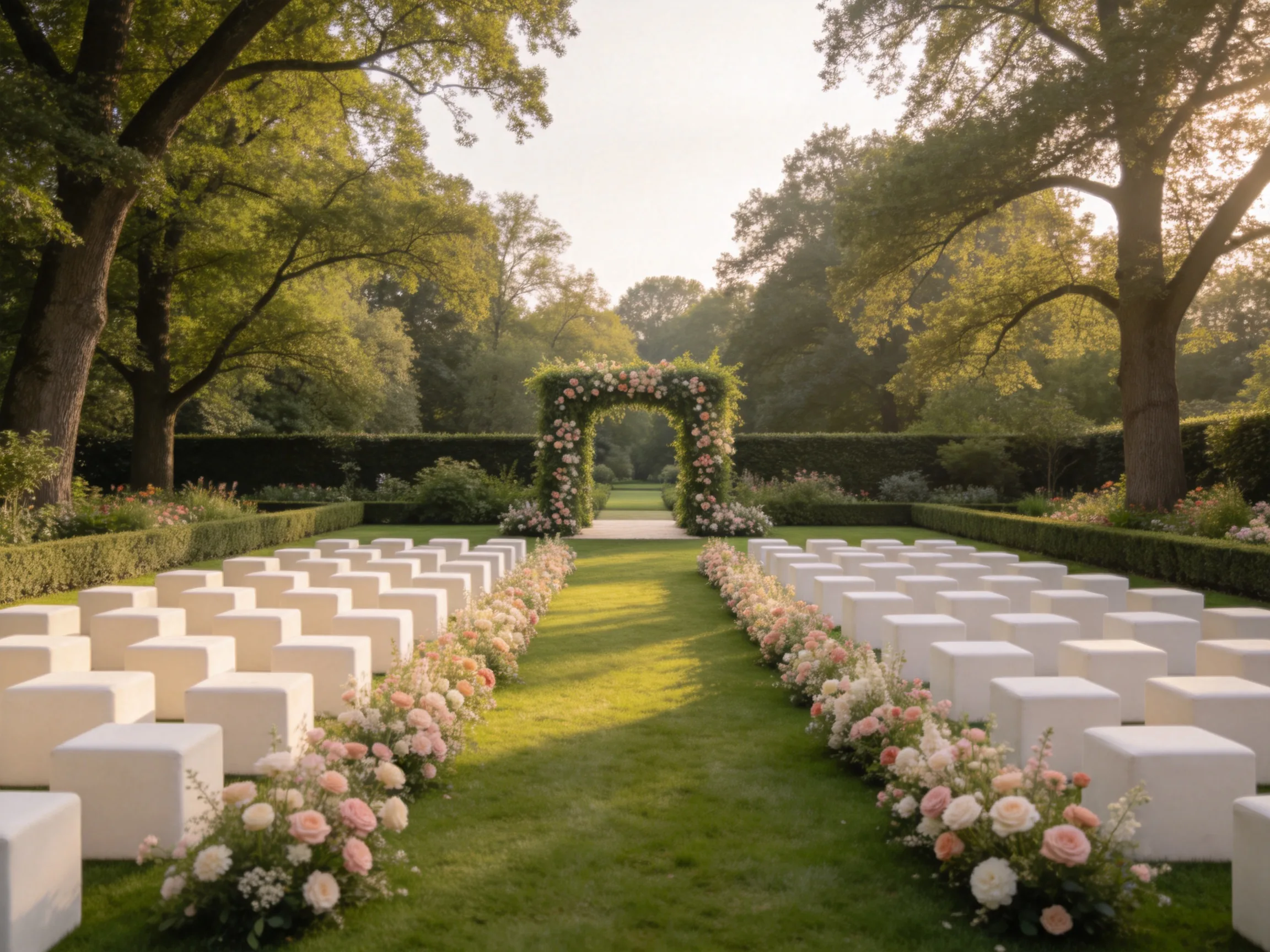
A thoughtful wedding lawn design should frame the ceremony beautifully while keeping guests comfortable and protecting the grass, flower beds, and mature trees already on the site. Before placing chairs or decor, note the lawn’s slope, sun exposure, irrigation heads, damp areas, utility access, and the route guests will take from parking to the ceremony. These 24 layouts combine practical seating plans with distinctive aisles, florals, shade, and focal points for lawns of different shapes and sizes.
1. Classic Center Aisle With Symmetrical Chair Blocks
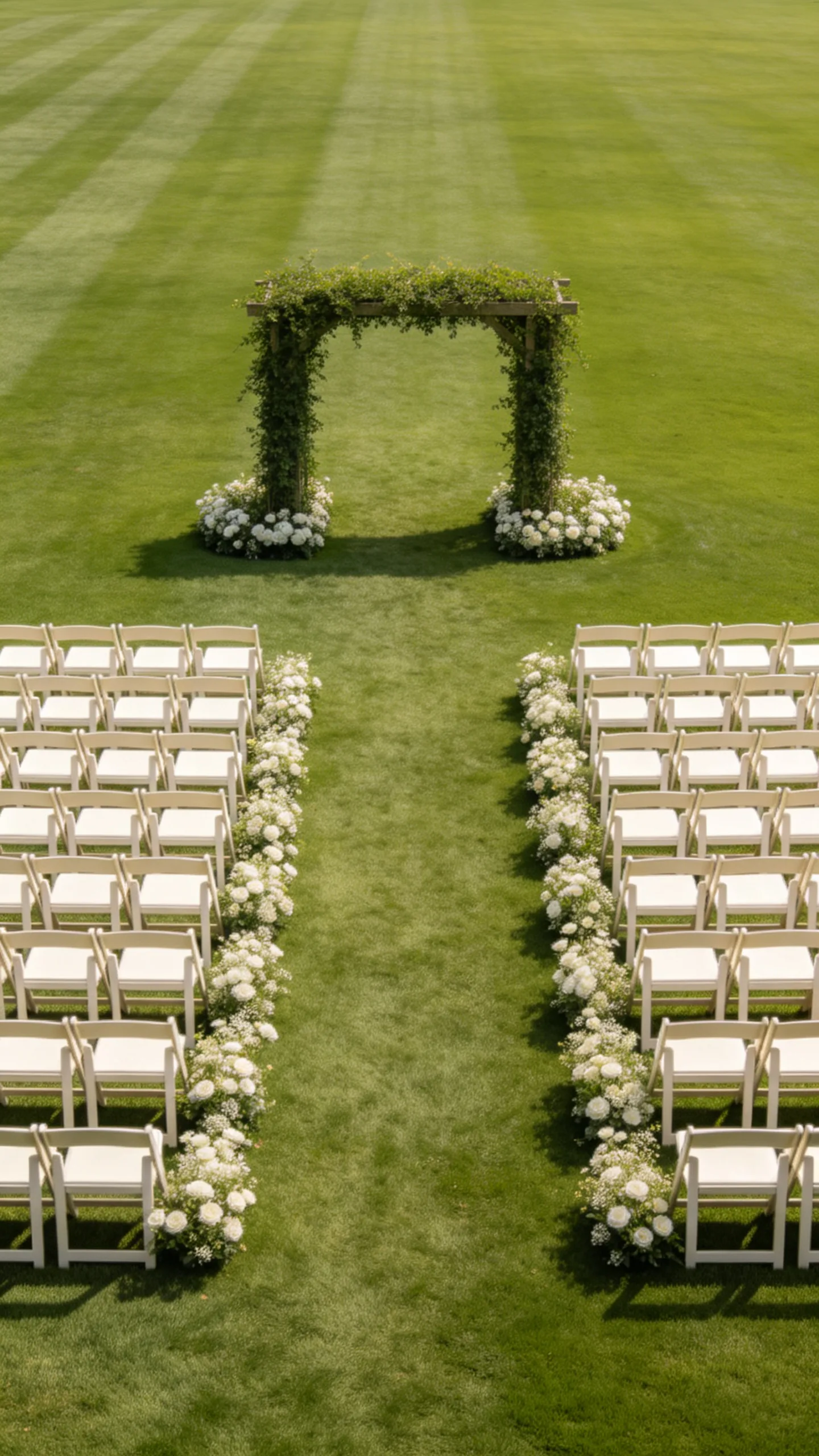
Arrange equal blocks of chairs on both sides of a straight center aisle, aiming the rows toward an arbor, mature tree, or garden border. This traditional layout works especially well on a rectangular lawn because its clear sightlines and balanced proportions make the space feel orderly.
Leave enough aisle width for the wedding party, clothing, floral markers, and photography without brushing against seated guests. Place chairs on firm, level turf, and mark sprinkler heads before installation so chair legs and decor stakes do not damage the irrigation system.
2. Curved Aisle Through the Lawn
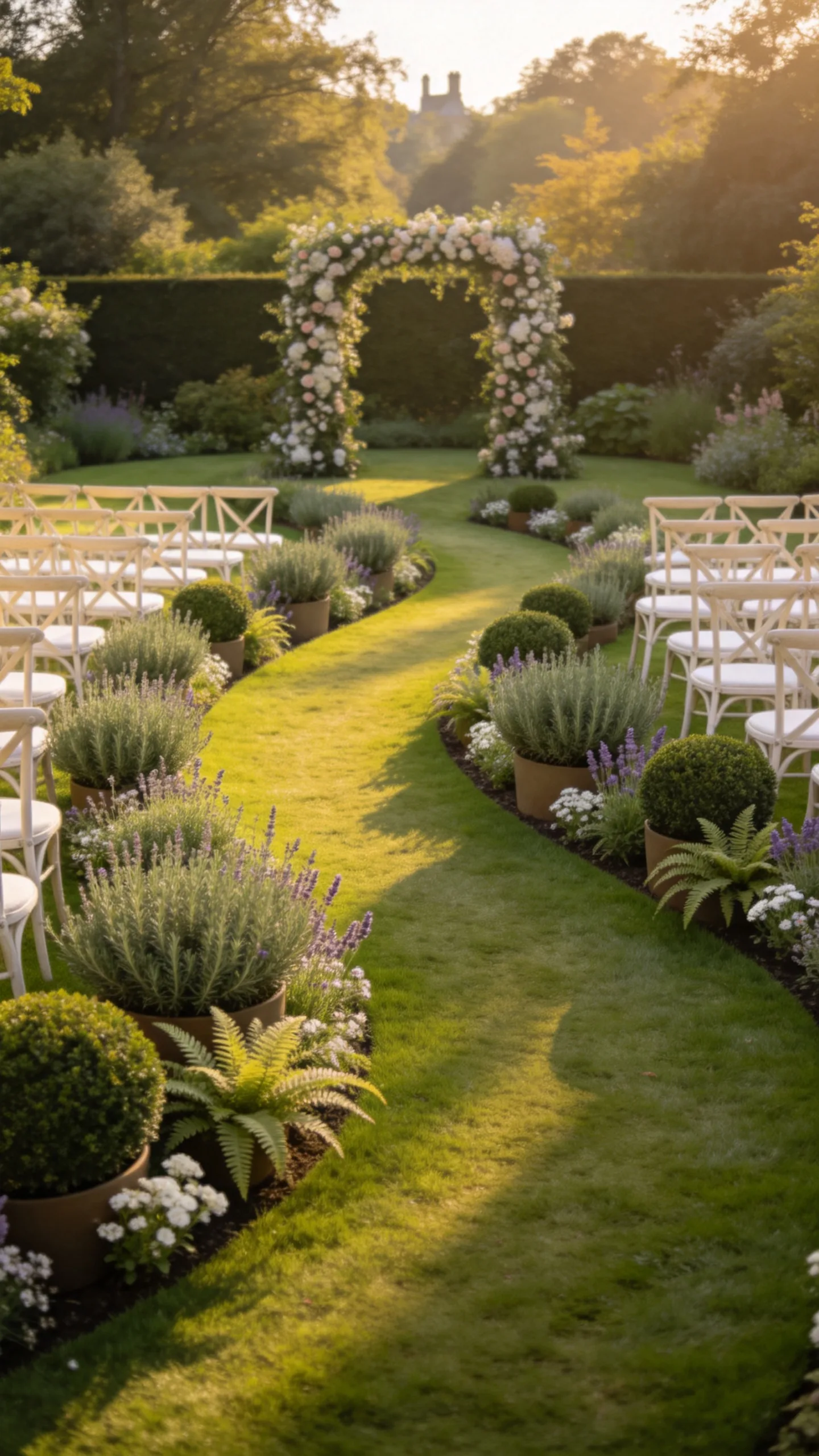
Create a gently curving aisle that enters from one side of the guest area before sweeping toward the ceremony backdrop. The bend adds visual depth and makes a short lawn feel longer because the full route is not visible at once.
Define the curve with low arrangements of potted herbs, clipped boxwood, ferns, or seasonal flowers rather than loose petals that may blow away. Keep plantings below seated eye level, and use containers with broad, stable bases to prevent tipping on uneven ground.
3. Circular Seating Around a Central Ceremony
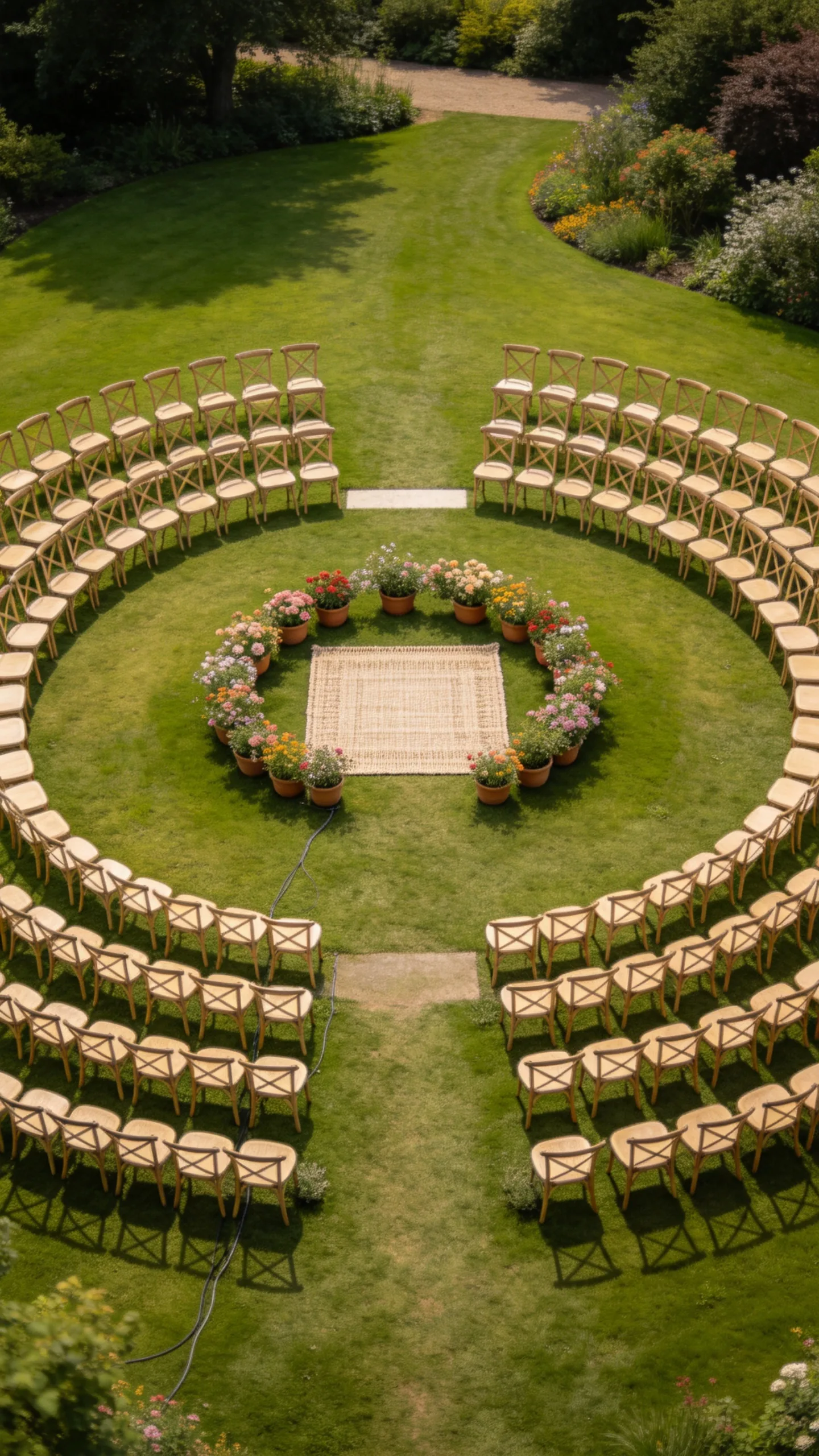
Place chairs in a complete circle around a small central ceremony area. This arrangement creates an intimate atmosphere and uses a broad, open lawn efficiently without requiring a conventional front and back.
Reserve one or two breaks in the circle for the processional and guest access. A low floral ring, woven rug, or grouping of planted containers can define the center without blocking views; check that microphones, cables, and musicians also have a discreet route into the layout.
4. Semicircle Rows Facing a Garden Arbor
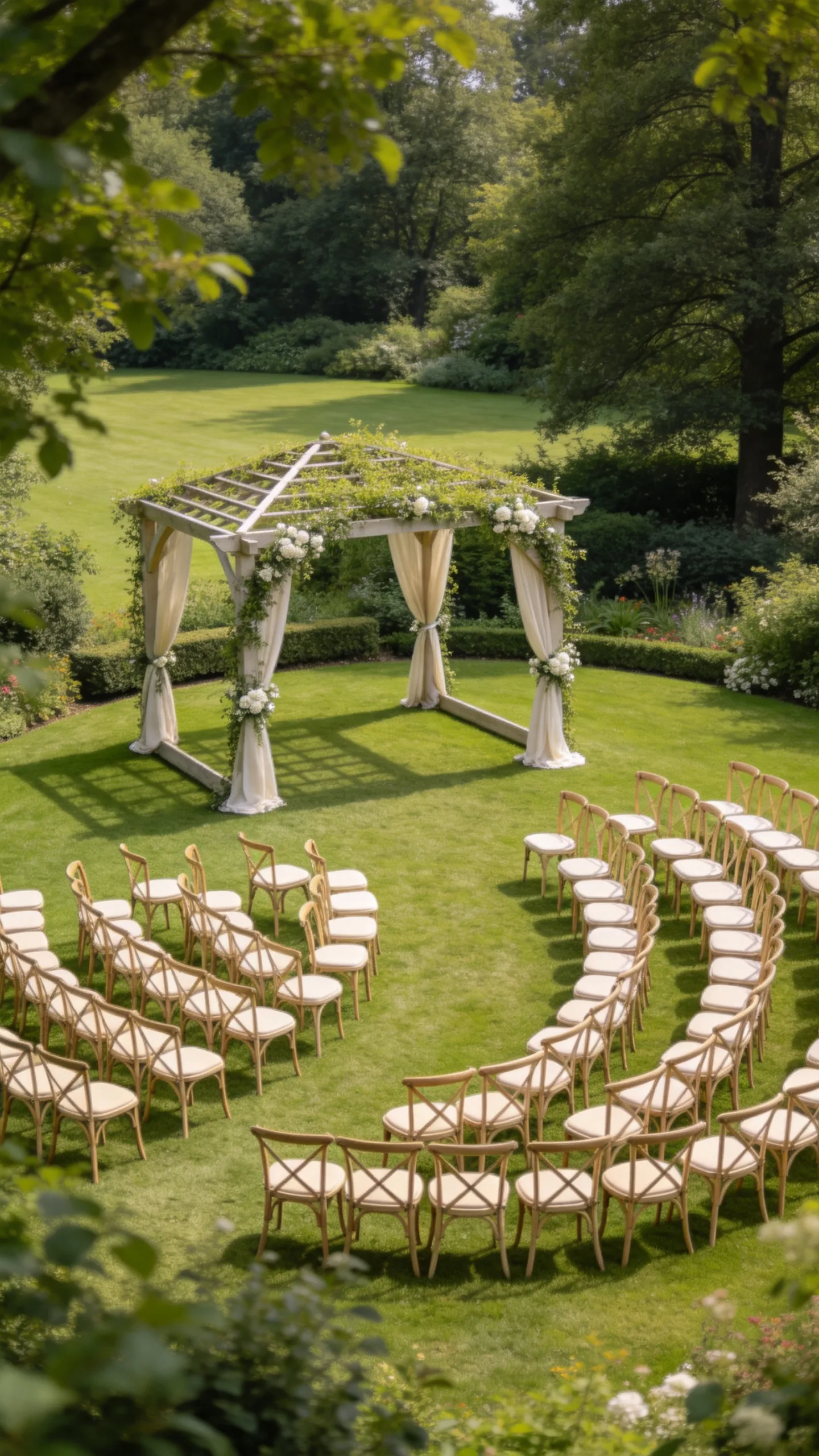
Fan curved rows of chairs around an arbor positioned at the edge of the lawn. The semicircle brings more guests closer to the ceremony than long straight rows and naturally directs attention toward the floral structure.
Anchor freestanding arbors according to venue rules, especially on windy lawns where stakes may conflict with irrigation or underground utilities. Decorate with lightweight greenery, fabric secured at multiple points, or reusable floral cages rather than top-heavy arrangements.
5. Split Aisles With a Central Floral Island
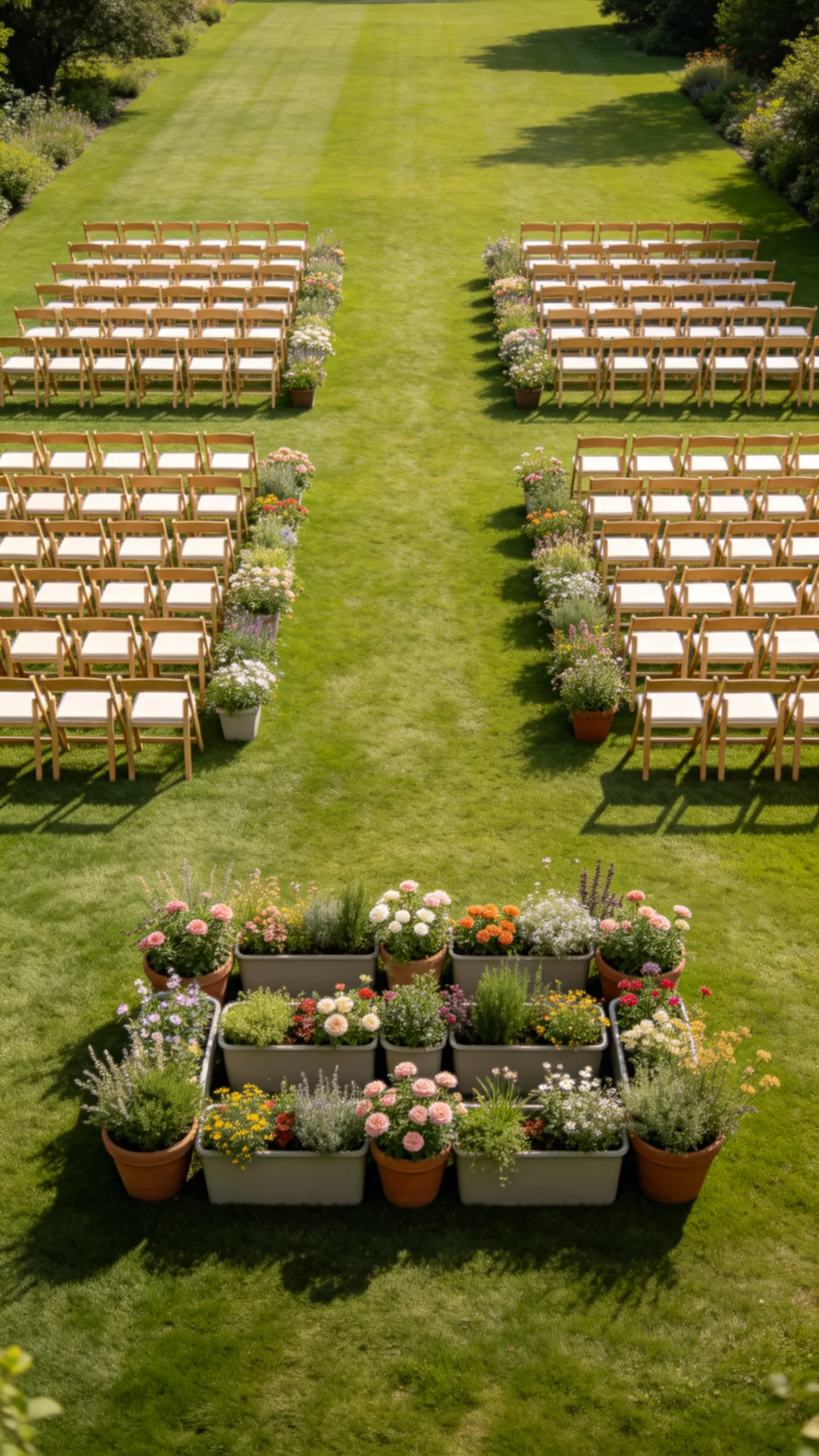
Divide the seating into three blocks to create two parallel aisles, then install a planted floral island between them near the front. The couple can enter along separate routes or use one aisle for the processional and the other for the recessional.
Build the central feature with pots, trough planters, or flowers arranged in low waterproof vessels so it does not damage the turf. This design suits a wide lawn and reduces the distance guests at the outer edges must walk to reach their seats.
6. Diagonal Seating Across a Square Lawn
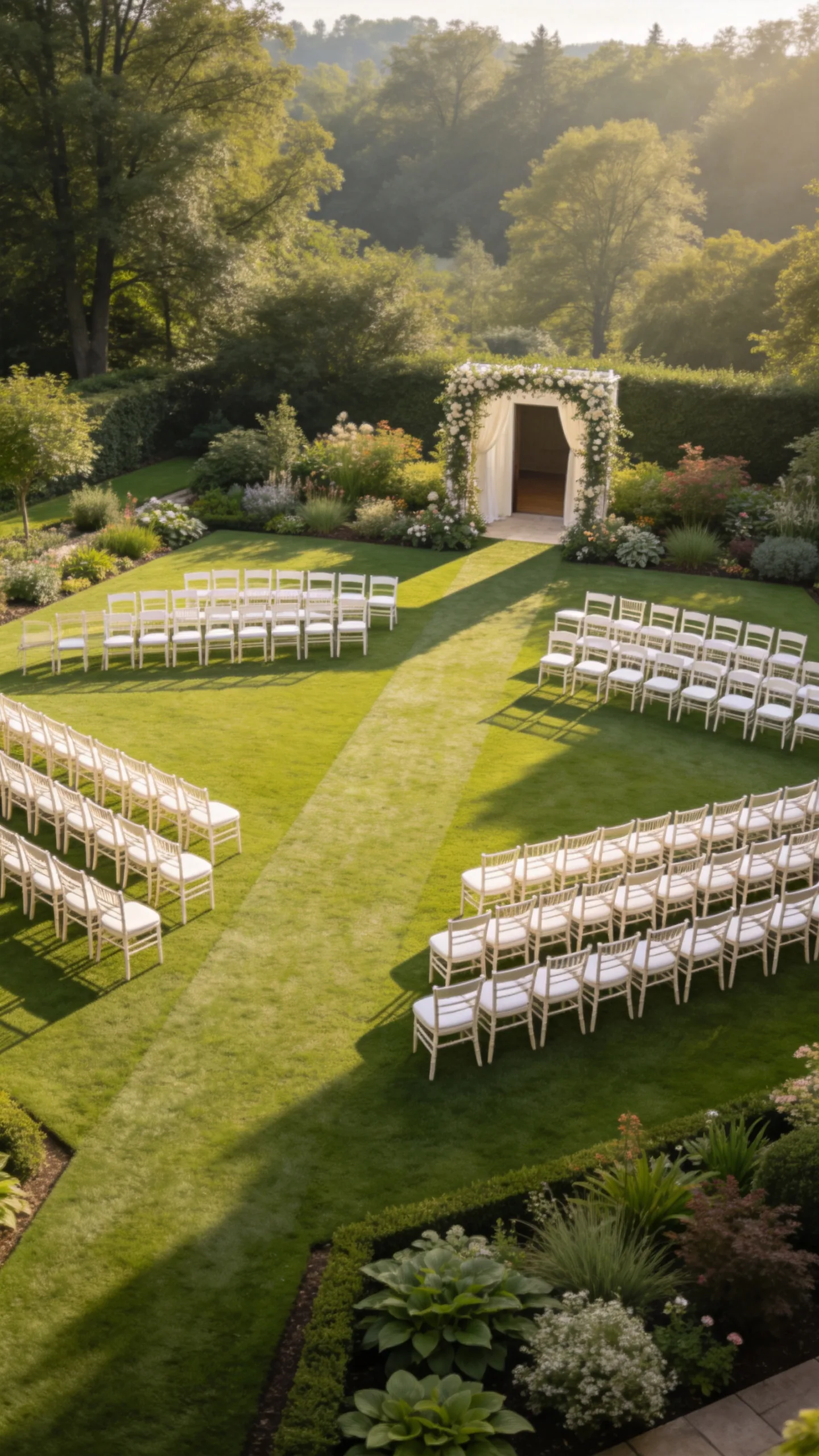
Turn the entire ceremony layout on a diagonal, placing the backdrop in one corner and the entrance in the opposite corner. A diagonal wedding lawn design creates a longer aisle and can make a compact square yard appear more expansive.
Use the corner with the most attractive view, reliable shade, or established planting as the focal point. Test chair stability before setup, since diagonal placement may cross subtle lawn grades that are not obvious when viewed from the house or patio.
7. Tree-Centered Ceremony With Radiating Rows
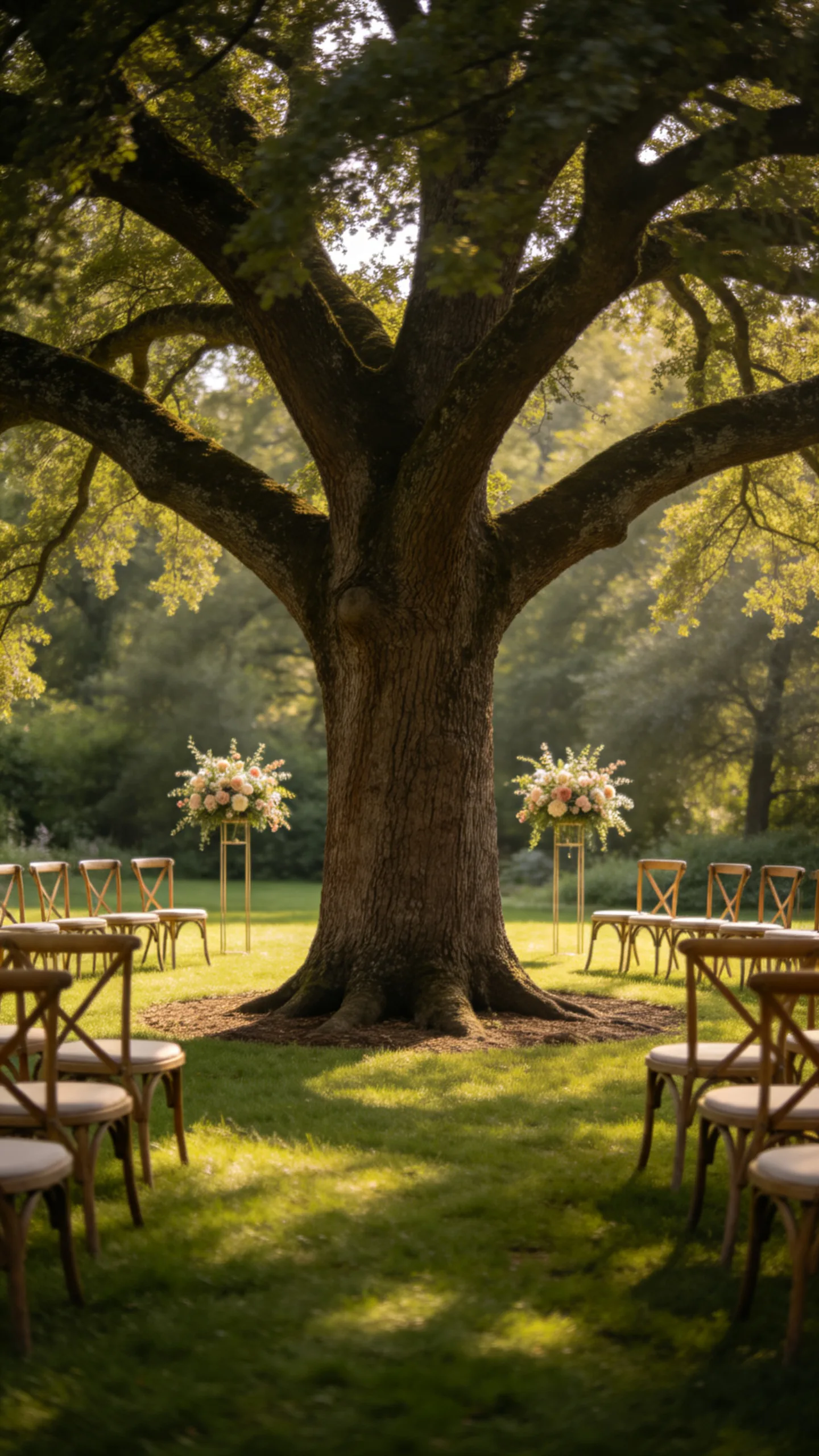
Make a mature tree the ceremony anchor and arrange short chair rows that radiate outward from its canopy. The trunk provides a natural focal point, while the branches can frame restrained floral accents without requiring a large constructed arbor.
Protect the root zone by keeping heavy structures, vehicles, and tightly packed equipment away from the base. Do not nail, screw, or tightly wire decor to bark; use venue-approved freestanding pieces or loose, padded ties that can be removed promptly.
8. Shaded Side-Lawn Seating Plan
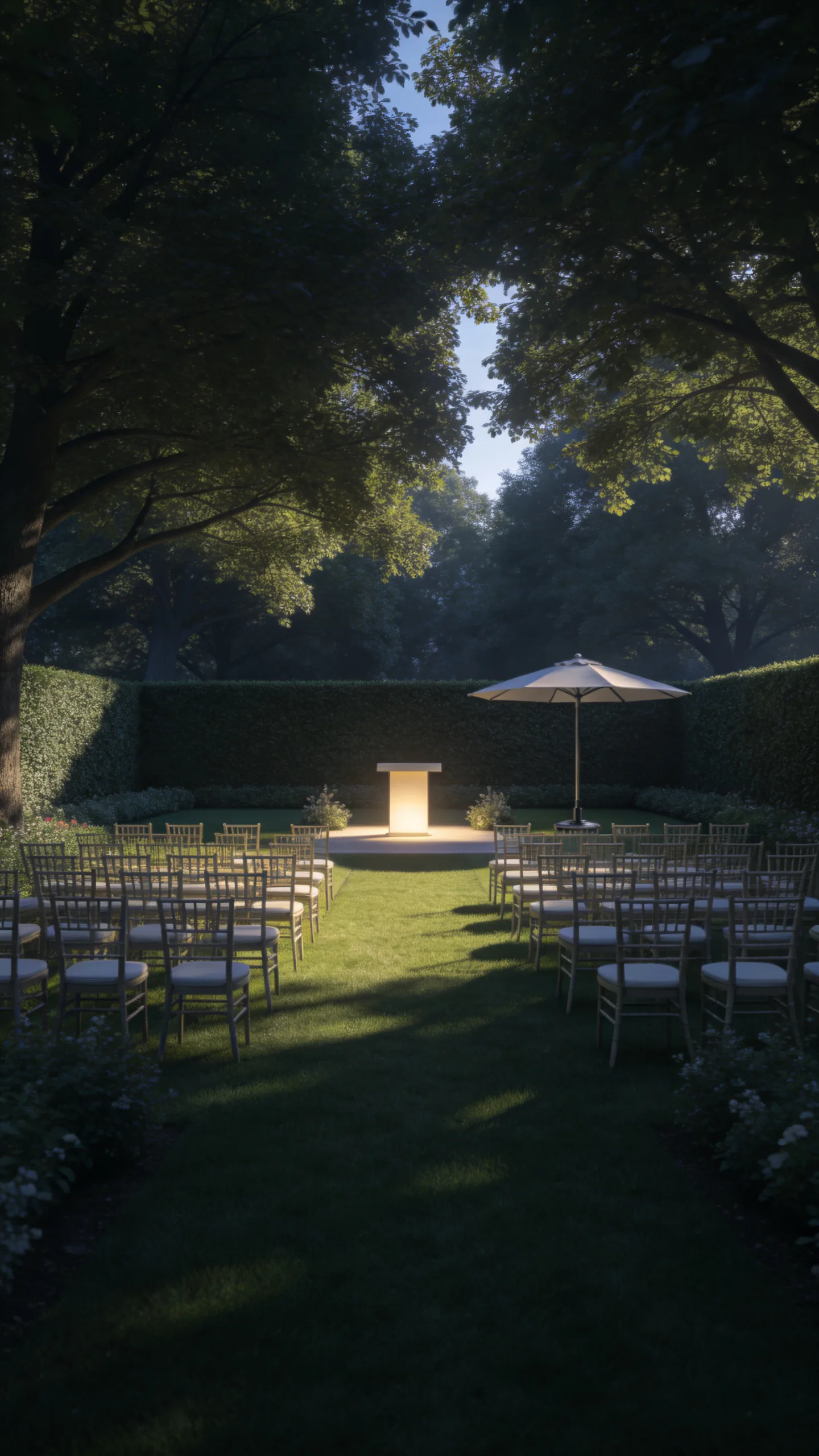
Place guest seating on the side of the lawn that receives afternoon shade from trees, hedges, or a nearby building. Position the couple where they remain visible without forcing guests to look directly into the sun.
Observe the site at the planned ceremony time because shade patterns change by season. If natural shade covers only part of the area, reserve the coolest rows for older guests and provide freestanding umbrellas or an approved canopy that will not interfere with sightlines.
9. Long Meadow Aisle With Compact Seating
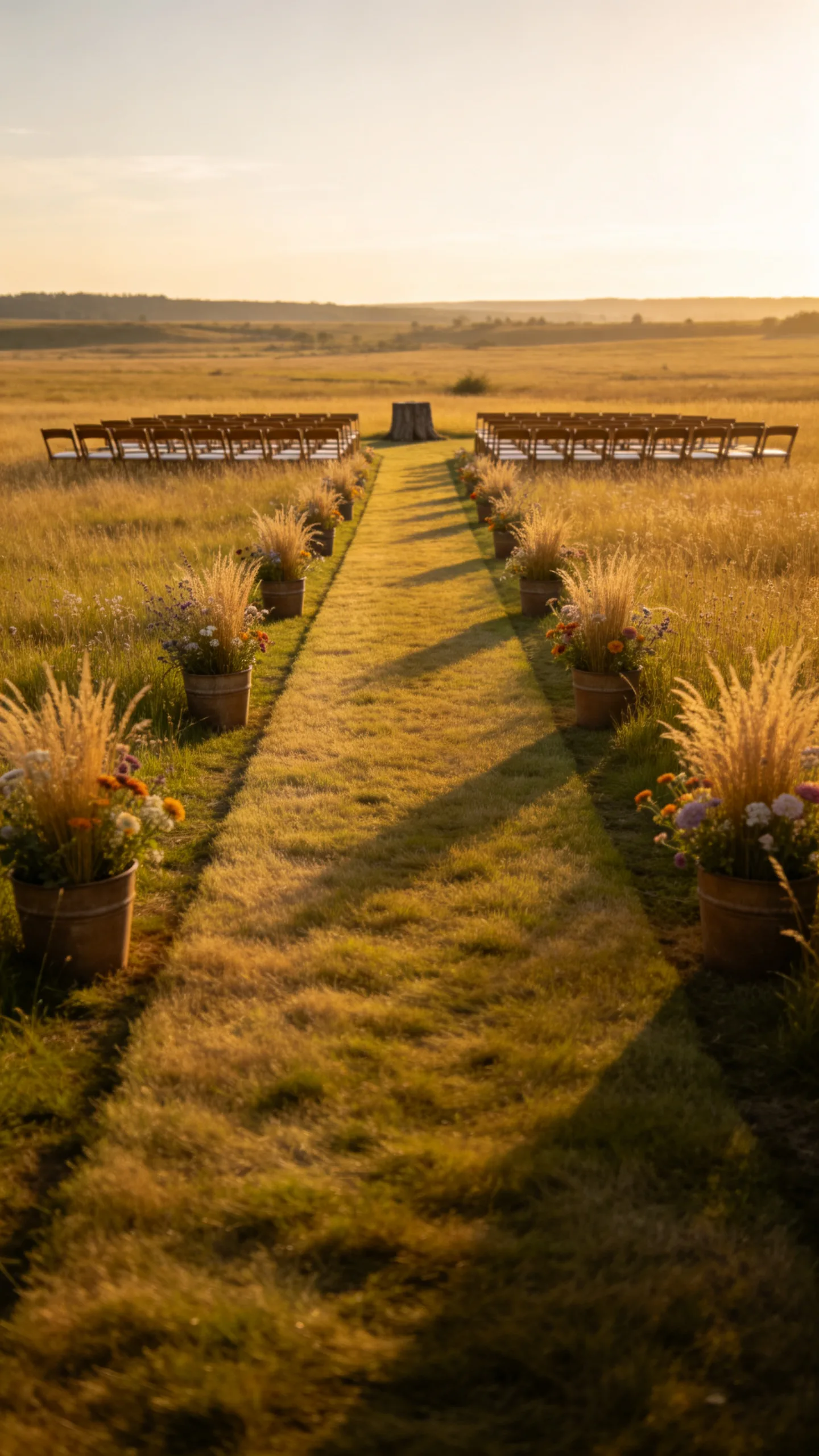
Use a narrow strip of mown grass as an extended processional aisle, with compact chair blocks gathered near the ceremony focal point. This layout works for large lawns or meadow-edge settings where the arrival itself is meant to feel dramatic.
Keep the aisle surface even and cut the grass shortly before the event, but avoid mowing when the soil is saturated. Border the route with spaced pots or meadow-style arrangements instead of continuous decor, preserving the open landscape and reducing setup materials.
10. Short Cross-Aisle for Easier Guest Access
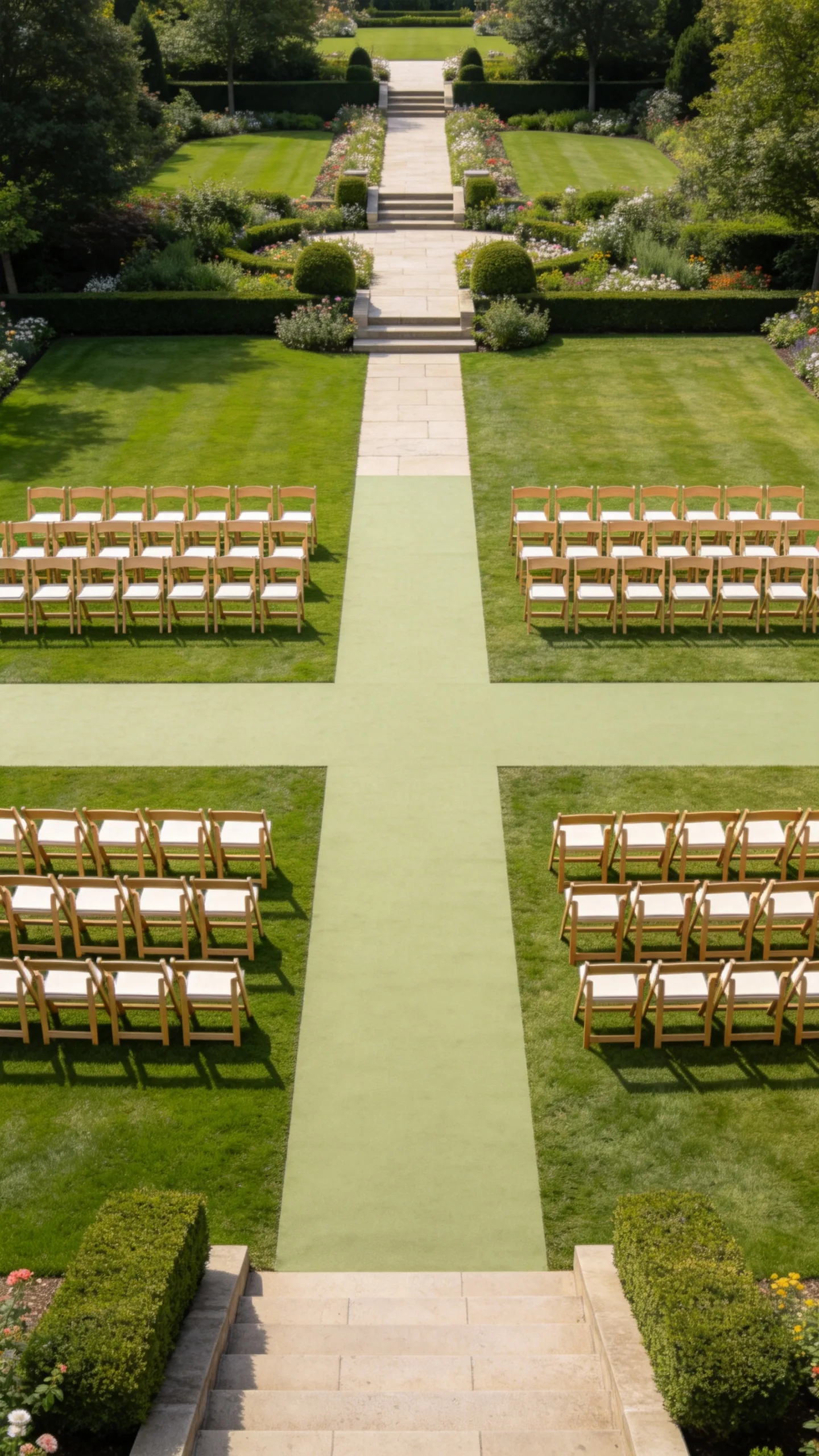
Add a horizontal cross-aisle between the front and rear seating rows. Guests can reach their chairs without walking the entire length of a row, and planners gain a clear route for assisting anyone who needs a shorter path.
Keep the cross-aisle free of floral stands, cords, and signage. On a large lawn, connect it to an established path or temporary firm surface so wheelchairs, mobility aids, and narrow heels do not have to cross soft turf unnecessarily.
11. U-Shaped Seating Around a Low Floral Meadow
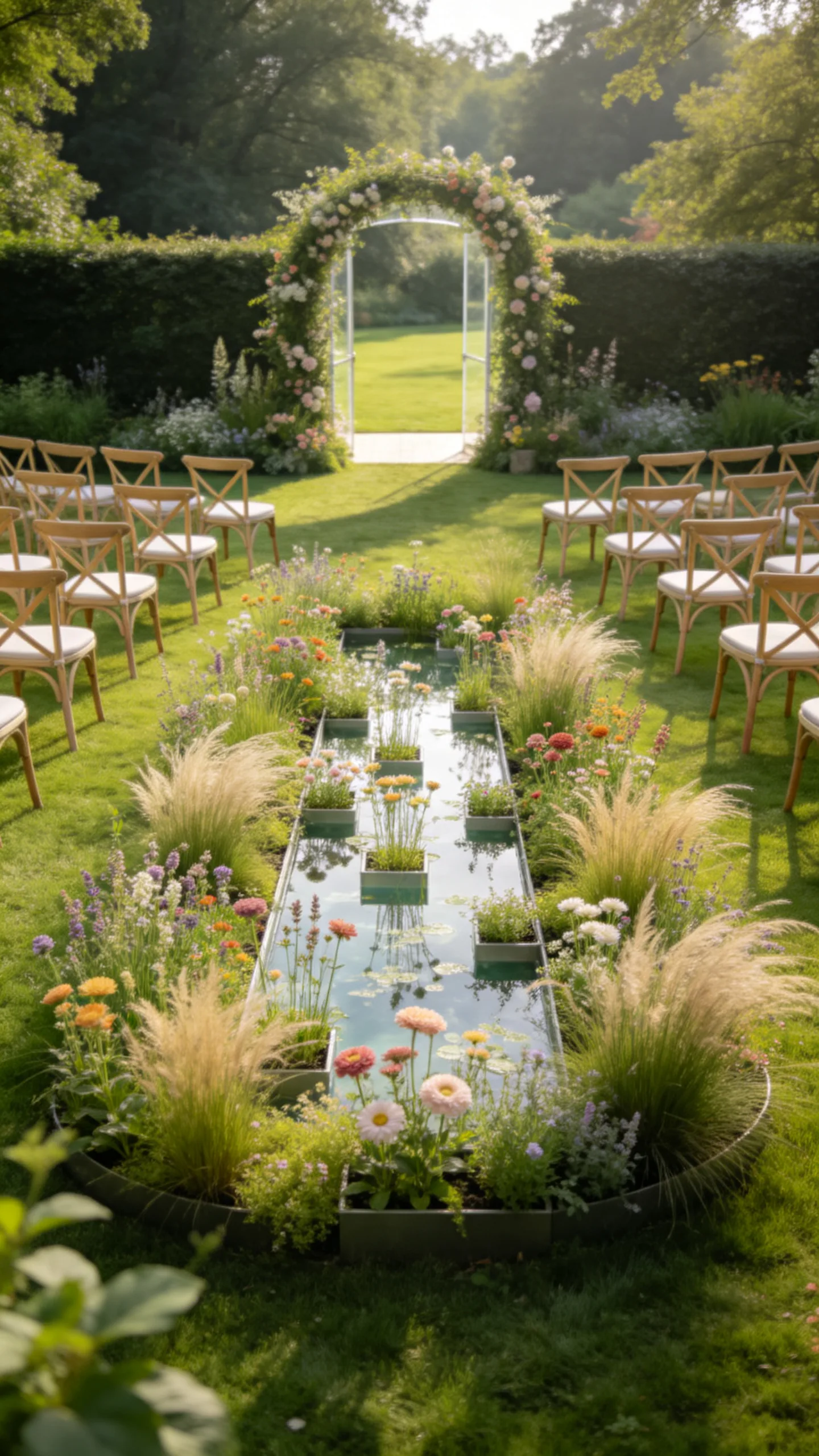
Arrange chairs in a broad U shape around a low “meadow” of flowers, grasses, and greenery. The couple stands at the open or closed end depending on the view, while the planted center creates a garden-like frame for photographs.
Use container-grown plants or stems secured in water-filled mechanics rather than inserting cut flowers directly into the ground. Select seasonal materials that tolerate the expected sun and temperature, and keep the display low enough for guests on opposite sides to see clearly.
12. Herringbone Chairs Along a Central Aisle
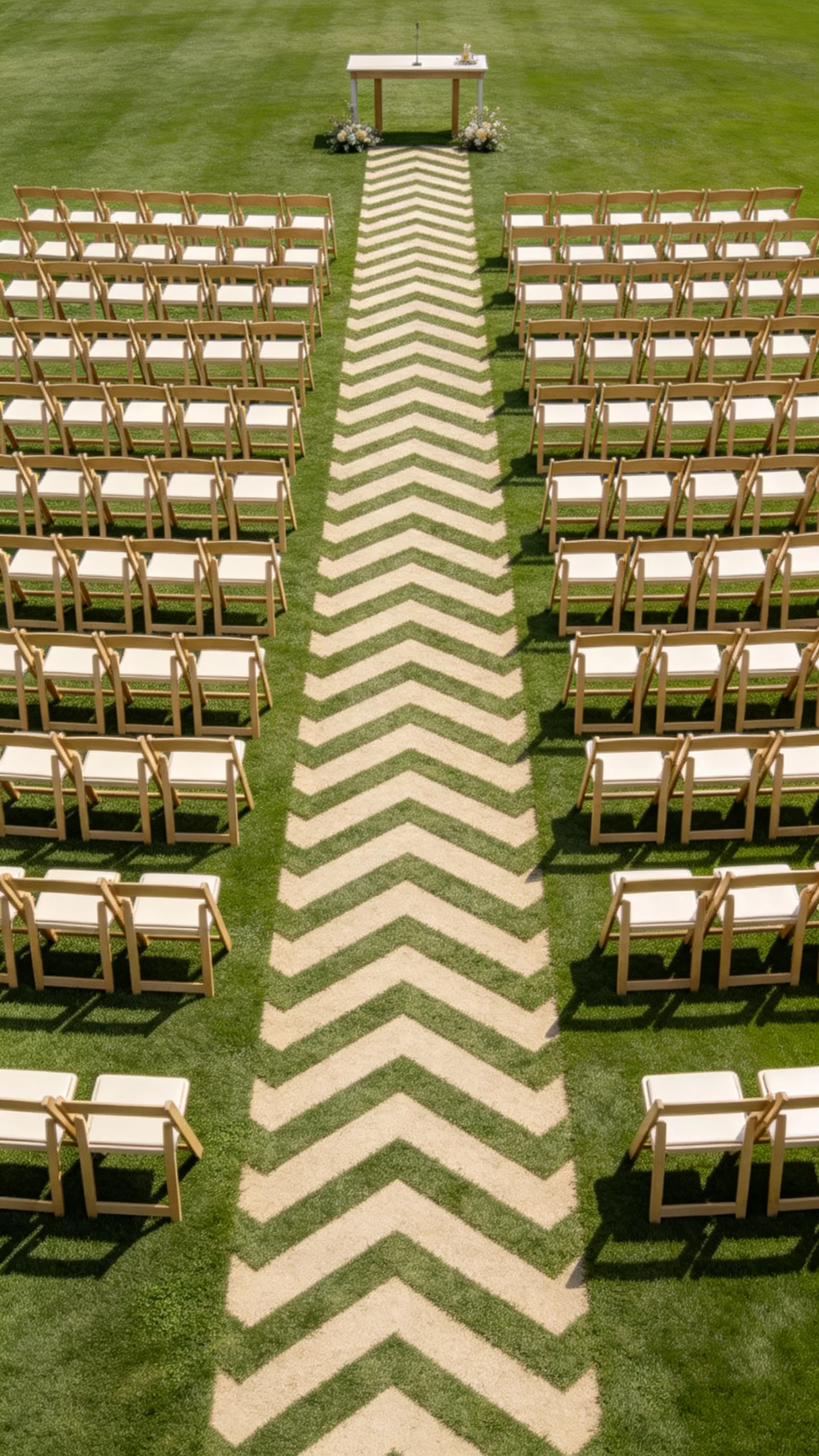
Angle each row slightly toward the center aisle to create a herringbone pattern. This brings guests’ attention inward, provides an attractive overhead layout, and makes a long, narrow lawn feel more deliberately designed.
Maintain consistent spacing by marking the first chair in each row before filling in the remaining seats. Confirm that angled chair legs sit firmly on the turf, and leave adequate clearance at the row ends for servers, photographers, and guests.
13. Intimate Horseshoe Layout for a Small Lawn
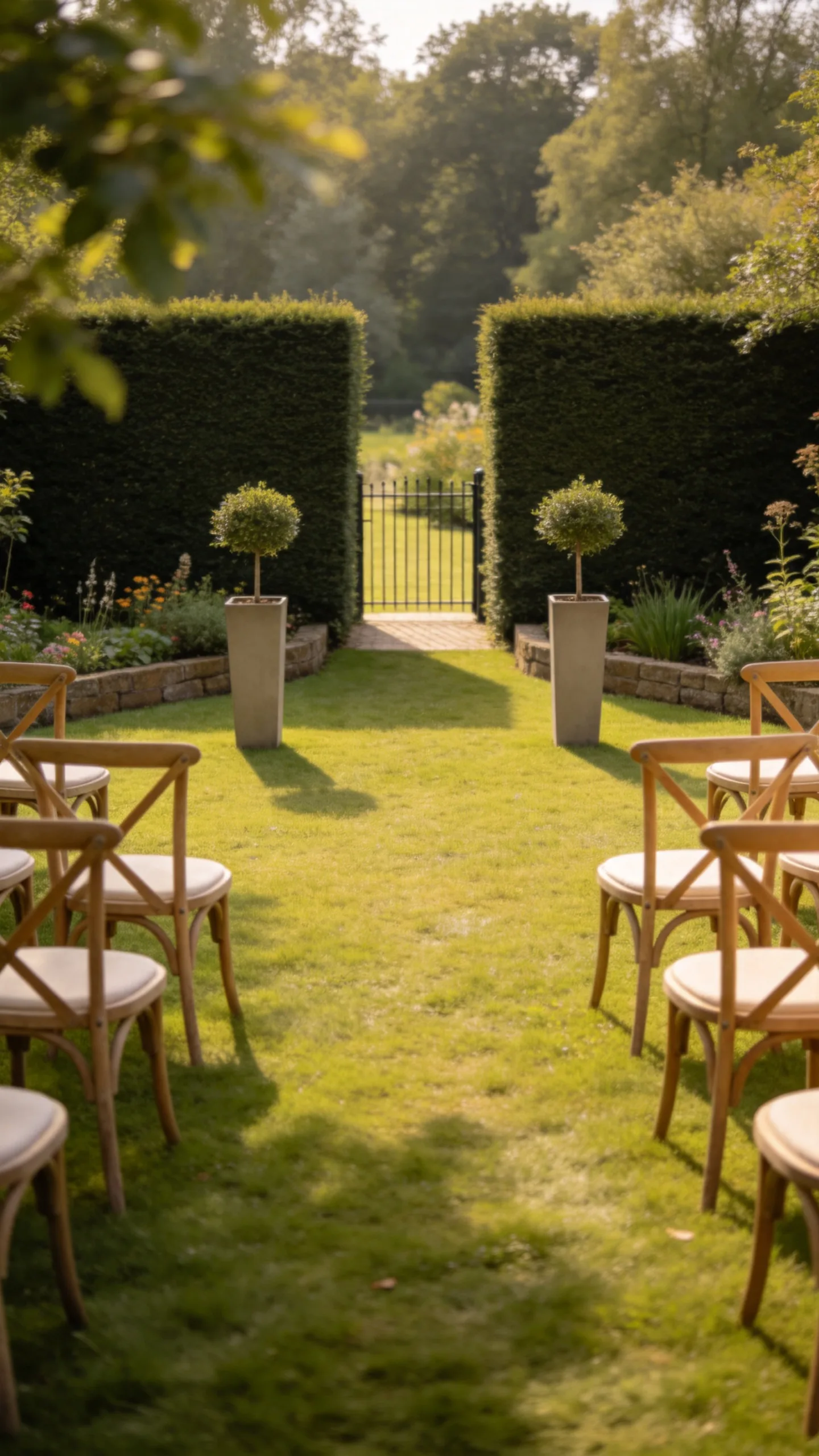
Place a limited number of chairs in a horseshoe around the ceremony area, leaving a central opening for the processional. The shallow rows keep every guest close and avoid overwhelming a small backyard with too much rental furniture.
Use the existing fence, hedge, or flower border as the backdrop rather than adding a bulky structure. A pair of tall planted containers can mark the ceremony position while preserving valuable floor space and leaving access to garden gates.
14. Staggered Chair Clusters for an Informal Garden Look
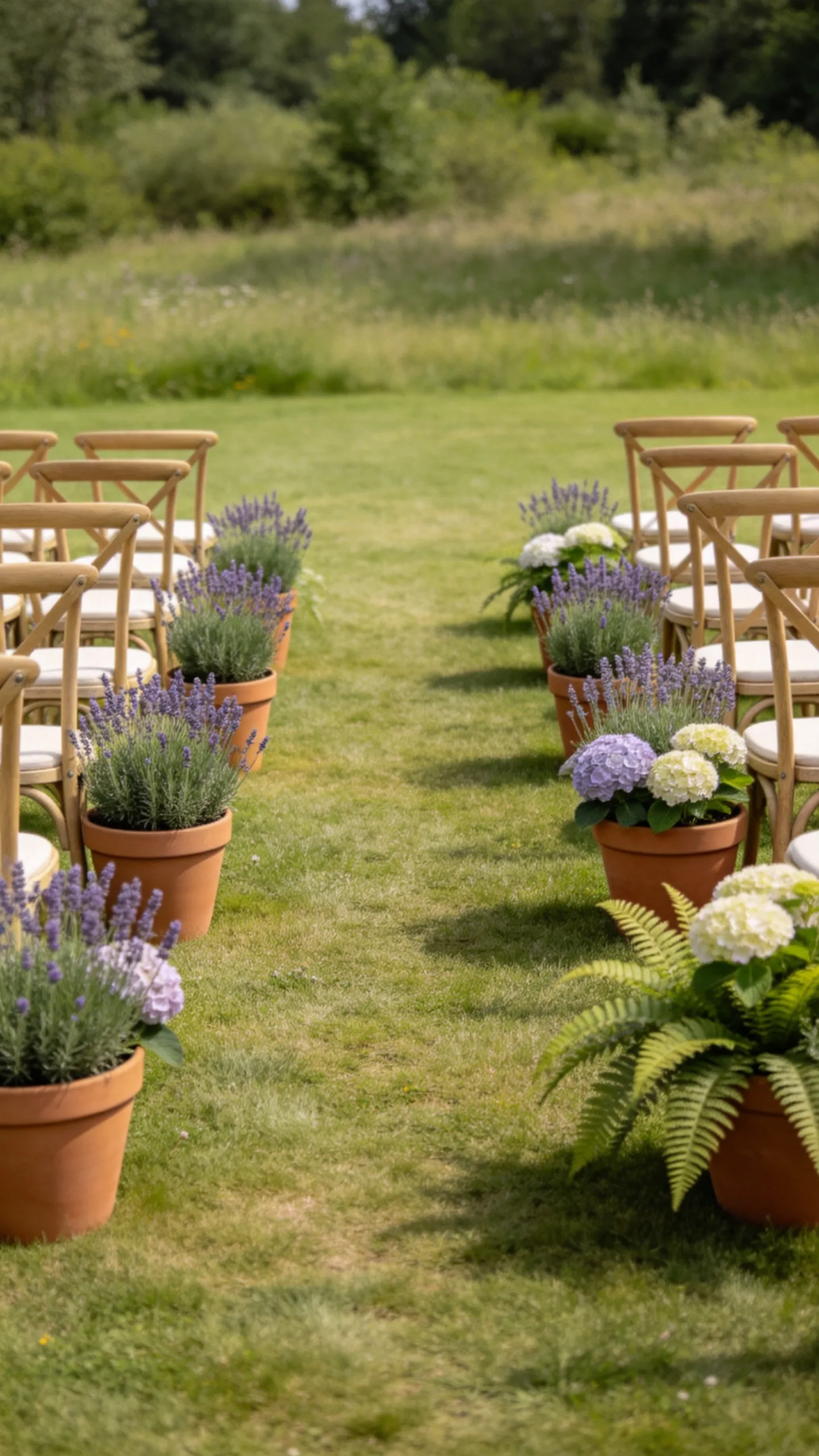
Replace uninterrupted rows with small clusters of four to eight chairs, staggered on both sides of the aisle. The breaks create pockets for potted plants and make an irregular garden lawn feel intentional rather than forcing it into a rigid grid.
Keep the clusters aligned enough to preserve sightlines and clear escape routes. Choose only a few stable plant groupings—such as rosemary, lavender, hydrangeas, or ferns suited to the local conditions—so the design remains cohesive and the containers can be reused afterward.
15. Raised Patio Backdrop With Lawn Seating
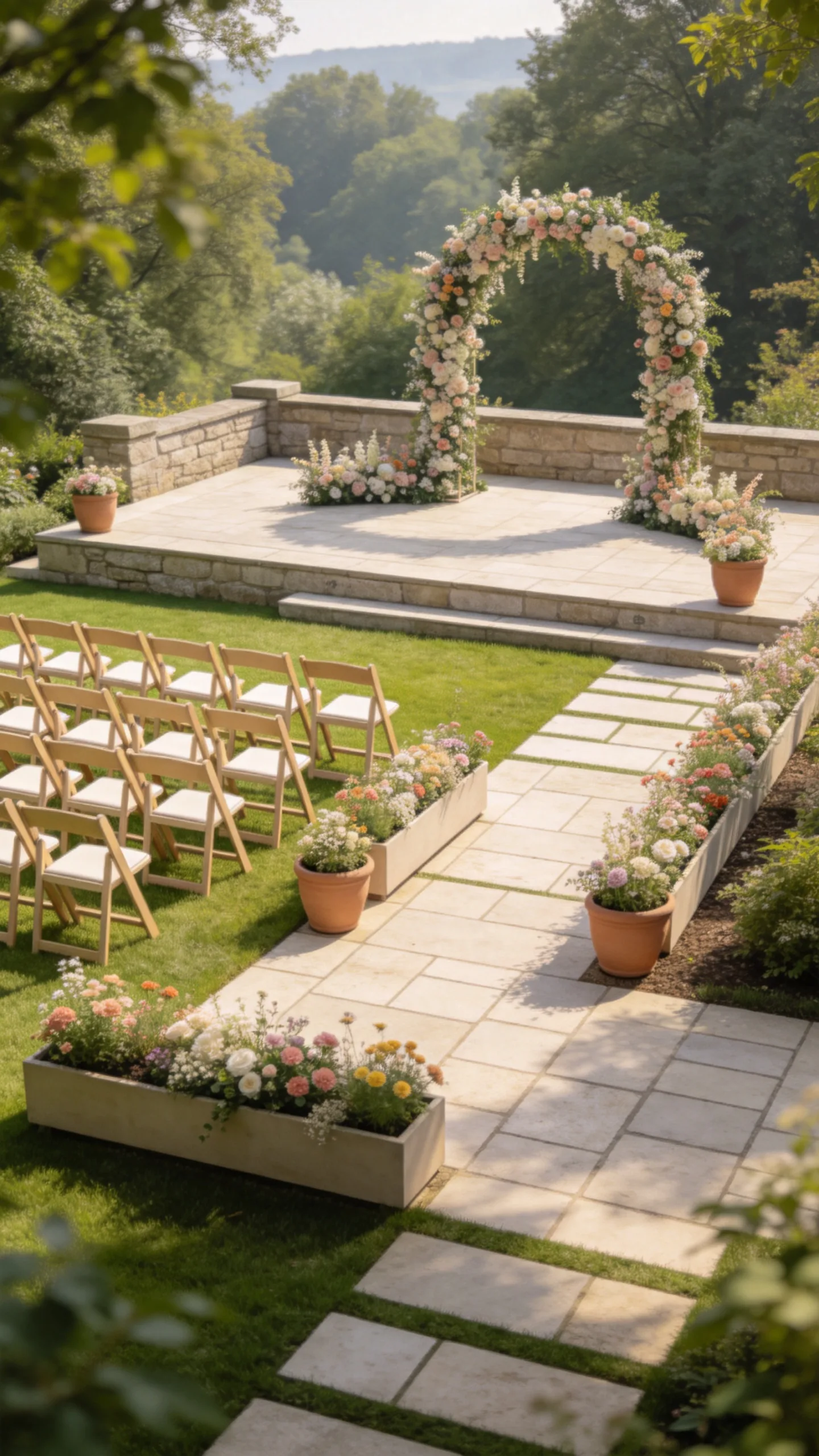
Position the ceremony on an existing patio, terrace, or deck and arrange guest chairs on the adjacent lawn. The change in elevation improves visibility while keeping floral structures and sound equipment on a firm surface.
Check that the transition between patio and grass is clearly marked and free of trip hazards. Soften the hard edge with long planters, low floral troughs, or matching pots placed outside the walking route, and provide a step-free approach where needed.
16. Hedge-Framed Ceremony With Side Aisle Entry
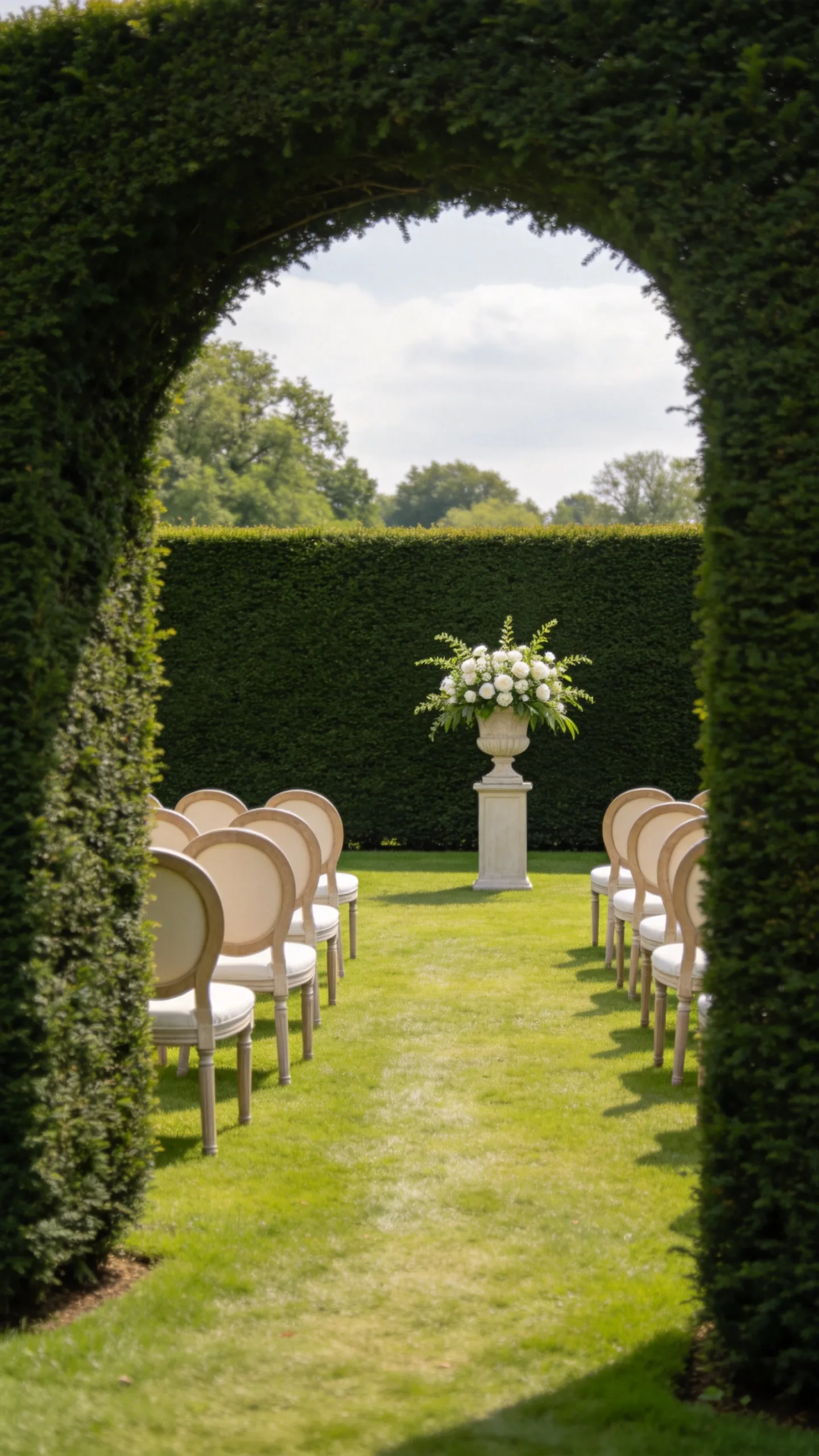
Set the ceremony in front of a clipped hedge or dense evergreen screen, then bring the processional in along a side aisle. The hedge supplies color, privacy, and a strong backdrop without requiring extensive floral coverage.
Inspect the hedge for gaps, thorns, low branches, or nesting wildlife before finalizing the location. Keep chairs far enough away that guests can move comfortably, and use a freestanding floral arrangement to mark the point where the side aisle turns toward the ceremony.
17. Two-Aisle Layout Around a Reflecting Pool or Fountain
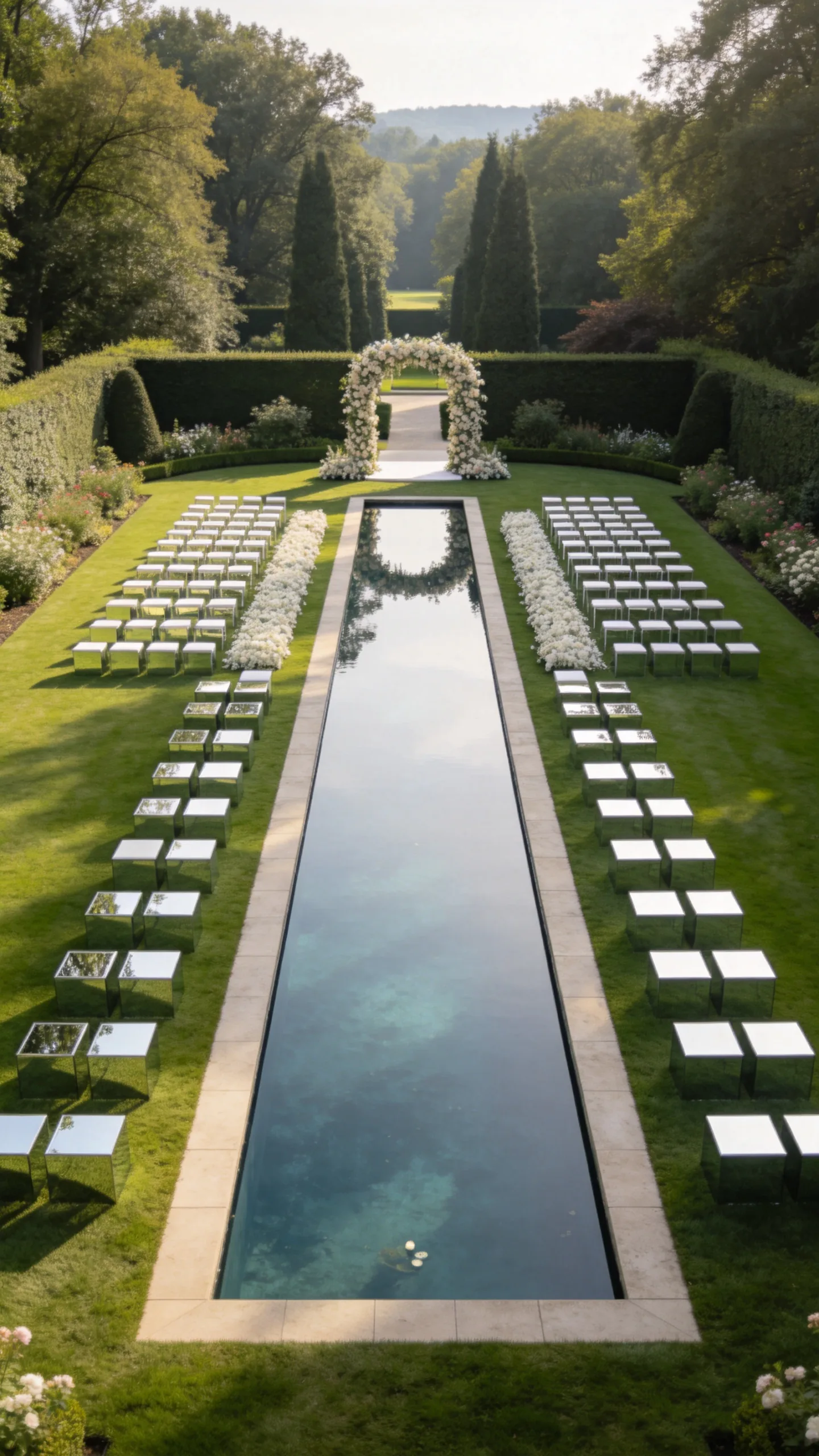
If the lawn borders a fountain, narrow pool, or formal water feature, place seating on both sides with separate aisles leading toward a shared ceremony point. The water becomes a visual centerpiece while the mirrored seating preserves symmetry.
Maintain a generous, unobstructed buffer around the water’s edge, particularly where the ground may be slippery. Avoid floating candles or loose floral materials unless the venue permits them and the feature has filtration that will not be affected.
18. Floral Arch at the End of an Offset Aisle
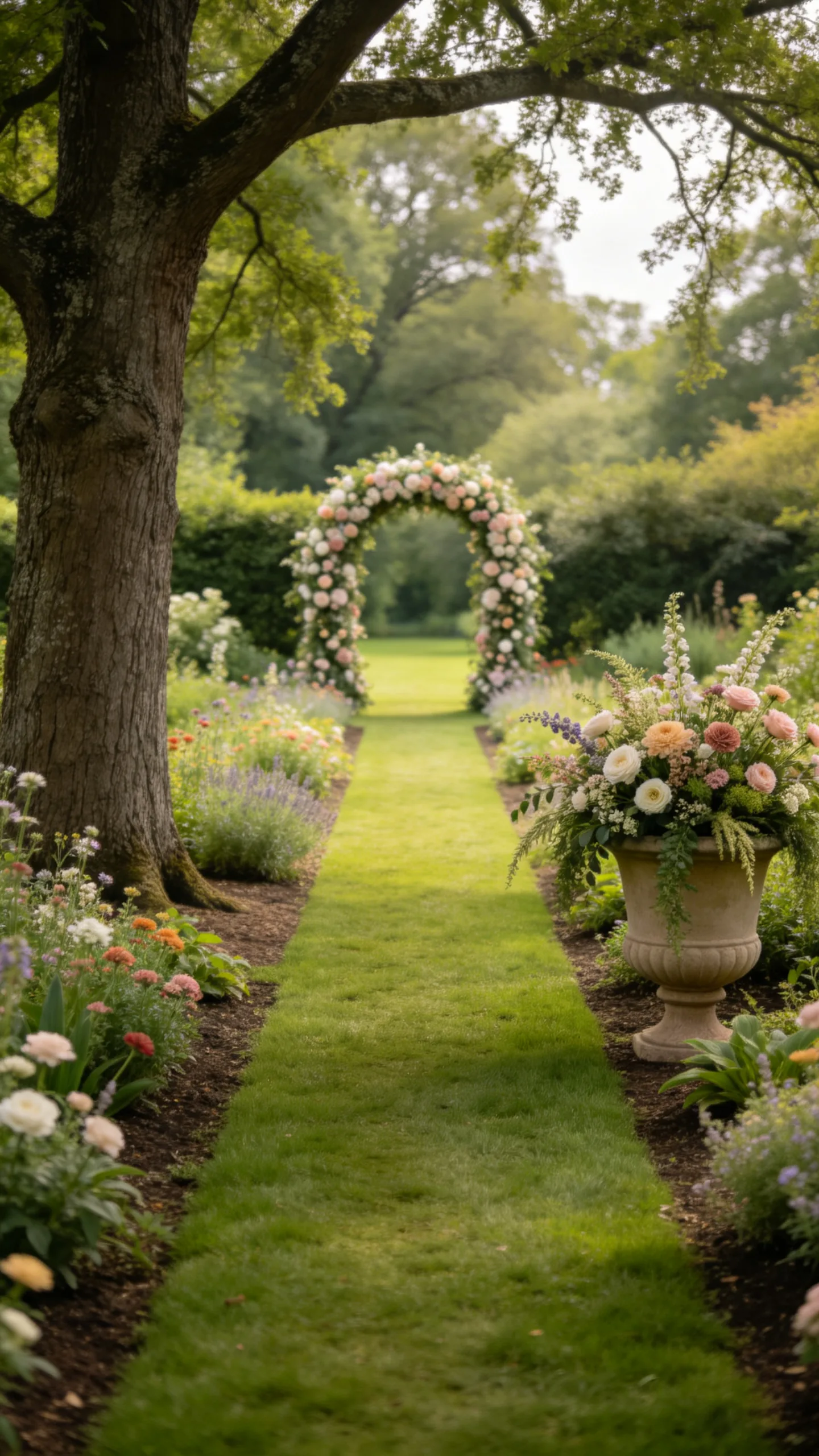
Position the aisle off-center to work around a tree, flower bed, damp patch, or sloping section of lawn. Place the arch at the far end so the asymmetrical route still leads to a strong focal point.
Balance the open side with a large planted container, floral urn, or grouped lanterns approved for outdoor use. An offset design is especially useful in established gardens because it adapts to existing plants instead of requiring beds or branches to be disturbed.
19. Wide Family Aisle With Low Border Plantings
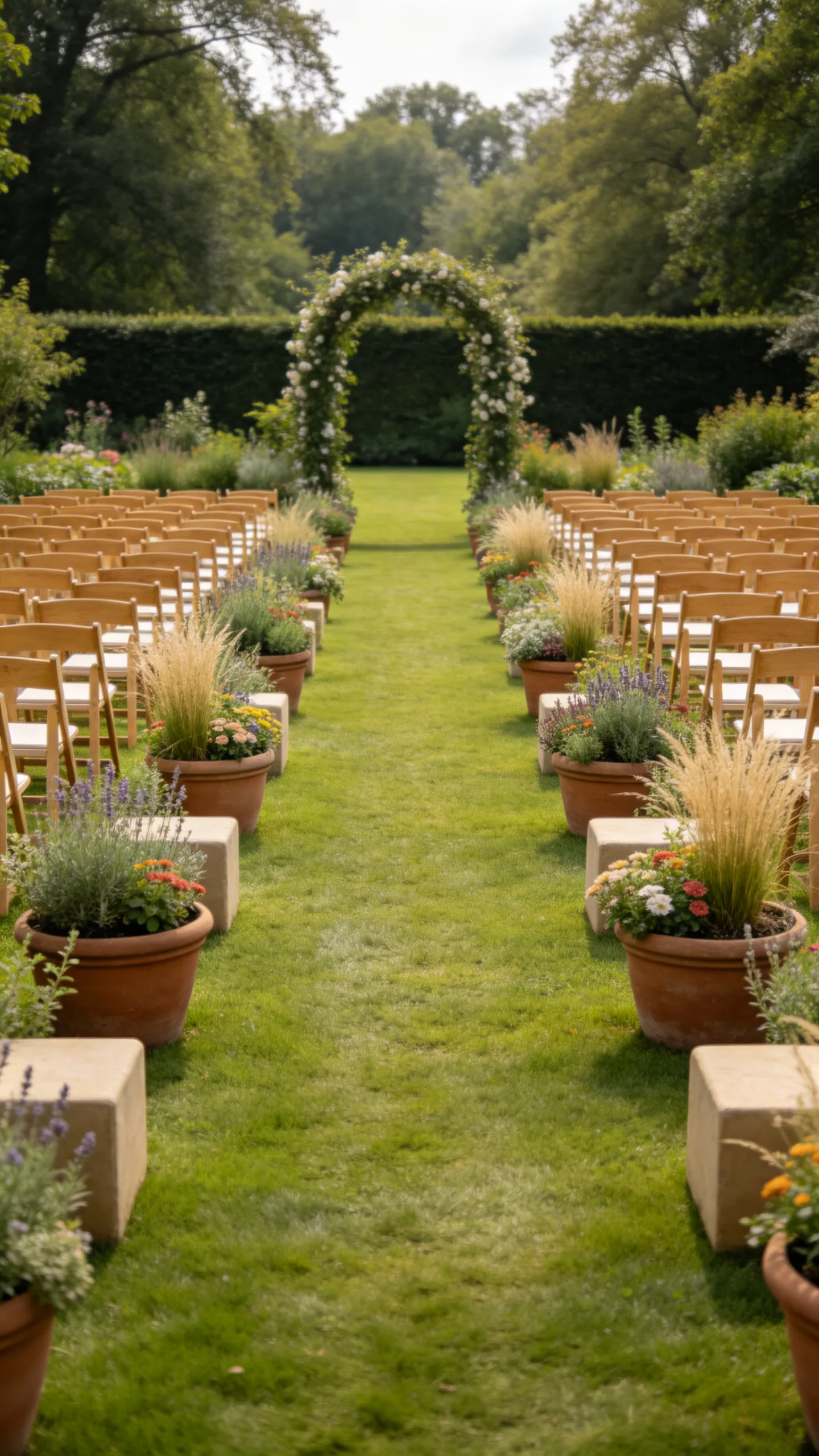
Design an extra-wide central aisle for couples entering together, large wedding parties, children, or family group processions. The additional width prevents crowding and gives photographers room to capture movement without stepping into seated areas.
Line the edges with low, widely spaced pots of seasonal annuals, herbs, or ornamental grasses. Avoid tall stakes and trailing vines along the walking line, and leave clear gaps so guests can enter rows without stepping over plants.
20. Sunburst Seating Facing a Scenic View
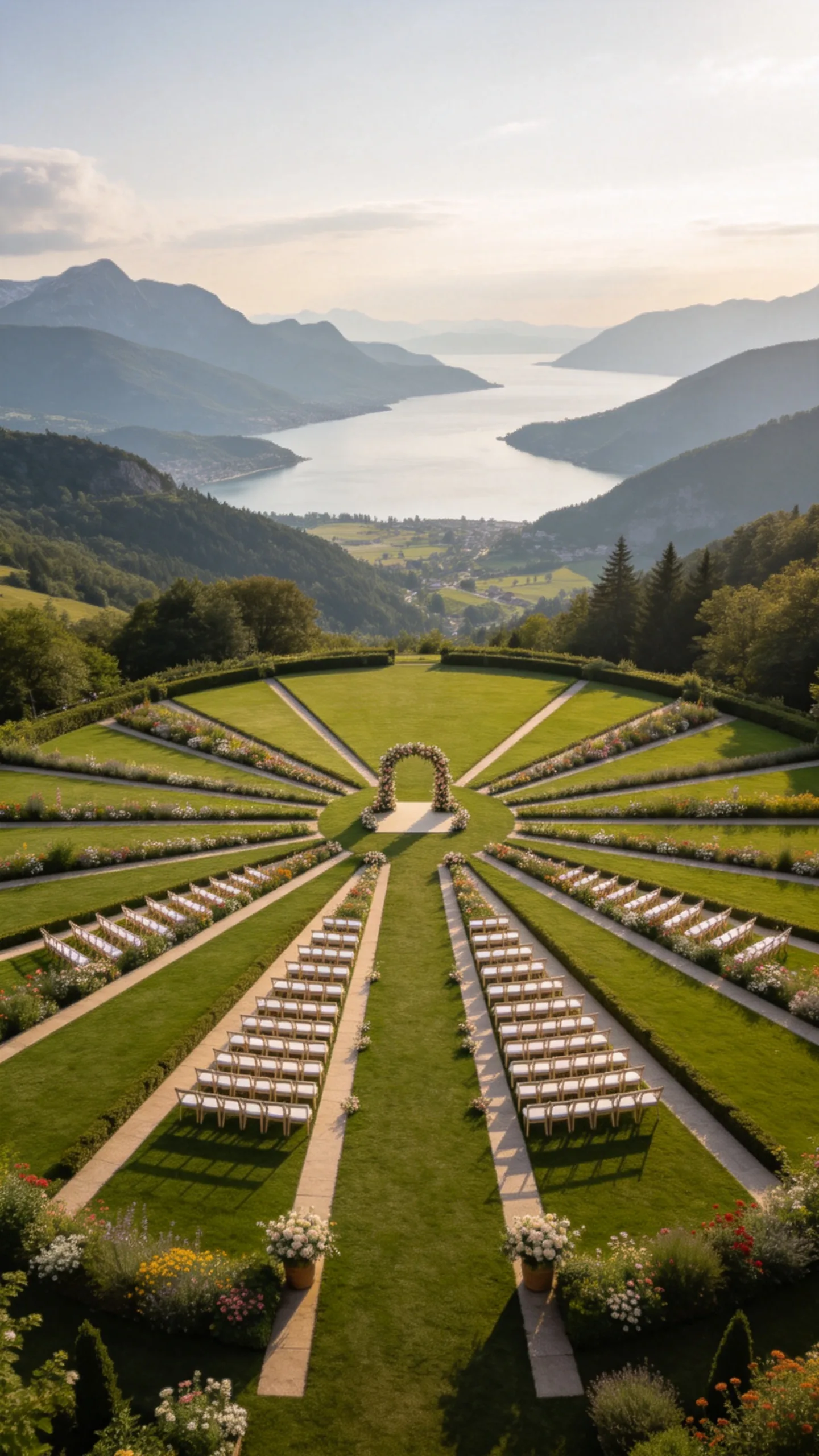
Arrange wedge-shaped seating sections that fan outward like sun rays from the ceremony point. This layout works on a broad lawn overlooking mountains, water, woodland, or a distant garden feature because it allows more guests to share the view.
Place the couple slightly off the exact sightline if strong backlighting would affect visibility and photographs. Use narrow aisles between the wedges for access, but confirm their widths and routes with the venue rather than sacrificing safe circulation for additional chairs.
21. Pergola Ceremony With Garden-Room Seating
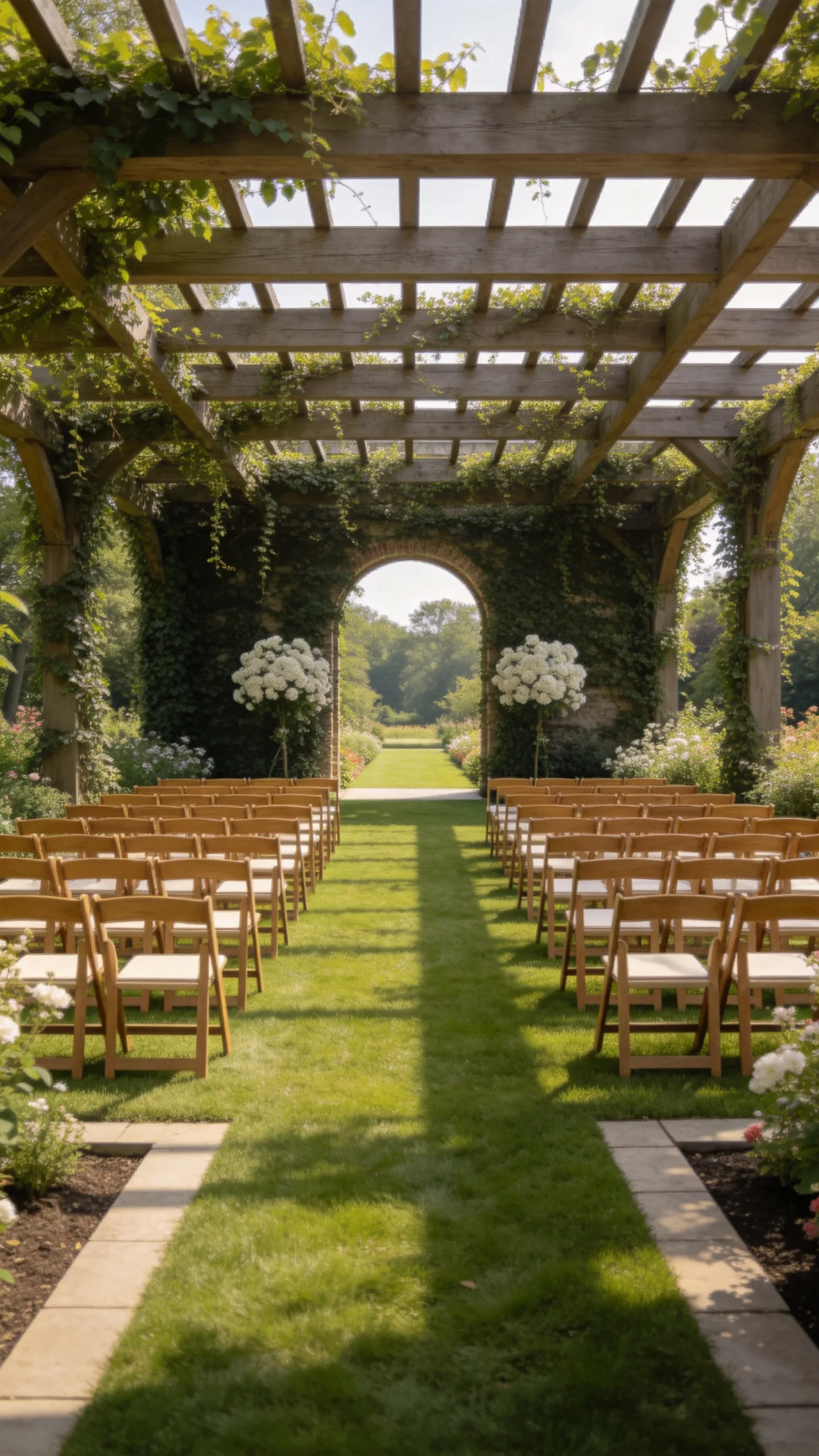
Use an existing pergola as the ceremony frame and arrange chairs on the lawn as though they occupy an outdoor room. A straight aisle aligned with the pergola opening creates a strong visual axis and makes the garden architecture part of the decor.
Enhance established climbing plants with a few removable floral clusters instead of covering them completely. Check for bees, falling petals, overhead drips, and low vines, and protect the planting beds by keeping chairs and foot traffic on the lawn or paved paths.
22. Lounge Seating at the Back of Formal Rows
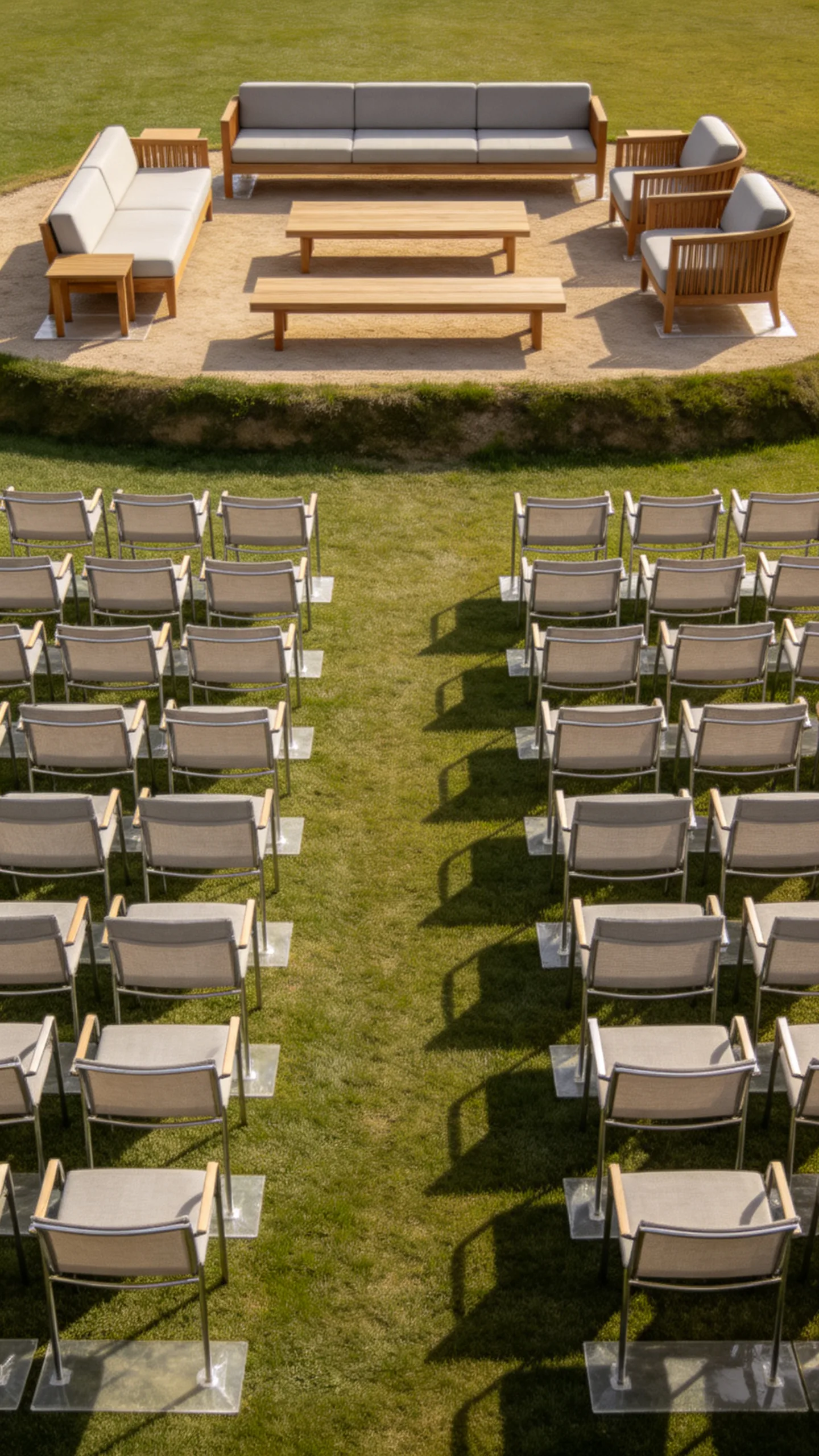
Combine standard ceremony chairs at the front with outdoor sofas, benches, and armchairs in a rear lounge zone. This gives families or small groups flexible seating while adding texture to a large lawn that might otherwise feel sparse.
Use furniture designed for stable outdoor placement, and set broad feet on discreet protective pads if the soil is soft. Maintain a clear view over the formal rows by choosing low-backed pieces or placing the lounge area on a naturally higher, level section of ground.
23. Minimalist Aisle With Statement Entrance Planters
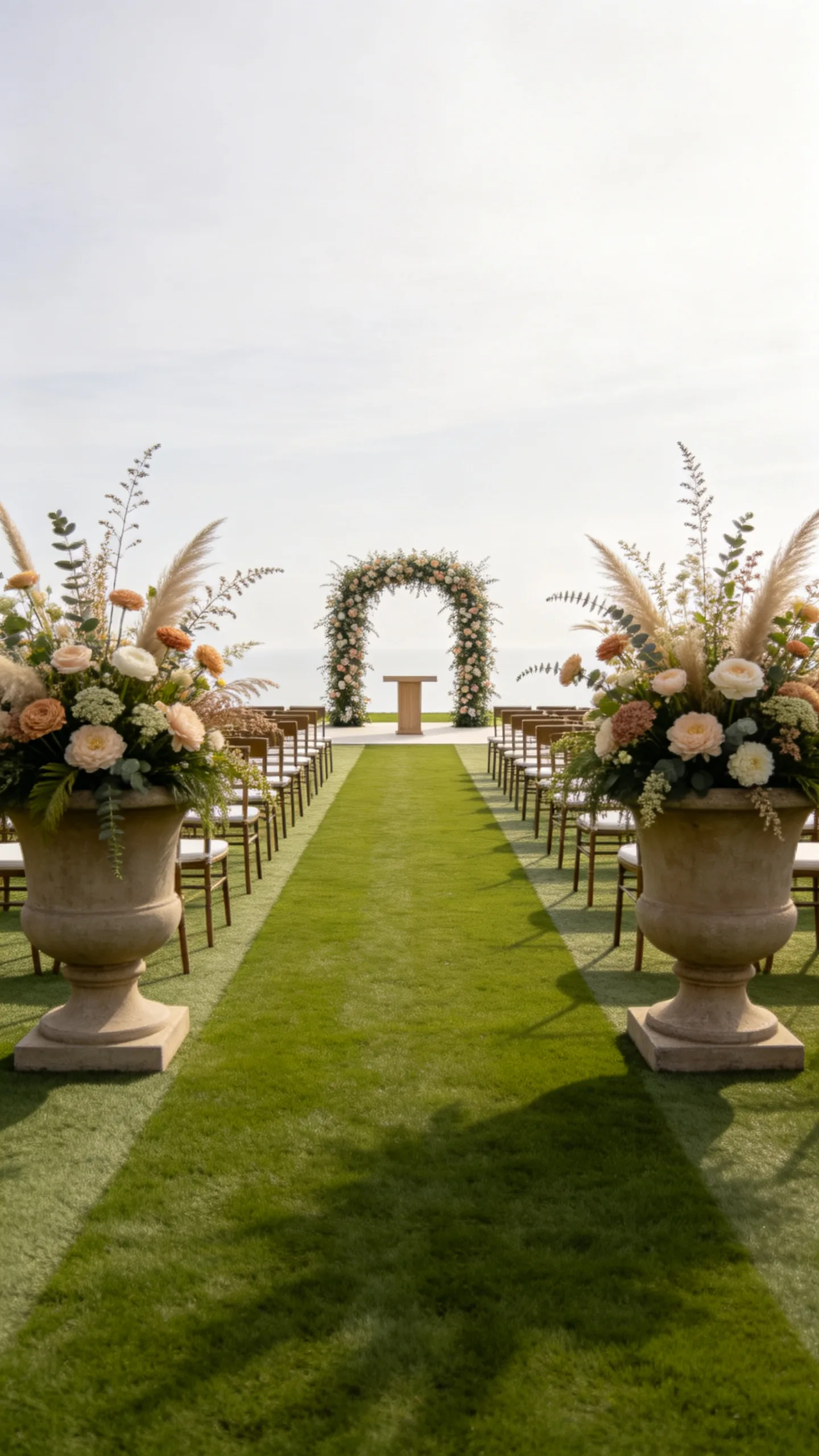
Keep the aisle itself undecorated and concentrate flowers in two large planters at the entrance. The open stretch of grass feels clean and spacious, while the planters signal the beginning of the ceremony route and can later move to the reception.
Choose heavy containers that will not tip, but avoid dragging them across the turf. Fill them with flowers and foliage appropriate to the day’s light and heat, water them before guests arrive, and use drip trays if they will later sit on paving or decking.
24. Reception-Ready Ceremony Layout With Movable Florals
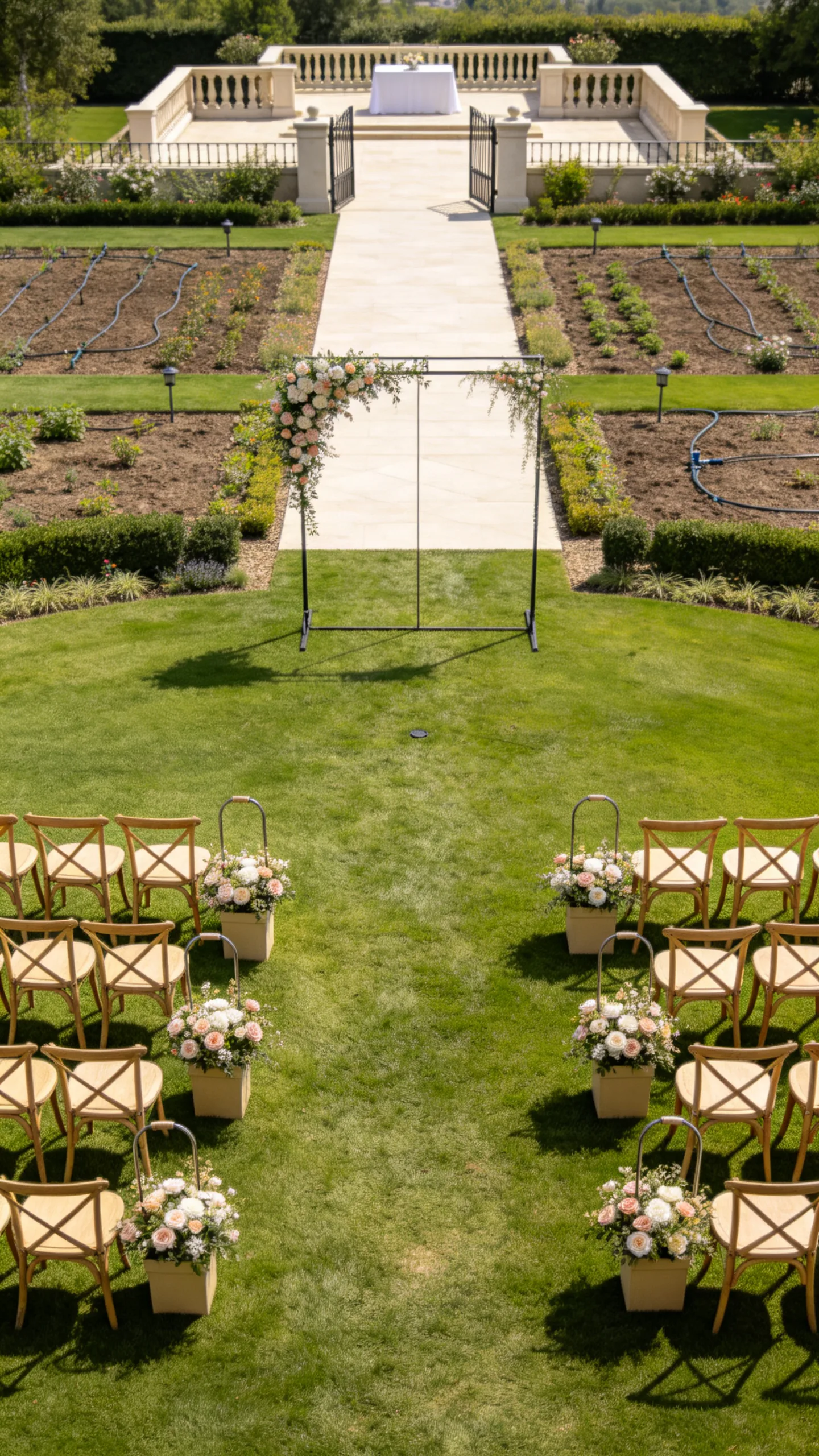
Arrange the ceremony so chairs and floral pieces can transition efficiently into the reception layout. For example, place short chair rows near the lawn’s perimeter, use aisle arrangements in portable pots, and position the ceremony backdrop where it can later frame a sweetheart table or photo area.
Plan the movement route before installation, keeping garden beds, irrigation lines, and narrow gates in mind. Assign specific pieces to specific destinations, use containers that two people can lift safely, and leave the lawn clear of water-filled vessels, stakes, and cables before dining or dancing begins.