A successful modern lawn design uses simple shapes, crisp boundaries, and a restrained plant palette to make the front yard feel polished. Whether you are replacing an existing lawn or refining a small patch of grass, these layouts combine practical access, manageable planting, and strong curb appeal. Adjust plant choices and turf varieties to suit your local climate, soil, and light conditions.
1. Frame a Rectangular Lawn With Steel Edging
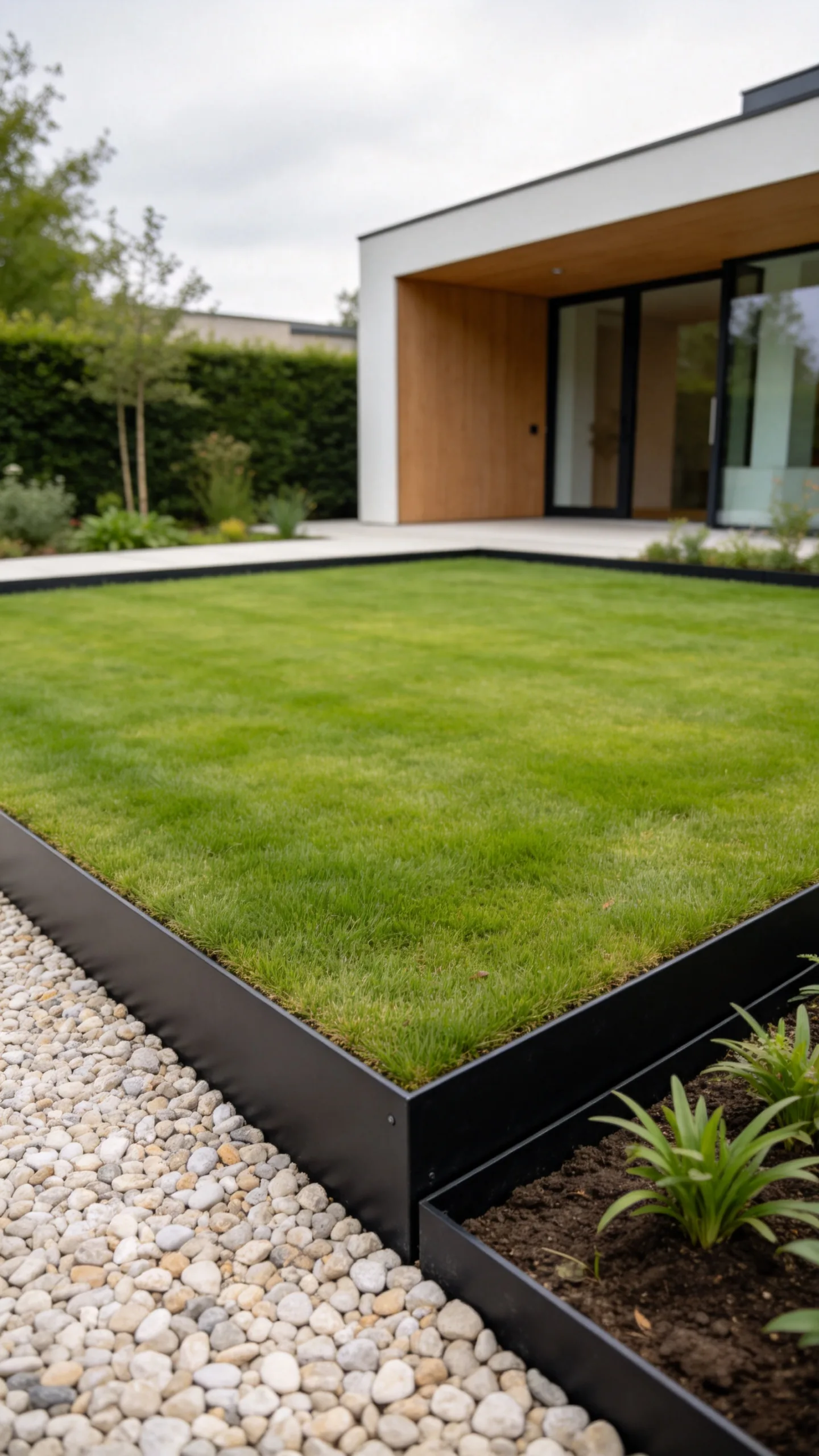
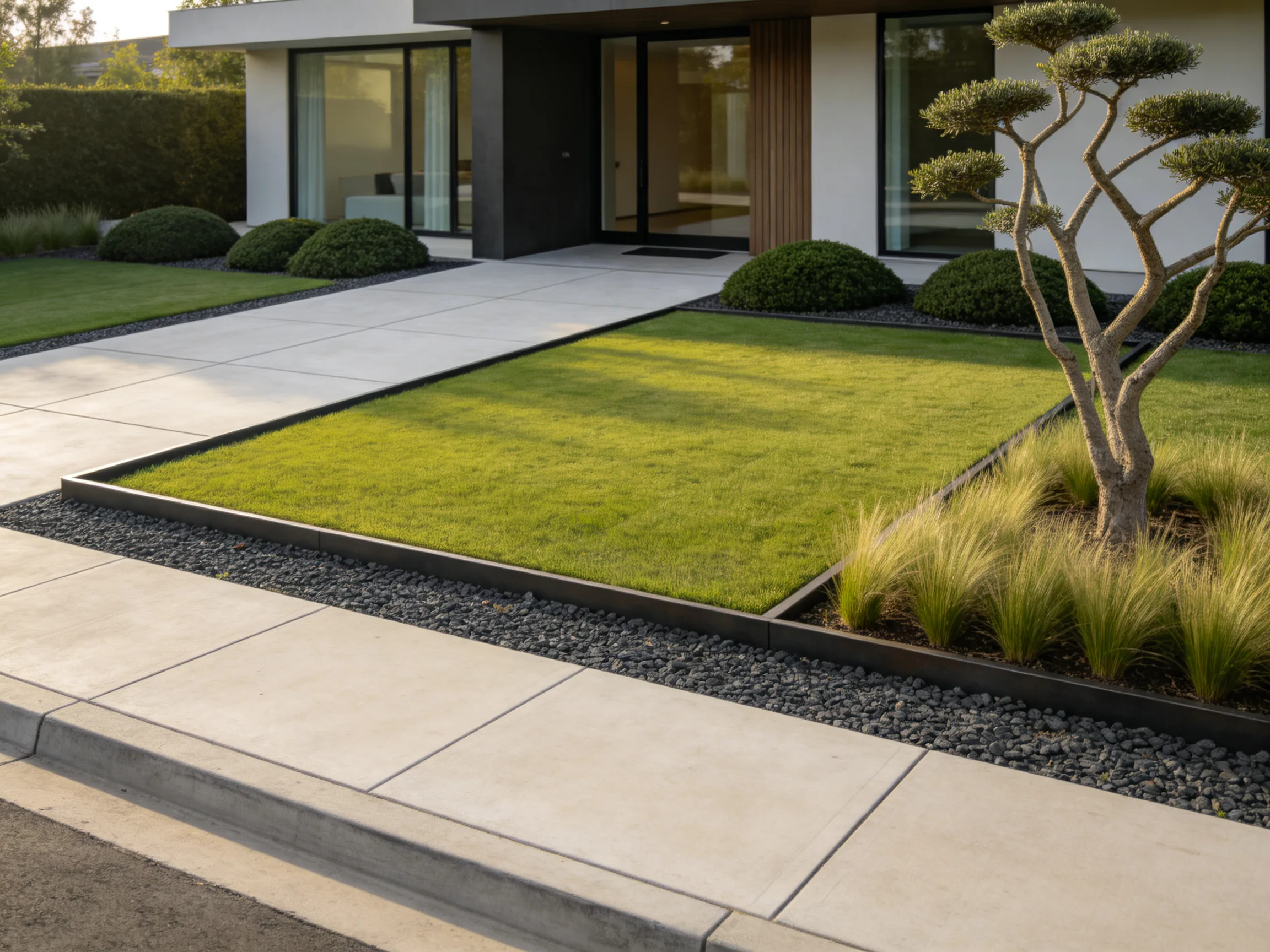
Turn a conventional front lawn into a clean geometric feature by shaping it into a square or rectangle. Install powder-coated steel or aluminum edging around the perimeter to create a sharp division between turf and planting beds.
Metal edging is especially effective where grass meets gravel, mulch, or low ground cover. Set the top nearly flush with the soil so a mower wheel can pass over it, and check the boundary each spring for shifting caused by frost or soil movement.
2. Pair a Narrow Lawn With Oversized Pavers
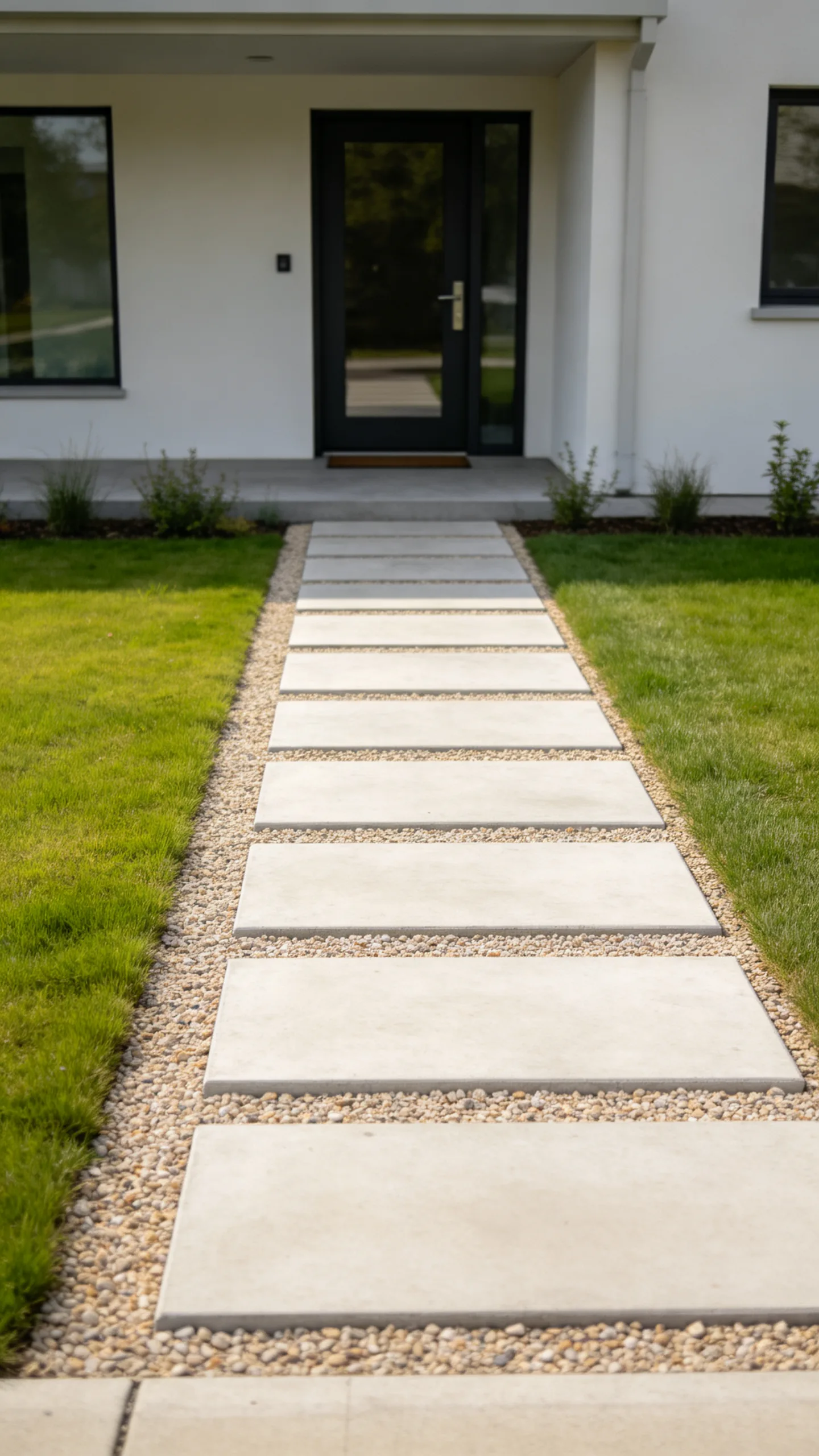
In a compact front yard, preserve a slim strip of grass and use large-format concrete pavers for the main route to the door. Rectangular slabs create a modern rhythm while reducing the amount of lawn that requires watering and mowing.
Space the pavers evenly and keep the joints narrow for a streamlined look. Fill gaps with compacted gravel or a low-growing, foot-tolerant plant such as creeping thyme where climate and light conditions allow. Make sure the surface is stable and gently graded away from the house.
3. Create a Floating Lawn With a Gravel Border
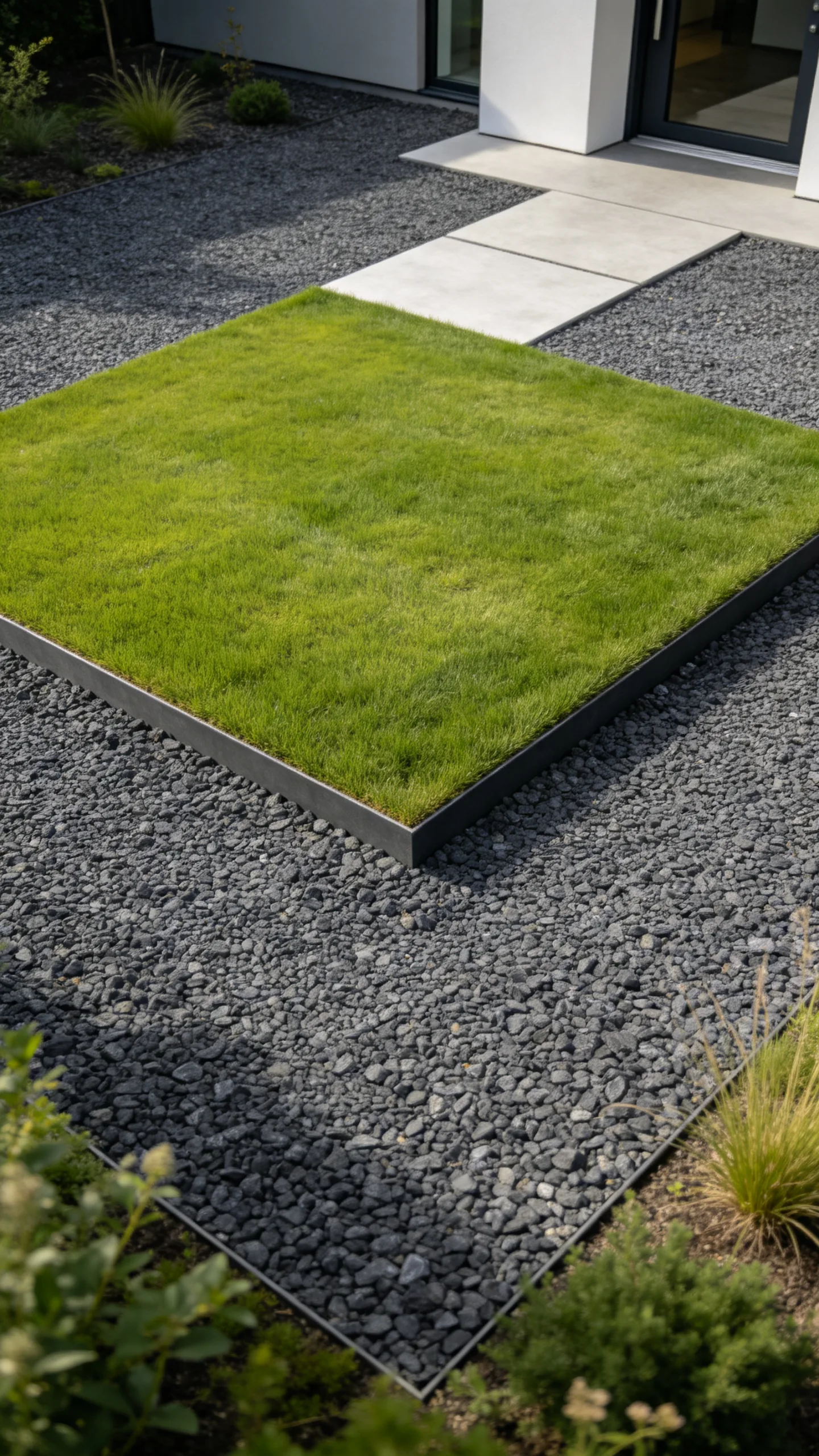
Surround a simple patch of turf with a band of dark gravel to make the lawn appear like a floating green platform. The contrasting materials produce a graphic effect without requiring elaborate planting.
Place landscape edging between the grass and gravel to stop stones from migrating into the mower path. A permeable base beneath the gravel can help manage rainfall, but avoid covering areas where runoff should naturally reach tree roots or planting beds.
4. Use an L-Shaped Lawn to Define the Entry
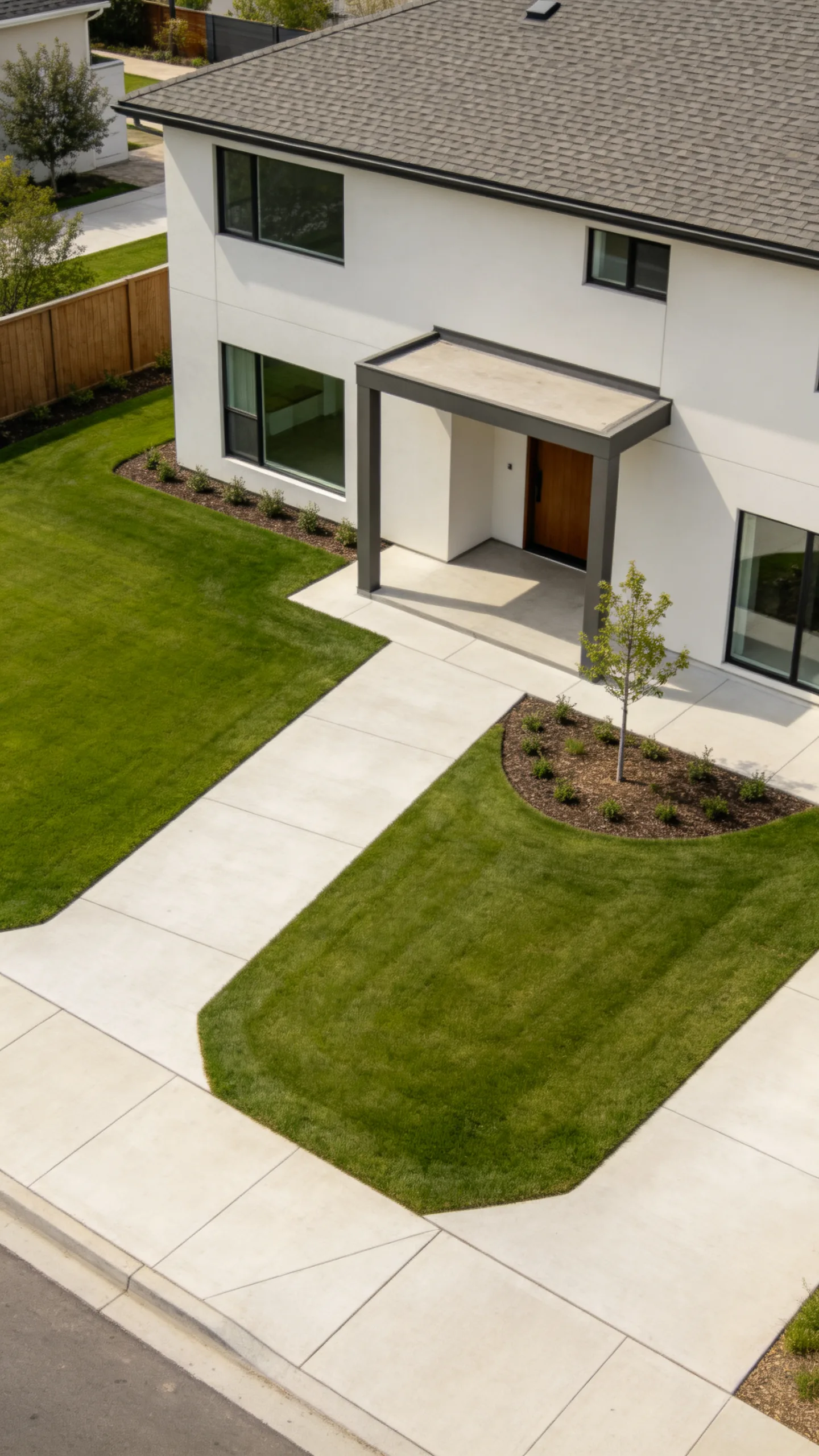
An L-shaped lawn can wrap around a front walkway or porch, linking separate parts of an irregular yard. The strong angle makes the property feel organized while leaving room for a wide path, a specimen tree, or a planted corner.
Keep the inside corner broad enough to mow without repeated turning. If the angle is too tight, replace the smallest section with ornamental grass, ground cover, or gravel so routine maintenance remains simple.
5. Border the Lawn With Low Evergreen Mounds
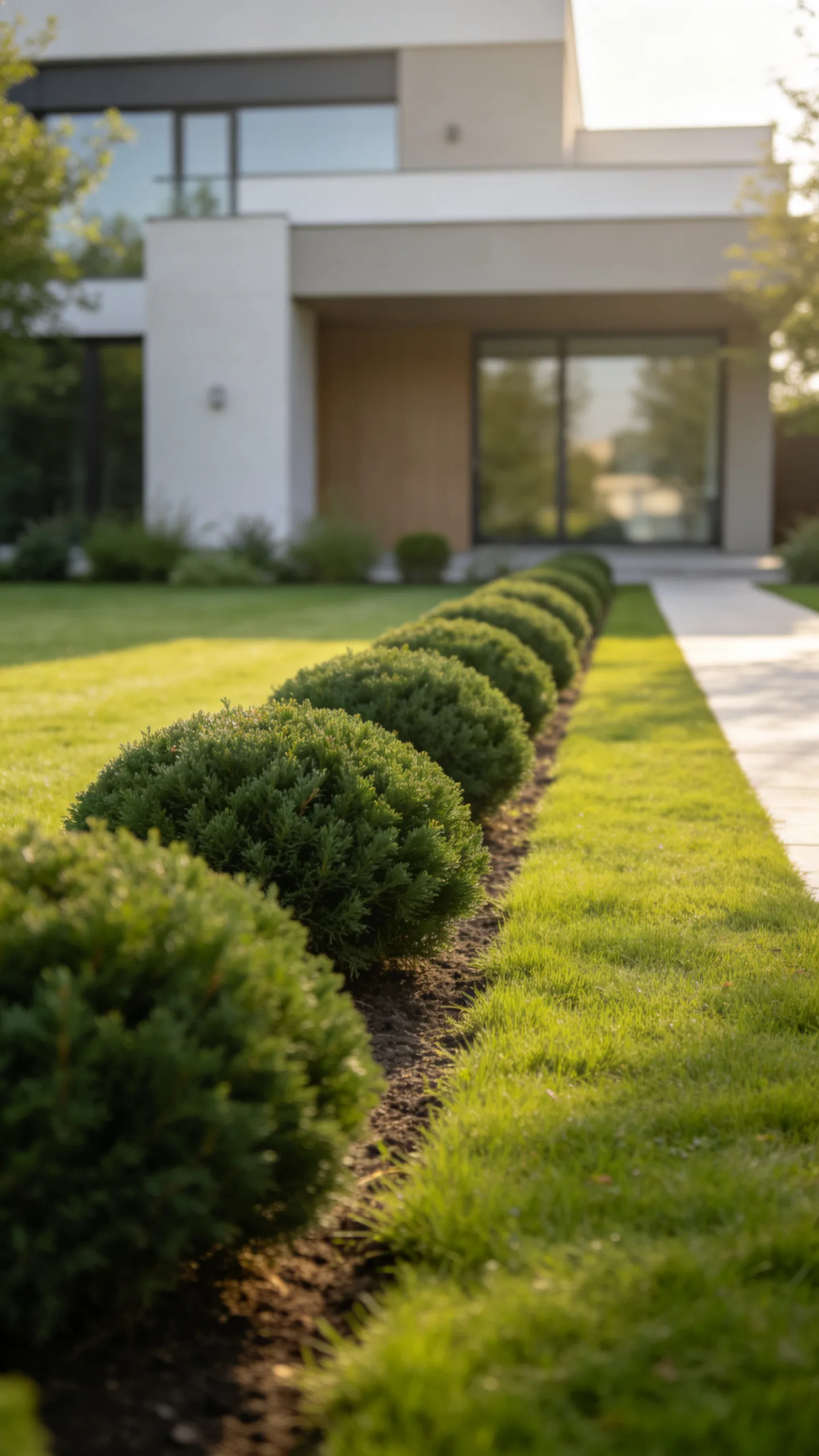
Line a geometric lawn with compact evergreen shrubs to create a stable, year-round framework. Rounded forms soften straight lawn edges while preserving the uncluttered character of modern landscaping.
Choose naturally compact varieties suited to the yard’s sun exposure and mature dimensions. Dwarf boxwood alternatives, low junipers, compact inkberry, or small-leaved pittosporum may work depending on the region. Space plants according to mature width rather than planting them tightly for immediate fullness.
6. Add a Linear Ornamental Grass Bed
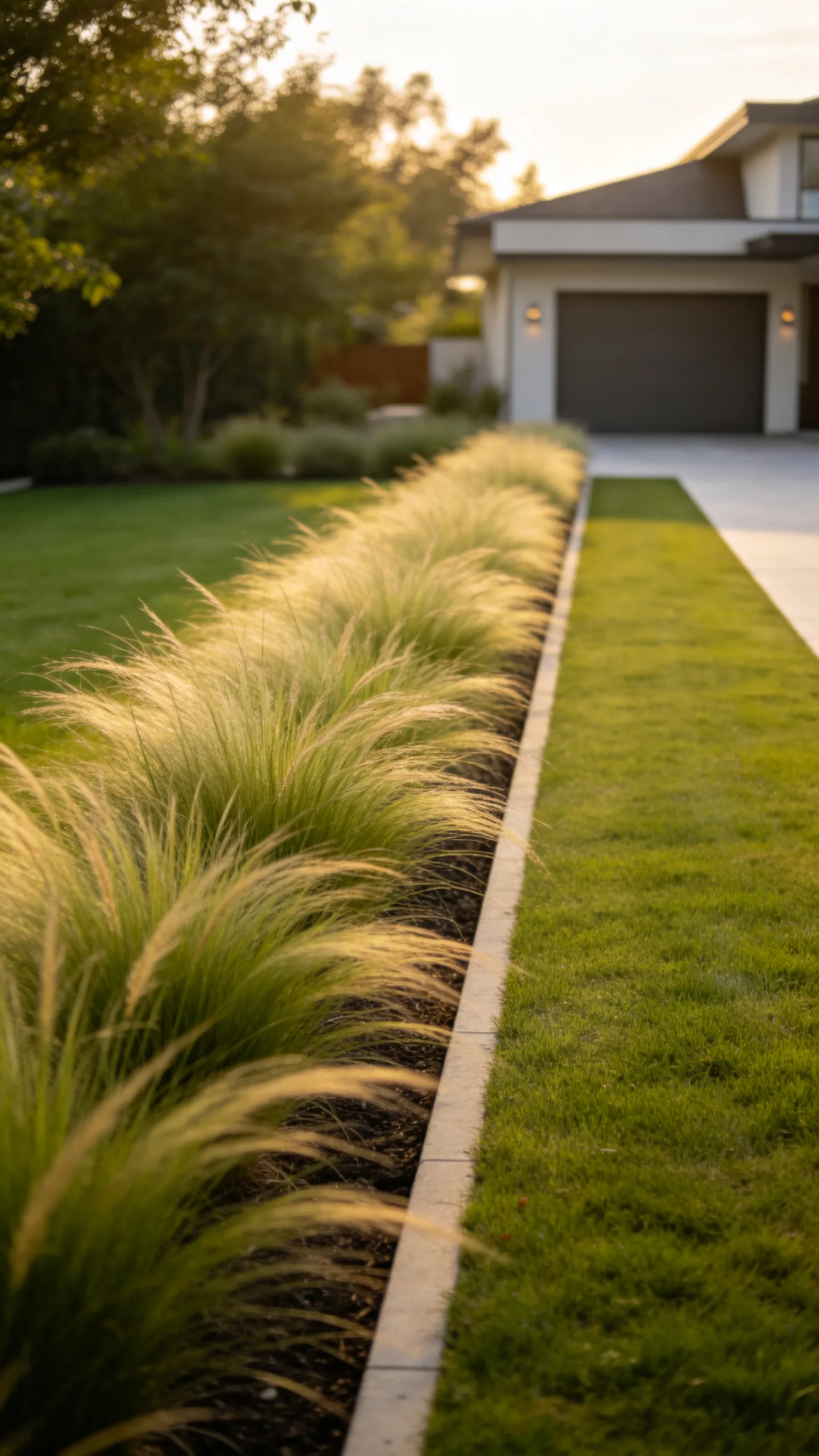
Install a narrow bed of ornamental grasses along one side of the lawn for texture and movement. Repeating a single grass variety keeps the composition cohesive and can screen a driveway, utility area, or neighboring walkway.
Select noninvasive clumping grasses that match the available light and moisture. Feather reed grass suits many sunny sites, while sedges can be better for partially shaded or consistently moist locations. Cut back deciduous grasses at the appropriate time in late winter or early spring.
7. Divide the Lawn With a Straight Concrete Walkway
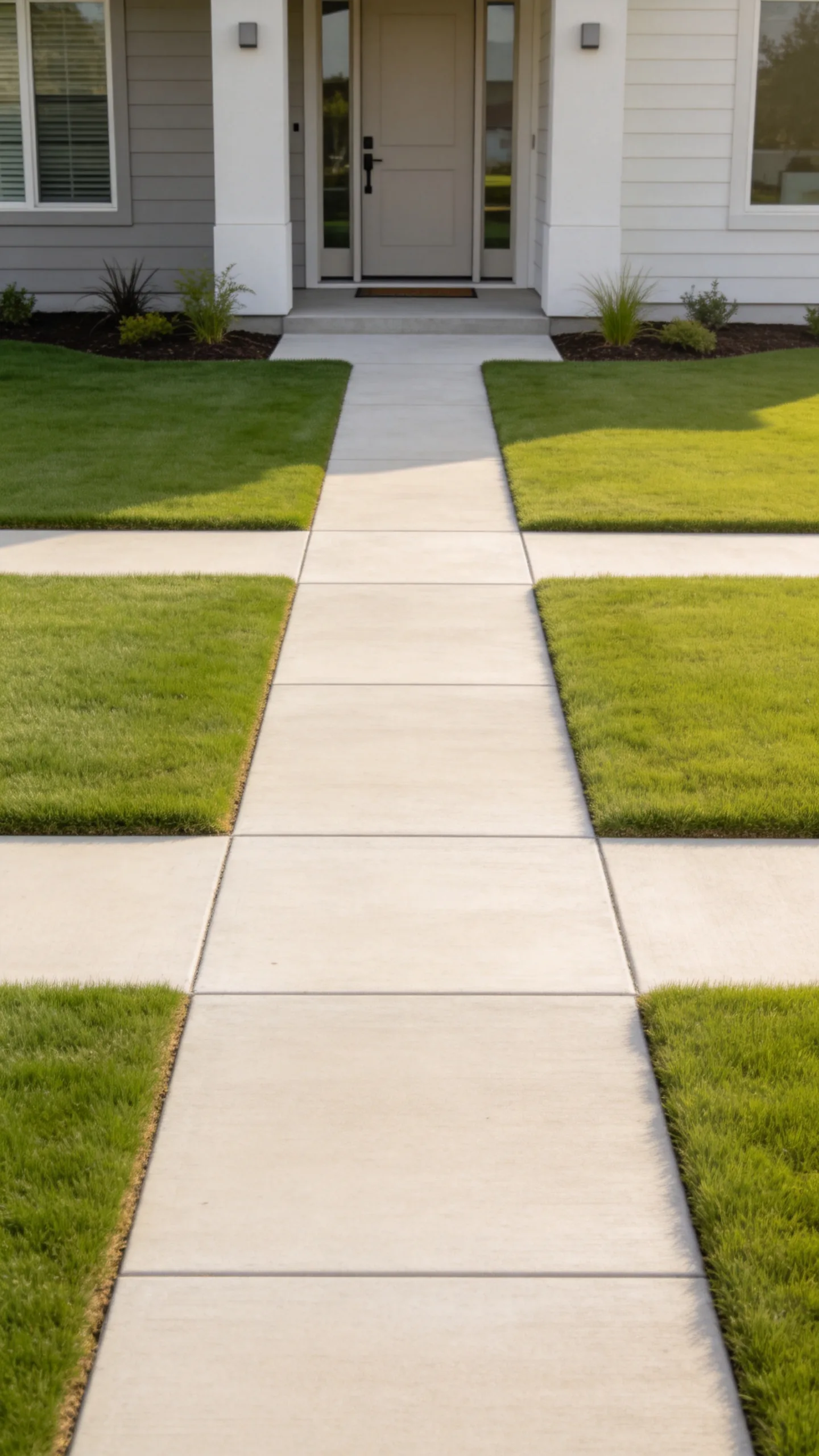
A direct walkway running through the lawn creates symmetry and gives visitors an obvious path to the front door. Poured concrete, precast slabs, or smooth concrete-look porcelain can all support a contemporary exterior.
Make the route wide enough for two people to walk comfortably when space permits. Keep the lawn surface level with the path edge to reduce tripping and simplify mowing, and provide a slight cross-slope so rain does not collect on the paving.
8. Design a Stepped Lawn for a Sloping Yard
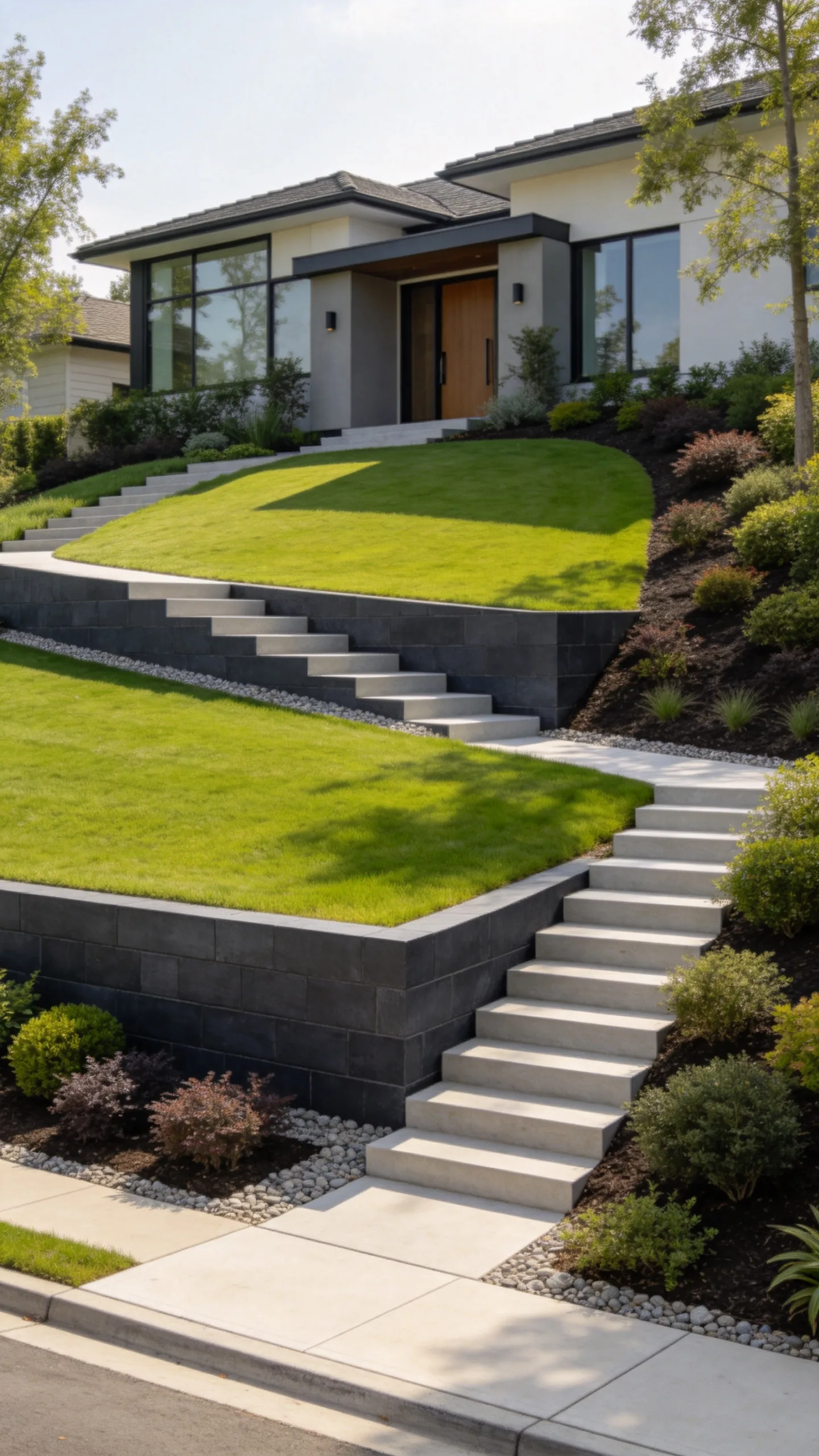
Instead of trying to maintain turf on one continuous incline, divide a sloped front yard into two or three level lawn terraces. Low retaining walls can create usable sections while giving the landscape a crisp architectural structure.
Use materials that coordinate with the house, such as smooth concrete, dark masonry, or cut stone. Proper drainage behind retaining walls is essential, and taller walls may require permits or professional engineering. Reserve the steepest areas for deep-rooted shrubs or ground covers rather than difficult-to-mow grass.
9. Outline the Lawn With a Dark Mulch Bed
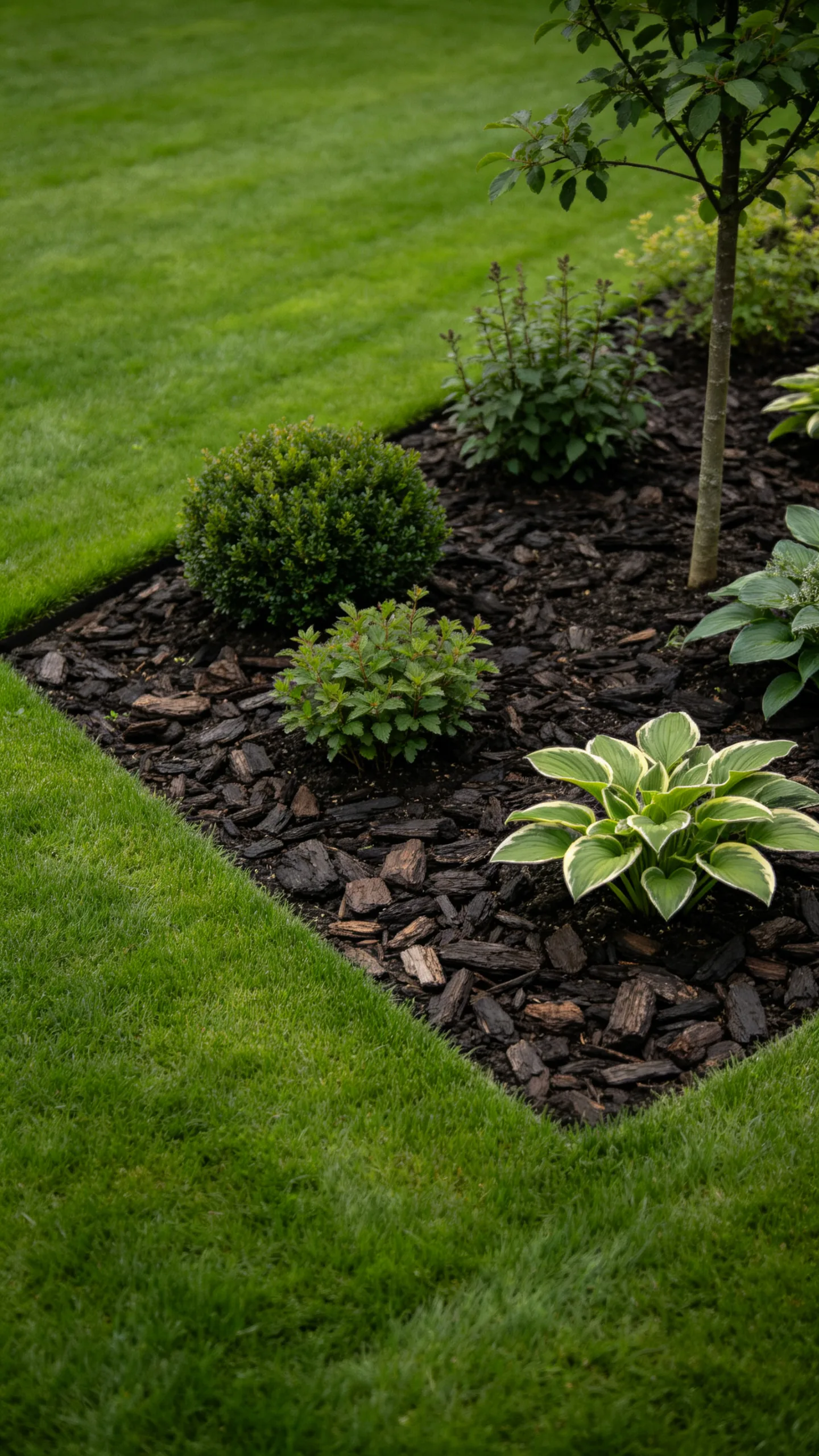
A dark mulch border creates immediate contrast around bright green turf and provides planting space for shrubs or perennials. Use broad, uncomplicated bed lines rather than multiple small curves to maintain a modern appearance.
Install the bed at least wide enough to accommodate the mature spread of its plants. Replenish organic mulch when it becomes thin, but keep it a few inches away from trunks, stems, and the home’s siding to limit moisture problems.
10. Place a Single Feature Tree in the Lawn
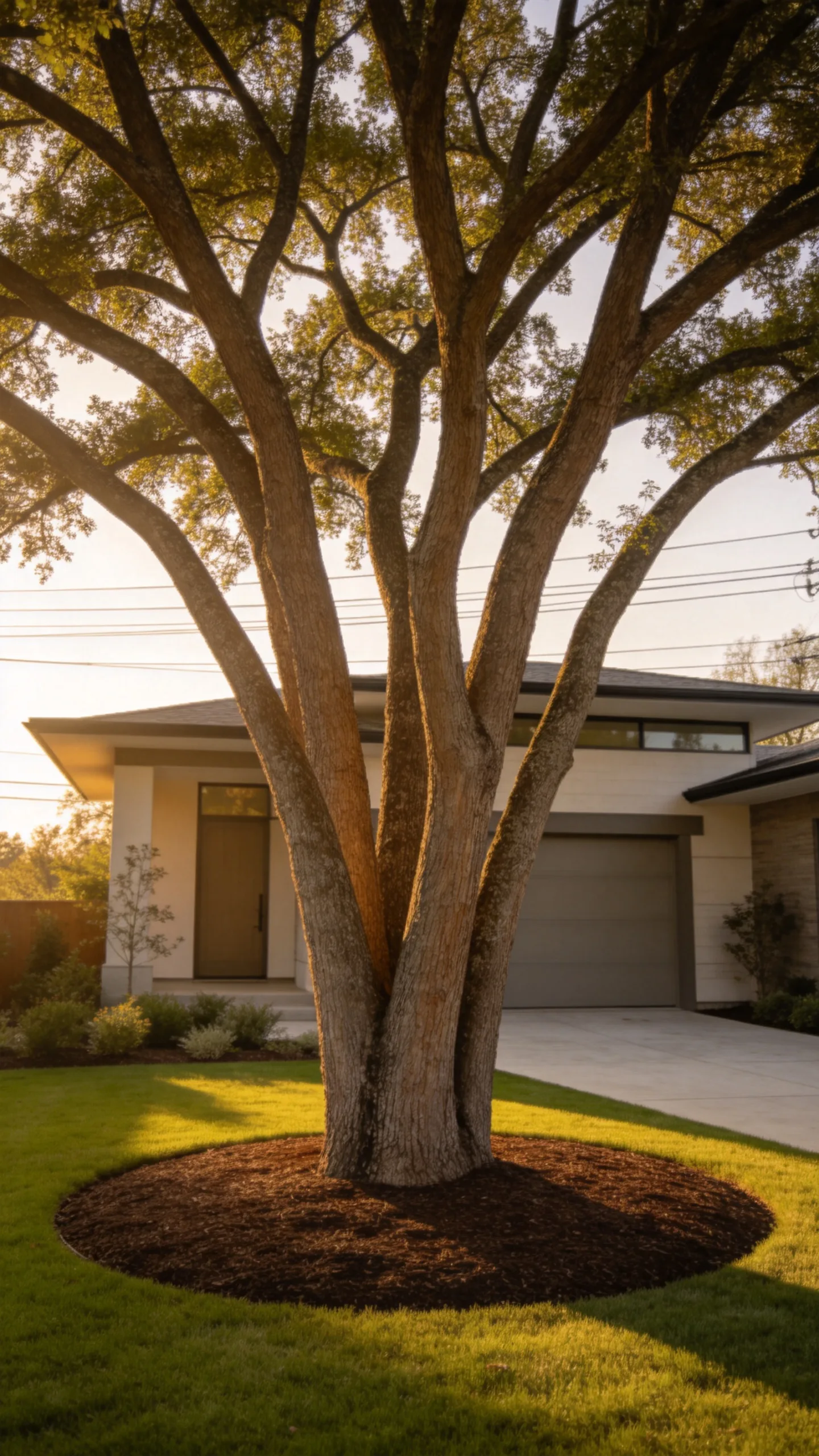
Use one carefully positioned tree as the focal point of an otherwise open lawn. A multi-stem tree or a species with attractive bark can add height and seasonal interest without making the yard feel crowded.
Choose a tree based on mature canopy size, root behavior, local climate, and distance from buildings or utility lines. Create a generous mulch ring around the trunk instead of forcing grass to compete directly with the roots, and expand the ring as the tree grows.
11. Combine Lawn Panels With Ground-Cover Strips
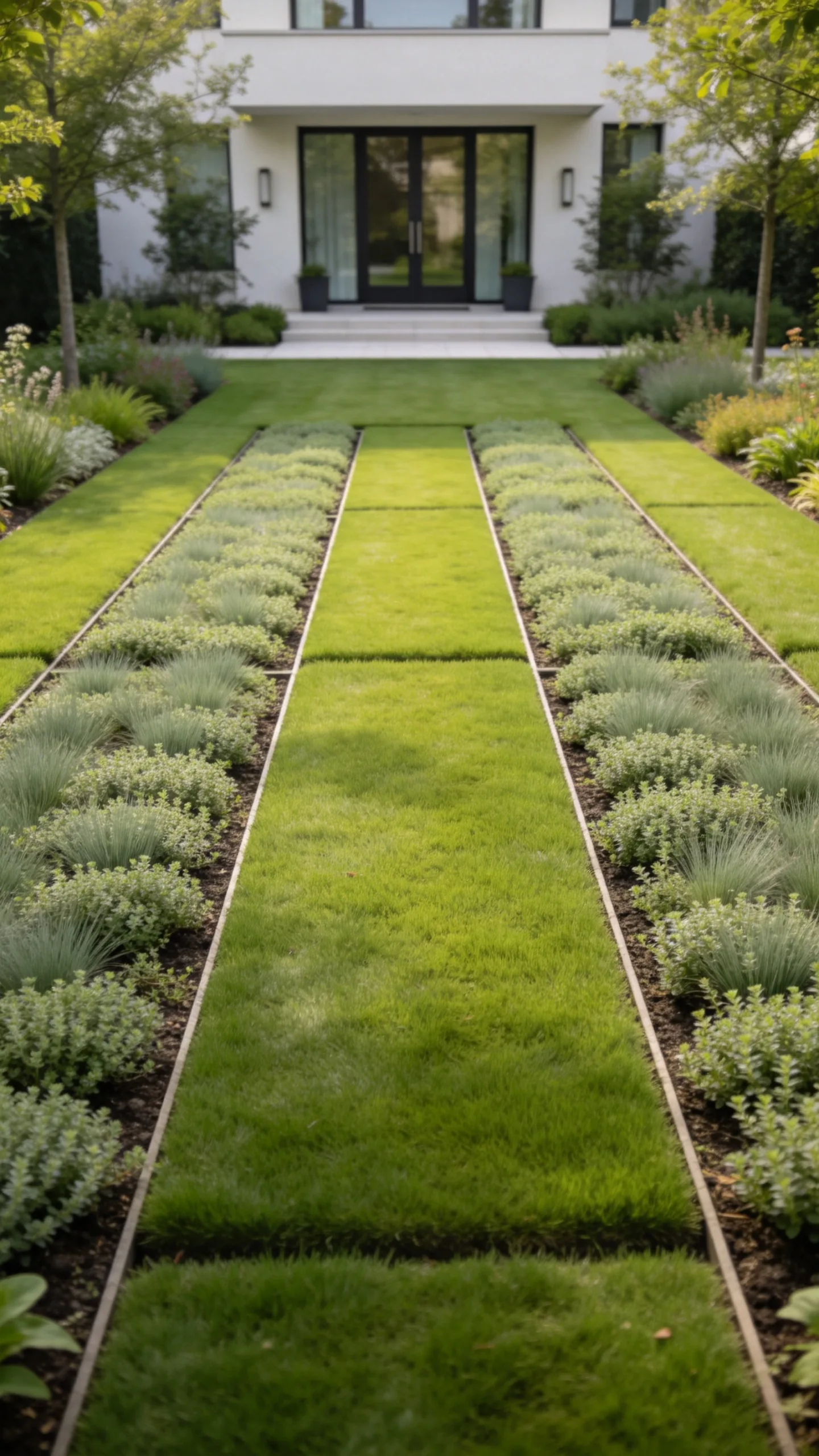
Break a wide front lawn into rectangular grass panels separated by strips of low ground cover. This modular layout introduces color and texture while visually shortening a broad or shallow yard.
Use plants that tolerate the site’s exposure and expected foot traffic. Creeping thyme may suit sunny, well-drained strips, while sedge, mondo grass, or other regionally appropriate ground covers can work in partial shade. Include edging so spreading plants do not invade the turf.
12. Install a Lawn Courtyard Beside the Driveway
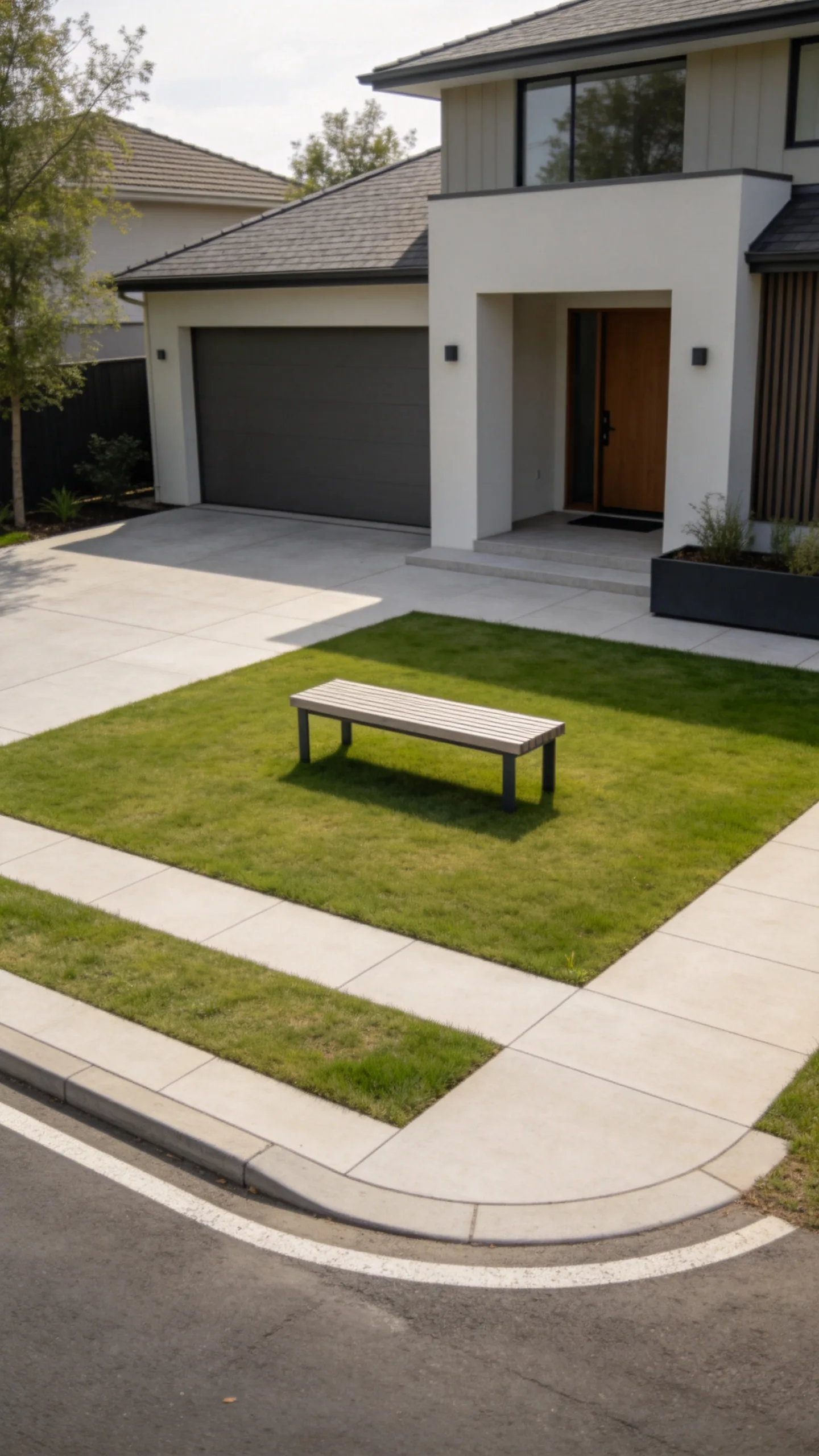
Transform unused space beside the driveway into a small lawn courtyard. A compact square of turf bordered by paving can serve as a visual pause between parked vehicles and the front entrance.
Add one bench, planter, or small tree rather than filling the area with several decorative objects. Protect the grass from vehicle overhang and road salt, and choose a durable turf type if the space will occasionally handle foot traffic.
13. Add a Wide Mowing Strip Around the Grass
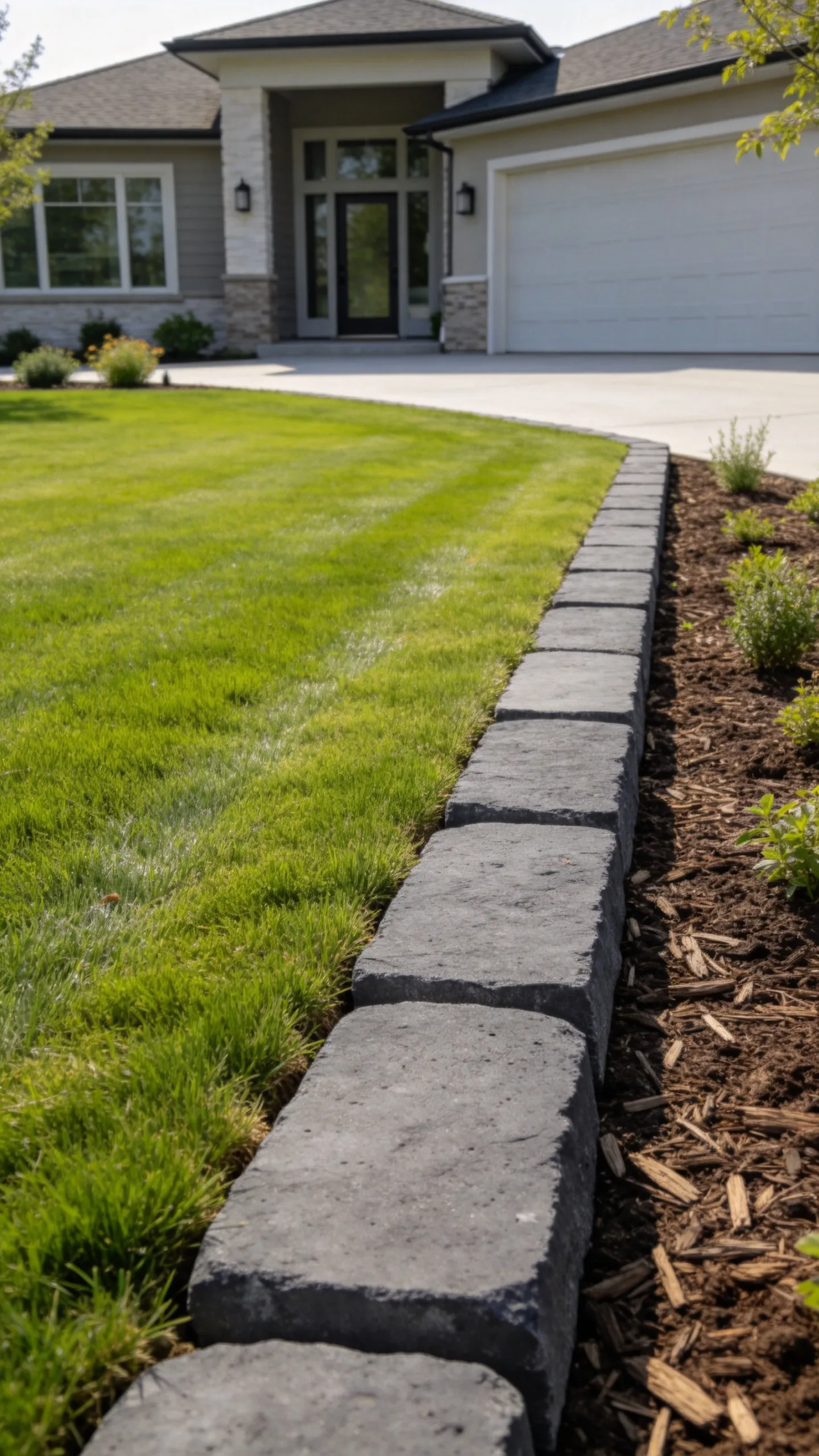
Install a flush band of brick, concrete, or stone around the lawn to create a practical mowing strip. The hard edge prevents turf from creeping into adjacent beds and lets mower wheels travel along the border for a cleaner cut.
Use a restrained material that repeats the color of the driveway, facade, or front steps. Lay the strip over a properly compacted base so it remains level, and avoid narrow units that may shift under equipment or seasonal soil movement.
14. Mix a Small Lawn With Drought-Tolerant Planting
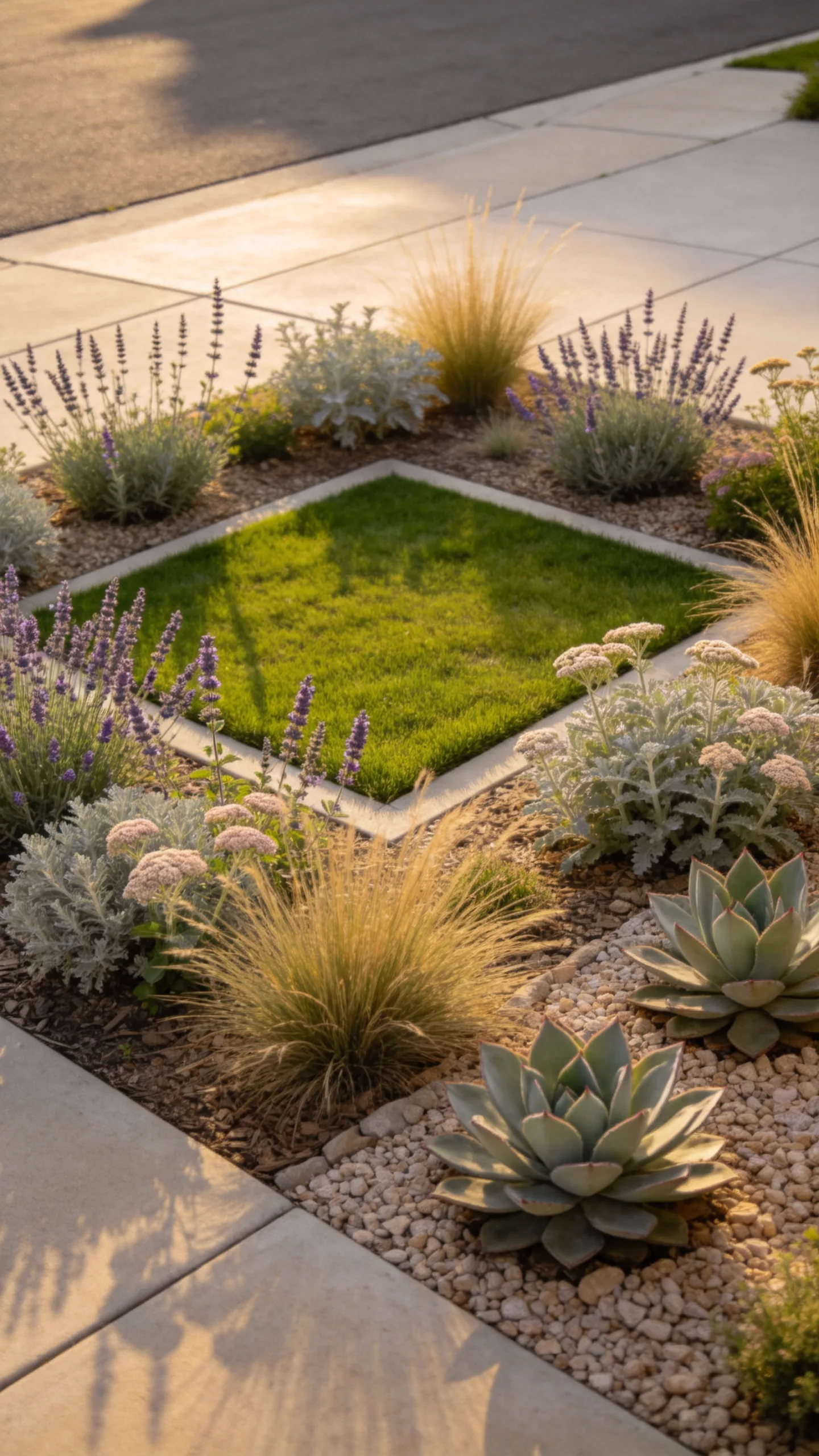
Reduce a large lawn to one purposeful geometric area and fill the remaining space with climate-appropriate, lower-water plants. This keeps the green visual anchor while reducing irrigation needs where dry summers or watering restrictions are common.
Group plants by moisture requirements and place the thirstier lawn on its own irrigation zone. Lavender, salvia, yarrow, agave, manzanita, or ornamental grasses may be suitable in certain regions, but choices should reflect local winter temperatures, rainfall, and soil drainage.
15. Create a Symmetrical Lawn-and-Bed Layout
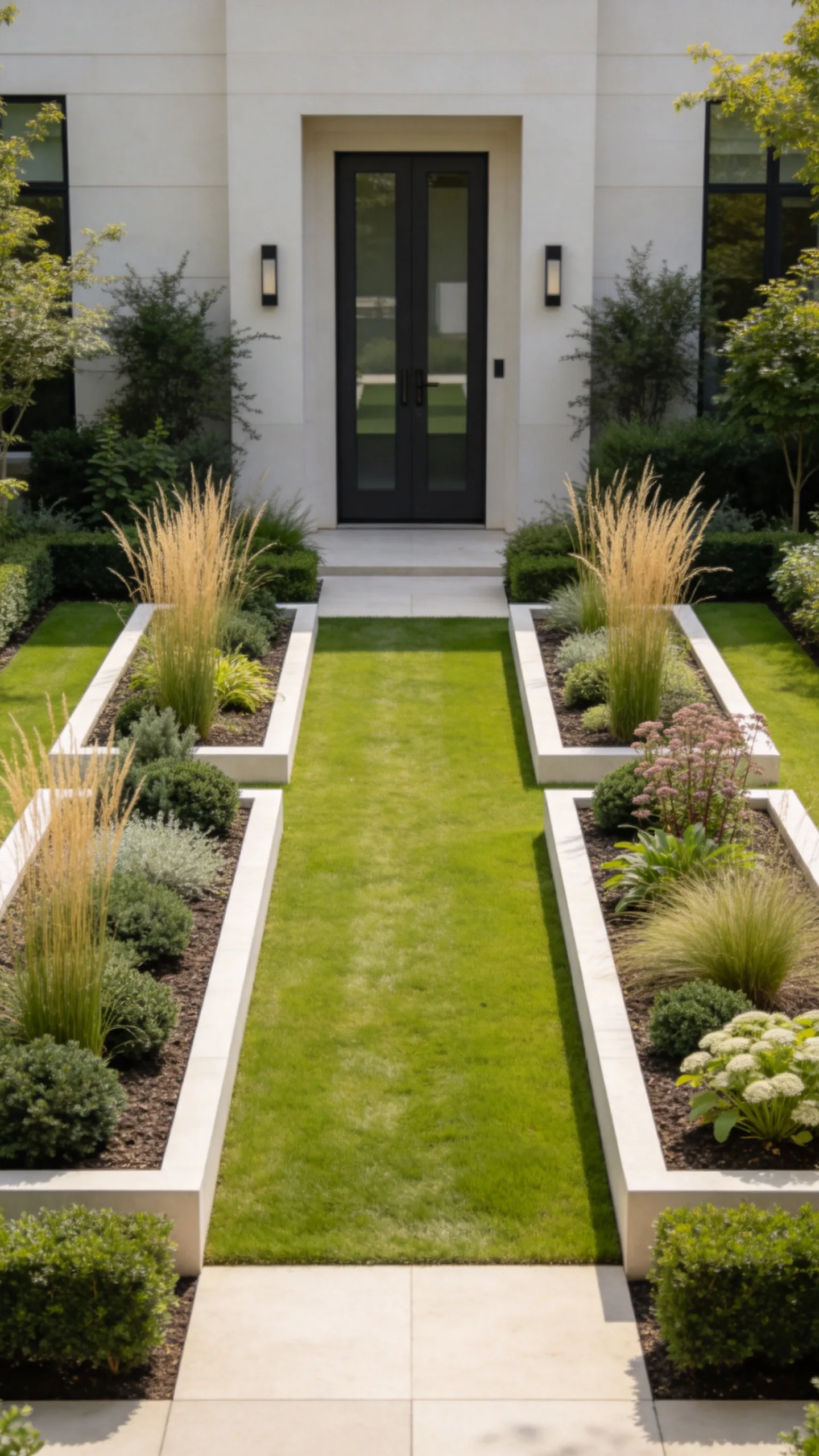
Place a central lawn between matching planting beds for a formal modern entry. Repeating the same shrubs, grasses, or perennials on both sides directs attention toward the front door and brings order to a busy facade.
Keep the plant palette limited to two or three main varieties. Choose species with similar growth rates and maintenance needs, and prune selectively rather than forcing every plant into an unnaturally tight shape.
16. Curve One Lawn Edge for a Softer Modern Look
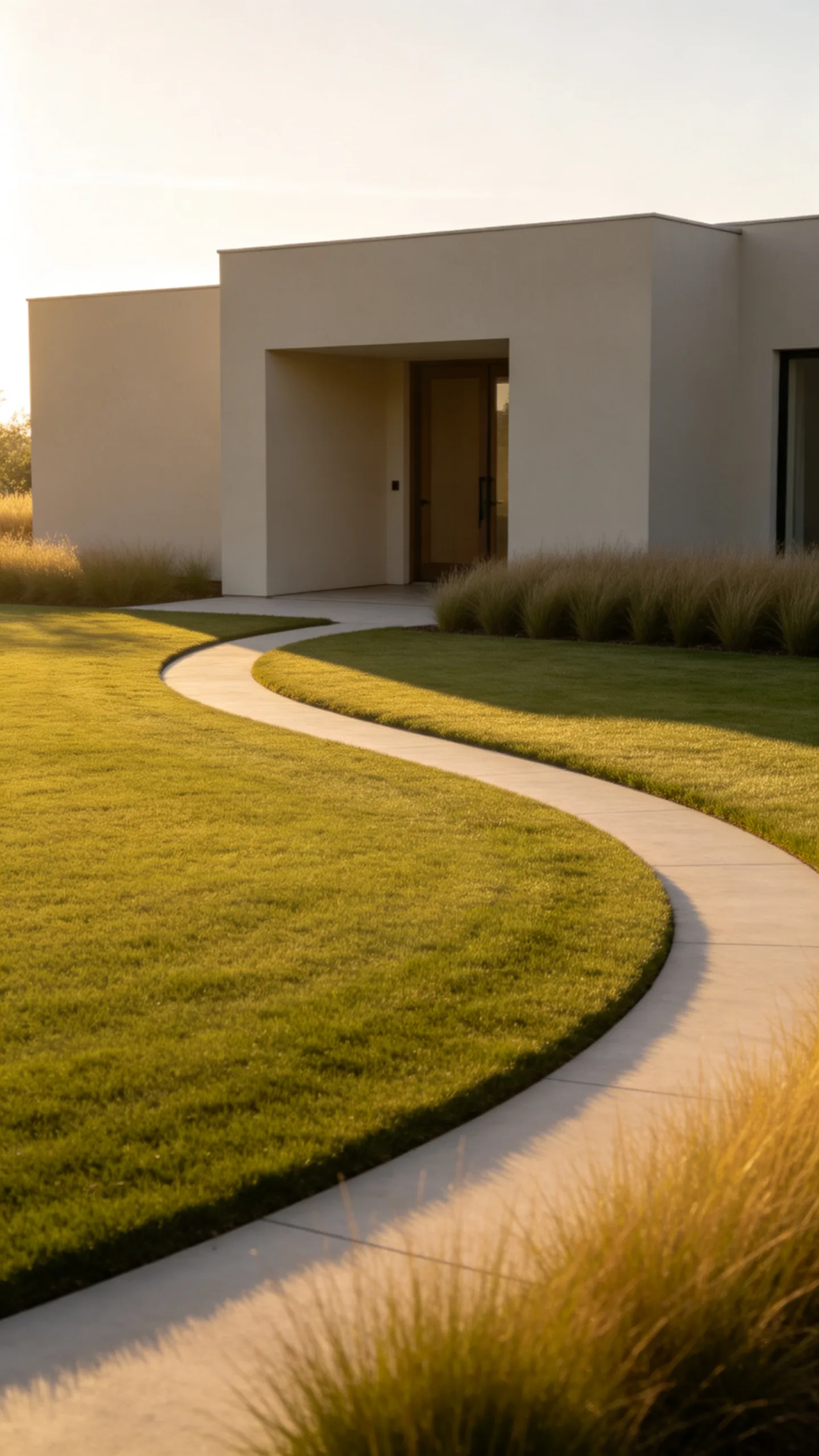
Modern landscaping does not have to rely entirely on right angles. A single broad curve can guide the eye toward the entrance while balancing a rectangular house, driveway, or sidewalk.
Create the curve with a garden hose before cutting the new edge, and avoid small waves that complicate mowing. Pair the smooth boundary with simple planting masses so the result remains contemporary rather than overly ornamental.
17. Add Raised Planters Along the Lawn Boundary
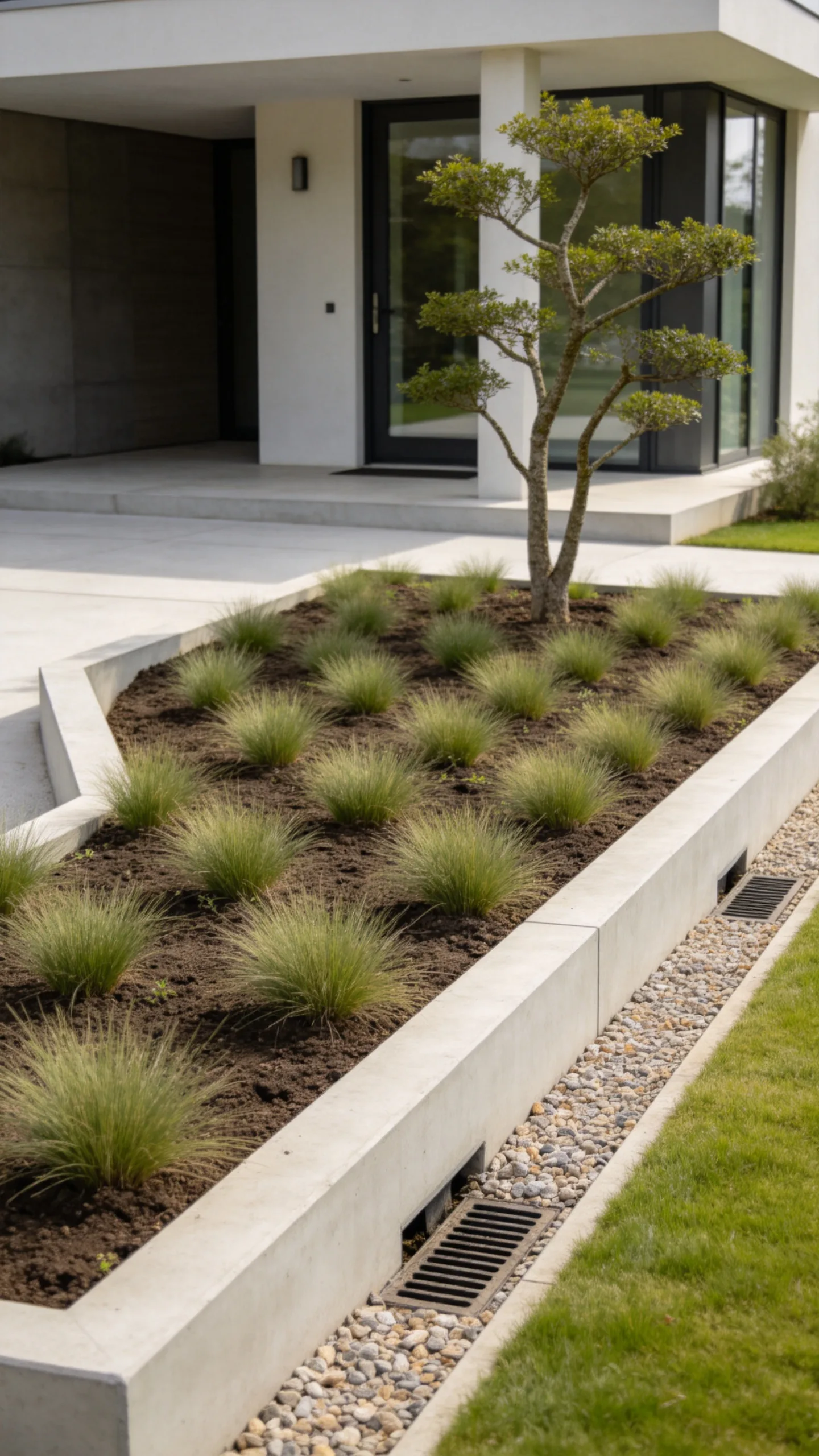
Low raised planters can frame a lawn while introducing height near the porch or property line. Smooth concrete, rendered masonry, weathering steel, or timber planters work well with modern architecture.
Fill them with free-draining soil suited to the selected plants, and include drainage outlets that do not empty onto walkways. Repeat one small tree, evergreen shrub, or ornamental grass rather than mixing many unrelated species in a narrow container.
18. Use Artificial Turf in a Tiny Enclosed Front Yard
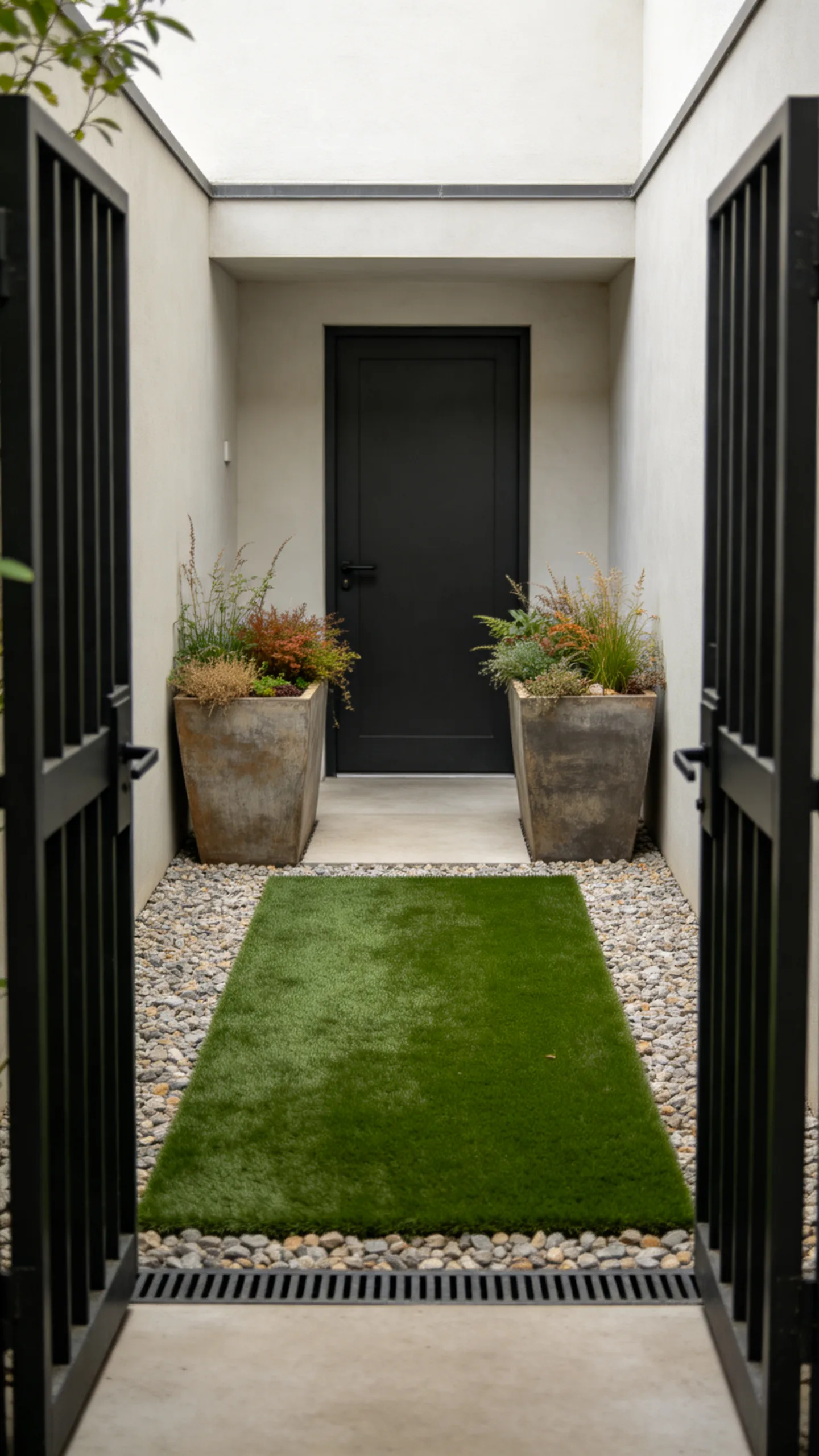
Where sunlight is limited, access is difficult, or a very small lawn receives constant wear, high-quality artificial turf can provide a green surface without mowing. It is best reserved for compact areas rather than treated as a universal replacement for living landscape.
Prepare a stable, permeable base and direct runoff toward an appropriate drainage area. Break up the synthetic surface with planting beds or large containers to add habitat and seasonal interest, and check local rules regarding installation, heat, and stormwater management.
19. Highlight the Lawn With Low-Voltage Lighting
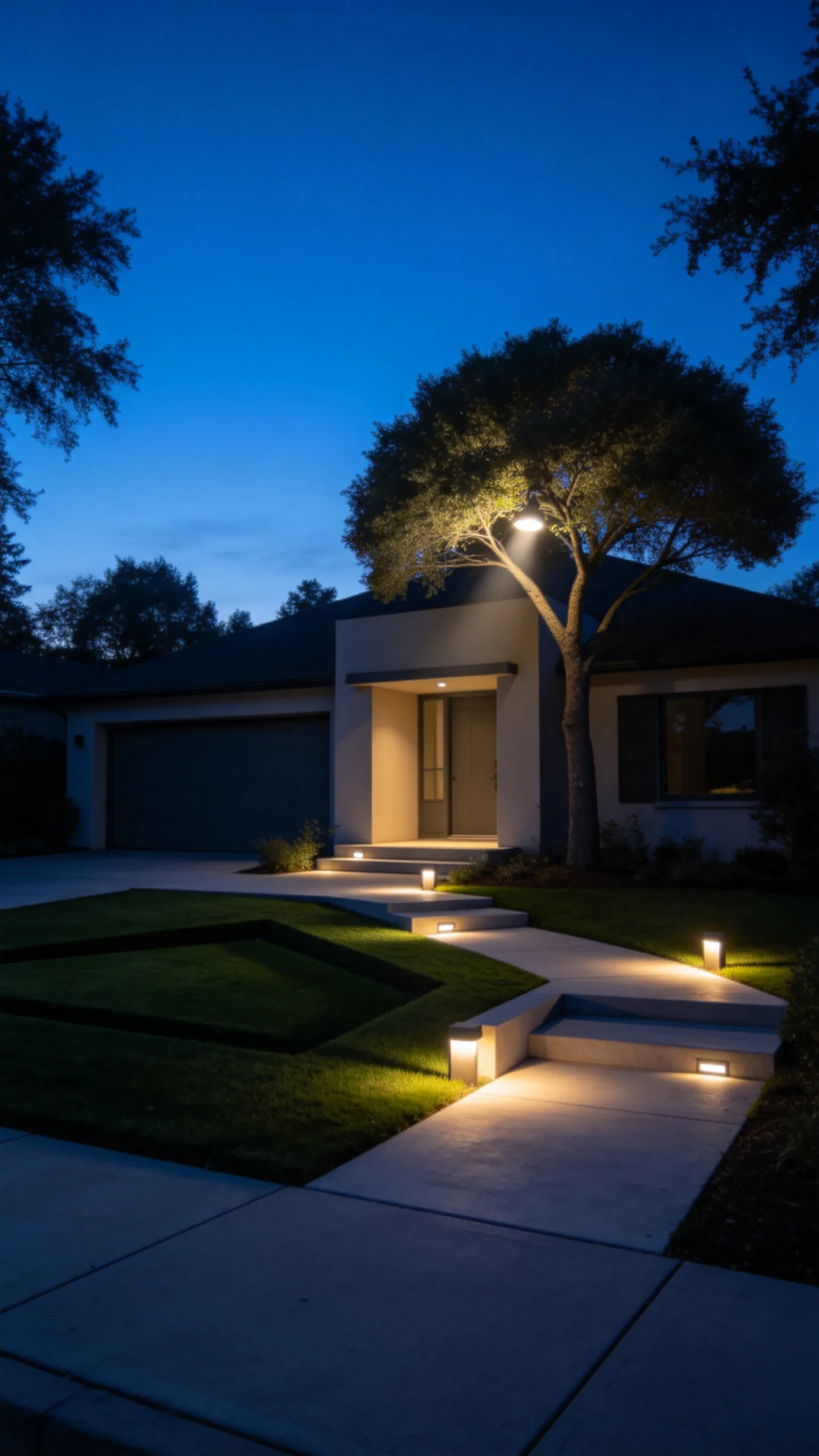
Place discreet low-voltage fixtures around the lawn to emphasize its shape after sunset. Recessed path lights, shielded bollards, or small fixtures aimed at a feature tree can improve visibility without creating excessive glare.
Focus light on steps, path changes, and the front entrance rather than illuminating every edge. Use warm-colored lamps, angle fixtures away from neighboring windows, and connect the system to a timer or dusk sensor to limit unnecessary overnight lighting.
20. Build a Privacy Screen Behind the Lawn
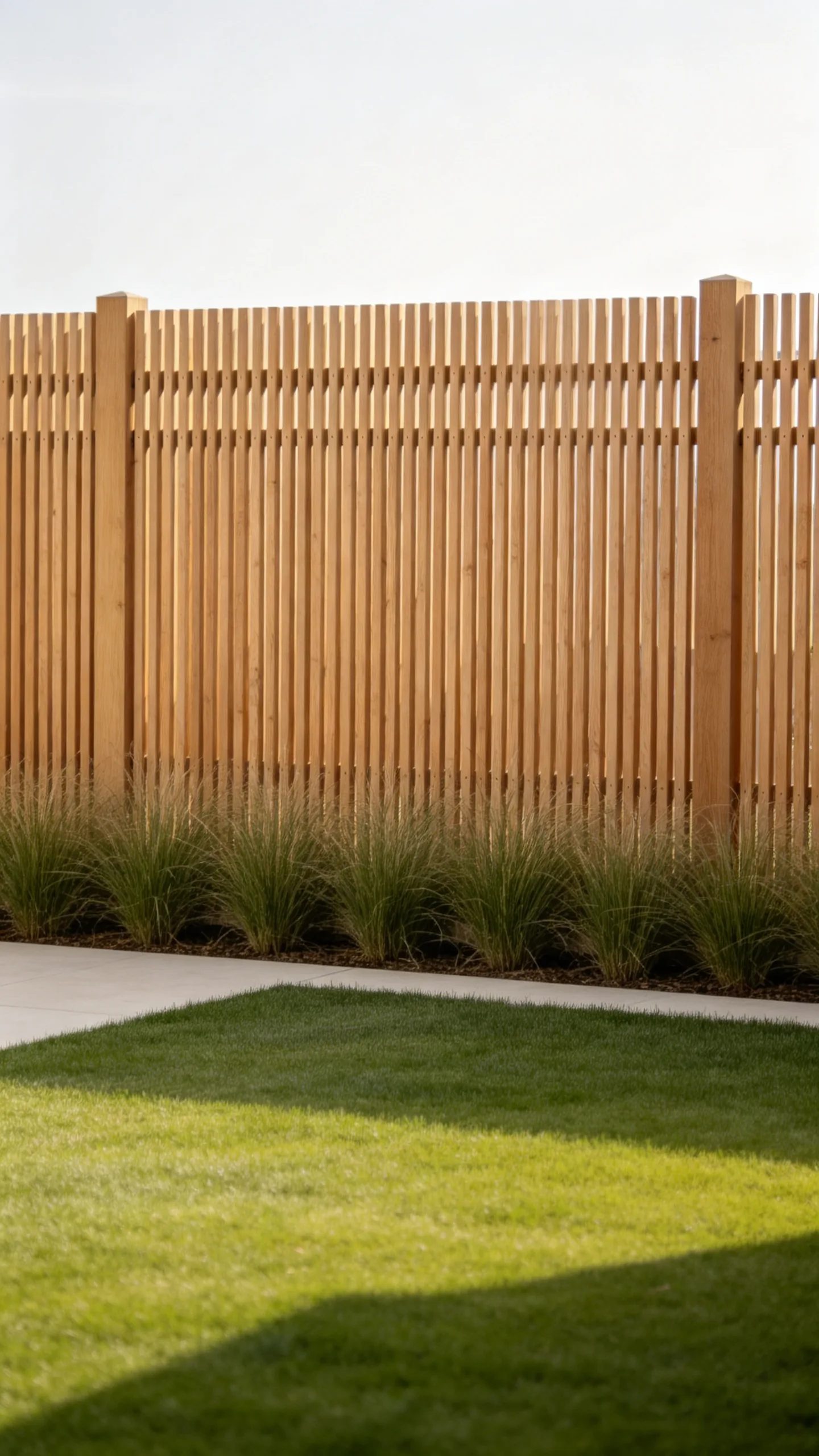
A slim privacy screen can make an exposed front lawn feel more defined without consuming the space required by a wide hedge. Vertical timber battens, metal panels, or an open trellis create a clean backdrop for the grass.
Check front-yard height and setback restrictions before installation. Soften the structure with a restrained row of clumping grasses or a manageable vine, ensuring the chosen plant will not damage the screen or require constant pruning.
21. Replace the Traditional Lawn With a Clover-Turf Mix
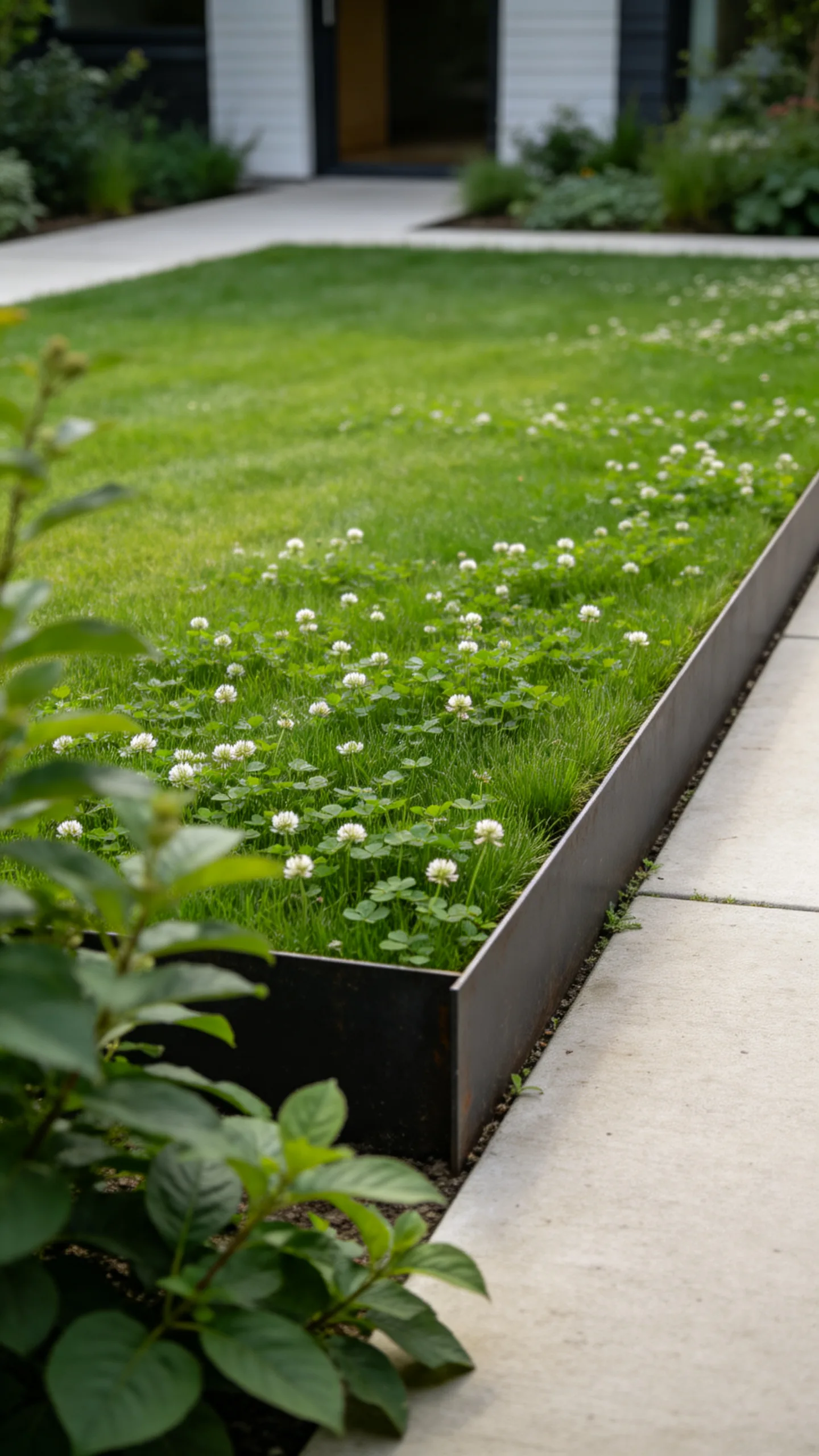
For a softer alternative to a conventional grass monoculture, establish a lawn containing fine turfgrass and low-growing clover where local conditions support it. The mixture can create a relaxed green surface while fitting a modern yard when contained within crisp geometric edges.
Select seed suited to the site’s light, rainfall, and expected use, and confirm that clover is appropriate in your region. Prepare the soil, sow during a suitable cool and moist season, and water consistently during establishment. Mow slightly higher than a closely clipped ornamental lawn to help the mixed planting remain dense.