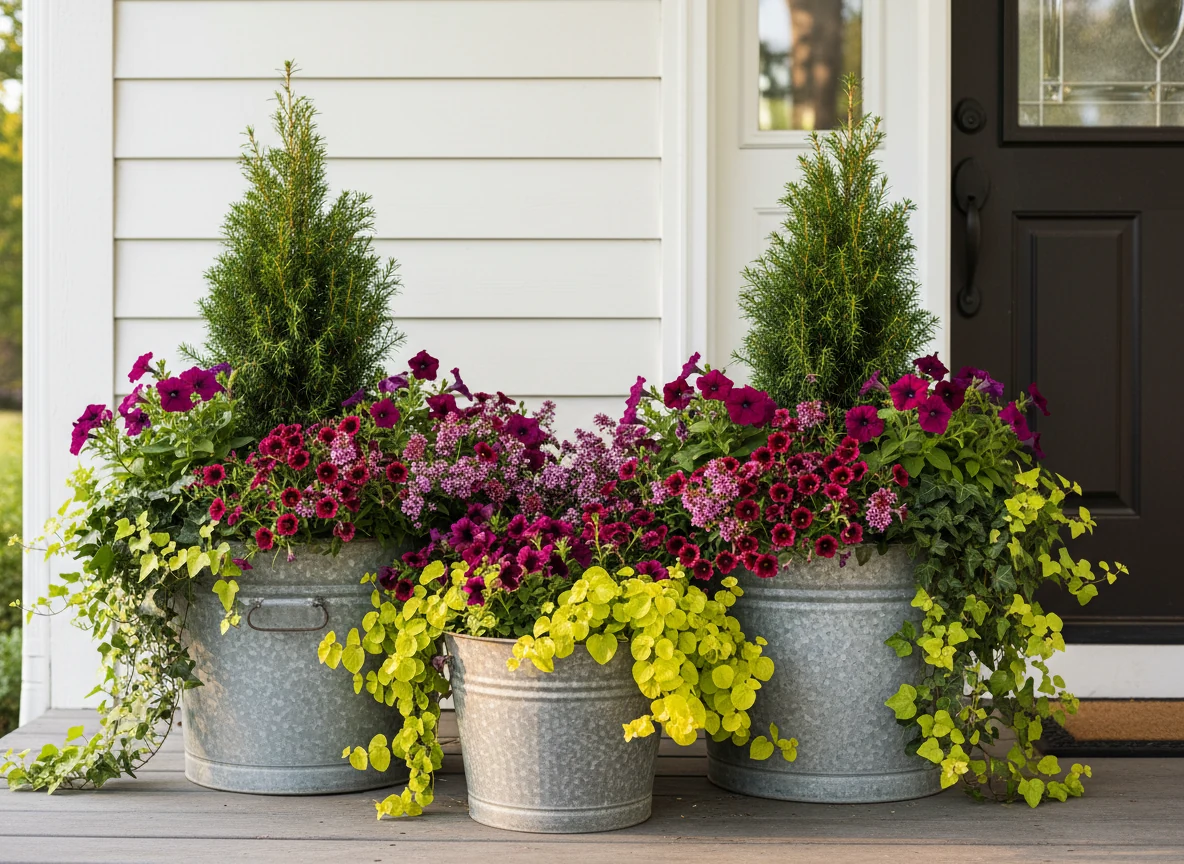
Front Porch Wash Tub Planters: Flower Pairings for All-Season Color
You want your front porch to feel like a warm welcome, not a waiting room. Vintage wash tub planters deliver that vibe instantly—casual, charming, and big enough to make a statement. Add the right flower pairings and you’ll get color from spring tulips through winter evergreens. Let’s turn those tubs into four-season showpieces without fuss or garden drama.
Why Wash Tub Planters Steal the Porch Show

Wash tubs offer generous space, so you can build layered plantings that feel lush and intentional. The galvanized patina plays well with cottage, farmhouse, and modern styles, so you never worry about clashing. They sit low and wide, which means neighbors notice them and your cat can’t knock them off a railing. Plus, you can swap plants by season quickly, because the opening makes access easy.
Choose the Right Tub
Aim for 18–24 inches deep and at least 20–24 inches across for healthy roots and dynamic layers. - Metal matters: Galvanized steel handles outdoor weather best. Avoid thin aluminum; it dents and heats up faster.
- Handles help: Grab a tub with side handles for painless repositioning.
- Drainage or bust: Drill holes in the bottom (more on that in a minute). Otherwise, you build a swamp.
Color All Year: The Pairing Playbook
You want nonstop color, but seasons change, and plants have moods. So we use flexible pairings that anchor with foliage and swap flower-forward pieces as the months shift. Think of the tub like a stage: long-lived greenery holds the scene, while star performers rotate in and out when their time comes. No stress, no empty pots.
Thriller–Spiller–Filler, Simplified
- Thriller (height + drama): Use ornamental grasses, dwarf conifers, or a compact shrub. They create the backdrop and stay put across seasons.
- Filler (mid-layer color): Choose perennials and seasonal annuals with repeat blooms. They cover the center and play backup vocals.
- Spiller (edges + flow): Trailers soften the rim. Think ivy, creeping Jenny, bacopa, or trailing petunias for instant romance.
Pro tip: Build the tub around a year-round anchor (evergreen, grass, or hardy perennial) so you never face a naked planter.
Sun vs. Shade: Pick the Right Cast for Your Porch
Your porch’s light decides everything. Don’t fight it—embrace it. Full sun wants heat-loving blooms, while shade demands texture and foliage flair. You get happy plants, consistent color, and fewer guilt-driven “plant recovery” purchases.
Full Sun Cast
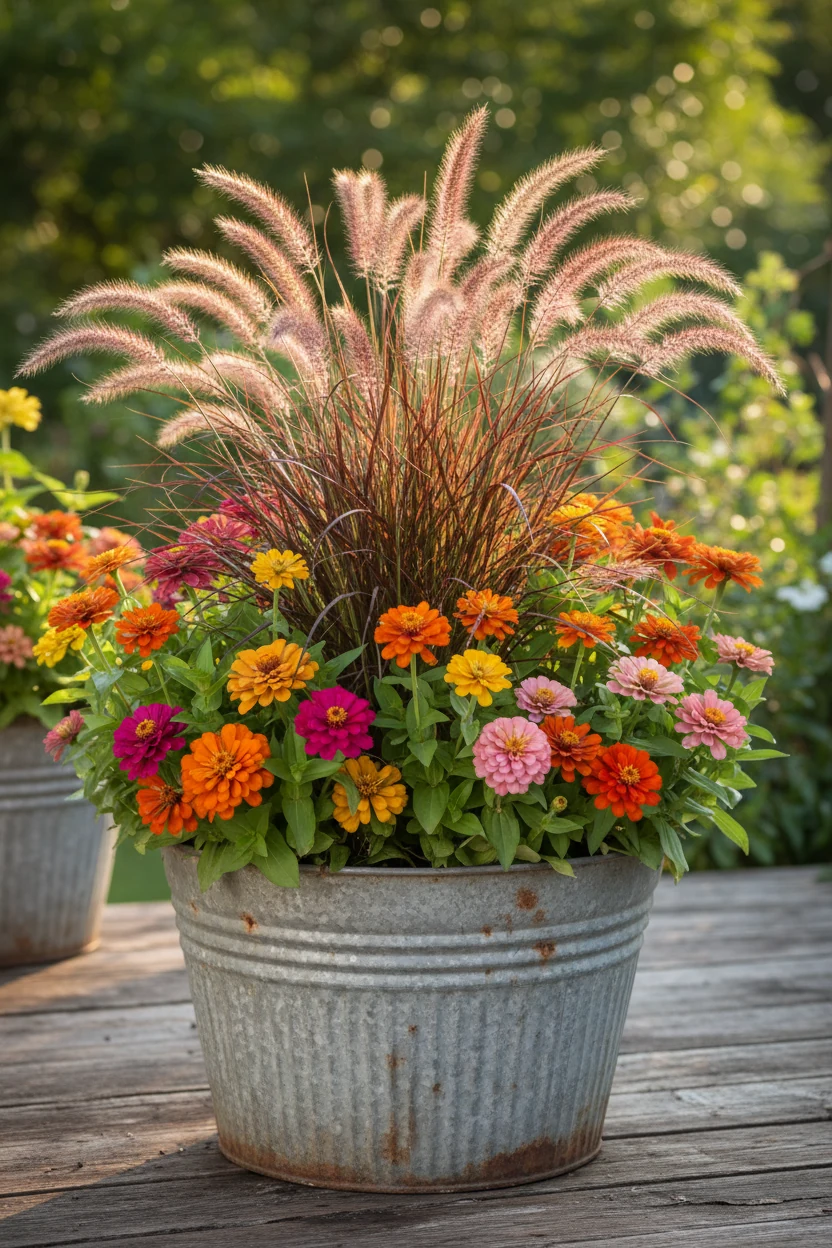
- Anchor: Dwarf conifer (like ‘Little Gem’ spruce) or purple fountain grass.
- Filler: Zinnias, geraniums, calibrachoa, verbena, salvia.
- Spiller: Trailing lantana, sweet potato vine, creeping Jenny (in part sun), or ivy geraniums.
- Seasonal swaps: Tulips/daffodils in early spring; mums in fall; winter pansies + evergreen sprigs for cold months.

Part Shade Crowd
- Anchor: Heuchera (coral bells) or evergreen boxwood.
- Filler: Impatiens, begonias, lobelia, foxglove (spring), and snapdragons (cool seasons).
- Spiller: Bacopa, ivy, variegated vinca.
- Seasonal swaps: Spring primroses; summer New Guinea impatiens; fall asters; winter hellebore + moss accents.

Mostly Shade Beauties
- Anchor: Ferns or dwarf Japanese forest grass (Hakonechloa).
- Filler: Hostas, heuchera, and torenia (wishbone flower for bloom in shade).
- Spiller: Golden creeping Jenny, trailing English ivy, lamium.
- Seasonal swaps: Spring bulbs underplant; fall add ornamental cabbage; winter tuck in hardy evergreen sprigs.
Season-by-Season Pairings That Deliver
Let’s build practical combos you can plant, enjoy, and tweak. Use one tub or create a matching pair to frame your steps. Want drama? Go asymmetrical: tall anchor left, spillers right, for instant movement.
Early Spring: Buds and Cheer
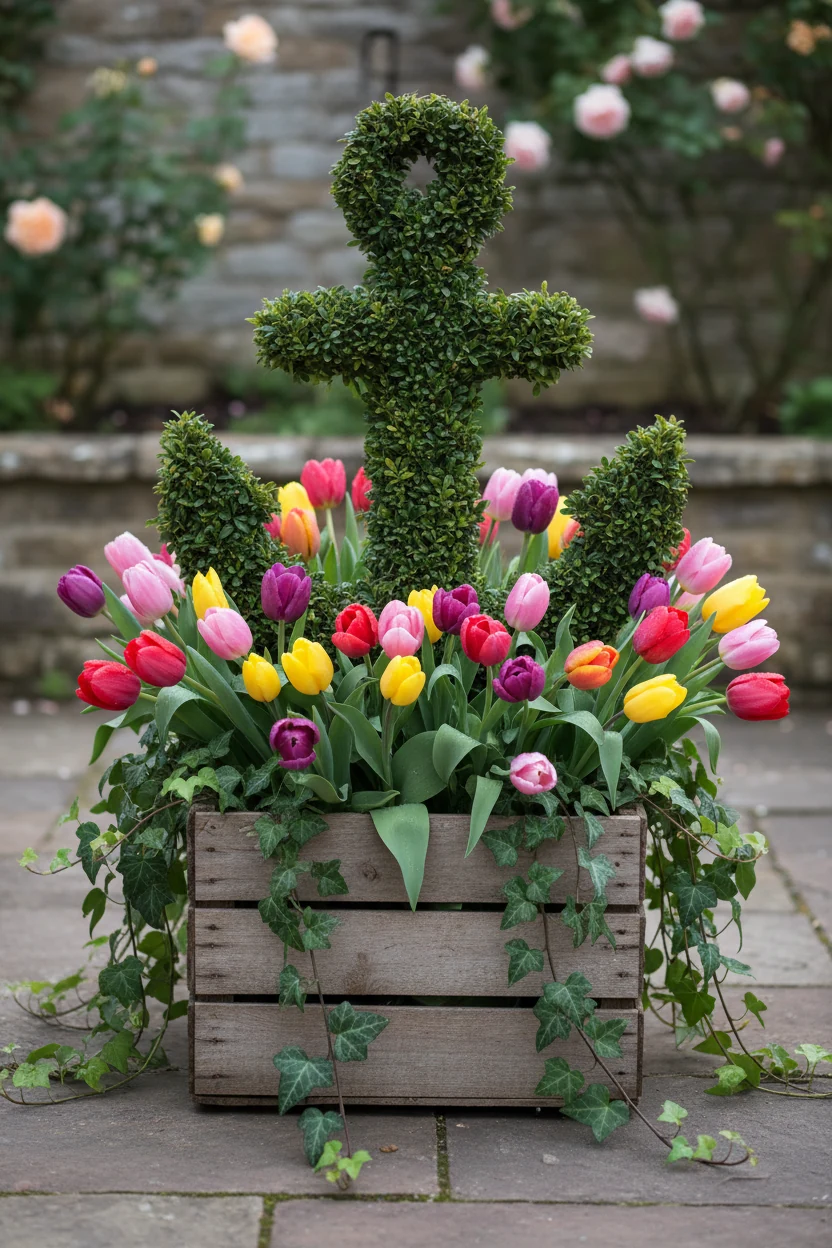
- Anchor: Small boxwood or dwarf conifer.
- Filler: Tulips, daffodils, hyacinths (pre-chilled bulbs or nursery pots).
- Spiller: Ivy or creeping Jenny for green continuity.
- Accent: Primroses or pansies for extra pop on cold mornings.
Tip: Use potted bulbs so you can swap them out fast after bloom. No digging. No tears.
Late Spring to Early Summer: Fresh and Layered
- Anchor: Heuchera with caramel or burgundy leaves.
- Filler: Snapdragons, foxglove (for height), or osteospermum (African daisy).
- Spiller: Bacopa and lobelia for soft edges.
- Accent: Sweet alyssum for honey fragrance near the door.
Move: Replace spent spring bulbs with compact geraniums or verbena for continuous bloom.
Peak Summer: Bold and Sun-Ready
- Anchor: Purple fountain grass or dwarf sunflower (front porch with full sun).
- Filler: Zinnias, calibrachoa, petunias, and salvia for steady color.
- Spiller: Sweet potato vine or trailing lantana.
- Accent: A small basil or rosemary plant—edible and pretty. Why not multitask?
Keep it blooming: Deadhead zinnias and petunias weekly. Your scissors become your secret weapon.
Early Fall: Cozy and Textured
- Anchor: Ornamental grass or evergreen shrub stays.
- Filler: Mums, asters, or rudbeckia for gold and berry tones.
- Spiller: Creeping Jenny (turns chartreuse to bronze as temps cool).
- Accent: Ornamental kale/cabbage for sculptural interest.
FYI: Mums love sun and consistent water. Starve them, and they pout.
Holiday + Winter: Evergreen and Frost-Proof
- Anchor: Dwarf conifer remains center stage.
- Filler: Winter pansies or violas in mild climates; switch to decorative cut greens where winters bite.
- Spiller: Ivy stays green and forgiving.
- Accent: Pinecones, birch branches, and LED micro-lights. It’s festive without yelling.
Note: In freezing zones, use insulating pot feet to lift the tub off icy surfaces and protect roots.
Low-Maintenance Rotation Schedule
- March–April: Add potted bulbs + pansies around your evergreen anchor.
- May–June: Swap bulbs for snapdragons, osteospermum, or begonias.
- July–August: Upgrade to heat lovers: zinnias, calibrachoa, lantana, salvia.
- September–October: Slide in mums, asters, ornamental kale.
- November–February: Keep evergreen center, add winter pansies (mild zones) or decorative greens.
Soil, Drainage, and Water: Keep Tubs Happy
Metal tubs look iconic, but they trap water and heat if you ignore basic setup. Create drainage, use light potting mix, and water smart. Your plants will thrive, and you won’t babysit them every day.
Quick Prep Checklist
- Drill 6–10 drainage holes in the bottom (½-inch bit). Space evenly.
- Add a mesh layer or a piece of landscape fabric to keep soil from washing out.
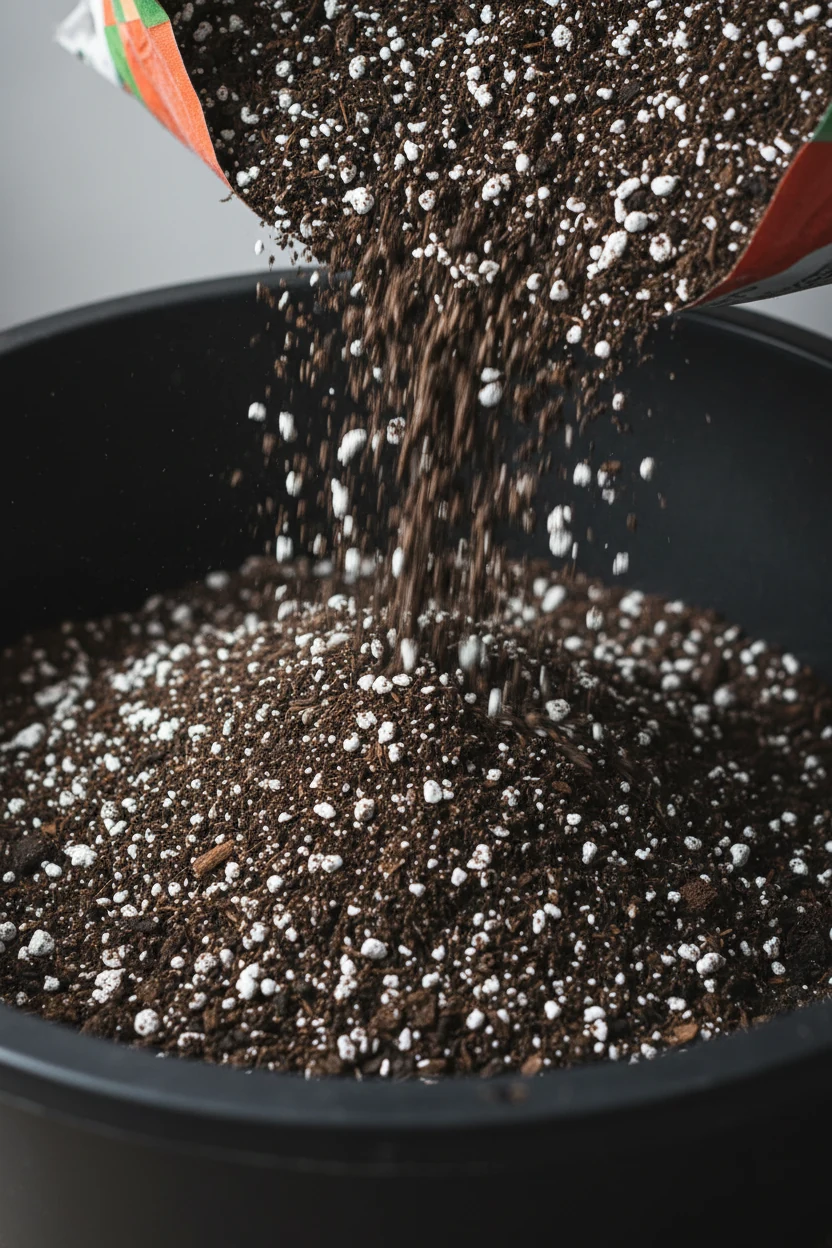
- Fill two-thirds with high-quality potting mix (not garden soil). Mix in perlite for airflow.
- Blend slow-release fertilizer into the top half of the soil for steady nutrients.
- Top off after settling, then plant anchors first, fillers second, spillers last.
- Watering: Soak thoroughly until water runs out the holes, then let the top inch dry before the next drink.
- Feeding: Use liquid bloom booster every 2–3 weeks in peak summer for annuals.
- Heat control: In scorching weather, move the tub a foot back from full sun or add morning sun/afternoon shade.
IMO: Good drainage solves 80% of container drama. You can’t fix root rot with pep talks.
Design Tricks: Height, Texture, and Color That Pop
You want eye-catching tubs that still feel relaxed. Think repetition and restraint, not “every plant at the garden center.” Choose a color story, echo it across the porch, and let foliage do half the work.
Make It Pop Without Trying Too Hard
- Go with a palette: Pick two main colors + one accent (e.g., berry, gold, and white).
- Repeat plants across tubs: Consistency reads polished even with vintage containers.
- Play with texture: Combine glossy leaves (begonias) with feathery grasses and velvety heuchera.
- Use odd numbers: Plant in 3s and 5s for a natural look.
- Lift for impact: Set tubs on risers or bricks to vary heights and improve drainage.
Porch Microclimate Fixes
- Wind buffer: Add a taller anchor or trellis piece to protect delicate blooms.
- Heat bounce: Metal warms quickly; line inside walls with corrugated plastic to reduce heat transfer.
- Splash zone: If rain misses your covered porch, schedule hand-watering and mulch the soil surface with bark chips to retain moisture.
Troubleshooting: When Things Wilt, Yellow, or Flop
Stuff happens. You’ll fix most issues fast if you spot patterns early. Here’s your cheat sheet so you stay in color, not confusion.
- Wilting at midday only: Check soil. If it cools and rebounds at night, increase watering frequency or add afternoon shade.
- Yellow leaves on annuals: Feed more consistently. Use a balanced liquid fertilizer every couple of weeks.
- Leggy petunias or calibrachoa: Shear by one-third and add a dose of bloom booster. They’ll bounce back in days.
- Spillers dominate: Trim trailing vines to keep anchors visible. You run the show, not the ivy.
- Pests (aphids, whiteflies): Blast with water, then apply insecticidal soap. Reapply weekly until gone.
- Root rot: Increase drainage, ditch saucers, and use airy potting mix. Swap badly affected plants promptly.
FYI: If a plant looks truly miserable, replace it. Your porch wants joy, not martyrdom.
FAQ: Your Tub Questions, Answered
Do I need to drill drainage holes in a vintage wash tub?
Yes, absolutely. Without holes, water sits and suffocates roots. Drill several holes across the base and include one near the side edge if you live in heavy rain areas, so excess can escape quickly.
What potting mix works best for large metal planters?
Use a lightweight, peat- or coir-based potting mix with added perlite for airflow. Avoid dense garden soil because it compacts and traps water. A high-quality mix keeps roots happy and lowers the risk of rot.
How do I keep color going in the hottest months?
Choose heat-loving bloomers like zinnias, lantana, calibrachoa, and salvia. Feed them every 2–3 weeks, deadhead regularly, and give them morning sun with a touch of afternoon shade if your porch bakes. You’ll keep blooms coming without constant nursing.
Can I leave my wash tub planters out through winter?
Yes, with smart planning. Use hardy anchors like dwarf conifers or evergreen shrubs, and add winter pansies or decorative greens. Lift the tub on pot feet and avoid waterlogged soil so roots don’t freeze in standing moisture.
How many plants should I put in one big tub?
For a 24-inch tub, go with one anchor, 3–5 fillers, and 2–3 spillers. That mix fills space without crowding. Plants grow fast in containers, so you want wiggle room for airflow and healthy roots.
What’s the easiest way to swap seasons without replanting everything?
Keep the anchor year-round and change the fillers and spillers. Slip new plants into gaps and remove tired ones in one session. You refresh the look in minutes while the anchor keeps the design grounded.
Wrap-Up: Plant, Swap, Enjoy
Front porch wash tub planters deliver big charm and four-season color when you build around a dependable anchor and rotate the stars. Pick plants for your light, feed and water consistently, and trim with confidence. You’ll get a porch that greets you with happy color from chilly March mornings to cozy December nights. And if a plant misbehaves—swap it, smile, and move on.