Shade-Loving Sweet Potato Vine Planter Ideas for North-Facing Porches
You want a shade-loving planter that actually looks lush on a north-facing porch? Sweet potato vine to the rescue. Those trailing, fast-growing vines bring drama even when the sun ghosts your front steps. You get big texture, bold color, and a vine that forgives imperfect care. Let’s build planters that thrive in low light and still look like you fussed (even if you didn’t).
Why Sweet Potato Vine Works on North-Facing Porches
Sweet potato vine (Ipomoea batatas) doesn’t need full sun to show off. It grows beautifully in partial to full shade, especially on porches with bright ambient light. You’ll get softer growth and slightly different color, but the vibe stays lush and intentional.
North-facing porches usually stay cooler and drier. You avoid crispy leaves and midday scorch, which sweet potato vine appreciates. Just remember: less light means slower growth and subtler color shifts.
How Much Shade Is Too Much?
Aim for bright shade or a couple hours of early/late indirect light. If your porch feels like the inside of a forest at dusk, the vine will still grow, but more slowly. It may reach rather than trail and produce larger, thinner leaves.
If you have deep shade, cluster planters near brighter edges of the porch or near a reflective wall. Rotate them monthly so all sides get whatever light exists.
Color Shifts in the Shade
Purple varieties can look more greenish or smoky in shade. Chartreuse types stay bright and punchy even when light drops. Variegated types often lose variegation if it’s too dim. That’s normal, not a crisis.
Bottom line: if you want reliable pop in low light, go chartreuse. If you crave moody drama, go purple and set realistic expectations.
Pick the Right Varieties (Shade MVPs)
Some cultivars handle dim porches like champs. Others pout. Choose wisely and you’ll win summer.
Chartreuse Champions (Best for Bright Color in Shade)
- ‘Margarita’: Big, heart-shaped chartreuse leaves. Holds color in shade like a pro.
- ‘Sweet Caroline Light Green’: Neater habit, excellent in mixed planters.
- ‘Illusion Emerald Lace’: Lacy, cut leaves for texture. Pops in low light.
- ‘SolarPower Lime’: Compact, great for hanging baskets and railing boxes.
Drama Queens (Purples, Reds, and Variegates)
- ‘Blackie’: Deep purple, lobed leaves. In shade, expect a slightly greener, smoky eggplant tone.
- ‘Sweet Caroline Raven’: Dark foliage, refined habit. Looks chic with silver and white companions.
- ‘Tricolor’ (pink/green/cream): Gorgeous, but wants brighter light to keep variegation. On deep porches, it may go mostly green.
- ‘SolarTower Lime’: A climber. Yes, a climbing sweet potato vine. Perfect for a shade trellis moment.
IMO, chartreuse types are the most consistent on north porches. Purple types still slay, but adjust your expectations about color intensity.
Container Basics That Make or Break Your Planter
You can’t cheat physics. Give the vine good bones and it’ll reward you with a waterfall of leaves.
Soil and Drainage 101
- Use a high-quality potting mix (not garden soil). Look for mixes with perlite or pine bark for air flow.
- Choose containers with drainage holes. Non-negotiable. If your dream pot lacks them, add a nursery pot inside it.
- Go bigger. A 12–18 inch pot holds more moisture evenly and reduces stress, especially in shade.
- A thin layer of mesh or coffee filter over the holes keeps soil from washing out. No rocks at the bottom, please.
Watering in the Shade Without Rot
- Check with the finger test. Water when the top 1–2 inches of mix feels dry.
- On shady porches, you’ll likely water 1–3 times per week, depending on pot size and weather.
- Empty saucers after rain. Constantly wet roots = mushy stems and sad vines.
- FYI: Self-watering planters help a ton, but allow the reservoir to draw down occasionally.
Feeding for Foliage
- Mix a slow-release balanced fertilizer into the soil at planting.
- Supplement with a dilute liquid feed every 2–3 weeks if growth slows.
- Don’t overdo nitrogen. In shade, excess N can make floppy, pale growth.
Design Ideas You’ll Actually Want to Copy
Let’s talk recipes. These combos thrive in shade and look intentional on day one.
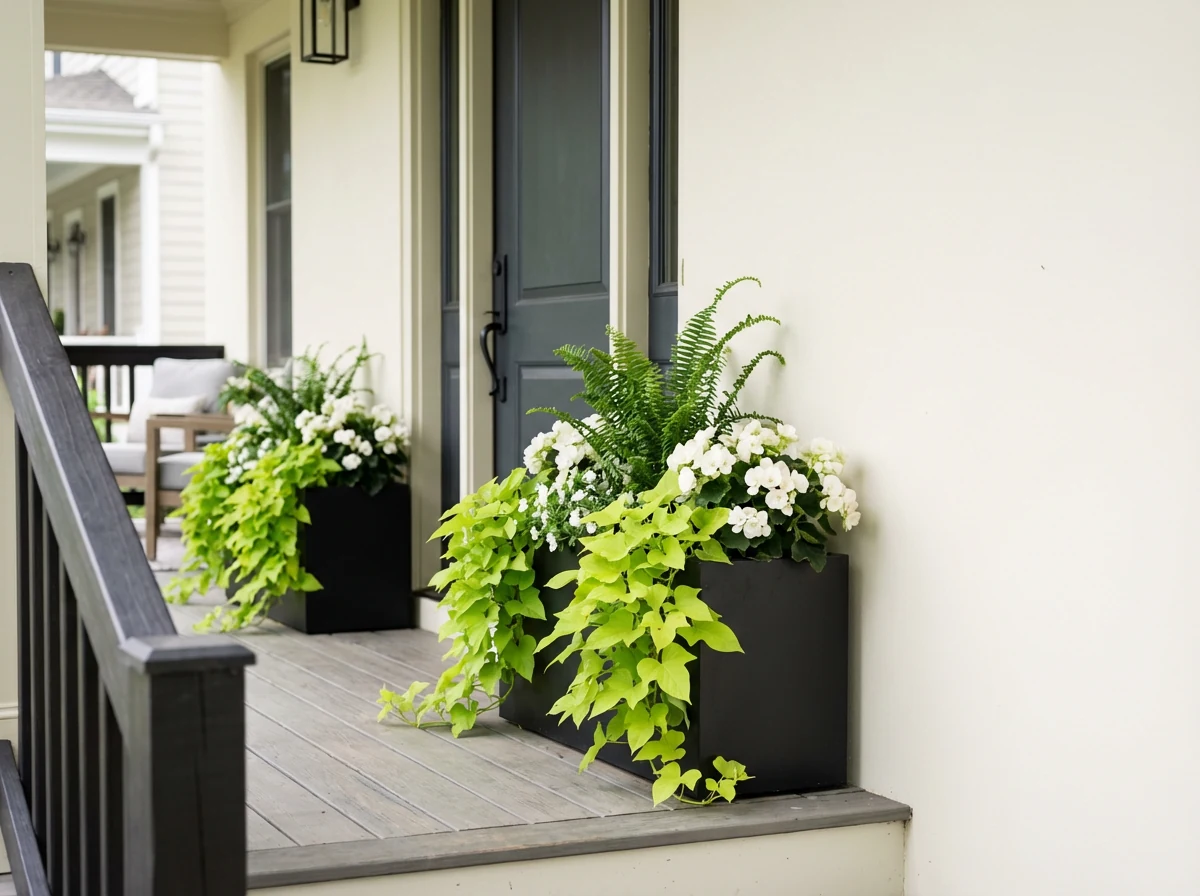
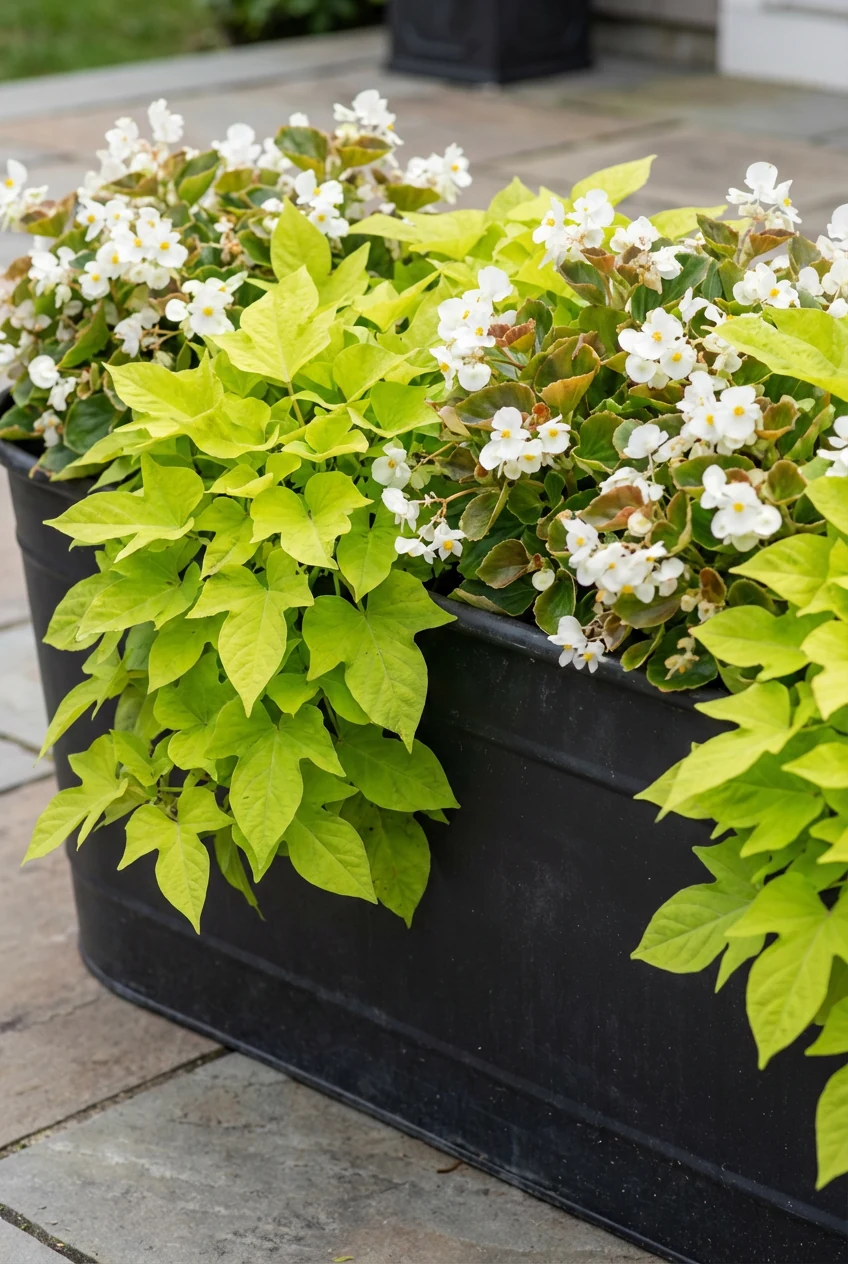
1) Lime Waterfall (Instant Brightness)
- ‘Margarita’ sweet potato vine (2 plants near the edges)
- White tuberous begonias (center and mid)
- Boston fern for fluffy height
- Accent: variegated ivy for extra texture
Place this near a dark door to create glow. The fern + begonia combo reads classic, while ‘Margarita’ handles the heavy lifting.
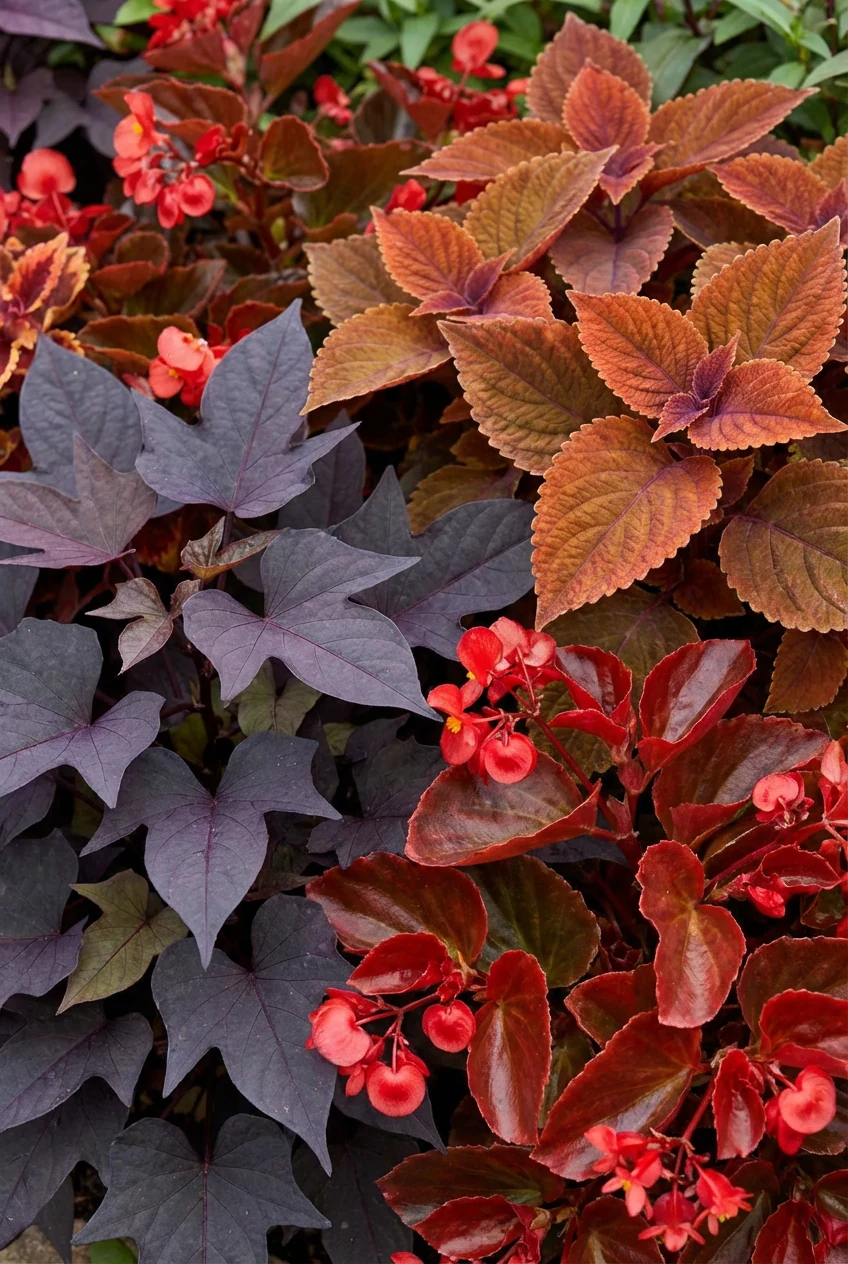
2) Moody Jewel Box
- ‘Blackie’ (or ‘Raven’) trailing at the edges
- Heuchera ‘Caramel’ or ‘Obsidian’ for plush mounds
- ‘Coleus’ in bronze or burgundy (upright “thriller”)
- Dragon Wing red begonia for color drops
If your porch style leans cozy-and-dramatic, this one slaps. Purple foliage softens in shade but still reads luxe.
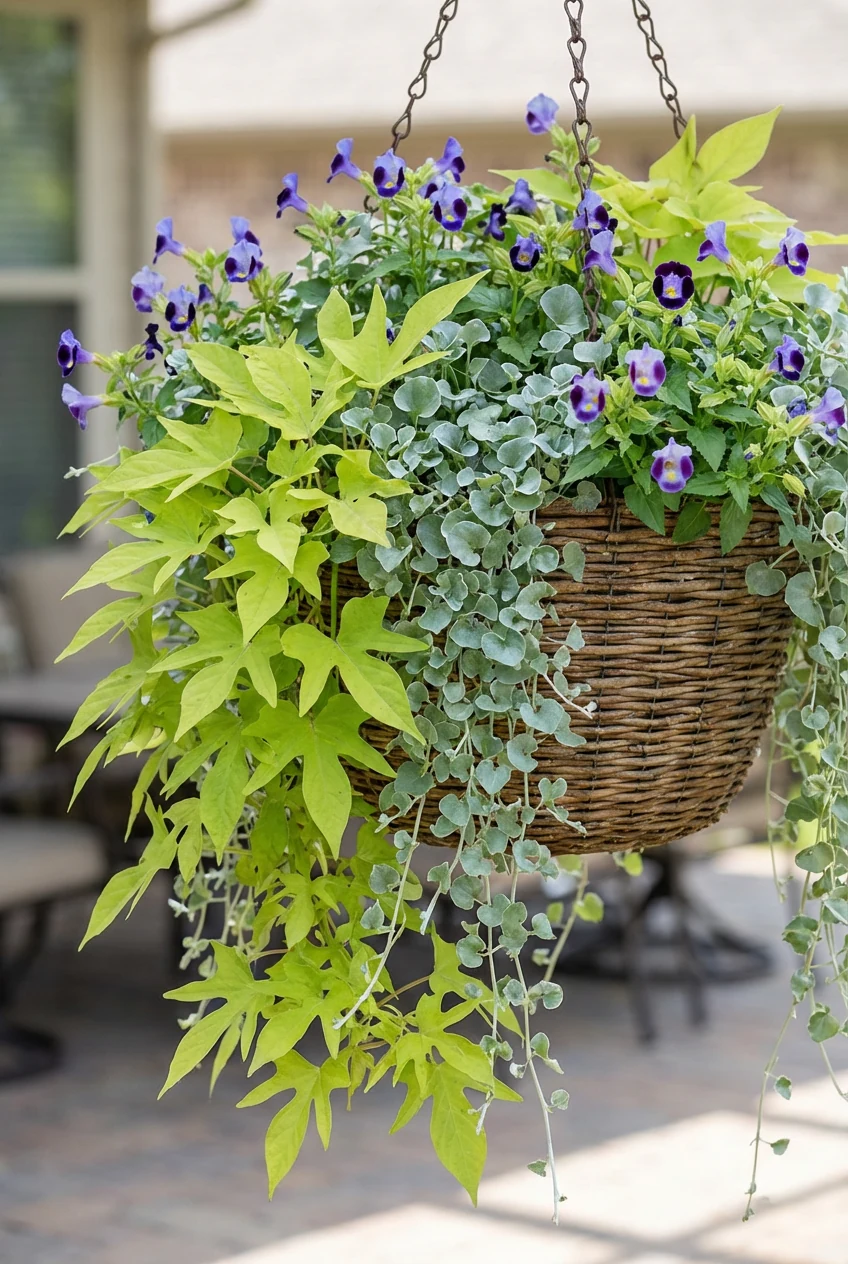
3) Hanging Basket Cloud
- ‘Illusion Emerald Lace’ for fine-textured spill
- Silver dichondra ‘Silver Falls’ (edge accents)
- Violet torenia (wishbone flower) for blooms in shade
This combo swirls light and texture overhead. Keep baskets large (at least 12 inches) so they don’t dry out in a breeze.
4) Railing Planter, Easy Mode
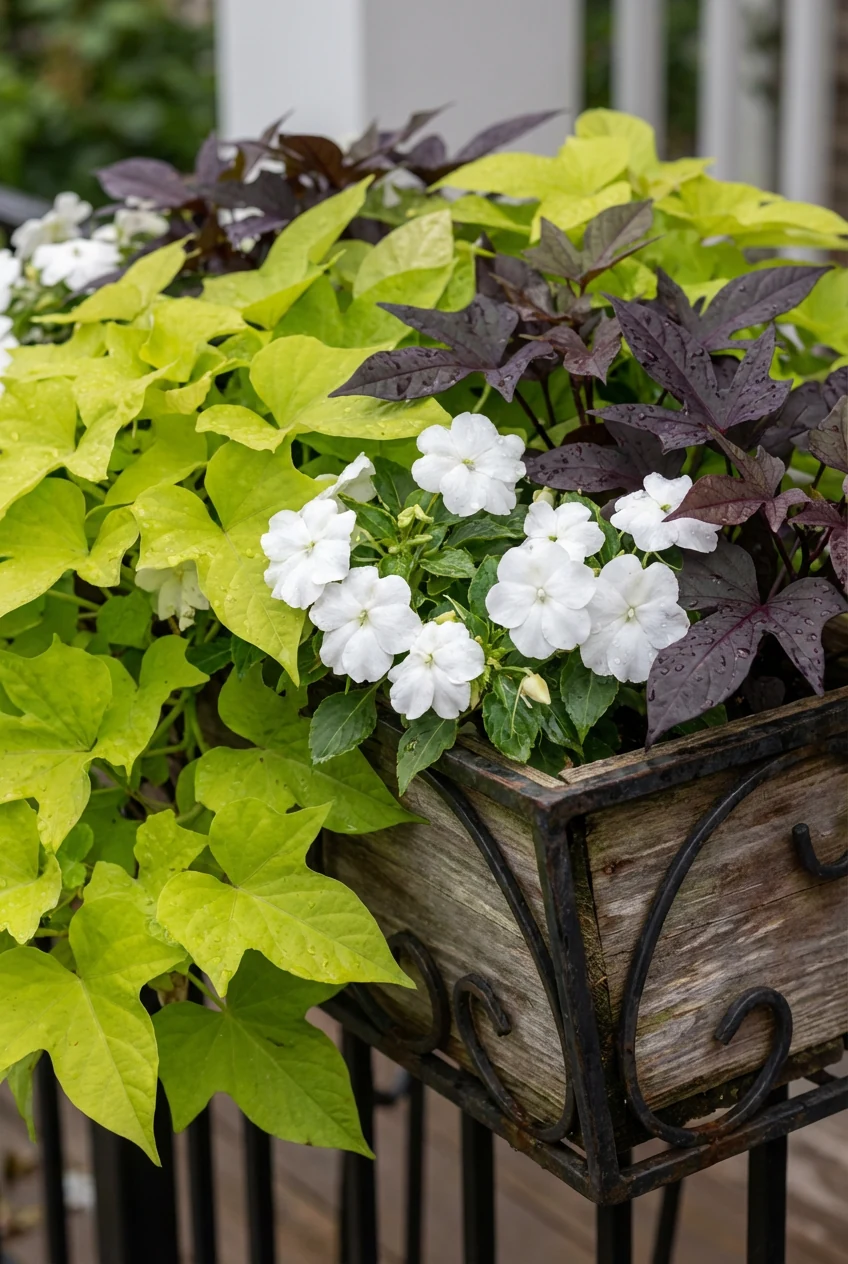
- ‘Sweet Caroline Light Green’ alternating with ‘Raven’
- White New Guinea impatiens for no-fuss blooms
- Variegated carex grass to punctuate sections
Repeat in multiples across the railing for rhythm. It looks high-end, but you basically water and vibe.
5) Tropical Shade Retreat
- ‘Margarita’ or ‘SolarPower Lime’
- Caladium (pink or white veins)
- Asparagus fern for wispiness
- Peace lily for glossy leaves (bonus: occasional white blooms)
All the lush, zero sunburn. Big deck planter recommended for jungle-level fullness.
6) Monochrome Modern
- ‘Margarita’ massed along the edges
- Heuchera ‘Lime Marmalade’ or golden creeping Jenny (small fillers)
- Matte black or concrete trough
Lean into one color and win. This reads designer-y without trying.
7) Climbing Corner (Yes, Really)
- ‘SolarTower Lime’ trained on a bamboo obelisk
- Underplant with torenia and variegated ajuga
Guide the vine with soft ties. It’ll climb in shade and give you vertical interest where sun lovers would fail.
8) Porch Steps Repeat
- Small pots: one ‘Margarita’ per pot
- Intermix with lanterns or pumpkins (seasonal flex)
Line the steps for repetition. Easy, photogenic, and it scales up or down depending on budget.
9) Goth Garden (But Make It Soft)
- ‘Blackie’ spills
- Orange tuberous begonias for pop
- Bronze coleus to bridge colors
Halloween vibes all summer. People will ask where you got it. You’ll say “I made it.”
Training, Pruning, and Taming the Beast
Sweet potato vine grows fast, even in shade. That’s the fun part. You get to sculpt it.
Pinching and Shaping
- Pinch tips after 5–6 leaves to encourage branching.
- Loop long stems back over the planter edge or weave them along railings.
- Snip to control length. The plant doesn’t mind a haircut; it thickens up.
- Dead leaves? Yank them off. You’ll prevent rot and keep it tidy.
Propagation and Overwintering (Free Plants!)
- Take 4–6 inch cuttings. Strip lower leaves.
- Root in water or moist potting mix in bright shade. Roots show in 1–2 weeks.
- Pot them up and keep indoors by a bright window over winter.
- Plant out after frost when nights stay above 55–60°F. Cold snaps blacken leaves fast.
If you get attached (it happens), you can also dig and store ornamental tubers like dahlias. Keep them cool, dry, and barely humid until spring.
Troubleshooting on North-Facing Porches
Shade solves some problems and creates others. Here’s your quick rescue list.
Common Pests and Quick Fixes
- Aphids/whiteflies/spider mites: Hose plants off, then spray insecticidal soap or neem. Repeat weekly until gone.
- Slugs (damp porches): Use iron phosphate bait or copper tape around pot rims.
- Fungus gnats: Let the top inch dry between waterings; add a Bti “mosquito bit” soak to the water.
Leaves Look Blah?
- Pale/yellow leaves: Likely overwatering or nutrient dilution. Ease up on water; feed lightly.
- Greenish purple leaves: Normal in shade. Move to brighter spot if possible.
- Brown tips: Underwatering or wind. Increase pot size or water consistency.
Cold Snaps and Timing
- Plant after your last frost date. Night temps below 50°F cause blackened, mushy foliage.
- If a surprise cold night looms, pull planters inside or throw on a frost cloth.
- Got hail? Stick the pot under the porch table. Done.
FAQ
Will sweet potato vine grow in full shade on a north-facing porch?
Yes, it will grow in full shade, though it grows more slowly and colors soften. You’ll still get gorgeous trailing texture. For the best look in deep shade, choose chartreuse cultivars like ‘Margarita’ and plant in larger containers for steady moisture.
Which varieties keep their color best in low light?
Chartreuse cultivars hold color best. ‘Margarita,’ ‘Sweet Caroline Light Green,’ and ‘Illusion Emerald Lace’ stay vibrant in shade. Purples like ‘Blackie’ still look amazing, but they lean greener without brighter light.
How often should I water on a shaded porch?
Usually 1–3 times per week, but always check soil before watering. Let the top 1–2 inches dry out, then water thoroughly until it drains. Big planters need less frequent watering than small ones, and self-watering pots simplify everything.
Can I overwinter sweet potato vine indoors?
Definitely. Take cuttings in late summer, root them in water, then grow them in a bright window. Or store tubers cool and dry. In spring, pot up rooted cuttings and reset your planters after frost passes.
Is sweet potato vine safe for pets?
Generally, yes. Sweet potato vine (Ipomoea batatas) is considered non-toxic to dogs and cats, though munching leaves can cause mild stomach upset. Keep in mind, other Ipomoea species (like morning glory) differ, so label your plants and discourage snacking just in case.
Can I eat the potatoes from my ornamental vines?
Technically, yes, but they’re usually not tasty. Ornamentals aren’t bred for flavor. If you’re curious, you can dig and sample, but don’t expect bakery-level sweet potatoes. They shine in planters, not on plates.
Pro Tips to Level Up Your North Porch Planters
- Plant near the pot edge so vines cascade early.
- Rotate planters monthly for even growth in uneven light.
- Match pot color to foliage: dark pots for lime vines; light pots for purples. Instant contrast.
- Add a reflective element (light wall, pale rug, glossy ceramic) to bounce light back at your plants.
- Use one 4-inch starter per 12–14 inch pot if you want room for companions. Two starters if you want a full-on cascade by midsummer.
You don’t need a botany degree. Just give the vine air, drainage, and reasonable water. It does the rest.
Conclusion
North-facing porches don’t have to look like plant purgatory. With the right sweet potato vine and a solid container setup, you get lush, trailing color that actually thrives in shade. Mix in shade-loving buddies, pinch here and there, and enjoy a porch that looks curated without constant babysitting. IMO, that’s the best kind of gardening—maximum vibe, minimal drama.