small zen garden ideas outdoor
You want a small outdoor zen garden that chills you out without stealing your entire yard? Perfect. You can carve out a quiet corner with a little gravel, a few stones, and some thoughtful lines that invite you to slow down. No need for a landscape crew or a monk with a rake. You can build a calm pocket of quiet in a weekend, and it won’t wreck your budget or your back.
Small Space, Big Calm: Why a Mini Zen Garden Works Outdoors
Tiny spaces carry huge vibes when you design with purpose. A small zen garden nudges you to focus on essentials: texture, line, and simple form. That focus lowers visual noise, which lowers mental noise. You finish with a place that supports a five-minute reset or a long, quiet sit—no spa appointment required.
Small doesn’t mean boring. Small means intentional. You can shape a serene moment with a few shapes and a rake. You tune the view, invite stillness, and enjoy a better morning coffee.
Micro, Pocket, or Balcony?
– Micro: 2×3 to 3×5 feet. Think side yard nook or under a window.
– Pocket: 4×6 to 6×8 feet. Perfect near a deck or along a path.
– Balcony: Tray or trough gardens with shallow containers and compact stones.
Pro tip: Pick a size you can maintain with a single rake pass and a quick sweep. You want simple, not a second job.
Find the Sweet Spot: Choosing the Location
You want a spot that feels slightly tucked away but still easy to reach. Favor dappled light, stable ground, and a view line from a chair or window. Avoid foot traffic or sprinkler overspray, unless you enjoy gritty flip-flops.
Check drainage. Gravel drains fast, but soil below should shed water. Place your garden away from roof drips and puddle zones. You want clean edges and consistent texture, not a swamp.
Wind, Pets, and Neighbors
– Wind: Use a low fence, tall grass, or a screen to calm gusts. Strong wind scatters gravel and annoys zen.
– Pets: Create a discrete border, and use larger aggregate. Dogs love fresh gravel… a little too much.
– Neighbors: Aim for privacy angles. A simple screen or bamboo panel turns “fishbowl” into “retreat.”
The Essentials: Gravel, Stones, Plants, and Wood
Zen gardens lean on simple materials that play well together. You build calm with contrast: rough vs. smooth, light vs. dark, solid vs. raked.
Core materials to gather:
- Gravel or sand: Pea gravel, decomposed granite, or washed sand. Choose a color that matches your home’s vibe.
- Stones: River stones for smooth forms; basalt or granite for bold, angular presence.
- Border: Cedar or composite edging, steel strip, or stone curb.
- Plants (optional but lovely): Dwarf conifers, moss, ornamental grasses, or groundcovers.
- Wood accents: A simple bench, bamboo panel, or mini bridge for character.
Keep materials consistent. Two or three textures create harmony. Five or six textures create chaos, and chaos hates zen.
Rock Types and Meaning
– Upright stones: Suggest mountains, strength, and stillness.
– Reclining stones: Suggest shorelines and relaxation.
– Clusters: Tell a story—parent stones with smaller “offspring” stones work beautifully.
– Accent stones: Lead the eye, anchor corners, or frame a small plant.
Place stones with intention. Angle faces toward the viewer and let lines flow. Don’t make them stare at the fence.
Plant Picks for Low Maintenance
– Dwarf Japanese juniper, mugo pine, or black pine for structure.
– Moss (sheet moss or Irish moss) for soft green carpets.
– Japanese forest grass (Hakonechloa) for movement.
– Blue fescue or mondo grass for tidy clumps.
Choose slow growers. Fast plants invite hustle and pruning marathons. Slow plants support quiet.
Design Ideas That Fit Tiny Spaces
You control mood with layout and line. Start simple, then add one or two accents that feel special. IMO, restraint wins every time.
Five compact layouts to try:
- Raked courtyard: One focal rock cluster, clean gravel field, and gentle wave patterns.
- Moss island: A soft green oval “island” with gravel as “water,” and a single upright stone.
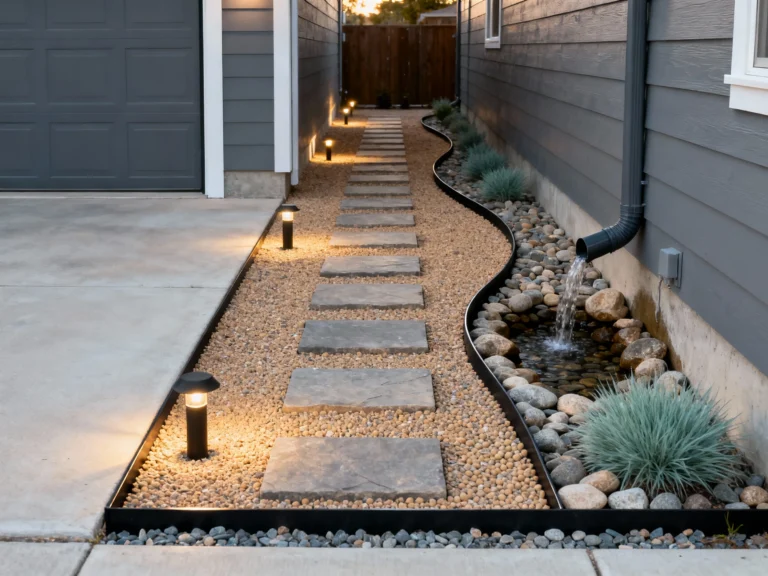
- Stepping-stone ribbon: A narrow path through gravel with three stones guiding the line.
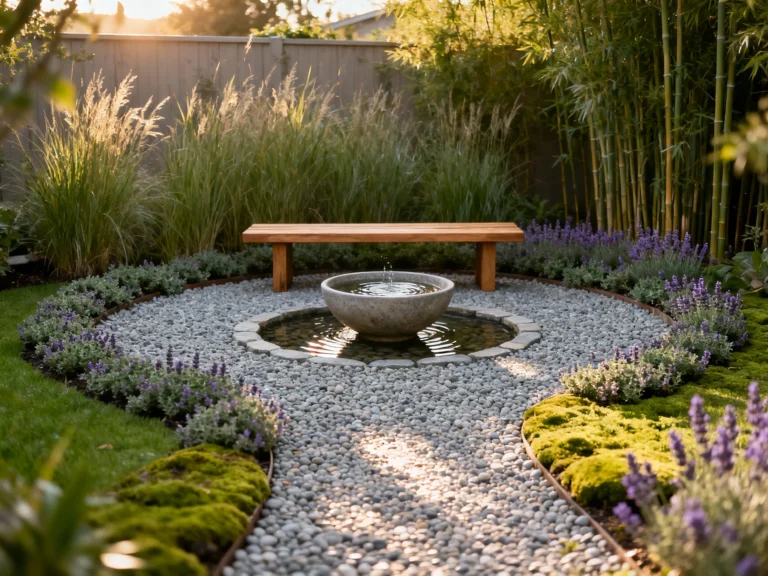
- Water bowl corner: A shallow basin on a stone pad with quiet ripples and subtle lighting.
- Container zen: Two trough planters with gravel and stones, plus a mini lantern between.
Color and Texture Tips
– Keep the palette neutral: grey, black, cream, and soft green.
– Add contrast with one strong element—dark stone against pale gravel looks sharp.
– Vary scale, not clutter: one big stone, two medium, five small.
– Leave negative space. Empty areas invite breath.
Build It: Simple Step-by-Step for a Small Outdoor Zen Garden
You can knock this out in a day if you prep well. Gather tools, drink water, and ignore anyone who says you need “more stuff.”
Tools checklist:
- Shovel and hand trowel
- Landscape rake (wide teeth) and a hand rake
- Tamper or a scrap 4×4 for compacting
- Level and tape measure
- Landscape fabric and pins
Steps:
- Mark the footprint. Spray paint or chalk a smooth shape: rectangle, oval, or soft kidney.
- Excavate 2-3 inches. Remove sod and roots. Keep edges crisp.
- Compact the base. Tamp the soil so it feels firm underfoot.
- Lay landscape fabric. Overlap seams and pin tight to block weeds.
- Install the border. Set edging level and secure it. Straight lines feel modern; curves feel organic.
- Place major stones. Bury bases slightly so they look grounded, not plopped.
- Add gravel. Pour and rake to 2 inches deep. Level lightly.
- Create raked patterns. Pull clean lines around stones. Keep strokes even and intentional.
- Add plants or accents. Tuck moss or a dwarf grass near stones and set a lantern or bowl.
Raking Patterns That Tell a Story
– Straight lines: Calm water, clarity, and focus.
– Gentle waves: Flow and movement around “islands.”
– Circles around stones: Ripples from a “mountain.”
– Broken lines: Edges of shorelines and change.
FYI: Rake lightly. Deep grooves look dramatic but they collapse fast. Soft lines age better.
Keep It Zen: Maintenance Without the Drama
You can keep a small zen garden tidy in minutes. Treat maintenance like a quick meditation, not a chore. You show up, you rake, you breathe, you bounce.
Simple routine:
- Weekly: Rake lines, brush debris, spot-pull weeds.
- Monthly: Top up gravel thin spots and check edges.
- Seasonal: Trim plants, reset stones if frost shifts them, clean lanterns.
Use a hand broom for corners and a leaf blower on low for leaves. Stay gentle. You sculpt, not bulldoze.
Fast Five-Minute Reset
– Brush leaves off stones.
– Rake two passes of lines.
– Smooth footprints near the edge.
– Flip one accent stone to refresh the look.
– Sit for one minute. Yes, that last step matters.
Level Up: Accessories, Lighting, and Seasonal Twists
You can add character without clutter. Pick one or two accessories and let them shine. You want calm, not a garden-themed yard sale.
Accessories that work:
- Stone or metal lantern (small-scale)
- Bamboo water spout into a bowl (shishi-odoshi vibe, but gentle)
- Mini bridge over a gravel “stream”
- Low screen or trellis for privacy
- Muted chimes for soft sound
Lighting tips:
- Use warm, low lumens. Bright beams kill mood.
- Backlight stones to reveal texture at night.
- Hide fixtures behind grasses or edging.
Sound and Scent
Subtle sound and scent deepen the vibe. A trickling bowl calms the mind, and a small clump of lavender wafts softly in warm evenings. Keep both minimal. One sound source, one scent source—no perfume cloud, no airport fountain.
Seasonal touches: Swap a branch arrangement in winter, set a ceramic bowl in summer, or add a single maple leaf vignette in fall. Small changes keep the space fresh.
Budget and Sustainability Tips
You can build gorgeous quietly and cheaply. Focus on local materials and durable basics. Spend on stones and edging first; add accents later.
Smart saving moves:
- Source locally. Local stone blends with your landscape and costs less.
- Reuse. Upcycle wood offcuts into borders or stepping pads.
- Buy in bulk. Gravel by the yard beats bagged prices and looks consistent.
- Start small. Build a micro garden now. Expand when you feel the flow.
Sustainability wins:
- Choose drought-tolerant plants and skip thirsty turf.
- Use permeable surfaces to support drainage and soil health.
- Pick long-lasting edging to avoid replacements every year.
Common Mistakes (and Quick Fixes)
– Too many accents: Remove half. Let space breathe.
– Flat stones that look “stuck on”: Bury bases, tilt faces, and stagger heights.
– Messy gravel: Add depth, rake in one direction, and set borders firm.
– Random plants: Group by color and habit. Pattern beats scatter.
– No focal point: Elevate one stone or add a simple water bowl. Give the eye a destination.
FAQs
How small can an outdoor zen garden be?
You can go as small as 2×3 feet and still get a peaceful vibe. Micro sizes work well near steps or under a window. Keep materials simple and choose one focal stone so the scale feels intentional.
What gravel works best for raking?
Use fine, stable aggregate like decomposed granite, pea gravel around 3/8 inch, or washed sand. These options hold lines without collapsing too fast. Test a small patch and rake a few patterns before you commit.
Can I build one on a balcony?
Yes. Use shallow planters or trays with drainage and line them with landscape fabric. Fill with a thin layer of gravel, set a few stones, and add a tiny lantern. Keep weight in mind, and check your building rules—FYI, some balconies hate heavy loads.
Do I need plants?
No. Pure stone and gravel look stunning and require almost no maintenance. If you want green, add slow growers like dwarf pines or moss. One plant group often beats a mixed jumble.
How do I keep cats or dogs out?
Create a clear edge and use larger aggregate near borders. Set a low screen on the windward side and avoid open dry soil (pets love it). Offer a more interesting spot elsewhere—humans and pets both follow the fun.
What’s the easiest rake pattern for beginners?
Start with straight, parallel lines. Pull the rake in one direction, then clean edges with a hand rake. Turn around stones gently and keep spacing consistent. Once your lines feel smooth, try soft waves.
Conclusion
Small outdoor zen gardens deliver calm without drama. You build with a few materials, place stones with intention, and rake lines that invite breath. Keep it simple, trust your eye, and edit often—IMO, that mindset turns a tiny footprint into a big daily reset. When life gets loud, you’ll have a quiet corner ready for you.