Minimalist Small Garden Pool Designs: Modern Tiles, Clean Lines and Plants
A tiny pool can transform a small garden from “nice” to “oh wow” in one weekend glance. Clean geometry, modern tiles, and the right plants create a calm, sculptural scene that looks expensive and effortless. You don’t need a resort footprint or a lottery budget—you just need clarity about what to include (and what to ruthlessly skip). Ready to design small and think big?
Why Minimalist and Small Works So Well
Minimalist design gives your brain a break. Straight lines, limited materials, and a tight plant palette calm visual noise and make small spaces feel intentional. In a small garden, you can’t hide clutter, so you design like a curator, not a collector.
Small pools also heat fast, maintain easily, and cost less to build. You lounge more and scrub less. That counts. And because you optimize every inch, you end up with a stronger composition—less “yard,” more “courtyard.”
Micro-pools, Plunge Pools, and Rills: What Fits Where
– Micro-pool: 2 x 3 m (6.5 x 10 ft), depth 1.2–1.35 m. Great for cooling off and soaking.
– Plunge pool: 3 x 4.5 m (10 x 15 ft), depth 1.2–1.5 m. Add a bench and a compact swim area.
– Lap lane: 2 x 6–8 m (6.5 x 20–26 ft). Narrow, linear, and dramatic along a boundary.
– Reflecting rill: 0.6–1 m wide. Shallow, mirror-like, and insanely elegant against a wall.
Rule of thumb: leave 900–1200 mm (3–4 ft) of clear deck on at least one long side so you can move and furnish without shimmying like a crab.
Shape and Layout: Clean Lines That Actually Fit
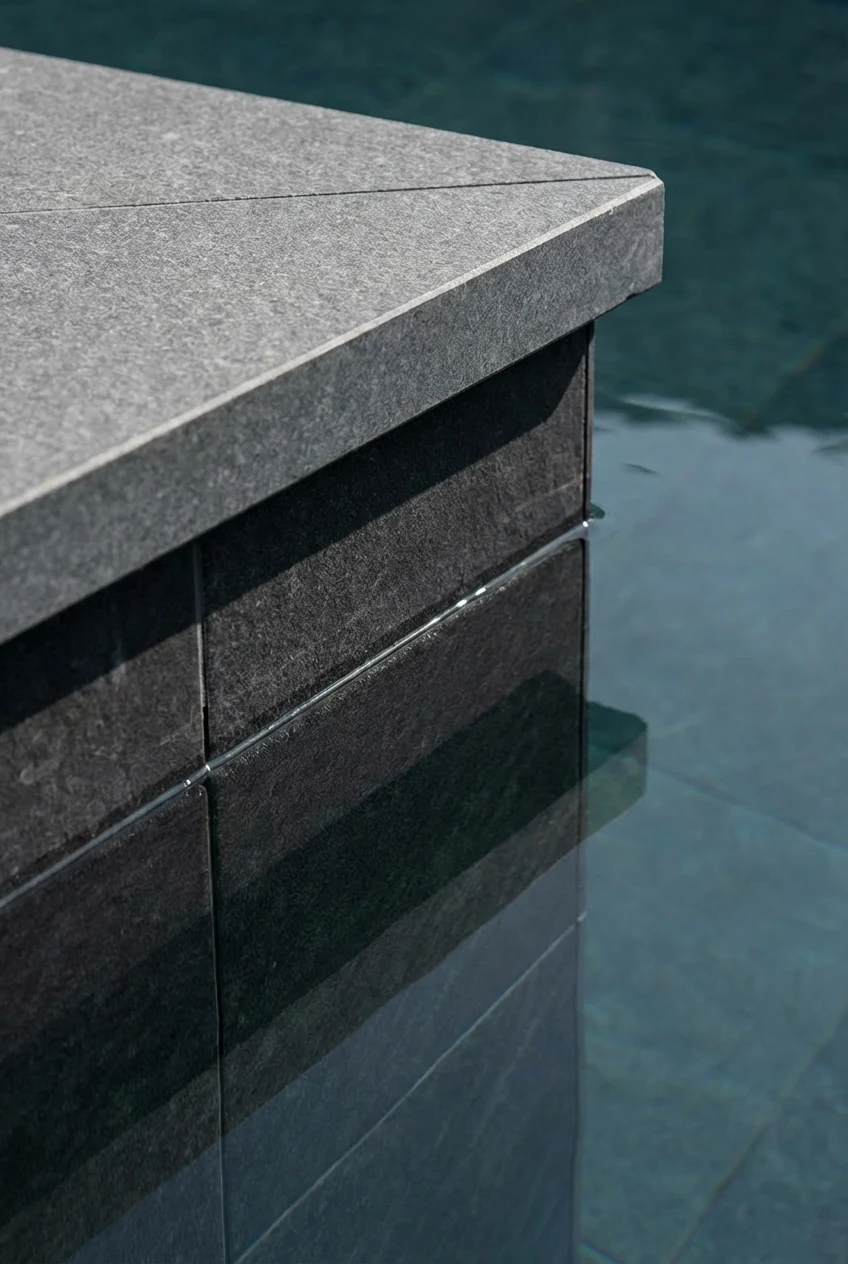
Rectangles dominate minimalist design because they sit quietly and play nice with architecture. They also simplify construction, tile layout, and covers. Soft curves can work, but they often eat space and fight modern lines.
Align the pool with something important: a door axis, a window, or the end of a path. When you anchor the pool to architecture, the garden feels planned, not sprinkled. Also, push the water surface close to the house if you can—the reflection doubles your views and your bragging rights.
Smart Layout Rules of Thumb
– Circulation space: keep 900 mm+ (3 ft) around main walk zones.
– Deck slope: fall away from water at 1–2% for drainage.
– Skimmer placement: put it on the leeward side of prevailing winds so debris drifts toward it.
– Steps: 300 mm treads, 150–180 mm risers. Add a full-length bench along one side for chill time.
– Coping overhang: 25–40 mm to cast a crisp shadow and keep water off the face tile.
– Safety: meet local fence and gate codes; plan them at the start, not 15 minutes before inspection.
Hide the Stuff: Steps, Benches, and Covers
– Build a submerged bench the full pool length on the house side. It reads as a shadow line and offers a perch.
– Integrate steps into one corner in the same tile as the shell. Contrast-edge only the nosing for safety.
– Want a cover? Slot an automatic slatted cover into a recessed headbox or under a bench. It looks invisible and saves heat big-time.
Modern Tile Choices: The Palette That Makes It Pop
Your tile picks drive the mood more than anything. Porcelain keeps things clean and minimal, glass mosaic brings shimmer, and natural stone adds soul (and a tiny bit of diva energy). Choose one hero material and one quiet sidekick. That’s it.
Color matters. Dark charcoal or deep teal reads architectural and reflective. Pale gray or bone feels airy and spa-like. If you crave color, keep it inside the pool and go neutral on the deck so the space still looks coherent.
Tile Specs Cheat Sheet
– Porcelain: 8–10 mm thick, rectified for tight joints. Look for DCOF ≥ 0.42 (wet) or R11/P4 for deck slip resistance.
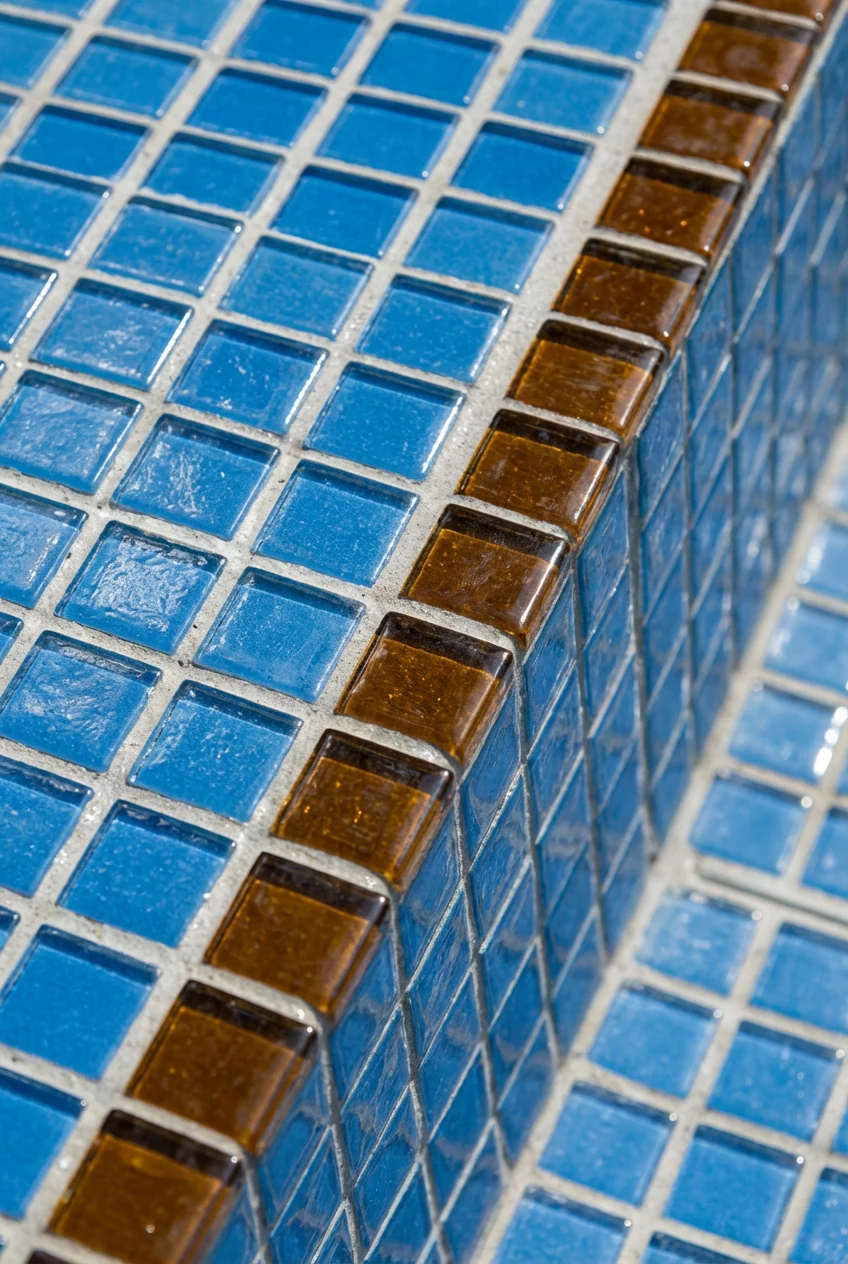
– Glass mosaic: 20 x 20 mm on mesh or paper-faced sheets. Choose frost-resistant, pool-rated glass.
– Stone (travertine, limestone, basalt): seal it; pick a tumbled or sandblasted finish for grip. Tea + stone can stain, FYI.
– Grout: epoxy grout resists stains and chemicals better than cementitious grout. Worth it.
– Joint widths: 1.5–2 mm for mosaics; 3–5 mm for porcelain pavers.
Coping, Edges, and Waterline
– Coping: keep it flat and square. A 40–60 mm thick straight-edge coping looks sharp.
– Waterline: skip contrasting bands if you want the water to read as a single plane. Use the same tile shell-to-waterline for that seamless vibe.
– Overflow edges: if you go perimeter overflow, keep level tolerances tight (±2 mm). It’s fussy—but stunning.
Pro tip: pair charcoal porcelain inside the pool with light gray deck and black powder-coated steel accents. It always looks modern and never dates, IMO.
Planting for Structure: Greenery That Frames, Not Clutters
Minimalist planting focuses on form and repetition. You want bold silhouettes, clean lines, and leaves that don’t shed into the water like confetti. Think architectural shapes and grasses that move, not a dozen species battling for attention.
Place plants to frame views and soften hard edges. Keep them off the coping so you can sit and walk without a leaf shower. Use restrained groupings—3s, 5s, and 7s—so your eye reads pattern, not chaos.
Climate-Based Palettes That Behave
– Cool/Temperate
– Structural: upright hornbeam hedge, dwarf magnolia, Japanese holly (Ilex crenata)
– Texture: feather reed grass (Calamagrostis), blue fescue, sedges
– Accents: dwarf bamboo (Fargesia), hosta in shade, fern clumps
– Mediterranean
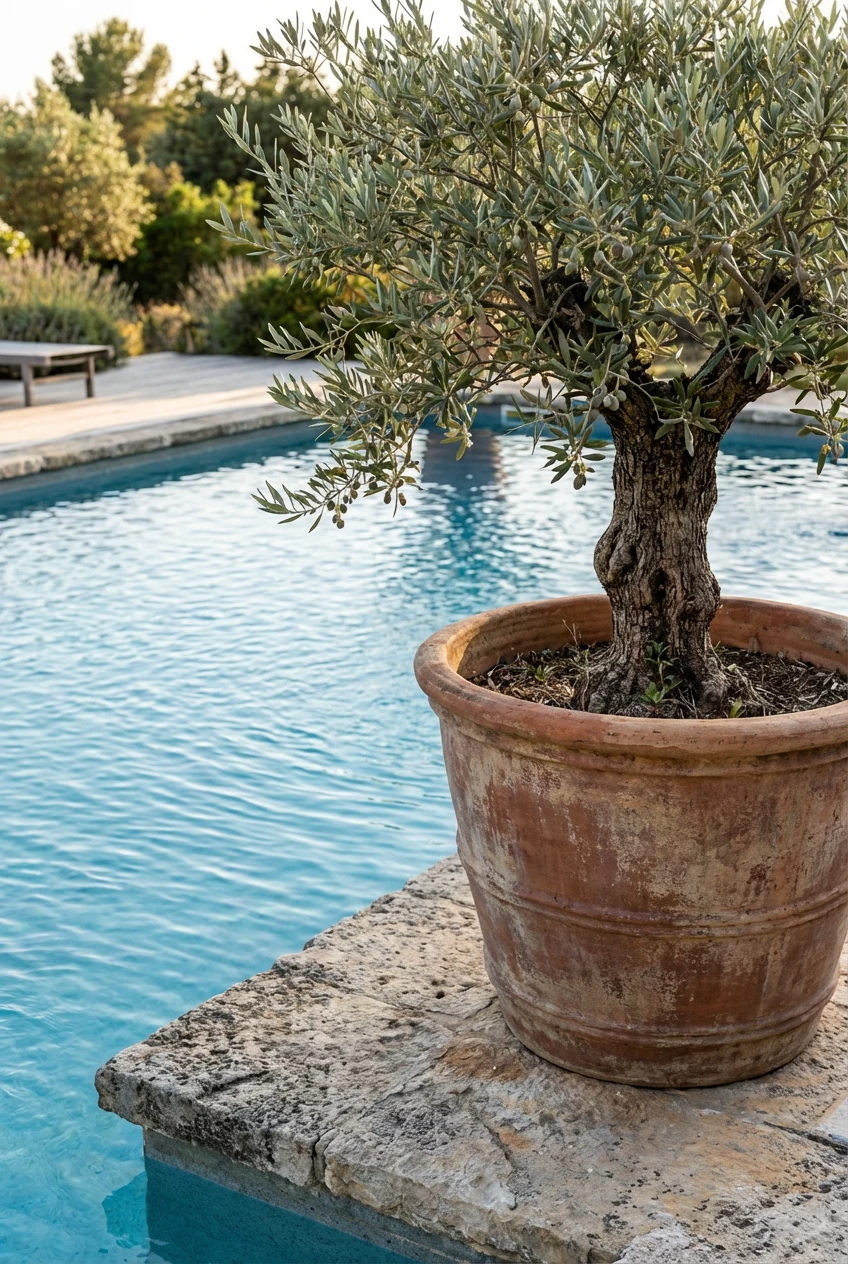
– Structural: olive (in large pots), bay laurel, Italian cypress (singles, not a forest)
– Texture: rosemary, westringia (salt-tolerant), lavender
– Accents: agave, phormium, senecio ‘Angel Wings’
– Tropical/Subtropical
– Structural: traveler’s palm or strelitzia (giant bird of paradise) away from the pool edge
– Texture: heliconia, philodendron ‘Xanadu’, liriope
– Accents: cycads, cardamom gingers, bromeliads in clumps
– Arid
– Structural: yucca rostrata, dasylirion, palo verde (prune cleanly)
– Texture: hesperaloe, festuca, myoporum groundcover
– Accents: golden barrel cactus groupings (not next to the cannonball zone)
Leaf litter alert: skip jacaranda, pine, and anything that sheds year-round right over the water. Your skimmer will hate you.
Placement and Spacing Rules
– Keep messy plants 1 m+ (3+ ft) from the coping.
– Use root barriers for bamboo and vigorous grasses. No one enjoys heaving pavers.
– Plant in bold blocks: 1–2 structural species, 1 texture species, 1 accent. Repeat.
– Saltwater system? Choose salt-tolerant plants: westringia, rosemary, agave, pittosporum, and many phormiums.
Irrigation Without Splash Drama
Install drip irrigation with pressure-compensating emitters for planting zones. Avoid spray heads near the pool—overspray messes with your chemistry. Mulch with gravel or fine pebble for a clean, modern look and less leaf breakdown in water.
Water, Filtration, and Lighting: The Hidden Modern Tech
Minimalist looks hide the engineering. You still need good flow, quiet gear, and consistent water quality. Good news: compact, efficient systems fit in small spaces and keep your garden chill, literally and acoustically.
Choose a variable-speed pump to dial flow and slash noise and energy. Pick a filter that suits your maintenance style. Add a heat pump if you want shoulder-season dips. Then light it like a boutique hotel.
Filtration and Sanitation Basics
– Turnover: aim for every 2–4 hours in a small pool.
– Filters:
– Cartridge: fine filtration, small footprint, easy to service.
– Sand/glass media: robust and simple; upgrade to recycled glass for better clarity.
– Sanitation:
– Saltwater chlorinator: gentle feel, stable chlorine, less fuss.
– Traditional chlorine: works fine; dose automatically if possible.
– Chemistry targets: pH 7.2–7.6, free chlorine 1–3 ppm, salt (if SWG) 3000–4500 ppm.
Quiet Equipment Layout
– Place the equipment pad as close as practical (short runs) but around a corner or behind a screen.
– Use antivibration pads and flexible unions.
– Pick a variable-speed pump rated < 55 dB at 1 m at low speed for a whisper vibe.
– Enclose with slatted timber or metal screens with ventilation, not a sealed box (gear needs to breathe).
Heat, Covers, and Evaporation
– Heat pump: air-source with COP 4–6 keeps costs down.
– Solar thermal: great if you have roof area; pair with a cover.
– Cover: an automatic slatted or a neat fitted thermal cover cuts evaporation by 70–90%. Fewer chemicals, more comfort.
Night Lighting That Feels Like a Scene, Not a Stadium
– Underwater: warm-neutral 3000–4000K, IP68, dimmable. Two small lights beat one blinding photon cannon.
– Steps/bench: low-glare strip or tiny marker lights for safety.
– Landscape: wash the wall behind the pool; uplight one hero plant.
– Avoid top-down glare on water. You want glow and reflections, not interrogation vibes.
Details That Sell the Minimal Look
Minimalism lives or dies in the details. When you hide drains, align joints, and stick to one or two materials, everything reads “custom.”
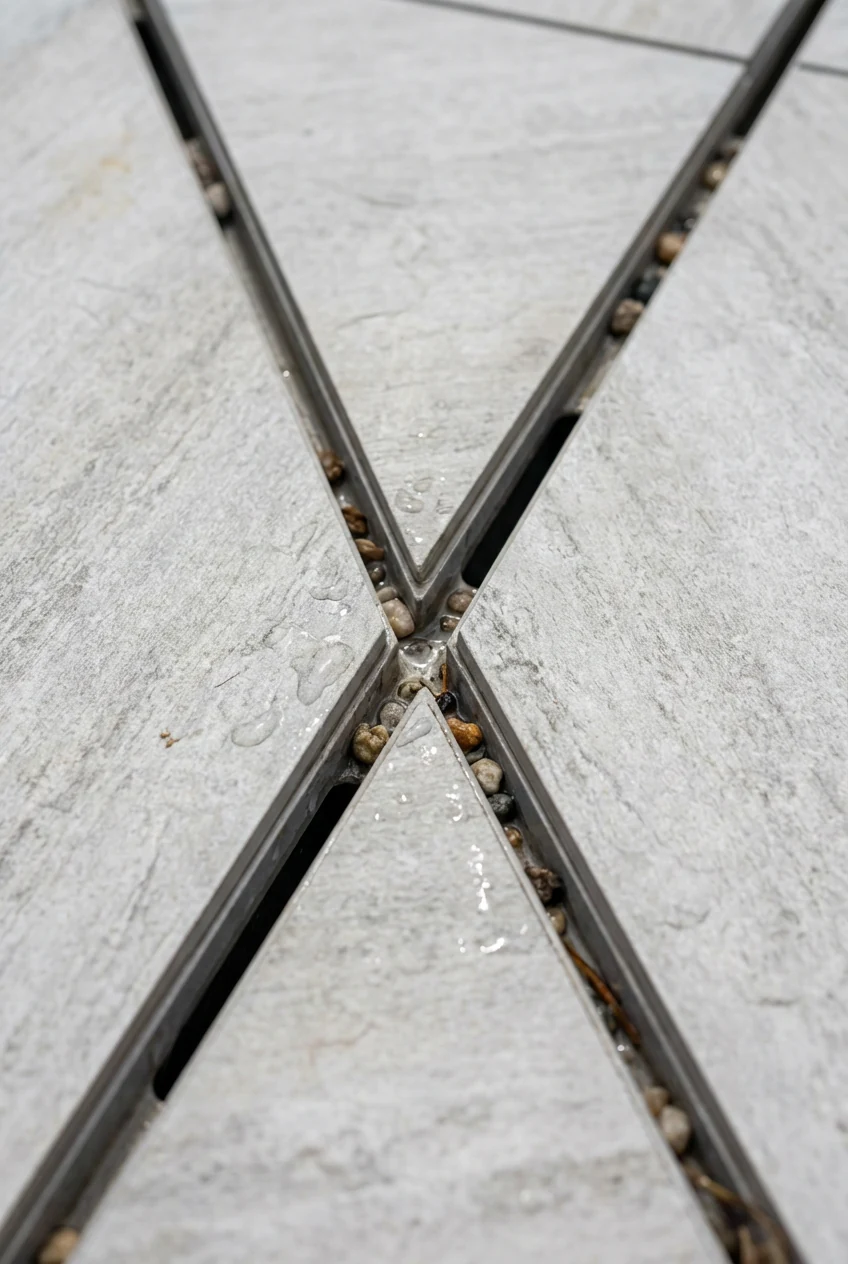
– Slot drains along the deck edge swallow water without visible grates.
– Concealed skimmer lids (tile-in) keep surfaces clean.
– Align tile joints across pool, coping, and deck for visual calm.
– Add a simple outdoor shower with a linear drain—perfect before/after dips.
– Keep furniture low and linear: teak or aluminum frames with neutral cushions. Two lounges, one side table, done.
Material Pairings That Never Fail
– Charcoal porcelain + pale gray concrete + black steel
– Bone mosaic + light oak or teak + brushed stainless
– Deep teal glass mosaic + warm limestone + bronze accents
Two-material max: if you tempt a third, make it a small accent. The eye thanks you, IMO.
Budget, Build, and Maintenance: Keep It Real
Small doesn’t mean cheap, but it does mean controlled. You spend on structure, waterproofing, and finishes; you save on volume and scale. Set a clear scope, then phase nice-to-haves like fancy lighting or a custom bench if needed.
Plan permits and engineering up front. Check setbacks, utility locations, and fence rules. In frost zones, spec footings below frost line and use a proper two-component cementitious waterproofing membrane with movement joints every 3–4 m. Boring? Yes. Necessary? Absolutely.
Numbers to Budget (Very Rough, Region-Dependent)
– Concrete plunge pool shell (small): moderate five figures; tile and coping push it higher.
– Filtration/heating package: a few thousand to low five figures depending on toys.
– Decking (porcelain/concrete/stone): per m² costs vary—choose durable, slip-rated materials.
– Landscaping/lighting: set 10–20% for plants, irrigation, and fixtures.
Spend on: shell, waterproofing, slip-rated deck, and a variable-speed pump.
Save on: overcomplicated shapes, too many materials, and novelty features you won’t use.
Maintenance Cheat Sheet
– Weekly: skim, check skimmer basket, test pH/chlorine, quick vacuum or robot run.
– Monthly: brush tile line, clean filter (cartridge) or backwash (sand/glass), inspect lights and seals.
– Seasonally: service the heater/heat pump, check cover mechanism, prune plants away from coping.
– Annually: deep clean grout, reseal stone, review chemistry balance and adjust salt cell output.
Common Mistakes (Aka: Learn From Other People’s Regrets)
– Oversizing the pool and undersizing the deck. You need a place to sit.
– Too many plant species. Pick four, repeat them, and breathe.
– Ignoring slip resistance. Wet porcelain isn’t funny.
– Putting equipment where you can hear it from your pillow.
– Forgetting a cover. Evaporation burns cash while you sleep, FYI.
FAQ
How small can a pool go and still feel luxurious?
You can create a luxe vibe with a 2 x 3 m micro-pool if you nail the details. Keep the shape rectangular, run a full-length bench, and use high-quality tile and lighting. Luxury comes from proportion, finish, and calm composition—not size.
Glass mosaic or porcelain—what’s better for a minimalist look?
Both work. Porcelain gives a crisp, architectural vibe with low maintenance and excellent slip ratings. Glass mosaic adds depth and shimmer for that jewel-box feel. If you want easy, choose porcelain for deck and interior, then add glass as a narrow feature on steps or the bench for subtle sparkle.
Saltwater or chlorine for a tiny pool?
Saltwater chlorinators keep chlorine levels steady and feel great on skin. They also reduce the daily jug-dumping routine. If you already understand manual dosing and you hardly swim, standard chlorine works. For most small, frequently used plunge pools, saltwater wins on convenience.
What plant should I avoid next to a minimalist pool?
Anything that sheds constantly or roots aggressively along the deck—pine, jacaranda, ficus, or running bamboo. Also avoid plants that stain stone (think berry droppers). Favor upright evergreens, clumping grasses, and structural succulents that don’t feed your skimmer for sport.
How do I make the pool look bigger than it is?
Use a darker interior to increase reflectivity, align the long edge with your sightline from the house, and keep the deck material consistent wall-to-wall. Mirror or wash-light a boundary wall to extend the scene at night. Limit furniture and décor so the water surface reads as one clean plane.
Can I DIY parts of this without crying?
Yes—planting, drip irrigation, lighting (low-voltage), and deck furniture selection make good DIY chapters. Leave the shell, waterproofing, electrical, gas, and fencing to pros. You can also project-manage sequencing and sourcing to save money without risking leaks or inspections.
Conclusion
Small minimalist pools hit that sweet spot: big mood, tiny footprint. Clean lines, modern tiles, and disciplined planting create a courtyard that feels curated and calm. Focus on proportion, materials, and a few stealthy tech upgrades, and you’ll build a space that looks expensive, lives easy, and stays timeless. Keep it simple, keep it sharp, and enjoy the splash—IMO, that’s the whole point.