small front yard landscaping ideas low maintenance
Your small front yard deserves big curb appeal without eating your weekends. You can build a tidy, welcoming entry with plants that thrive on neglect and hardscaping that never whines. Think structure, texture, and a few strategic pops of color. You’ll create an easy, evergreen look that quietly impresses the neighbors while you sip coffee inside.
Start with a simple plan (so you don’t overthink it)
You don’t need a landscape architect. You need a tape measure, a quick sketch, and a few smart decisions. Decide on your vibe—clean modern, cottage-lite, or native minimal—and stick to it. Then plan for low maintenance from the start.
Use this quick setup:
- Pick a focal point: a dwarf tree, a sculptural pot, or a neat house-number wall.
- Frame the path: simple straight lines keep things easy. Curves look nice but require more edges and more trimming.
- Repeat a short plant list: 3–5 species max. Repetition simplifies care and looks intentional.
- Cover bare soil: mulch or gravel beats dirt. Dirt grows weeds and sadness.
The keep-it-simple formula
Use the 60/30/10 rule. Give structure plants 60% (evergreen shrubs or dwarf conifers). Fill 30% with groundcovers for weed suppression. Reserve 10% for seasonal color in containers or a small annual bed. Easy. Done.
Hardscape first: paths, borders, and patios that behave themselves
Plants get all the love, but hardscape keeps things tidy with zero drama. Install a clear path to the door and define clean edges. When you control edges, you control maintenance.
- Pavers or stepping stones: choose larger formats with tight joints. Fewer pieces = fewer weeds.
- Steel or aluminum edging: slim, durable, and crisp. It blocks mulch from spilling and grass from creeping.
- Gravel landing: pea gravel or 3/8″ crushed stone creates a budget-friendly entry pad or mini patio.
Gravel vs. mulch (and when to use each)
Use gravel for high-traffic areas and under benches or mailboxes. Gravel stays put and looks sharp. Use mulch in planting beds where you want moisture retention and soil health. FYI: skip rock mulch in hot climates around thirsty plants; it bakes roots.
Pick tough, compact plants that thrive without fuss
You want plants that earn their keep. Choose small-scale shrubs, dwarf trees, and drought-tolerant perennials. Favor native or well-adapted species for your region. Fewer divas, more doers.
- For full sun: lavender, rosemary, santolina, yarrow, sedum, dwarf barberry (where legal), blue fescue.
- For part shade: heuchera, hellebores, carex, Japanese forest grass, ferns (dry-tolerant varieties).
- For cold climates: dwarf box honeysuckle, spirea ‘Little Princess’, dwarf spruce, juniper ‘Blue Star’, aronia.
- For hot/dry climates: dwarf agave, yucca, lantana, salvia, echeveria, desert spoon.
Keep density high and variety low. Plant in drifts of 3–5 instead of singles. Grouping creates impact and simplifies care.
Bulletproof plant list for tiny front yards
- Dwarf conifers (globe spruce, mugo pine): slow growth, year-round structure.
- Lavender (‘Hidcote’ or ‘Munstead’): compact, fragrant, bee-friendly.
- Boxwood alternatives (Inkberry holly ‘Gem Box’, dwarf yaupon ‘Micron’): fewer pests, similar shape.
- Hellebores: evergreen leaves, late winter flowers, minimal fuss.
- Sedum and sempervivum: thrive in neglect, love heat, look tidy.
- Artemisia ‘Powis Castle’: silver foliage, drought tough, easy size control.
- Carex pansa: soft, no-mow look in mild climates.
- Spirea ‘Double Play’ series: compact, colorful foliage, spring blooms.
- Dwarf crape myrtle (warm climates): long bloom, little pruning.
- Little bluestem: airy habit, gorgeous fall color, wildlife-friendly.
Groundcovers beat lawns (sorry, grass fans)
Lawns take watering, mowing, edging, fertilizing, and your Saturday. Groundcovers cover soil, smother weeds, and look great with almost no effort. Replace postage-stamp turf with a patchwork of groundcovers and gravel and never wrestle a mower again.
No-mow swaps that stay tidy
- Creeping thyme: sun-loving, fragrant, handles light foot traffic, bee magnet.
- Kurapia or Lippia nodiflora (where available): grows fast, low water once established.
- Dwarf mondo grass: shade-friendly, tufted texture, slow spread.
- Buffalo grass (select cultivars): low water, occasional trim, great in warm regions.
- Blue star creeper: tiny flowers, good between pavers, light step only.
Low-lift mulch and weed control
Lay 2–3 inches of shredded bark or fine gravel in planting beds. Thicker mulch blocks light and stops weed seeds from germinating. Skip landscape fabric in mixed beds; it traps roots and makes future planting a pain. Use fabric only under pure gravel zones. IMO, mulch plus dense planting beats fabric long-term.
Containers, raised beds, and vertical tricks
Small front yards love height and layers. Use tall containers, trellises, and wall planters to pull eyes upward. You add presence without eating ground space.
- Self-watering planters: longer intervals between watering, fewer plant emergencies.
- Rail or wall boxes: instant color at eye level, great near the door.
- Narrow obelisks or trellises: support star jasmine, clematis, or mandevilla (climate dependent).
Container combo recipes that don’t flop
- Sunny modern: dwarf olive or rosemary (thriller) + blue fescue (filler) + trailing sedum (spiller).
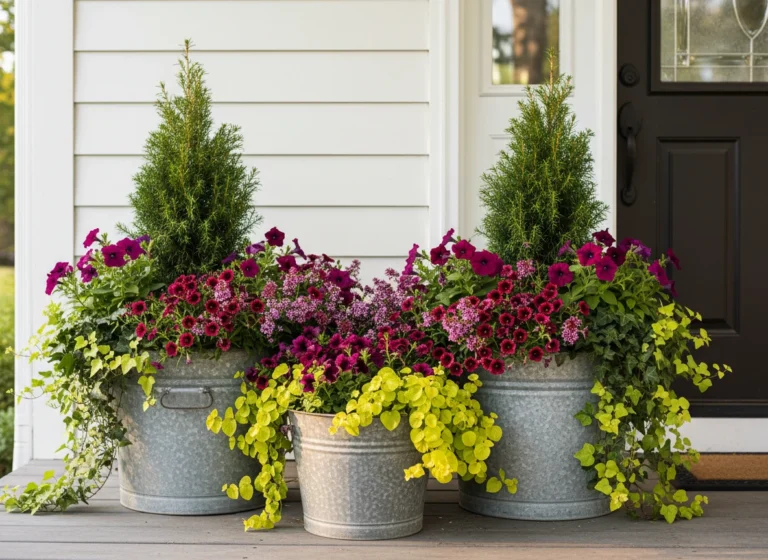
- Shade elegant: dwarf conifer (thriller) + heuchera (filler) + creeping jenny (spiller).
- Desert vibe: small agave (thriller) + echeveria (filler) + string-of-pearls (spiller, sheltered spot).
Use fewer, bigger pots for a calm look. Match pot colors to your trim or door for instant cohesion.
Smart watering and lighting you set and forget
Automation saves your sanity and your plants. Install drip irrigation with a simple timer, or use soaker lines on dedicated zones. Add a rain sensor so you don’t water during storms like the neighbor who ignores weather.
Set-and-forget watering plan
- New plants: water deeply 2–3 times per week for the first month, then taper.
- Established drought-tolerant beds: deep soak every 10–14 days in summer, monthly in cool seasons.
- Containers: use self-watering reservoirs; top off weekly in heat.
Keep emitters at the drip line of shrubs and at the root zone of perennials. Adjust seasonally. FYI: most plants die from kindness (overwatering), not neglect.
Lighting that flatters at night
- Low-voltage LED path lights: space them wider than you think—every 8–10 feet.
- One or two uplights: graze a small tree or the façade for drama.
- Warm color temperature (2700–3000K): cozy glow, not crime-scene vibes.
Design moves that make small yards look bigger
You can fake more space with a few visual tricks. Lead the eye to the door with a slightly wider path. Repeat shapes and colors so the yard reads as one cohesive scene.
- Contrast textures: fine-textured grasses next to bold succulents.
- Limit colors: pick a foliage palette (silver/green + one accent) and stick to it.
- Use odd-number groupings: 3 pots or 5 shrubs look balanced and intentional.
- Anchor with a focal point: a dwarf Japanese maple, olive, or a statement pot.
Paint your front door, update house numbers, and add a mailbox that doesn’t wobble. Those tiny upgrades multiply the effect of your landscape choices.
Maintenance you can do in under an hour a month
You want a front yard that minds its own business. You can keep things tidy with short, regular touch-ups. Schedule mini sessions and finish before your coffee cools.
- Monthly: 10-minute weed sweep, quick deadhead of anything scruffy, blower pass on the path.
- Seasonal: top up mulch in spring, light prune in late winter, fertilize containers at the start of the growing season.
- Annual: check irrigation, replace any underperformers, refresh one container combo for fun.
Quick spring-and-fall checklist
- Spring: cut back grasses, shape shrubs lightly, test drip lines, add compost under mulch.
- Fall: remove crispy annuals, thin out perennials, reset edging, plant bulbs if you want surprise joy.
Pick plants that grow slowly and hold their shape. You prune less, you enjoy more. IMO, slow growth equals true low maintenance.
Sample layouts you can copy
Not sure where to start? Use these tiny templates and swap plants for your climate. Keep the bones, change the cast.
- Modern strip border: steel edge, 24″ gravel band along the walk, repeating clumps of blue fescue, three dwarf conifers, two statement pots by the steps.
- Cottage-lite entry: brick path, thyme between pavers, spirea and lavender in alternating drifts, a dwarf Japanese maple as the focal point.
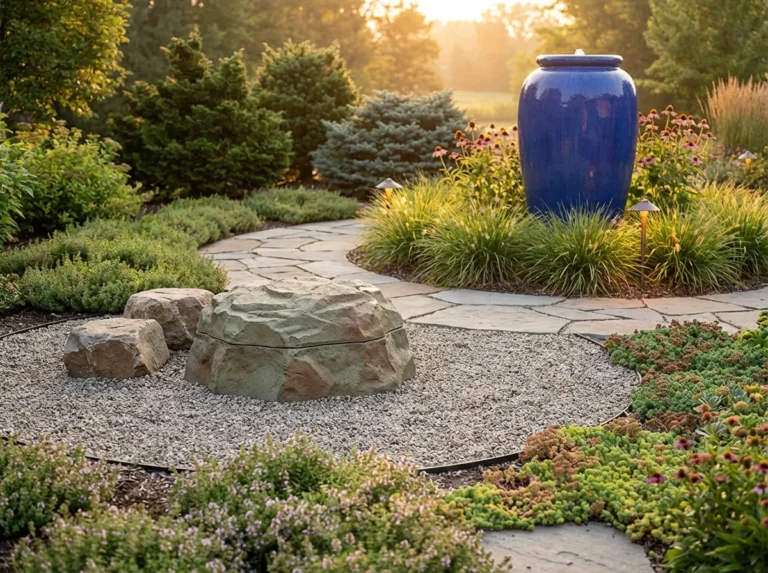
- Desert minimal: decomposed granite field, boulder trio, agave cluster, yucca accent, low bowl planter near the door with mixed succulents.
FAQ
How can I landscape a small front yard on a tight budget?
Start with edging and mulch. Clean lines and a consistent ground cover transform the look fast. Add 3–5 tough shrubs and a bag of bulbs. Use one or two bold containers near the door for color. You can upgrade hardscape or lighting later when your wallet recovers.
What plants need almost no watering?
Succulents and many Mediterranean plants handle drought like champs. Try agave, yucca, sedum, lavender, rosemary, and artemisia. In colder climates, go for dwarf conifers, junipers, and little bluestem. Group by water needs and run drip only when soil dries down 2–3 inches.
How do I keep weeds down without chemicals?
Block light and disturb soil rarely. Lay 2–3 inches of mulch or fine gravel, plant densely, and pull baby weeds before they root. Use a stirrup hoe for fast sweeps. A spring pre-emergent for paths and gravel zones helps a lot if you want an extra layer of defense.
Can I plant a small tree that stays small?
Yes, but choose a true dwarf, not a “fast-growing” monster in disguise. Look at dwarf Japanese maple, dwarf olive, or Amelanchier ‘Regent’. Place it where roots won’t fight utilities or the walkway. Prune lightly once a year to maintain shape, and you’ll keep the scale perfect.
Do rocks overheat and hurt plants?
Rocks absorb and reflect heat, so they warm soil in summer. Use rock mulch with heat-loving plants like agave and yucca. Use bark mulch around shrubs and perennials that like cooler roots. You can mix zones strategically so everything thrives.
Do I need landscape fabric under mulch?
For mixed planting beds, skip fabric. Mulch plus tight plant spacing controls weeds while your soil improves. Fabric works under pure gravel patios or paths where you don’t plan to plant. In beds, fabric tangles roots and makes changes harder.
Conclusion
You can build a low-maintenance, high-style front yard with a short plant list, clean edges, and smart groundcovers. Lean on hardscaping, add drip and simple lighting, and automate the boring parts. Pick tough plants that hold shape and color year-round. Your yard will greet guests with confidence—and you’ll keep your weekends to yourself.