Small Yard Solutions: Narrow Grass Border Ideas That Save Space
Tight yard with big ideas? You can still sneak in a fresh, green edge without eating your whole footprint. Narrow grass borders deliver a clean, soft buffer around patios, beds, and paths while you keep the bulk of your space usable. Think of them like eyeliner for your landscape: subtle, tidy, and oddly transformative. Let’s map out grass borders that look intentional, grow well, and don’t ask for weekend-long maintenance marathons.
Why Narrow Grass Borders Work in Small Yards
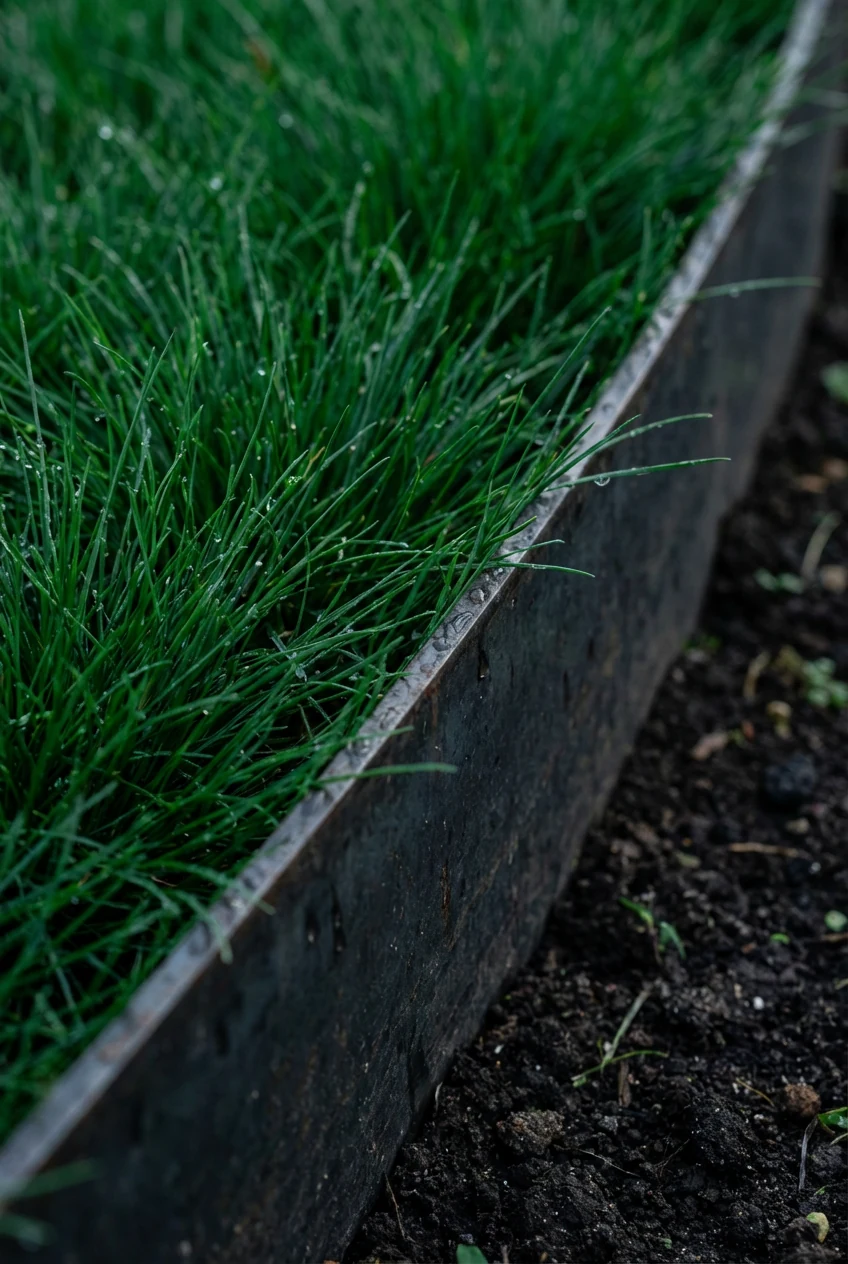
You want texture and softness, but you don’t want lawn dominating every inch. A slim grass border solves that. You add a crisp frame around beds or hardscape, which makes the rest of your space feel bigger and more designed.
You also gain flexibility. You can run a narrow border along fences, patios, or paths and still leave room for seating, planters, or a grill. That border reads as “garden” without creating a mowing beast.
Bonus: Grass edges create visual order. Hard lines look harsh alone. A thin strip of green breaks that up and softens transitions without crowding.
What Counts as “Narrow” (And Still Practical)
You want enough width to grow healthy grass and to mow it without gymnastics. Aim for:
- 12–18 inches along paths or patios (the sweet spot for looks and maintenance)
- 18–24 inches where you plan curves or have partial shade
- 6–10 inches only for micro-turf or groundcover blends next to pavers, not for a standalone strip
Anything tighter than a foot dries out fast and invites edging drama. You can push limits with artificial turf or groundcovers, but regular lawn grass likes some elbow room.
Design Rules for a Slim Border That Still Looks Lush
Narrow borders need strong structure and clean lines. You want intention, not “oops, the grass spilled.”
Set a consistent width. Use a tape measure and stakes to keep lines parallel. Wavy widths scream “I eyeballed this and hoped.”
Pick one edge style. Steel, brick, or concrete—choose one and repeat it. Mixed edging looks busy and shrinks the feel of the space.
Use contrast. Light pavers next to deep green turf? Chef’s kiss. Dark mulch with a bright fescue edge? Also great. Contrast makes small spaces pop.
Curves vs. Straight Lines
Curves soften fences and long sightlines. Straight runs feel modern and crisp. Both work, but keep these in mind:
- Curves need width. Keep curved borders at least 18 inches wide to avoid pinch points.
- Straight lines simplify mowing. You glide a reel mower or trimmer in one pass.
- Repeating gentle arcs looks better than one giant swoop that steals space.
Edging That Saves Inches
Edging sets the boundary and makes maintenance sane.
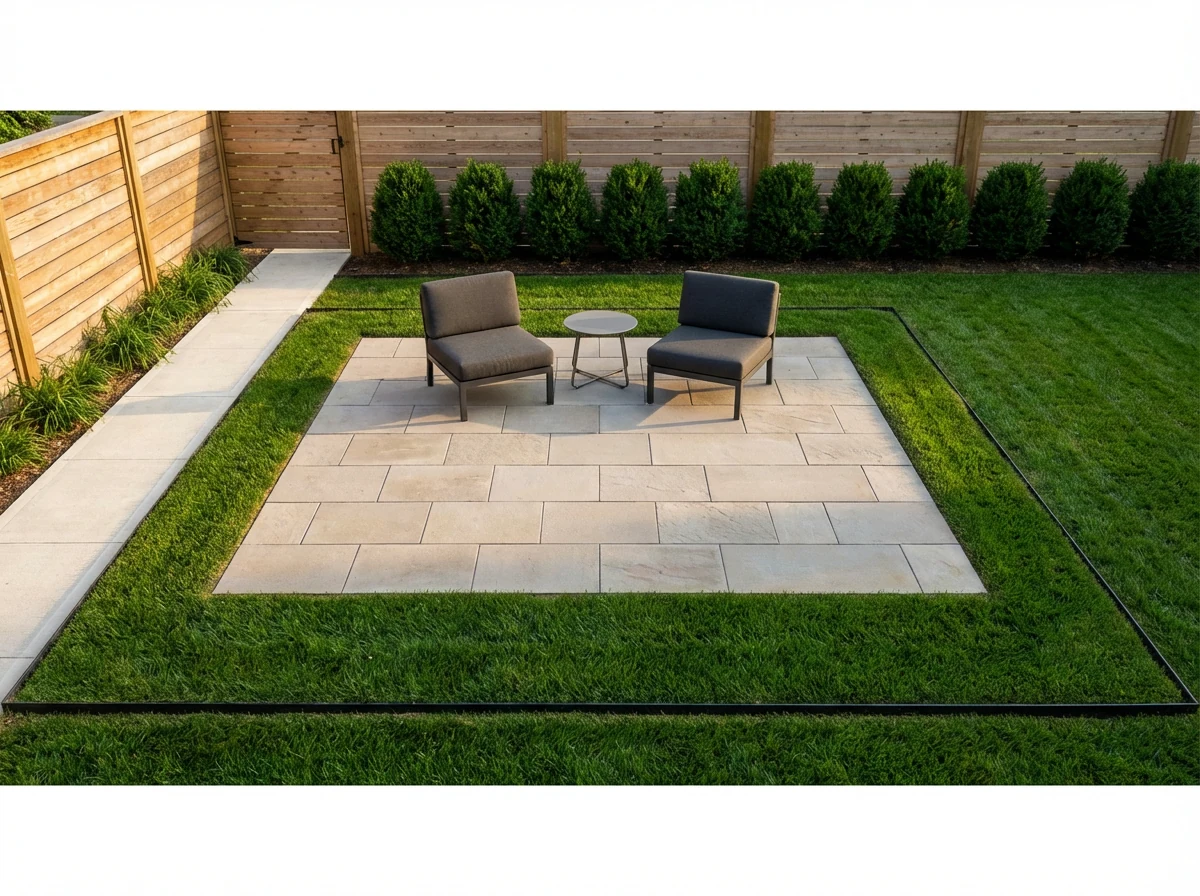
- Steel edging (1/8–3/16 inch) delivers razor lines and minimal footprint.
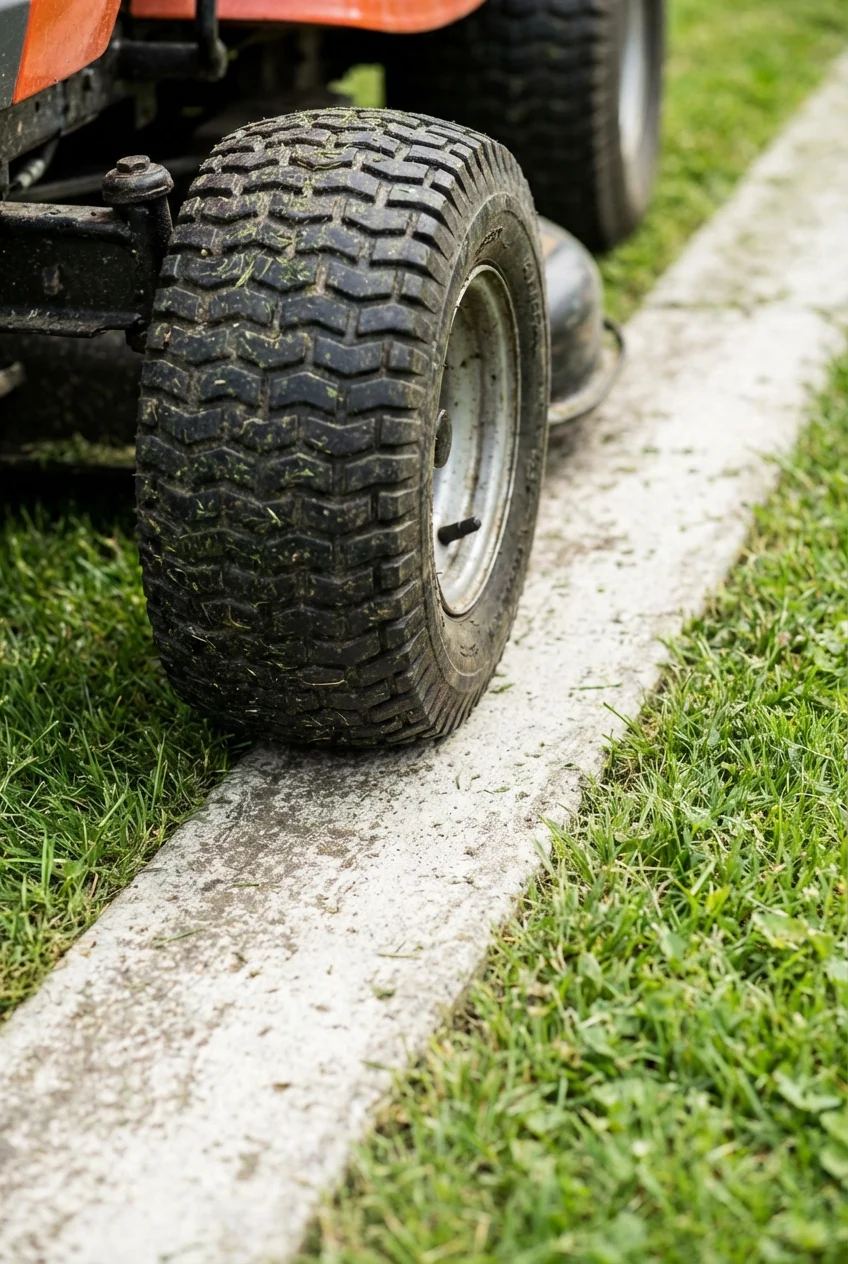
- Concrete or stone mowing strip provides a hard surface so your mower wheel rides right on it.
- Brick on edge looks classic and holds shape, but it eats 4 inches of width. Weigh the look vs. space.
- Hidden poly edging works, but it can wiggle over time. Stake it generously and keep it straight.
FYI: If you want ultra-crisp modern edges, steel wins. IMO, it gives the best “designer on a budget” vibe.
Soil Prep in Tight Strips
Grass struggles in skinny, compacted zones. Do this once and you win long-term:
- Excavate 3–4 inches of compacted subsoil or rubble along old patios or fence lines.
- Add 2–3 inches of compost or a sandy loam mix for drainage and nutrients.
- Grade the strip so water drains off hardscape, not under it.
- Roll lightly or tamp with a board to settle the surface evenly.
Pro tip: Roots run horizontally in strips, so soil quality matters more than depth alone. Feed the top 4–6 inches well.
Grass Options That Handle Tight Quarters
You need varieties that tolerate heat, edges, and occasional foot traffic. You also want slower growth so you don’t trim every three days.
Cool-Season Picks (North and Transition Zones)
- Fine fescues (creeping red, chewings, hard fescue): Slow growth, shade tolerance, elegant texture. Great for 12–18 inch borders.
- Turf-type tall fescue: Durable, deep roots, handles sun and part shade. Choose “dwarf” types for less mowing.
- Perennial ryegrass: Quick establishment and strong color. Mix it in for fast cover, not as a solo act in heat-prone microstrips.
Warm-Season Picks (South and Coastal Warm Areas)
- Zoysia: Dense, slow growth, excellent for razor edges. Tolerates foot traffic and heat.
- Bermuda: Tough and aggressive. Use edging or concrete borders to stop creeping into beds.
- St. Augustine: Bigger blade, great shade tolerance for warm zones. Keep the strip at least 18 inches wide for airflow.
Low-Mow and Microclover Blends
Want less mowing and more color? Try:
- No-mow fescue mixes for cool climates—soft, tufted look, mow a few times per season.
- Microclover + fescue blends—deep green, nitrogen-fixing, fewer fertilizer needs, good resilience.
Note: Clover lowers maintenance and stays green longer. If you love the golf-green look, clover brings a slightly mottled texture—IMO it looks richer in small spaces.
High-Traffic and Pet-Friendly Mixes
Dogs, kids, and delivery carts happen. Choose:
- Turf-type tall fescue + perennial rye in cooler zones.
- Zoysia or hybrid Bermuda in warmer zones.
- Keep a mowing strip so feet stay off the roots near edges.
Smart Hardscape Combos: Pavers, Ribbons, and Mow Strips
Mix grass with hard materials to keep it tidy and walkable. You save space and gain function.
Pavers-with-Grass Joints
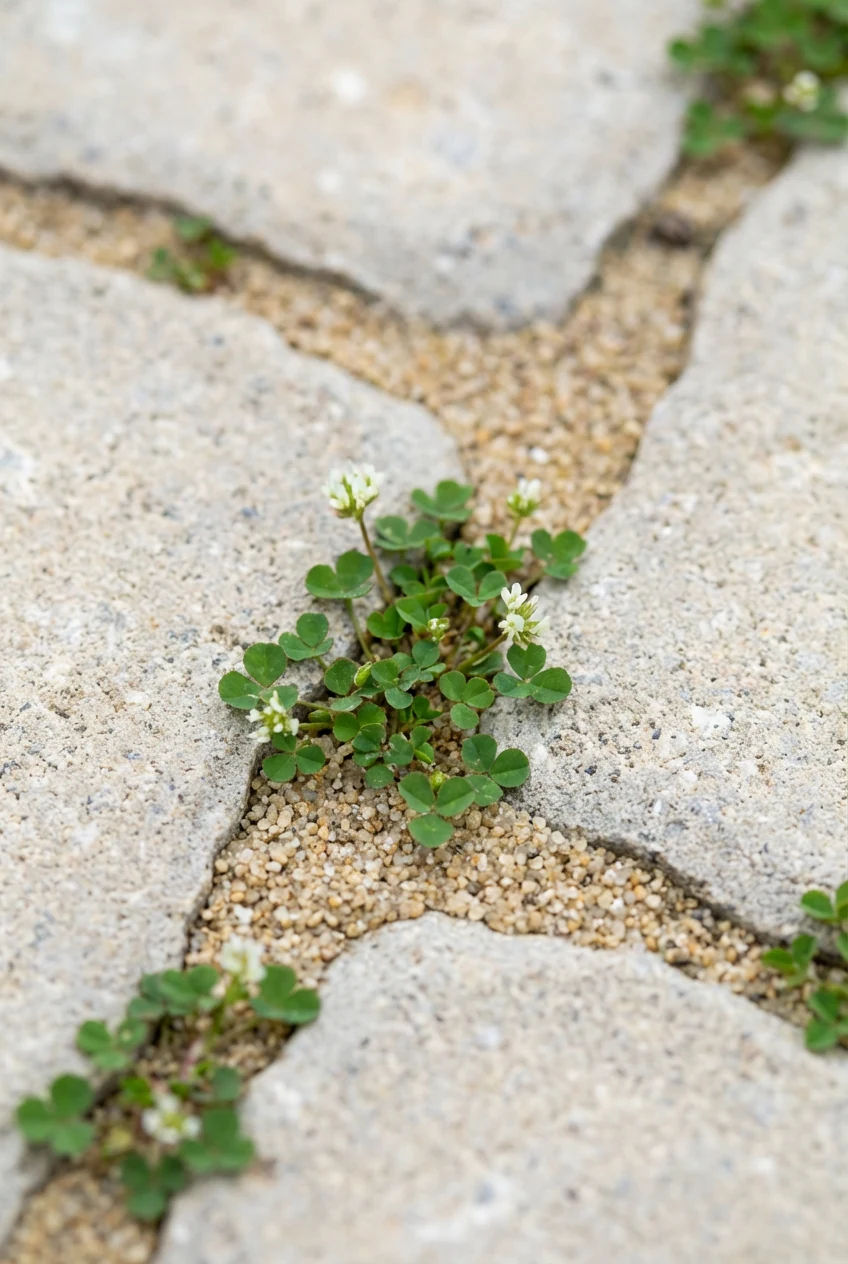
Set large pavers with 2–3 inch joints and tuck turf or groundcover between them. You soften the patio but keep solid footing.
- Use polymeric sand on load-bearing joints and turf on select gaps for accent.
- Choose microclover or creeping thyme where mower wheels can’t reach.
- Keep joints wider than your string trimmer line so trimming feels easy, not surgical.
Concrete or Stone Mowing Strip
A 6–8 inch band of concrete, brick, or stone alongside your grass border pays dividends.
- Your mower runs one wheel on the strip—clean edge, zero scalping.
- It blocks rhizomes from sneaking into beds.
- It gives a place to walk without trampling the turf.
Ribbon Driveway or Path
Two tire tracks in concrete or pavers with a narrow grass center looks vintage and functional.
- Keep the center strip 12–18 inches wide with deep-rooted fescue or zoysia.
- Install subsurface gravel for drainage so ruts never form.
- Edge the center with steel if you want a permanent line that grass can’t jump.
Watering, Mowing, and Maintenance Without the Headache
Narrow strips dry out fast and get heat from adjacent surfaces. Plan smart, and they thrive with less fuss.
Irrigation That Hits the Strip (Not the Patio)
Overspray wastes water and stains hardscape. Use:
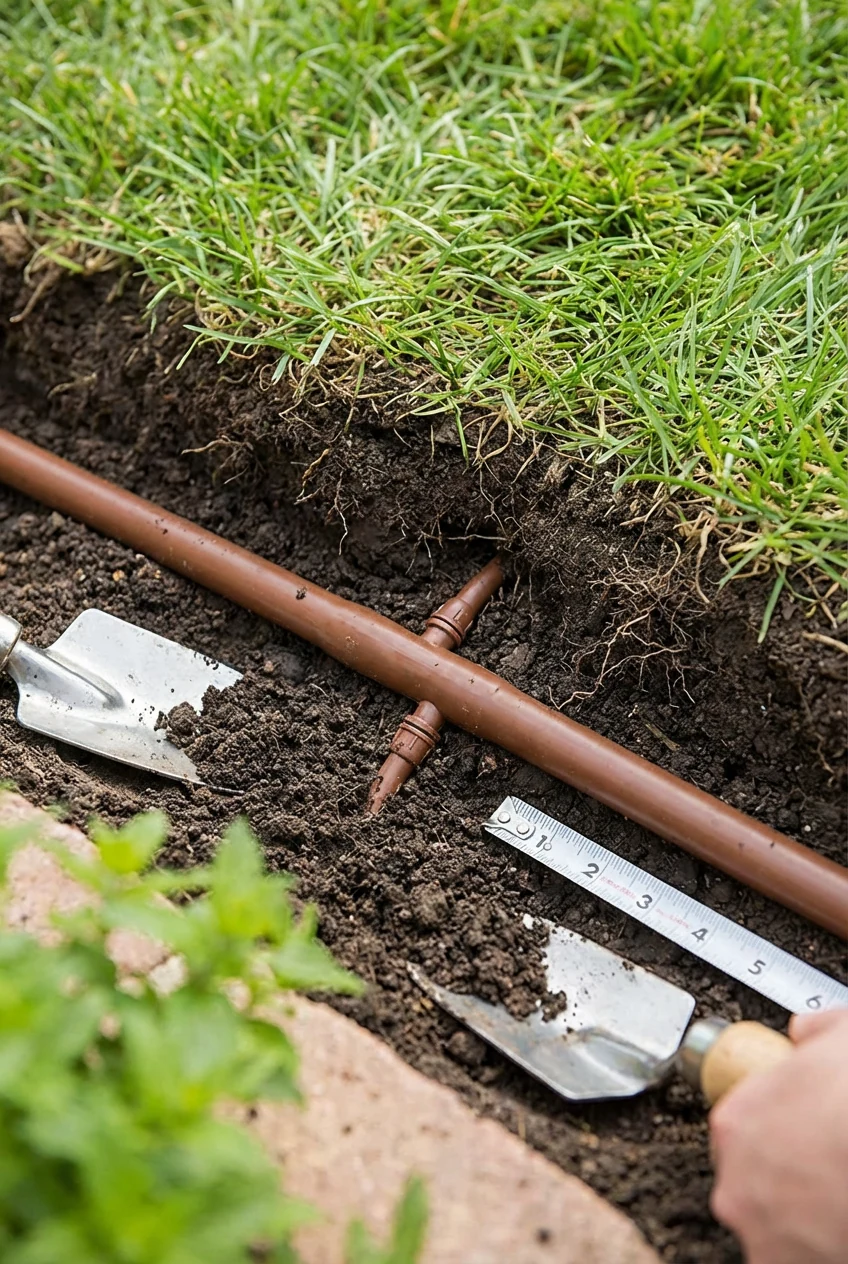
- Inline dripline (12–18 inch spacing) buried 2 inches deep—uniform and efficient.
- Low-arc rotary nozzles for narrow rectangles—fine droplets, less mist in wind.
- Smart timers that adjust for heat and shade pockets.
Water deeply but infrequently. If the strip sits next to a west-facing wall, schedule a short supplemental cycle on hot afternoons to cool it down.
Mowing and Edging Tools for Tight Spaces
You don’t need a giant mower. Use nimble tools:
- 14–16 inch reel mower for silky clean cuts on thin-bladed grasses.
- Cordless string trimmer with a fresh line for crisp edging.
- Half-moon edger for monthly touch-ups along beds.
- Shears for micro-spots a mower can’t reach.
Keep blades sharp. Dull blades shred edges, and shredded edges brown out faster and look messy.
Feeding, Weeds, and Wear
Tight strips don’t forgive neglect, but they don’t ask for much either.
- Fertilize lightly 2–3 times per year or use microclover to cut fertilizer in half.
- Mulch edges of adjacent beds so weed seeds don’t leap across the border.
- Topdress annually with 1/4 inch compost to boost soil and thicken turf.
If a corner gets hammered by foot traffic, swap a 12-inch square of turf with a stepping stone. Instant fix, zero drama.
Space-Saving Layout Ideas You Can Steal
You want a clean plan, fast. Try these:
- Patio halo: Add a 12–16 inch grass ribbon around a small patio with steel edging on the outer side.
- Fence softener: Run an 18 inch grass strip along a fence, then plant a single repeating shrub line inside the lawn curve.
- Path gallery: Set 24-inch pavers as a walkway and keep 6–8 inch turf joints on both sides for a gallery look.
- Micro-lawn island: Create a 3–4 foot by 10–12 foot lawn “rug” flanked by gravel and beds, with steel edges all around.
These layouts keep maintenance predictable and the look cohesive. Your yard reads as designed, not patched together.
Budget, Timeline, and Common Mistakes
You don’t need a contractor and a second mortgage. But a little planning saves big headaches.
Costs and Quick Wins
- Edging: Steel runs $2–$4 per foot DIY. Brick or stone varies more but adds heft.
- Soil + compost: Budget $40–$60 per cubic yard delivered.
- Turf or seed: Seed costs less but sod gives instant finish. Sod strips along patios look pro with minimal area.
- Irrigation: Dripline for a border costs less than pop-up heads and wastes less water.
Want the biggest visual return? Install crisp edging and a mowing strip first. Then lay sod or seed. The clean boundary sells the look instantly.
Mistakes to Avoid
- Going too narrow. A 6-inch strip of lawn will fry next to hot hardscape. Use groundcover there instead.
- No root barrier near aggressive species. Bermuda and some zoysias will invade beds without a hard stop.
- Overwatering. Thin strips saturate fast and invite fungus. Water less, more precisely.
- Skipping soil prep. Compaction kills thin turf. Loosen and amend before you plant.
Keep it simple, repeat details, and your yard reads bigger. Consistency beats complexity every time.
FAQ
What’s the minimum width for a grass border that won’t look sad?
Shoot for 12–18 inches along paths and patios. Go 18–24 inches if you want curves or deal with partial shade. Anything less than a foot struggles with heat and dries out fast. If you must go tighter, use microclover or a stepable groundcover instead of traditional turf.
How do I keep a clean edge without weekly pain?
Install steel edging or a concrete/stone mowing strip. Run your mower wheel on the hard edge and trim the other side. Touch up monthly with a half-moon edger. The hard boundary does most of the work, and you keep the lines crisp without sculpting every weekend.
Will a narrow grass strip burn out next to my patio or driveway?
It can if you starve it or drown it. Prep the soil, choose a heat-tolerant variety, and water precisely. Dripline or low-arc rotors keep moisture in the roots, not on the concrete. If western sun reflects off a wall, add a short afternoon cycle during heat waves, or switch to zoysia or a microclover blend that handles heat better.
Can I use artificial turf for a narrow border?
Yes, especially for 6–12 inch accent bands where real grass would struggle. Use a good base (compacted decomposed granite), install a rigid edge, and broom the fibers upright. Artificial turf stays tidy and saves water, but it heats up in sun, so place it where feet won’t bake.
What should I plant in shade where grass sulks?
Use fine fescue mixes in cool climates or St. Augustine in warm areas if you get dappled light. Deep shade wants groundcovers: liriope, mondo grass, or pachysandra look great as “grass-adjacent” and need far less sun. Keep the same edging so the design still flows.
My dog treats narrow strips like a racetrack. Any fix?
Add a mowing strip or stepping stones along the run so paws don’t chew the turf. Choose tougher blends (tall fescue + rye or zoysia). Train a “path” by mulching one edge intentionally and letting the grass hold the other side. Dogs love a lane—give them one and protect the rest.
Conclusion
You don’t need a giant lawn to get that fresh, finished look. A narrow grass border frames your spaces, adds softness, and keeps maintenance sane. Focus on consistent widths, crisp edging, smart irrigation, and the right grass, and your small yard feels bigger and more polished. Keep it simple, repeat the details, and enjoy the vibe—because tidy doesn’t have to mean high-maintenance, IMO.