Witchy Herb Garden Ideas: 15 Plants & Layout Tips for a Gothic Aesthetic
You want a garden that whispers spells, flirts with shadows, and still gives you fresh herbs for dinner? Same. Let’s build a witchy herb patch with real plants, real layout tips, and a moody, gothic aesthetic—no cartoon cauldrons required. Think silvery foliage, deep purples, and dramatic structure, all backed by solid growing advice. Ready to conjure a plot that looks like midnight but tastes like summer? Let’s dig in.
Set the Mood: Gothic Vibes Without the Gimmicks
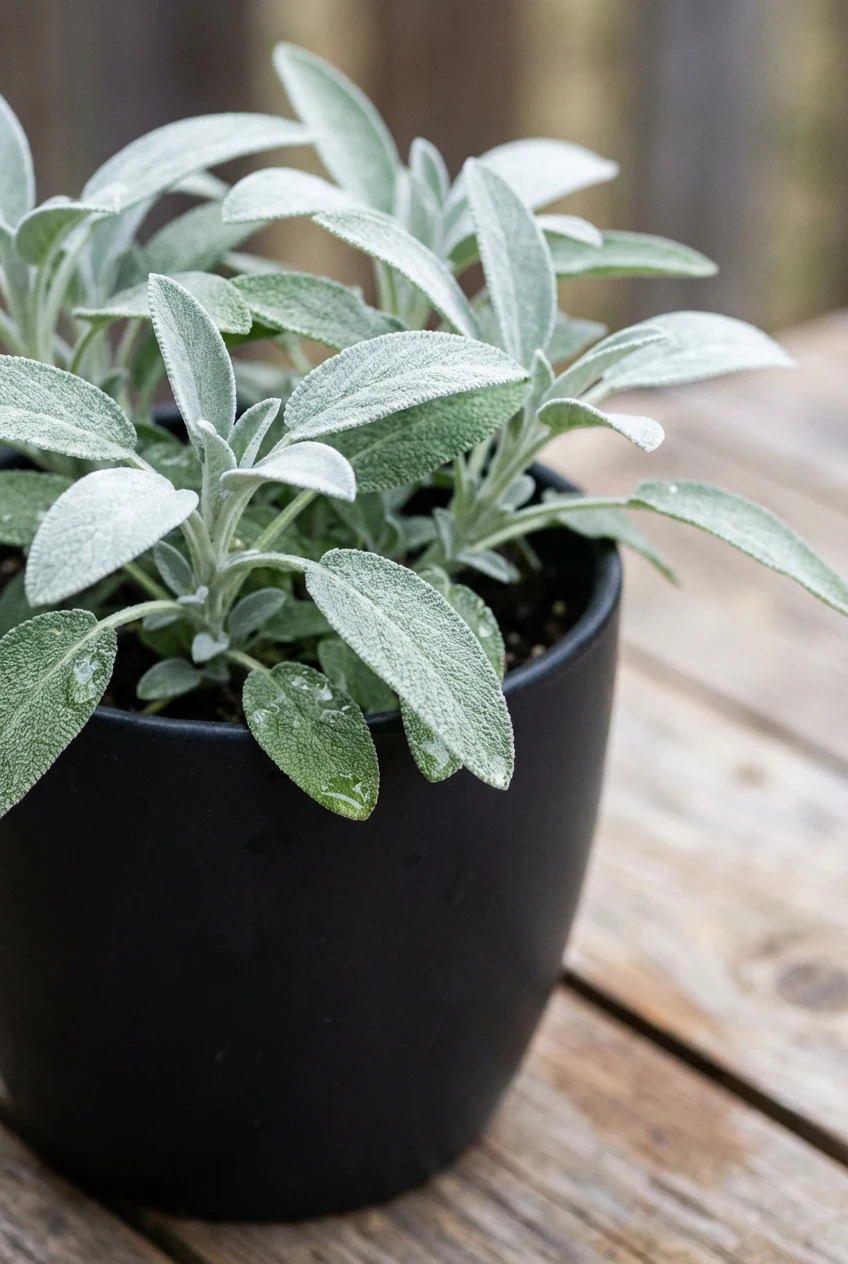
A witchy garden leans hard into contrast: dark foliage against pale stone, romantic blooms next to thorny textures, and shadows that look mysterious instead of messy. You want structure first, plants second. Build shape with beds, arches, and paths, then layer herbs to soften edges.
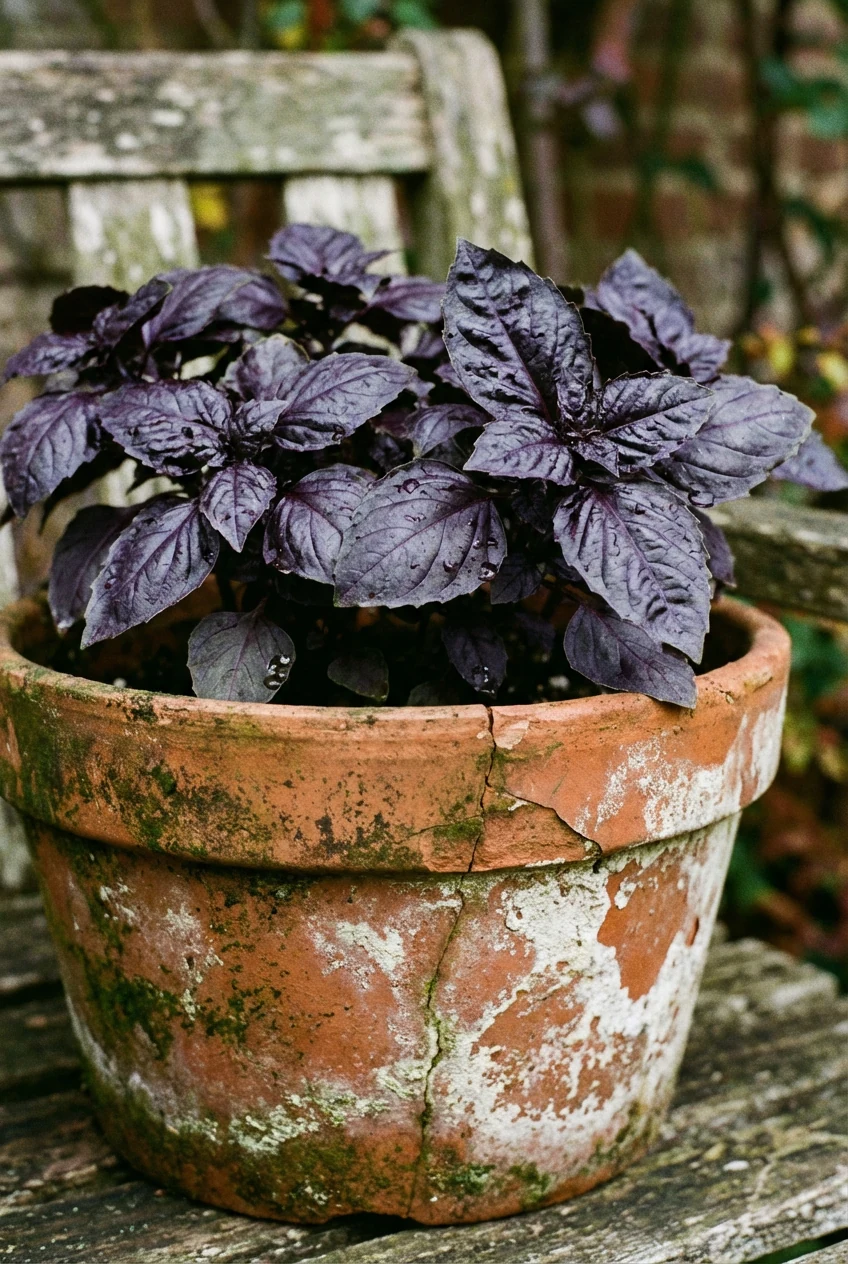
Aim for a palette with deep purple, near-black, silver, and velvet green. Wrought iron, weathered wood, and rough stone sell the look fast. If you love containers, use black clay, aged terracotta, and matte charcoal glaze for instant drama.
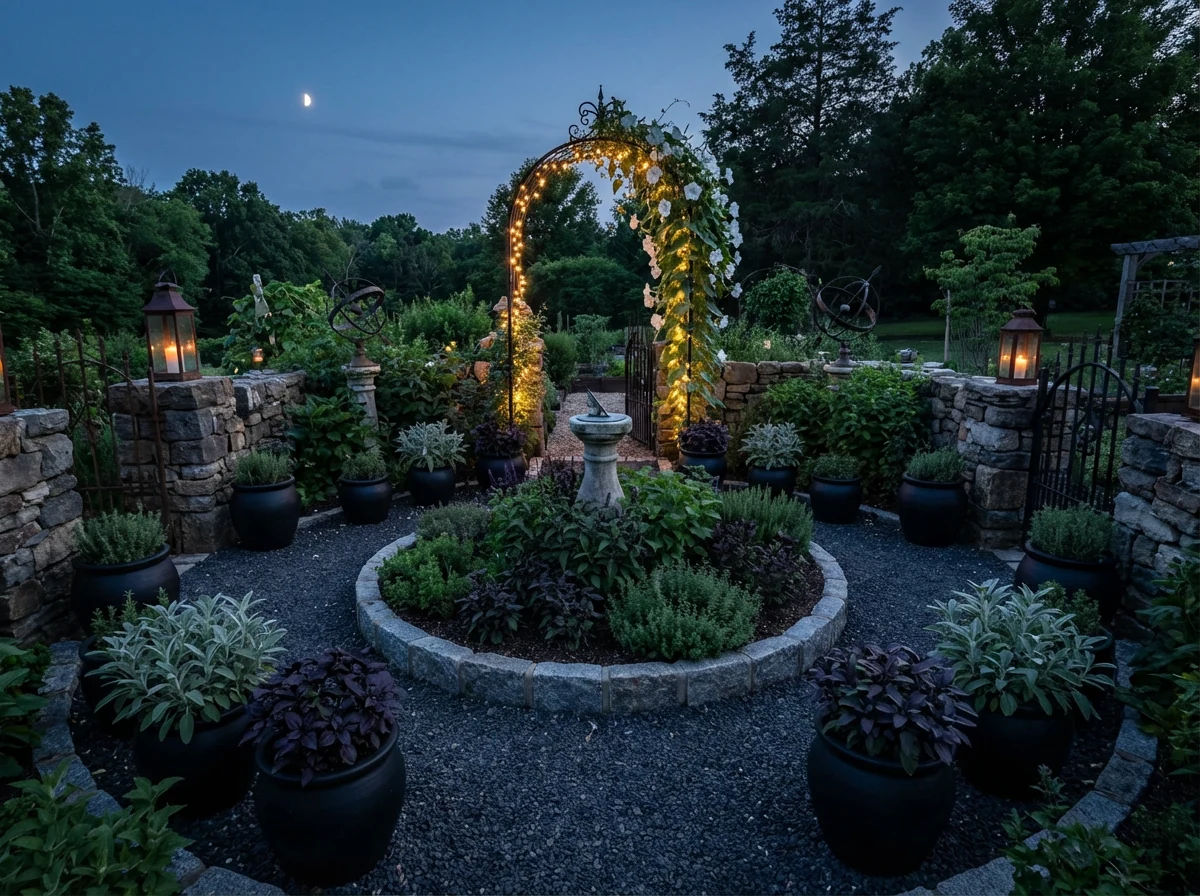
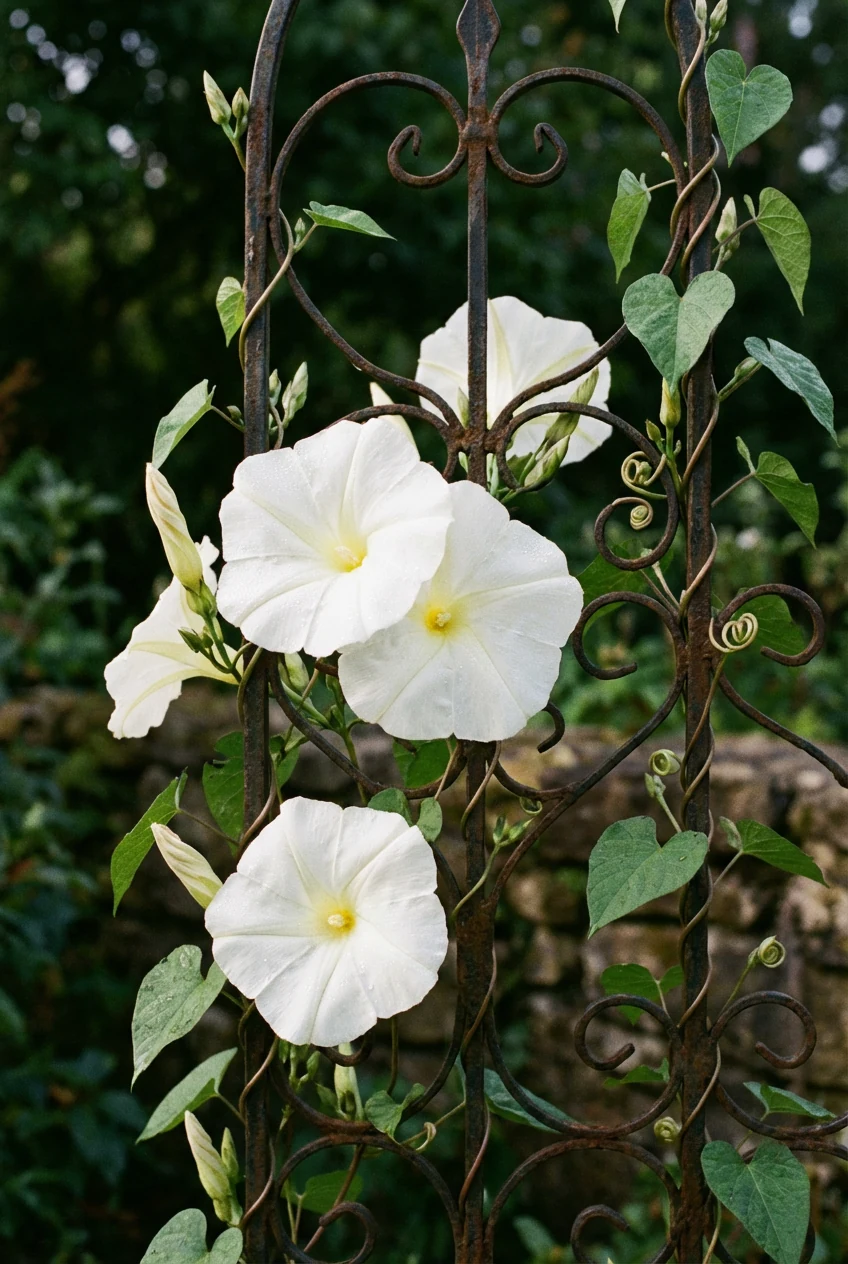
At night, let the garden glow. String soft lights through trellises, set lanterns near seating, and tuck solar stakes around paths. Moonflower and white blooms turn the whole space into a dreamy monochrome scene when the sun dips.
15 Witchy Herbs and Plants With Gothic Charm
You’ll get a mix of edible staples, traditional witchcraft herbs, and a few moody ornamentals that steal the scene. FYI: I included safety notes where needed. Respect the plants, and they’ll treat you right.
Core Protectors and Kitchen Allies
- Rosemary (Rosmarinus officinalis) — Evergreen, upright, and stubborn in the best way. It loves full sun and sharp drainage and grows in zones 8–10 (with winter protection in cooler areas). Use it for protection work, memory, and skewers for witchy kebabs.
- Sage (Salvia officinalis) — Soft gray leaves, earthy scent, and hardy in zones 5–8. Plant in full sun and sandy soil. Use for wisdom and cleansing (go with culinary sage instead of threatened white sage), and fry the leaves for crispy, magical snacks.
- Lavender (Lavandula angustifolia) — Bees worship it, and your sleep routine will thank you. Full sun, lean soil, and zones 5–9 with good drainage. Use for calm, love, and dream sachets. Bonus: it looks like fog rolling in when it blooms en masse.
- Thyme (Thymus vulgaris) — Tough, fragrant groundcover that handles foot traffic well. Full sun, dry soil, zones 5–9. Use for courage magic and crispy roasted potatoes. It creeps beautifully over stones.
- Yarrow (Achillea millefolium) — A healer with feathery foliage and flat-topped blooms. Full sun, average soil, zones 3–9. Use for boundaries and protection. Choose deep red cultivars for drama or white for moonlit contrast.
- Catnip (Nepeta cataria) — Soft gray-green leaves and cute little white flowers. Full sun to part shade, zones 3–9. Use for relaxation teas and life enrichment if you share the garden with cats. It sprawls, so give it a corner to vibe.
- Bronze Fennel (Foeniculum vulgare ‘Purpureum’) — Smoky, feathery bronze foliage and edible everything. Full sun, zones 6–10. Use for prosperity, digestion, and dramatic height. Swallowtail butterflies adore it.
- Dark Opal/Purple Basil (Ocimum basilicum ‘Dark Opal’) — Nearly black leaves, edible flowers, and a luxe look. Full sun, annual in most zones. Use for love, prosperity, and caprese that looks like art. Keep it watered and pinch for bushiness.
- Perilla/Shiso (Perilla frutescens) — Deep purple leaves, anise-mint flavor, and killer contrast. Full sun to part shade, warm-season annual. Use for protection, pickles, and visual drama. It reseeds, so harvest often.
Dreamwork and Shadow Herbs (Handle With Care)
- Mugwort (Artemisia vulgaris) — Silvery, tall, and famously dreamy. Full sun to part shade, zones 4–8. Use for divination and dream pillows. Avoid during pregnancy and if you have ragweed allergies.
- Wormwood (Artemisia absinthium) — Ghostly silver foliage and bitterness with attitude. Full sun, dry soil, zones 4–8. Use for protection and banishing. Never ingest casually or in large amounts; it contains thujone.
- Valerian (Valeriana officinalis) — Tall stems topped with vanilla-scented white umbels. Sun to part shade, zones 4–8. Use the root for sleep and calm. Check interactions if you take meds; valerian can sedate.
- Rue (Ruta graveolens) — Blue-green leaves, yellow flowers, and a long history in wards. Full sun, zones 4–9. Rue can irritate skin and cause phototoxic reactions; wear gloves and avoid during pregnancy.

Dark Beauty Accents (Not Traditional Herbs, But 100% Mood)
- Black Hollyhock (Alcea rosea ‘Nigra’) — Near-black, velvety blooms on tall spires. Full sun, zones 3–8. Use for height and drama behind silvery sages. Stake in windy areas and deadhead for more blooms.
- Hellebore (Helleborus spp.) — Winter bloomers with dusky petals and leathery leaves. Part shade, zones 4–9. Use near entries for off-season magic. All parts are toxic, so enjoy visually and keep pets away.
Want strictly edible options? Swap hellebores and hollyhocks for purple sage cultivars, deep-red amaranth, or dark-leaf lettuces. You’ll keep the vibe and score extra salad.
Layout Tips That Feel Arcane (But Grow Like a Dream)
You don’t need a giant plot. You need shapes that guide the eye and help plants thrive. Think circles, crescents, keys, and lines that lead somewhere (even if it’s just a chair where you drink tea and judge your weeds).
Go Geometric: Herb Wheel, Crescent Beds, and Keyholes
- Herb wheel — Create a circular bed and divide it like a pie with stones or edging. Place a birdbath or sundial in the center, plant sun-lovers on the outer ring, and tuck shade-tolerant herbs closer to any nearby structure.
- Crescent beds — Curve a bed around a seating area or a path. Line the inner edge with low growers (thyme, catnip) and plant tall spires (hollyhock, fennel) at the tips for a moonrise effect.
- Keyhole garden — Build a round raised bed with a notch for access. Use the inner hub for a compost basket that feeds the beds. Plant heavy feeders (basil, fennel) near the hub and drought-lovers (lavender, sage) on drier edges.
Map Sun and Shade Like a Witch With a Compass
- Track sun for a day and note full-sun zones (6+ hours) vs. part shade (3–5 hours). Put lavender, rosemary, fennel, and basil in the brightest spots.
- Use part shade for mugwort, valerian, hellebore, and perilla. They handle softer light and still look broody.
- Plant silver-leaf herbs along paths so they catch moonlight and create that ethereal glow.
Vertical Magic: Arches, Obelisks, and Trellises
- Frame entries with arches and grow climbing beans or moonflower for night drama. The structure alone screams gothic romance.
- Add obelisks in beds for height and anchor with bronze fennel or hollyhock. You’ll get instant depth and shadow.
- Use chain or wrought iron to hang planters. Fill with trailing thyme, purple basil, or perilla for a layered look.
Small Space Spellcraft
- Use a black metal shelf as a “witchy apothecary.” Top shelf: rosemary, lavender. Middle: basil, thyme. Bottom: mugwort in a contained pot.
- Plant a trough with silver sages, dark basil, and purple violas. Boom—portable gothic window box.
- Place a single large pot with bronze fennel as a centerpiece, then cluster smaller pots with thyme, perilla, and catnip around it.
Soil, Sun, and Water: Keep the Magic Alive
You don’t need a spellbook for care. You need drainage, consistent light, and a watering rhythm that doesn’t drown your plants.
- Prioritize drainage — Add gravel or perlite to pots and plant Mediterranean herbs (rosemary, lavender, sage, thyme) in sandy, lean soil. Soggy roots throw curses back.
- Feed lightly — Compost once in spring for leafy ones like basil and perilla. Keep fertility low for aromatics; rich soil often blunts fragrance.
- Water smart — Water deeply, then let soil dry a bit. Morning watering beats evening for mildew control, IMO.
- Mulch — Use shredded bark or dark gravel to boost the moody look and reduce evaporation. Keep mulch off stems to avoid rot.
- pH matters — Many culinary herbs prefer neutral to slightly alkaline soil. If your soil runs acidic, lime lightly and test again.
- Containers — Choose at least 12-inch pots for perennials. Mix: 50% high-quality potting soil, 25% compost, 25% perlite. Basil and perilla thrive in this blend.
Style It: Pots, Labels, and Finishing Touches
Lean into materials that age beautifully. Weathered terracotta, matte black planters, and beat-up wooden crates look right at home next to silvery leaves and dark blooms.
- Contrast wins — Put dark plants in light pots and silver plants in black ones. You’ll nail that high-drama vibe.
- Apothecary energy — Use metal plant labels and etch names with a paint pen. Add tiny sigils on the back for secret flair.
- Lighting — Hang warm fairy lights, place lanterns at corners, and add one witchy candelabra near seating (battery-powered unless you trust your wind).
- Textures — Mix gravel paths, rough wood edging, and iron accents. The garden reads “ancient and intentional,” not “yard sale chaos.”
DIY Labels And Storage
- Cut zinc tags, stamp herb names, and rub with black wax for a tarnished look. They age nicely and survive weather.
- Dry herbs on a black mesh rack in a dim, ventilated area. Store in glass jars with simple paper labels—no neon tape, please.
- Keep a small journal for harvest notes, lunar cycles, and favorite blends. You’ll learn fast and remember what works.
Simple Rituals and Real-World Uses
Let your garden serve your practice and your pantry. You don’t need elaborate rites. You need presence, gratitude, and a good pair of scissors.
- Moonlit harvests — Snip lavender and rosemary at dusk during a waxing moon for love and protection work. It’s romantic and practical.
- Smoke cleansing alternatives — Use homegrown rosemary, thyme, or lavender bundles instead of endangered white sage. You’ll respect ecosystems and keep the vibes strong.
- Dreamwork — Make dream sachets with lavender, mugwort, and a pinch of thyme. Avoid mugwort in pregnancy.
- Kitchen magic — Infuse olive oil with rosemary and thyme, then dress salads with intention. Stir clockwise for drawing energy, counterclockwise for banishing—if you’re into that.
- Tea time — Try valerian-lavender-catnip for sleep. Start tiny and adjust. Do not ingest any plant you can’t 100% identify.
FAQ
Can I grow a witchy herb garden in part shade?
Yes. I tuck mugwort, valerian, perilla, and hellebore in part shade and they thrive. Put sun-hungry plants like rosemary, sage, thyme, fennel, and basil where they get at least six hours of light. If your whole space leans shady, focus on textures and silver foliage, and use containers to chase sun pockets.
Which plants give me winter interest?
Rosemary stays evergreen in mild climates, and hellebores bloom in late winter. Yarrow holds its foliage in many zones, and lavender looks good even dormant. Add structure—arches, obelisks, and stone edging—to keep the bones beautiful when everything sleeps.
Are these plants safe for pets?
Some are, some aren’t. Catnip is pet-friendly and hilariously entertaining. Rue, hellebore, wormwood, and valerian can harm pets if they nibble (effects range from GI upset to toxicity). If your animals graze, plant risky species in fenced areas or containers they can’t reach. When in doubt, choose the safer herbs and supervise.
How do I keep the garden looking gothic without constant maintenance?
Plan structure first, then choose low-effort plants. Lavender, sage, thyme, and yarrow need little fuss once they establish. Use dark mulch, strong edging, and taller anchors like fennel or hollyhock to create drama. Deadhead when you wander with tea, not during an eight-hour marathon.
Do I need to follow a specific tradition to use herbs magically?
No. You can honor your own practice ethically and with respect. Focus on intention, gratitude, and sustainability. If you borrow rituals, learn their roots and avoid sacred practices from closed traditions. Your garden supports personal meaning just fine.
Can I start a witchy garden in winter?
Absolutely. Sketch layouts, source hardscape, and collect pots and labels now. Start seeds indoors late winter for basil, perilla, and hollyhock. Order shrubs or perennials early so you can plant as soon as the ground thaws. Winter prep makes spring feel easy.
Conclusion
You don’t need a spell to create a witchy herb garden—you need a plan, some moody plants, and a vibe that tells your story. Build structure, lean into silver and shadow, and pick herbs that serve both aesthetics and everyday life. Then sit outside, sip something herbal, and let the garden cast its quiet magic. IMO, that’s the best kind.