Small Front Yard Landscaping Ideas on a Budget: Make It Look Bigger for Less
You don’t need a giant budget (or a giant yard) to stop people in their tracks. A few smart choices can stretch a tiny front yard so it reads bigger, cleaner, and way more intentional. Think illusion over excavation, and style over stuff. Ready to make your small space do big things for less?
Start With a Designer Mindset (No Degree Required)
You control the vibe the second people see your front yard. So you need a simple plan before you buy anything. Focus on shape, flow, and a clear focal point. You set the rules, not the garden center clearance aisle.
Keep the palette tight. Pick 2-3 materials and 2-3 plant colors. Clutter shrinks space; cohesion expands it. Want a cheat code? Repeat one element at least three times so your eye reads a rhythm.
Create one focal point. A bold planter, a shapely shrub, or a small tree can anchor your space. Everything else should support that star. Noise kills the illusion of space, so keep supporting actors quiet.
Stay low and open near the street. Short plantings and open sightlines make the yard feel deeper. Save height for the house side or as vertical accents.
Scale and Proportion 101
– Use fewer, larger elements rather than lots of tiny bits. Big pot, not six petite ones.
– Match plant size to space. Dwarf or compact varieties keep things crisp.
– Leave breathing room. Negative space reads as “bigger yard.”
Focal Point Ideas That Don’t Cost Much
– Painted front door with matching planter
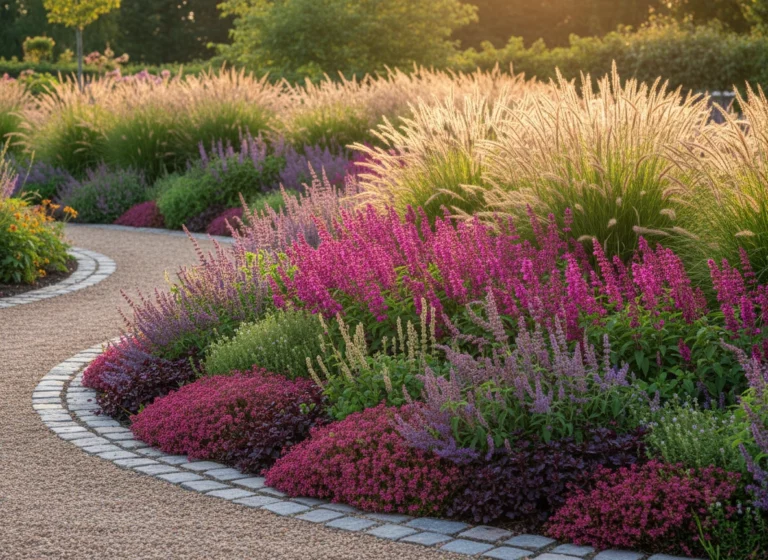
– Ornamental grass clump in a gravel bed
– DIY cedar box with a small Japanese maple
– Oversized ceramic pot (grab a thrift find and paint it)
Stretch the Space With Lines and Layers
Your eye follows lines. So draw the lines you want. Curate gentle curves or clean diagonals to pull attention deeper into the yard and toward the entry.
Pro tip: Run lines toward the door, not across the yard. Crossing lines chop up space.
Pathways That Pull You In
– Angle stepping stones slightly toward the door to add depth.
– Edge a path with low groundcovers or dwarf mondo grass for a tidy line.
– Keep path materials consistent. One path, one material. Consistency stretches space.
Layered Planting Without the Clutter
Aim for a simple 3-tier system:
– Front: groundcovers or low spreading herbs (creeping thyme, blue star creeper)
– Middle: compact shrubs or grasses (boxwood, dwarf fountain grass, heuchera)
– Back: a narrow vertical accent (columnar juniper, sky pencil holly)
Place taller elements near the house, not the sidewalk. You create a gentle lift that makes the yard feel longer.
Use Vertical Space Like a Pro
When you can’t go wide, go up. Vertical accents draw the eye and suggest height without hogging square footage. Even one strong element can transform a flat yard.
Look for columnar plants. They take minimal width and still give structure. Columnar evergreens, narrow deciduous trees, or tall ornamental grasses work well.
Give your wall or fence a job. A blank wall screams “small.” Add a trellis, a wall planter grid, or a painted color block to stretch it visually.
Climbing Plants on a Budget
– Star jasmine, clematis, or climbing roses add instant charm.
– Scarlet runner beans or sweet peas offer fast, cheap vertical interest.
– Use fishing line and eye hooks to train vines if you don’t want a trellis.
DIY Trellis Ideas
– Cedar lattice panel with a simple frame
– Grid of galvanized wire and screws (minimal, modern, cheap)
– Reclaimed ladder or pallet wood fixed to the wall
Again, keep it simple. One vertical moment beats five fussy ones every time.
Containers: Moveable Magic That Looks Expensive (But Isn’t)
Containers let you cheat. You can add height, color, and a focal point in one move—and you can re-style seasonally without digging.
Buy fewer, larger pots. Big planters look upscale and make a yard feel curated. Mix one statement pot with two secondary ones of similar style.
Cheap Container Hacks
– Paint mismatched pots in a matte black, deep green, or warm terracotta tone.
– Fill the bottom third with upside-down nursery pots or gravel to cut soil costs.
– Group containers in odd numbers for instant design points.
The “Thriller, Filler, Spiller” Formula (Still Works)
– Thriller: something tall (dracaena, cordyline, dwarf conifer)
– Filler: medium, rounded plant (coleus, heuchera, small hydrangea)
– Spiller: trailing accent (sweet potato vine, ivy, dichondra)
Repeat colors from the door, shutters, or house trim. That consistency ties everything together and makes the space feel bigger.
Hardscaping Without the Price Tag
You can change the whole vibe with simple, wallet-friendly hardscape upgrades. Gravel, stepping stones, and crisp edges read clean and modern without contractor prices.
Gravel wins on cost and flexibility. It drains well, covers ground quickly, and offers that nice crunch that says “expensive” (even when it’s not).
Weekend Gravel Refresh
– Outline the area with a garden hose to test the shape.
– Dig 2-3 inches, lay landscape fabric, and pin it down.
– Add compactable base (optional for heavy traffic), then 1-2 inches of pea gravel or decomposed granite.
– Broom in and tamp. Add large step stones for stability.
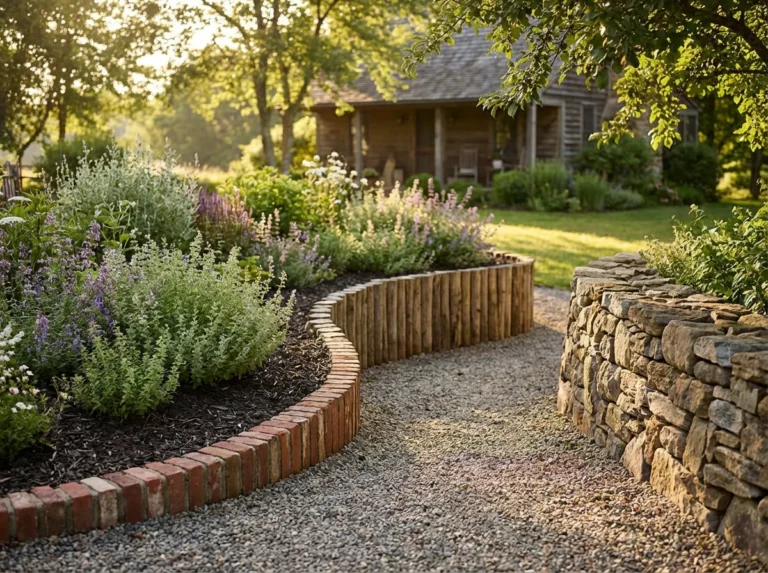
Edge everything. Clean edges make a tiny yard feel sharp and organized. Use steel edging, paver bricks, or even recycled roof tiles.
Stepping Stones That Stretch Space
– Set stones on a slight diagonal to lengthen the look.
– Keep gaps equal to create rhythm: 2 shoe lengths apart works for most adults.
– Plant creeping thyme between stones for a lush look on the cheap.
FYI: You can paint existing concrete with mineral paint or a stencil pattern. Suddenly “old slab” becomes “custom patio.”
Light It Like a Magazine Cover
Lighting does magic at dusk, and you can grab that magic with $100 worth of solar fixtures. You guide attention, hide the clutter, and create depth with light.
Use three types of light:
– Path lights for safety and flow
– Uplights on a focal plant or small tree for drama
– Warm accent light near the door for hospitality
Solar Stakes and String Lights
– Line only one side of the path with stake lights for a lean, modern look.
– Drape warm-white string lights along a fence or trellis for ambiance.
– Clip-on solar spotlights can highlight a house number, mailbox, or artwork.
Accent the Right Things
Shine light on verticals and textures. Uplight a columnar plant, a textured wall, or a feature pot. Leave utility areas dark so eyes skip them.
Pro move: Use warm color temperature (2700K–3000K). Harsh blue light reads cheap and shrinks the space visually.
Color, Mulch, and Maintenance That Actually Matter
Color choices change perceived size fast. Cool hues recede. Warm hues advance. So let cooler greens and blues dominate, and use hot colors as small accents.
Pick a house-friendly palette. Borrow a color from the roof, trim, or brick. Repeat it in planters, pillows (if you have a porch), and flowers.
Color Palette Rules (IMO)
– Stick to two main flower colors plus green.
– Use white or silver foliage to brighten shade and add “air.”
– Add hot colors near the door to pull attention in.
Mulch That Looks Rich
– Choose dark brown or black mulch for contrast and polish.
– Rake and top up thin spots each season; it costs little and looks new.
– Consider gravel or crushed stone for a modern look that lasts longer than bark.
Low-Lift Plants That Work Hard
– Groundcovers: creeping thyme, mazus, dwarf mondo, sedum
– Compact shrubs: boxwood, inkberry holly, spirea, dwarf nandina
– Perennials: salvia, catmint, heuchera, daylily, hosta (for shade)
Plant in groups of three or five. Odd numbers look natural. Repetition makes the yard feel bigger and more cohesive.
Maintenance Cheats You’ll Love
– Edge the lawn monthly for crisp lines. Instant upgrade.
– Hide irrigation hoses under mulch or behind edging.
– Keep a foldable bucket by the door for weekly five-minute weed patrol.
Fast Curb Appeal Extras (Small Money, Big Impact)
You can boost perceived size and style with tiny tweaks. These work fast and cost almost nothing.
Refresh your mailbox. Paint it, add a house number decal, and plant a mini bed around the post with a single grass and groundcover. The neatness near the street makes the yard look longer.
Upgrade house numbers. Modern, oversized numbers guide the eye and add design cred. Mount them on a painted board if your surface looks fussy.
Paint the front door. One afternoon, one quart of paint, and your entire facade suddenly looks deliberate. Tie the planters to the door color for cohesion.
Hide the ugly. Use a small lattice screen or tall grasses to mask trash bins or utilities. Distraction = design.
Micro-Budget Shopping List
– 3-5 solar path lights
– One bag of mulch per 20–30 square feet
– 2 large planters, 1 statement plant, 2 spillers
– Steel or plastic edging for one side of the path
– Trellis kit or wire grid, plus a fast-growing climber
Buy once, use often. Good edging, a quality hose, and a decent pair of pruners save you money and time every season.
FAQ
How do I make a narrow front yard look wider?
Angle your path slightly instead of running it straight down the middle. Plant low, spreading groundcovers along one side and keep the other side clean with mulch and a few bold accents. Use horizontal lines, like a low hedge or a band of gravel, to widen the visual field.
What’s the cheapest way to add impact fast?
Containers and mulch. Place one large statement pot near the entry and echo its color with a second pot or a door accent. Top up mulch everywhere, edge the lawn, and boom—instant polish for very little cash.
Can I keep a small lawn without it looking boring?
Yes, but keep it tight and clean. Treat the lawn like a rug, not wall-to-wall carpet. Edge it sharply, choose a simple shape, and surround it with low plantings or gravel for contrast.
What plants make a small front yard feel bigger?
Go with compact shrubs, columnar evergreens, and fine-textured perennials. Blue-green foliage recedes visually, which stretches space. Mix in light or silver foliage to add air and brightness without visual clutter.
How do I create privacy without a tall fence?
Use layered screening: a low hedge in front, a narrow columnar shrub behind, and a trellis with a light vine near the porch. You block sightlines where it matters and still keep the yard open. Use partial screens, not walls, so the space feels larger.
I rent—what can I do that I can take with me?
Go container-heavy, add solar lights, and use freestanding trellises. Lay stepping stones on compacted gravel so you can pull them later. Paint only what you can repaint easily, or upgrade hardware (house numbers, mailbox) and store the originals. FYI, you can keep receipts and switch back before moving.
Conclusion
Small front yards don’t need more stuff. They need smarter lines, fewer materials, and one or two strong moments that do the heavy lifting. Keep the palette tight, run the eye toward the door, and repeat elements with confidence. Do that on a budget and, IMO, your tiny front yard starts to look like the chic, intentional space you meant it to be all along.