Modern Front of House Landscaping Ideas with Rocks & Gravel
You want curb appeal that doesn’t drain your weekend or your wallet? Rocks and gravel deliver that modern, clean look with zero fuss. They play perfectly with minimal planting, bold lines, and low-key lighting. Ready to ditch the thirsty lawn for something sleek, smart, and seriously good-looking?
Why Rocks & Gravel Win the Front Yard
Rocks and gravel give you instant structure with almost no maintenance. They handle sun, rain, and foot traffic like champs. They also make your plants pop because they create strong contrast and order.
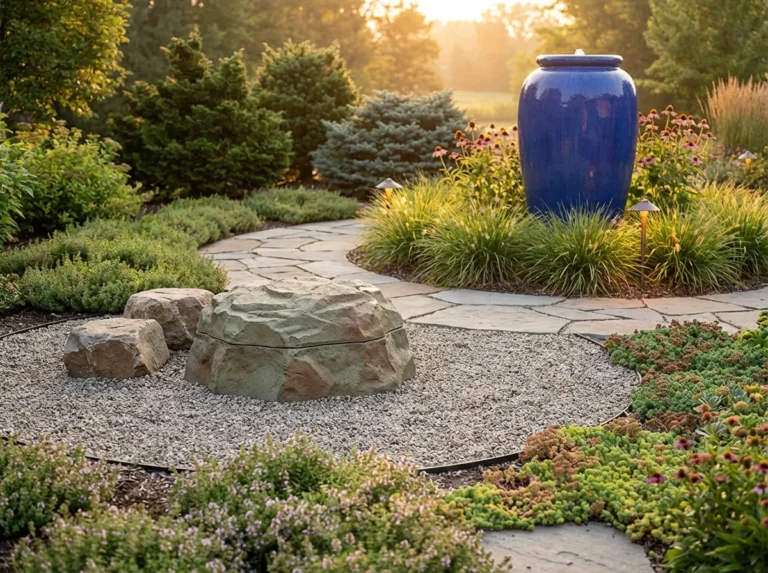
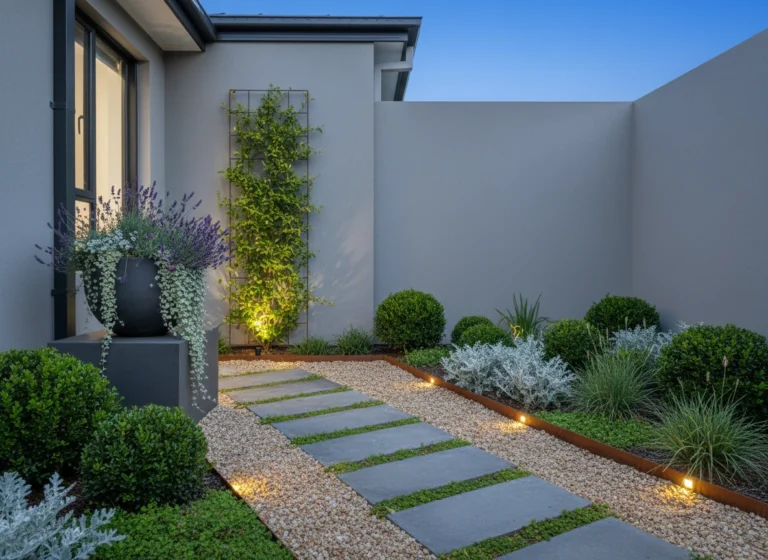
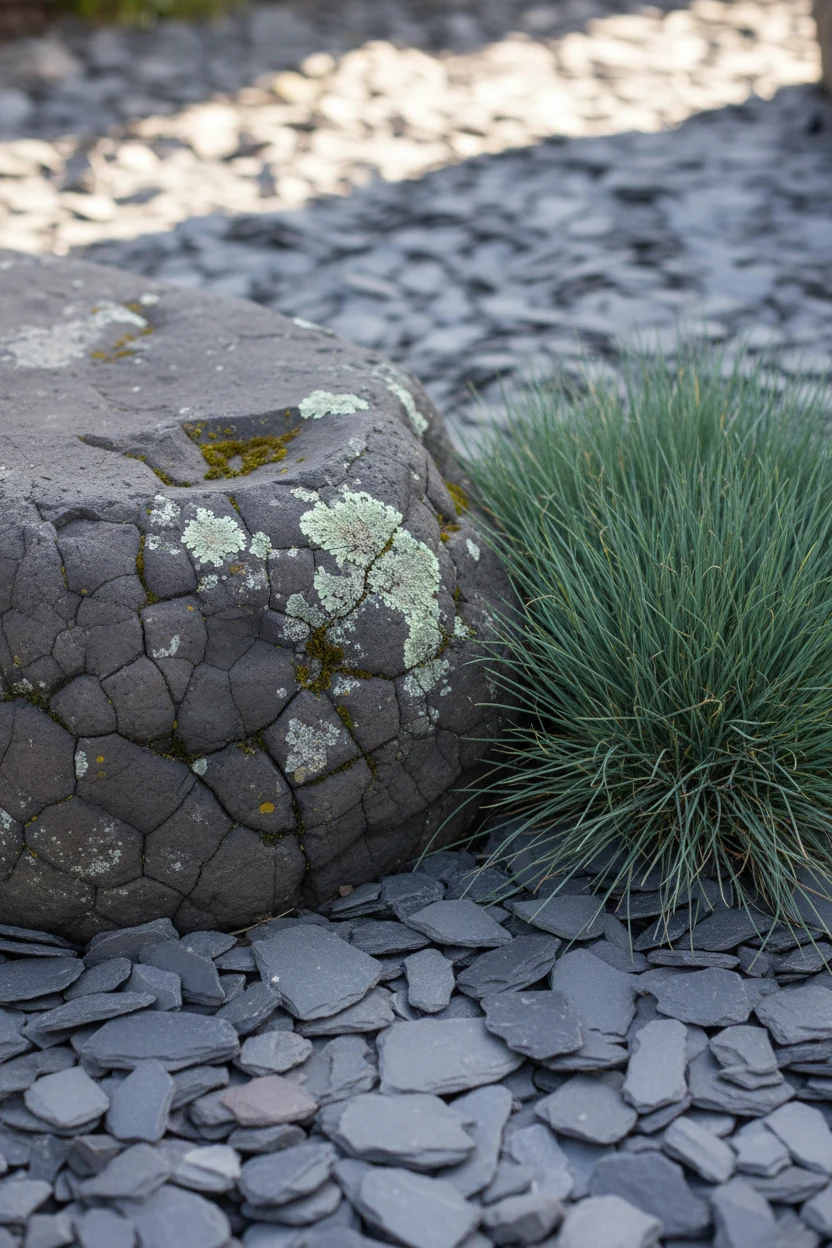
You get a huge style range too. Go desert-chic with warm tones, or lean coastal with cool gray river rock. Want modern drama? Try dark basalt with crisp steel edging and a single ornamental grass. Easy win.
Bonus: Rocks and gravel stay tidy year-round. No muddy patches, no mowing, no annual re-seeding drama. They reinforce drainage and help you avoid puddles that sabotage your entry.
Build Your Rock Palette Like a Pro
Think of rocks as your front yard’s wardrobe. You want color, texture, and scale that match your house and vibe. Here’s the short list to get your eye in:
- River rock: Smooth, rounded, and natural-looking. Great for relaxed, organic compositions.
- Pea gravel: Tiny, tan or gray pebbles. Comfortable underfoot and versatile for paths and patios.
- Crushed granite: Angular grit with a contemporary look. Packs tight for sturdy walkways.
- Slate chips: Blue-gray and edgy. Love them with black accents and simple plant palettes.
- Lava rock: Porous, bold, and lightweight. Adds color punch around cacti and succulents.
- Basalt or black rock: Deep charcoal tones that scream modern. Pair with light stucco or warm wood.
Match rock color to your home’s trim and roof, not just the siding. That subtle alignment makes the whole facade feel cohesive.
Size matters: mix small, medium, and statement
Choose one primary gravel size for continuity, then layer larger rock and boulders for hierarchy. Use small gravel (3/8” to 1/2”) for paths and broad areas. Drop in 3–12” cobbles to frame plant beds and corners. Place one or two boulders as focal points, ideally with visible grain or unique shape.
Color coordination tips
Use cool gray stones with blue or black trim. Go warm tan and rust with terracotta, beige, or cedar. If your house mixes materials (hello, brick plus siding), anchor the palette with the dominant tone. FYI: avoid mixing more than three rock colors, or you risk visual noise.
Design Moves That Look Expensive
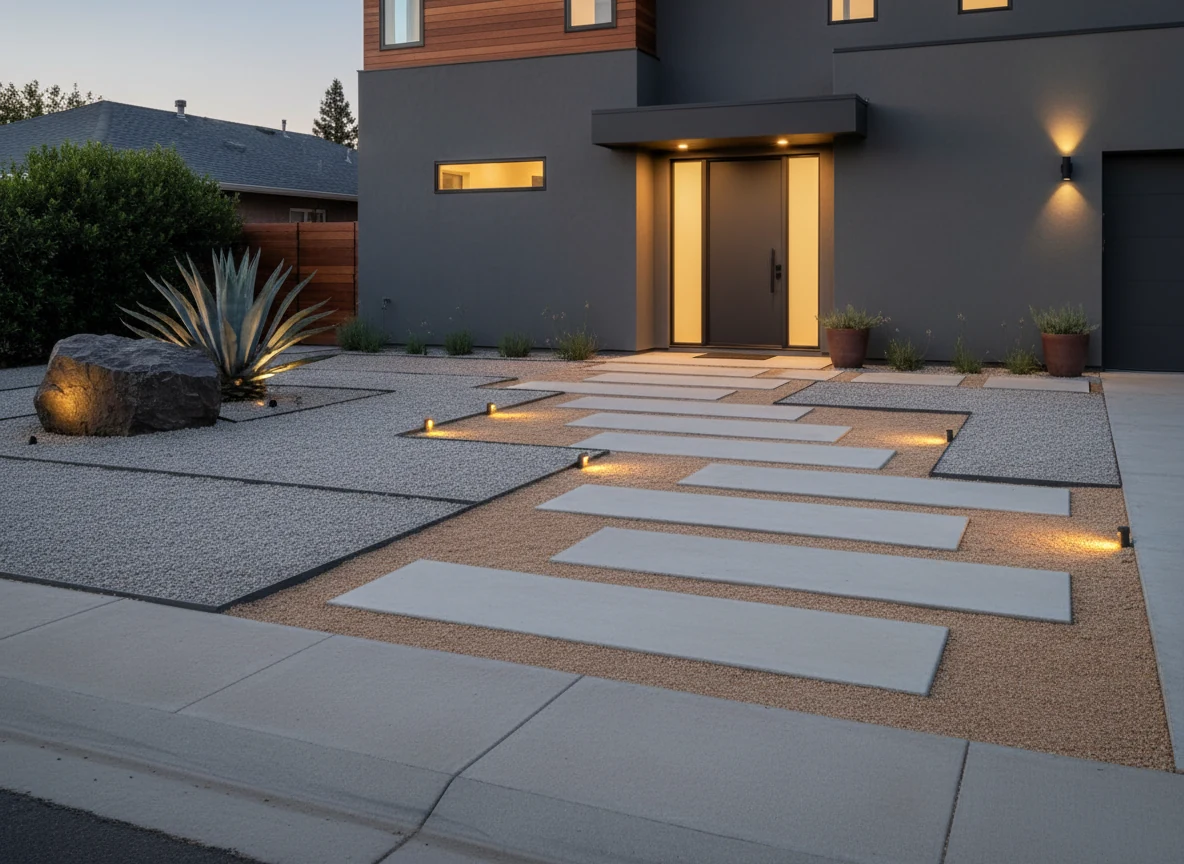
Clean lines sell “modern” faster than anything. Create strong shapes with rock areas that read like geometric panels. Repeat patterns across the front yard to build rhythm—think mirrored plant pockets or evenly spaced boulders.
Use negative space. Leave breathing room around focal plants and entry paths. Let gravel be your canvas, not just filler. Keep the forms simple: rectangles, ribbons, and arcs work beautifully with modern architecture.
Modern edges & borders
You need sharp boundaries to keep everything legit. Try:
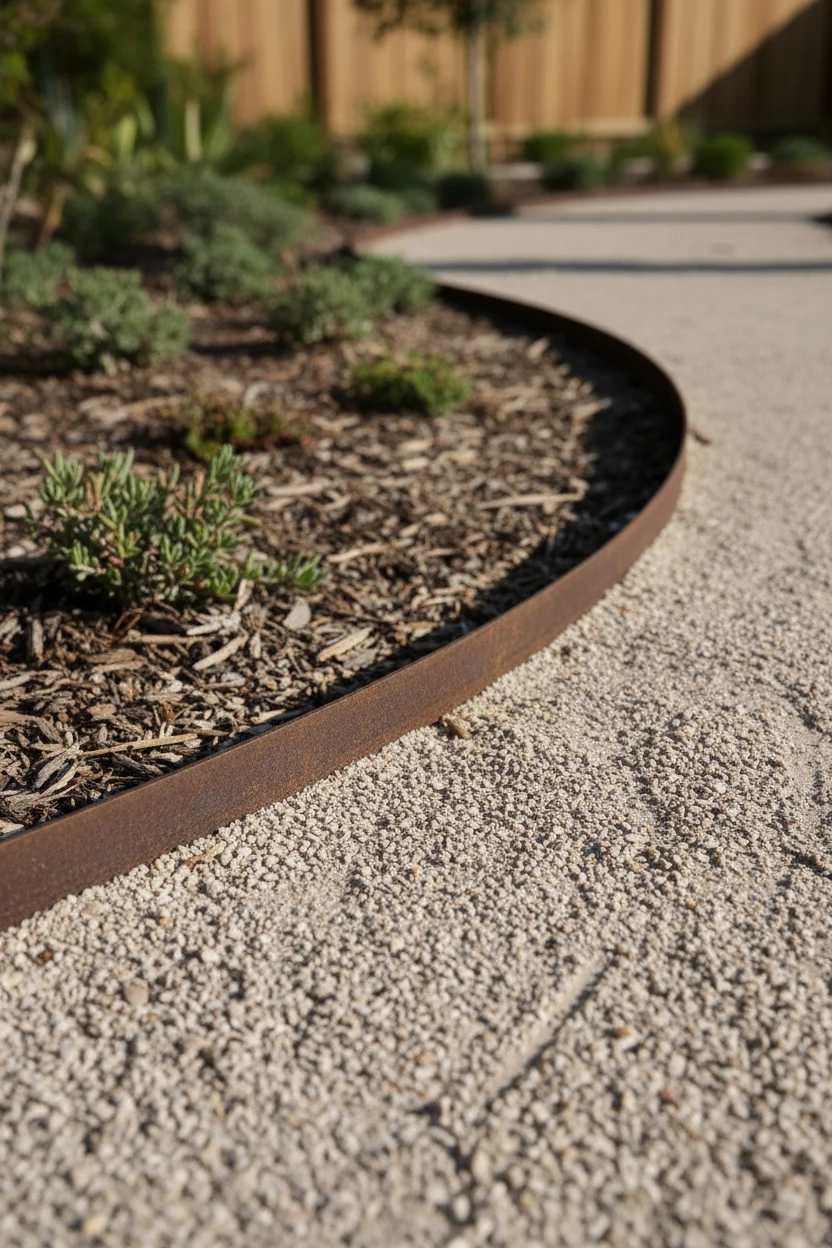
- Steel edging: Thin, crisp, and basically invisible from a distance. Minimalist dream.
- Poured concrete ribbons: Bold and permanent. Frame gravel like a gallery piece.
- Aluminum angle or composite: Sleek, weather-resistant, and easy to install.
- Stone set on edge: Organic border with a refined vibe. Great for river rock beds.
Keep lines straight or gently curved, not wiggly. Wiggly reads “accidental.” You’re not doing accidental.
Walkways and Entries: Crunch, Step, Wow
Your entry path deserves star treatment. Combine compacted gravel, stepping pads, and lighting for a modern, tactile experience. Gravel crunch underfoot feels satisfying and looks chic. Add monolithic pavers to guide the eye and keep shoes clean.
Use a wider path than you think. Go 4 feet minimum to avoid shoulder-bumping your Amazon delivery. Flank the walkway with low plantings and contrasting rock to push that high-end feel.
Build a stable gravel path
Want gravel that doesn’t wander into your street? Do this:
- Excavate 3–4 inches and shape a gentle slope away from the house (about 1–2%).
- Compact a 2–3 inch base of Class II road base or crushed stone.
- Lay edging to lock the shape—steel, composite, or concrete.
- Install a permeable gravel stabilizer grid if you want ultimate control (IMO, worth it near entries).
- Top with 1–2 inches of your chosen gravel and compact lightly.
Pro tip: Use crushed granite or a fines blend for paths. It interlocks and stays put better than rounded pea gravel.
Planting That Loves Rock
Modern rock landscaping thrives with simple, hardy plant choices. Think sculptural forms, strong foliage, and tough-as-nails tolerance. You don’t need a botanical museum. You need a few hits that highlight your architecture.
Group plants in threes and fives for impact. Repeat clusters across the front yard to build unity. Leave space between plants so their forms read clearly against the gravel—no hedge-style crowding.
Drought-tolerant plant shortlist
You can mix and match these without overthinking:
- Agave and yucca: Sculptural spikes, instant drama, minimal water.
- Festuca glauca (blue fescue): Soft mounds, cool color, great contrast with dark rock.
- Pennisetum or lomandra: Strappy grasses with movement and elegance.
- Sedum and ice plant: Groundcovers that bloom and laugh at dry spells.
- Rosemary or lavender: Fragrant, evergreen, and surprisingly versatile.
- Manzanita or dwarf pittosporum: Shrubby anchors with year-round structure.
Keep irrigation simple. Use drip lines under the gravel with emitters at each plant. Top-dress around plant bases with slightly larger stone to emphasize the form and reduce splashback.
Elevation, Drainage, and Dry Creek Style
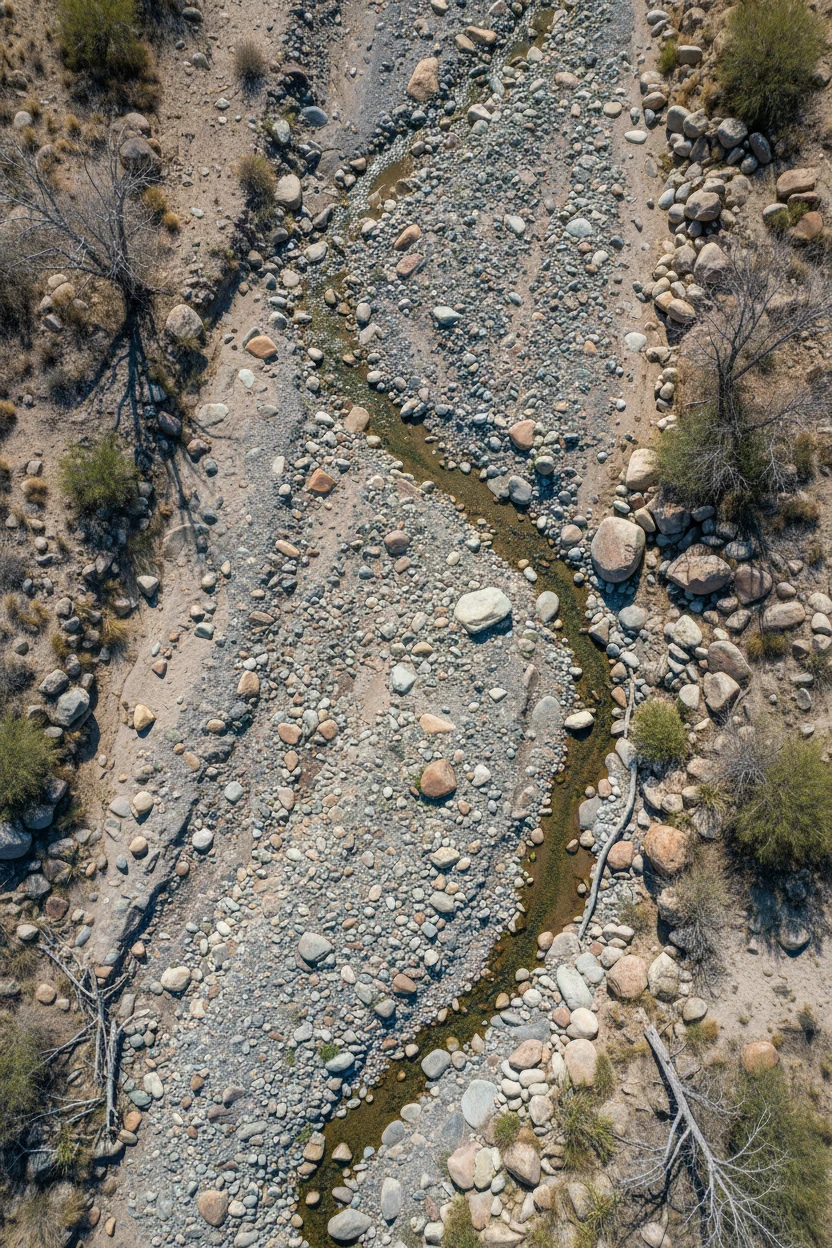
Gravel and rock love water management. You can shape subtle swales to redirect runoff and look good doing it. Dry creek beds double as sculpture and storm control—very practical, very photogenic.
Avoid hard slopes near entries. Terrace with low steel or concrete step-ups. Use larger rock as retaining accents. Put plants up high so they don’t drown when it rains sideways.
Dry creek bed basics
Build a creek that works even when it’s not “on”:
- Sketch a natural path that curves gently from high to low points.
- Excavate a shallow trench (6–10 inches deep, wider in the middle for “main channel”).
- Line with landscape fabric if you have aggressive weeds.
- Set larger “bank” rocks first, then mid-size anchors along the edges.
- Fill the center with mixed river rock sizes for texture and realism.
- Place rip-rap at any inflow to slow fast water.
- Plant drought-tolerant species along the banks to soften the look.
Test with a hose. Watch how water moves and tweak rock placement. Avoid dead-flat creeks—they need a gentle grade to do their job.
Lighting, Edges, and Finishing Touches
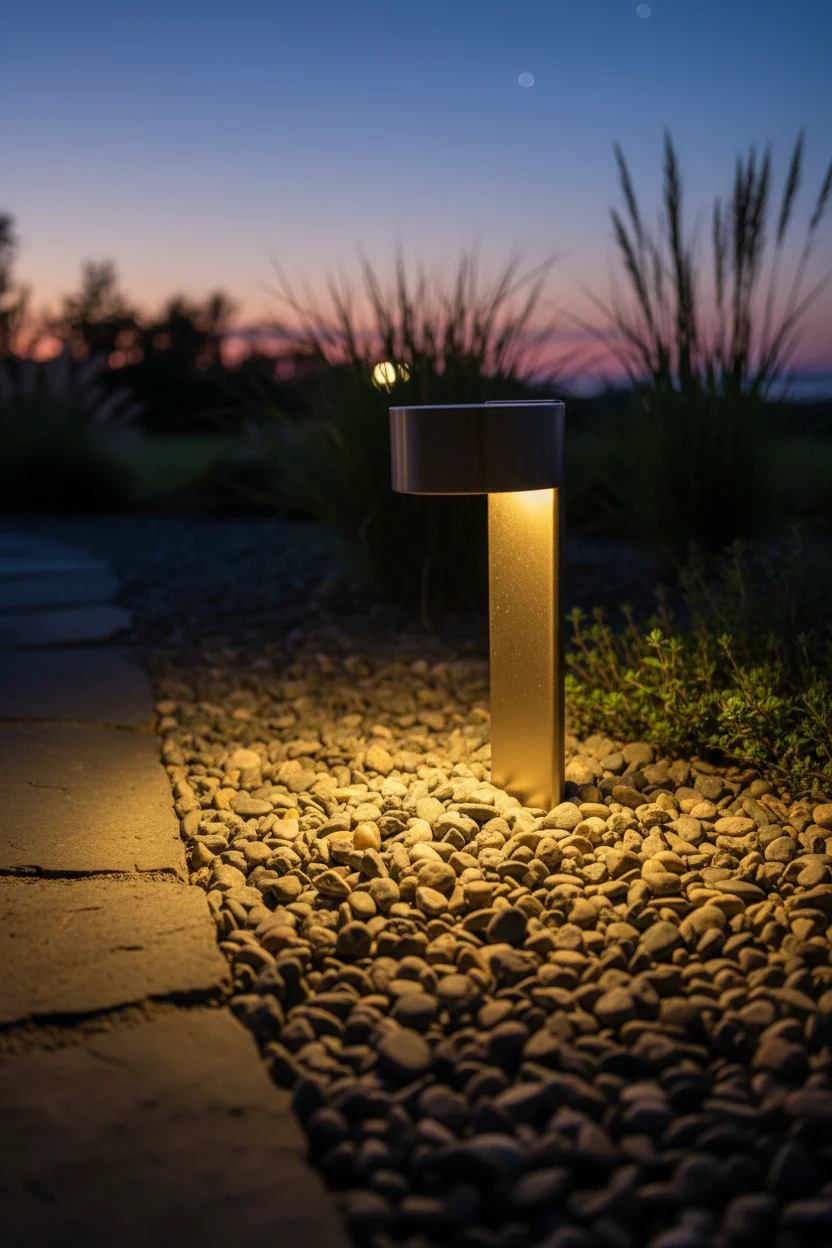
Lighting turns your rock landscape into a vibe. Low path lights skim across gravel and create sparkle. Up-light a boulder or that heroic agave and boom—you have drama after dark.
Accessories matter. Update house numbers in a modern font, swap your mailbox for something metal and minimal, and add a weathered steel planter for warmth. Small moves pack big curb appeal.
Smart lighting tips
Want glow without glare? Follow these:
- Use warm LEDs (2700–3000K) so rocks and plants feel inviting, not clinical.
- Keep fixtures low to avoid light spill into neighbors’ bedrooms—friendly, right?
- Accent only a few features (entry, focal plant, house number). Complexity kills simplicity.
- Choose solar for easy installs, hardwired for reliability. Mix if that fits your setup.
FYI: Aim lights across textures, not straight at them. Side lighting reveals shape and shadow.
Maintenance That Actually Fits Your Life
You want low-maintenance, not no-maintenance. A tiny checklist keeps everything crisp without eating your Saturday. Gravel and rock stay neat if you control weeds and migration.
Lay down quality weed barrier where you won’t plant, then add at least 2 inches of gravel. Use pre-emergent in early spring if weed seeds get ambitious. Quick touch-ups with a rake and blower keep the zen.
Annual tune-up checklist
Do these once or twice a year:
- Top off gravel in high-traffic zones (1/2 inch does wonders).
- Re-compact path areas with a hand tamper if they feel soft.
- Check edging for movement and tap it back into line.
- Prune plants for clean silhouettes—no shaggy chaos at the front door.
- Brush rock off stepping stones so shoes stay clean.
Rule of thumb: Keep 2 inches of clearance between gravel and thresholds. No one likes a crunchy doormat.
FAQ
Will gravel attract weeds?
Gravel doesn’t attract weeds, but wind loves to drop seeds everywhere. Use landscape fabric under non-planted areas and drip-irrigate plants so you don’t water the whole surface. Add pre-emergent in spring if weeds get bold. A quick pull every few weeks beats a mid-summer jungle.
How do I stop gravel from migrating off the path?
Edge it, compact it, and choose the right product. Crushed granite or fines lock together better than rounded pea gravel. Install a stabilizer grid on slopes or near entry points. Keep a small hand broom by the door and sweep strays back like it’s no big deal—because it isn’t.
Is rocks and gravel landscaping pet-friendly?
Mostly, yes. Dogs handle pea gravel just fine, and cats act like they own it (accurate). Avoid super sharp stone if your pet sprints for fun. Put larger stepping pads down in high-speed zones so paws get a smoother runway.
What’s the difference between pea gravel and crushed granite?
Pea gravel has rounded stones that feel smooth underfoot but can roll. Crushed granite has angular particles that interlock and stay put better. Use pea gravel for casual seating areas and decorative beds. Use crushed granite for walkways and any surface that needs extra traction.
Can I use rocks in cold climates with snow removal?
Absolutely. Keep gravel at least 3 inches away from the edge of your walkway or driveway so the shovel doesn’t scoop it. Choose larger aggregate near plow zones (no pea gravel right at the curb). Set clear edges, and use a plastic shovel if you worry about scratching pavers and compacted fines.
Do I need to seal or treat rocks?
No sealing needed for most outdoor rock. Just clean with a blower or a gentle hose rinse when dust builds. If you use decorative concrete or steel planters, treat those as needed. Rocks themselves age like champs.
Conclusion
Rocks and gravel flip your front yard from high-maintenance to high-style fast. They deliver texture, contrast, and structure with a few smart moves. Pair clean lines with a tight plant palette, lock in good drainage, and toss in a little lighting. IMO, that combo gives you modern curb appeal that stays gorgeous with almost no effort—exactly what you signed up for.