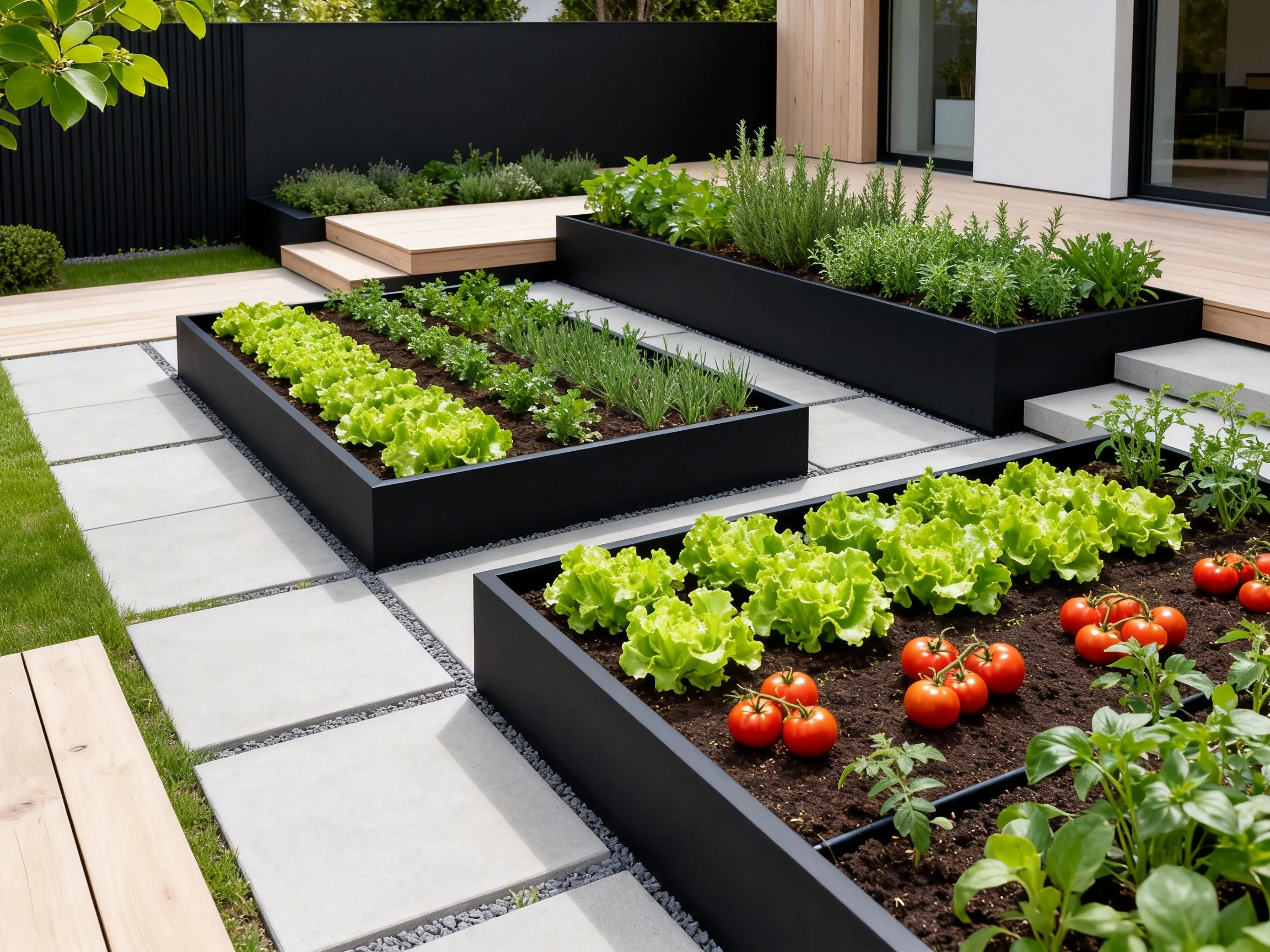
Vegetable gardens used to get shoved into a back corner like some secret side project. Not anymore. Modern vegetable garden design puts edibles front and center, and honestly, it looks good doing it. You can grow tomatoes, herbs, and lettuce in a space that feels clean, stylish, and actually enjoyable to walk through.
Why modern vegetable gardens look so different now
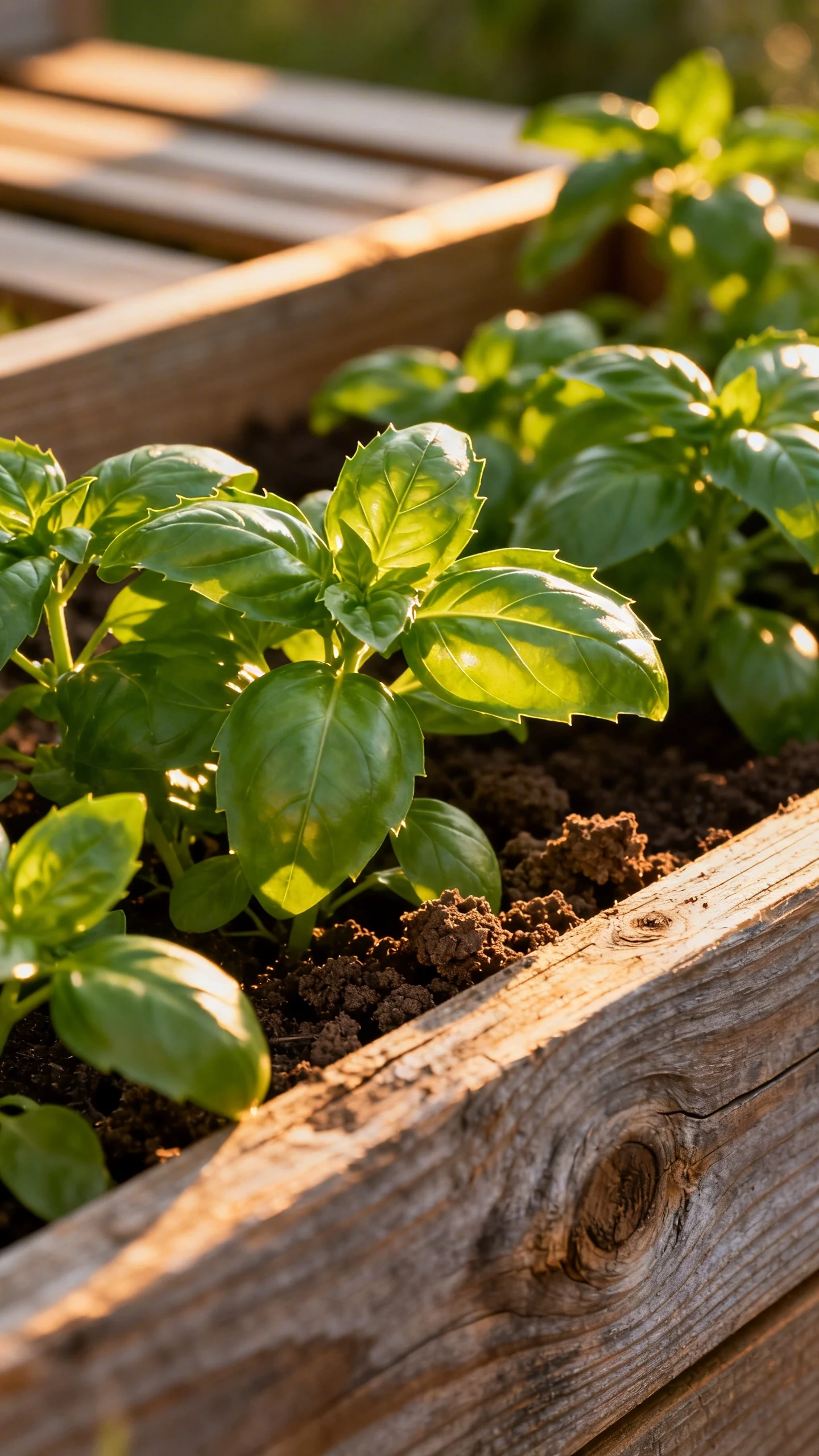
Old school veggie patches had one job: produce food. Fair enough. But modern garden design asks a better question: why not grow food in a space that also looks amazing?
That shift changes everything. You start thinking about lines, shapes, materials, color, and flow, not just where to stick the zucchini. The result feels less like a random planting zone and more like an outdoor room with snacks.
Modern design also fits the way people live now. Most of us want something low-maintenance, tidy, and flexible. We want a garden that works on a Wednesday evening, not just in some fantasy life where we have six free hours and a basket hat.
Function still matters, obviously
Pretty doesn’t mean pointless. A good modern vegetable garden still needs sun, healthy soil, water access, and sensible spacing. If your raised bed looks like a magazine spread but your peppers get two hours of light, the garden will humble you fast.
So yes, design matters. But good design solves problems. It makes watering easier, harvesting quicker, and maintenance less annoying. IMO, that beats fussy decoration every single time.
Start with layout, not plants
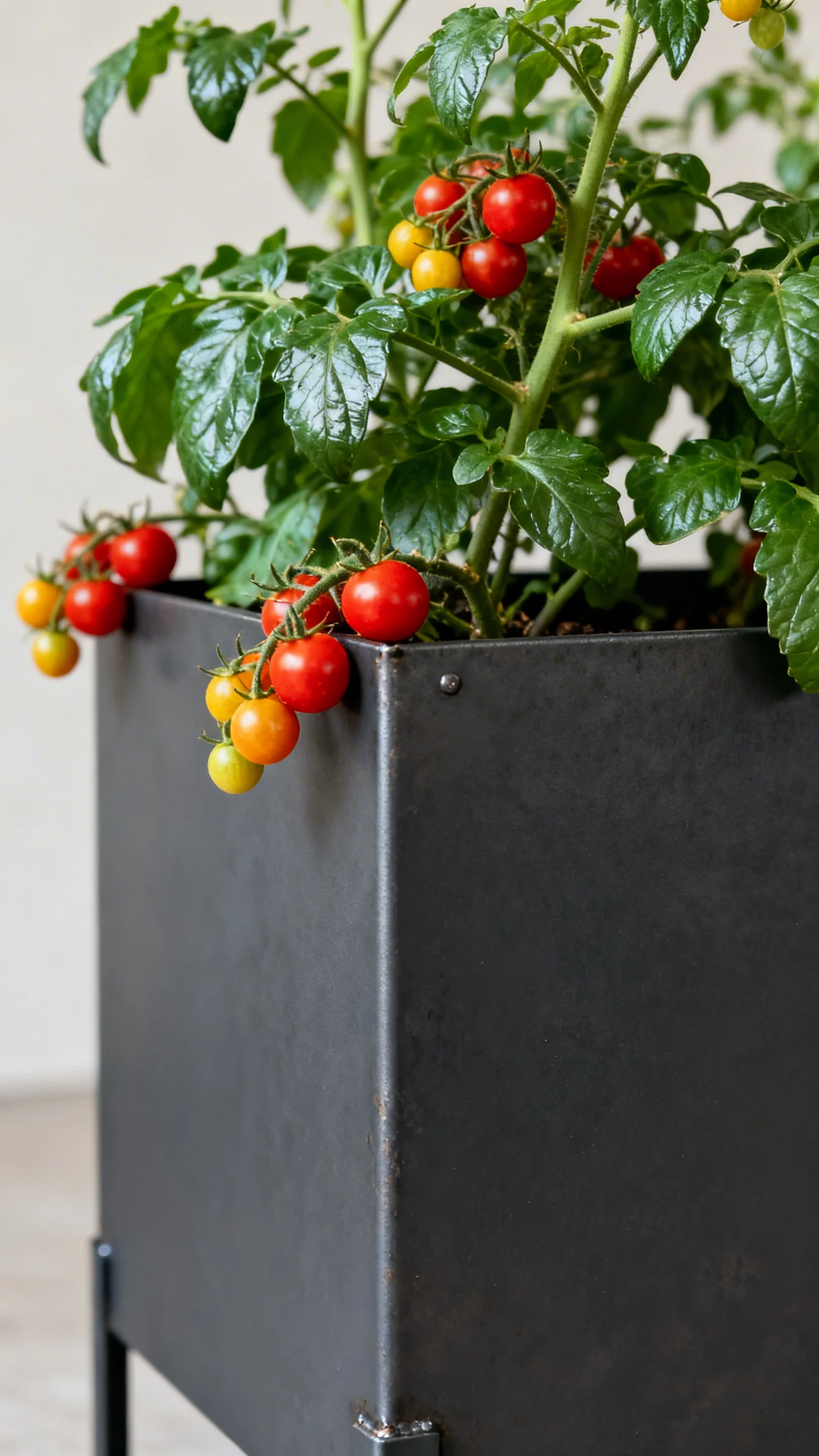
If you want a modern look, begin with the bones of the space. Resist the urge to buy twelve seed packets and “figure it out later.” That approach usually ends with chaos, regret, and one giant squash trying to annex the patio.
Think about geometry first. Rectangles, squares, straight paths, and defined borders create the clean structure that modern gardens do so well. Curves can work too, but they need purpose. Random wiggly edges just look indecisive.
Ask yourself a few simple questions. How do you move through the garden? Where do you stand to harvest? What do you see from the kitchen window? Modern design loves intentional choices, even in small spaces.
Raised beds make everything easier
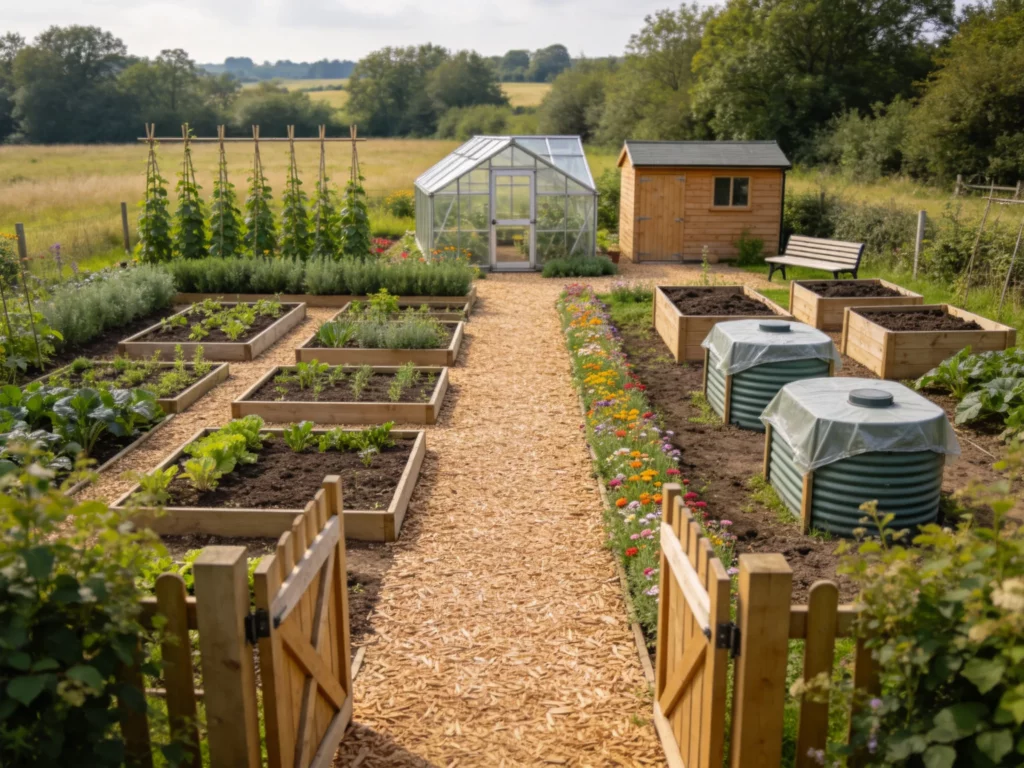
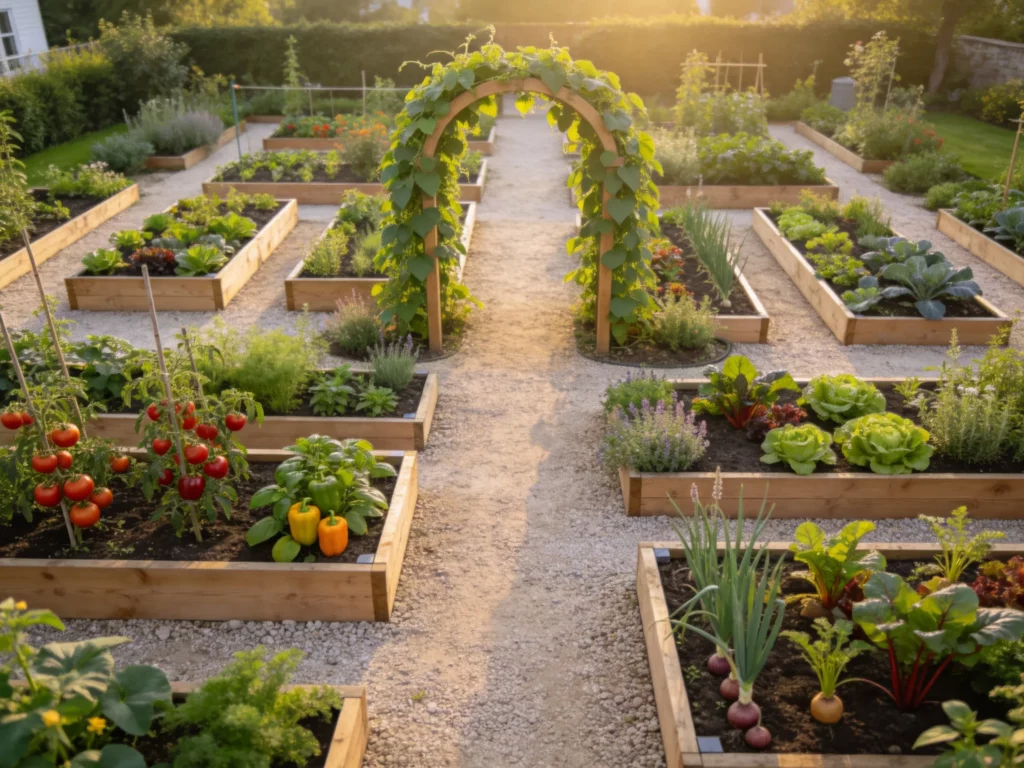
Raised beds basically do the heavy lifting for modern vegetable garden design. They create strong visual lines, improve drainage, and make the whole garden feel organized. Plus, they save your back, which becomes a thrilling topic way sooner than anyone expects.
Choose materials with a simple, streamlined look. Cedar, corten steel, powder-coated metal, brick, and smooth concrete all fit the modern vibe. Try to keep your material palette tight so the space feels calm instead of busy.
Paths deserve more respect
People often obsess over the beds and forget the paths. Big mistake. Paths shape the experience of the garden just as much as the plants do.
Gravel, large pavers, decomposed granite, or poured concrete all work well in modern spaces. Keep path widths practical, and make them easy to walk with a watering can or harvest basket. If the path annoys you, the garden annoys you. It’s that simple.
Pick a plant palette that looks intentional
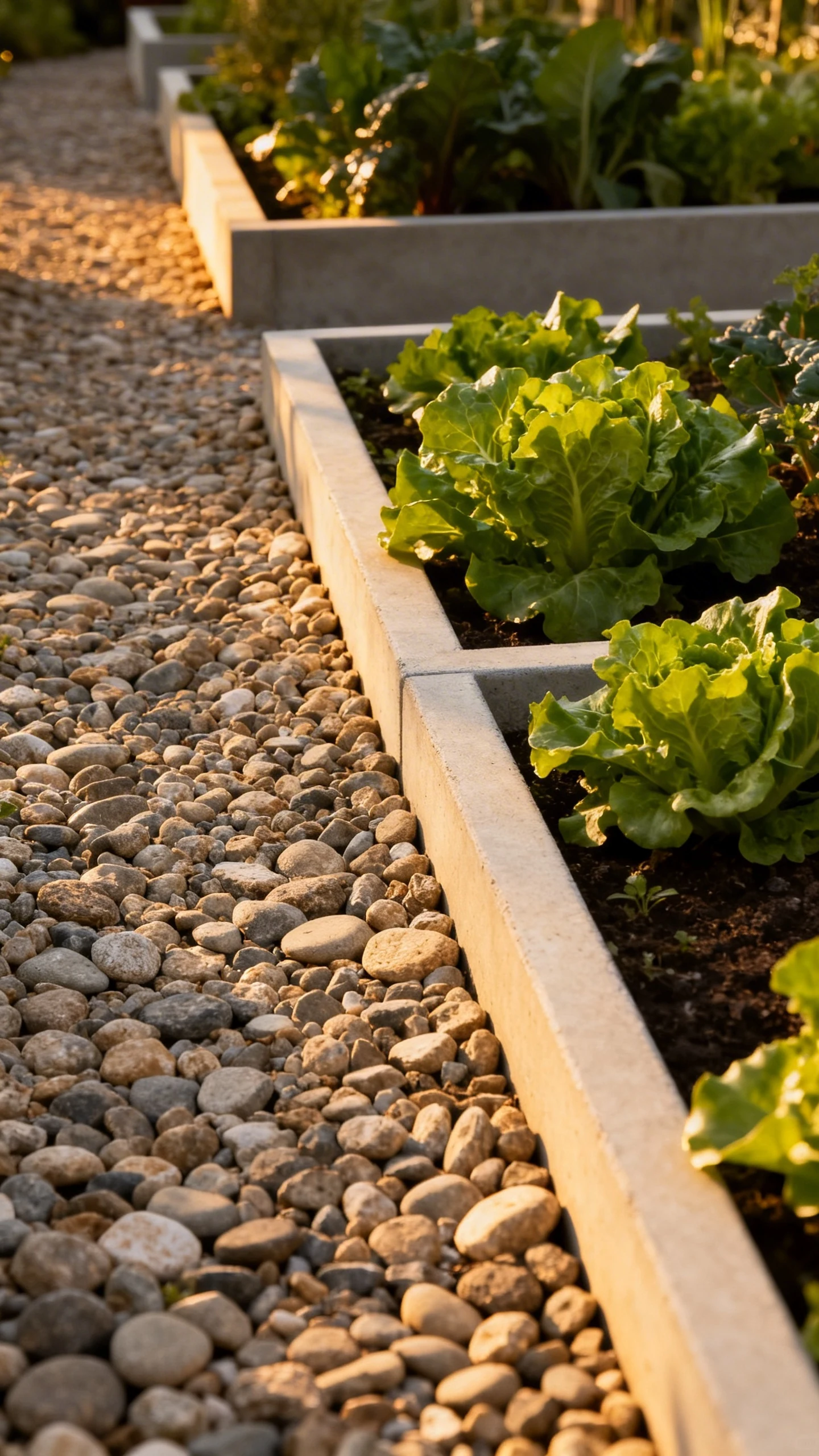
Modern gardens usually look best when the planting feels edited. You do not need seventeen kinds of kale unless you run a very niche kale empire. A focused plant palette creates rhythm and keeps the space from looking messy.
Repeat crops and colors across the garden. Plant the same lettuce variety in multiple beds. Use herbs as borders in a few places. Let silvery sage, deep green kale, and bright basil echo each other so the whole design feels connected.
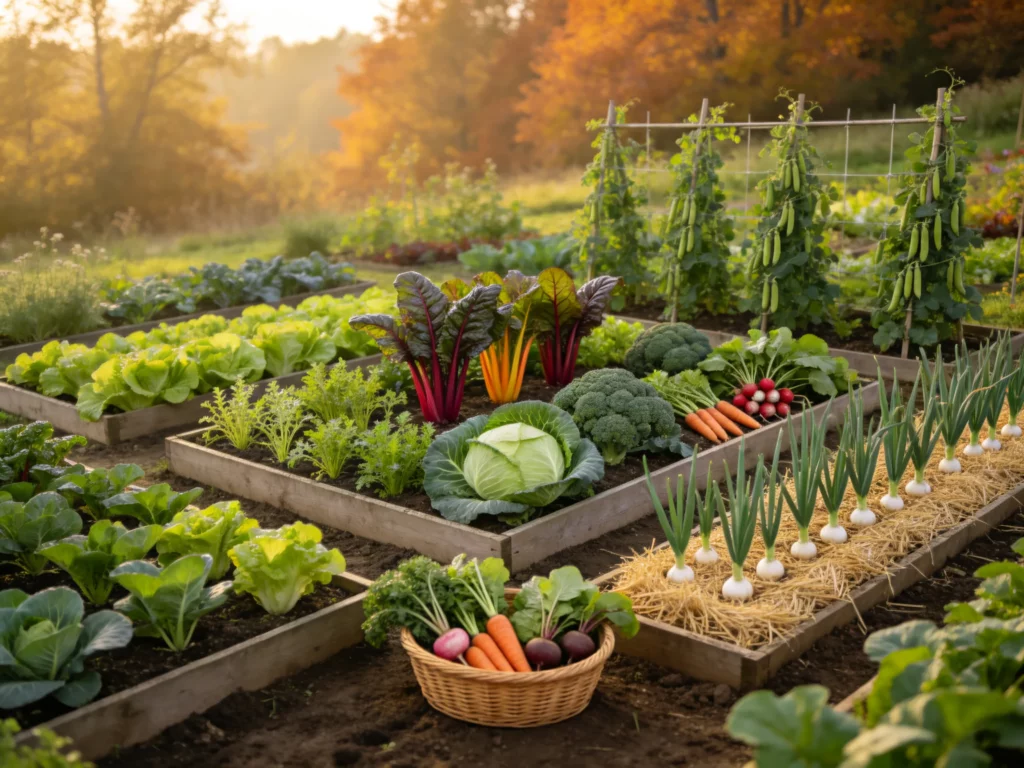
Texture matters just as much as color. Feathery carrot tops, broad squash leaves, upright onions, and compact thyme all bring different shapes to the mix. That contrast makes a vegetable garden feel designed instead of accidental.
Mix edible plants with ornamental style
This is where modern vegetable gardens really shine. You can pair chard with clean-edged planters, let nasturtiums soften corners, or use purple basil like a foliage plant. Edibles can look seriously chic when you give them a little respect.
Try combining productive crops with structural plants. Rosemary, lavender, dwarf fruit trees, or clipped evergreen shrubs can anchor the space. Then your seasonal vegetables rotate around those steady elements like they know what they’re doing.
FYI, flowers help too. Calendula, marigolds, alyssum, and cosmos bring pollinators in and break up all that green. They also save the garden from looking like a very disciplined salad bar.
Use materials and details that feel clean and current
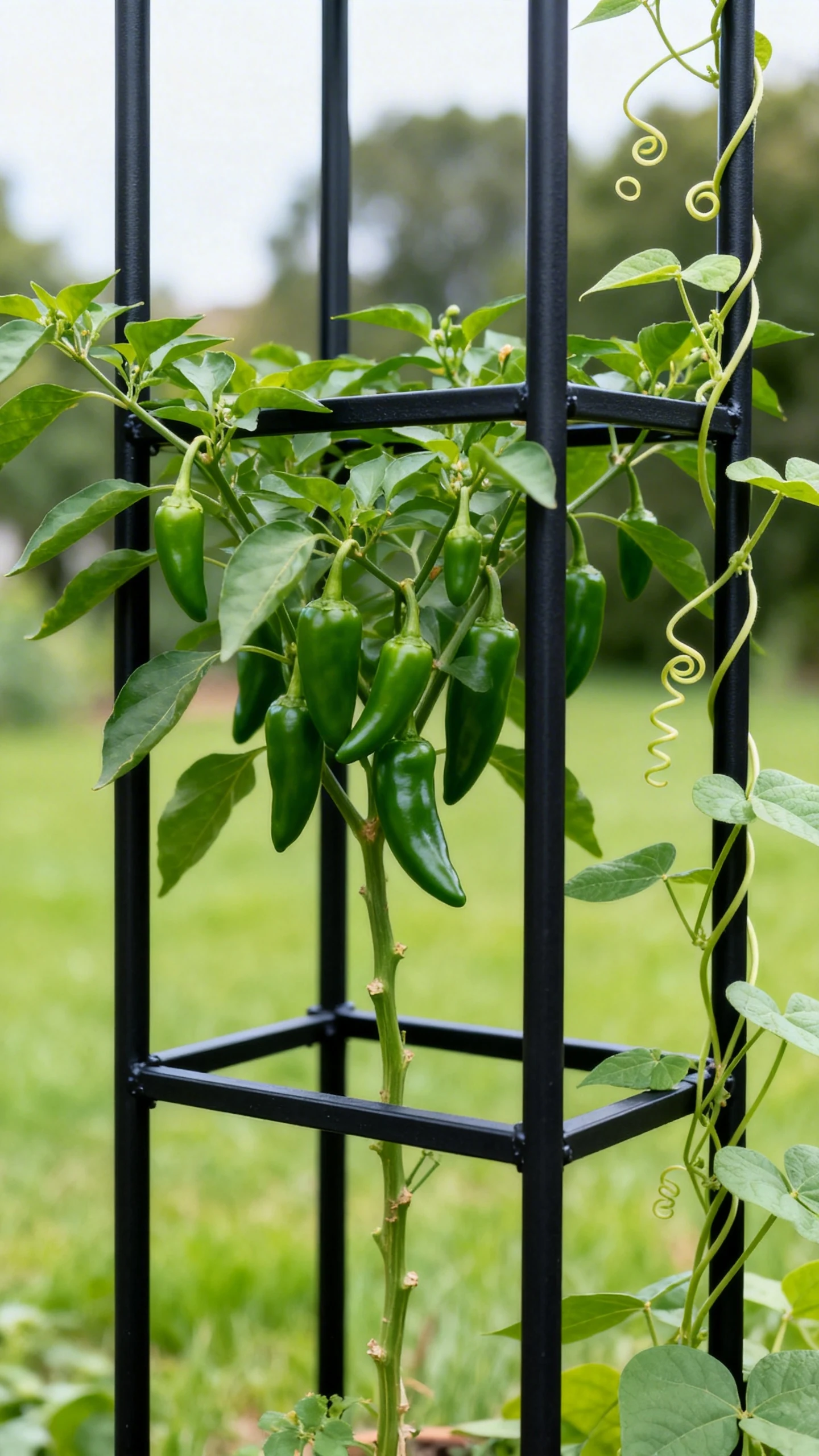
Modern design leans on simplicity, but simple never means boring. It means every choice earns its place. The containers, edging, furniture, and supports should all work together instead of fighting for attention.
Stick with a restrained color palette when possible. Black, charcoal, natural wood, soft gray, white, and muted green all play nicely in modern gardens. Bright colors can still work, but use them on purpose, not because the garden center had a sale on neon plastic pots.
Trellises and supports matter more than people think. Tomato cages that look like bent wire disasters can wreck a sleek design fast. Choose sturdy, minimal supports in wood or metal, and let vertical crops become part of the architecture.
Lighting changes everything
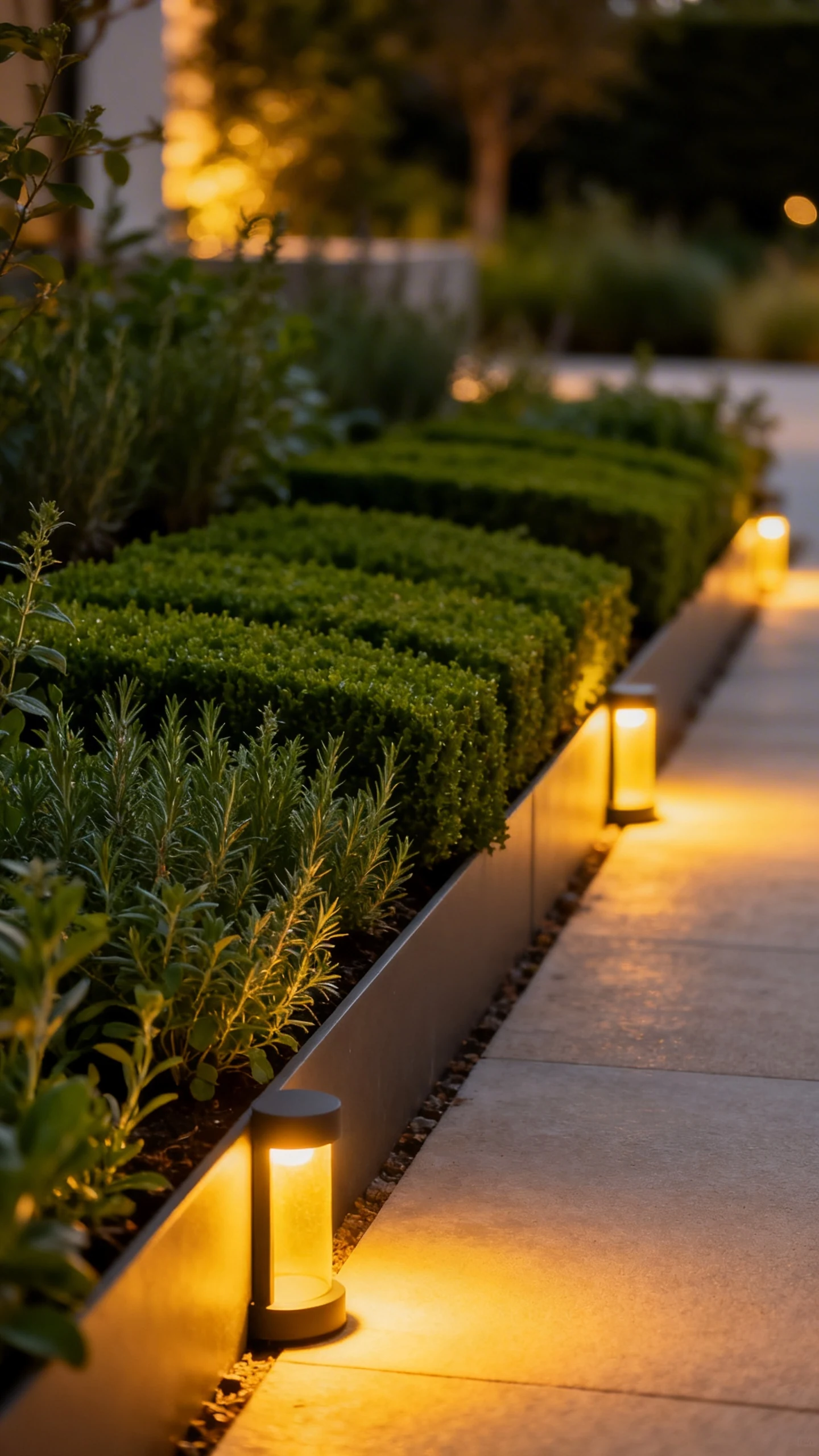
If you use the garden in the evening, add lighting. It extends the space, makes paths safer, and shows off your hard work after sunset. Also, vegetables lit from below look weirdly glamorous.
Use simple fixtures with warm light. Path lights, wall-mounted lights, or discreet uplighting around a focal tree work beautifully. Good lighting makes a small garden feel finished, and finished always beats “almost there.”
Small spaces can look incredibly modern
You do not need a sprawling backyard to pull this off. In fact, small urban gardens, courtyards, rooftops, and patios often suit modern design perfectly. Tight spaces force clarity, and clarity looks good.
Use containers if you lack ground space. Go for matching or coordinated planters instead of a random collection from three different decades. A consistent container style creates unity fast.
Vertical growing helps a ton. Trellises, wall planters, shelves, and espaliered fruit use height without eating up precious floor space. Why sprawl when you can climb?
Best crops for compact modern gardens
Some vegetables simply behave better in smaller, design-focused spaces. Salad greens, bush beans, peppers, compact tomatoes, radishes, herbs, and spring onions all deliver good returns without turning into garden bullies.
Choose varieties bred for containers or tight footprints. You’ll get a cleaner look and easier maintenance. And you’ll avoid the classic mistake of planting one innocent-looking zucchini that later requires diplomatic intervention.
Make maintenance part of the design
A modern vegetable garden should look sharp without demanding constant drama. That means you need to plan for upkeep from the start. If the system feels annoying, you won’t stick with it, and the weeds will throw a party.
Install irrigation if you can. Drip lines or soaker hoses keep watering efficient and discreet. Smart watering saves time, reduces mess, and helps plants grow more evenly.
Mulch also pulls a lot of weight here. It suppresses weeds, holds moisture, and gives beds a polished finish. Fine bark, straw, compost, or gravel around non-edible areas can all help the garden look tidy.
Design for seasonal change
Vegetable gardens never stay frozen in one perfect moment. Crops come and go, beds empty out, and some plants suddenly decide they’re done with life. A modern design handles those shifts without looking sad.
Keep a few evergreen or long-season elements in the mix. Use repeated bed shapes and permanent structures to maintain order even when one bed finishes early. That way the space still looks intentional in spring, summer, and fall.
Succession planting helps too. Swap one crop in as another finishes so gaps don’t linger too long. IMO, a garden with a plan always looks better than one with a lot of awkward dirt patches.
FAQ
What defines a modern vegetable garden design?
A modern vegetable garden uses clean lines, simple materials, structured layouts, and a limited plant palette. It balances productivity with appearance. The goal is a space that grows food well and looks polished at the same time.
Do raised beds always work best in a modern garden?
Not always, but they help a lot. Raised beds create structure, improve drainage, and make the garden feel organized. If you prefer in-ground planting, you can still get a modern look with crisp edging, straight paths, and repeated shapes.
Which materials look best for a modern edible garden?
Cedar, steel, concrete, brick, gravel, and large-format pavers all fit the style well. Choose materials that feel simple and durable. Try to limit the number of finishes so the garden looks cohesive instead of cluttered.
Can a modern vegetable garden still feel cozy?
Absolutely. Modern doesn’t mean cold. Add warmth with wood, soft lighting, comfortable seating, and lush planting. You want the space to feel inviting, not like a showroom where a tomato would feel nervous.
How do I keep a modern vegetable garden from looking too stark?
Use texture and contrast. Mix leafy greens with upright herbs, add a few flowers, and include natural materials that soften the lines. A modern garden needs structure, but it also needs life. Otherwise it starts looking like a spreadsheet with basil.
What are the easiest vegetables for a sleek beginner garden?
Lettuce, spinach, herbs, radishes, peppers, and compact tomatoes make great starters. They grow well in beds or containers and don’t usually take over the whole scene. Start with a few reliable crops and build from there.
Conclusion
Modern vegetable garden design works because it combines beauty with common sense. It gives your edible garden structure, style, and a whole lot less chaos. If you plan the layout, choose materials carefully, and keep the planting intentional, you can grow food in a space that looks every bit as good as it tastes.
And honestly, that’s the dream, right? A garden that feeds you, looks sharp, and doesn’t require a full-time grounds crew. Pretty solid deal.