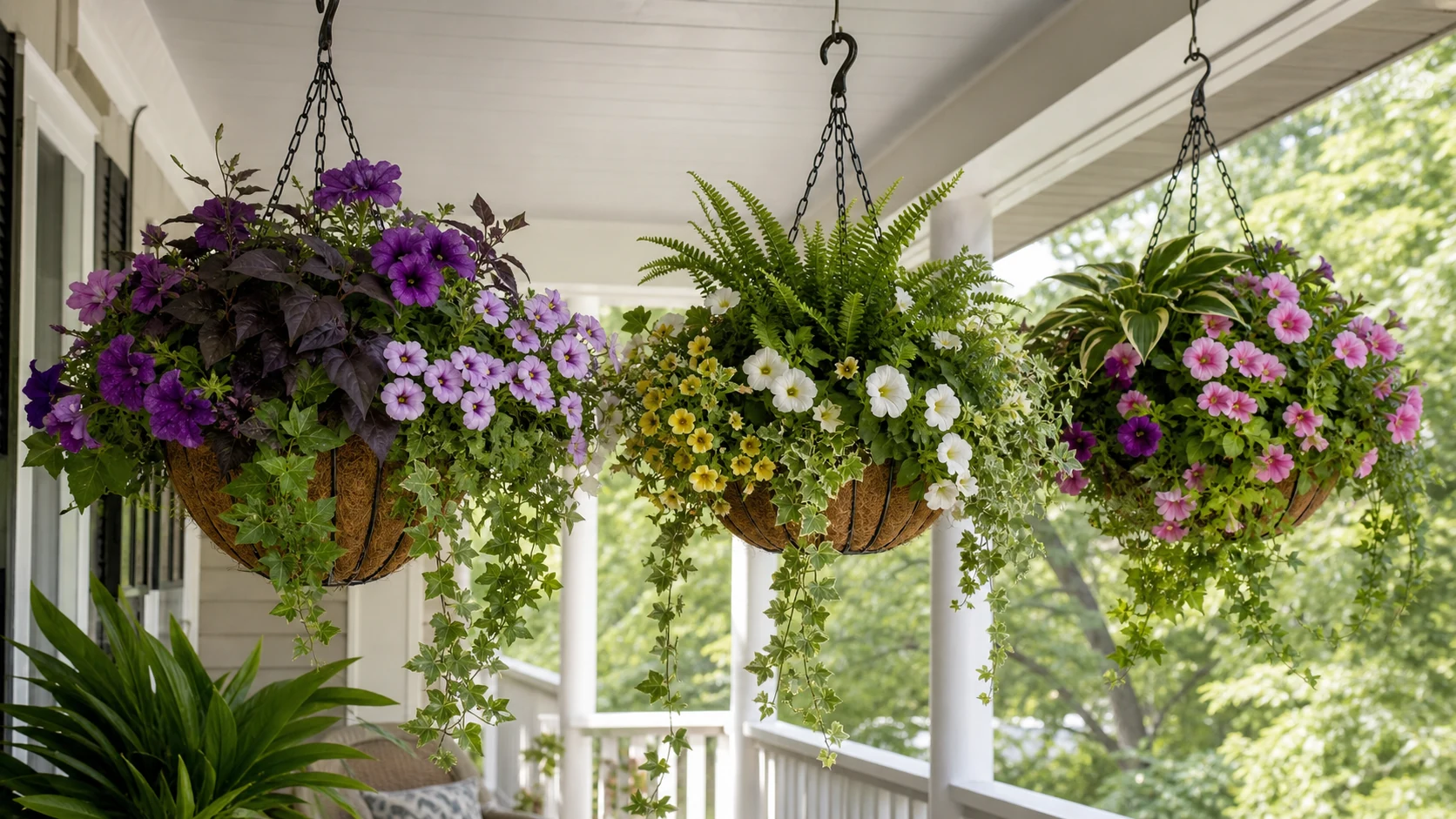
You want outdoor hanging baskets that stop people in their tracks? Totally doable. You don’t need a landscape degree or a secret greenhouse either. You just need the right basket, the right plants, and a few small tricks that make a huge difference. Let’s build some showstoppers you’ll actually enjoy taking care of.
Pick the right basket and hardware
You can’t build a great basket without a great basket. I know, shocking. Start with size and materials, then sort out the hardware so your creation doesn’t swan-dive in a wind gust.
Go bigger than you think. A 14–16 inch basket holds more soil, which means better root space and fewer water emergencies. Small 10–12 inch baskets dry out fast and need constant babysitting.
Choose the right material.
- Wire basket with coco liner: Classic, breathable, and pretty. It dries out quicker but looks luxe.
- Plastic/resin: Holds moisture longer and often includes a hidden reservoir. Less “romance,” more practical.
- Rattan/wood: Cute if lined well, but it can break down faster outdoors.
- Self-watering (with reservoir): Great if you travel or forget to water. No shame.
Smart liner choices
Coco or sphagnum moss liners look natural and drain well. Double-line them with a thin plastic sheet (poke small drainage holes 1–2 inches up the side) to create a tiny water reservoir. FYI, burlap works in a pinch too.
Hanging safely
Use hardware rated for wet weight. Wet baskets weigh a lot more than dry ones. Pick sturdy brackets, anchors, and chains; find a stud or use proper masonry anchors. Add a swivel hook to prevent wind tangling, and hang at eye level where you won’t head-butt it every time you grab the mail.
Nail the location: light, wind, and space
Your plant choice lives or dies by the light. If you match plants to sun exposure, you already win half the battle. Then consider wind and heat bounce from walls and patios.
Match plants to light first, decor second. Pretty plants in the wrong sun still sulk.
Full sun superstars (6+ hours)
- Petunia, calibrachoa, and million bells
- Lantana, verbena, and scaevola
- Portulaca (moss rose) and trailing sedum
- Vinca (Catharanthus) and ivy geranium
They handle heat with a decent breeze. Morning sun plus afternoon shade keeps flowers happiest in blazing climates.
Shade darlings (bright shade to morning sun)
- Begonia (tuberous, rex, or dragon wing)
- Fuchsia and torenia
- Impatiens and New Guinea impatiens
- Coleus and heuchera (for foliage pop)
Shade baskets bring color where garden beds struggle. They also forgive a missed watering or two.
Wind warriors
If your balcony turns into a wind tunnel, pick toughies:
- Dichondra ‘Silver Falls’ and asparagus fern
- Ivy geranium and vinca vine
- Succulents like burro’s tail (secure it well!)
Cluster baskets together to block wind, or tuck them near walls for shelter.
Plant combinations that always win
You don’t need to reinvent design. Use a simple formula, keep colors intentional, and layer textures so the basket looks full and lush.
Thriller–Filler–Spiller 101
Thriller: a taller focal plant (upright grass, coleus, salvia).
Filler: medium plants that bulk up the center (petunia, begonia, verbena).
Spiller: trailers that cascade over the edge (bacopa, sweet potato vine, dichondra).
How many plants?
- 12-inch basket: 3–5 plants
- 14-inch basket: 5–7 plants
- 16-inch basket: 7–9 plants
Use starter sizes (not huge gallon pots) so roots knit together nicely.
Color palettes that always work
- Sunset vibes: coral, orange, yellow, and lime foliage
- Cool calm: purple, white, and silver foliage
- Monochrome moment: all white (petunia, bacopa, alyssum) for night glow
- Bold contrast: hot pinks with chartreuse sweet potato vine
Repeat a color or plant 2–3 times around the basket for cohesion. IMO, a simple palette beats a rainbow mash-up every time.
Edible and herb baskets
Yes, you can hang snacks.
- Strawberries + thyme + trailing nasturtiums (edible flowers!)
- Herb medley: basil, parsley, oregano, dwarf rosemary (full sun)
- Tomato-on-a-sling: dwarf cherry tomato + trailing thyme (use a 16-inch basket with a strong bracket)
Avoid mint unless you want a mint-only basket. It will bully everyone else.
Fragrance and pollinator picks
For scent, try nicotiana, heliotrope, lemon verbena, or sweet alyssum near doors and seating. For pollinators, add salvia, cuphea, lantana, and verbena. You’ll get butterflies, bees, and that smug “I support wildlife” glow.
Seasonal switch-ups that stay fresh
Rotate plants through the year for maximum wow. You can refresh the top few inches of soil and swap plants without rebuilding the whole basket.
Spring (cool and cheerful)
Pansies, violas, nemesia, snapdragons, osteospermum, and ivy bring color even in chilly weather. Mix in heuchera for foliage and trailing lobelia for soft edges. If a late frost threatens, pop the basket off its hook and tuck it in the garage overnight.
Summer (heat-tolerant and low drama)
Calibrachoa, vinca, lantana, scaevola, portulaca, and coleus thrive when temperatures climb. Keep colors bold for sun-washed spaces. Deadhead or shear midseason to keep flowers coming and prevent the “jellyfish” look.
Fall (rich tones and texture)
Try mini mums, ornamental kale, pansies, heuchera, trailing ivy, and dwarf grasses. Tuck in a few ornamental peppers or small pumpkins for fun. Water a bit less as temperatures cool.
Winter (evergreen structure)
In mild climates, mix dwarf conifers, ivy, wintergreen, heather, and pansies. In colder zones, use faux greens and pinecones or dried stems, then add a small battery light string. Drainage still matters—frozen, waterlogged baskets crack liners.
Water, soil, and feeding without stress
You can’t out-design bad soil or erratic watering. Dial these in, and your baskets go from “meh” to “whoa.”
Potting mix that stays airy
Use a high-quality lightweight potting mix—not garden soil. Blend in extra perlite for drainage and a bit of compost for life. Add a slow-release fertilizer at planting, and (optional) a small amount of water-holding crystals used exactly as directed.
Watering hacks that actually work
- Water thoroughly in the morning until it runs out the bottom.
- On hot days, check again by early afternoon; baskets heat up fast.
- Pre-soak coco liners before planting to slow early drying.
- Use self-watering baskets or add a hidden reservoir (thin plastic liner with small holes an inch up).
- Travel a lot? Add a drip line on a timer with an adjustable emitter.
Bigger baskets stay moist longer. If the soil goes bone-dry, dunk the whole basket in a tub until bubbles stop. It’s like CPR for plants, but wetter.
Feeding without fuss
Mix in slow-release fertilizer at planting, then feed every 1–2 weeks with a diluted liquid fertilizer (“weekly, weakly”). Calibrachoa often needs extra iron (chelated iron) if leaves yellow with green veins. Flush with plain water monthly to avoid salt buildup.
Easy maintenance and quick fixes
A little grooming goes a long way. Five minutes a week keeps baskets lush and blooming.
Deadhead spent blooms (petunias and geraniums love this). Pinch back leggy stems on coleus and verbena. Every 6–8 weeks, give the whole basket a light haircut to encourage fresh growth.
Rotate baskets every week or two so all sides see the sun. Watch for aphids, whiteflies, and spider mites; blast them off with water, then use insecticidal soap if needed. Increase airflow and avoid late-night watering to prevent mildew.
Storm rolling in? Take baskets down and set them on the ground or in the garage. They can’t impress anyone if they’re in the neighbor’s yard.
Quick revive checklist
- Soak thoroughly (bottom-dunk if hydrophobic).
- Shear back straggly growth by one-third.
- Top up with fresh potting mix and slow-release fertilizer.
- Replace a couple of tired plants with fresh starters.
- Feed lightly and resume regular watering.
Do this, and most “sad” baskets perk up in a week. Miracle? No. Just plant science with a makeover.
Budget-friendly hacks and DIY flair
You can build high-end looks without melting your credit card. A few strategic cheats help.
Thrift and refresh. Grab secondhand wire baskets and repaint brackets with rust-resistant spray. Replace liners and you’re golden.
Side-plant for instant fullness. Cut small slits in coco liners and insert trailers (bacopa, dichondra) around the sides. They cascade sooner and hide the liner.
DIY reservoir. Stash a water bottle (cap with pin holes) upside-down near the center. It releases water slowly and reduces midday wilt.
Propagate and swap. Root coleus and sweet potato vine cuttings in water, then pot them up for free filler. Trade extra starts with friends. IMO, this is the most fun part.
Reuse soil smartly. For non-edibles, you can refresh last year’s mix by blending 50% new high-quality potting mix plus perlite and compost. For edibles, go with fresh mix to avoid disease carryover.
Add personality. Twine-wrapped chains, a cute plant tag, or a small solar light turns “nice” into “I meant to do that.”
FAQ
How often should I water outdoor hanging baskets?
Check daily in warm weather. Water thoroughly in the morning, and recheck by afternoon in heat waves. If the top inch feels dry or the basket feels noticeably lighter, water until it drains out the bottom. In cooler months, you might water every 2–3 days—always let the plants tell you.
What plants work best for shade baskets?
Go for fuchsia, torenia, begonias, impatiens (or New Guinea impatiens), coleus, heuchera, and trailing ivy. Add lobelia or bacopa for a delicate spill. These thrive in bright shade or morning sun and bring color without demanding full sun’s energy bill.
How many plants do I put in one basket?
For a 12-inch basket, use 3–5 small plants. For 14-inch, 5–7; for 16-inch, 7–9. That count includes thrillers, fillers, and spillers. More than that turns into a root cage match by midsummer.
How do I keep baskets from drying out so fast?
Use a larger basket, double-line coco with thin plastic (drain holes a bit up the side), and mix in perlite plus a small amount of water-holding crystals. Water early, add a shade break during the hottest hours if possible, and consider a self-watering insert or drip line. Group baskets to reduce wind exposure.
Can I keep hanging baskets alive through winter?
In mild climates, yes—switch to cold-hardy plants like ivy, heather, wintergreen, small conifers, and pansies. In freezing climates, either protect baskets in a sheltered spot or swap plants for decorative greens and lights. The basket survives; the tender summer annuals won’t (they’re annuals… they did their best).
My basket looks leggy and tired. Can I fix it?
Absolutely. Shear back by one-third, feed with diluted liquid fertilizer, and water deeply. Replace a couple of weak links with fresh plants and top up the soil. Give it a week of consistent care and good light—most bounce back like they just had a spa day.
Conclusion
Outdoor hanging baskets don’t require magic, just a few smart choices. Pick the right size, match plants to your light, and water like you mean it. Layer textures and colors with the thriller–filler–spiller method, then do a quick weekly tidy. You’ll get head-turning baskets that last all season—and you’ll enjoy the process, which, FYI, matters almost as much as the flowers.