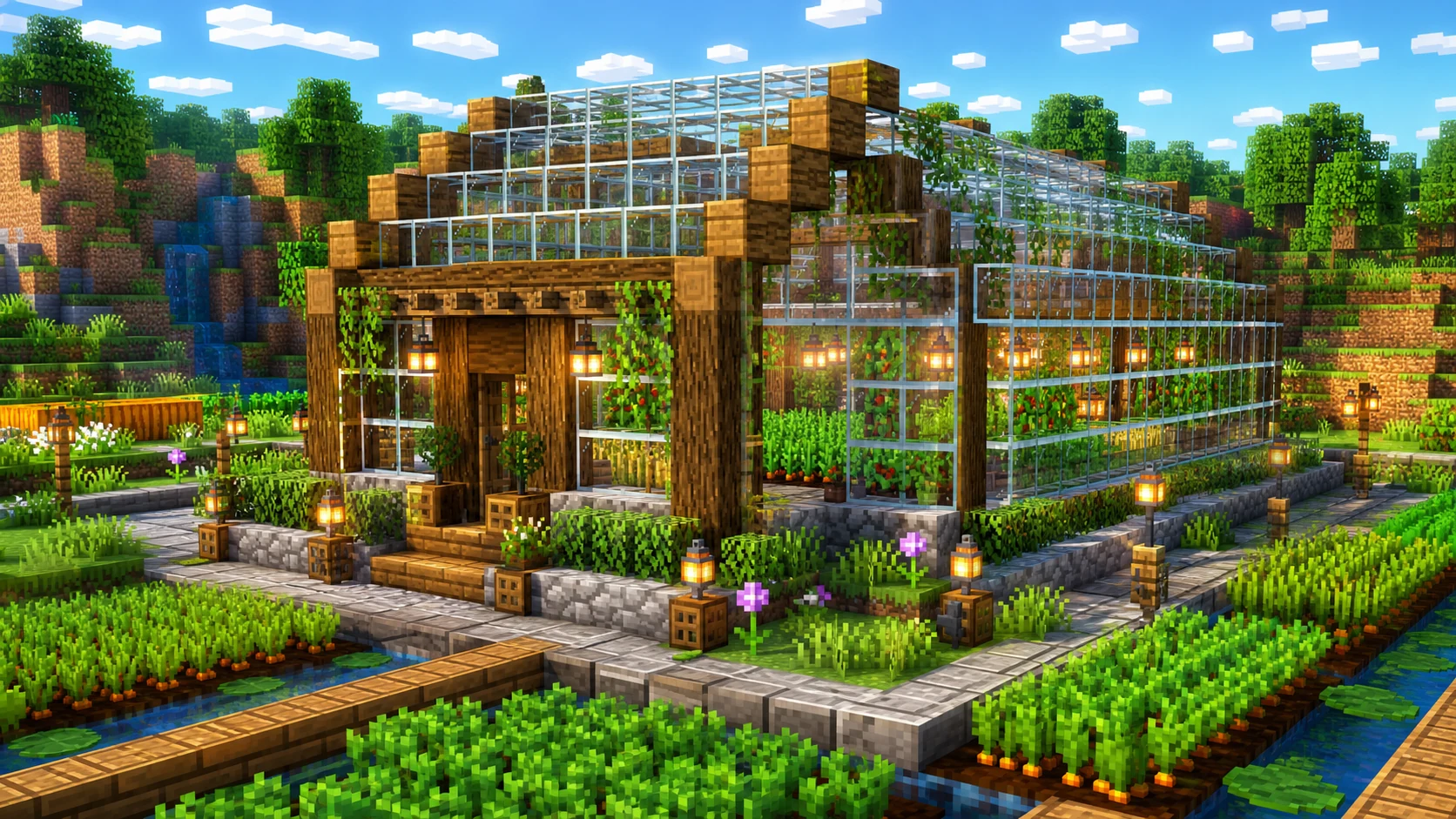
You want a Minecraft greenhouse that looks gorgeous and grows more than your average potato patch? Perfect. Let’s mash practical farm mechanics with stylish builds so your crops thrive and your base gets that “I-actually-care-about-architecture” vibe. Grab your shovel, some glass, and a little imagination, because we’re going from cozy cottage-core to sci‑fi eco lab—without the grindy nonsense.
Pick a vibe: from cottage-core to sci‑fi eco lab
You set the tone before you lay the first block. Do you want rustic wood beams and lanterns? Or sleek copper frames and frog lights that scream “future botanical research”? Both look great and both grow a ton.
Ask yourself what fits your world. Lean into your biome’s palette. Jungle builds love dark oak and moss. Snowy biomes pop with spruce and warm lantern light. Desert bases can go sharp and modern with oxidized copper and calcite accents. Why fight the terrain when you can vibe with it?
One more tip: plan for a path. You’ll walk in and out constantly, so make a clean entry with a door, double doors, or even a redstone door if you like drama. I like a greenhouse that connects right to the main base, so I can grab carrots in slippers.
Grow faster: light, water, and crop mechanics that matter
If you want speed, you dial in the basics. Crops need light level 9+ on the block to grow well. That’s easy with skylights, lanterns, sea lanterns, glowstone, shroomlights, or frog lights. Torches work, but they can look messy, so tuck them under trapdoors if you must.
Hydrate your farmland. A single water source hydrates farmland up to 4 blocks away, so a central water tile covers a 9×9 area. Hydrated farmland grows faster than dry farmland, so keep water close. Sugarcane needs water adjacent. Nether wart grows only on soul sand and doesn’t care about light at all—handy if you want a moody corner.
Bees speed growth. Place hives or nests inside, add flowers, and bees will pollinate crops as they wander. Use a campfire under hives to harvest honey safely. Don’t spam hives right away—2–3 bees per hive keeps things chill. Bees go home at night and in rain, so keep them covered with a roof or constant glass.
One last mechanic FYI: tinted glass blocks light. It looks cool, but it starves crops. Use it only for accent areas or observation windows, not your main roof.
Materials that make it pop (and actually work)
Glass forms the shell, but the frame sells the build. You can use glass blocks for solid curves and strong lines, or glass panes to save materials and add depth. Mix both for detail—panes for wall sections, blocks for roof beams.
Pick a frame you’ll love:
- Spruce/Dark Oak: cozy, rustic, pairs well with lanterns.
- Stone Brick/Deepslate: sturdy, formal, great with glowstone.
- Copper: modern, with satisfying oxidation. Wax it with honeycomb if you want to freeze the color.
- Quartz/Calcite: clean, bright, perfect for contemporary designs.
Lighting that looks intentional:
- Lanterns on chains for vintage charm.
- Frog lights for color splash and high light level.
- Sea lanterns for crisp, aquatic vibes.
- Shroomlights tucked into foliage for organic glow.
Floors and planters:
- Path blocks and coarse dirt for a garden feel.
- Spruce trapdoors as planters around farmland.
- Moss blocks and glow berries for lush corners.
- Composters and barrels to sell the “working greenhouse” narrative.
Starter greenhouse setups you can build today
Let’s stack some simple builds that you can whip up in an afternoon. Low resource, high payoff.
Lean-to greenhouse attached to your base
Want something quick that looks intentional? Mount a glass lean-to on your house.
- Pick a wall on your base and extend a 5×7 footprint.
- Run a spruce/dark oak frame around the footprint with vertical supports.
- Angle a glass roof down from your main wall using a stair-step profile (use slabs/stairs for the frame, glass blocks for the roof).
- Place a central water source and lay farmland around it.
- Add lanterns under the roof edges for even light.
- Drop in two bee hives, 4–6 flowers, and a compost station.
This design blends straight into your base. It looks like you planned it, not like you squished crops beside a cow pen in a panic.
Classic 9×9 greenhouse for efficient farming
The 9×9 grid hits the hydration sweet spot and keeps things tidy.
- Outline a 9×9 pad with stone brick, and mark the dead center.
- Dig the center and place a water source. Put a slab over the water so you don’t fall in.
- Convert the area to farmland. Plant in rows by crop type for sanity (wheat, carrots, potatoes).
- Build a 4-block tall frame and add a gentle arched glass roof.
- Place lanterns or sea lanterns every 4 blocks for light level coverage.
- Run a composter corner: hopper → composter → chest for bonemeal.
You get a clutch of crops with minimal maintenance. Pair this with bees and you’ll harvest like a champ.
Jungle conservatory with bees
If you play near a jungle, lean into the lush vibe.
- Frame a 7×11 greenhouse with dark oak and mossy stone accents.
- Use glass panes for walls and glass blocks for a curved roof.
- Hang glow berry vines from the roof beams. They add light and food.
- Place 2–3 bee hives on fence posts, put a campfire under each, and scatter flowers.
- Run paths with moss blocks, azalea bushes, and rooted dirt around planters.
- Add a frog light or two for color and strong light.
The result looks like a tiny botanic garden. Functional, pretty, and bee-friendly.
Showpiece designs when you want that wow
When you want more than a box with glass, try one of these. They anchor a base and tell a story.
Geodesic glass dome
Go big and round. I know, spheres in Minecraft take patience, but the payoff feels epic.
- Mark a circular footprint (use an online sphere guide if you need one).
- Build a lattice frame with copper or deepslate. Wax copper if you want a specific oxidation stage.
- Fill the triangles with glass blocks. Avoid tinted glass for the roof—your crops need light.
- Inside, lay curved paths, raised planters, and a central fountain with lily pads.
- Hide lighting beneath trapdoors or in planters for clean lines.
You get a landmark that screams “I can terraform vibes.” IMO, domes feel timeless.
Underground bio-lab
You don’t want to clutter your skyline? Dig down and go futuristic.
- Excavate a 13×13 chamber with 5 blocks of headroom.
- Line walls with quartz and deep slate for contrast. Add observation windows with glass.
- Install rows of crops with water channels under slabs.
- Use redstone lamps with daylight sensors or levers to toggle your “grow lights.”
- Set bee hives behind glass partitions with access tunnels, so bees roam but stay safe.
It feels like a research center, and you cut noise above ground.
Sky garden or airship greenhouse
Why touch the ground at all? Suspend your greenhouse with chains or build it onto an airship deck.
- Create a floating platform with spruce and stripped logs.
- Frame a glasshouse with copper trim and strategic lanterns.
- Run water sources under slabs to hydrate plots without spills.
- Add windmill blades or balloon-style anchors for flair.
- Transport crops down with water elevators or a bubble column.
You get dramatic views, zero mob traffic, and bragging rights.
Smart automation: redstone and villager magic
You can keep it manual, but redstone turns your greenhouse into a smart farm. Go simple or extra—your call.
Flush harvest farms:
- Place crops in rows with containment edges.
- Use dispensers with water buckets to flood rows and push items into hoppers or water streams.
- Trigger the dispensers with buttons or levers when you want to harvest.
- Collect into chests near the door so you grab and go.
Sugarcane and bamboo automation:
- Put observers at the height you want to detect growth.
- Connect observers to pistons to break the cane/bamboo.
- Catch drops with hopper minecarts under rails or with water streams.
These look great along a greenhouse wall as a “research row.”
Bonemeal loop:
- Feed seeds and plant waste into a composter.
- Pull bonemeal out to dispensers for instant sapling growth or for decorative flowers.
- Use this to fuel fast tree farms just outside your greenhouse.
Villager co-op:
- Put a farmer villager inside a sectioned greenhouse plot.
- Give the farmer a composter and let them replant and harvest on rotation.
- Use collection systems (hopper minecart under the floor) to gather produce.
Keep it small so villagers don’t wander. They love taking scenic routes at the worst times.
Biome and environment tips
Your world location changes everything. Use it, don’t fight it.
Snowy biomes: Glass roofs stop snow from covering your crops. Add extra lanterns since days feel darker. If you build outdoors, place enough light to prevent snow layers around paths.
Desert and badlands: Lean into oxidized copper, cactus gardens, and calcite frames. You can create oases with water channels and palm-like trees using jungle logs and leaves.
Swamps: Go earthy. Use mud blocks, mangrove logs, and hanging lanterns. Flycatcher vibe with vines and drip leaf looks fantastic.
Nether themes: Build a “nether greenhouse” with crimson/warped roots, fungi, and nether wart. Soul sand beds don’t need light. If you want overworld crops near a nether portal, add strong lighting and keep the portal framed so the ambiance works.
Mobs: Hostile mobs need low light to spawn. Flood your floors with enough light sources so nothing surprises you mid-harvest. Hide light under carpets or trapdoors if you want clean visuals.
Decoration that sells the illusion
Make it feel like a real working space. Small details go a long way.
- Add benches with stairs and signs near the entrance.
- Place composters, barrels, and item frames with “tools” (hoe, shears, bottle of honey).
- Hang chains with lanterns and flower pots on trapdoors as shelves.
- Use trellises: fence posts with trapdoors and vines for climbing plants.
- Drop in a water barrel corner with cauldrons. FYI, dripstone above a cauldron can slowly refill water.
- Pop in a little “seed library” chest and a “fertilizer” chest for bonemeal.
You create a believable space, not a sterile glass box.
Common mistakes and quick fixes
Let’s dodge the “why aren’t my plants growing” meltdown.
- Mistake: Using tinted glass for the roof. Fix: Switch to regular glass or skylights; keep tinted only as accent windows.
- Mistake: Insufficient light. Fix: Drop lanterns every few blocks or install sea lantern strips.
- Mistake: No water source near farmland. Fix: Add central water or hidden water under slabs; hydrate up to 4 blocks.
- Mistake: Overcrowding bees. Fix: Keep 2–3 bees per hive; give enough flowers. Bees need calm flow.
- Mistake: Messy harvest collection. Fix: Add a hopper line or water channel to a single chest near the door.
- Mistake: Villagers wandering off mid-farm. Fix: Fence sections, add doors properly, and keep the farmer’s workstation inside.
FAQ
What’s the best size for a beginner greenhouse?
I recommend a 9×9 plot with a central water source. You hydrate all farmland, you light it easily, and you get enough crops to matter without a resource drain. Expand with an attached second room once you’re happy with the layout.
Do I need bees for faster crop growth?
You don’t need them, but bees help. They pollinate and accelerate growth as they pass over crops. Place a couple hives, add flowers, and watch the cycle kick in. Use campfires under hives so you harvest honey and honeycomb safely.
Should I use panes or blocks for greenhouse walls?
Use both. Panes save glass and add delicate detail. Blocks give clean lines and make roof construction easier. Mix panes for vertical walls and blocks for roof segments to keep structure simple and stylish.
How do I light the greenhouse without ugly torches everywhere?
Use lanterns on chains, frog lights for strong glow, or sea lanterns set into the floor and covered by trapdoors. You can also hide glowstone behind leaves or under carpets. Keep light level 9+ on crops and you’ll stay efficient and mob-free.
Can I automate wheat, carrots, and potatoes easily?
Yes. Run dispensers with water buckets above your rows to flush harvests into hoppers or a water stream. Replant manually or add a farmer villager in a controlled section to handle replanting. Keep the system simple and reliable so it doesn’t break when you step away.
Is tinted glass ever useful in a greenhouse?
It looks cool, but it blocks light. Use it only for viewing corridors, bee enclosures, or aesthetic contrasts. Keep regular glass for roof areas and crop sections. Tinted glass belongs in labs and skylight shading, not your grow zones.
Conclusion
You can build a Minecraft greenhouse that actually works and also turns heads. Dial in light and water, sprinkle in bees, choose materials that fit your vibe, and stack a little automation where it counts. Then decorate the space so it feels alive. Build small, iterate fast, and push one feature per upgrade. Before long, you’ll harvest in style—and your base will look like it hired a landscape architect, IMO.