You want a flower bed that makes your flag pole pop without emptying your wallet. Totally doable. With a few clever materials and the right plants, you’ll pull off a clean, high-impact look for less than a nice dinner out. Let’s build something your neighbors “just happen” to stroll past every evening.
Why a Flag Pole Flower Bed Works on a Budget
A flag pole already gives your yard vertical drama. You only need a small ring of color to make it look intentional and polished. That small footprint means small costs, which your bank account loves.
You also get an easy weekend project. No backhoe, no fancy edging tools, no landscaper who “will swing by sometime next week.” You handle this in a few hours, then take the victory lap.
The flag pole also sets your style. Want classic, modern, or cottage? You control it with plants, rock, and edging. Small space, big energy, tiny budget.
Start Smart: Size, Layout, and Realistic Costs
Aim for a 3–5 ft diameter ring around the pole. That size looks balanced without crowding the base or swallowing your lawn. Leave clear access to any bolts or access panels. Your future self will thank you when you need to tighten something.
Stick to simple shapes. A circle or square reads clean from the street. Edging locks everything in and gives you that “finished” look for cheap.
Pro tip: Keep bed height low near the pole. You want wind to pass, not turn your flowers into a tornado experiment.
Quick Budget Planner (Under $100)
- Edging: No-dig plastic edging kit ($20–$30) or thrifted bricks ($0–$25)
- Soil/Mulch: 2–4 bags garden soil + 2–3 bags mulch ($25–$40)
- Plants: 6–12 annuals or a mix of 3 perennials + 6 annuals ($20–$40)
- Decor: Solar spotlight or small stones ($10–$20)
FYI: Marketplace finds and curbside bricks stretch your dollars fast.
Tools You Probably Already Own
- Shovel or spade
- Hand trowel
- Landscape fabric or cardboard
- String and stake (for marking a circle)
- Scissors or utility knife
Five Stunning Designs Under $100
You want options. I’ve got you. Pick the vibe that fits your house and sun exposure. All five designs land under $100 with smart shopping.
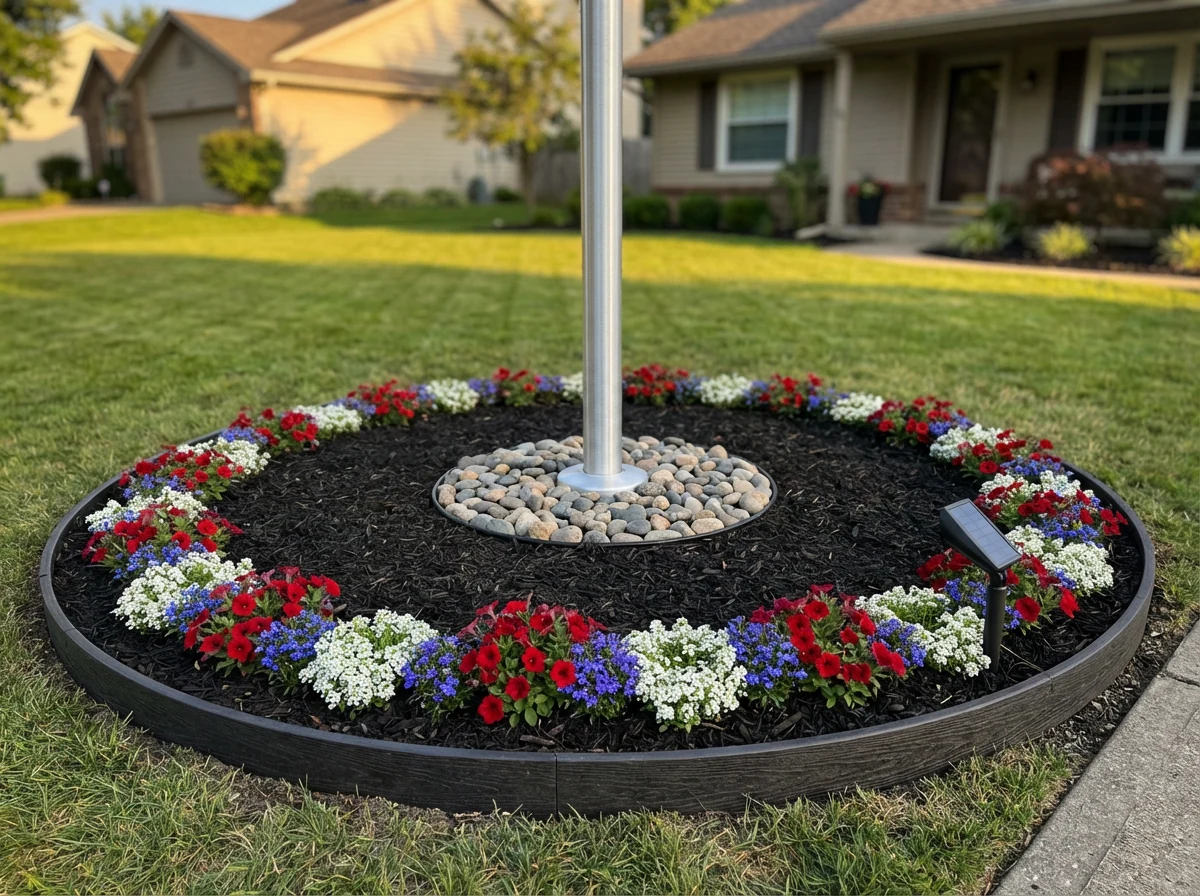
1) Classic Circle with Red-White-Blue Blooms
This one hits the theme hard and still looks chic. Think tidy edging, dark mulch, and a ring of bold annuals.
Materials
- No-dig plastic edging (20 ft)
- Garden soil (2–3 bags), dark mulch (2 bags)
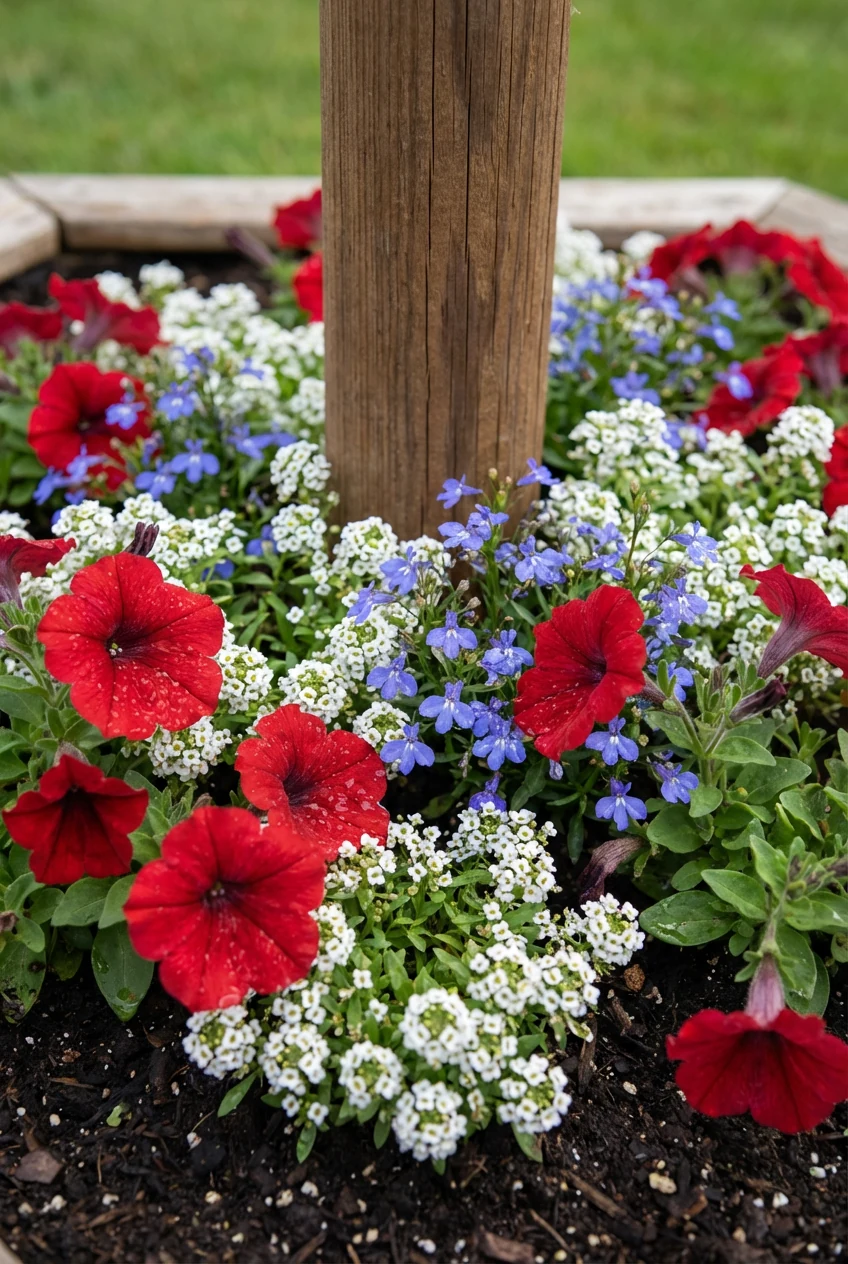
- Plants: red petunias or salvias, white alyssum, blue lobelia or ageratum
- Optional: small solar spotlight
Estimated Cost: $70–$95
Steps
- Mark a 4 ft circle with string. Cut turf along the line.
- Lay cardboard over the grass inside the circle for weed suppression.
- Install edging, backfill the trench, and tamp it down.
- Add soil, then a thin mulch layer.
- Plant a red-white-blue ring around the pole, keeping 8–10 inches away from bolts.
- Water deeply and adjust the mulch.
Why it works: High contrast edges plus saturated color equals instant curb appeal.
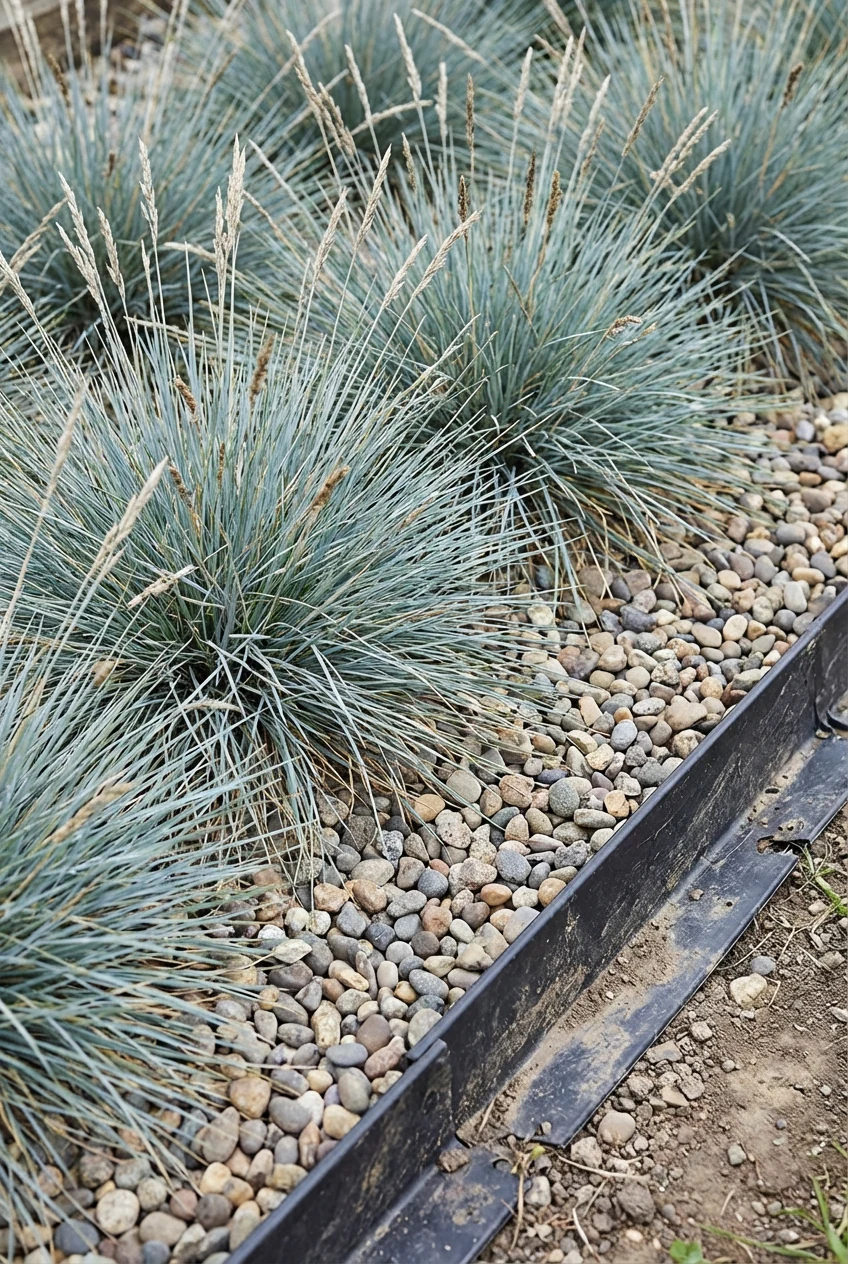
2) Rock-and-Grass Minimalist Ring
Low maintenance, modern vibe. This one handles wind like a champ.
Materials
- Steel or plastic edging
- Weed barrier fabric or cardboard
- Pea gravel or river rock (3–4 bags)
- Dwarf fountain grass or blue fescue (3–5 plants)
Estimated Cost: $60–$90
Steps
- Edge a 3.5–4 ft circle.
- Layer fabric, cut Xs for the grasses.
- Plant grasses 12–18 inches from the pole.
- Top with a 2-inch rock layer.
Why it works: Grasses bring movement. Rocks keep weeds down. Your watering can gets a vacation.
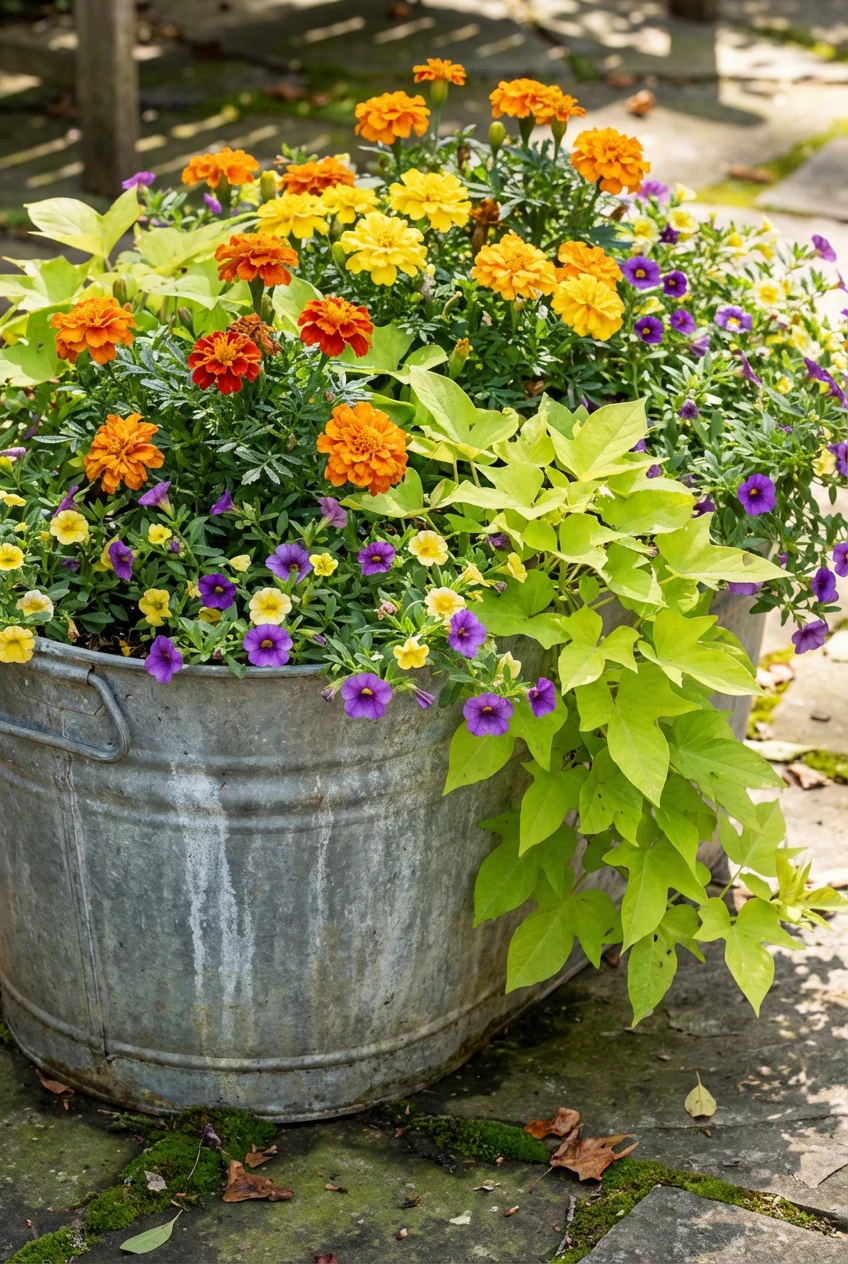
3) Galvanized Tub Collar
Farmhouse look with zero digging. Yes, please.
Materials
- 24–30 inch galvanized tub (thrifted or new)
- Drill for drainage holes
- Potting mix (2–3 bags)
- Trailing calibrachoa, marigolds, and sweet potato vine
Estimated Cost: $50–$85
Steps
- Drill drainage holes in the tub bottom.
- Center the tub around the pole.
- Fill with potting mix and plant fillers, spillers, and thrillers.
- Add a small rock mulch to retain moisture.
Why it works: Container gardening keeps roots tidy near the base. You also move it if you need access. IMO, it looks custom.
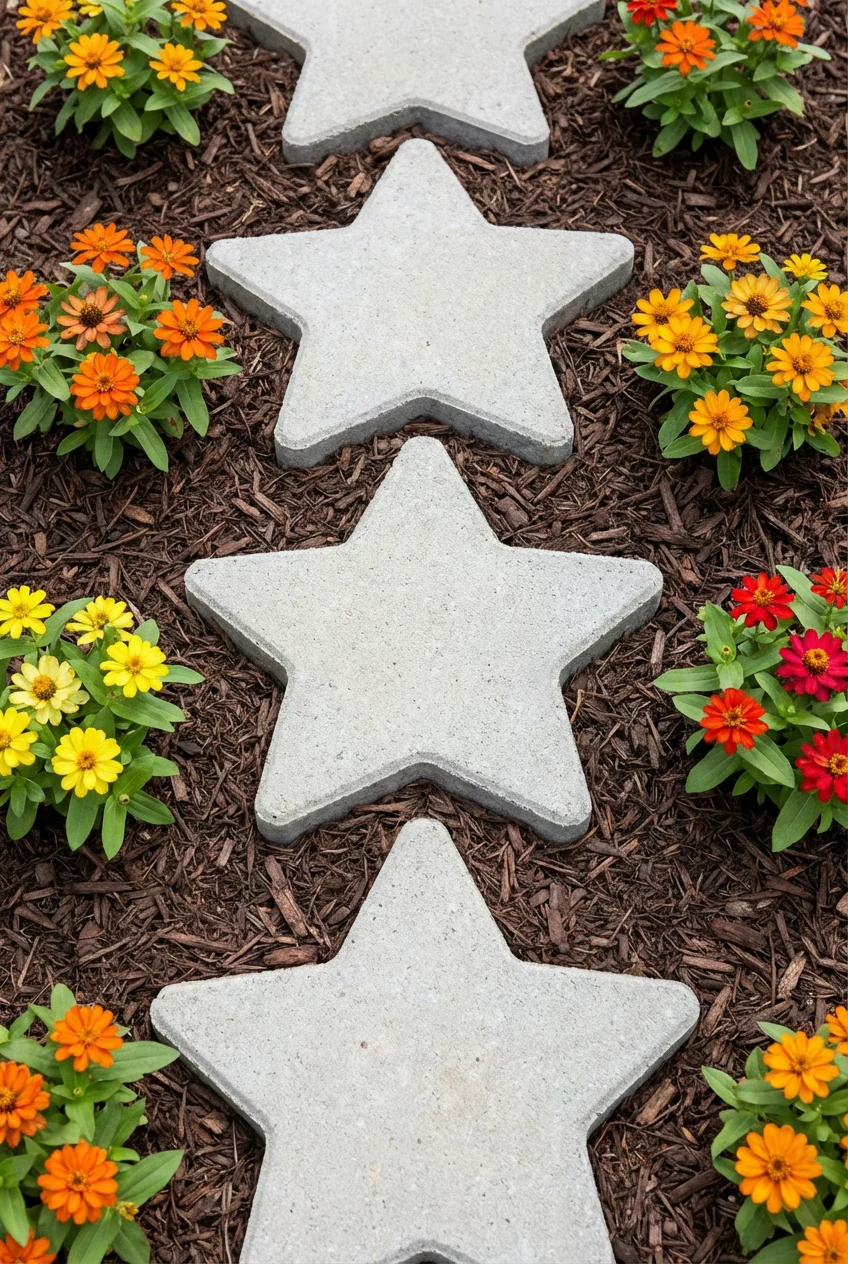
4) Paver-and-Mulch Star
Want a hint of Americana without going full parade? Shape a subtle star with pavers in mulch.
Materials
- 20–25 square pavers or brick offcuts
- Mulch (2–3 bags)
- Compact annuals: vinca or dwarf zinnias
- Cardboard for sheet mulching
Estimated Cost: $45–$80
Steps
- Edge a circle; lay cardboard inside.
- Create a five-point star using pavers, points aimed outward.
- Fill the star voids with mulch.
- Plant annuals along the paver lines.
Why it works: The star reads from the curb but doesn’t scream. Clean geometry looks expensive.
5) Upcycled Tire Planter (Painted Navy)
Yes, a tire. Paint transforms it. Garden snobs can clutch their pearls.
Materials
- Old tire, cleaned and primed
- Exterior paint (navy or charcoal)
- Potting mix (2 bags)
- Plants: upright salvia, white alyssum, trailing lobelia
Estimated Cost: $30–$60
Steps
- Paint the tire and let it cure.
- Place around the pole.
- Fill with potting mix and plant a thriller-filler-spiller combo.
Why it works: Bold color frames the flowers and protects the base. It looks intentional, not “yard sale.”
Plants That Laugh at Wind and Sun
Flag poles sit in open areas, so your plants need grit. Choose compact, sun-loving varieties and you avoid flopping and drama.
Full-Sun Champs
- Petunia, calibrachoa, and vinca: Color machines with minimal fuss
- Marigold and zinnia: Bright, pollinator-friendly, budget-friendly
- Lantana: Heat lover, butterflies love it, no diva behavior
- Angelonia: Spiky blooms that handle heat and wind
Drought-Tolerant All-Stars
- Blue fescue, dwarf fountain grass: Movement and texture
- Sedum and ice plant: Succulent leaves, low water needs
- Gaillardia and coreopsis: Long bloomers, tough as nails
Shoulder-Season and Perennial Backbone
- Heuchera (coral bells): Foliage color that lasts
- Lavender: Fragrant, tidy, sun hungry
- Spring bulbs (daffodils): Plant in fall for early pop
Container-Friendly Picks
- Sweet potato vine: Lush trails over edges
- Dwarf salvia: Upright color without wind flop
- Alyssum: Soft edges and sweet scent
FYI: Compact varieties stay neat around hardware. Choose plants rated for your USDA zone and full sun.
Build It Right: Quick Step-by-Step
You only need one afternoon. Keep it simple and focus on the details that make it look pro.
- Mark your shape. Tie string to a stake at your radius, spin a circle around the pole. Or trace a tub for a tighter ring.
- Edge and prep. Slice the turf, remove the top layer, and level. Lay cardboard or fabric to block weeds.
- Install edging. Curve it snugly, stake it, and backfill the outside. A clean edge screams “finished.”
- Build the base. Add 2–3 inches of soil where plants go. Keep the area around bolts clear.
- Place plants. Set them still in pots to plan spacing. Keep plants 8–12 inches from the pole.
- Plant and mulch. Tuck plants in, water, then add 1–2 inches of mulch or rock. Don’t smother stems.
- Light it. Add a solar spotlight angled up the pole. Instant drama.
Safety note: Never bury hardware. You need airflow and access for maintenance.
Finishing Touches That Look Expensive (But Aren’t)
Small upgrades push the design from “nice” to “dang, who did that?”
- Solar spotlight: $15–$25 for a sleek model that uplights the flag at dusk.
- Rock accents: A small bag of river rock creates a clean inner ring near the base.
- Hidden drip hack: Bury a perforated 2-liter bottle near roots. Fill weekly. Your plants call that first-class service.
- Edging glow-up: Rub a dark soil over scuffed plastic edging to blend shine. Weird trick, solid results.
- Mini stakes: Short, unobtrusive stakes help taller annuals hold posture on windy days.
IMO: One strong focal point beats five random trinkets every time.
Care and Maintenance Without Babysitting
You built it. Keep it tidy with a light-touch routine. No one needs a high-maintenance flower diva.
- Water deeply twice a week in hot spells. Shallow sips grow lazy roots.
- Deadhead petunias, zinnias, and marigolds weekly for nonstop color.
- Feed with a slow-release granular fertilizer at planting, then again mid-season.
- Mulch refresh every 6–8 weeks. Top up a half inch to block weeds and hold moisture.
- Trim and tidy after storms. Snip broken stems so the bed snaps back fast.
Swap in mums for fall and ornamental cabbage for a frosty look. You keep the structure, change the outfit.
Common Mistakes to Avoid
No one wants to redo this in August. Dodge these easy traps.
- Crowding the pole: Keep plants 8–12 inches away for airflow and access.
- Skipping weed block: Use cardboard or fabric and save yourself hours later.
- Too-tall plants: Wind turns them into kites. Stick to compact varieties.
- No edging: Grass invades, mulch escapes, and everything looks messy.
- Overwatering: Roots sulk in soggy soil. Water deep, not daily.
IMO: A clean edge and fresh mulch do 80% of the aesthetic heavy lifting.
FAQ
How big should I make the flower bed around my flag pole?
Go 3–5 ft in diameter. That size keeps good visual balance and leaves access to bolts or a collar. If the yard feels tight, drop to 3 ft and use compact plants and a darker mulch to make it feel deeper.
Will a flower bed damage the flag pole base?
No, as long as you protect the base. Keep plants and soil off the hardware, leave a clear 8–12 inch gap around bolts or access panels, and avoid burying metal. Use rock or bare soil right at the base to keep things dry and serviceable.
What plants handle wind and full sun best?
Choose compact sun-lovers like vinca, lantana, marigolds, zinnias, petunias, and angelonia. Add dwarf grasses like blue fescue or dwarf fountain grass for structure. These varieties stay upright, bloom hard, and shrug off gusts.
Can I build this on concrete around an in-ground sleeve?
Yes. Use a container or a galvanized tub collar. Drill drainage holes, fill with potting mix, and plant a thriller-filler-spiller combo. Containers give you total control and zero digging, which sounds like a win.
How do I keep weeds and grass out without chemicals?
Layer cardboard under mulch. Overlap seams by 4–6 inches. Wet it, then add soil and a 1–2 inch mulch cap. Cardboard breaks down over time but blocks weeds long enough for your plants to fill in.
What’s a realistic cost breakdown to stay under $100?
Think $25–$30 for edging, $25–$40 for soil and mulch, and $20–$40 for plants. Add a $15 solar light if you want night drama. Score used bricks or a free tire, and you cut that total even more.
Conclusion
You don’t need a landscaping crew or a platinum card to make your flag pole look amazing. Pick a simple shape, use clean edging, and plant sun-tough, compact varieties. Layer in mulch, maybe a solar spotlight, and you’ve got a showpiece for under $100. Short project, big glow-up—go plant it and claim those compliments.