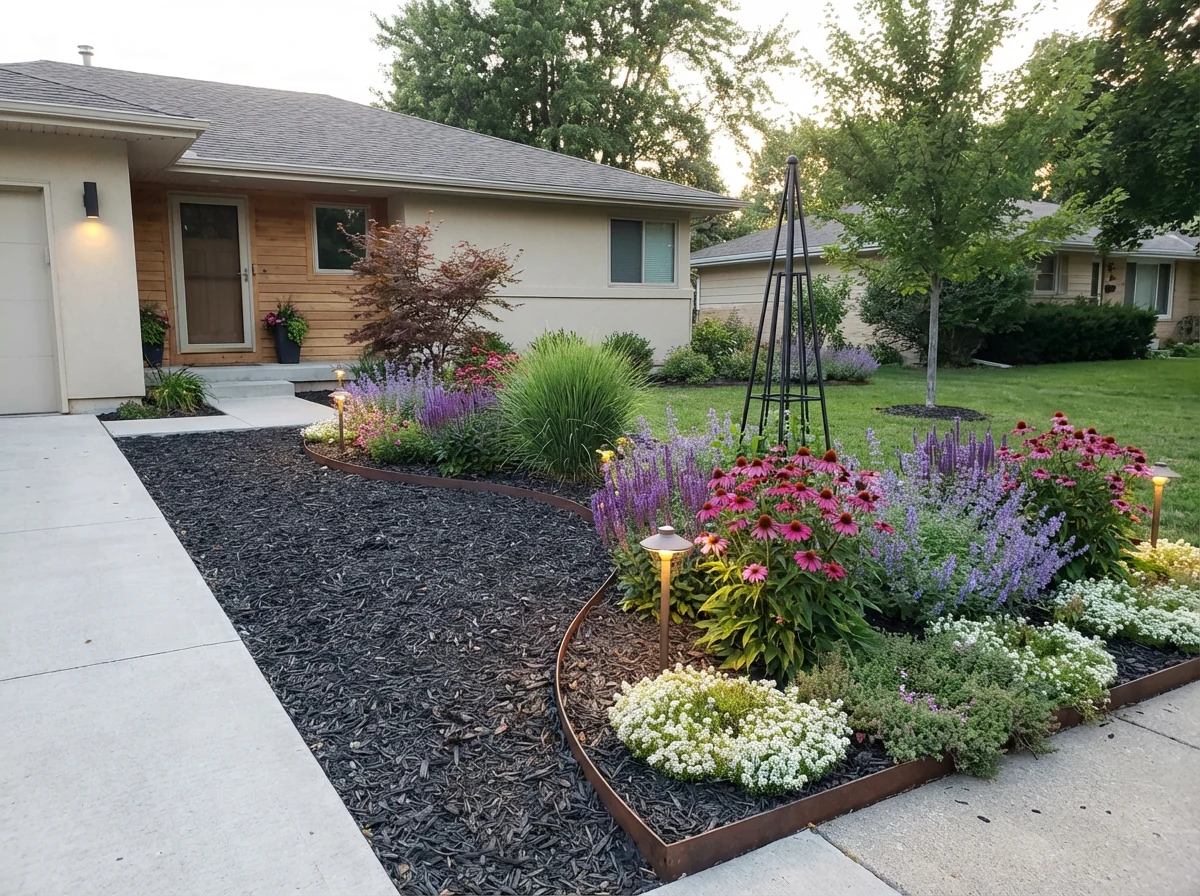
Your front yard may be small, but it doesn’t need to whisper. It can absolutely shout “hey, look at me” without turning into a circus. Smart lines, layered plants, and a few bold moves can make a tiny flower bed look intentional and impressive. Ready to turn that little strip of soil into the star of your street?
Start With the Shape: Big Impact From Simple Bed Lines
Before you plant anything, set the stage with a clean shape. Curves feel friendly and soften a boxy facade, while straight lines look modern and crisp. Match the lines to your house style so the bed looks designed on purpose, not like a floral afterthought.
Keep scale in check. A bed that’s too tiny looks shy, and one that’s too big swallows the walkway. Aim for a bed depth of 3–5 feet if you can swing it, so you have room to layer plants without crowding the sidewalk.
- Try a gentle swoop that widens near the entry, then narrows toward the driveway.
- Frame the walkway with mirrored beds for instant symmetry and curb appeal.
- Anchor corners with a rounded “cap” bed at the driveway edge or porch steps.
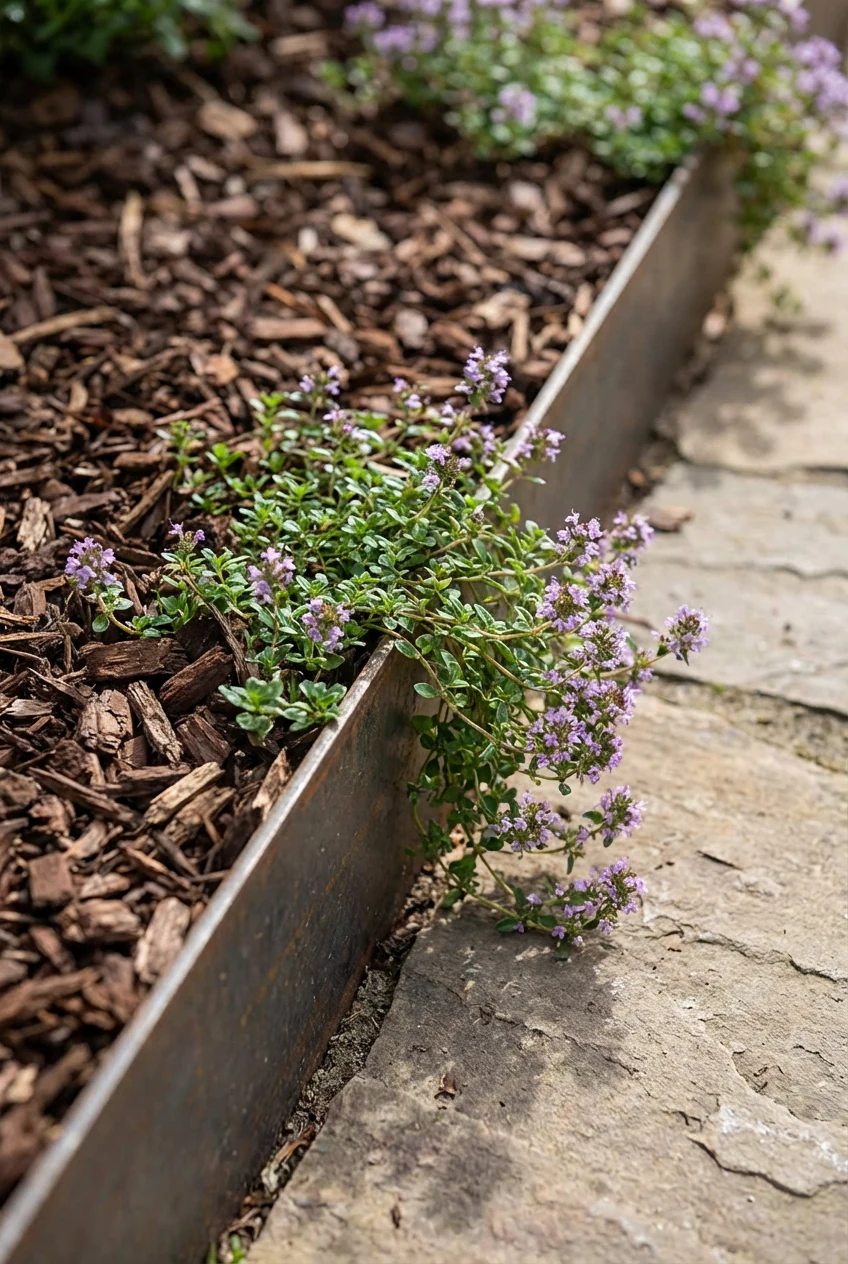
Edge the bed so it stays crisp. Metal edging gives a sleek line, brick looks classic, and a paver mowing strip saves time. No more wobbly grass-beds battles, which your lawn usually wins, FYI.
Layer Like a Pro in Tight Spaces
Small beds need discipline. Think in three layers: tallest in back, medium in the middle, low and trailing at the front. Use compact shrubs for structure, then thread in perennials and annuals for color.
Use the thriller-filler-spiller formula in the ground, not just in containers. One focal “thriller” (a dwarf shrub or upright perennial), a cluster of “fillers” (bushy perennials), and a few “spillers” (low growers or trailing forms) give depth without chaos. Repeat the same plants in groups of three for a cohesive look.
Sun Lovers That Behave

- Thrillers: Dwarf fountain grass, ‘Little Lime’ hydrangea, lavender standards, or a compact rose pillar on a small obelisk.
- Fillers: Salvia, catmint, coreopsis, dwarf daylilies, or compact coneflowers.
- Spillers: Creeping thyme along the edge, bacopa, sweet alyssum, or low sedums.
Mix heights so your eye bounces smoothly from back to front. You want flow, not a wall. Keep mature plant sizes in mind so you don’t create a tiny jungle by July.
Shade Combos That Never Sulk
- Thrillers: Japanese forest grass, dwarf boxwood, or a slim shade-tolerant arborvitae.
- Fillers: Heuchera, hosta minis, astilbe dwarf varieties, hellebores for early bloom.
- Spillers: Creeping jenny, mazus, or hardy ferns that arch slightly over the edge.
Layer foliage textures if flowers come and go. Shiny leaves, matte leaves, ruffles, and spikes create interest even when nothing blooms. Shade beds look luxe when you play that texture game right, IMO.
Color That Pops (Without Looking Like a Crayon Box)
Pick a tight palette and commit. Two main colors plus a neutral (white, silver, or chartreuse) keep things polished. White blooms and variegated foliage brighten small spaces and make everything look a bit more intentional.
Lead with foliage so your bed looks good before, during, and after bloom. Purple leaves, blue-green grasses, and lemon-lime accents pull serious weight. Use long-bloomers and staggered accents so you always have something happening.
Bold Palette Ideas
- Magenta + chartreuse + white: Coneflowers, heuchera ‘Lime Rickey,’ white vinca or alyssum.
- Hot coral + deep purple + silver: Zinnia ‘Queeny’ coral, salvia, dusty miller.
- Fire and ice: Red daylilies, white phlox, blue fescue grass.
Repeat colors and plants down the bed for rhythm. Your eye loves patterns. Your neighbors will think you hired a designer, which you can neither confirm nor deny.
Soft Palette Ideas
- Blush + lavender + gray-green: Catmint, pale pink roses, lamb’s ear.
- Peach + cream + sage: Yarrow, cream calibrachoa, dwarf artemisia.
- Blue + white + lime: Salvias, white gaura, golden oregano.
Want all-season color? Work in spring bulbs under your perennials, then swap in summer annuals at the front edge. Fall mums and ornamental kale carry you into sweater weather without drama.
Vertical, Containers, and Tiny Architectural Moments
When the footprint stays small, go up. A narrow trellis, mailbox garden, or an obelisk creates a focal point without eating space. Even a single post with a finial can look fancy when you train a compact climber.
- Try a slim trellis with star jasmine, mandevilla, or clematis (pick the right sun level).
- Dress the mailbox with a ring of low growers and one upright accent.
- Window boxes tie the whole facade together and add instant curb appeal.
Match container finishes to your house vibe. Black or bronze looks modern, terracotta reads warm and classic, and stone composites give weight without back-breaking heft. Keep containers near the entry for a layered, lush look.
Container Formula for the Front Step
- Thriller: Upright grass, dwarf conifer, or a compact canna.
- Fillers: Petunias, begonias, or coleus in two coordinated colors.
- Spillers: Creeping jenny, trailing verbena, or ivy.
Echo your bed’s colors in the pots so everything reads as one design. Toss in a seasonal swap mid-summer if something fizzles. Containers let you cheat the seasons and always look fresh, FYI.
Edging, Mulch, and the Underrated Power of Negative Space
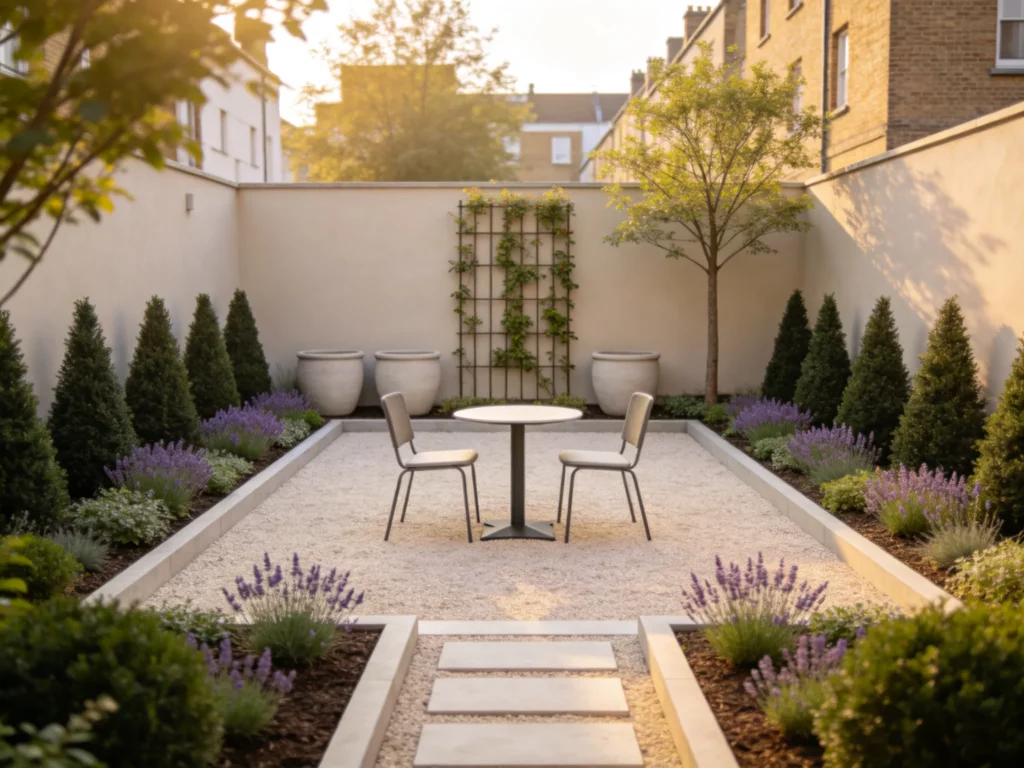
Clean edges make small beds look expensive. Steel or aluminum edging bends smoothly for curves. Brick on edge or a soldier course creates a classic frame, while a paver strip makes mowing a breeze.
Mulch does heavy lifting. It evens out the bed, hides drip lines, and keeps weeds from staging a coup. Use dark shredded mulch for a modern look, pine straw for cottage vibes, or a fine gravel in xeric designs.
- Leave breathing room: Don’t plant edge-to-edge. Give each clump its spotlight.
- Keep mulch off stems: Pull it back a couple inches to avoid rot.
- Set a maintenance strip: A 6–8 inch mulch or gravel band against hardscaping keeps things tidy.
Negative space matters as much as plants. A little open mulch and a repeated plant rhythm read neat, not bare. It’s the difference between “cute” and “curated.”
Low-Maintenance, Eco-Friendly, and Budget-Savvy
Want easy? Choose plants that actually enjoy your conditions. Natives and tough perennials shrug off heat, wind, and random watering schedules. They also feed pollinators, which feels good and looks buzzing with life.
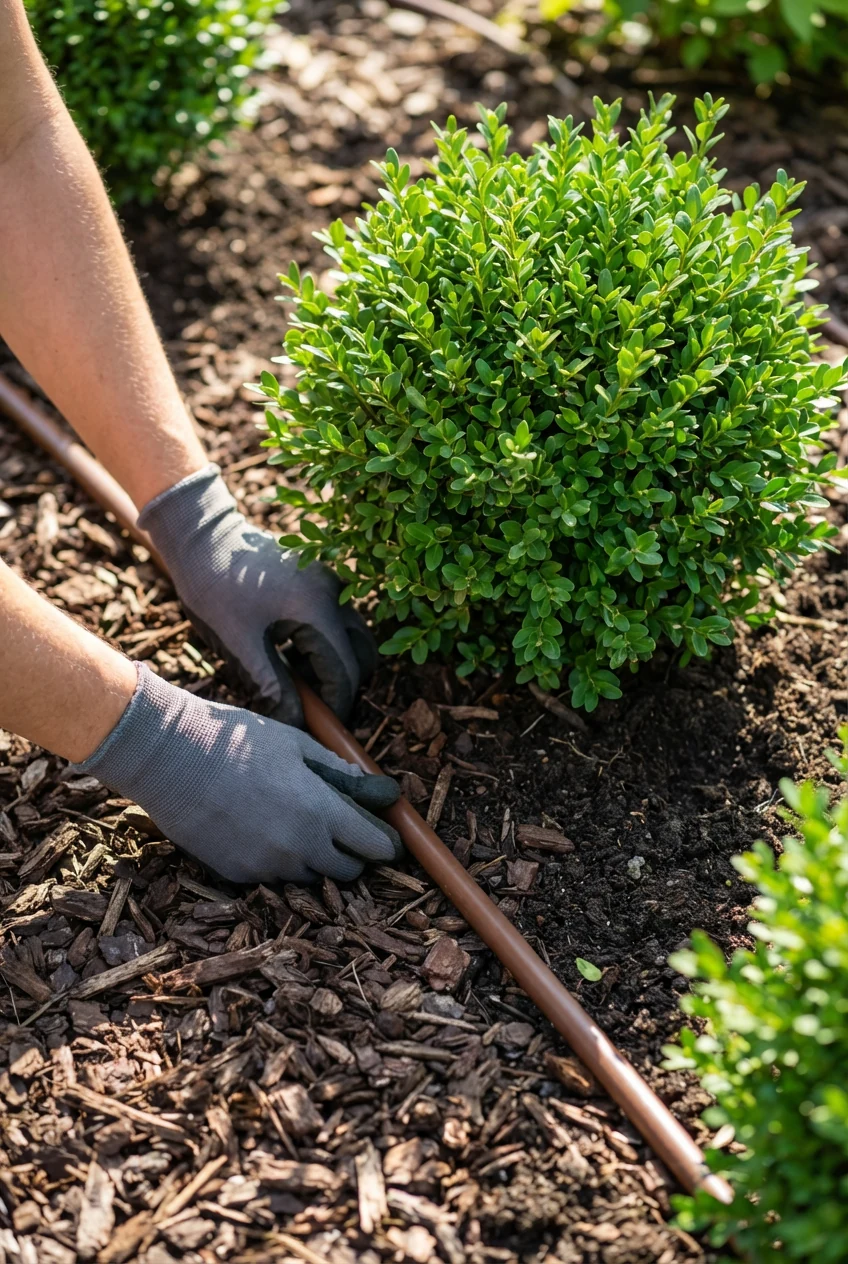
Install simple irrigation if you can. A soaker hose or drip line under mulch delivers water right to roots and saves time (and water). Hand water new plants for a couple weeks, then let your system handle the boring stuff.
- Skip landscape fabric under flower beds. It strangles soil life and never stops weeds long-term.
- Feed the soil: Mix in compost at planting. Healthy soil grows healthy, low-drama plants.
- Choose workhorse plants: Coneflowers, catmint, yarrow, sedum, heuchera, dwarf boxwood, and ornamental grasses.
Want to save cash? Buy fewer varieties and more of each. Small yards look richer when you repeat the same winners instead of collecting one of everything, IMO.
Pollinator Buffet That Stays Tidy
- Spring: Hellebores, hyacinths, grape hyacinths, and early-blooming catmint.
- Summer: Salvia, coneflower, bee balm dwarf varieties, and zinnias.
- Fall: Asters, sedum ‘Autumn Joy,’ and dwarf goldenrod (clumping types).
Group each plant in 3–5s so pollinators can forage efficiently. Clip spent blooms on tidy growers and leave seed heads on a few for birds. Balance neatness and nature for a bed that looks designed and alive.
Four-Season Interest and Simple Lighting
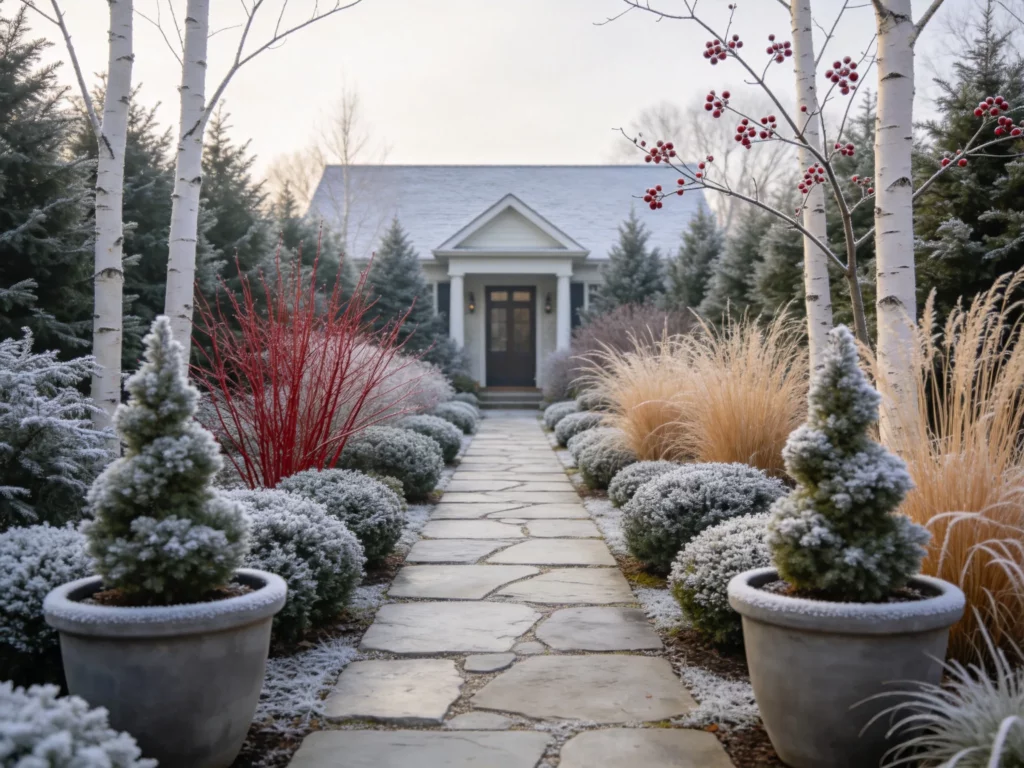
Flowers come and go. Structure stays. Mix in evergreen mounds, dwarf conifers, or compact hollies to hold the bed together in winter.
Think winter drama with redtwig dogwood, ornamental grasses, and seed heads that catch frost. Add spring bulbs for an early pop, and choose perennials with good foliage so summer doesn’t carry all the weight. You want something to love every month.
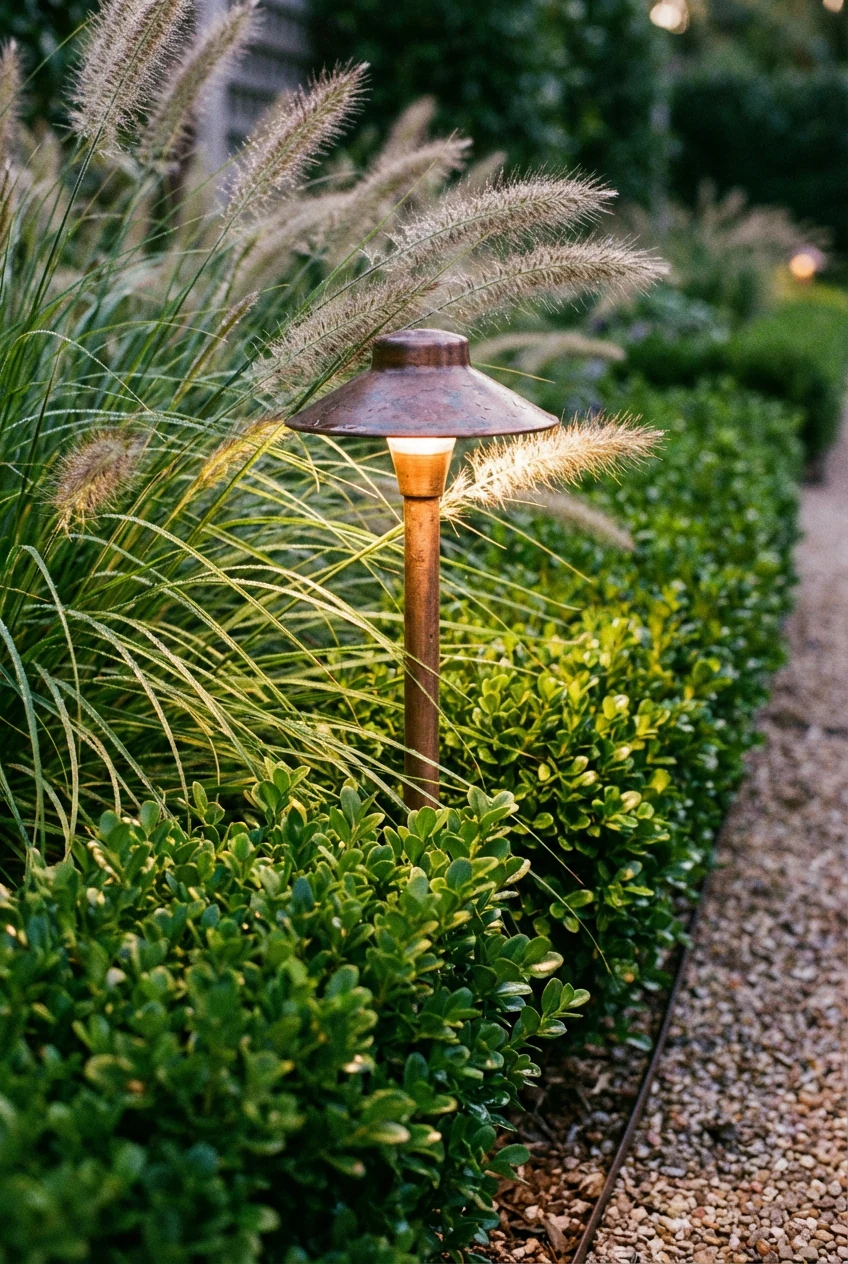
- Path lights spaced 6–8 feet apart guide the eye and the feet.
- One or two uplights on a specimen plant or house column make the facade glow.
- Warm color temp (2700–3000K) looks cozy, not like a parking lot.
Solar works in full sun and low-drama installs. Low-voltage wired systems look brighter and last longer if you want a set-it-and-forget-it vibe. Don’t spotlight your neighbor’s bedroom. They won’t send thank-you cookies.
FAQs
How many different plants should I use in a small front bed?
Less than you think. Aim for 5–7 varieties total, then repeat them in groups for impact. Repetition creates harmony and makes the space feel larger.
How close should I plant for a full look without overcrowding?
Check mature width on the tag and plant 75–80% of that distance apart. You’ll get quick fill without instant crowding. If you need a faster “lush” moment, tuck in some seasonal annuals at the edge.
Can I make it low-maintenance without it looking boring?
Absolutely. Choose compact shrubs for structure, then add 2–3 long-blooming perennials and one annual color for the front. Mulch, drip irrigation, and plant repetition carry the design so you don’t spend every weekend out there, FYI.
What if my front yard sits in full shade?
Lean into foliage texture and subtle blooms. Use heuchera, hosta minis, ferns, hellebores, and a few white accents to brighten. Add a glossy-leaf evergreen and a warm path light for instant “finished” vibes.
How do I deal with a sloped or awkward narrow strip?
Terrace gently with a low stone edge or create a long, ribbon-like bed with repeated grasses and groundcovers. Keep the plant list tight and use drifts. Long lines and repetition calm weird shapes and make them look intentional.
My HOA feels strict. What reads neat and safe but still fun?
Go for a clipped evergreen backbone (dwarf boxwood or holly), a single color family for blooms, and crisp edging. Add a small trellis or one container by the door for personality. It looks tidy and stylish, IMO, and it keeps the letter-writing committee happy.
Conclusion
Small front yard flower beds shine when you keep the lines clean, the plant list tight, and the color story focused. Layer heights, repeat your winners, and sneak in a vertical accent for drama. Edge it, mulch it, light it, and you’ll have curb appeal that punches way above its weight. Tiny yard, huge impact—mission accomplished.