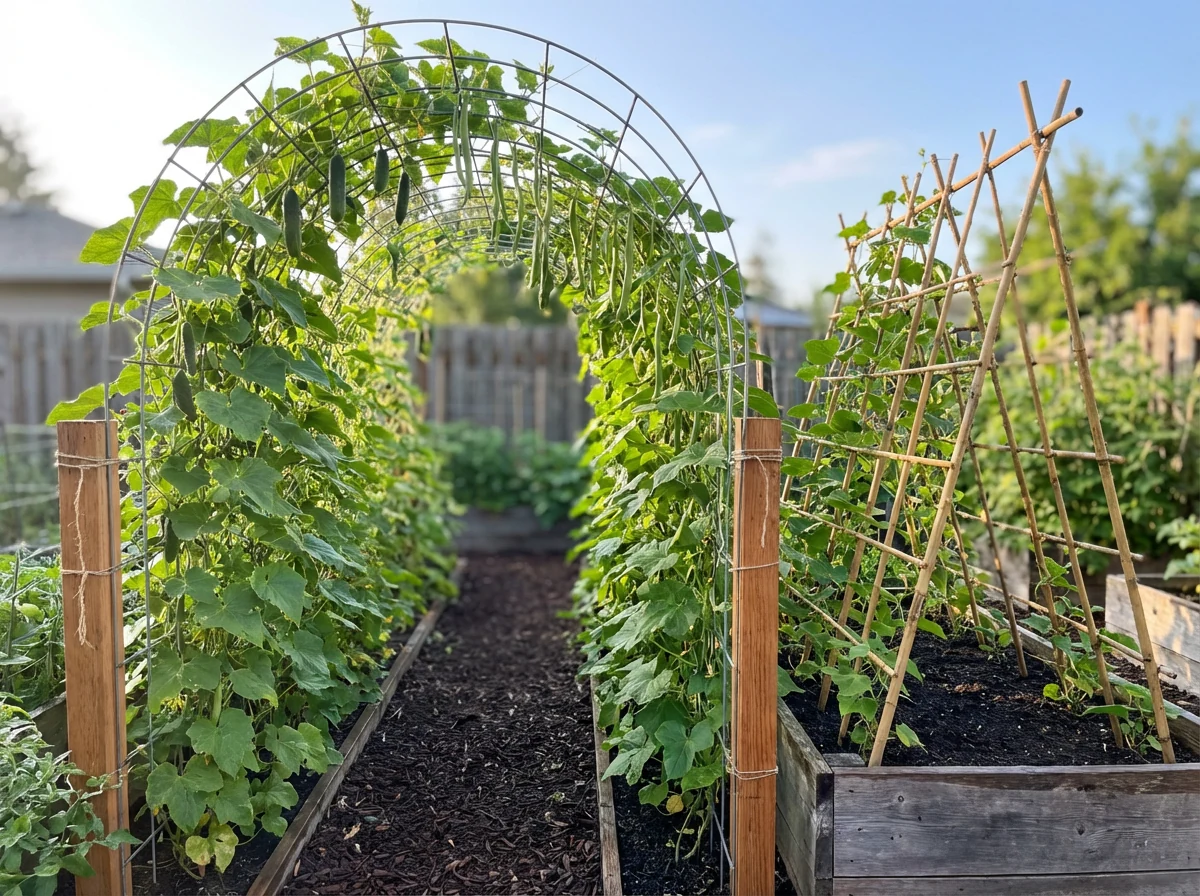
Gardening on a balcony or a small backyard? No problem—grow your veggies up instead of out. Vertical setups look amazing, save space, and keep your plants cleaner and healthier. You can build simple trellises in an afternoon with cheap materials, and your harvests will thank you. Ready to guide those vines and tame those tomatoes?
Why Grow Up? The Case for Vertical Veggies
Vertical vegetable gardens pack more plants into less square footage without sacrificing production. You create sunlight lanes, air flow, and easy access for harvest. You also get fewer slug surprises and less muddy produce. Win, win, win.
- Better air circulation: You reduce mildew and leaf diseases because leaves don’t wallow in damp soil.
- Cleaner fruit and faster harvests: You spot ripe cucumbers, tomatoes, and beans without crawling under vines.
- Space savings: You tuck trellises along fences, paths, and raised bed edges.
- Stronger plants: You guide stems, spread weight, and prevent snapped branches after storms.
Bonus perk: vertical gardens look like living art. You grow food and create a statement wall. FYI, your neighbors might peek over the fence and start asking for cucumbers.
Pick the Right Plants for Vertical Success
Not every plant loves heights. Some climb on their own, and some need convincing. Choose varieties that fit your trellis style and your climate.
Climbers vs. Leaners
- Natural climbers: Pole beans, peas, malabar spinach, and passionfruit hook tendrils onto netting or wire without much training.
- Guided leaners: Cucumbers, indeterminate tomatoes, squash, and melon vines need ties or clips to stay on track.
Want zero-effort trellising? Go heavy on pole beans and peas. Want big payoffs with a little training? Cucumbers and tomatoes deliver big yields vertically.
Compact Power Producers
- Bush cucumbers and compact zucchini: These accept a small trellis and still pump out fruit.
- Determinant tomatoes: Shorter plants that fit low cages or short stakes; great for tight spots.
- Chili and sweet peppers: These don’t climb, but they benefit from stakes for wind and fruit weight.
Grow a mix to keep things fun. You stack quick crops like peas with longer-season tomatoes and cucumbers.
Heat and Light Reality Check
- Sun requirement: Give 6–8 hours of direct sun to most fruiting vegetables. Less light equals fewer fruits.
- Heat tolerance: Beans and cucumbers love warmth; peas prefer cooler spring and fall slots.
- Wind risk: Tall trellises catch gusts. Anchor posts and tie plants securely to avoid midseason heartbreak.
Plan the garden like you plan furniture. Don’t block your best sun with a giant tomato wall right in front of smaller herbs.
DIY Trellis Designs You Can Build This Weekend
You don’t need a carpentry badge for these. Grab simple materials and build sturdy supports that last for seasons. IMO, simple beats fancy nine times out of ten.
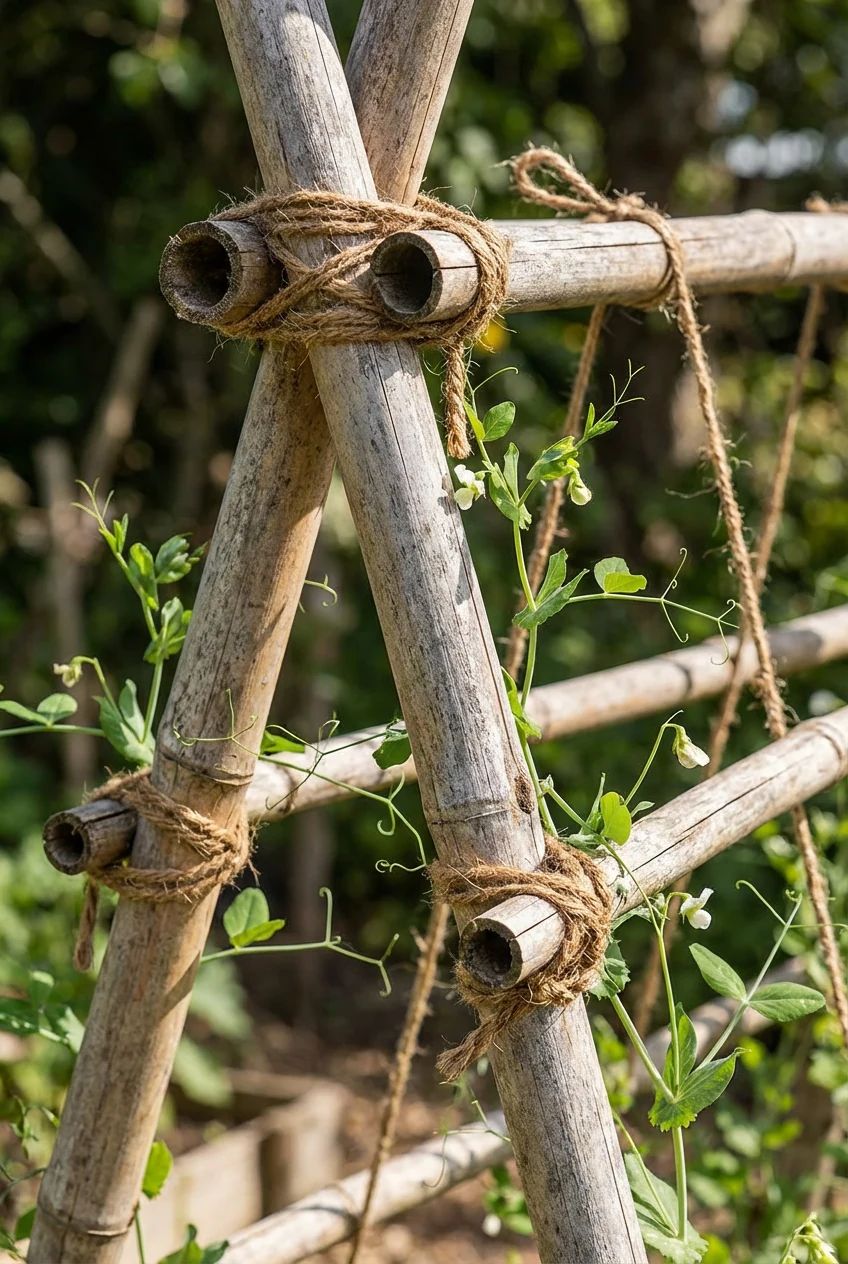
String and Bamboo A-Frame
Perfect for peas, beans, and cucumbers in raised beds.
- Materials: Bamboo poles or wooden dowels, garden twine, zip ties, tent stakes.
- Push two poles on each side of the bed and lean them together to form an A-shape.
- Bind the top with twine or zip ties and secure bottoms with tent stakes.
- Run horizontal strings every 6–8 inches and vertical strings as needed.
Tip: Keep strings snug. Loose strings turn your trellis into a hammock, and plants don’t harvest well from hammocks.
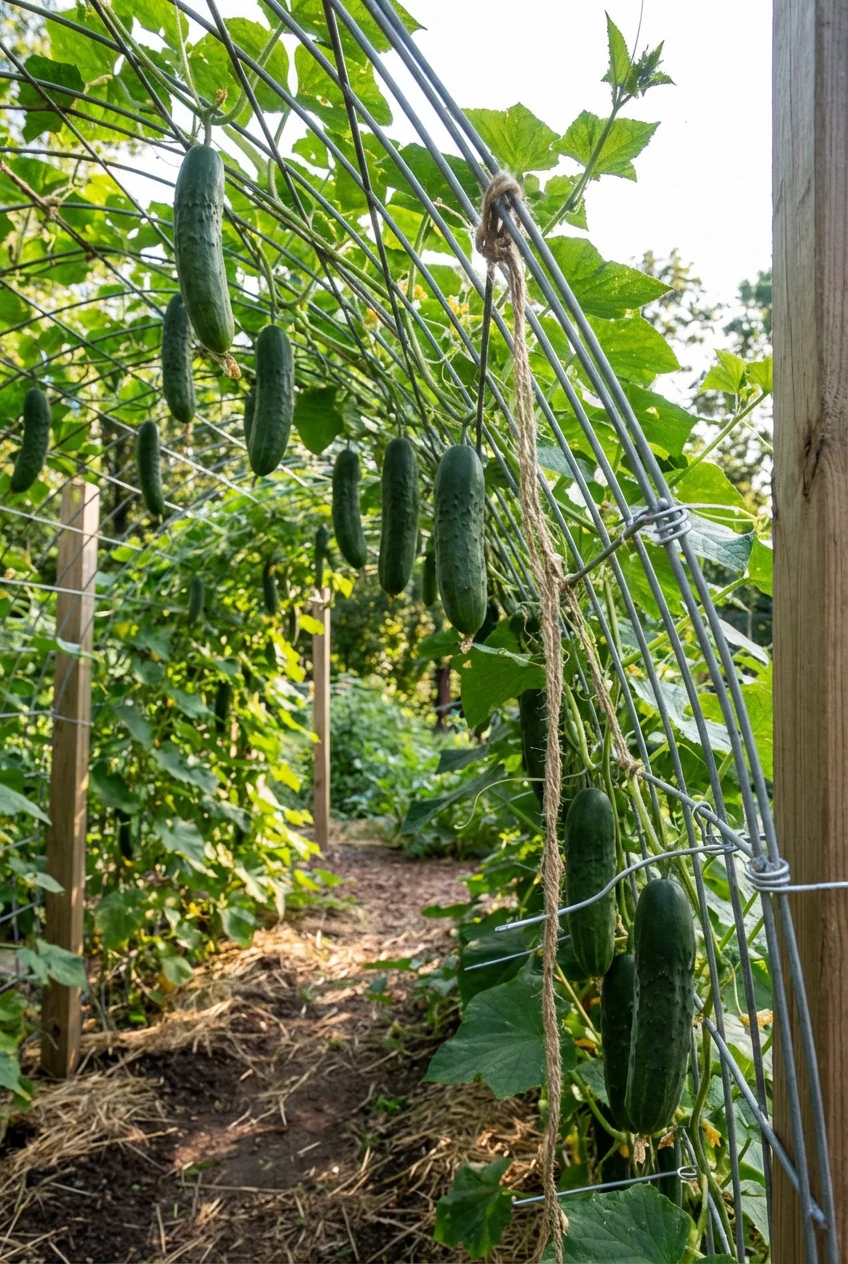
Cattle Panel Arch
This build creates a photo-worthy tunnel and powers heavy yields.
- Materials: 16-foot cattle panel, T-posts or rebar stakes, metal ties or wire.
- Drive two posts on each bed edge and curve the panel across the span.
- Tie the panel to posts at several points to lock it in place.
- Plant cucumbers, pole beans, and small-leaved squashes at both sides.
Why it rocks: You get shade under the arch for greens while your vines claim the top.
Netting Wall on a Fence
Use that fence like a vertical superhighway.
- Materials: Nylon trellis netting, eye hooks or staples, zip ties.
- Attach eye hooks to the fence frame for anchor points.
- Stretch netting tight and zip-tie corners and key points.
- Plant peas or beans a foot from the base and guide the first climb.
Keep netting taut. Slack netting sags and turns harvest day into a game of “find the bean.”
Removable Ladder Trellis
Perfect for patios and renters who move gear around.
- Materials: Two wooden ladders or ladder-style frames, a couple of hinges, wood screws.
- Hinge the top so the ladders fold like a book.
- Spread the legs and secure feet with bricks or sandbags.
- Run twine between rungs to create climbing lanes.
Bonus: You store it flat in winter and avoid the “where do I stash this giant trellis” problem.
The Florida Weave for Tomatoes
Skip flimsy tomato cages and weave like a pro.
- Materials: Sturdy stakes every 3–4 feet, heavy twine, pruning shears.
- Plant tomatoes in a straight row and sink tall stakes at intervals.
- Run twine at 12–18 inches high, weaving in front of one plant and behind the next.
- Add new twine rows every 8–10 inches as plants grow.
Key move: Prune suckers to one or two leaders for cleaner weaving and stronger stems.
Simple PVC Frame for Cucumbers
Lightweight, cheap, and easy to customize.
- Materials: 1/2-inch PVC pipe, elbows and tees, nylon netting, zip ties.
- Build a rectangular frame that fits your bed.
- Attach netting to the frame with zip ties.
- Stake corners with rebar or wood dowels for stability.
Paint the pipe if you hate the white. Plants don’t care, but you can match your vibe.
Smart Support Tips: Tie, Train, and Trim Like a Pro
You guide vines like a traffic controller. You don’t let them run amok. A little weekly attention keeps chaos away.
Ties That Don’t Strangle
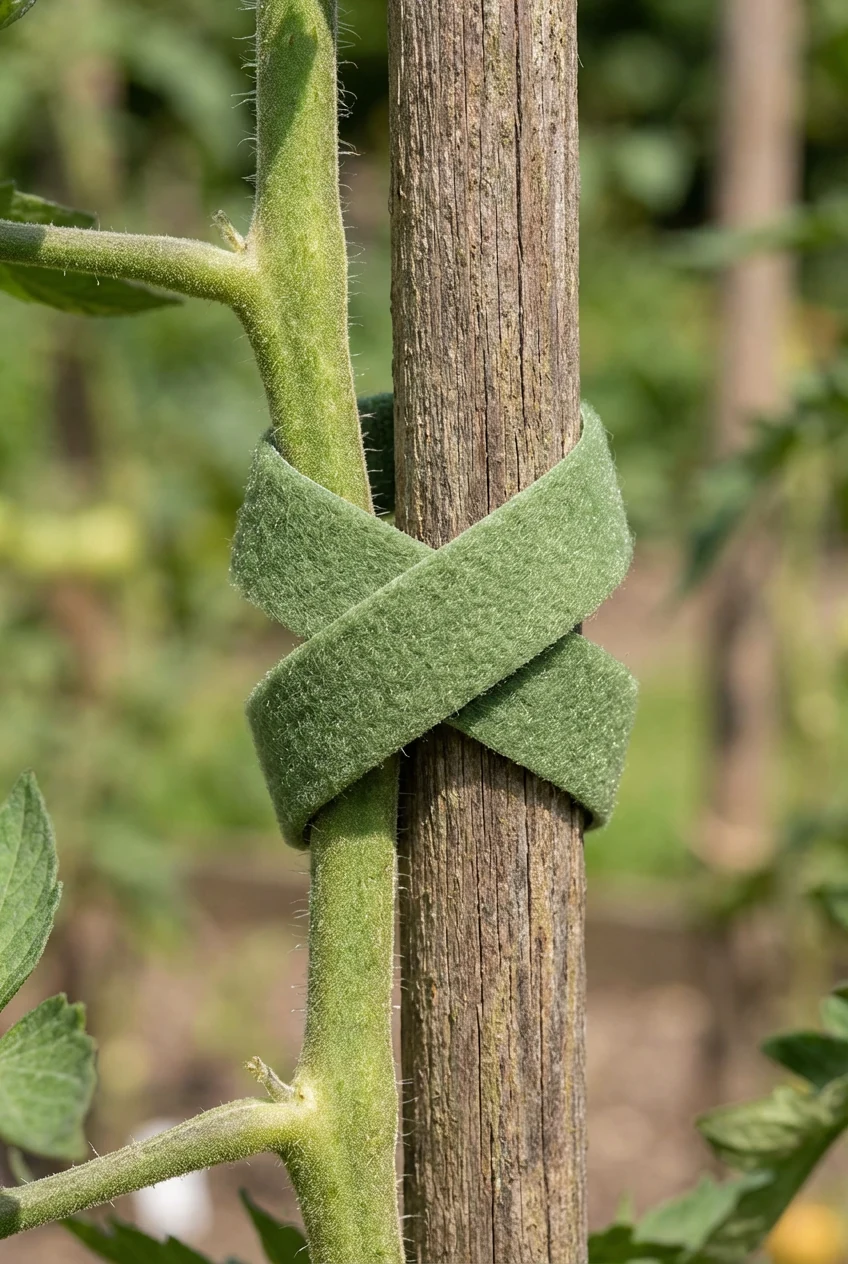
- Use soft ties: Stretchy tape, Velcro plant ties, or ripped T-shirt strips prevent stem damage.
- Loop and space: Tie a figure-eight around the stem and the support so the plant can grow.
- Skip wire: Wire and thin twine cut into stems as plants thicken.
Rule: If a tie feels harsh on your fingers, it punishes plant stems. Pick gentler stuff.
Train Early, Win Big
- Guide the first 12–18 inches religiously. Plants remember that path and stick with it.
- Redirect wandering vines weekly. You prevent tangles and save time later.
- Pinch off rogue shoots that jam ventilation and make harvests annoying.
Think of yourself like a coach. You set the lineup and keep players in their lanes.
Prune Without Fear
- Tomatoes: Keep one or two main leaders. Remove suckers below the first fruit cluster.
- Cucumbers: Trim crowded laterals and old leaves near soil to reduce disease.
- Squash and melons: Limit to one or two runners; pinch after fruit sets to focus energy.
Don’t overthink it. You cut what blocks light and airflow, and you keep the main stem strong.
Manage Weight Like a Boss
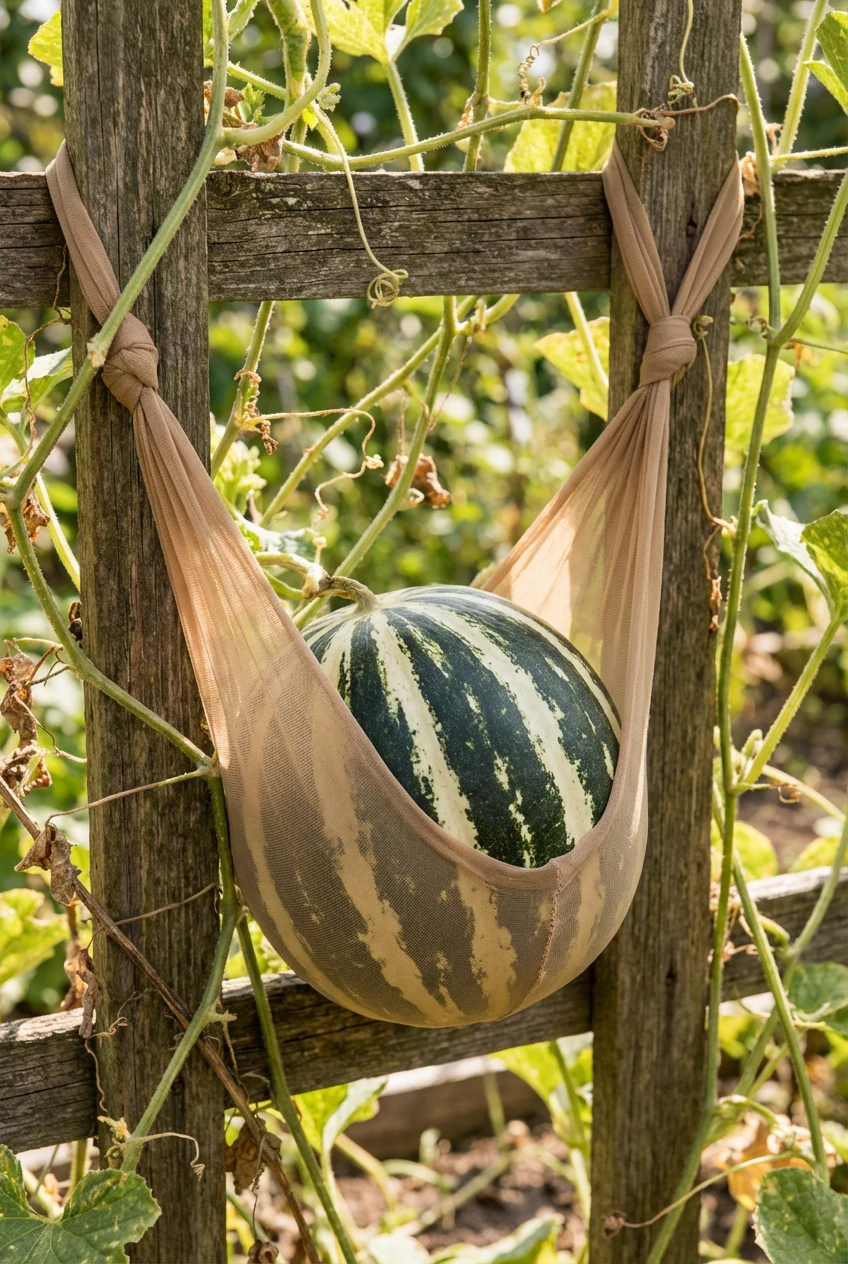
- Use slings for melons: Old T-shirts, mesh bags, or pantyhose cradle heavy fruit.
- Spread the load: Tie main stems at multiple points to share weight across the frame.
- Harvest often: Pick cucumbers and beans fast to reduce sag and encourage more fruit.
Let the trellis carry the weight, not one lonely tie point. Your plants and your frame will last longer.
Container and Small-Space Hacks
Balcony gardener? You can still grow a jungle. You just choose compact builds and stable bases.
Balcony-Friendly Setups
- Use narrow trellises: Ladder frames, wall netting, or slim stakes keep traffic lanes open.
- Anchor pots: Place bricks, sandbags, or heavy trays under containers to prevent tipping.
- Go vertical with shelves: Stack herbs and greens on tiered racks; reserve trellis lanes for climbers.
Check building rules for weight limits. You don’t want to explain a cattle panel arch on the third-floor balcony to your landlord.
Raised Bed Integration
- Mount trellises on the north edge so they don’t shade shorter crops.
- Inset posts inside the bed corners to avoid outside wind leverage.
- Create pathways under arches for harvest access and drip line routing.
Pro move: Build two parallel trellises and run twine between them for an instant bean tunnel.
Water Smarter
- Install drip lines: Run emitters at the base of each plant to target roots, not leaves.
- Mulch deeply: Add 2–3 inches of straw or wood chips to lock in moisture.
- Morning watering: Hydrate before heat spikes to reduce stress and leaf scorch.
Vertical gardens don’t drink more water automatically. You only water the root zones, not the trellis itself.
Soil, Feeding, and Growth Rhythm
Trellised plants grow fast and carry loads. They need strong nutrition and consistent moisture. You don’t need fancy stuff, just steady routines.
- Start with rich soil: Blend compost, aged manure, and a balanced organic fertilizer.
- Feed periodically: Side-dress compost or use a mild liquid feed every 2–3 weeks during peak growth.
- Watch the leaves: Pale growth signals nitrogen deficits; dark leaves with weak fruiting signals excess nitrogen.
- Keep roots cool: Mulch reduces heat stress and keeps microbes happy.
Don’t overfeed. You grow leaves for shade and fruit for dinner. Pick a lane and adjust accordingly.
Troubleshooting: Wind, Sagging, and Sneaky Pests
Stuff happens. Wind gusts flex frames. Fruit loads pull netting. Bugs show up uninvited. You handle it fast and keep harvests rolling.
Wind-Proofing Basics
- Anchor deeply: Drive stakes 12–18 inches into soil. Add diagonal braces for tall frames.
- Distribute ties: Tie plants at multiple points so wind can’t rip one connection.
- Reduce sail area: Prune dense foliage and remove tangled lateral shoots.
Check hardware after storms. Tighten ties and re-drive any loose stakes. FYI, wind loves flimsy builds.
Fix Sag Before It Snowballs
- Add crossbars: Screw a horizontal brace halfway up the frame.
- Double-layer netting: Sandwich netting or string lines for extra rigidity.
- Redistribute fruit: Move melon slings and trim excess lateral vines.
Don’t wait for a collapse. Prevent it with quick adjustments and spreads in weight.
Pest Patrol
- Aphids and whiteflies: Blast with water, then follow with neem oil or insecticidal soap.
- Cucumber beetles: Use yellow sticky traps and row covers early; remove covers at flowering for pollination.
- Slugs and snails: Keep mulch tidy and use traps or iron phosphate bait around bases.
Observation beats panic: Check undersides of leaves weekly. You catch problems early and skip heavy interventions.
Shade and Sun Shifts
- Rotate trellises or swap crops when summer sun angles change.
- Plant shade-loving greens under arches once vines establish.
- Raise the trellis height for tomatoes if neighboring trees grow fast.
Don’t fight the sun; work with it. Plants love predictable light more than you love surprise clouds.
Planting Layouts That Actually Work
Good layouts make training simple and harvests easy. You won’t play vine Jenga if you set spacing correctly from day one.
- Cucumbers: Space 9–12 inches apart along a trellis line; train one main stem and a few short laterals.
- Pole beans: Plant 3–4 seeds per pole or 6 inches apart on netting; thin to strong pairs.
- Peas: Space 2–3 inches apart; add extra string lines at 12-inch intervals.
- Indeterminate tomatoes: Plant 18–24 inches apart and commit to one or two leaders per plant.
Pathways matter: Leave 18–24 inches of walkway behind your trellis so you can reach and tie without gymnastics.
Harvesting Without Drama
Harvest early and often. Plants throw more blooms when you pick consistently. You set reminders and keep a basket handy.
- Beans: Pick every 2–3 days for tender pods and more flowering.
- Cucumbers: Harvest at 6–8 inches for slicers; smaller for picklers to avoid bitterness.
- Tomatoes: Snip with pruners to protect stems; support heavy clusters with a spare tie.
- Melons: Check tendrils near the fruit stem; dried tendrils and sweet aroma signal ripeness.
Use pruners and a gentle touch. You don’t yank fruit and you don’t tear stems. Your trellis stays tidy and happy.
FAQ
How close should I plant cucumbers to a trellis?
Plant 9–12 inches from the base of the trellis and space plants 9–12 inches apart along the line. Train a single main stem upward and trim crowded laterals. This spacing gives leaves airflow and keeps fruit visible for quick harvests.
What’s the best height for a tomato trellis?
Go 5–6 feet for indeterminate tomatoes and 3–4 feet for determinate varieties. Tie leaders every 8–10 inches as plants grow and keep pruning tight. If you grow monsters, add an extension and keep the weave going.
Can I reuse trellis materials every season?
Yes, absolutely. Inspect frames for rust or cracks, replace worn ties, and sanitize netting with a mild bleach solution if you dealt with disease. Store materials out of sun and rain to extend their life. IMO, reusable builds beat disposable gear by a mile.
Do vertical gardens need different watering routines?
You still water at the root zone. Drip lines or targeted hand watering work best. Mulch heavily and water in the morning so plants handle midday heat. Trellised leaves dry faster, which helps prevent disease.
How do I stop containers from tipping with a trellis attached?
Use wide, heavy containers and anchor bases with bricks or sandbags. Tie the trellis to railings or walls if allowed. Keep the center of gravity low by pruning and training fruit evenly across the frame.
What ties or clips work best for tomatoes and cucumbers?
Soft plant ties, stretchy tape, and Velcro strips work great. Tomato clips snap onto string or netting for quick support. Always leave room for stem growth. Avoid wire; it cuts into stems and creates damage.
Conclusion
Vertical vegetable gardens pack a punch for small spaces and big harvests. You pick the right plants, build simple trellises, and keep ties and pruning on schedule. You harvest more and deal with fewer pests and diseases. Start with one trellis this weekend and watch your garden climb—literally.