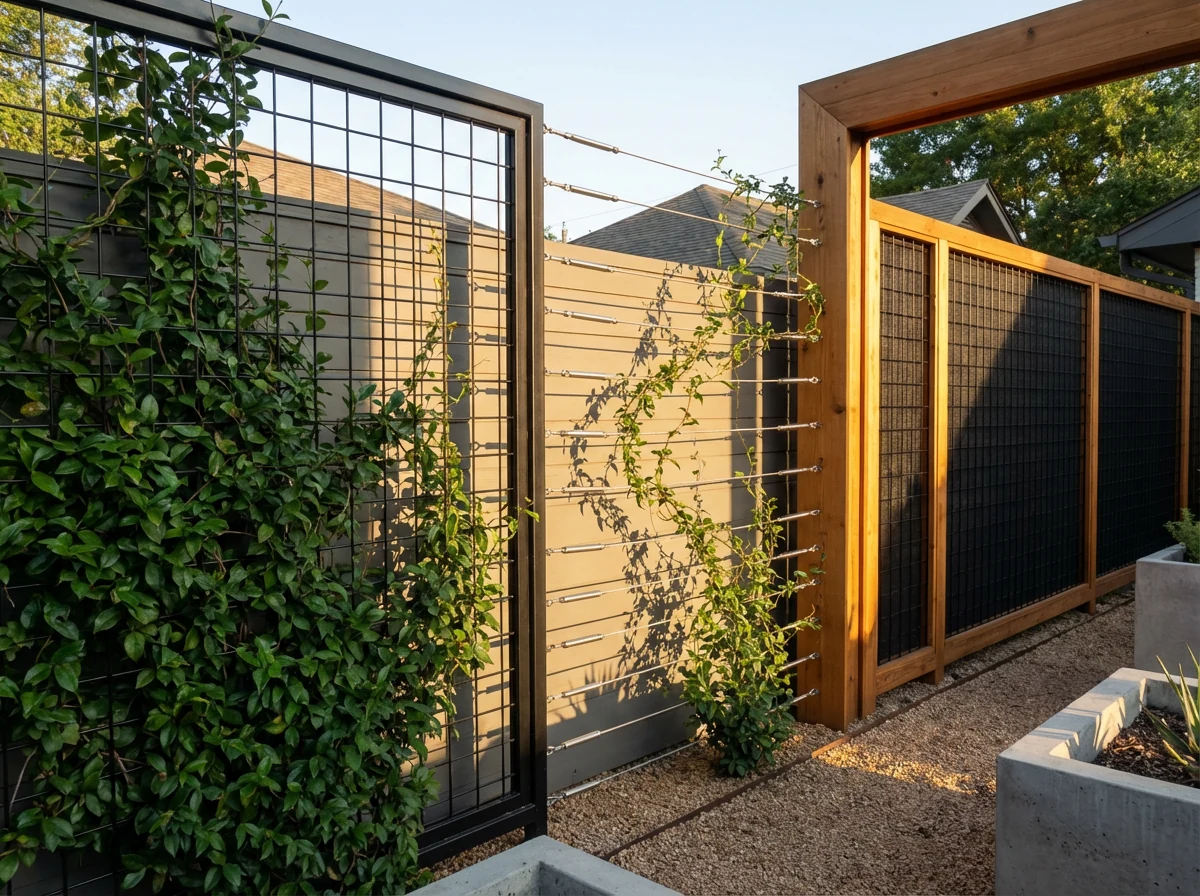
You want a fence that looks sleek, grows greenery fast, and doesn’t turn into a high-maintenance headache? Metal and wire trellis panels deliver that combo. They keep lines clean, plants happy, and neighbors a tiny bit jealous. Let’s talk smart, modern designs that you can build now without overcomplicating your weekend.
Why Metal and Wire Trellises Change the Game
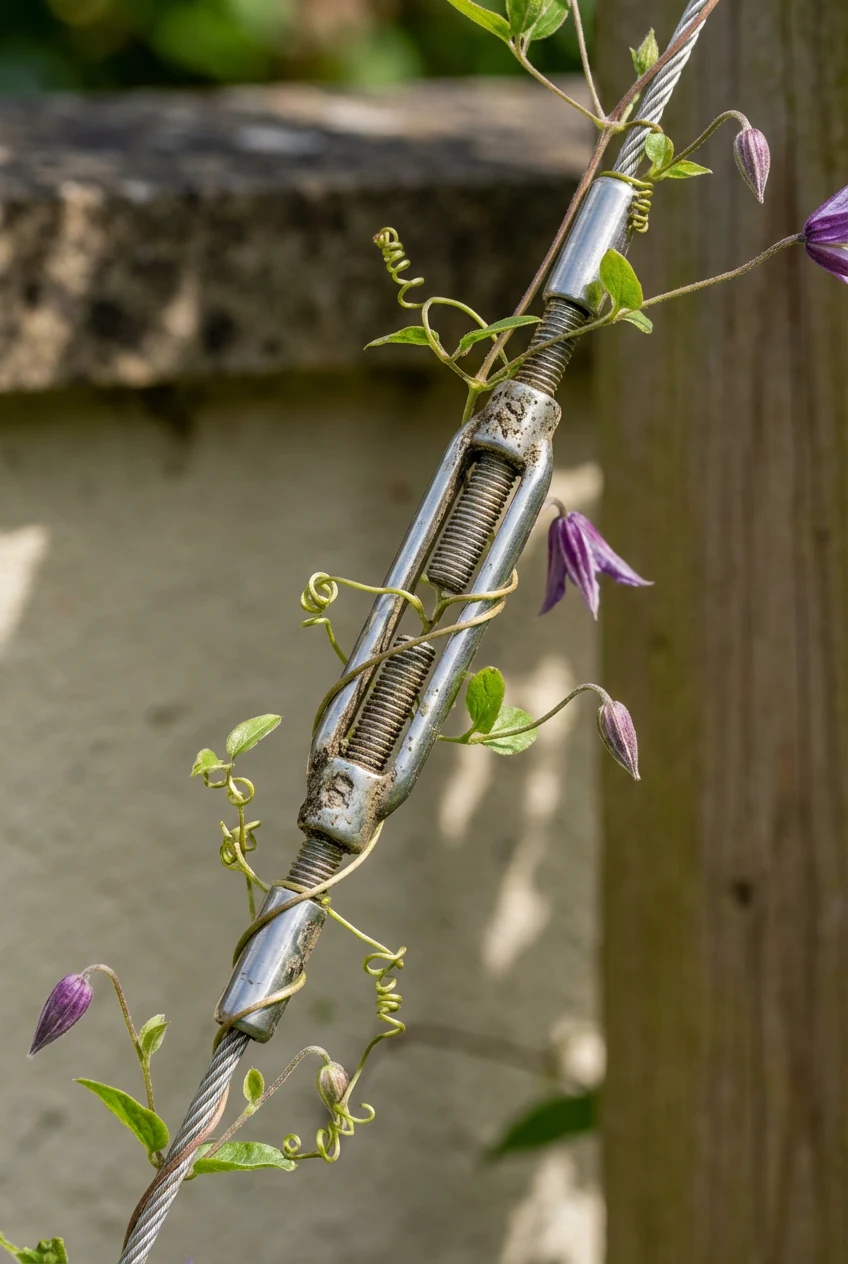
Metal and wire trellises bring structure without bulk. They guide vines cleanly and never sag or warp like wood. They also blend into the background visually, so plants steal the spotlight.
You get strong support, crisp geometry, and great airflow. Want privacy? Layer vines over panels and control the density. Prefer a lighter look? Keep plants sparse and let the grid add texture.
Modern yards love minimal lines and durable finishes. Metal and wire trellises hit that sweet spot. You build once, then enjoy for years without constant patchwork repairs.
Choosing the Right Materials
Pick materials with both performance and style in mind. You can balance budget, climate, and the look you want.
- Stainless steel: Premium, sleek, and tough. It resists corrosion and cleans up easily. Expect a higher cost, but the finish stays fresh.
- Galvanized steel: Budget-friendly strength. The zinc coating fights rust. You can paint or powder-coat it for extra protection.
- Powder-coated aluminum: Lightweight, modern, and corrosion-resistant. It handles coastal air well and looks sharp in matte black.
- Corten (weathering steel): Rustic-industrial vibe. It forms a stable, protective patina. Keep it away from runoff that stains patios.
- Black vinyl-coated wire mesh: Clean look and plant-friendly surface. It hides behind foliage and resists scratches.
Best Metals for Different Climates
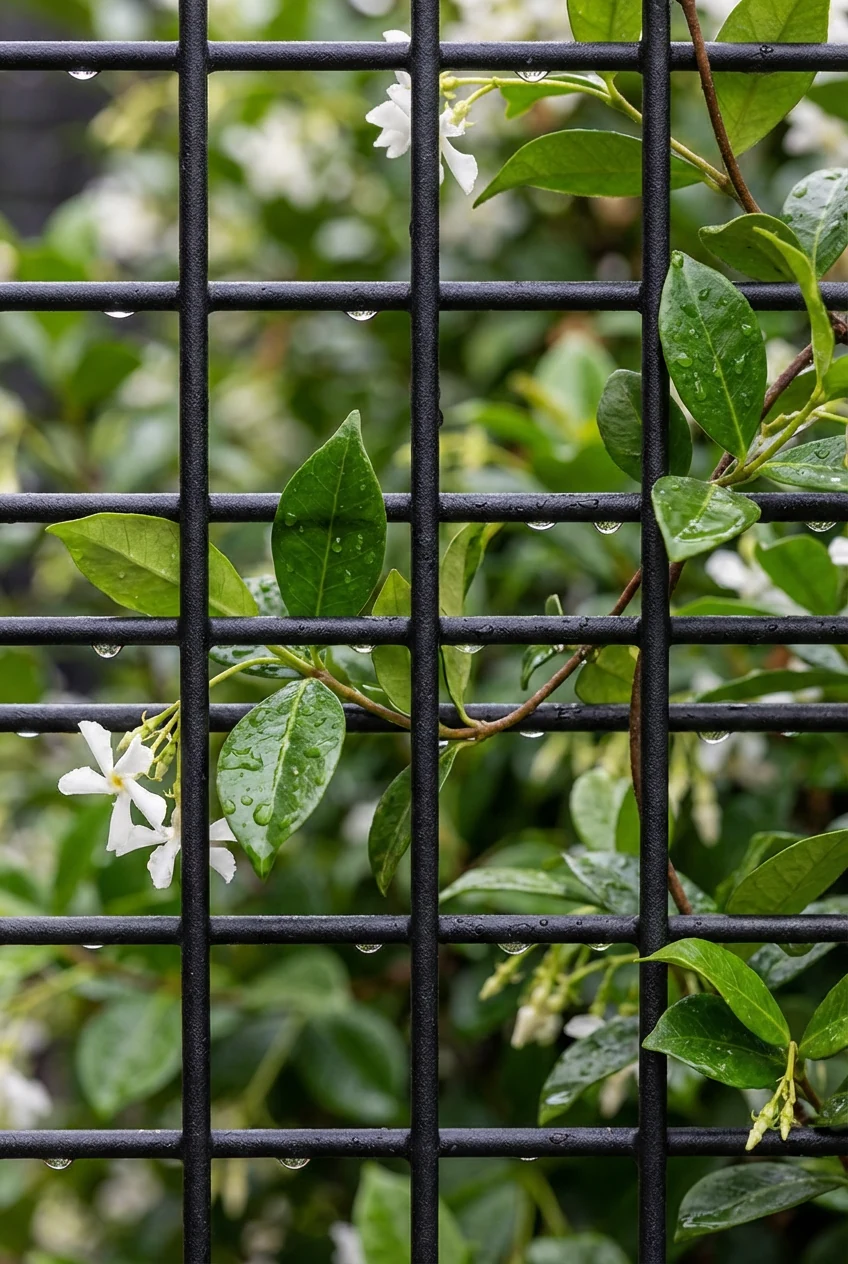
Coastal air throws salt at everything. Choose aluminum or 316 stainless in those zones and thank yourself later. Dry climates accept galvanized steel without drama.
Rainy regions push water into joints. Seal connections and use powder-coated hardware for extra defense. Cold climates? Pick metals with sturdy brackets and avoid thin cable systems that kink easily.
Wire Gauges and Patterns
Wire thickness affects strength and style. Go thinner for delicate vines, thicker for strong climbers. Mesh patterns define the vibe: grid feels modern, diamond feels classic, horizontal lines feel architectural.
Try these common options:
- Welded wire grid: Square openings from 2″ to 6″. Clean and strong.
- Woven wire: Flexible and traditional. Good for gentle training.
- Cable trellis: Stainless cables with tensioners. Sleek and high-end.
- Expanded metal: Edgy look with tons of grip for tendrils.
Design Styles You Can Build Today
You don’t need a design degree. You only need a few rules and a willingness to measure twice.
Minimalist Grid Panel
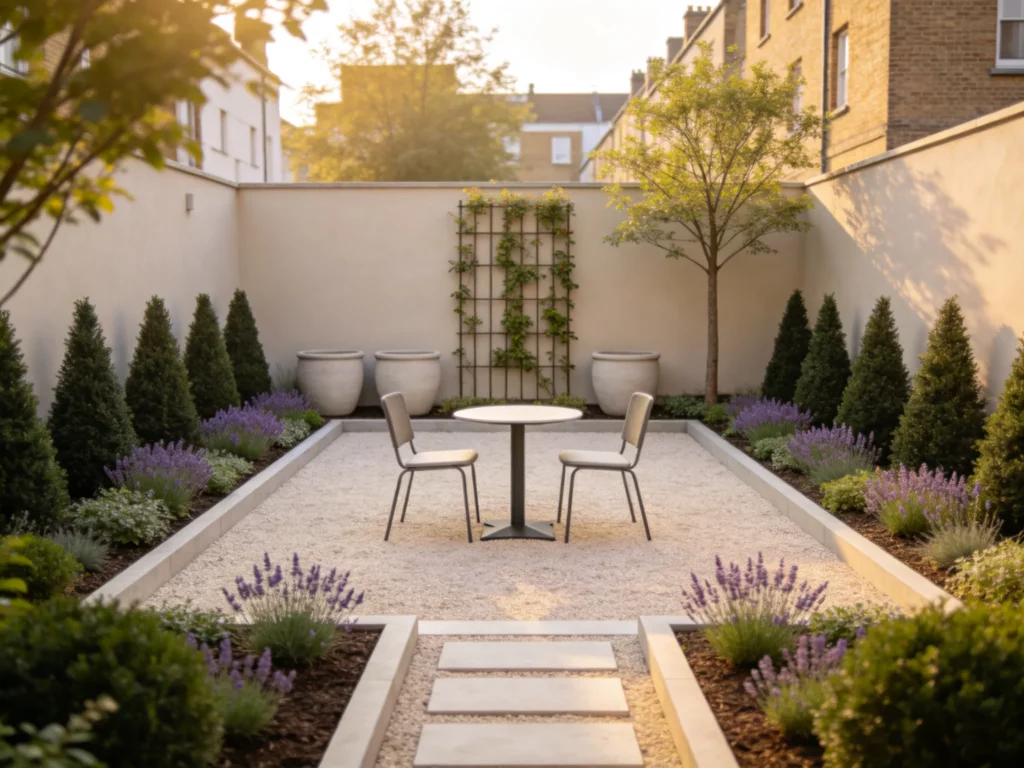
Mount a black powder-coated grid to posts and frame the panel with a slim metal angle. Keep spacing tight for privacy or open it up for a lighter feel. Add a small ledge at the base so plants catch onto the panel fast.
Pro tip: Align the grid with architectural lines nearby. The fence, patio, and house windows all play together visually. You create a cohesive look with simple alignment.
Architectural Cable Trellis
Run horizontal stainless cables between posts with sleek tensioners. Space them 6″ to 8″ apart for climbing support. Train vines to weave in and out for an airy wall of green.
This style stays elegant with minimal foliage, and it scales up nicely. You can add vertical cable drops to guide plants higher without bulk.
Mixed Materials: Metal + Wood
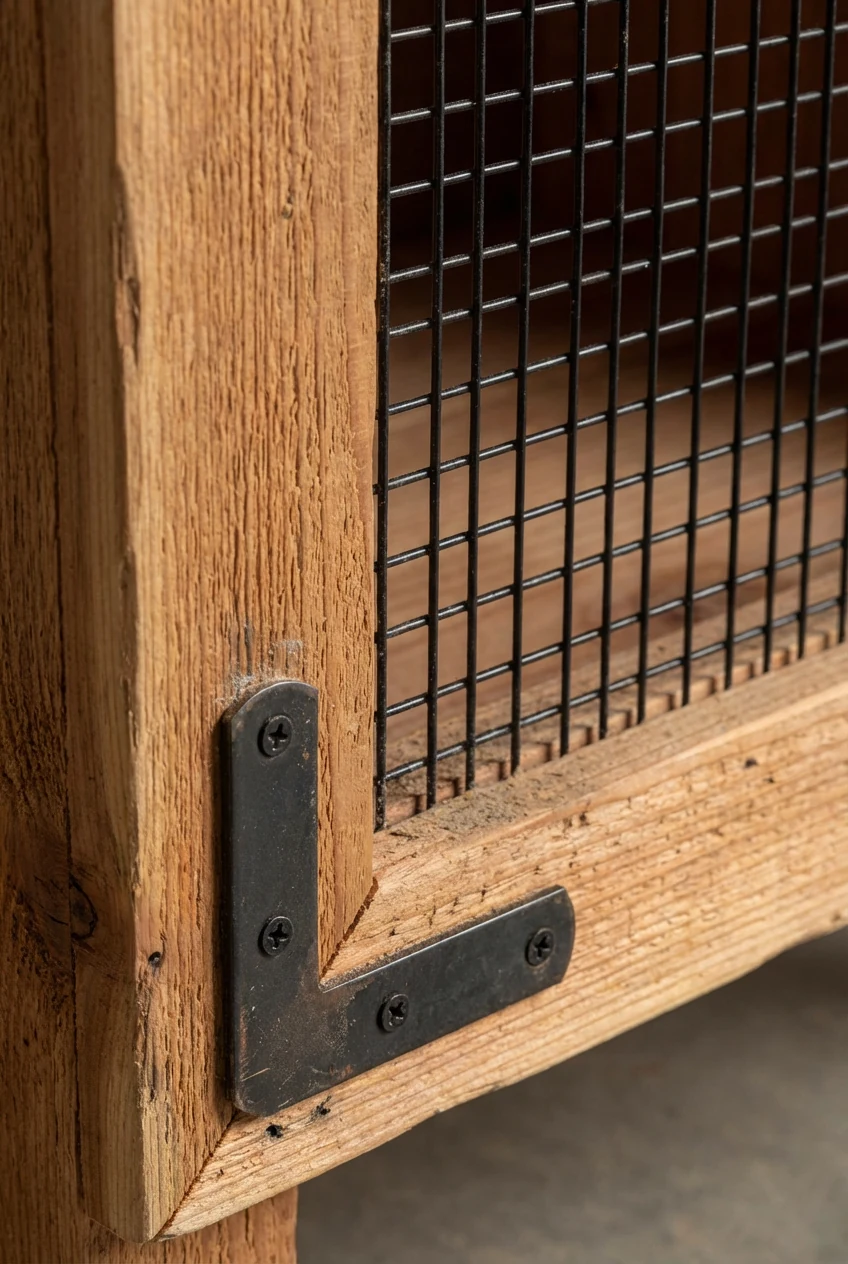
Pair a warm cedar frame with a black wire panel for contrast. Use metal brackets that echo the panel color so the look stays unified. This combo fits modern homes that still want a natural touch.
Keep edges crisp and avoid chunky posts if you want a lean profile. Thin posts with strong footings deliver the minimalist effect without wobble.
Angled and Chevron Panels
Run wires at 45° and create chevron patterns. Vines climb diagonally and add movement. You get rhythm without visual noise.
Use symmetrical angles for a more formal look, or mix angles for a playful twist. Keep the pattern consistent across multiple bays so the design feels intentional.
Plant Pairings That Pop
Metal trellises only look better with the right plants. Choose climbers that fit your climate and your patience level.
- Star jasmine: Fragrant blooms and glossy leaves. It loves grids and never overwhelms.
- Clematis: Big color hits, graceful vines. It grabs wire easily.
- Climbing roses: Romantic and architectural. Use sturdier mesh and prune regularly.
- Honeysuckle: Fast growth and sweet scent. It fills panels quickly.
- Passionflower: Exotic blooms and fast coverage. It likes warmth and sun.
- Boston ivy: Strong climber with seasonal drama. Train it well and keep it tidy.
- Grapes or tomatoes: Edible trellis fun. Use thicker wire and support fruit weight.
Fast Climbers vs. Slow Beauties
Want instant coverage? Go honeysuckle, passionflower, or some ivy varieties. They grab wires quickly and build volume fast.
Prefer sculptural elegance? Choose clematis or roses. They deliver color and texture with a more tailored growth habit. You guide them and keep the design intentional.
Non-Climbing Plants You Can Train
You can train hydrangeas, espaliered fruit trees, or even herbs on wire frameworks. Use soft ties and guide branches horizontally for that classic espalier look. You get living art without extra bulk.
Keep ties loose and replace them as stems thicken. You only need gentle correction to keep the form neat.
Installation Tips That Save Headaches
Plan once, install smoothly, relax sooner. You only need a simple workflow and the right hardware.
DIY Workflow
- Lay out the run: Mark post locations and panel spacing. Confirm property lines because surprises ruin weekends.
- Set posts: Dig 24″ to 36″ deep depending on wind loads. Use concrete footings and a level. Check plumb twice and braces once.
- Mount panels: Use stainless or coated screws and matching brackets. Keep a consistent reveal around frames for a clean look.
- Add plant guides: Install starter wires or clips. Position plants near anchor points so they catch quickly.
- Finish and seal: Touch up any cut edges with rust inhibitor. Clean the metal and remove fingerprints for that showroom finish.
Common Mistakes You Avoid
You skip flimsy hardware because vines add weight over time. You avoid uneven spacing because misaligned grids drive you nuts forever. You seal cut metal edges and protect fasteners so you never chase rust, FYI.
You also keep panels at least 2″ off the ground. Splashback from soil causes grime and early wear. That gap helps airflow and smiles at your future self.
Privacy, Light, and Airflow: Balancing the Trade-Offs
Open wire panels keep air moving and light streaming. Dense plant coverage adds privacy without heavy walls. You dial in the balance by adjusting plant choice and panel openness.
Smart Ways to Add Privacy Without Bulk
Use a tiered approach: dense plants near seating areas, lighter vines along the rest of the fence. Mix leaf textures to break up silhouettes. Layer a second panel behind the main trellis and offset it slightly for extra screening.
Add planters at the base for height boosts and quick coverage. Direct vines to cross diagonally and fill gaps faster. You can also stack narrow panels and create a staggered curtain that still breathes.
Maintenance and Upgrades
Metal trellises don’t need much, but a little care goes a long way. You clean annually, check hardware, and prune plants so the structure stays visible and crisp.
Quick Care Schedule
- Spring: Wash panels with mild soap. Inspect fasteners and tighten anything loose. Prune vines to shape.
- Summer: Guide new growth and add soft ties. Water roots evenly and keep the base clear.
- Fall: Trim spent growth. Touch up coatings if you cut or scratched metal.
- Winter: Check cable tension if you use a cable system. Clear debris and plan upgrades.
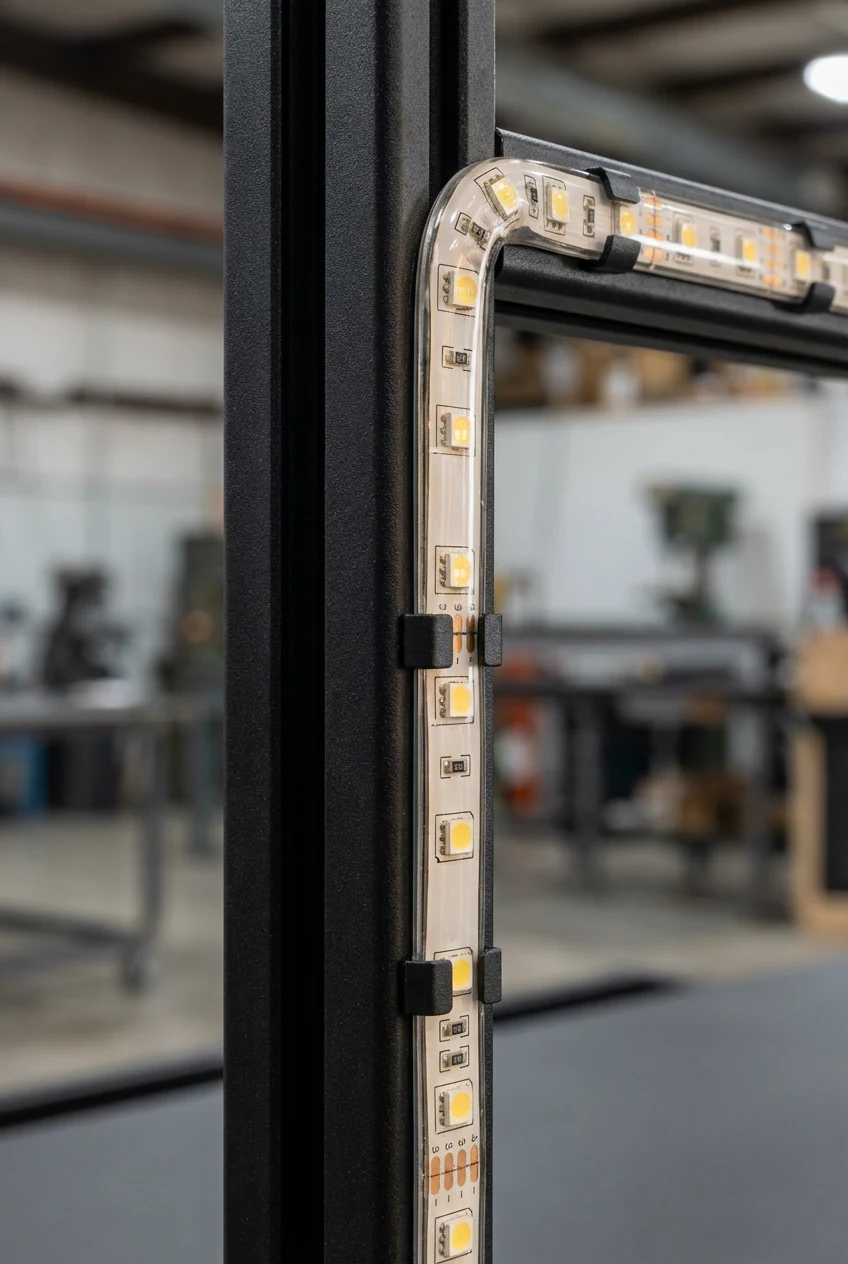
You can add lighting easily. Clip low-voltage LED strips along frames or mount spotlights to highlight textures. Plants glow, metal lines pop, and the fence feels like a feature wall.
Hot tip: Use matching metal tones across brackets, screws, and panels. Small details sell the design as intentional, not accidental. IMO, those tiny choices elevate the whole yard.
Budget-Friendly Tweaks That Look High-End
You don’t need to splurge on every piece. You pick where to spend and where to save.
- Spend on posts and anchors: Strong foundations keep the system straight for years.
- Save on mesh: Choose galvanized or vinyl-coated wire with a clean finish.
- Upgrade the frame: Add slim angle-iron borders for a custom look.
- DIY powder-coat vibe: Use quality metal primer and satin enamel paint. Spray light coats and let them cure fully.
You can also stagger panels with gaps and plant taller shrubs between them. The rhythm feels intentional and saves material costs. You build more character and spend less.
Small-Space Ideas That Deliver Big Style
Narrow yards still win with wire trellises. Thin panels keep pathways clear and make vertical gardens feel lush.
Use a wall-mounted cable system and let vines climb tightly. Add shallow planters, then train stems upward to avoid footprint creep. Use lighter foliage plants so you don’t overwhelm small patios.
A monochrome palette simplifies tight spaces. Black panels plus green vines always look chic. Introduce one accent color through blooms or pots for a curated vibe.
Safety and Code Stuff That Actually Matters
You want the fence to look amazing and stay legal. Check local codes for height limits, neighbor setbacks, and wind load requirements. You avoid drama with clear communication and good documentation.
Use safe edges and cap sharp wire ends. You keep pets, kids, and your own elbows intact. You also ground metal near pool areas if local rules require it.
When in doubt, overbuild connections and undercomplicate the layout. Strong, simple systems handle real life better than fancy-but-fussy builds.
FAQ
What wire spacing works best for most climbing plants?
Aim for 4″ to 6″ openings for versatile training. That spacing gives tendrils and stems plenty of grab points without overwhelming the look. You adjust to 2″ or 3″ for delicate climbers that need closer support.
How do I prevent rust and staining on patios?
Seal cut edges with rust-inhibiting primer and touch-up paint right after you cut. Keep panels off the ground by at least 2″ so water doesn’t pool and leach onto surfaces. If you use corten, redirect runoff away from concrete to avoid orange streaks.
Will metal trellises get too hot for plants?
Metal warms up in direct sun, but plants don’t mind when airflow stays good. You choose lighter finishes or add shade-loving vines on the hottest exposures. You also water consistently and avoid tight ties that press stems against hot surfaces.
Can I mount wire panels to existing wood fences?
Yes, you can. Use standoffs or spacers so plants have room to weave. Screw into studs or rails, not just thin fence boards, and pick corrosion-resistant hardware for long-term strength.
How do I get privacy without building a solid wall?
Use layered planting and staggered panels. Choose dense vines in seating zones and lighter foliage elsewhere. You can also offset double panels slightly so they overlap views without killing airflow.
What tools do I need for a clean install?
You need a level, tape measure, drill/driver, metal-specific bits, angle grinder or hacksaw for cuts, and safety gear. Add clamps for hands-free alignment and painter’s tape for tidy spray lines. That kit covers most builds without fancy extras.
Conclusion
Metal and wire trellis panels keep fences fresh, plants happy, and maintenance sane. You get crisp lines, customizable privacy, and upgrade-friendly hardware. Start simple, measure carefully, and build a system that your yard and your calendar both love.
Go modular, choose climate-smart materials, and guide plants like a pro. The result: a fence that works hard, looks intentional, and whispers “Yes, I’m this polished on a Tuesday.” That’s the modern trellis win, FYI.