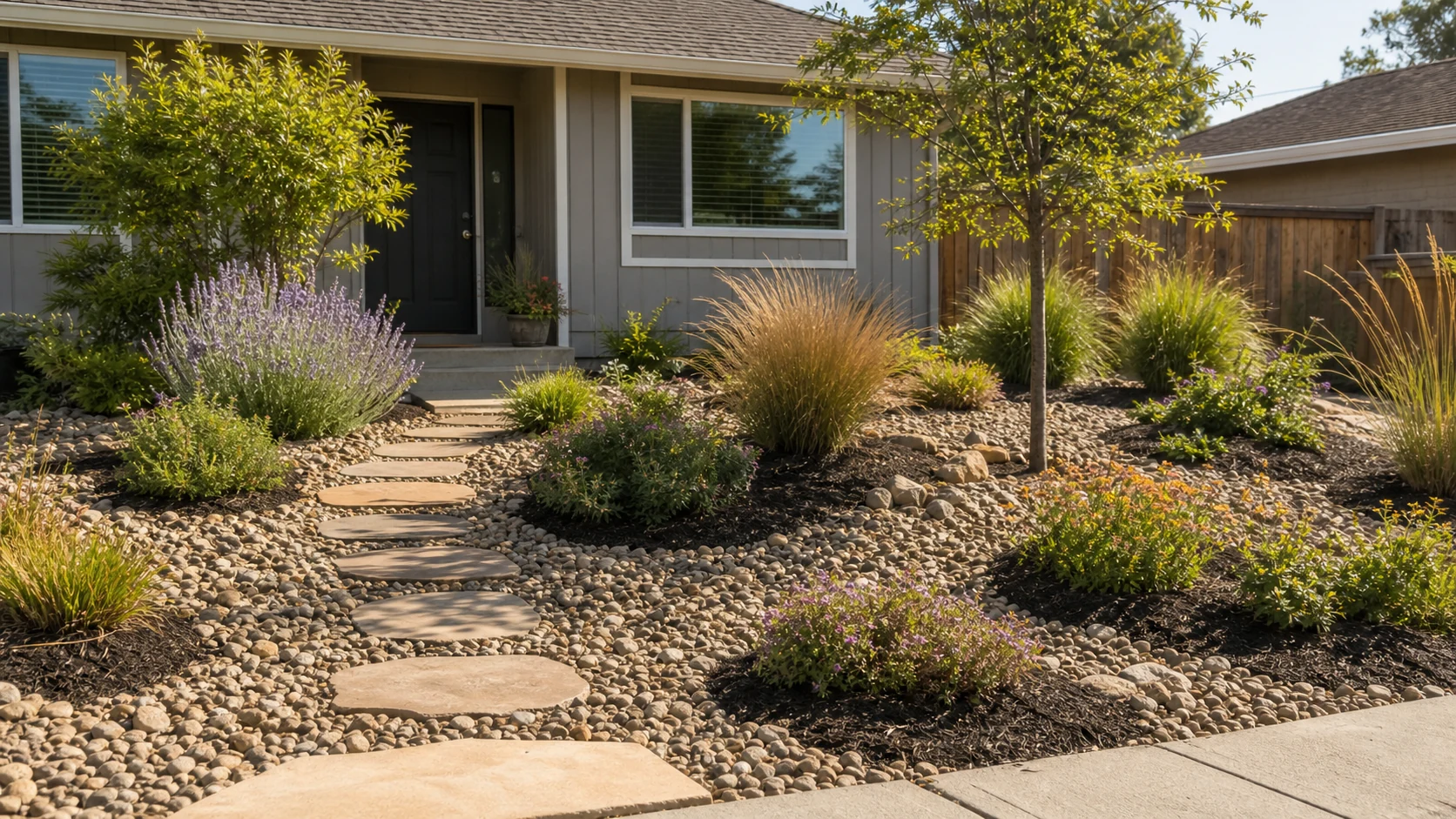
Sick of mowing, watering, and babying a lawn that refuses to look like the golf courses in magazines? Skip the grass entirely and build a front yard that looks great, costs less, and laughs at drought. Rock, mulch, and hardy plants deliver curb appeal without the drama. Ready to turn that thirsty lawn into a low-maintenance star? Let’s make it happen.
Why ditch the lawn (and keep your cash and weekends)
You don’t need a lawn to win at curb appeal. You just need a plan that trades thirsty turf for smart materials and tough plants. The payoff? Less water, fewer chores, and a look that actually fits your climate.
- Save water big time: No lawn means you cut outdoor water use dramatically, especially in hot climates.
- Lower maintenance: No mowing. No edging. No mud. Just simple seasonal touch-ups.
- Better curb appeal: Rock and mulch create texture and contrast, and plants add color without demanding daily attention.
- Budget-friendly: You control costs with DIY installing and smart material choices.
Plan your layout and budget like a pro
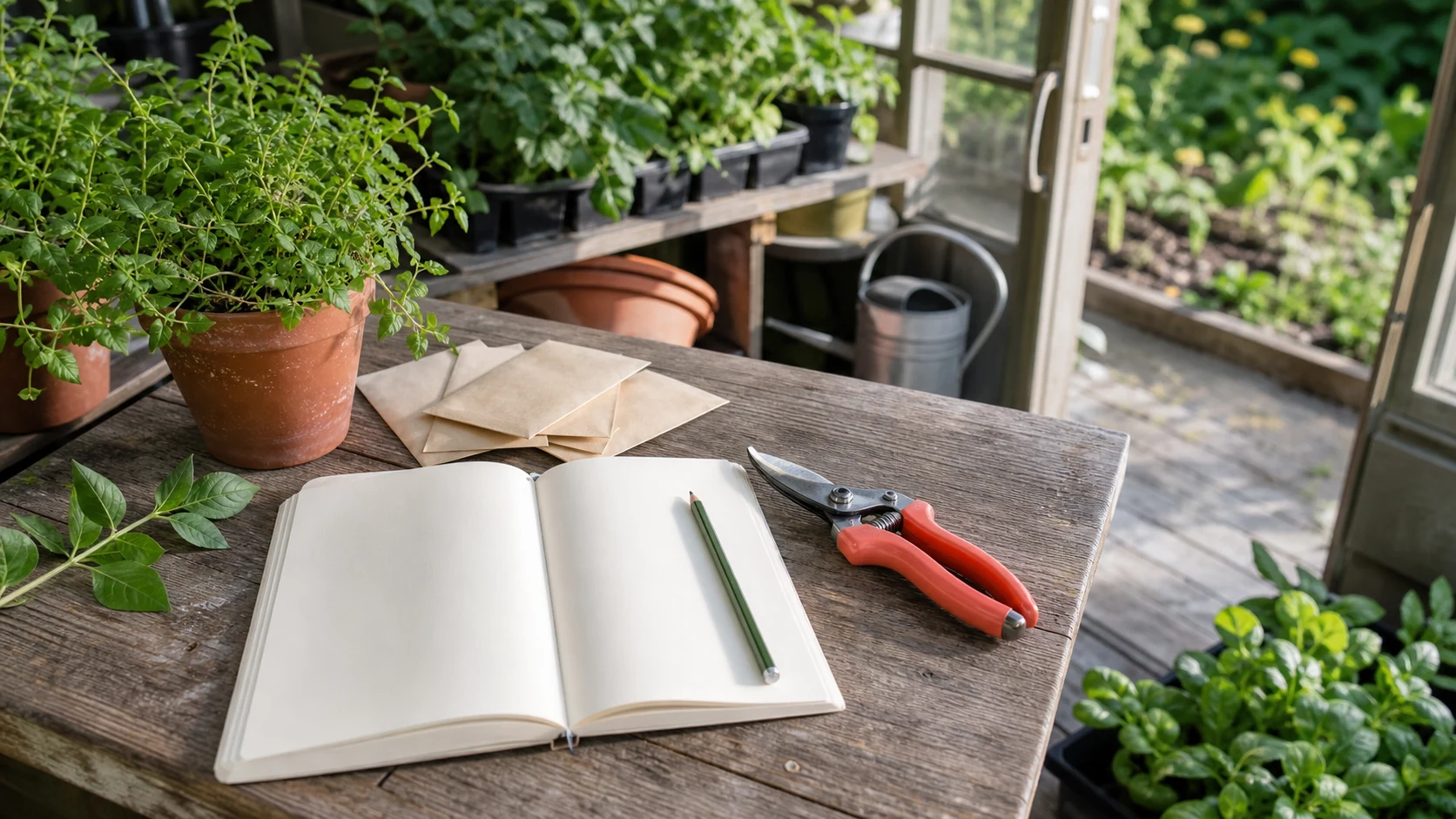
Don’t start with plants. Start with a sketch. You’ll avoid random purchases and piles of extra material. A couple smart measurements save money and headaches.
- Sketch zones: Define paths, a seating nook (even a mini bench counts), planting areas, and a focal point by the front door.
- Measure square footage: Measure each zone so you buy the right amount of rock or mulch.
- Pick a vibe: Modern minimalist, desert-friendly, cottage, or Mediterranean. Your vibe guides material choices.
- Set a real budget: Assign costs per zone, then choose materials that fit. FYI: mulch often beats rock on up-front cost.
How to measure without overthinking it
Keep it simple. Break the yard into rectangles and circles, measure length and width, then multiply. Add 10% extra to your material orders to account for odd edges and settling. You’ll thank yourself later.
Style direction, on a budget
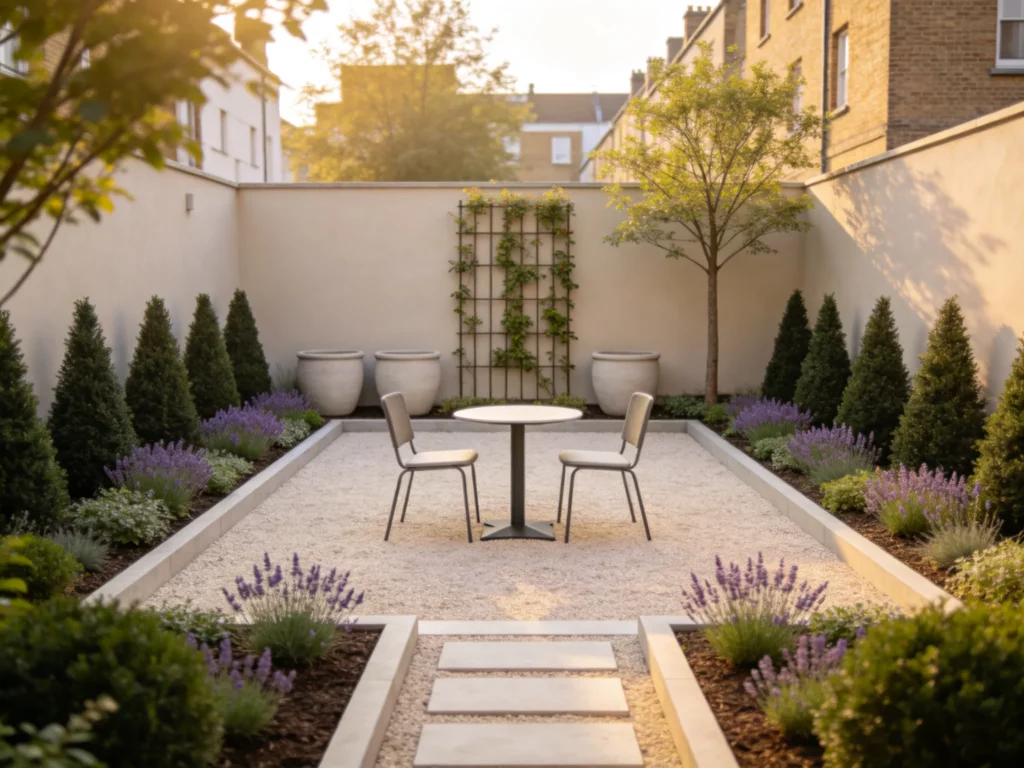
Want modern? Go for decomposed granite, clean lines, and muted plant palettes. Prefer cottage? Use bark mulch, curved paths, and bloom-heavy perennials. Mediterranean? River rock, terracotta pots, and silvery foliage. Commit to one palette so the yard feels intentional, not random.
Rock ideas that look expensive (but aren’t)
Rock comes in flavors, and some play nicer with wallets than others. Think texture first, then color. You’ll build structure and visual interest without watering a thing.
- Decomposed granite (DG): Firm, walkable, warm-toned. Great for paths and patios. Compact it for a tidy look.
- Pea gravel: Soft underfoot, easy to spread, charming in cottage or coastal designs.
- River rock: Smooth, rounded, great for dry creek beds and accent borders.
- Crushed rock/basalt: Angular, modern, and excellent for crisp edges.
Choose the right size, avoid the mess
Smaller gravel (3/8″) moves underfoot more, but looks tidy around plants. Larger rock (1″-3″) stays put and adds drama, but can feel chunky if you overuse it. Mix sizes strategically: larger for borders, smaller for paths and plant pockets.
Install rock like you mean it
Rock looks best when you prep right. You don’t need a contractor—just patience and a shovel.
- Remove or kill existing grass and weeds.
- Rake, level, and lightly slope away from the house for drainage.
- Install edging (steel, bender board, or cobble) to keep rock contained.
- Lay landscape fabric under rock to reduce weeds.
- Spread rock 2″-3″ deep and rake it smooth.
Mulch that pulls its weight (and saves you cash)
Mulch doesn’t just cover dirt. It cools soil, prevents weeds, and feeds plants as it breaks down. Plus, it usually costs less up front than rock.
- Bark mulch (shredded or nuggets): Classic look, easy to spread, great around shrubs and perennials.
- Wood chips: Often cheapest (sometimes free). Natural, chunky, and perfect for large areas.
- Compost/topdressing: Rich, dark, boosts soil health. Use sparingly for a polished look.
- Rubber mulch: Long-lasting and tidy, but not my favorite near plants (IMO).
Which mulch lasts longest?
Bigger chunks last longer. Nuggets and wood chips outlast fine shredded mulch. Spread 3″ deep for best weed suppression and moisture retention. Top up once a year, or every other year if you like a more natural look.
Should you use landscape fabric under mulch?
Under rock? Yes. Under organic mulch? Usually no. Fabric can block soil life and trap roots. Use a thick layer of mulch over cardboard instead. It smothers weeds and decomposes into the soil over time.
Drought-friendly plants you won’t babysit
Plants bring life and color, even in a no-grass yard. Choose tough species that handle heat, low water, and poor soil like champs. Native plants win big here, and they pair beautifully with rock and mulch.
- Succulents: Agave, aloe, sedum, hens-and-chicks, ice plant. Sculptural, colorful, and super low-maintenance.
- Mediterranean herbs: Lavender, rosemary, thyme, sage. Fragrant, drought-tough, and pollinator-friendly.
- Flowering perennials: Yarrow, salvia, gaillardia, coneflower. Long bloom times with minimal water once established.
- Shrubs: Manzanita, rockrose, sagebrush, dwarf barberry. Anchor your design and add structure.
- Clumping grasses: Blue fescue, feather reed grass, muhly. Movement and texture without the thirsty lawn.
Easy plant combos that always work
Try lavender + rosemary + river rock for Mediterranean vibes. Pair agave + red yucca + crushed basalt for modern desert drama. Mix coneflower + yarrow + bark mulch for cottage charm. Repeat plants in groups of three for a designer look without trying too hard.
Spacing and watering, simplified
Space plants based on mature size, not baby size. Leave room to breathe so you avoid crowding and extra pruning. Water deeply once a week the first season, then taper. After that, most drought-friendly plants handle occasional deep soaks like pros.
Design moves for instant curb appeal
You create style with lines, contrast, and focal points. You don’t need a massive budget—you just need a few strong moves that guide the eye.
- Define a path: Use DG or pea gravel with steel edging to create a clean walkway to your door.
- Add a dry creek bed: River rock in a gentle curve looks natural and improves drainage.
- Build a focal point: A large pot, sculptural plant, or boulder near the entry says “look here.”
- Layer heights: Low groundcovers, medium perennials, taller shrubs. Stagger plants for depth.
- Pop some color: Warm mulch + cool green plants = contrast. Or flip it for a modern look.
- Light it up: Solar path lights and a spotlight on your focal plant add nighttime drama for cheap.
Smart budget moves: get the look for less
You don’t need the priciest rock to get a clean design. You just need smart sourcing and a couple hacks. Your wallet and your front yard can both win.
- Source locally: Rock and mulch cost less when you buy local, and color matches your region better.
- Ask for “contractor’s mix”: Some yards sell blends at a discount. It still looks great once spread.
- Get free mulch: Tree trimming crews often deliver chips free. Perfect for large areas and paths.
- Use cardboard sheet mulch: Lay cardboard under mulch to block weeds cheaply and effectively.
- Share rentals: Split the cost of a plate compactor or trailer with a neighbor. Everyone saves.
- Buy in bulk: Skip the bagged stuff. A single delivery usually beats the big-box price by a mile.
Where to save vs. where to splurge
Save on wide coverage areas (mulch, gravel). Splurge a little on edging and a standout focal plant. Edging keeps everything crisp, and one bold plant near the entry makes the whole yard feel “designed.” IMO, that’s money well spent.
FAQ: No-grass front yards, answered
Is mulch cheaper than rock?
Usually yes. Mulch often costs less per square foot up front, and you install it easily without heavy equipment. You top it up over time, but the yearly cost stays manageable and your plants love the improved soil.
Will rock make my yard hotter?
Rock absorbs heat more than mulch, especially darker stones. Balance it with plants, shade, and lighter colors where possible. Keep rock away from south-facing walls if you worry about heat buildup.
Do I need landscape fabric?
Under rock, fabric helps a lot by blocking weeds and stabilizing the surface. Under organic mulch, skip it and use cardboard instead so soil life thrives. This combo reduces weeds and supports healthy roots long-term.
Can I keep a small patch of grass?
You can, but consider a tough groundcover or a tiny no-mow area instead. A small lawn still drinks water and needs care. If you crave green, use clumping grasses, thyme, or sedum for a lawn-like vibe without the maintenance.
How do I stop weeds for good?
You won’t stop every weed forever, but you can make them rare. Prep the soil, use edging, lay fabric under rock or cardboard under mulch, and keep a 3″ depth. Spot-pull early and often, and you’ll stay ahead.
Will this raise my home’s curb appeal?
Absolutely. Clean lines, strong textures, and bold plants look intentional and modern. Add lighting and a focal point near the entry, and you’ll turn heads—without mowing anything.
Conclusion: Skip the grass, keep the wow
You don’t need a lawn to own curb appeal. Rock and mulch set the stage, and drought-friendly plants bring the personality. Plan smart, buy local, and edit your choices so everything feels cohesive. Your front yard will look polished, sip water, and free your weekends—win, win, and win. FYI: once you ditch the mower, you won’t miss it.