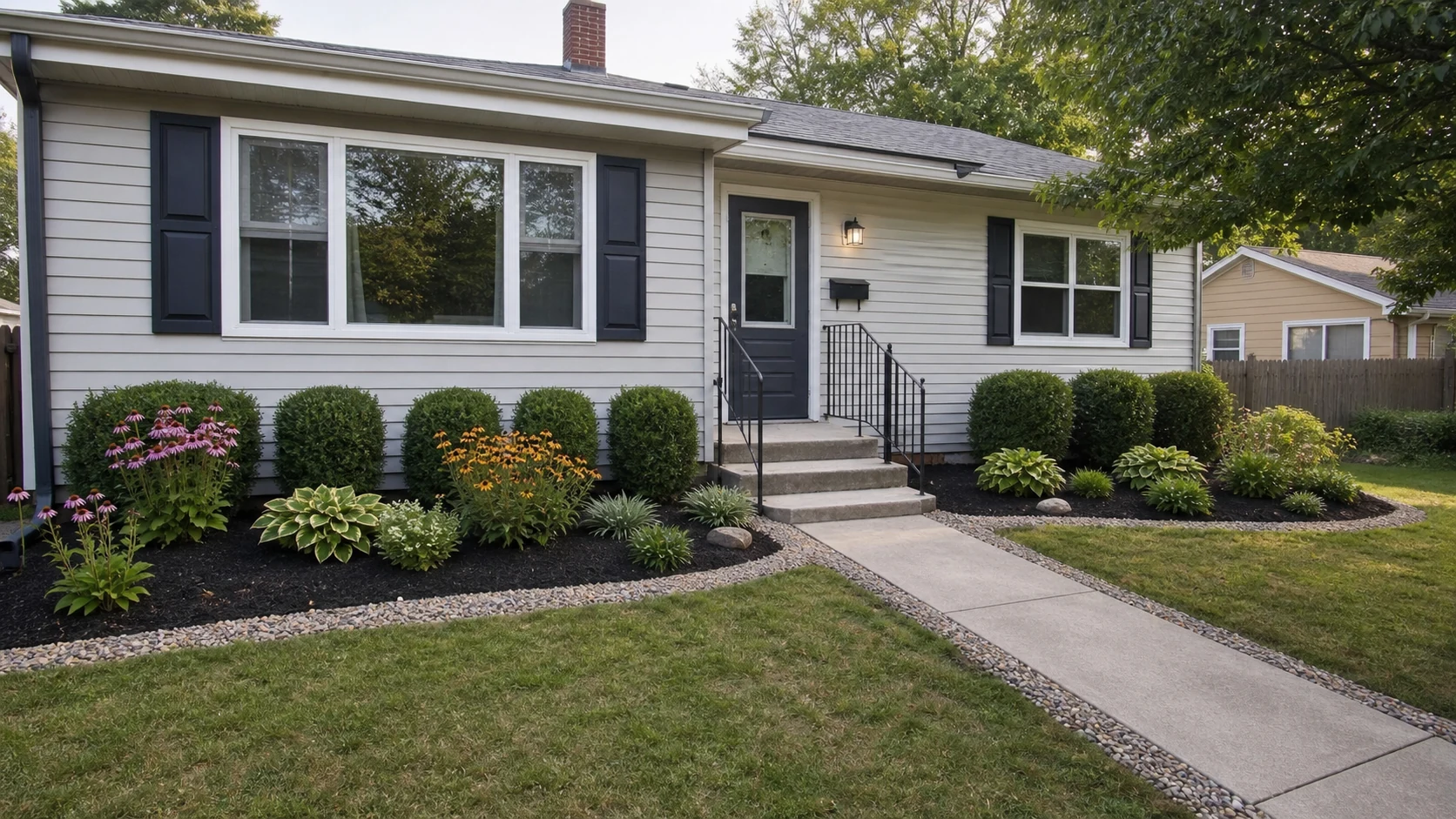
You want a front yard that looks great, costs less, and doesn’t demand weekend-after-weekend of maintenance? Same. You don’t need a crew, a designer, or a second mortgage. You just need a plan that favors low-maintenance plants, simple hardscaping, and smart watering. Ready for 17 ideas you can actually do without hating your Saturdays?
Start with a game plan (so you don’t waste money)
You don’t need blueprints. You just need a few decisions that steer your budget toward the stuff that matters. Aim for improvements that give curb appeal, cut maintenance, and survive your climate.
Focus on three things: shrink the lawn, add drought-tolerant plants, and simplify edges so you never fuss with a weed whacker dance again. IMO, you win when your yard still looks tidy after you ignore it for two weeks.
Pick your battles
Decide where you want “showy” and where you want “set-and-forget.” Highlight the mailbox, the path to the door, and the bed under the windows. Keep the rest simple, green, and low-water.
Know your sun and soil
Check where the sun hits longest and note soggy spots. Match plant choices to those conditions. Plants thrive when you stop forcing them into a bad location (FYI, plants hold grudges).
Ditch the fussy lawn and cover ground the smart way
Short lawns look classic, but they drink money and time. Shrink yours or swap it for low-care groundcover and mulch. Your water bill and your mower will thank you.
- Blanket beds with mulch – Mulch blocks weeds, holds moisture, and makes everything look finished. Buy bulk shredded bark or wood chips for cheaper coverage. Refresh a thin layer each spring and stroll away like a landscaping ninja.
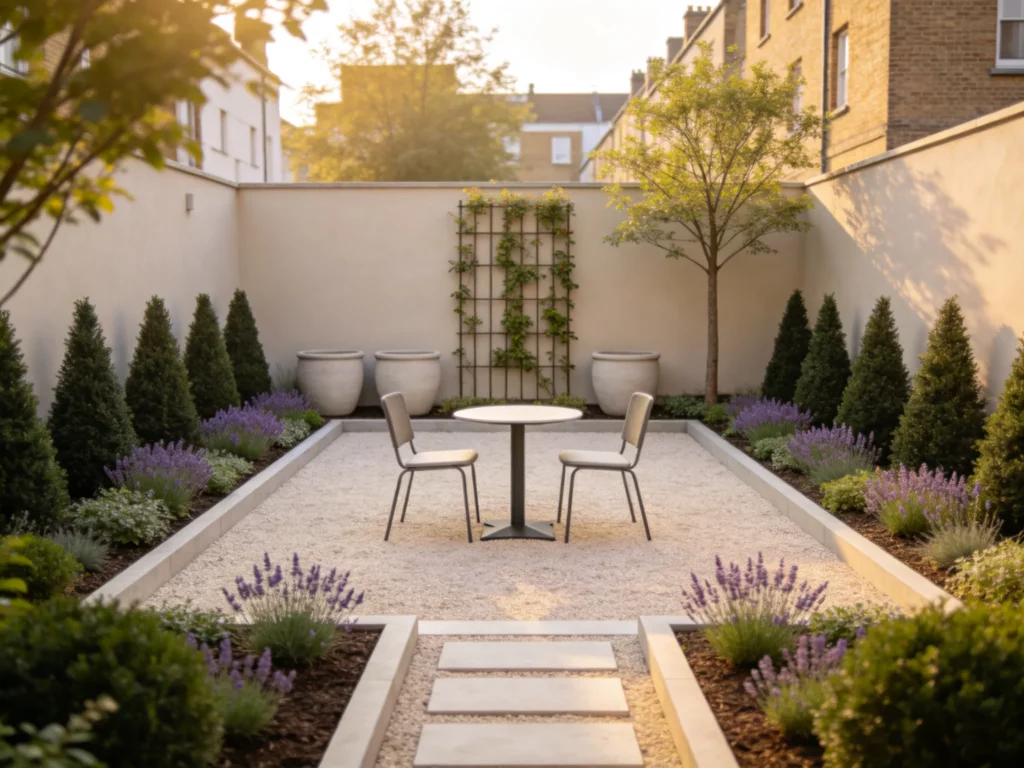
- Use gravel or decomposed granite – Replace small lawn patches with DG or pea gravel. Add a couple potted plants and you get a modern look without mowing. Install landscape fabric first to stop weeds and keep it low-maintenance.
- Plant drought-tolerant groundcovers – Creeping thyme, woolly yarrow, and sedum handle heat, spread neatly, and shrug off foot traffic. Mix two varieties for texture and skip the weekly trim routine.
How much mulch do you need?
Measure your beds in square feet and aim for 2–3 inches of depth. One cubic yard covers roughly 100 square feet at 3 inches. Order a little extra if your beds feel uneven; better to have a small pile left than stare at a bald spot.
Pick plants that basically care for themselves
Low-maintenance plants earn their keep. You get structure, color, and seasonal interest without fiddly pruning or plant drama. Choose compact, tough varieties and you’ll dodge most headaches.
- Anchor with evergreen shrubs – Dwarf boxwood, inkberry holly, and yaupon holly hold shape year-round. Plant in groups of three for instant polish. Trim once a year, tops.
- Lean on ornamental grasses – Switchgrass, little bluestem, and feather reed grass add movement and winter interest. Cut them back once in late winter and forget them the rest of the year.
- Use native perennials – Coneflower, black-eyed Susan, and coreopsis feed pollinators and handle local weather like champs. They bloom hard with minimal watering. Deadhead if you want extra flowers, or don’t—your call.
- Choose unfussy flowering shrubs – Spirea, potentilla, and dwarf abelia throw out color with almost no maintenance. They don’t demand perfect soil and they bounce back after heat waves.
- Go for foliage-first plants – Heuchera, hosta (for shade), and lamb’s ear bring texture and color even when blooms take a break. Foliage plants make your yard look intentional every single day.
Low-maintenance legends
If you want “plant it and peace out,” look at viburnum, ninebark, and dwarf conifers. They handle wind, drought, and the occasional kid soccer ball. Space them properly so they don’t crowd each other, and they’ll behave for years.
Add height and structure (without creating work)
A small tree or vertical element makes your front yard feel finished. Go compact and well-behaved so you never fight roots or rogue branches.
- Plant one small ornamental tree – Serviceberry, redbud, or crape myrtle (in warmer zones) deliver spring bloom and fall color with minimal pruning. Place it where it frames your entry, not where it blocks your windows.
- Use columnar trees in tight spaces – ‘Sky Pencil’ holly or columnar hornbeam give you vertical interest without giant canopies. They make narrow lots look tailored and neat.
Want flowers without a diva attitude?
Skip high-maintenance roses. Try shrub roses like ‘Knock Out’ or ‘Drift’ varieties if you need romance on easy mode. They bloom for months and don’t demand expert pruning.
Paths, borders, and little upgrades that punch above their weight
Hardscaping sets the tone and keeps weeds in line. You can DIY most of it with weekend effort and a reasonable budget. Clean edges and straightforward paths make even simple plantings look high-end.
- Lay a stepping-stone path – Use large pavers or flat flagstone, set in sand or DG. Keep spacing natural and add groundcover between stones for that “I meant to do that” vibe.
- Install simple edging – Steel, aluminum, or heavy-duty plastic edging creates crisp lines between lawn and beds. You stop the grass creep and lose the awkward trim sessions.
- Border beds with rocks or bricks – Collect local stone or reuse old bricks for a rustic look. Dry-stack them if you want flexibility; set them in sand if you prefer permanence.
- Create a micro seating nook – Add a small bench by the front walk or a bistro set near the porch. One piece of furniture signals “welcome,” and suddenly your yard feels intentional.
- Use solar lights for instant drama – Line the path and pop a couple near the mailbox. You get safety, nighttime curb appeal, and zero wiring headaches.
Cheap materials cheat sheet
Check salvage yards for bricks and flagstone remnants. Ask local tree services for free wood chips. Shop big-box stores for end-of-season deals on edging and solar lights. Low price doesn’t always mean low quality—just be picky.
Smarter watering and soil hacks (the no-hassle way)
Watering steals time and money if you wing it. A couple simple tools and habits can slash maintenance while keeping your plants happy. No complex systems needed.
- Run soaker hoses on a timer – Snake them through beds and set a basic battery timer. Water early morning for 20–30 minutes, two to three times a week, and adjust when the weather cools.
- Collect rainwater – Install a rain barrel under a downspout. Use it for containers and new plantings. Free water feels nice, and you’ll reduce runoff.
- Topdress with compost once a year – Spread a thin layer over beds each spring. You improve soil structure and reduce the need for fertilizer. Plants grow stronger roots and basically mind their own business.
- Replace some lawn with microclover or low-mow fescue – Microclover stays green with less watering and needs fewer nutrients. Fine fescue grows slowly and looks neat without constant mowing.
Timer settings that save sanity
Start with 20 minutes, three times a week in summer for new plants. Drop to twice a week as they establish. When rain hits, turn the timer off and feel smug about your water-smart life.
Design tips that make your yard look expensive (for cheap)
Design isn’t about fancy plans. It’s about repetition, contrast, and balance. You can nail that with plants and materials you already want.
- Repeat plants – Use three of the same shrub or five of the same perennial. Repetition looks intentional and calms visual clutter.
- Mix textures – Pair fine grasses with broad-leaf shrubs. Combine smooth pavers with chunky stone. Texture beats color for low effort impact.
- Use a simple color palette – Pick two colors (say, chartreuse foliage and purple blooms) and stick with them. Your yard will look curated, not chaotic.
- Frame the entry – Place taller plants at the corners of your house and shorter ones near the path. You’ll guide the eye straight to the front door.
Seasonal cheats
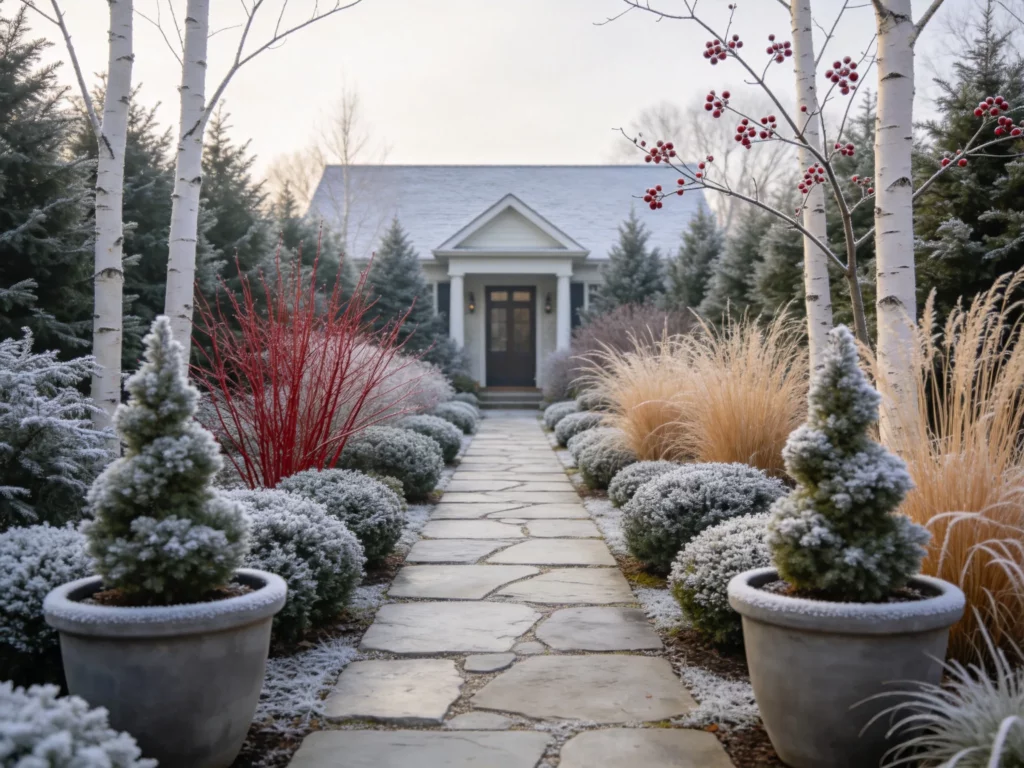
Choose shrubs with multi-season interest: spring flowers, summer foliage, fall color, winter form. Add one evergreen per bed so winter doesn’t look bleak. Hang a seasonal wreath and boom—curb appeal without touching a trowel.
FAQs
What’s the cheapest way to reduce my front lawn?
Lay cardboard over the grass, add 3 inches of mulch, and plant into pockets you cut through the cardboard. The grass dies underneath, and you skip digging it out. After a season, the cardboard breaks down and the bed feels established.
Which plants survive neglect and still look good?
Go for tough shrubs like spirea, abelia, and dwarf conifers, plus perennials like coreopsis, salvia, and coneflower. Ornamental grasses like switchgrass and feather reed grass handle heat and wind with no drama. Choose natives for your region and you’ll win even harder, FYI.
How do I stop weeds without chemical overkill?
Use mulch, landscape fabric under gravel areas, and dense planting to shade the soil. Pull weeds early when they’re tiny and before they set seed. You’ll spend minutes, not hours, if you handle them consistently.
Can I have color without constant deadheading?
Yes. Pick shrubs and perennials that bloom for weeks: spirea, shrub roses like ‘Knock Out,’ catmint, and black-eyed Susan. They keep color rolling with minimal intervention, IMO. Deadhead if you want bonus blooms, but you don’t need to.
What small tree works in a narrow front yard?
Serviceberry and redbud stay compact and offer gorgeous spring flowers. Columnar varieties like ‘Sky Pencil’ holly or narrow hornbeam give height without width. Place them off-center to frame the house and avoid window blockage.
How much should I water a low-maintenance yard?
Deeply and infrequently. Run soaker hoses 2–3 times a week in summer for new plants, then cut back as they establish. Check soil moisture with your finger; if it feels cool and damp an inch down, you’re good.
Conclusion
You don’t need a sprawling budget or a gardener’s diploma to nail front yard curb appeal. Shrink the lawn, choose tough plants, simplify your edges, and water smarter. Stack those wins and your yard will look tidy, welcoming, and way more expensive than it is. And yes—your Saturdays can stay fun.