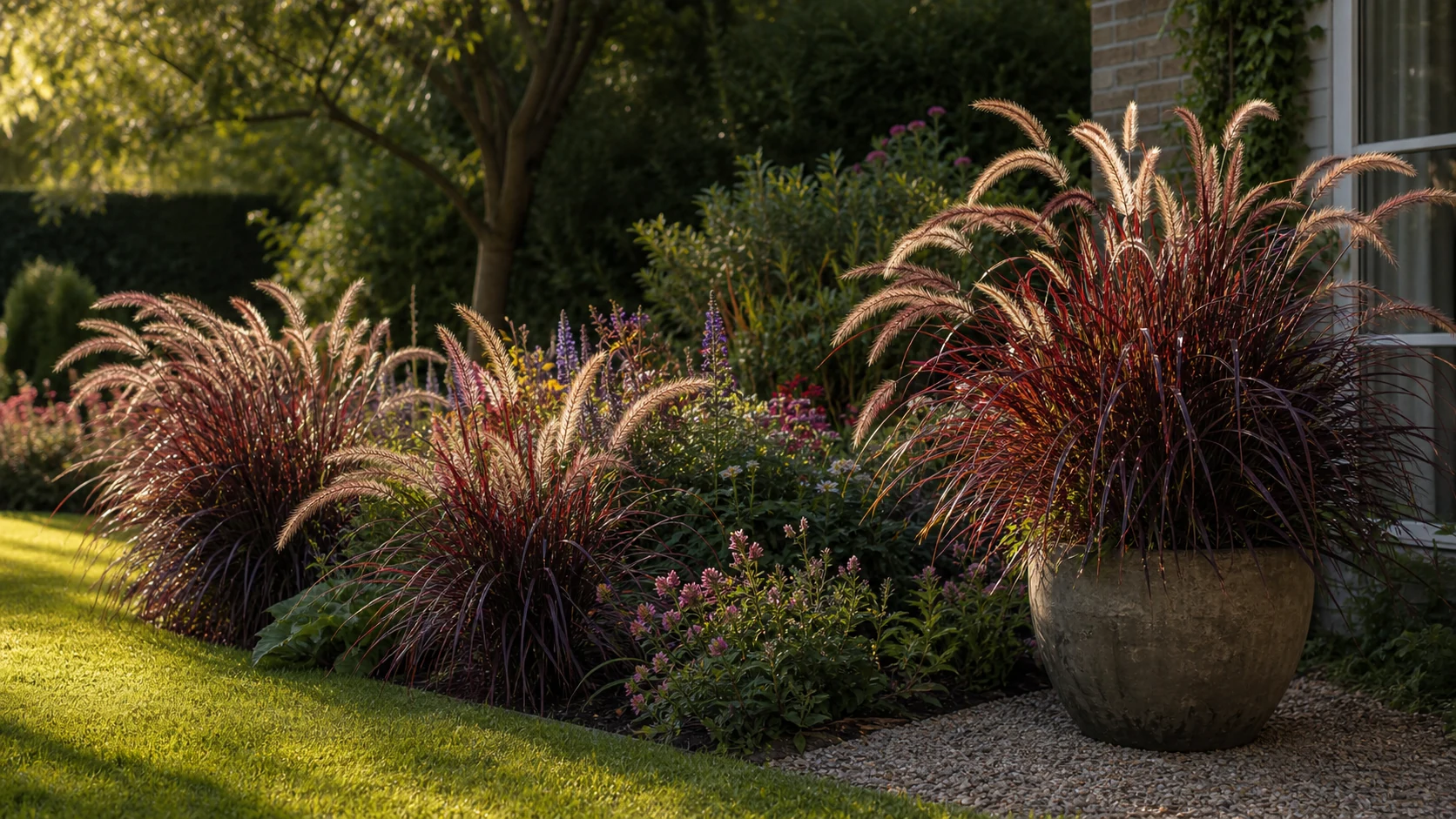
Purple fountain grass brings instant drama. Those arching burgundy blades and fuzzy plumes move like slow-motion fireworks every time a breeze shows up. You want bold color without fussy upkeep? Grab this grass and go big in beds, borders, and pots. It turns “meh” corners into magazine spreads faster than you can say “mulch.”
Why Purple Fountain Grass Steals the Show
Purple fountain grass (Pennisetum setaceum ‘Rubrum’ and friends) delivers color, texture, and movement in one plant. The foliage stays a deep wine hue, and the plumes add airy height that catches light like glitter. You get a sculptural anchor that plays nicely with almost any plant palette.
Rubrum leads the pack because it looks good from spring to frost with minimal drama. It loves heat, hates soggy feet, and shows best in full sun. Want a plant that does heavy lifting while still pulling focus? This grass steps up.
Meet the Star Cultivars
– ‘Rubrum’: The classic. Deep burgundy foliage, rose-tan plumes, about 3–4 feet tall. Best color in full sun.
– ‘Fireworks’: Variegated pink, burgundy, and cream stripes; slightly shorter; big personality. Use it when you want a louder look.
– ‘Burgundy Bunny’: Compact cutie; stays around 12–18 inches. Great for edging and small containers.
FYI: Many purple forms don’t set much viable seed, which keeps them tidy. The plain green fountain grass can run wild in warm climates, so stick with named purple varieties for gardens and urban settings.
Design Ideas for Beds and Borders
You can drop purple fountain grass into almost any bed and watch it do magic. It thrives as a back-of-border anchor, a mid-border texture break, or a mass-planting showstopper. Use it to frame paths, soften edges, or add vertical punctuation between perennials.
Try these placement moves:
- Drifts of three to five along a border for rhythm and flow.
- One bold clump near a mailbox, entry, or seating area for instant curb appeal.
- A repeating pattern every 6–8 feet in long beds to unify mixed plantings.
- Matrix planting with perennials: weave grasses through flowers to calm color chaos.
Want contrast? Pair those wine-red blades with silvery foliage. Dusty miller, artemisia, and lamb’s ear nail that cool contrast. For bright pops, add chartreuse companions like coleus or sweet potato vine and enjoy the neon glow.
Color Combos That Pop
– Hot brights: coneflower (magenta), gaillardia (red-orange), verbena (purple) — you get a sizzling sunset palette.
– Cool calm: Russian sage, lavender, and salvia — the blue tones make the burgundy read even richer.
– Moody modern: black mondo grass, heuchera (‘Obsidian’ or ‘Black Pearl’), and sedge — sleek, dramatic, very “designer.”
Spacing: Set plants 24–36 inches apart. Give air and light to keep foliage dense and plumes plentiful.
Pots and Planters: Make It Your Thriller
Purple fountain grass absolutely owns containers. Treat it as the “thriller” in the classic thriller-filler-spiller formula. Use a pot that doesn’t tip easily, because those plumes can catch wind and shift weight.
Go with at least a 16–20 inch diameter pot for full-size varieties. Terracotta, glazed ceramic, or tall fiberglass planters look extra sharp with burgundy foliage. Keep the pot shape simple and let the grass steal the spotlight.
Container Companions
– Fillers: coleus (lime or pink), heuchera (caramel or ruby), dwarf begonias, calibrachoa
– Spillers: trailing sweet potato vine (chartreuse or deep purple), creeping jenny, dichondra ‘Silver Falls’
– Accents: upright salvia, angelonia, or dwarf dahlias for longer bloom color
Use high-contrast combos if you want a showy patio moment. Want subtle elegance? Match it with silver foliage and white flowers for a clean, modern vibe.
Potting Mix and Care
Use a well-drained mix:
- 2 parts high-quality potting soil
- 1 part perlite or coarse pumice
- 1 part compost (light, not heavy)
Water deeply, then let the top inch dry before watering again. Don’t drown it. Fountain grass hates soggy roots, especially in containers.
Feed lightly with slow-release fertilizer in spring. If foliage fades midseason, water a touch more and add a half-strength liquid feed. Rotate pots every couple weeks for even sun exposure and shape.
Seasonal Drama: Spring to Frost
Spring brings fresh blades with a greenish tint that quickly deepen to wine as temps climb. By early summer, plumes start to rise and arch. Those plumes glow at golden hour, and yes, your camera will love them.
Fall delivers peak color and texture. Foliage intensifies, and plumes dry into blush-beige tassels that look spectacular against pumpkins, asters, and mums. You can leave them up through early winter for structure and frost sparkle.
Winter plan: in warm climates, trim back to 4–6 inches in late winter. In cold climates, treat it like an annual or overwinter (details below). Either way, the show runs long.
Fall Fireworks
Try these autumn pairings:
- Rudbeckia ‘Goldsturm’ + purple fountain grass = classic harvest glow.
- Ornamental peppers + mums + grass = porch display that stops pedestrians.
- Asters and sedums nearby keep pollinators happy while the plumes provide texture.
Pro tip: Leave plumes on until late winter for maximum seasonal interest. Cut them when they start shedding heavily.
Care Cheat Sheet
Keep it simple and the grass rewards you.
- Sun: Full sun for best color and plumes. Give at least 6–8 hours daily.
- Soil: Well-drained, average fertility. Avoid heavy clay or standing water.
- Water: Moderate. Deep soak, then let the top inch dry. Containers need more frequent water in heat.
- Feeding: Light. Use a slow-release balanced fertilizer in spring; skip heavy nitrogen.
- Height/Spread: 3–4 feet tall, 2–3 feet wide (varies by cultivar).
- Hardiness: Treat as a tender perennial. Zones 9–11 usually overwinter outdoors; zones 7–8 can survive with protection; colder zones treat as annual or overwinter indoors.
- Pruning: Cut back to 4–6 inches in late winter/early spring.
Overwintering Options
Garden in a cold zone? You have a few choices:
- Lift and pot before hard frost. Keep in a bright indoor spot at 50–60°F. Water sparingly.
- Keep container plants in a garage or sunroom. Give minimal water and good airflow.
- Mulch in-ground plants with 2–3 inches where winters stay mild (zones 8–9). Protect crowns from constant wet.
Bottom line: If your winters hit hard, treat purple fountain grass like a high-impact annual. The season-long payoff justifies the replant, IMO.
Common Mistakes
– Overwatering: soggy soil leads to root decline. Err on the dry side once established.
– Too much shade: color fades and plumes sulk. Move it to sun and watch it bounce back.
– Heavy, compacted soil: drainage matters. Amend or plant in raised beds.
– Crowding: tight spacing reduces airflow and plume production. Give room to breathe.
Sustainable and Safety Notes
Use named purple cultivars to avoid volunteer seedlings in warm zones. The green species can spread aggressively; purple forms tend to behave better. Always check local guidelines if you garden in sensitive coastal or desert areas.
Wildlife loves the structure. Birds perch and sometimes nab seeds from dried plumes. You can cut plumes for indoor arrangements and keep their airy texture for months. Compost the stems when they look tired.
Pet households ask about toxicity a lot. Purple fountain grass doesn’t rank as highly toxic for cats or dogs, but discourage chewing. Those plumes shed fine hairs that can tickle throats in playful pups.
Wildlife and Cut-Flower Use
– Birds: enjoy shelter and occasional seeds in late season.
– Pollinators: don’t rely on it for nectar, so layer in asters, salvias, and coneflowers nearby.
– Design: cut plumes when they feel firm and fluffy; dry them upright in a cool room for long-lasting arrangements.
FAQ
Is purple fountain grass annual or perennial?
Purple fountain grass acts like a tender perennial. In zones 9–11, it overwinters outdoors with minimal fuss. In colder zones, treat it as an annual or overwinter indoors where temps stay above freezing and light stays bright.
How tall and wide does it get?
Most purple forms reach 3–4 feet tall and 2–3 feet wide. Dwarf cultivars stay under 2 feet tall, which suits tight borders and small pots. Give space so the plumes arch gracefully instead of fighting neighbors.
Will it grow in partial shade?
It tolerates light shade, but the color and plumes dial down. Place it in full sun for maximum burgundy foliage and steady bloom. If shade creeps in, thin nearby plants or move your containers to chase the light.
Can I overwinter it indoors?
Yes. Pot it up before frost and park it in a bright, cool room (around 50–60°F). Water sparingly, just enough to keep the root ball from turning to dust. In spring, prune, acclimate it to outdoor light, and ramp up water and feeding.
Does it reseed or become invasive?
Purple cultivars usually produce few viable seeds, which keeps gardens tidy. The green species can spread in warm climates, so stick with named purple forms and check local rules. Deadhead if you want zero volunteers.
What pairs best in containers?
Go high-contrast if you love bold color: chartreuse sweet potato vine and magenta calibrachoa make the grass shine. For a calmer combo, add silver dichondra, white angelonia, and caramel heuchera. Keep filler plants low and spillers generous so the grass stays the star.
Conclusion
Purple fountain grass turns spaces from fine to fantastic with rich color, movement, and texture. Plant it in drifts for drama, pop it in pots for instant flair, and pair it with silvers or brights to match your mood. Give it sun, decent drainage, and light feeding, and it pays you back all season. FYI: if your climate freezes hard, treat it as an annual and enjoy the ride—big style points, low fuss, and zero regrets.