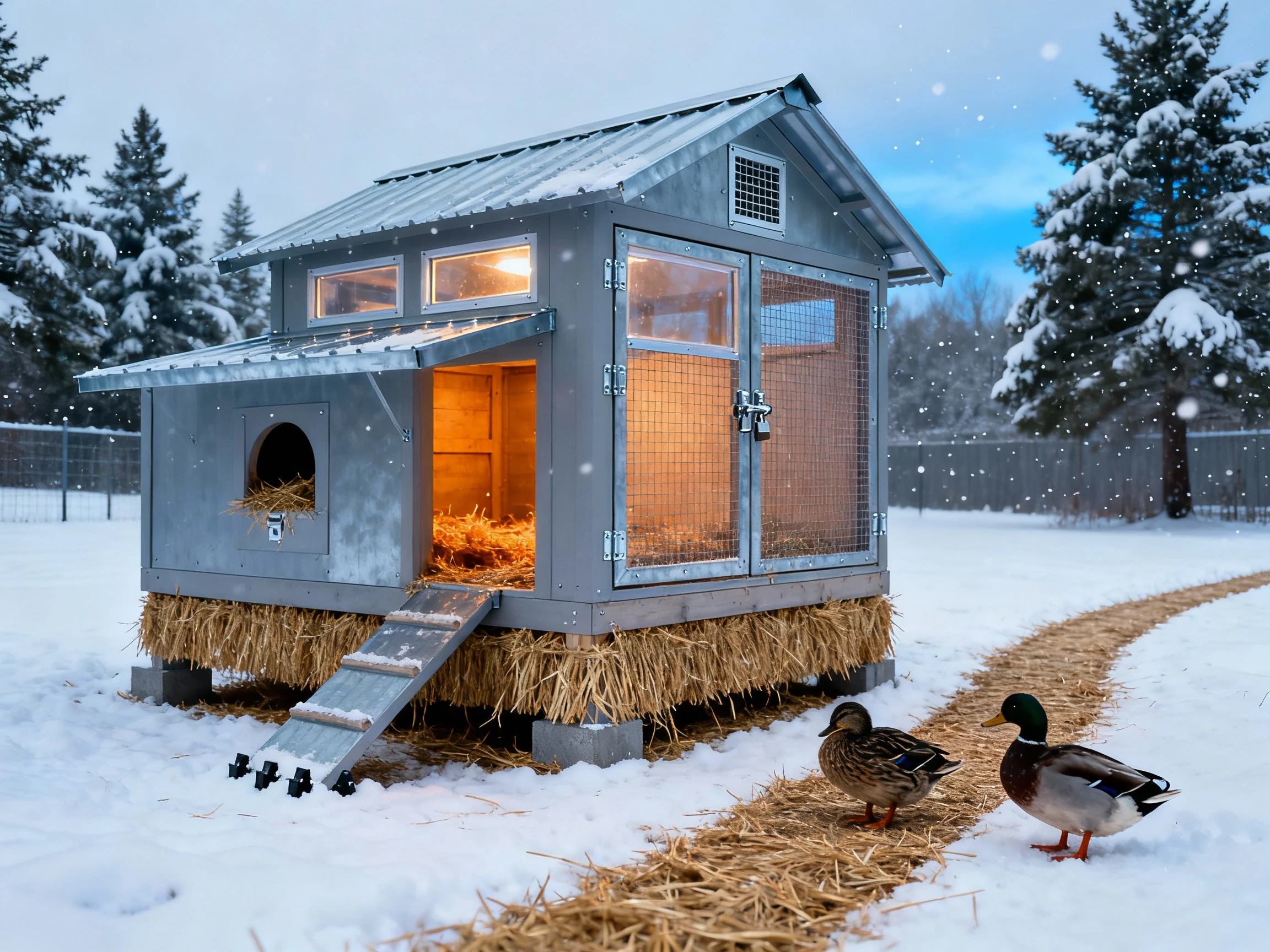
Winter doesn’t care about your cute backyard dreams. It howls, it bites, and it dares your ducks to step outside without proper shelter. The good news? Ducks handle cold way better than heat—if you give them the right house. Let’s build a winter-ready duck palace that shrugs at blizzards and laughs at icy puddles.
Winter Reality Check for Ducks

Ducks don’t need a sauna. They need dry, draft-free, well-ventilated housing and smart water management. That’s it. Do those three things and you’ll win winter.
What actually hurts ducks in cold climates? Wind chill, wet bedding, and trapped humidity. Wet feet and damp feathers invite frostbite. Stale, moist air invites respiratory issues. A small breeze across their backs at night can undo your best efforts.
So your mission looks simple: block wind near floor level, move humid air out near the roof, and keep bedding dry. Sounds boring, but this is the magic.
The Winter-Ready Duck House Blueprint
Forget Pinterest-pretty. You want tough, simple, and easy to clean. Here’s the core blueprint:
- Size: 4–6 square feet of floor space per duck inside. Ducks don’t roost, so they spread out.
- Height: At least 5 feet interior or a big hinged roof/panels so you can rake and scrub without swearing.
- Floor: Raised off the ground 6–12 inches to avoid moisture wicking and to discourage rodents.
- Door: A lockable pop-hole about 12–14 inches wide and 14–16 inches tall. Add a ramp with cleats for icy days.
- Roof: Pitched and strong. Metal or shingle with an overhang to keep snow and rain off the walls.
- Windows: Plexiglass or polycarbonate panels for winter sun, protected with hardware cloth.
- Ventilation: Permanent vents high under the eaves with adjustable baffles. No drafts at duck level.
Right Size and Floor Plan
Give ducks room to spread out and lie down. Tight quarters crank up humidity and turn bedding into a swamp. A rectangular footprint with a clear “dry sleeping zone” and a separate “mess zone” near the door keeps chaos contained.
Doors and Pop Holes
Mount the pop door on the leeward side of prevailing winds. Add a small covered porch so snow doesn’t drift inside. Install a two-step latch (carabiner or padlock) because raccoons read manuals, apparently.

Windows and Light
Ducks don’t need big windows, but a couple of small ones help dry the air and boost morale on gray days. Use clear panels that won’t shatter in extreme cold and cover them with 1/2-inch hardware cloth for security.

Warmth Without Damp: Insulation and Ventilation
You want to hold gentle warmth while humidity escapes. Sounds contradictory, but it’s doable.
Insulation That Ducks Won’t Eat
Use materials that resist moisture and rodents. Good choices:
- Foam board (XPS/Polyiso) behind plywood—sealed so beaks can’t reach it.
- Mineral wool in stud bays, again covered with interior sheathing.
- Straw-bale skirt stacked outside along the base for seasonal insulation and wind-blocking.
Insulate walls and roof if you can—floor if you’re extra. Keep the interior surface smooth and sealed so you can scrape frozen mess without tears.
Ventilation Without Drafts
Vent high, always. Warm, moist air rises, so you let it out at the ridge or eaves.
- Rule of thumb: Provide roughly 1 square foot of adjustable vent area per 10 square feet of floor space.
- Place vents above head height on the long walls or along the ridge.
- Add baffles (simple wood flaps) so you can reduce airflow on brutal nights without sealing the house.
FYI: Never seal a duck house airtight. Trapped humidity beats cold every time.
Bedding That Works When Temps Tank
Ducks are little water factories. Your bedding has to fight that. Deep, carbon-rich bedding absorbs moisture and provides gentle insulation from below.
Deep-Litter, Done Right
Deep litter doesn’t mean “never clean.” It means “layer and manage.”
- Start with a dry base: 2–3 inches of pine shavings or chopped straw.
- Add a sprinkle of agricultural lime or zeolite to bind ammonia (not the caustic quicklime).
- Layer more dry carbon daily: a flake of straw or a scoop of shavings to cover wet spots.
- Turn the top 2–3 inches with a rake every few days to keep air flowing.
When it gets soggy, remove the worst wet layer, backfill with fresh bedding, and keep going. Don’t let deep litter become deep sludge.
Easy-Clean Flooring Upgrades
Want to make winter chores not awful? Try:
- Rubber stall mats under bedding for a flat, non-absorbing surface.
- A slatted “splash zone” near the door where water bowls live, with a removable tray underneath.
- A slight floor crown or gentle slope toward the door so meltwater can’t pool inside.
IMO, stall mats pay for themselves the first time you scrape frozen poop in January and it actually moves.
Water and Feed That Don’t Freeze (and Don’t Soak Everything)
You can’t beat physics, but you can hack around it. Keep drinking water unfrozen and keep it far from the sleeping zone.
Heated Water Options
Pick your poison:
- Rubber feed pans: stomp out ice in the morning, refill with warm water. Cheap, bombproof.
- Heated dog bowls or bucket de-icers with guards: keep water open to -20°F if sheltered from wind.
- Heated bases + metal founts: classic poultry setup; protect cords from beaks and splashes.
Safety matters. Use outdoor-rated extension cords, a GFCI outlet, and a drip loop on cords. Keep all electrical parts on a raised, dry platform and away from bedding.
Spill-Proof Splash Zones
Make a “wet corner” that you don’t mind getting messy:
- Place water on rubber mats with a short lip to catch splashes.
- Hang a curtain of rubber flaps or a plywood splash board behind the bowl.
- Move water just outside under a covered lean-to on milder days to keep interior bone-dry.
Feed near the water but not in it. Use rodent-proof bins and a gravity feeder with a rain hood to keep crumbs dry.
Predator-Proofing and Snow-Smart Structure
Cold brings hungry predators closer. Snow hides tracks and weak spots. Your duck house should say “nope” to all of them.
Hardware That Laughs at Winter
Skip chicken wire; it’s basically pasta to raccoons.
- Skin openings with 1/2-inch, 19-gauge hardware cloth—sides, windows, vents, everything.
- Add a buried or surface apron: 12–18 inches down or 24 inches out flat to stop diggers.
- Use locking hasps and carabiners on every door. Two latches if you’ve got minks or clever raccoons.
- Install a solid night door on the pop hole, not just mesh.
Snow Load and Structural Safety
Build like you expect a blizzard because… you do.
- Roof pitch 4/12 or steeper. Add collar ties and hurricane ties on rafters.
- 2×4 or 2×6 framing at 16 inches on center for walls and roof.
- Metal roofing or high-quality shingles with an ice-and-water membrane along eaves.
- Keep pathways shoveled to doors and water areas. Add sand or straw for traction.
If you get roof avalanches, extend the drip edge so falling snow doesn’t block the pop door.
Real-World Layouts You Can Build This Weekend
Need ideas you can actually make? Pick one and tweak it to your space.
The Converted Shed with Vestibule
Turn a 6×8 or 8×10 wooden shed into a duck lodge.
- Vestibule/mudroom: a 2–3 foot deep entry with hooks, feed bins, and a splash zone for water.
- Sleeping chamber: separated by a short partition to block drafts and contain bedding.
- High vents under eaves with adjustable baffles. Windows on the sunny side.
- Stall mats on the floor, deep litter in the sleeping area.
The Hoop-Run + Insulated Box
Great for snow country if you want an attached winter run.
- Build a cattle-panel hoop run covered with polycarbonate or greenhouse plastic.
- Inside the run, park a small insulated sleeping box with a solid door for nights.
- Place water in the hoop run “wet zone” under a side awning so drips never hit the sleeping area.
- Add windbreaks (straw bales or plywood) along the base to cut gusts.
The Pallet-and-Panel Fortress
Cheap, sturdy, and warm when skinned right.
- Frame with pallets, fill cavities with mineral wool, skin inside with plywood, outside with siding or T1-11.
- Metal roof with generous overhangs; ridge vent plus eave vents.
- Hardware cloth everywhere under the skin for predator-proofing.
The Semi-Mobile Winter Base
If you tractor ducks in summer, park the tractor under a winter carport.
- Build a simple timber frame with a metal roof and three solid walls.
- Back the tractor into it and use the frame as the weather shell.
- Lay a thick chip base over geotextile fabric for drainage.
It’s modular, so you can pull it apart in spring, which is oddly satisfying.
Daily Winter Routine and Pro Tips
You don’t need to live in the duck house. You just need a plan that keeps things dry and drama-free.
- Morning: Open pop door, swap water with warm fresh water, fluff bedding, crack vents if frost built up.
- Midday (optional): Quick check on water, toss a handful of grains or peas in a separate area to keep them moving and warm.
- Evening: Top bedding in the sleeping zone, close pop door, set vents to “low but open,” check latches.
Smart upgrades that make winter nicer:
- Thermometer/hygrometer: Mount one inside to watch humidity. Aim for under 70% RH most days.
- Low-watt LED on a timer: Extend “daylight” to 12–14 hours if you want steady winter laying. Keep it gentle and off at night.
- Boot scraper and shovel by the door. Future-you will thank present-you.
- Grit and oyster shell in separate containers, always available.
- Windbreak fencing around the run to cut gusts without fully enclosing it.
FYI, if you see condensation on the inside of windows every morning, open the vents more. That moisture has to go somewhere, and it better not be your ducks’ lungs.
FAQ
Do ducks need supplemental heat in winter?
Usually no. Healthy ducks in a dry, draft-free, well-ventilated house handle subzero temps just fine. Supplemental heat adds fire risk and creates a harsh temperature difference that actually stresses birds when they go in and out. Focus on dry bedding and ventilation before you even think about heat.
How much ventilation is “enough” without chilling them?
Aim for high vents totaling around 1 square foot per 10 square feet of floor area, with adjustable baffles. Keep vents above duck height so moving air doesn’t blow across their backs. If you spot frost on walls or smell ammonia, you need more airflow.
What’s the best bedding for very cold, very wet winters?
Pine shavings plus chopped straw works well because shavings absorb, straw insulates, and both layer easily. Hemp bedding absorbs great if you can find it, but it costs more. Whatever you choose, layer often and keep a sacrificial “wet zone” for water dishes.
How do I keep water from freezing without running power?
Use black rubber tubs, swap water a couple of times daily, and place tubs in a sheltered suntrap. You can set the tub inside a larger, insulated box with a lid and small entry hole to reduce heat loss. Warm water in the morning buys a few extra hours, even in deep cold.
Will ducks still go outside in snow?
Many will, but not all. Shovel a path and spread straw so they don’t stand on ice. Provide a wind-sheltered run or lean-to so they can stretch and preen out of the weather. They don’t need to free-range far; they just need options.
Can I use a greenhouse as a duck run in winter?
Yes—with caveats. Vent it well so humidity doesn’t skyrocket, and protect the base with hardware cloth. Keep the sleeping box inside the greenhouse but elevated and separated from the water area. It’s cozy, but don’t cook them on sunny days—prop those vents open.
Conclusion
Winter doesn’t have to scare you—or your ducks. Build for dry, draft-free nights, add high, adjustable ventilation, and tame the water mess with a smart splash zone. The rest is habit and a sturdy shovel. Do that, and your duck house won’t just survive winter—it’ll cruise through it, quacking smugly the whole way.