You want fresh veggies without the grocery store drama? Let’s map out a garden that actually fits your space, your schedule, and your appetite. No acre of land required. No arcane garden wizardry either. You plan smart, plant what you love, and keep it simple. Ready to grow good food that tastes like victory?
Pick Your Plot (Or Fake One)
You need sun, water, and a place that won’t trip you every time you walk by. Most veggies love 6–8 hours of sun daily. If you lack a big yard, no worries. You can grow a solid harvest on a balcony, a patio, or even a sunny windowsill.
Look for:
- South-facing spots for heat lovers like tomatoes and peppers
- Shade in late afternoon if you live in scorch-zone summers
- Easy access to water so you actually water
- Wind protection on balconies—plants hate gale-force breezes
Sunny Spots vs. Shade Tolerance
Full sun: Tomatoes, peppers, cucumbers, eggplant, melons. They thrive with heat and light.
Part shade (3–5 hours): Greens, herbs, radishes, peas. You still pull a decent harvest without blasting sun.
If trees hog sunlight, tuck pots along the sunniest strip and rotate them weekly.
Containers vs. Raised Beds
Containers: Cheap, flexible, and perfect for renters. Use 5–10 gallon pots for tomatoes and peppers, 2–3 gallon pots for herbs.
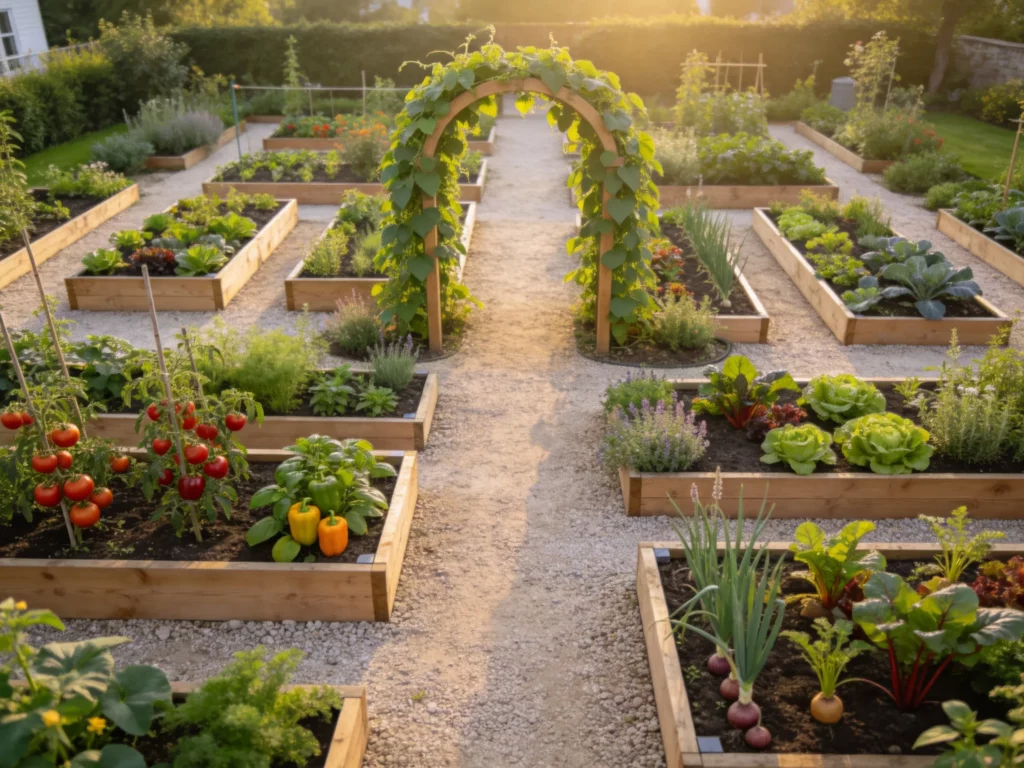
Raised beds: More upfront work, way less fuss later. You control soil quality and drainage. Start with 4×4 or 4×8 feet. That size keeps everything within easy reach.
Design for Real Life, Not Pinterest
Make a layout that you’ll actually maintain. You want paths you can walk without trampling seedlings and beds you can reach without a full stretch workout. Keep the hoses close and the tools closer. You’ll thank yourself in July.
Easy Layouts That Work
Grid beds: Divide beds into 1-foot squares for easy spacing.
Row beds: Great for root crops and succession planting.
Mixed planters: Combine herbs, greens, and a small tomato in one large pot for a mini kitchen garden.
Pathways and Access
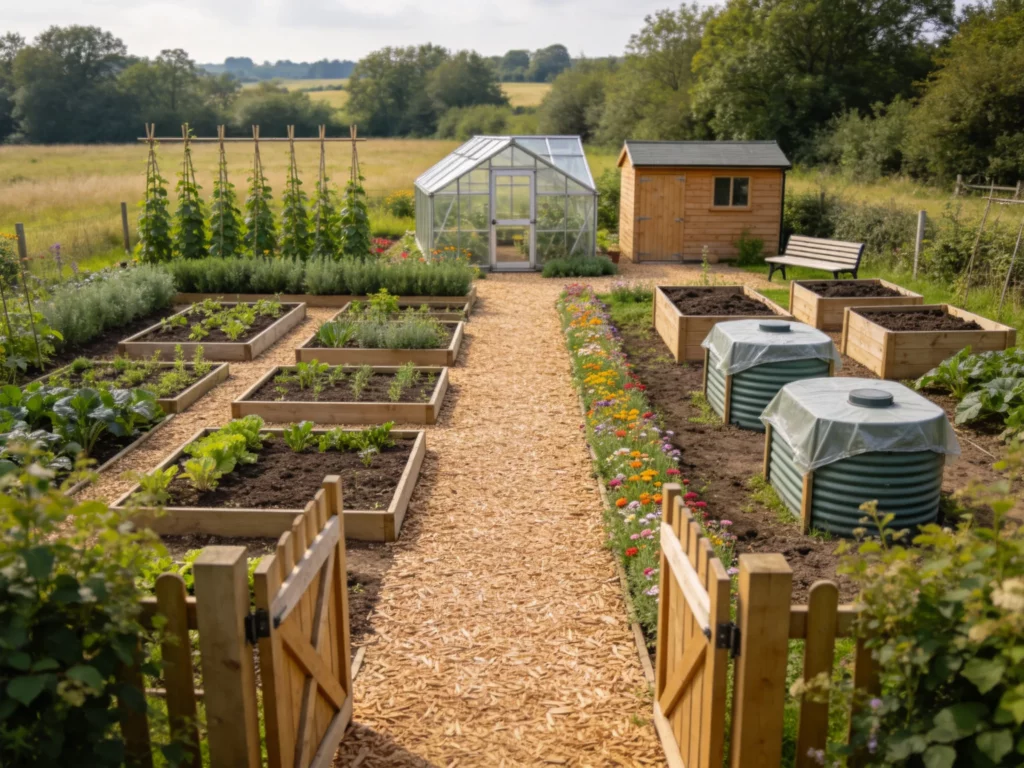
Keep paths at least 18 inches wide so you can lug a watering can without shoulder-checking basil. Lay down mulch, wood chips, or stepping stones. You block weeds and keep your shoes clean. Put a small tool bucket or hook nearby so you stop losing pruners to the abyss.
Soil: The Secret Sauce
You can’t fake good soil. Plants feel everything. Build soil that drains well, holds moisture, and feeds roots steadily. That combo keeps veggies happy and you sane.
Start with this:
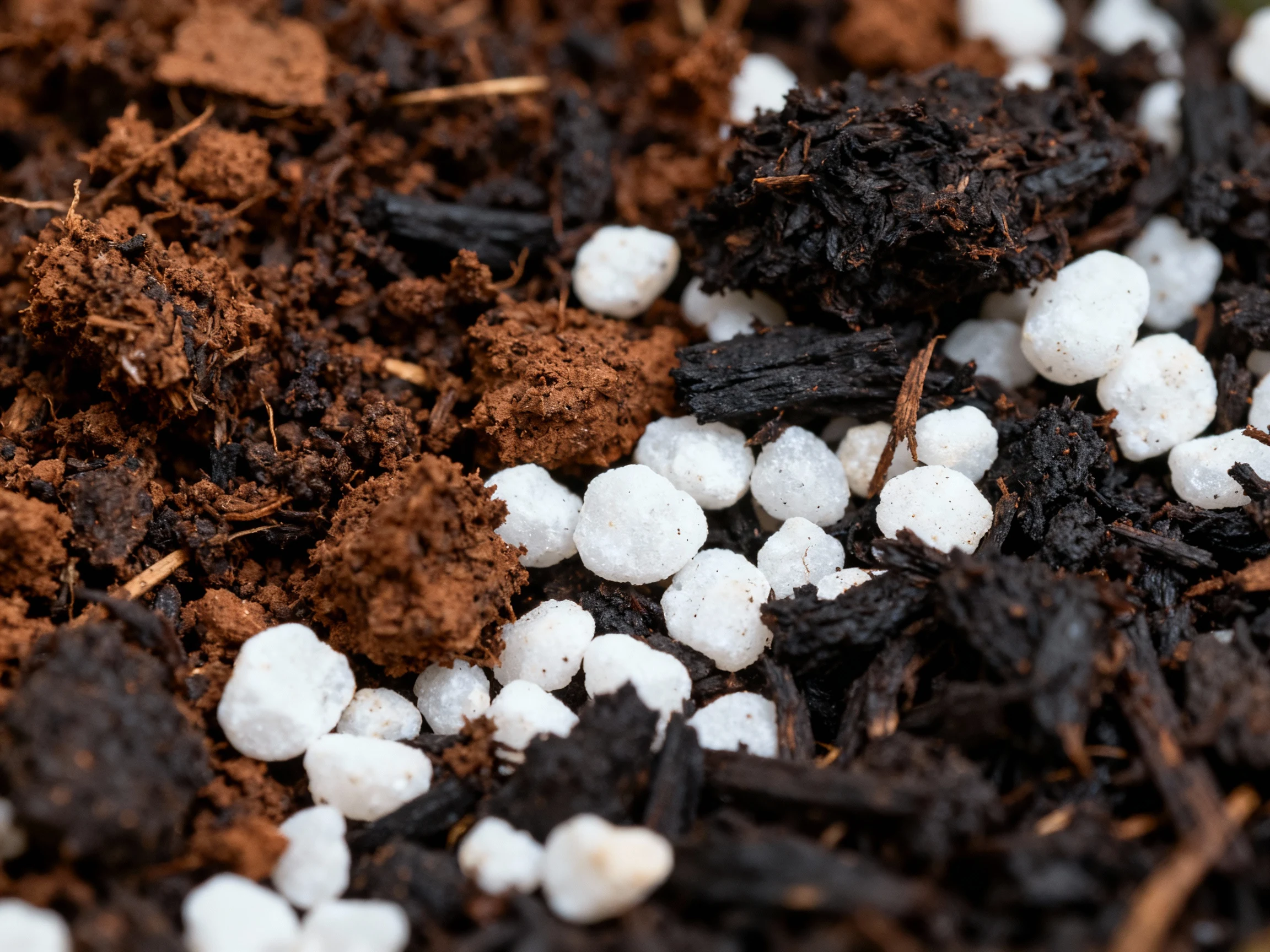
- 50–60% high-quality compost or composted manure
- 30–40% topsoil or raised bed mix
- 10% aeration material (perlite, coarse sand, or pine bark fines)
Add a handful of slow-release organic fertilizer per square foot when you plant. Refresh with compost midseason. Mulch with straw, shredded leaves, or grass clippings to lock in moisture and block weeds.
DIY Soil Mix for Containers
Use a blend that drains fast but doesn’t dry out in a day. Try:
- 2 parts high-quality potting mix
- 1 part compost
- 1 part perlite or pumice
FYI: Container soil settles. Top up with compost every few weeks and you’ll keep roots buried and happy.
Compost Without the Drama
You don’t need a giant bin or a master’s degree. Toss kitchen scraps, yard waste, and shredded paper into a small tumbler. Turn it weekly. Skip meat, dairy, and oily stuff. No space? Buy bagged compost from a reputable source and call it a day, IMO.
Grow What You Actually Eat
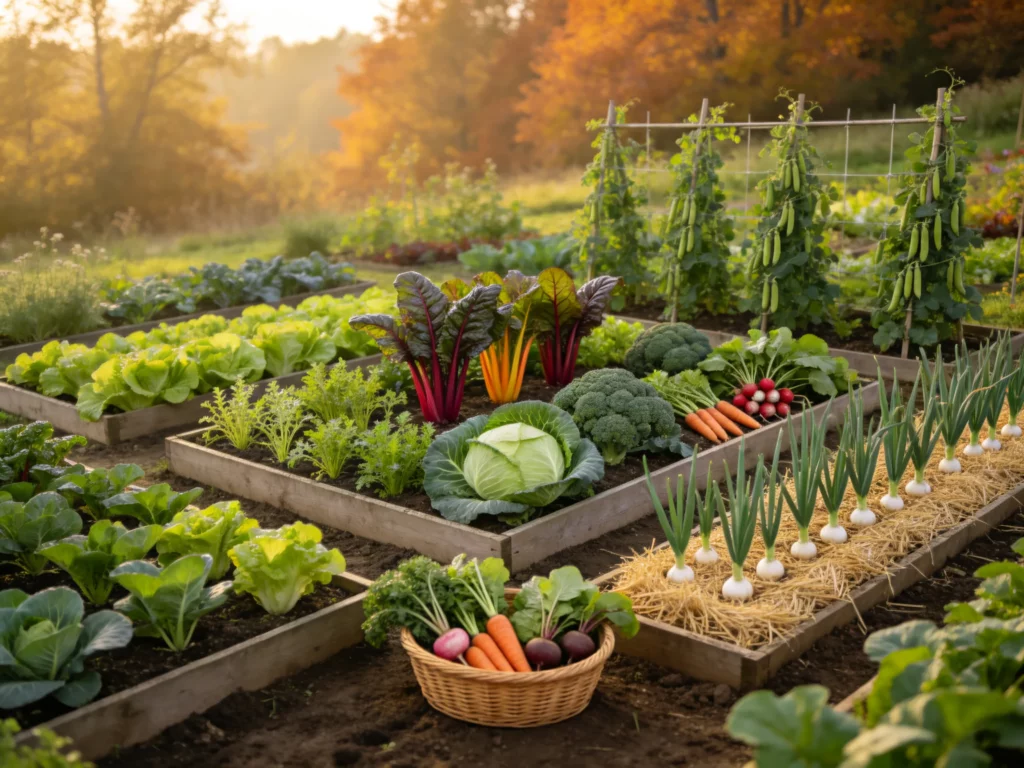
Don’t plant 12 zucchini if you don’t dream about zucchini bread. Grow the foods you cook weekly. You’ll harvest more and waste less. Plus, menu planning gets easier when your garden handles the produce section.
High-ROI Crops
These crops deliver tons of flavor and value:
- Salad greens: Cut-and-come-again varieties keep producing for weeks
- Herbs: Basil, cilantro, parsley, chives—fresh herbs level up every meal
- Cherry tomatoes: Generous, sweet, and almost too easy
- Peppers: Snackers, jalapeños, or bells—great yield in pots
- Cucumbers: Climb them up a trellis and save space
- Green beans: Bush or pole—both crank out pods
Plant a few “splurge” veggies too. Grow a quirky heirloom tomato or a purple carrot because you can. Variety keeps gardening fun.
Vertical Gardening 101
Go up if you can’t spread out. Use trellises, cages, or netting to support vines and keep fruit clean.
- Tomatoes: Cage or stake early and tie stems loosely
- Cucumbers: Train tendrils up mesh; harvest straighter fruit
- Beans and peas: String trellises work great in tight spaces
Vertical plants also boost airflow, which reduces disease. Your future self loves that.
Smart Watering and Feeding
Water consistently and you avoid split tomatoes and bitter greens. Aim for deep, infrequent sessions rather than daily sprinkles. Feed lightly and often for steady growth. Overfeeding just gives you leafy divas with zero flavor.
Set-and-Forget Watering
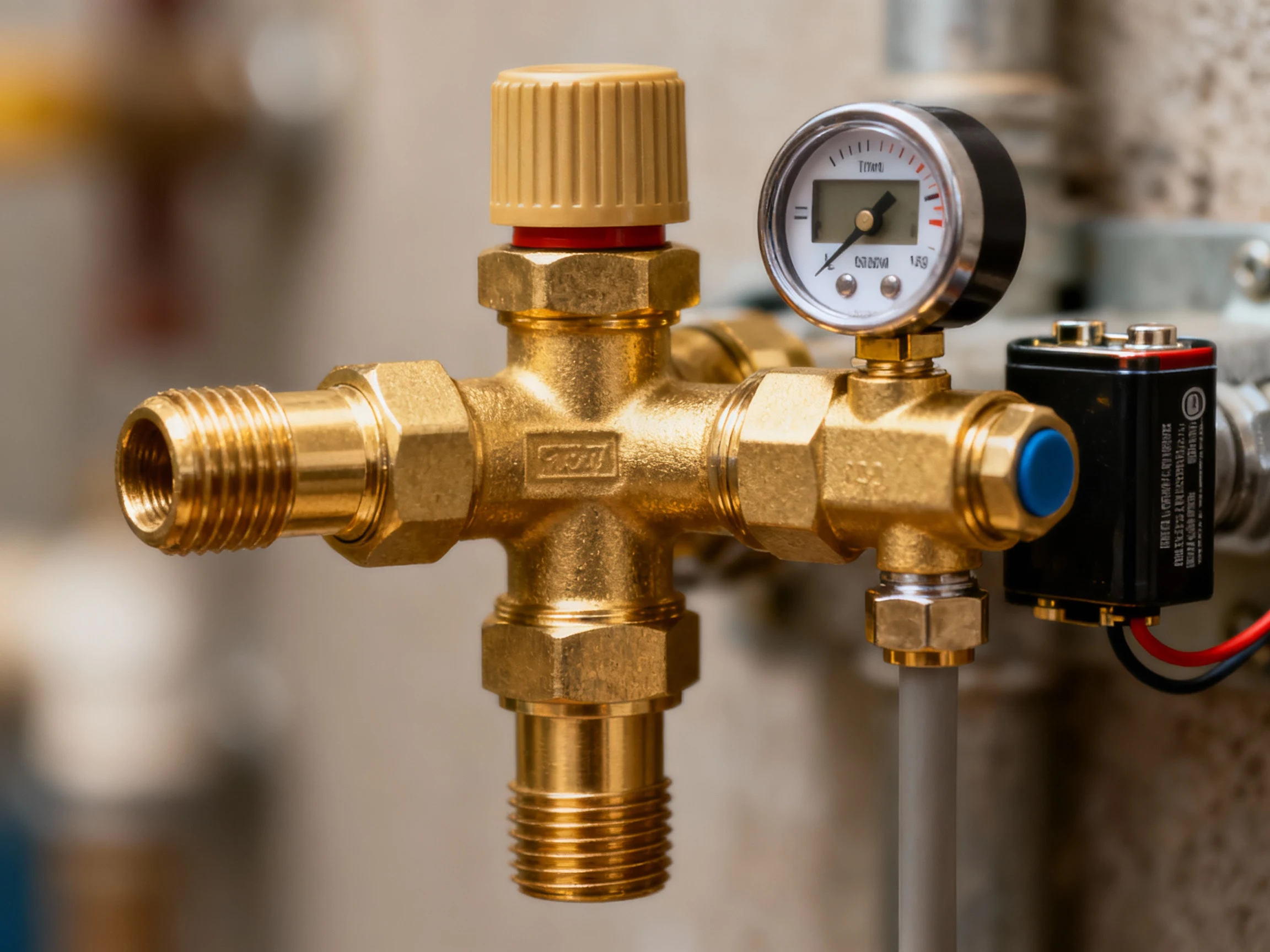
Install a simple drip system with a timer and call it genius. Drip lines deliver water at the roots, so you waste less and hit fewer disease problems.
Quick setup checklist:
- Backyard faucet splitter so you still use the hose
- Pressure reducer and filter (drip systems love consistency)
- 1/2-inch mainline tubing and 1/4-inch emitters to beds or pots
- Battery timer set for early morning cycles
No drip? Water in the morning at soil level. Your leaves avoid midday scorch and fungus drama.
Fertilizer Cliff Notes
Organic options: Compost, worm castings, fish emulsion, kelp meal—gentle and steady.
Synthetic options: Fast results but easy to overdo. Follow the label like it’s a sacred text.
Topdress with compost monthly and side-dress heavy feeders (tomatoes, corn, squash) midseason. Plants respond fast without the hangover.
Pests, Problems, and Plant Drama
Every garden sees a pest or two. You don’t need to wage chemical warfare. You build plant resilience, monitor regularly, and intervene early. Think “bouncer at a chill club,” not “apocalypse.”
Gentle Pest Control That Works
Prevent first:
- Healthy soil and consistent watering
- Mulch to reduce stress
- Row covers for brassicas (butterflies can’t lay eggs if they can’t get in)
Then target:
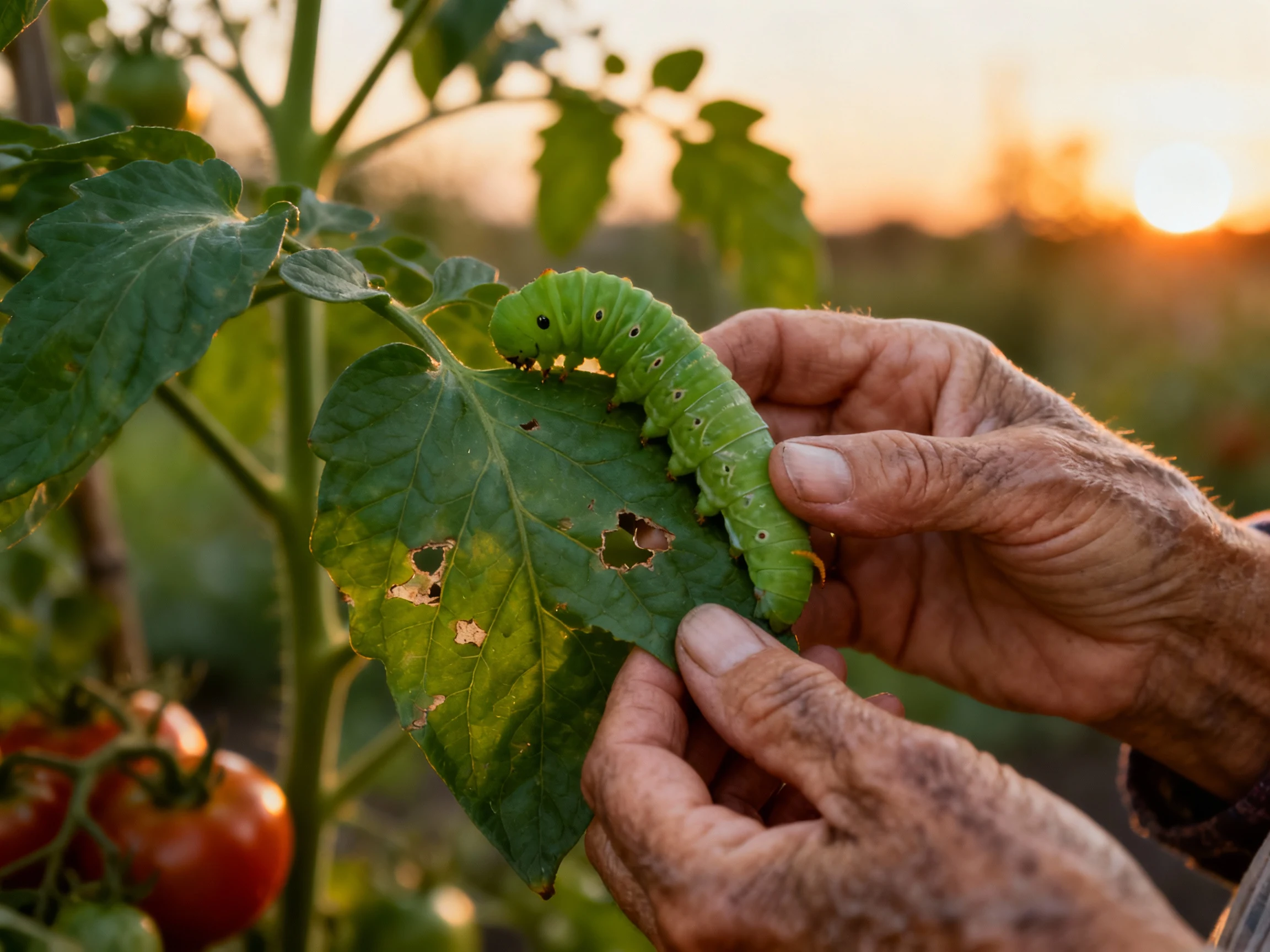
- Hand-pick hornworms at dusk (oddly satisfying)
- Blast aphids with water, then use insecticidal soap if needed
- Trap slugs with beer or use iron phosphate bait
Invite ladybugs and lacewings with dill, fennel, and alyssum. They crush aphids for free.
Disease-Proofing Basics
Water the soil, not the leaves. Space plants to boost airflow. Rotate crops yearly to avoid soil-borne issues, especially with tomatoes and potatoes. If a plant looks tragic, yank it and replant. Bad vibes spread fast.
Season Stretching and Small Space Hacks
You don’t need a long growing season to win. Use quick covers and fast-maturing varieties. Harvest more often, plant again, and treat your garden like a conveyor belt of snacks.
Quick Wins for Extra Harvests
Row covers: Protect spring greens and fall crops from frost and bugs.
Cold frames or mini hoop houses: Add a few weeks on both ends of the season.
Succession planting: Replant fast crops (radishes, lettuce, bush beans) every 2–3 weeks for steady output.
Micro-Garden Ideas
No yard? No problem. Stack pots on shelves, hang planters, or use railing boxes.
- Windowsill: Grow basil, chives, mint, and microgreens
- Balcony: One large container per “big” plant plus herb pots
- Kitchen counter: Microgreen trays for a weekly harvest
Harvest tiny, harvest often, and you’ll still cook like a garden legend, IMO.
FAQ
How many plants should I start with?
Start small and scale up. Try three “anchor” plants (like a tomato, a cucumber, and a pepper), a tray of greens, and 3–5 herb plants. You’ll learn fast without drowning in chores.
What veggies grow well in shade?
Grow leafy greens, radishes, peas, and many herbs. These tolerate 3–5 hours of sun and still produce nicely. Avoid heat-loving fruiting crops in shade because they stall and sulk.
How often should I water?
Water deeply 2–3 times per week in warm weather. Check soil with your finger; if the top inch feels dry, water. Containers dry out faster, so monitor them closely and consider a drip setup.
Do I need fertilizer if I use compost?
Compost builds soil and feeds slowly. Most veggies still appreciate a light, balanced fertilizer boost at planting and midseason. Heavy feeders need the extra fuel to deliver big harvests.
Can I reuse potting soil?
Yes, with a refresh. Remove roots, add 30–50% fresh compost, and mix in a slow-release organic fertilizer. Rotate crops and avoid reusing soil for tomatoes if you battled disease.
What’s the easiest veggie for beginners?
Salad greens. They germinate fast, grow quickly, and forgive mistakes. Radishes, bush beans, and cherry tomatoes also treat beginners kindly.
Conclusion
You don’t need perfect soil, a tractor, or infinite free time. You need sun, decent dirt, regular water, and a plan that fits your life. Start with a few high-value crops, grow vertically, and mulch like you mean it. Keep it simple, keep it fun, and enjoy the bragging rights when your dinner comes from 10 feet away.